Slovakia.
Slovensko
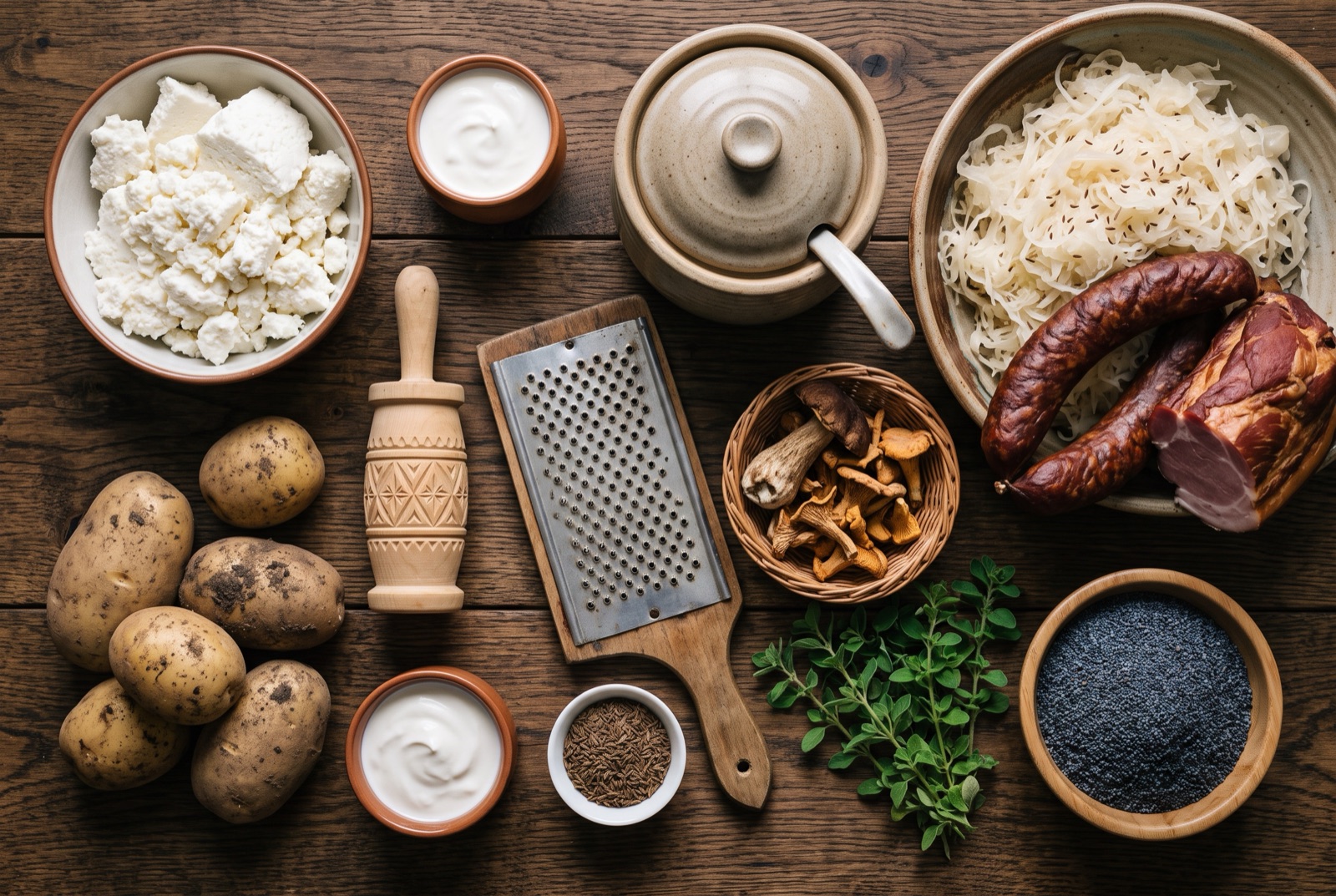
Slovak cooking is mountain food that spent three centuries within reach of a Habsburg capital, and it tastes like both halves of that sentence. The backbone is what survives a Carpathian winter: potatoes, cabbage soured in barrels, smoked pork, flour, eggs, and sheep's milk turned into bryndza — the soft, salty, faintly sour cheese that makes the national dish a national dish. Seasoning is deliberately narrow. Caraway runs through soups, potatoes, roast pork and rye bread so consistently that Slovaks abroad usually miss it before they miss anything else; marjoram, paprika, black pepper, dill and a spoonful of sour cream do most of the rest. What the kitchen invests in instead is texture: dumplings scraped off a board into boiling water, potatoes grated raw, dough rolled to the thickness of a coin, breadcrumbs fried in butter until sandy. It is filling, unshowy, cheap to make and far better than its reputation for beige suggests — and unlike its bigger neighbours it never traded its shepherd food for restaurant food.

- Continent
- EuropeCentral Europe
- Recipes in atlas
- 10
- Must-try dishes
- 3
- Pantry staples
- 9
Start with the classics.
Must tryThe dishes that explain the Slovakia kitchen fastest — if you cook only a few things from this page, cook these.
Inside the Slovakia kitchen.
Start with the potato, because half the Slovak canon does. It arrived late — a nineteenth-century crop in the poor northern uplands — and then took over completely, largely because it grows where wheat sulks. Grated raw and bound with flour and egg, it becomes the batter for halušky, the thumbnail dumplings scraped into boiling water through a perforated board; the same batter fried with sauerkraut is strapačky. Boiled and mashed, it becomes the dough for šúľance, for lokše flatbreads baked dry on a hot plate, and for the plump pirohy stuffed with bryndza. One ingredient, four different textures, and a whole cuisine built out of a vegetable that was once famine insurance.
The second pillar is sheep. Wallachian herders moving along the Carpathian arc over several centuries brought transhumant shepherding to the Slovak mountains, and with it the salaš — the summer sheep station where the bača and his crew milked, curdled and smoked. That system produced žinčica, the tangy whey drink; oštiepok, the smoked, decorated cheese pressed in carved wooden moulds; braided korbáčiky; and above all bryndza, made by grinding, salting and ripening fresh sheep cheese into a spreadable, lactic, deeply savoury paste. Slovak bryndza carries an EU protected designation, and its sharpness is the flavour Slovak cooking is organised around: without it, halušky are just dumplings.
Third comes the barrel of sauerkraut and the pig. Cabbage is not a garnish here but a souring agent and a vegetable in one, braised with onion and caraway for strapačky, simmered with smoked sausage and dried wild mushrooms into kapustnica, or stewed with pork and sour cream into segedínsky guláš. Pork supplies the fat as much as the meat — lard for frying, smoked bacon rendered over dumplings, klobása sliced into soup, škvarky (crackling) folded into bread dough. Nothing is wasted and almost nothing is browned aggressively; the flavours come from smoke, souring and long, low heat.
Meal structure is Central European and strict about it. A proper lunch opens with soup, every day, not only on Sundays — a thin broth with liver dumplings, a garlic soup poured over toast, a sour kraut soup. The main course follows, and it may legitimately be sweet: šúľance with poppy seed, pirohy filled with plum jam, or baked yeast buchty count as a full lunch rather than a dessert, a habit shared with Czechia and Austria that confuses visitors more than anything else on the table.
Regional accents are real. The south, long inside the Hungarian sphere, is heavier on paprika, peppers and paprikáš; the northeast leans Rusyn and Polish, with more cabbage, buckwheat and pirohy; the northern mountains of Orava and Liptov are bryndza country. And Bratislava keeps its own layer entirely — a Danube city of Austro-Hungarian coffeehouses whose walnut and poppy seed rožky are a protected pastry, and whose surrounding villages built a whole autumn ritual around roast goose eaten with lokše and young wine.
Signature pantry.
9 staplesThe ingredients this cuisine cannot function without.
- bryndza (sheep's milk cheese)
- potatoes
- sauerkraut
- caraway seed
- smoked pork and klobása sausage
- sour cream
- poppy seed
- dried wild mushrooms
- marjoram
How people eat in Slovakia.
Lunch, not dinner, is the real meal, and it begins with soup — a Slovak table without a first course feels unfinished. Bread sits out for the whole meal, and everyone waits for "Dobrú chuť" before starting. Sweet main courses are normal at midday and nobody treats them as dessert. Beer or a small glass of slivovica opens a celebration with "Na zdravie", and refusing the host's first pour takes some negotiating. The year's most important supper is Štedrá večera on Christmas Eve, meat-free in most households: wafers with honey and garlic, kapustnica, then fried carp with potato salad, eaten only once the first star appears. Coffee comes after, never during.
Regional kitchens.
Slovakia cooks 4 distinctly different ways depending on where you stand — here is what changes between them.
- R1Bratislava and the Danube Lowlands
- The Austro-Hungarian corner: coffeehouse baking, walnut and poppy seed Bratislavské rožky, and the goose-and-lokše feasts of villages like Slovenský Grob every autumn. Wine country rather than sheep country.
- R2Liptov, Orava and the Northern Mountains
- Bryndza's heartland, where summer sheep stations still supply the cheese behind halušky, žinčica and smoked oštiepok. Potato-and-dairy cooking, heavy on caraway and smoked pork fat.
- R3Spiš, Šariš and the East
- Rusyn and Polish influence shows in cabbage, buckwheat and generous plates of pirohy. Poorer historically, so the food leans hardest on potatoes, dried mushrooms and preserved cabbage.
- R4The Southern Border Belt
- Centuries inside the Hungarian sphere left paprika, peppers and slow-cooked paprikáš stews on the everyday menu, alongside pork and freshwater fish from the Danube and Tisza plains.
All Slovakia recipes.
10 recipes and counting
Slovakia2 hr 48 min
Bratislavské rožky
Walnut and Poppy Seed Crescents
Slovakia1 hr
Bryndzové Halušky
Potato Dumplings with Sheep Cheese
Slovakia40 min
Demikát
Slovak Shepherd's Bryndza Soup
Slovakia1 hr 45 min
Kapustnica
Slovak Christmas Sauerkraut Soup
Slovakia55 min
Lokše
Slovak Potato Flatbreads
Slovakia1 hr 55 min
Segedínsky Guláš
Slovak Pork and Sauerkraut Goulash
Slovakia1 hr 40 min
Slovenské Pirohy
Bryndza and Potato Dumplings
Slovakia1 hr 10 min
Strapačky
Potato Dumplings with Braised Sauerkraut
Slovakia50 min
Šúľance s makom
Poppy Seed Potato Rolls
Slovakia1 hr 5 min
Vyprážaný Syr
Slovak Breaded Fried Cheese with Tartare
Keep traveling.
Slovakia sits in Central Europe, and its kitchen shares borders as well as ingredients with Albania and Austria.
 Albania
 Austria