Argentina.
Argentina
Three separate food histories share one Argentine table, and they do not always mix. The oldest is Andean and pre-Hispanic — corn, squash, beans and potatoes, still the backbone of what people eat in the northwest provinces. The second arrived on cattle boats and grew into the Pampas: grass-fed beef in quantities that made meat an everyday food rather than a luxury, cooked over wood embers with salt and nothing else. The third came off passenger ships between roughly 1880 and 1950, when Italian and Spanish immigration reshaped the country so thoroughly that pasta on Sundays, milanesas on weeknights and pizza by the slice now read as completely Argentine. What holds it together is a preference for the direct: few spices, long unhurried cooking, generous portions, and an aversion to chile heat that surprises anyone arriving from Peru or Mexico. Sweet gets its own department entirely, and almost all of it runs through dulce de leche.

- Continent
- South AmericaSouthern Cone
- Recipes in atlas
- 10
- Must-try dishes
- 3
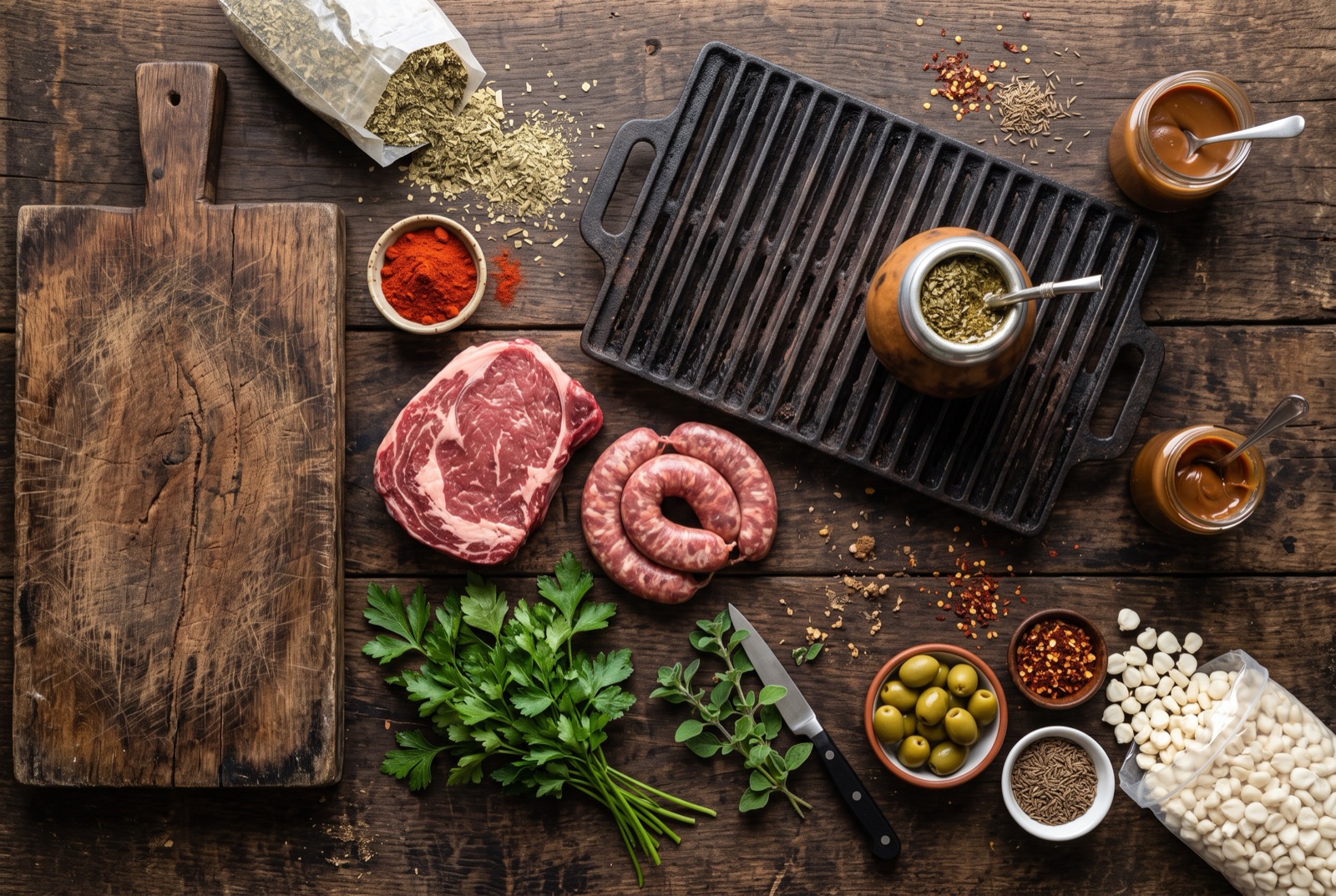
- Pantry staples
- 10
Start with the classics.
Must tryThe dishes that explain the Argentina kitchen fastest — if you cook only a few things from this page, cook these.
Inside the Argentina kitchen.
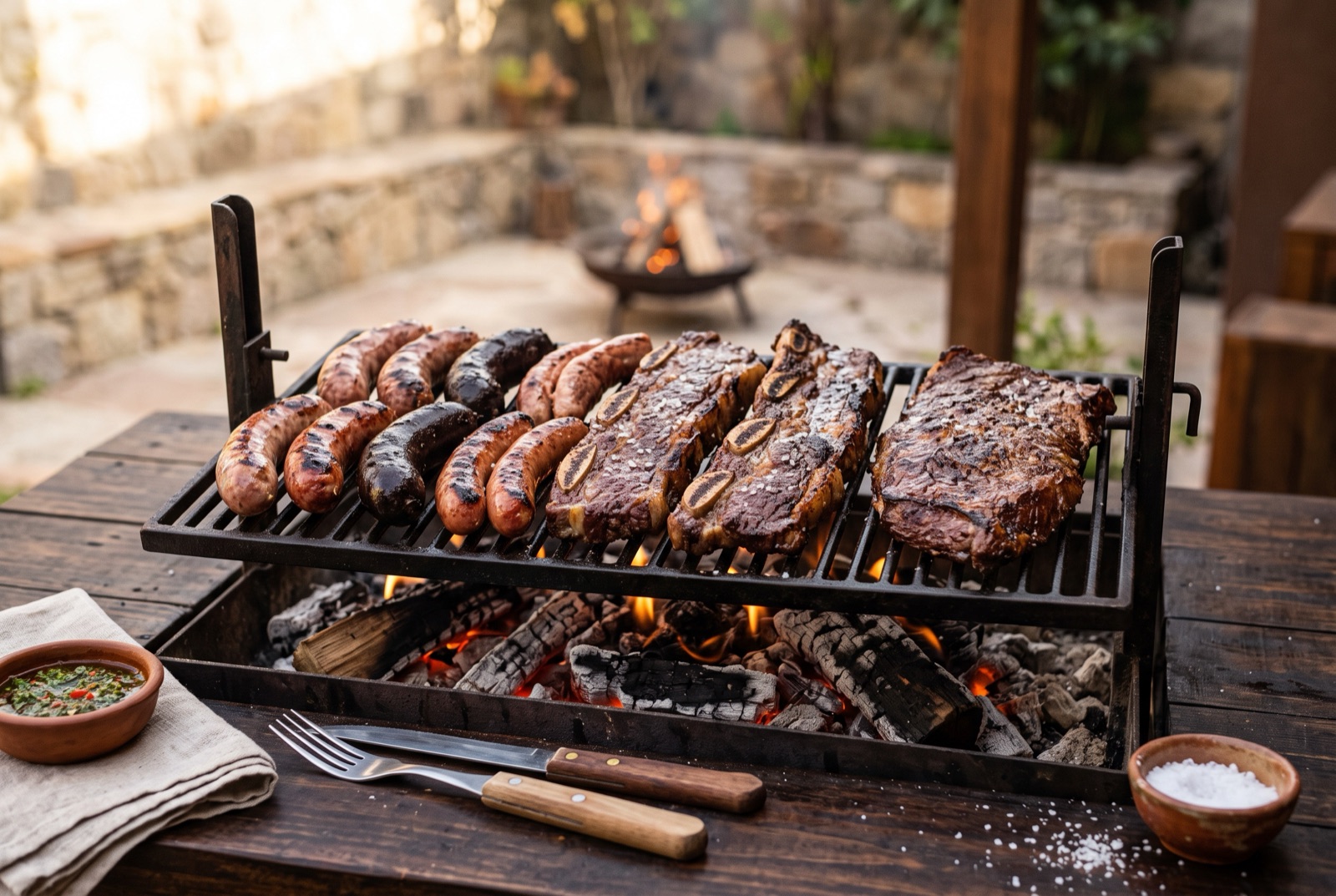
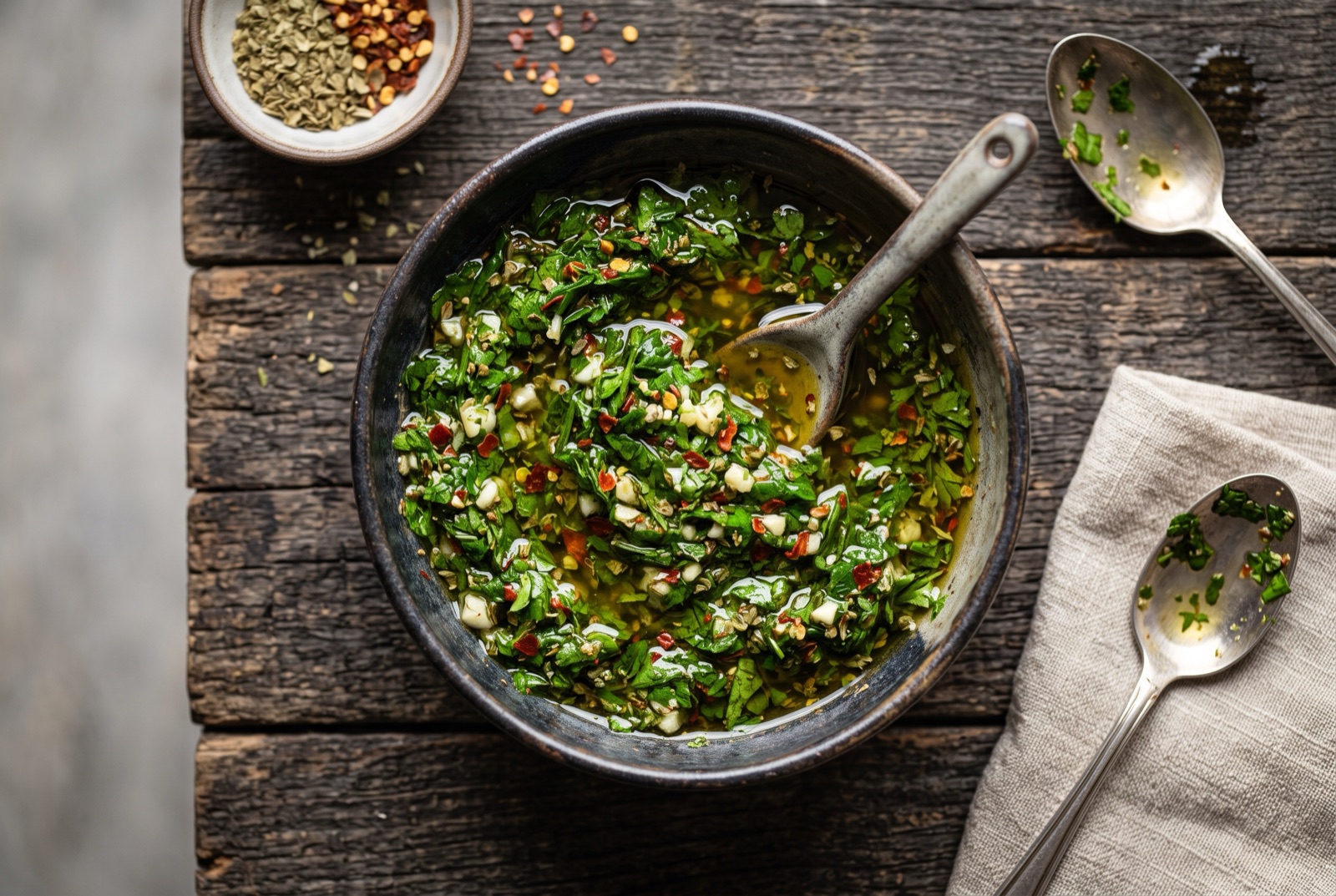
Beef sets the terms. Argentine cattle are largely pasture-raised, and the butchery follows its own map — asado de tira cut across the rib bones, vacío from the flank, entraña, matambre, colita de cuadril — names that do not translate cleanly into American or European cuts. The default treatment is the parrilla: a grill loaded with embers raked from a wood fire, the meat set high above them and cooked for hours at a temperature low enough that you can hold a hand over the grate. Seasoning is coarse salt. Sauces come afterward and on the side, which is why chimichurri and salsa criolla live in bowls at the end of the table rather than in the cooking.
The northwest tells a different story. Salta, Jujuy, Tucumán and Catamarca sit high and dry against the Andes, and their kitchens run on white hominy corn, squash, beans, potatoes, goat and llama, seasoned with cumin and sweet paprika rather than the near-empty spice rack of the Pampas. Locro, humita, tamales and the hand-cut empanada all belong here, and they connect straight across the border to Bolivia and northern Chile — this is one culinary region that a political map cuts in half.
Italian immigration supplied the weeknight. Milanesa is the national cutlet, eaten breaded and fried at home, sandwiched in bread at kiosks, or buried under ham and cheese in a restaurant. Fresh pasta shops sell ravioli and sorrentinos by the kilo, ñoquis are eaten on the 29th of the month, and pizza in Buenos Aires evolved into its own thick, cheese-heavy species with fugazzeta as the local flagship. Spanish influence shows up in tortillas, pucheros and the empanada itself, which came across the Atlantic long before it acquired provincial fillings.
Sweets are their own discipline, and dulce de leche is the axis: milk and sugar cooked down to a thick caramel that fills alfajores, layers cakes, tops pancakes and is eaten off a spoon without apology. Argentina and Uruguay both claim its invention and neither claim is settled; the same preparation exists as manjar in Chile and manjar blanco in Peru. Alongside it sit quince and sweet potato pastes eaten with cheese, Italian-derived pastries, and the medialuna — a small, sticky, syrup-glazed croissant that is the standard breakfast.
The drink that frames all of it is mate: yerba leaves packed into a gourd, drunk through a metal straw, refilled and passed around a circle. It is not a beverage ordered in cafés so much as a social object carried in a bag with a thermos, and the sharing rules around it — one gourd, one straw, everybody drinks — say more about Argentine table culture than any dish.
Signature pantry.
10 staplesThe ingredients this cuisine cannot function without.
- grass-fed beef
- yerba mate
- dulce de leche
- sweet paprika (pimentón)
- cumin
- flat-leaf parsley
- white hominy corn
- chorizo criollo
- oregano
- green olives
How people eat in Argentina.
Dinner starts late — nine at the earliest, later in summer — and lunch is the bigger meal in much of the country. An asado is a whole afternoon rather than a course: people arrive hours before anything is served, drink and eat sausage and grilled cheese while the beef takes its time, and the asador who runs the fire is not expected to socialize much. Meat arrives in waves rather than plated portions, and you take what comes off the grill next. Bread sits on the table throughout and is used to mop. Between meals, mate circulates: the person who brews it serves everyone from the same gourd, and saying thank you is the polite signal that you have had enough.
Regional kitchens.
Argentina cooks 4 distinctly different ways depending on where you stand — here is what changes between them.
- R1Buenos Aires and the Pampas
- Cattle country and the immigrant capital at once. The parrilla, the milanesa, the pizzeria and the fresh-pasta shop all belong to this stretch of flat grassland and the port city at its edge.
- R2The Northwest (Salta, Jujuy, Tucumán)
- High Andean provinces where the pantry is corn, squash, beans and potatoes rather than beef. Locro, humitas, tamales and the hand-cut empanada come from here, seasoned with cumin and paprika.
- R3Cuyo (Mendoza and San Juan)
- Desert irrigated into vineyards and olive groves at the foot of the Andes. Malbec country, with a goat- and olive-leaning kitchen and a strong tradition of long-cooked stews and preserved fruit.
- R4Patagonia
- Sparse, cold and coastal in parts: whole lamb splayed on iron crosses over open fire, trout and king crab from the south, and berries, smoked meats and Welsh cake baked in the Chubut valley.
All Argentina recipes.
10 recipes and counting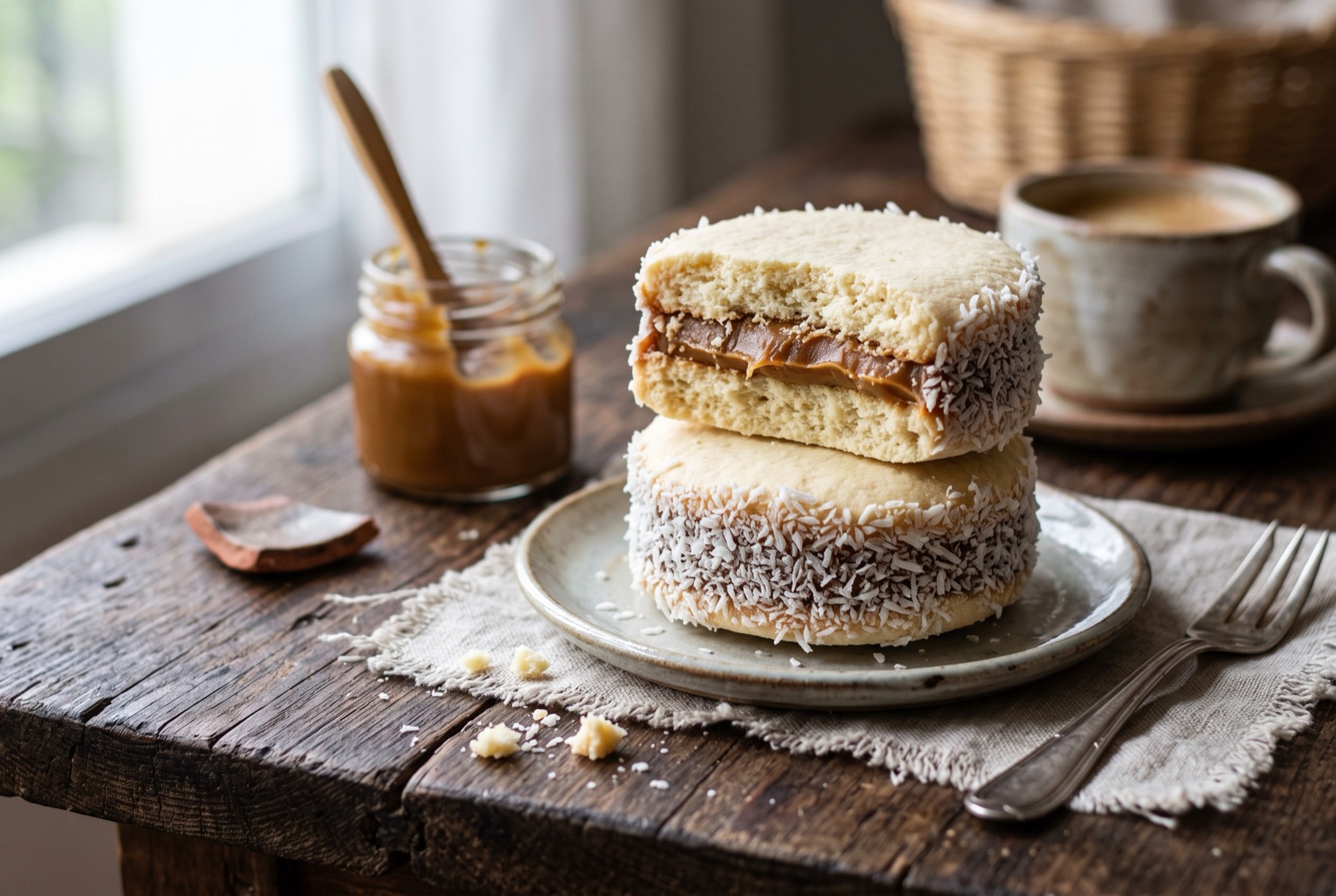
Argentina1 hr 42 min
Alfajores de Maicena
Argentine Cornstarch Cookies with Dulce de Leche
Argentina4 hr 15 min
Asado
Argentine Wood-Fired Beef Barbecue
Argentina2 hr 15 min
Chimichurri
Argentine Parsley, Garlic and Vinegar Sauce
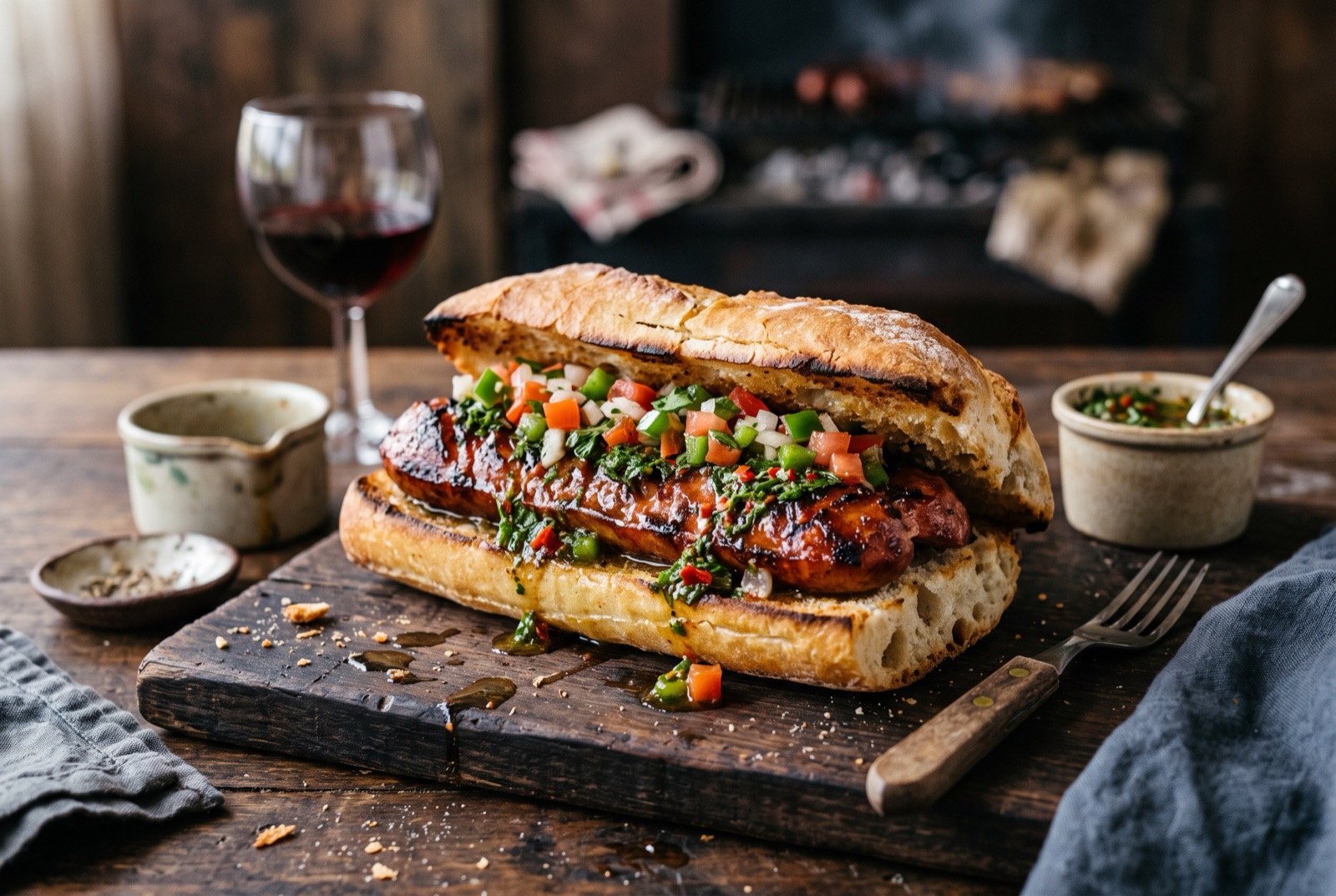
Argentina40 min
Choripán
Argentine Grilled Chorizo Sandwich
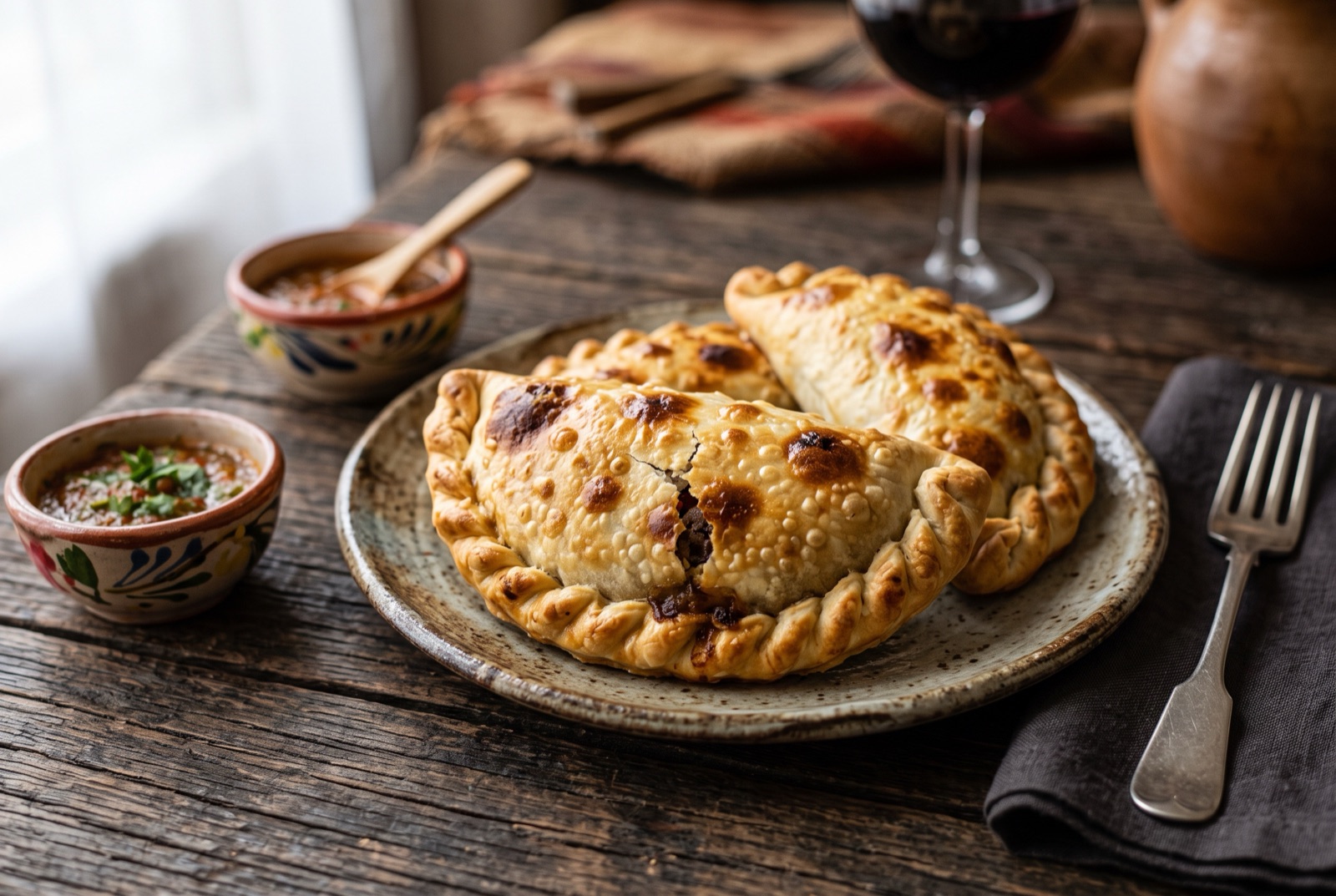
Argentina5 hr 15 min
Empanadas Salteñas
Baked Argentine Beef Turnovers
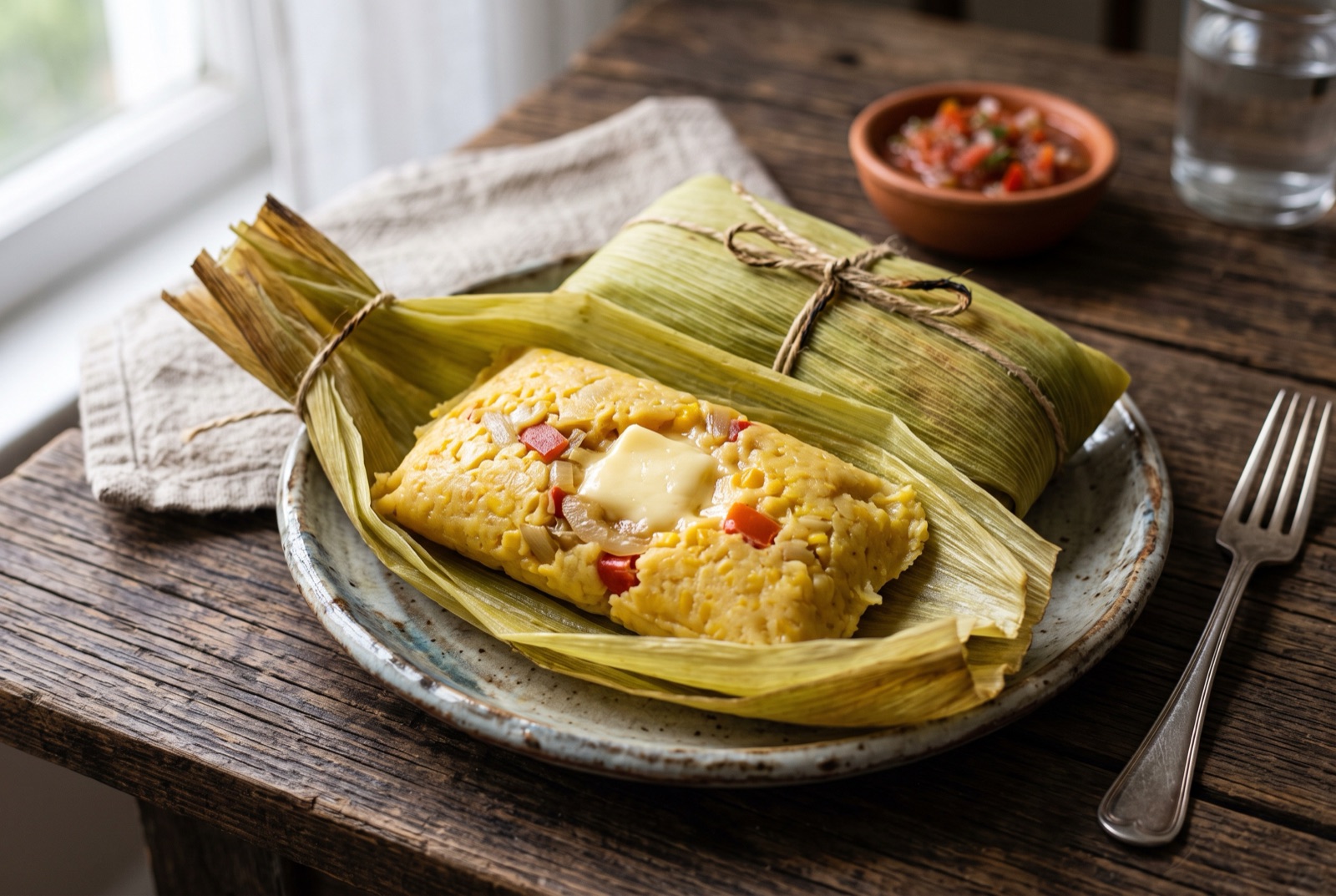
Argentina1 hr 25 min
Humita en Chala
Steamed Fresh Corn Parcels
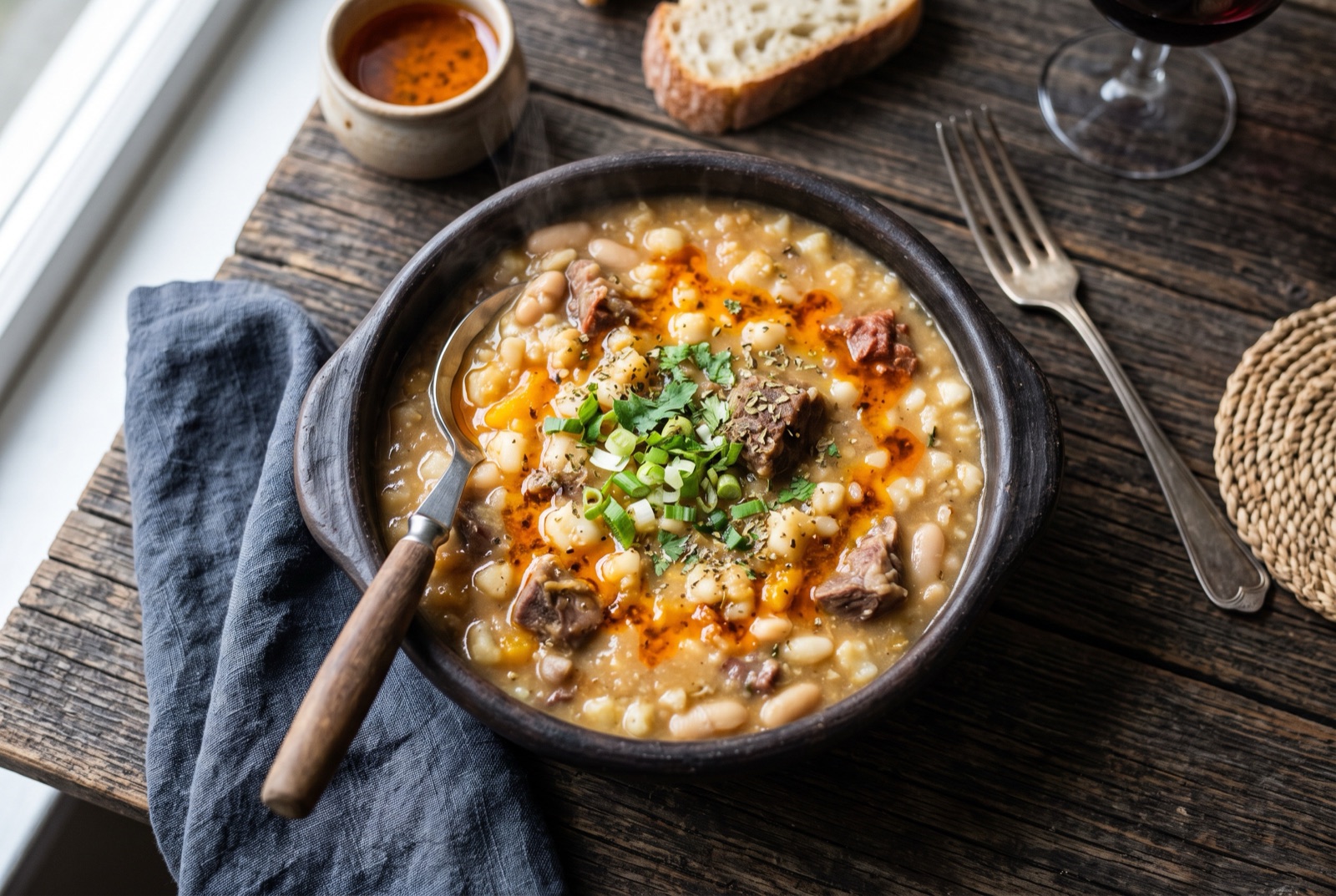
Argentina16 hr
Locro
Argentine Hominy, Squash and Meat Stew
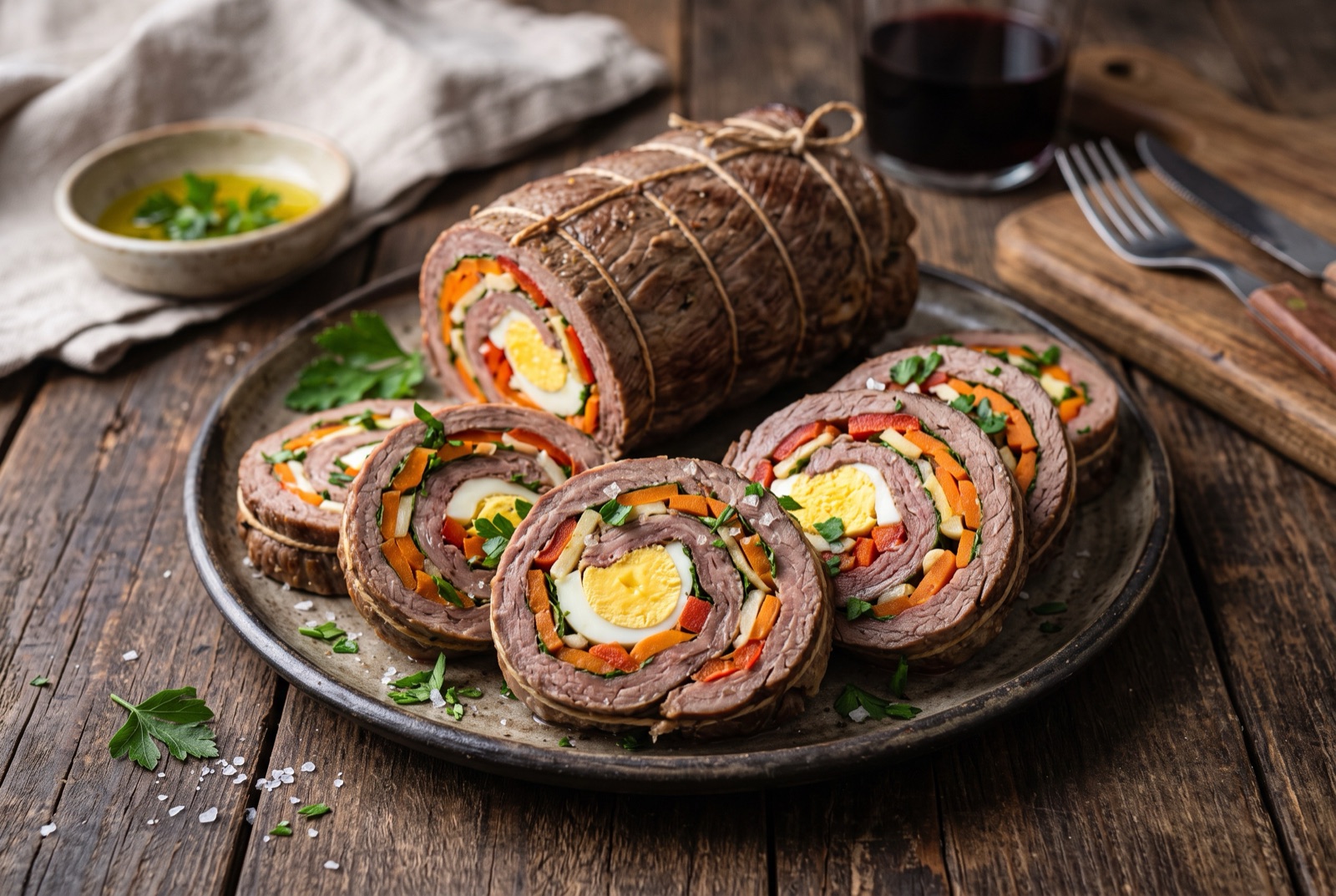
Argentina14 hr 15 min
Matambre Arrollado
Argentine Rolled Stuffed Flank Steak
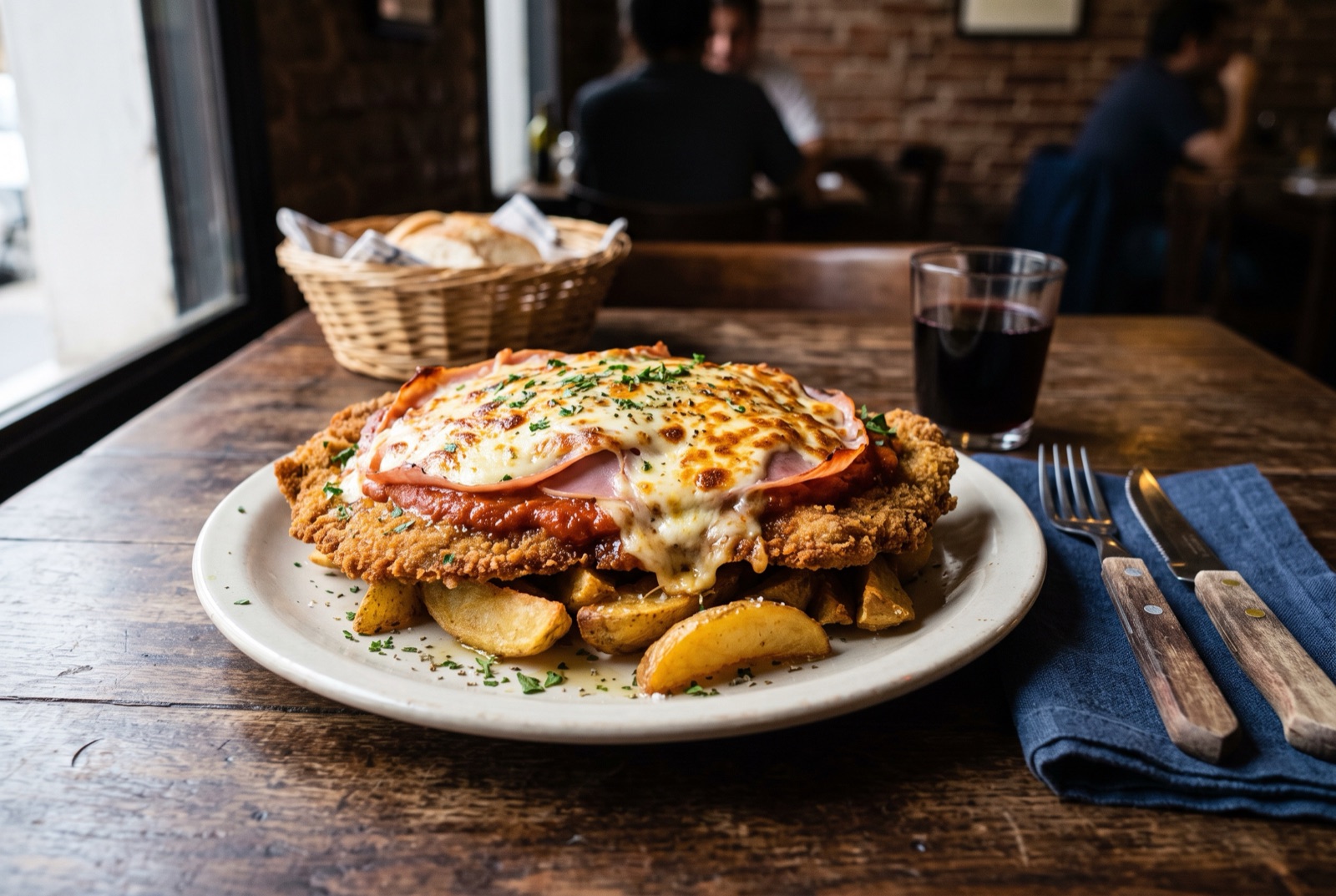
Argentina1 hr 20 min
Milanesa a la Napolitana
Breaded Beef Cutlet with Ham and Cheese
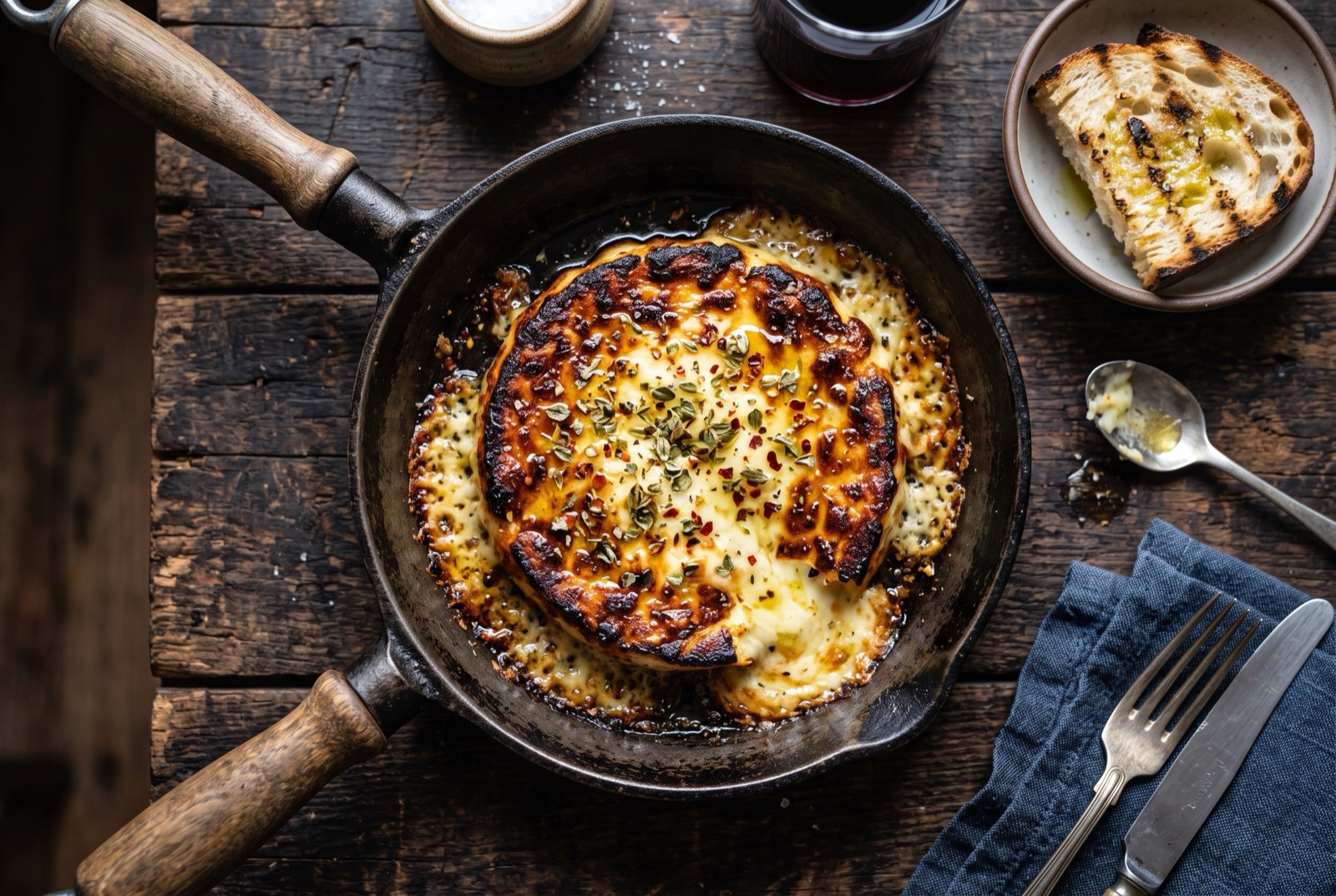
Argentina1 hr 18 min
Provoleta
Argentine Grilled Provolone with Oregano
Keep traveling.
Argentina sits in Southern Cone, and its kitchen shares borders as well as ingredients with Bolivia and Brazil.
 Bolivia
 Brazil