Australia.
Australia
Australian food is the sum of who arrived and what grows here, and it has stopped pretending otherwise. The base layer is tens of thousands of years of Aboriginal and Torres Strait Islander foodways — kangaroo and fish, yams, wattleseed, native limes, lemon myrtle — overlaid by a British colonial kitchen of roasts, chops, pies and boiled puddings, then rewritten twice by migration: Greek and Italian families after the Second World War, and Vietnamese, Cantonese, Lebanese, Turkish and Indian kitchens from the 1970s onward. What emerged is less fusion than adjacency — a suburban shopping strip where the fish-and-chip shop, the phở house and the charcoal chicken joint sit in a row, and everyone eats at all three in the same week. The through-line is climate. Cooking happens outdoors for much of the year, seafood is eaten cold and barely dressed, acidity is used hard, and produce is treated as something to interfere with as little as possible. Australians distrust fuss on a plate, which is why so many of the national dishes are things you eat standing up, in one hand.

- Continent
- OceaniaAustralasia
- Recipes in atlas
- 10
- Must-try dishes
- 3
- Pantry staples
- 9
Start with the classics.
Must tryThe dishes that explain the Australia kitchen fastest — if you cook only a few things from this page, cook these.
Inside the Australia kitchen.
The barbecue is the organising technique, and it is not what most of the world pictures. An Australian barbie is usually a flat steel plate rather than an open grill, heated hard, wiped with oil, and loaded with sausages, lamb chops, onions, butterflied prawns and slabs of fish. Nothing is smoked low and slow; the point is fast contact heat, a crust, and food off the plate and into a slice of bread or onto a plate of salad within minutes. Because Christmas falls in high summer, the traditional roast has quietly lost ground to cold prawns, oysters, glazed ham and pavlova eaten in the shade, and the seafood counters of Sydney and Melbourne trade around the clock in the days before December 25.
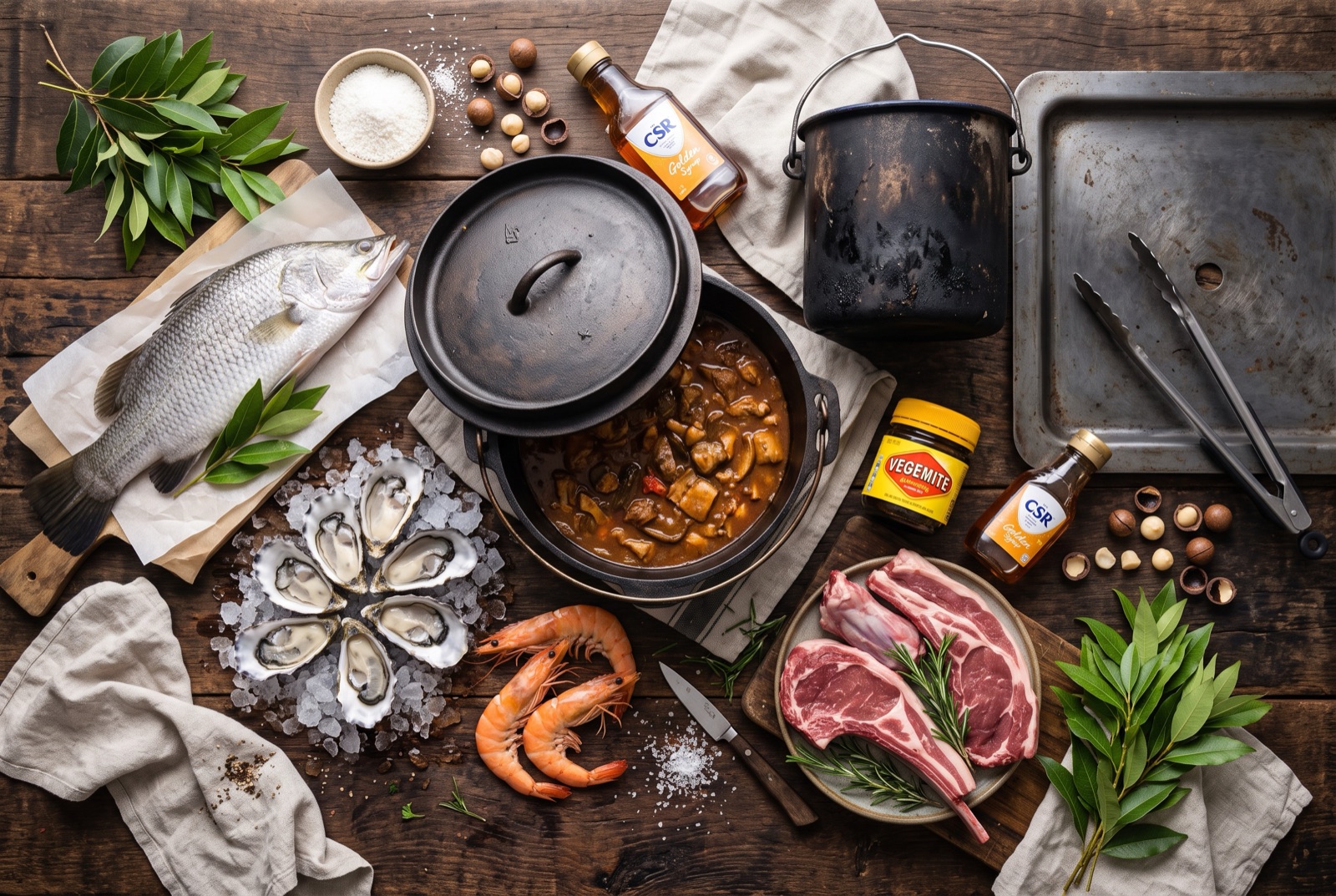
Seafood defines the coastline, which is where nearly everyone lives. Sydney rock oysters and Pacific oysters are eaten raw with lemon and nothing else, king prawns are bought green (raw) and grilled the same day, barramundi is the default white fish, and Moreton Bay bugs, mud crabs and scallops mark the tropical north. At a suburban fish and chip shop the standard order is flake — shark — battered and salted, with chips and a potato scallop, wrapped in paper and eaten on a seawall.
Meat and pastry carry the everyday canon. Australia eats an enormous quantity of lamb, sold as chops, racks and legs for Sunday roasts, and beef mince turns up in rissoles, spaghetti bolognese and, above all, in pies. The hand-sized meat pie and its cousin the sausage roll are sold in every bakery, service station and sporting ground in the country, and arguing about which regional bakery makes the best one is a durable national sport. Pub kitchens run on the chicken parmigiana, the schnitzel and the steak with chips and salad.
Baking follows a Country Women's Association lineage that runs on golden syrup, desiccated coconut, self-raising flour and condensed milk — lamingtons, ANZAC biscuits, caramel slice, sponge with cream, and pavlova, whose origin is genuinely contested between Australia and New Zealand and has never been settled. Children's parties still run on fairy bread: white bread, butter, hundreds and thousands.
Finally, the two forces reshaping the cuisine now. One is café culture — Australia and New Zealand gave the world the flat white and the modern brunch menu, and espresso standards in a random Melbourne side street embarrass most capital cities. The other is the migrant kitchen turned mainstream: salt and pepper squid, dim sims, Chiko rolls and banh mi are Australian food by adoption, while a serious revival of native ingredients — finger lime, saltbush, wattleseed, Davidson plum — is pushing restaurant cooking somewhere the colonial kitchen never went.
Signature pantry.
9 staplesThe ingredients this cuisine cannot function without.
- lamb
- king prawns
- barramundi
- Sydney rock oysters
- macadamia nuts
- Vegemite
- golden syrup
- desiccated coconut
- lemon myrtle
How people eat in Australia.
Hospitality here is casual and participatory. An invitation to a barbecue usually comes with "bring a plate", which means bring food to share, not an empty dish, and often "BYO" — bring your own drinks. Guests hover near the barbecue and offer to help cook; the person holding the tongs holds the floor. Meals are informal and unstructured, with salads and bread on the table at once rather than in courses, and lunch outdoors beats dinner indoors whenever the weather allows. Tipping is not expected and service is friendly rather than formal — you order at the bar in most pubs. Coffee is ordered with precision and drunk in the morning; ordering a cappuccino after dinner marks you as a visitor. Sausage sizzles outside hardware stores and polling booths are a genuine civic ritual.
Regional kitchens.
Australia cooks 4 distinctly different ways depending on where you stand — here is what changes between them.
- R1New South Wales and the Sydney coast
- Oyster and prawn country, with Sydney rock oysters from the estuaries and a harbour fish market that sets the national seafood standard. Also the birthplace of mid-century restaurant showpieces like carpetbag steak.
- R2Victoria and Melbourne
- The café and migrant capital: Italian and Greek families rebuilt the city's eating after 1945, and the espresso culture that followed exported the flat white and the brunch menu worldwide. Pub parmas are taken very seriously here.
- R3Queensland and the tropical north
- Mangoes, macadamias, sugarcane and barramundi, plus mud crabs and Moreton Bay bugs from the warm coast. Outdoor cooking runs year-round rather than seasonally.
- R4The outback and the bush
- Camp-oven cooking territory, where damper baked in coals and billy tea belong to the drover and swagman tradition. It is also where native ingredients — bush tomato, wattleseed, saltbush — are grown and harvested for the restaurant revival.
All Australia recipes.
10 recipes and counting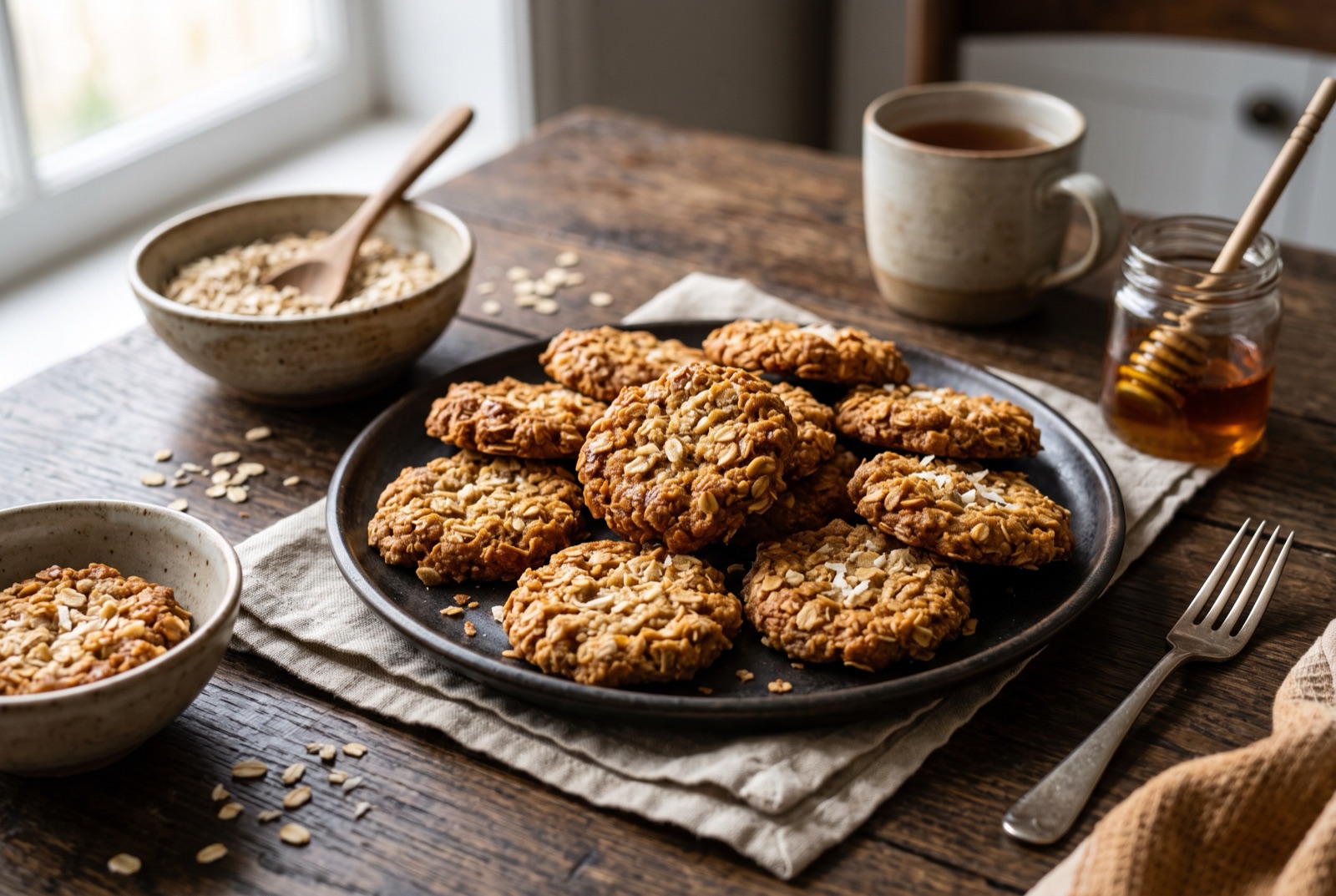
Australia30 min
ANZAC Biscuits
Oat and Golden Syrup Cookies
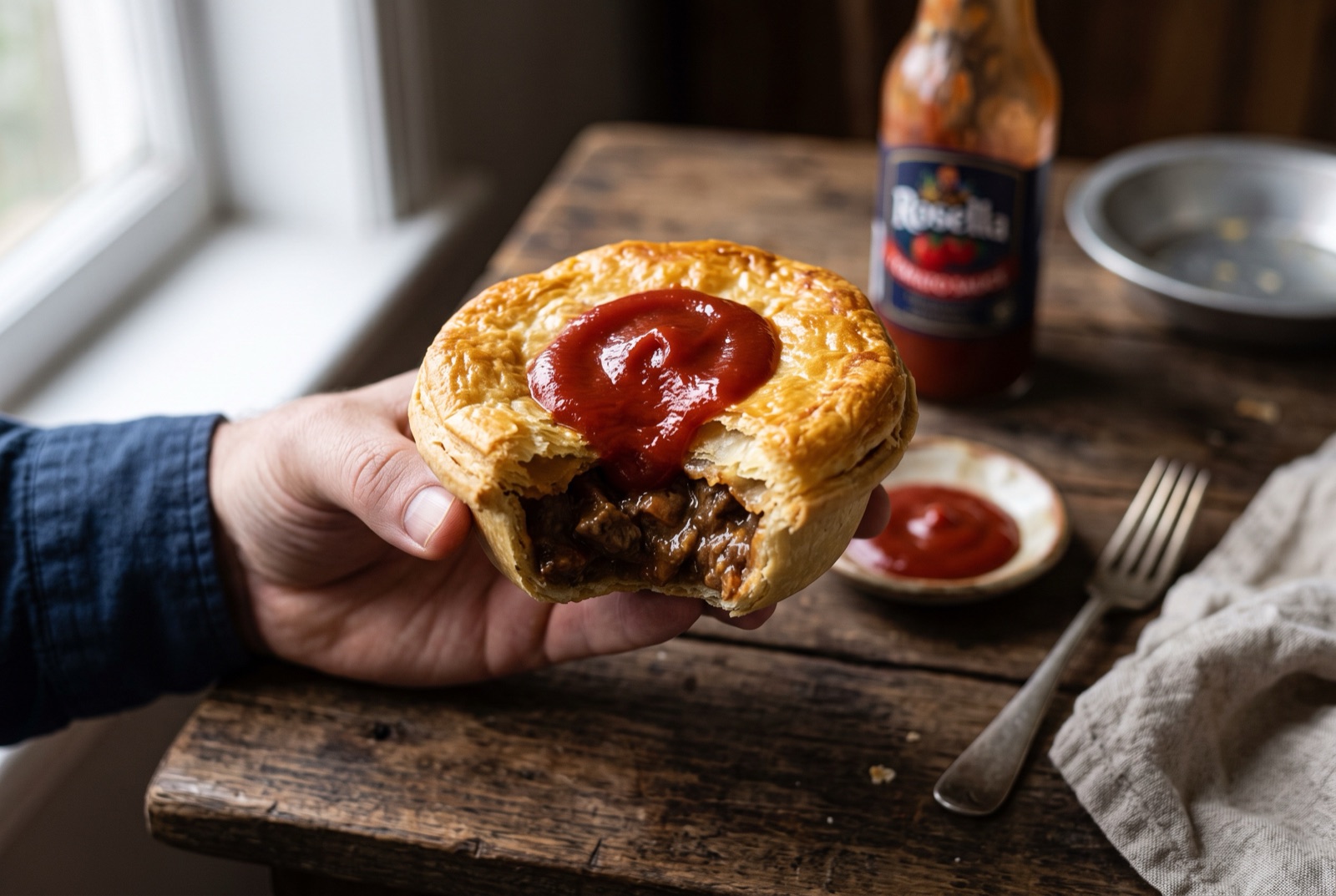
Australia3 hr 40 min
Aussie Meat Pie
Hand-Sized Beef Gravy Pie
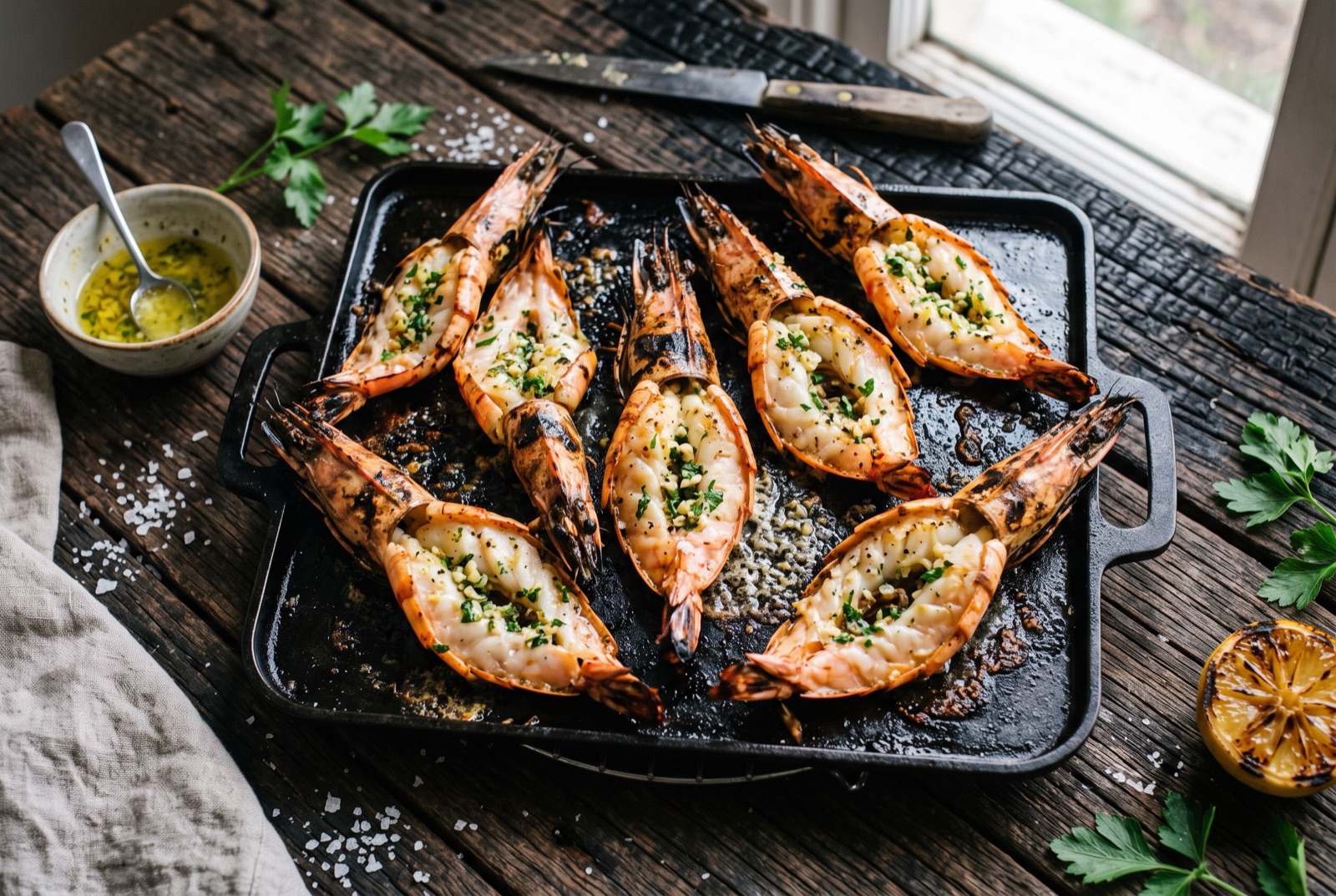
Australia28 min
Barbecued Prawns
Garlic Butter King Prawns
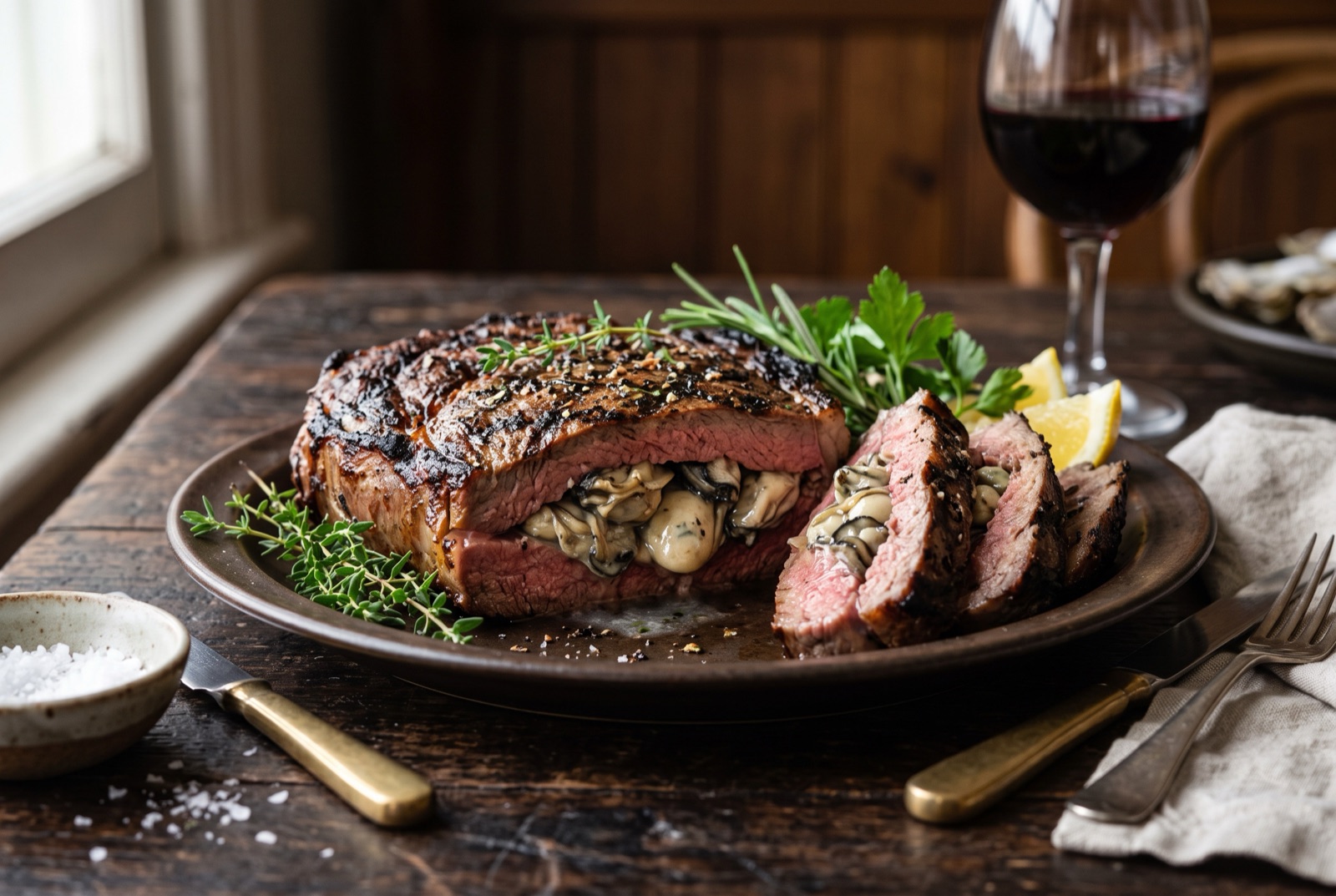
Australia48 min
Carpetbag Steak
Oyster-Stuffed Grilled Sirloin
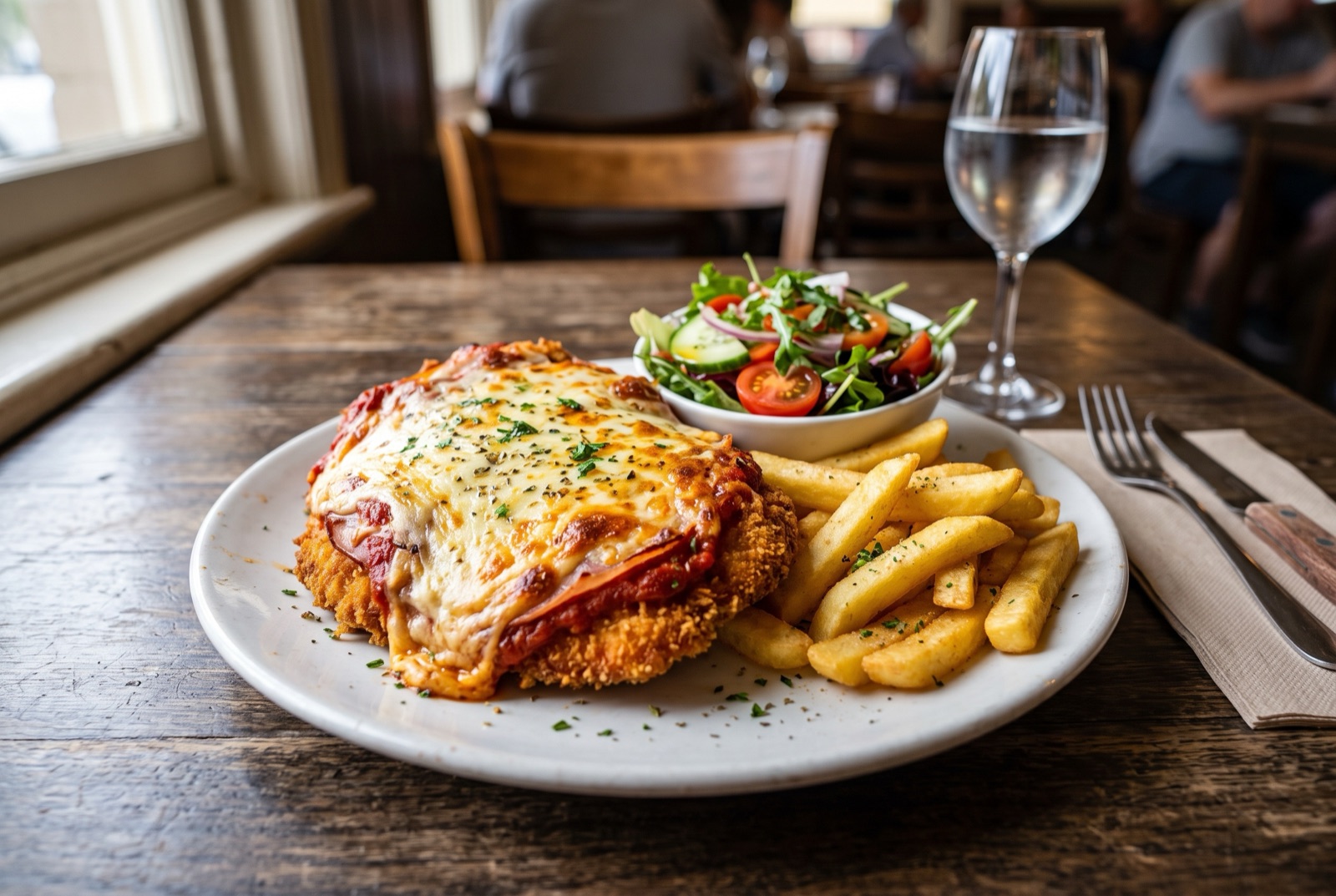
Australia1 hr 5 min
Chicken Parmigiana
Australian Pub Schnitzel with Cheese
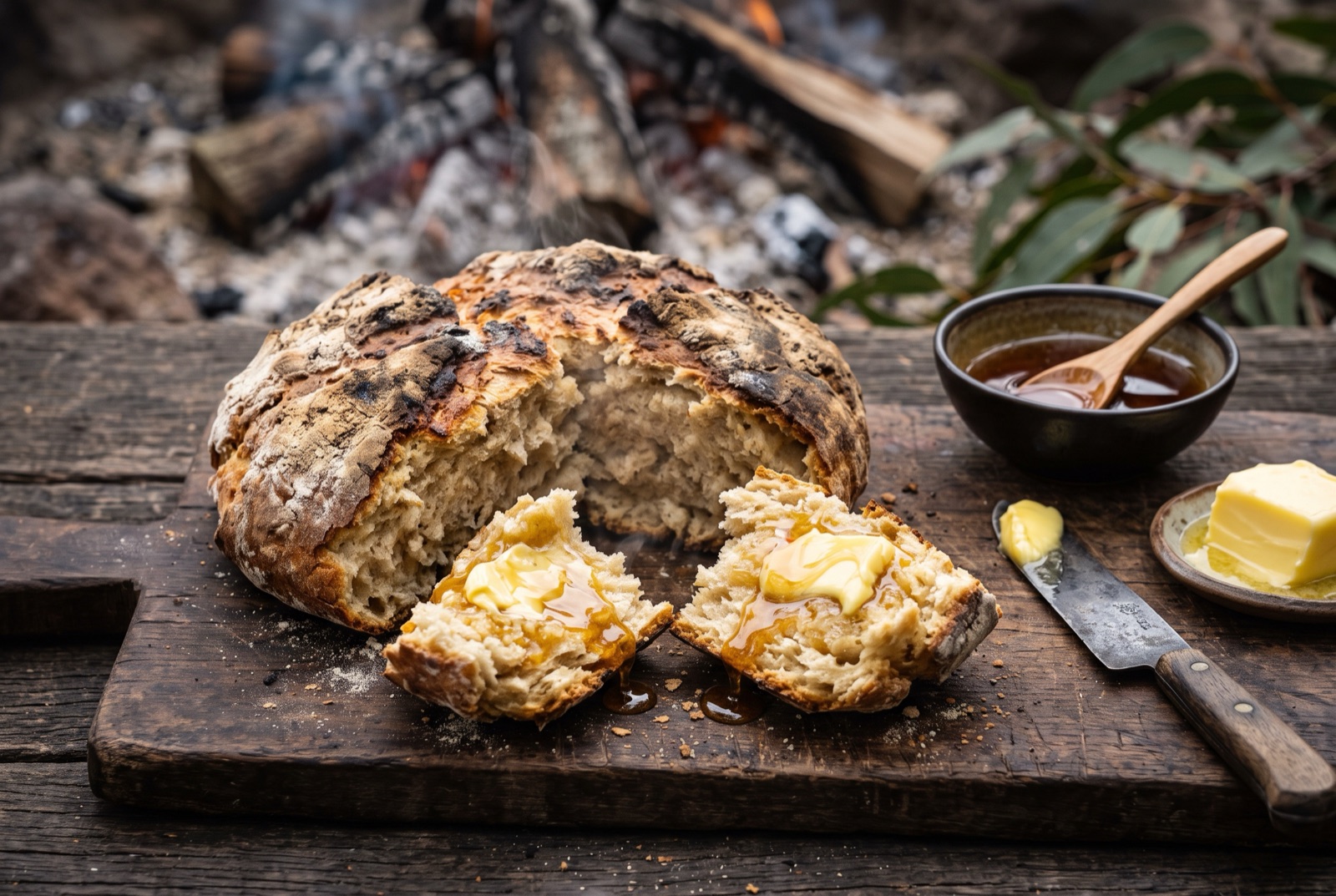
Australia40 min
Damper
Australian Campfire Soda Bread
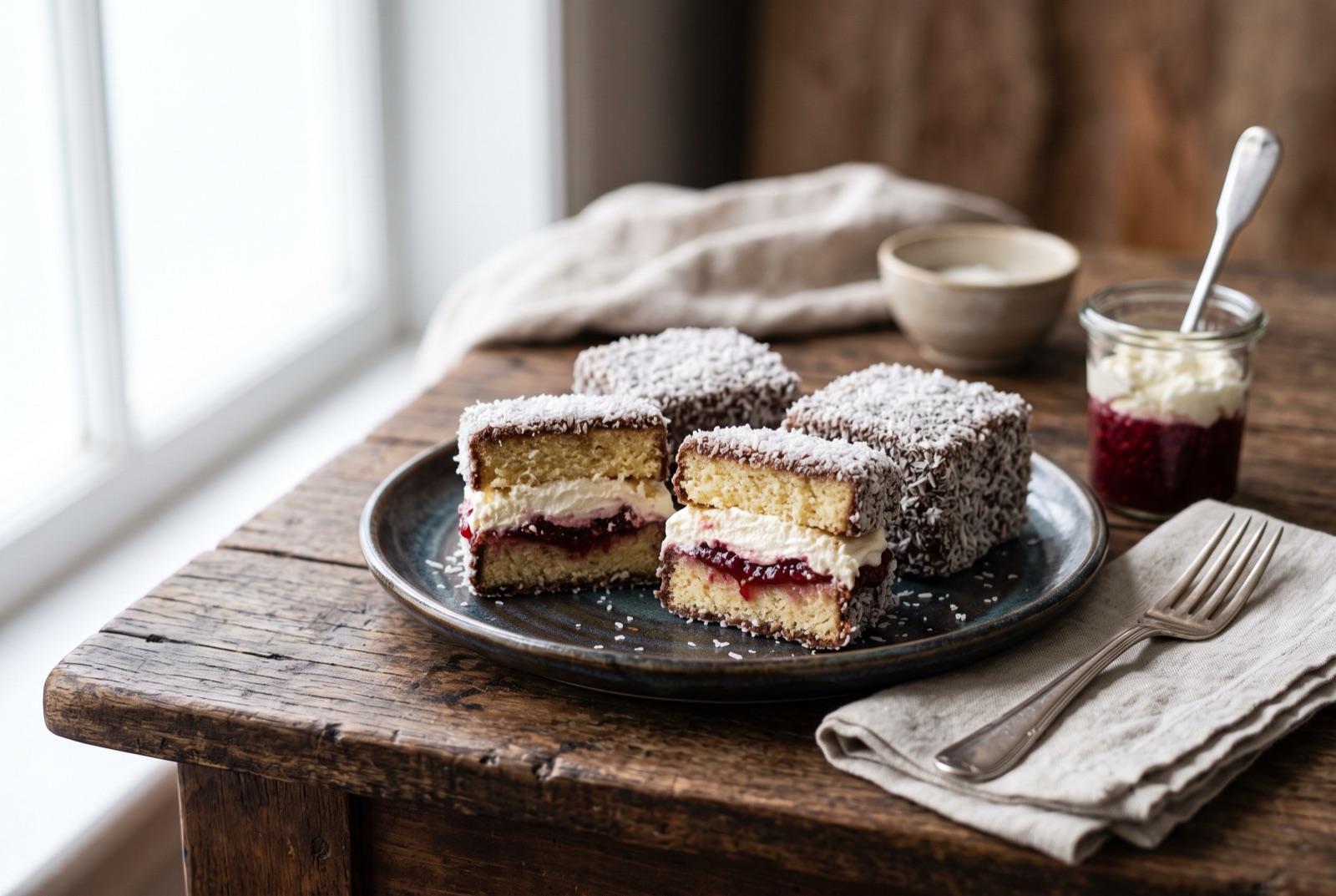
Australia13 hr 20 min
Lamingtons
Chocolate and Coconut Sponge Squares
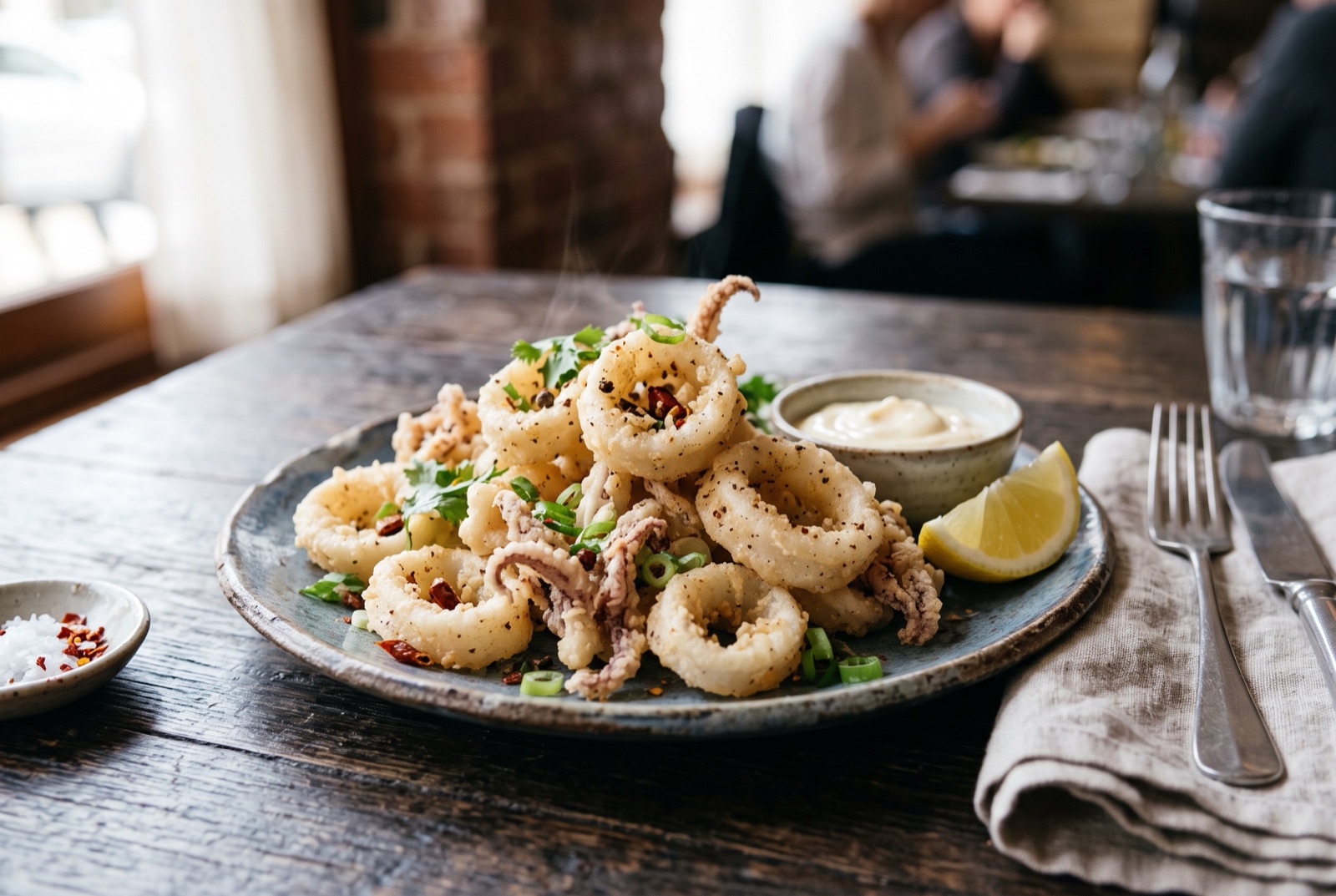
Australia1 hr
Salt and Pepper Squid
Peppered Fried Calamari
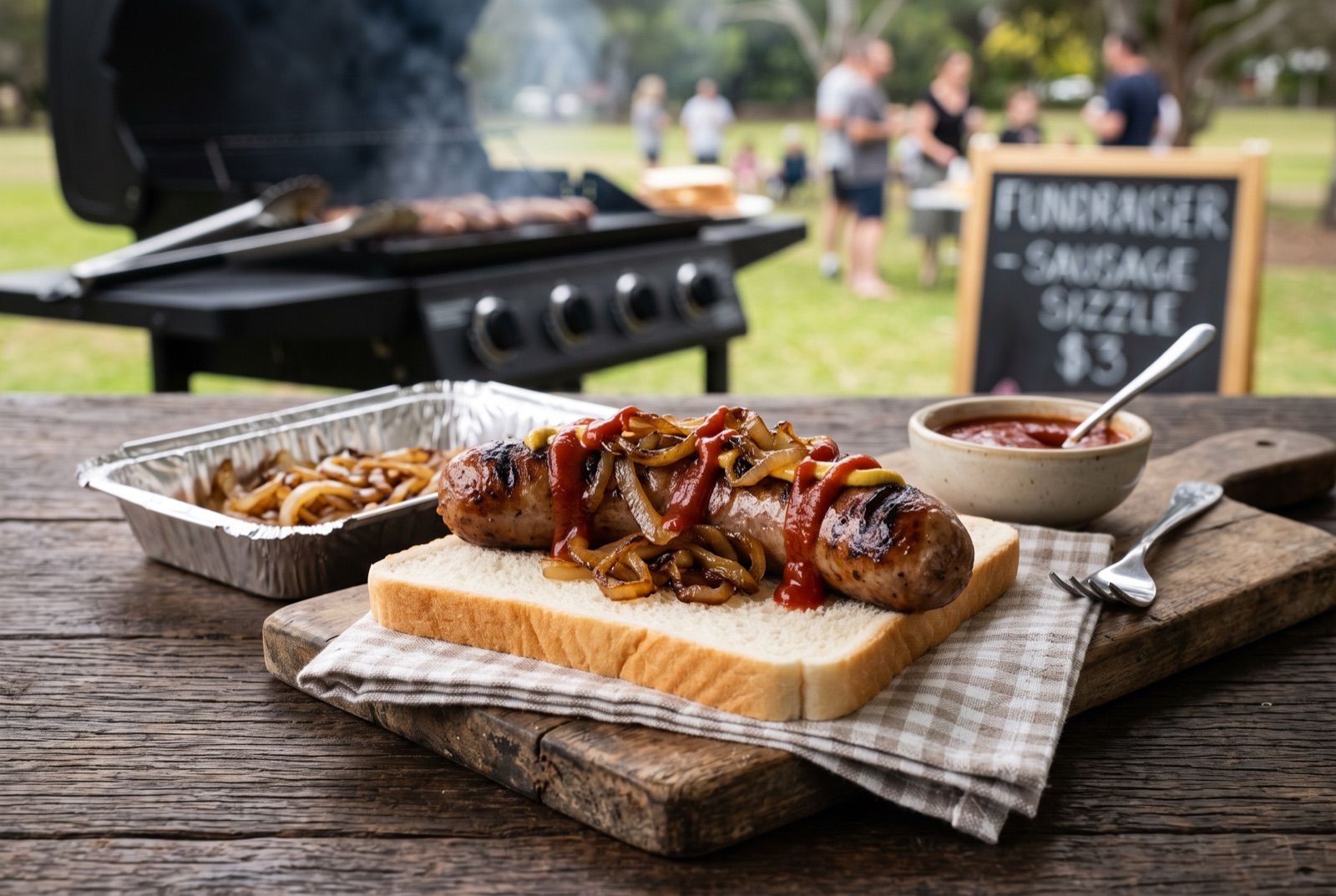
Australia35 min
Sausage Sizzle
Barbecued Snag in White Bread
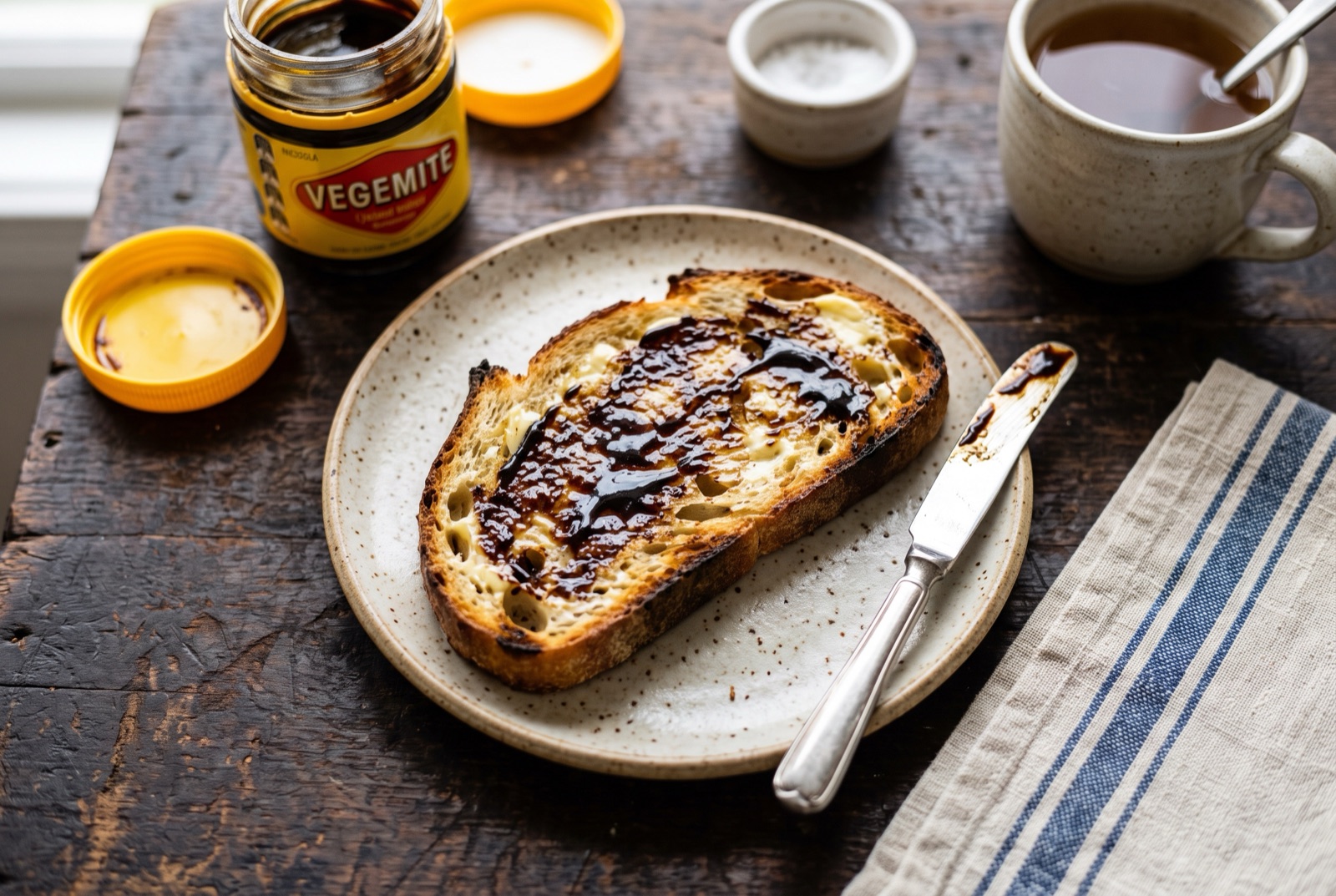
Australia5 min
Vegemite on Toast
Salty Yeast Spread on Buttered Toast
Keep traveling.
Australia sits in Australasia, and its kitchen shares borders as well as ingredients with New Zealand and Albania.
 New Zealand
 Albania