Chile.
Chile
Chilean cooking is shaped by a country 4,300 kilometres long that is rarely more than 180 wide: the Pacific on one flank, the Andes on the other, and a narrow band of farmland in between doing most of the feeding. Two obsessions run through it — shellfish and fresh corn — held together by a seasoning habit rather than a spice cabinet. Cooks call the habit aliño completo: cumin, oregano, paprika, garlic, salt and pepper, worked into nearly every pot of onion and meat in the country. Chilli heat stays off the stove and arrives at the table instead, in a bowl of pebre or a pinch of merkén, so no one is committed to a heat level they did not choose. The food is unhurried, faintly sweet in places, closer to the Mediterranean than to the tropics, and far milder than visitors expecting Peruvian or Mexican intensity tend to assume. Onion is chopped by the kilo, bread appears at every meal, and almost anything savoury is considered improved by a wedge of lemon and a spoonful of mashed avocado.

- Continent
- South AmericaSouthern Cone
- Recipes in atlas
- 10
- Must-try dishes
- 3
- Pantry staples
- 10
Start with the classics.
Must tryThe dishes that explain the Chile kitchen fastest — if you cook only a few things from this page, cook these.
Inside the Chile kitchen.
Start with the onion, because Chilean savoury cooking usually does. Pino — the beef-and-onion mixture inside empanadas and under the corn lid of pastel de choclo — is built from roughly equal weights of finely diced onion and meat, sweated slowly with cumin, oregano and ají de color until the onion goes translucent and sweet and the pan smells of toasted spice rather than raw allium. A spoonful of flour thickens the juices so they set on cooling. The same base, loosened with stock, becomes the sauce for a dozen other dishes, and the same six seasonings turn up in cazuela, in charquicán and on the grill.
Corn is the summer axis. From January to March the markets fill with choclo, a large-kerneled starchy corn quite unlike sweetcorn, and three dishes appear on rotation: humitas, corn paste steamed in its own husks; pastel de choclo, that paste beaten with basil and baked as a lid over pino; and porotos granados, fresh shelled cranberry beans stewed with pumpkin and grated corn. All three are pre-Hispanic in structure, and all three lean on the same partnership of corn, squash and beans that anchors indigenous agriculture across the Americas.
The sea does the rest. The cold Humboldt Current runs the length of the coast and makes Chilean waters improbably productive, which is why the fish counter reads like nowhere else: congrio and merluza, machas and locos, sea urchins eaten raw with lemon and onion, picorocos — giant barnacles boiled whole — and cochayuyo, a leathery kelp sold in dried braids and simmered into stews and salads. Caldillo de congrio, machas a la parmesana and mariscal are coastal standards, while on the Chiloé archipelago the shellfish goes into a pit of hot stones for curanto.
The south holds two larders side by side. Mapuche cooking contributed merkén — ají cacho de cabra smoked, dried and ground with toasted coriander seed and salt — along with piñones, the starchy nuts of the araucaria, wild murta berries and the wheat preparations catuto and mote. German-speaking settlers who arrived in Valdivia, Osorno and the Lake District from the 1850s left kuchen, smoked sausage, beer and crudos, raw beef on bread with lemon and onion, all of which Chileans now eat as their own. Chiloé, meanwhile, grows potato varieties whose genetics matter to potato breeders worldwide, and turns them into milcao and chapaleles.
Bread and sugar close the loop. Chile eats a great deal of bread by any international measure — marraqueta with a crackling crust, soft flat hallulla — which is why the sandwich culture is so developed and why the evening meal is often not dinner at all but once: tea, bread, avocado, cheese and manjar, the local dulce de leche. Sweets run to chancaca, the unrefined cane sugar poured over sopaipillas, and to mote con huesillo, a summer drink of dried peaches and cooked wheat. On the drinks side, the Central Valley makes the wine, including Carmenère, a Bordeaux grape grown here for over a century while being mistaken for Merlot until the 1990s. Pisco, the grape brandy distilled in the Elqui and Limarí valleys, is a genuinely contested subject: Chile and Peru both produce it, both claim it, and their competing denominations of origin are recognised differently in different countries — an argument that international arbitration has not settled and that neither side treats as trivial.
Signature pantry.
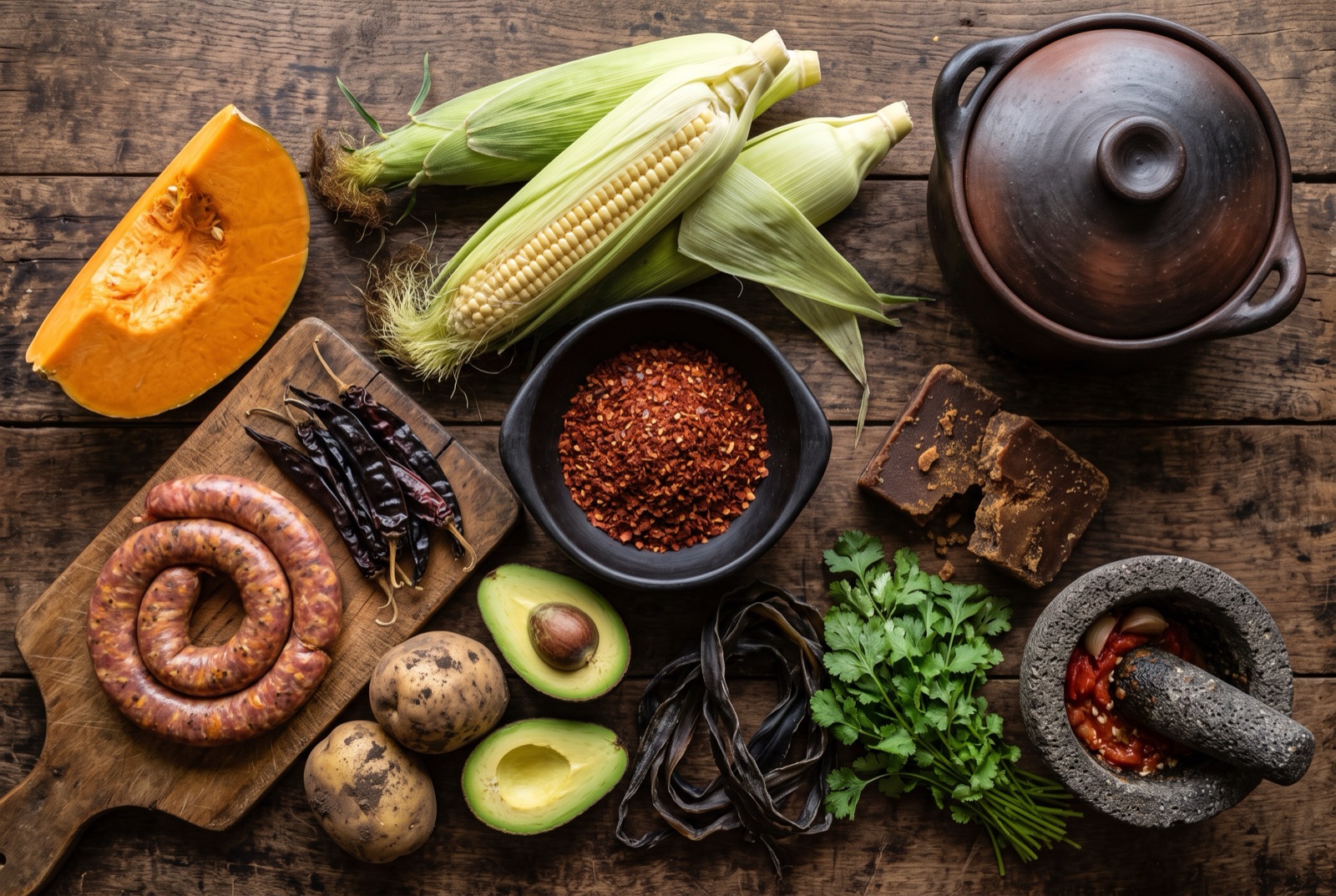
10 staplesThe ingredients this cuisine cannot function without.
- merkén
- ají cacho de cabra
- choclo (starchy fresh corn)
- zapallo camote (winter squash)
- cilantro
- potatoes
- cochayuyo (dried kelp)
- longaniza
- avocado
- chancaca
How people eat in Chile.
Lunch is the real meal, eaten late and often in two courses, and dinner frequently gives way to once — a bread-and-tea sitting between five and eight in the evening, with avocado, cheese, ham and manjar on the table and no obligation to cook. Bread is constant; a Chilean table without it reads as unfinished. Pebre and a lemon half sit within reach so each person seasons their own plate rather than the pot being seasoned for everyone. Empanadas and grilled meat belong to September, when Fiestas Patrias effectively suspends normal eating for a week. Toasting matters: glasses are raised and eyes met before the first sip, and refusing a second helping usually requires saying so twice.
Regional kitchens.
Chile cooks 4 distinctly different ways depending on where you stand — here is what changes between them.
- R1Norte Grande and Norte Chico
- Desert and high plateau, where Aymara and Atacameño cooking keeps quinoa, llama meat and goat cheese in circulation. The Elqui and Limarí valleys distil pisco, and La Serena grows the small aromatic papayas that turn up preserved in syrup.
- R2Zona Central
- The wheat, corn and wine belt around Santiago and south to the Maule, and the home of huaso country cooking: empanadas de pino, pastel de choclo, cazuela and chancho en piedra pounded in a stone mortar.
- R3La Araucanía and the Lake District
- Mapuche ingredients — merkén, piñones, murta, mote — alongside the baking and smoking traditions of nineteenth-century German settlers, which is why one town can offer both catuto and kuchen without anyone finding it odd.
- R4Chiloé and Patagonia
- Island potato country and the home of curanto, milcao and chapaleles, cooked in earth ovens or in a pot. Further south, Magallanes runs to lamb roasted upright over fire and centolla, the king crab of the Beagle Channel.
All Chile recipes.
10 recipes and counting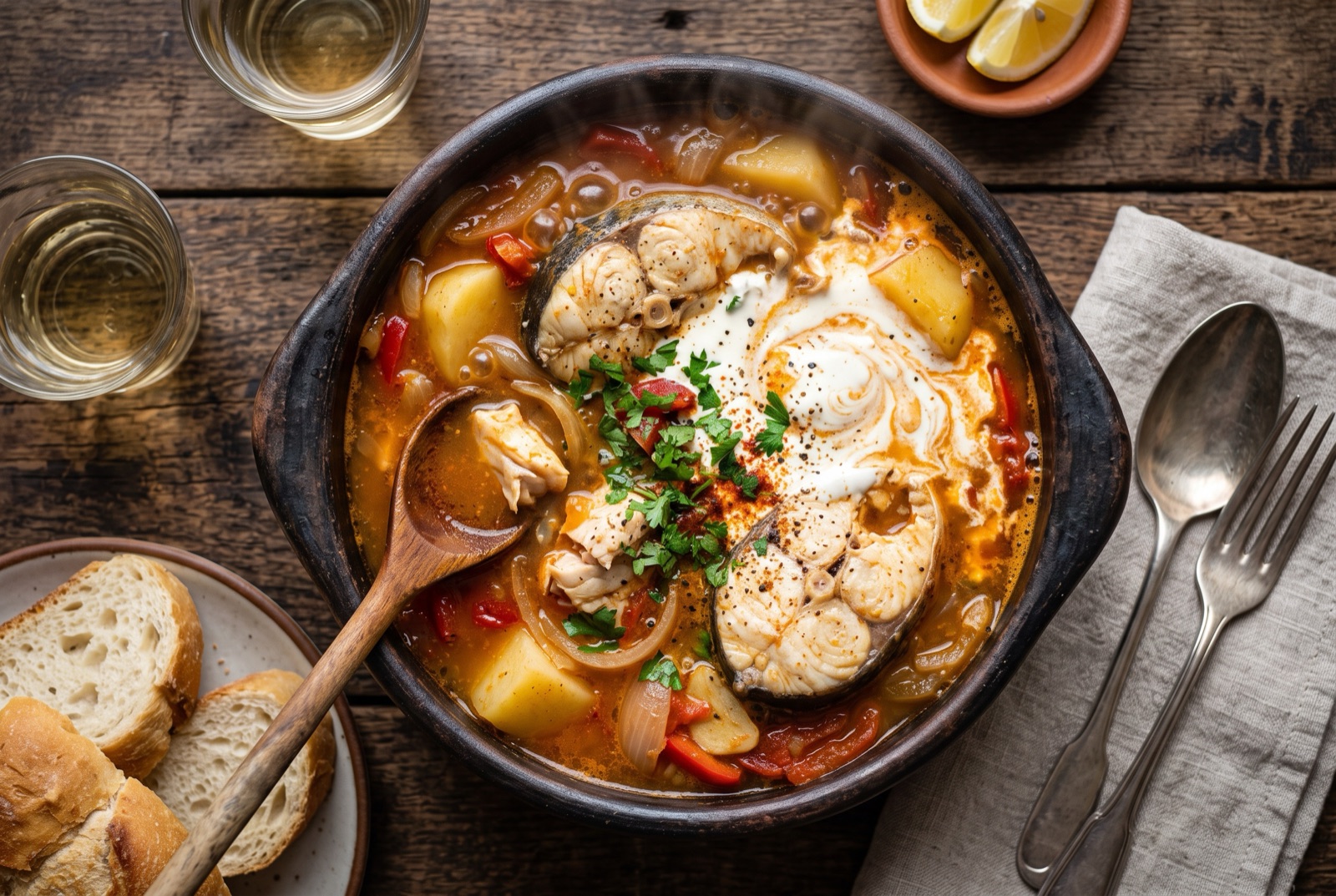
Chile1 hr 5 min
Caldillo de Congrio
Chilean Conger Chowder
Chile1 hr 55 min
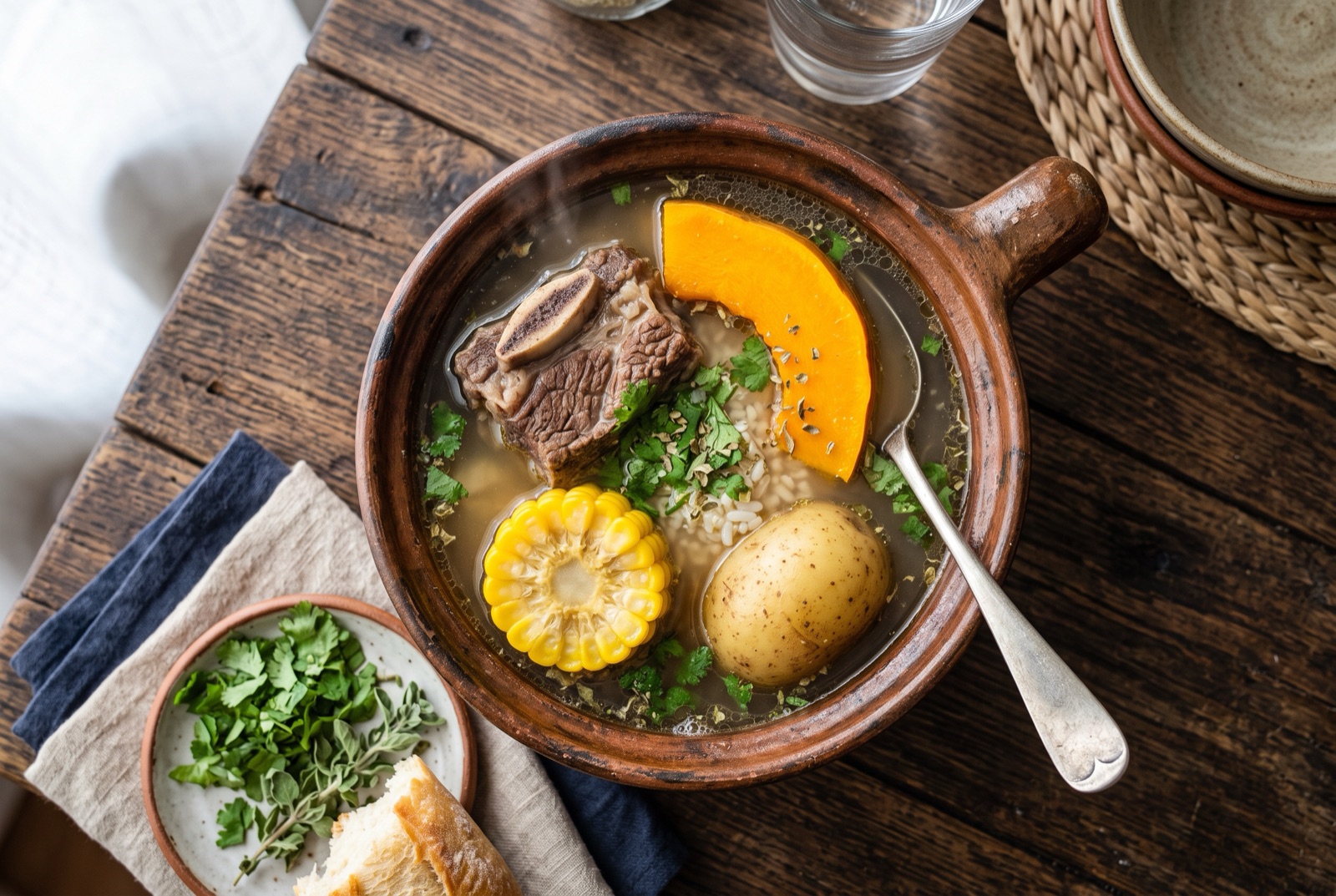
Cazuela de Vacuno
Chilean Beef, Corn and Pumpkin Broth
Chile25 min
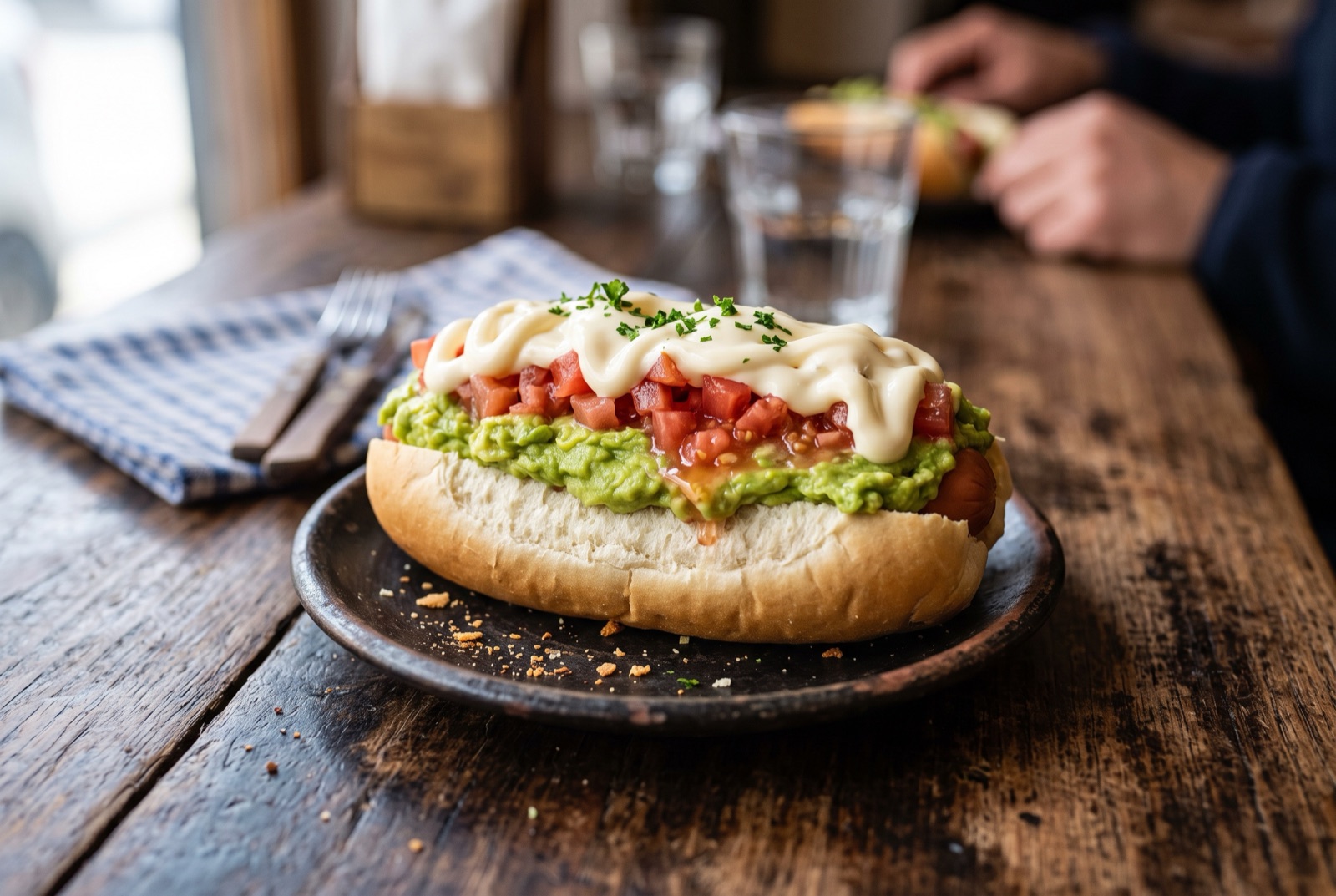
Completo Italiano
Chilean Hot Dog with Avocado and Tomato
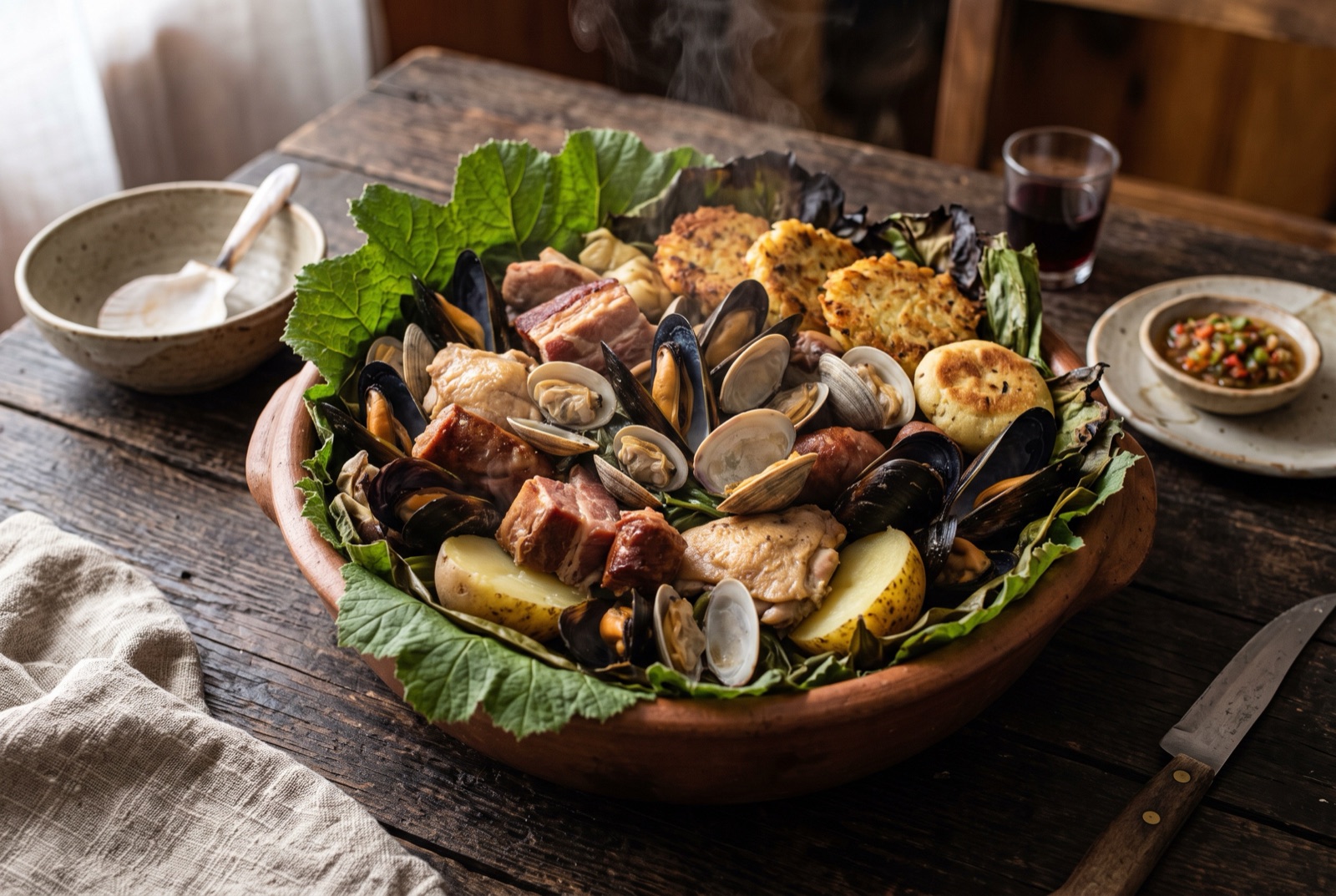
Chile2 hr 15 min
Curanto
Chiloé Shellfish, Meat and Potato Feast
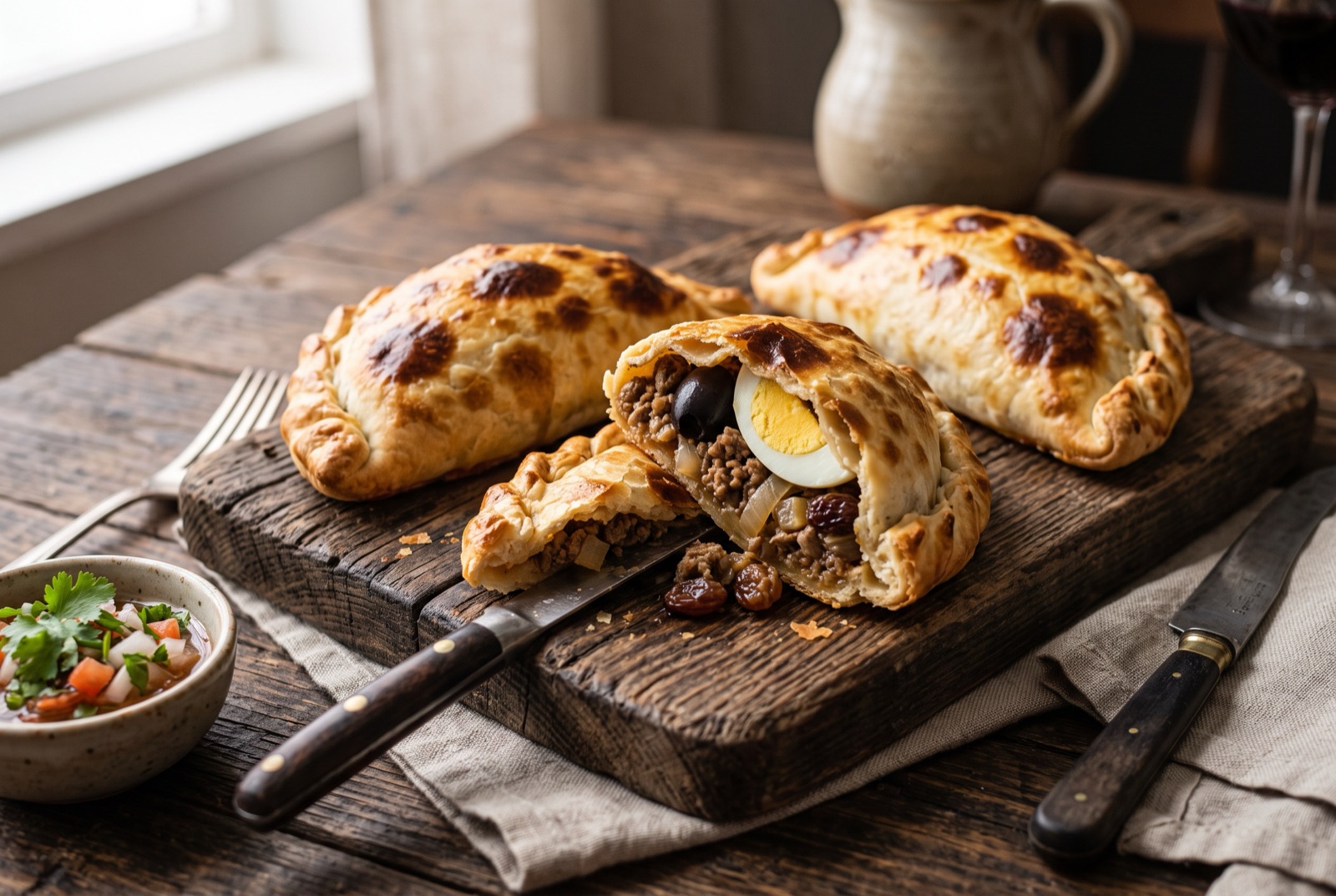
Chile9 hr 35 min
Empanadas de Pino
Chilean Baked Beef and Olive Turnovers
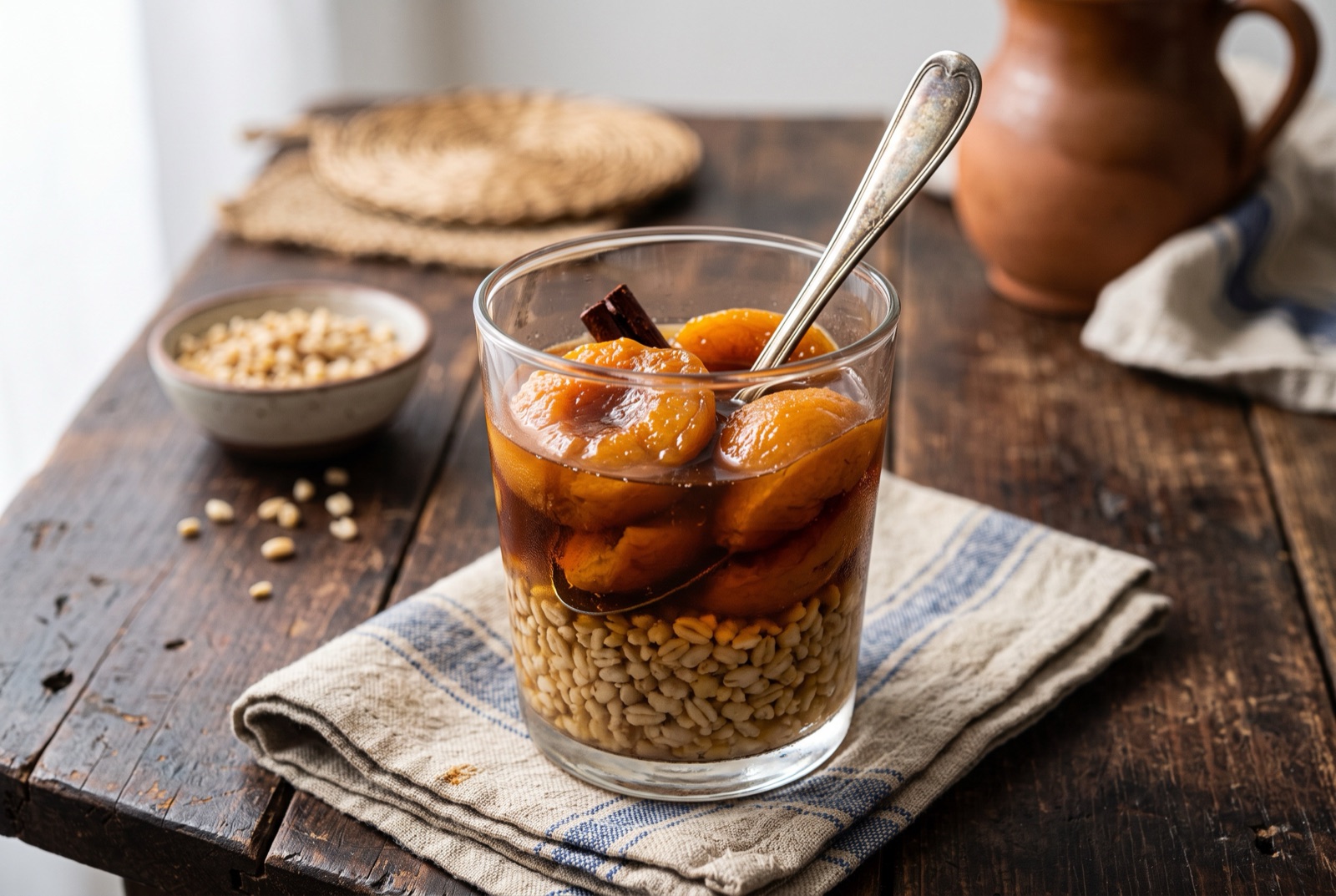
Chile13 hr 20 min
Mote con Huesillo
Chilean Dried Peach and Wheat Cooler
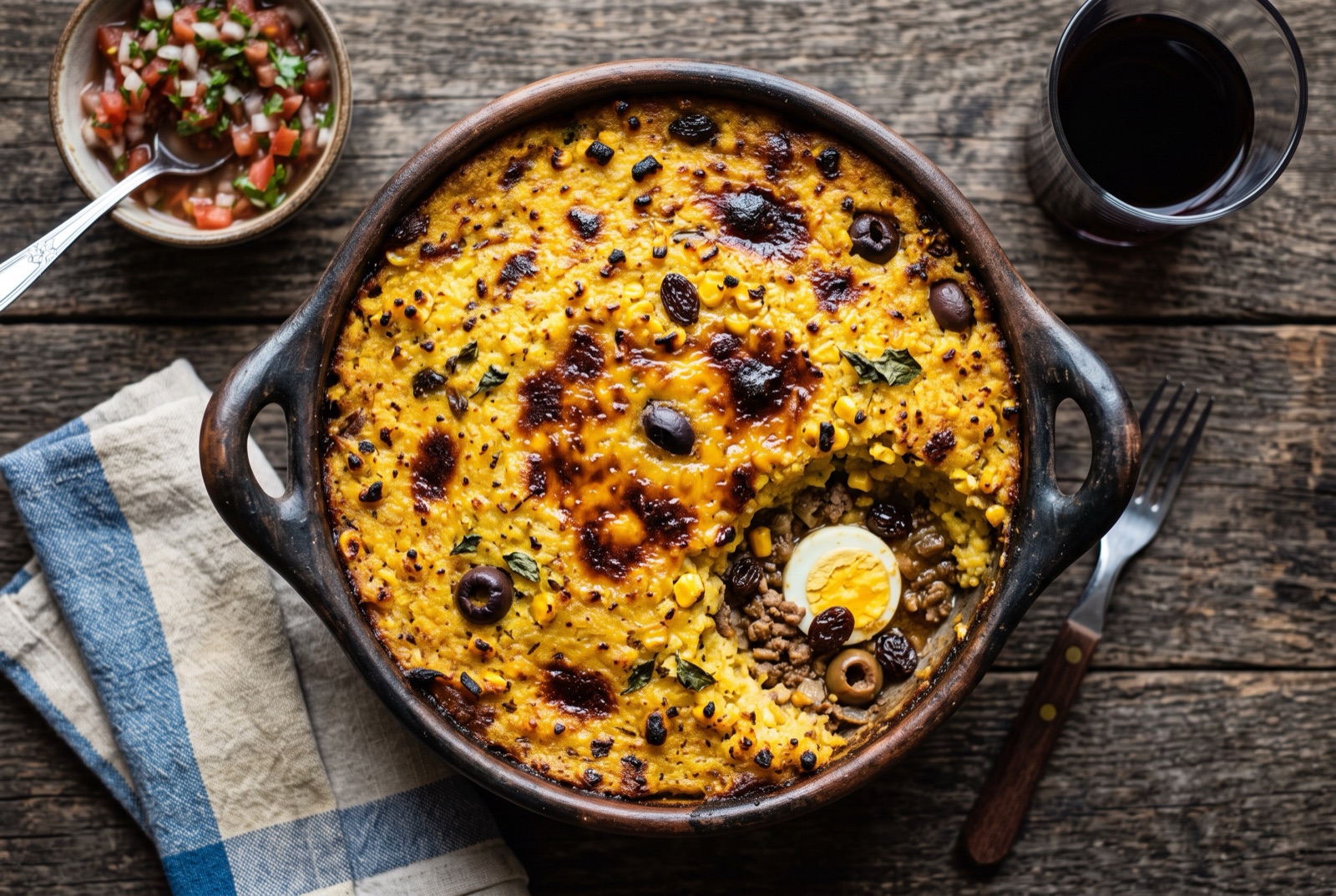
Chile1 hr 55 min
Pastel de Choclo
Chilean Corn-Topped Beef Casserole
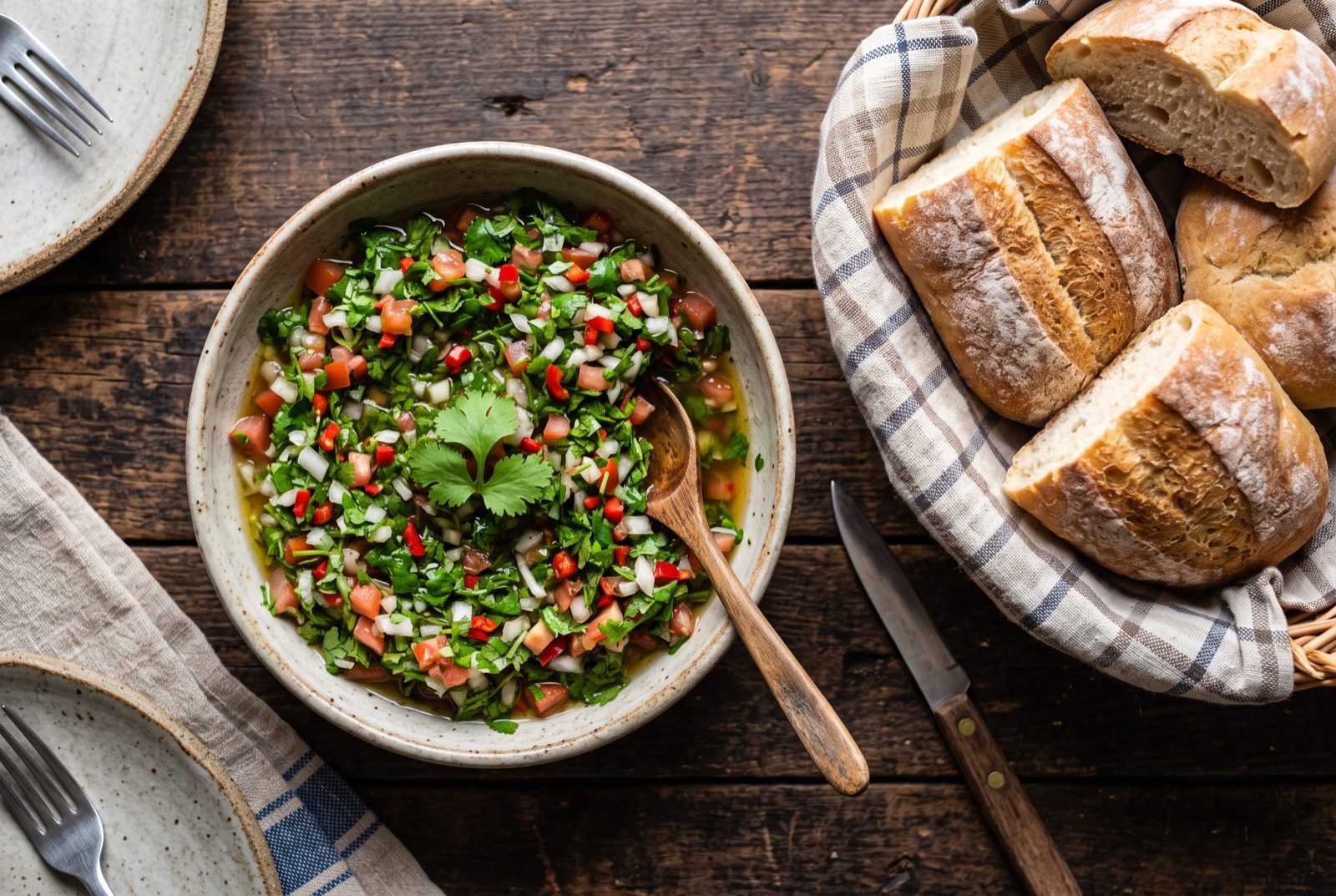
Chile45 min
Pebre
Chilean Cilantro, Onion and Chilli Relish

Chile1 hr 25 min
Porotos Granados
Chilean Bean, Corn and Squash Stew
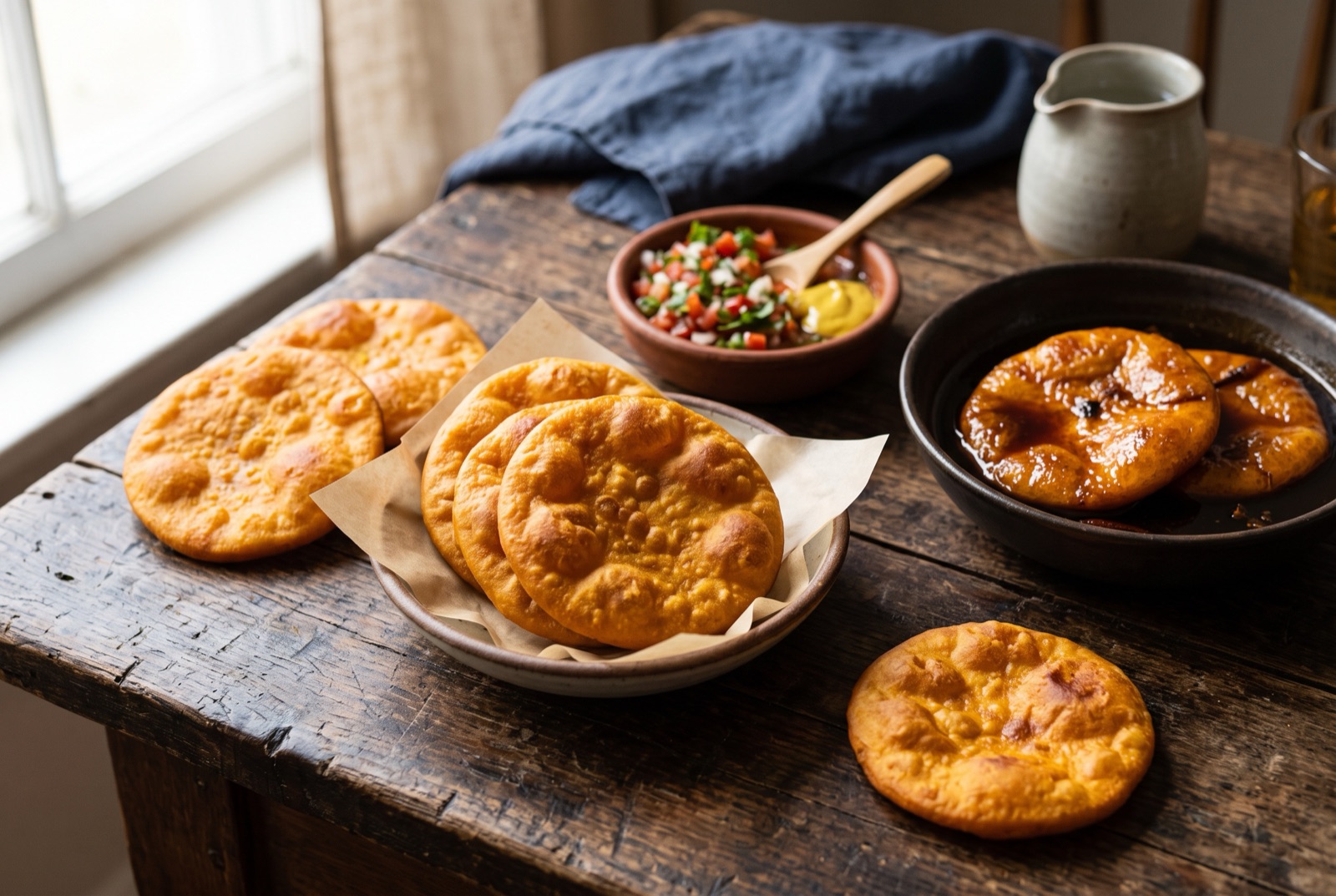
Chile1 hr 30 min
Sopaipillas
Chilean Fried Pumpkin Flatbreads
Keep traveling.
Chile sits in Southern Cone, and its kitchen shares borders as well as ingredients with Argentina and Bolivia.
 Argentina
 Bolivia