Curanto.
Chiloé Shellfish, Meat and Potato Feast
Curanto en hoyo · say it: koo-RAHN-toh
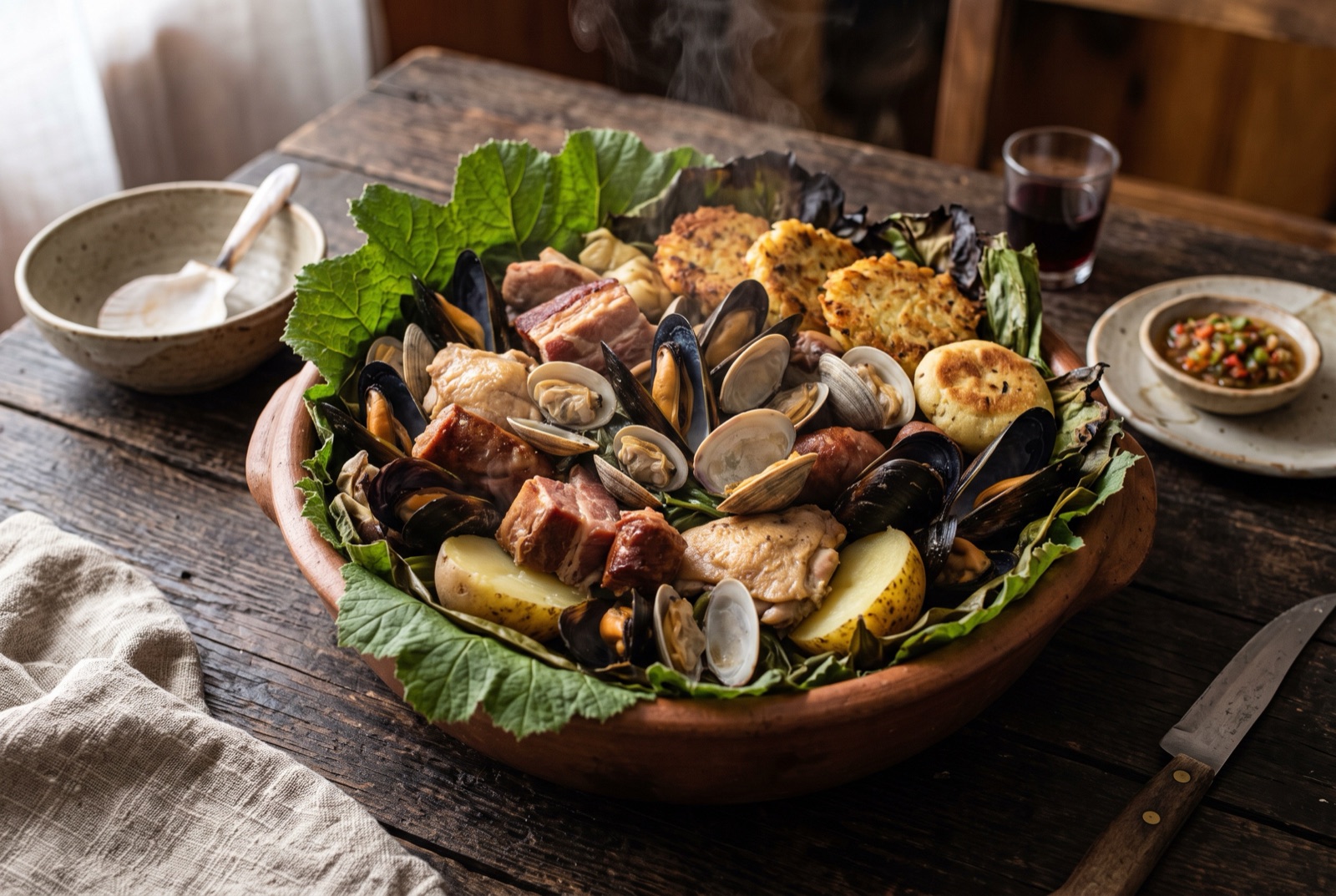
Curanto is a feast built in layers and cooked by steam. On Chiloé it is made in a pit of fire-heated stones covered with giant nalca leaves, where mussels and clams open and drip their liquor down through smoked pork, chicken, sausages, potatoes and dense potato patties called milcao. The shellfish season everything below them, so the meat tastes of the sea and the potatoes taste of both. Eaten at a long table, it comes out in waves — shellfish first, then meats, then milcao — with a cup of the accumulated broth to drink at the end. This version builds the same layers in a heavy pot, which is how most Chilean households actually cook it.

- Gate
- ChileChiloé
- Prep
- 1 hr
- Cook
- 1 hr 15 min
- Total time
- 2 hr 15 min
- Serves
- 6
- Status
- Takes skill
- Nutrition / serving · estimated
- Calories 780 kcal
- Protein 58 g
- Carbs 52 g
- Fat 36 g
- Fiber 6 g
- Sodium 1250 mg
Why this recipe works.
- Layers are stacked in the order the pit uses, so the shellfish liquor drips down and seasons the meat and potatoes below.
- Cabbage leaves stand in for nalca and do the same job — trapping steam and keeping the layers apart.
- Includes milcao made properly from raw grated and cooked mashed potato, not a flour dumpling pretending to be one.
- Clear about what the pot version does and does not reproduce, and what the smoked pork is doing to compensate.
Ingredients.
13 itemsShellfish
Meats
Vegetables
For the milcao
Equipment
- Very large heavy pot with a tight-fitting lid
- Box grater
- Clean kitchen towel for squeezing potato
Instructions.
Purge and clean the shellfish
Soak 1 kg of clams in cold salted water for 30 minutes so they release their grit, then rinse. Scrub the mussels and pull off the beards, discarding any shell that stays open when tapped firmly against the sink.
Make the milcao
Wrap the grated raw potato in a clean towel and wring it hard over the sink until barely any liquid comes out and the pulp feels dry and springy. Mix it with the mashed potato, the crisp bacon and its fat, and the salt, then shape into 6 flat patties about 1.5 cm thick.
Tip Let the squeezed potato liquid stand a minute, pour off the water and scrape the white starch from the bottom back into the mix — that is the glue.
Line the pot
Pour the wine into the bottom of your largest pot and line the base and sides with overlapping cabbage leaves, letting them hang over the rim. This is the layer standing in for nalca, so use plenty.
Stack the layers
Lay the smoked pork ribs, chicken thighs and sausages on the leaves and season with salt and pepper. Cover with another sheet of cabbage leaves, then arrange the whole potatoes and the milcao patties in a single layer. Add a third layer of leaves.
Tip Keep each layer flat and even. A mounded pot cooks the middle before the edges.
Top with shellfish and seal
Pile the mussels and clams over the top, fold the overhanging leaves inward to close the parcel, and press the lid down firmly. If the lid does not seal well, lay a damp cloth or a sheet of foil under it.
Steam undisturbed
Cook over medium heat for 20 minutes until you hear a steady hiss and see steam escaping at the rim, then lower the heat and cook 35–50 minutes more. It is ready when every mussel and clam has opened wide and a skewer slides into a potato without resistance.
Serve in waves and pour the broth
Lift the shellfish onto a platter first, then the meats, then the potatoes and milcao, keeping each group together. Strain the liquid from the bottom of the pot through a fine sieve into a jug and pour it into small cups to drink alongside.
Tips from our kitchen.
- Buy the shellfish live and closed, and discard any that stay open after a tap on the counter. This dish is entirely dependent on them being fresh.
- Scrub and debeard the mussels, then soak the clams 30 minutes in salted water so they spit out grit that would otherwise end up in the broth.
- Use the widest, heaviest pot you own with a tight lid. Layers stacked too deep steam unevenly and the top shellfish stay shut.
- Squeeze the grated raw potato for milcao until it is genuinely dry — wet grated potato gives a grey, gluey patty that falls apart.
- Do not lift the lid in the first 40 minutes. Every check releases the steam that is doing all the cooking.
- Save every drop of liquid in the bottom of the pot. Strained into cups, it is the broth Chilotes drink at the end and the best thing in the dish.
Substitutions.
- Nalca leaves → Large green cabbage or savoy leaves, blanched briefly to make them pliable
- Nalca grows nowhere outside its native range in usable quantity. Cabbage traps steam just as well; it simply does not contribute the faint bitterness the real leaves give.
- Longaniza de Chillán → Coarse pork chorizo or any smoked country sausage
- Look for something coarsely ground and lightly smoked rather than a hard cured salami, which stays tough and greasy under steam.
- Machas and picorocos → More mussels and clams, or a few scallops added in the last 10 minutes
- Chilean razor clams and giant barnacles are effectively unobtainable elsewhere. The dish is still recognisable without them; it is simply less varied.
Variations.
- Curanto en hoyo
- The original pit method: rounded stones heated in a bonfire, layers separated by nalca leaves, the whole pit sealed with sacking and turf for about two hours.
- Pulmay
- The pot version made with more wine and no milcao, closer to a shellfish and sausage stew, common on the mainland coast and in Puerto Montt restaurants.
- Chapaleles
- Instead of, or alongside, milcao — flat dumplings of mashed potato and flour steamed in the same layers, softer and breadier than the fried-edged milcao.
Storage & reheating.
Cooked shellfish does not keep well, so pick any leftover mussels and clams out of their shells the same evening and refrigerate them in a little of the strained broth for no more than 24 hours. Meats and potatoes keep 2 days and reheat well in a covered pan with a splash of the broth. Never reheat shellfish twice, and never freeze the assembled dish — the clams turn to rubber and the potatoes go mealy. Leftover milcao is best sliced and fried in a dry pan until crisp on both sides, which is how Chilote households eat it the next morning.
Serve with
Small cups of the strained cooking broth, pebre, and plenty of bread to work through the shellfish.
The story behind Curanto.
The name comes from Mapudungun, from kura, stone: a curanto is literally a stony place, and the technique is a stone oven dug into the ground. Cooking food in a pit of heated stones is very old on this coastline and in Chiloé it never became historical — it is still done, in gardens and on beaches, several times a summer. A fire is lit over a bed of rounded stones and burned down for hours until the stones glow. The embers are cleared, the pit is packed with shellfish at the bottom, then meats, then potatoes and milcao, each layer separated by the enormous leaves of the nalca plant. More leaves, wet sacking and turf seal the top, and for the next hour or two nothing is visible except a mound of earth breathing steam at the edges.
What makes curanto a social institution rather than a recipe is the labour. Heating the stones, gathering leaves, digging and covering the pit takes more hands than one household has, which ties it to the Chilote tradition of minga — collective work returned in kind, most famously in the tiradura de casa, where neighbours drag an entire wooden house to a new site and are fed for it. Curanto is the food of that arrangement: too much work for one family, therefore shared, therefore eaten together.
The pot version exists because the pit version cannot be improvised. Called curanto en olla, and often pulmay, it stacks the same ingredients in a covered pot with white wine at the bottom instead of red-hot stones, and steams them for a little over an hour. Chilotes will tell you it is not the same thing, and they are right — the pit adds smoke and the specific earthy note of scorched nalca that no kitchen reproduces. What survives intact is the more important part: the sequence of layers, and the way shellfish liquor runs downward and seasons everything under it. Whether pulmay counts as a dish in its own right or as curanto's indoor understudy is an argument that Chiloé has not settled either.
Questions, answered.
What is milcao made of?
Milcao is a Chilote potato patty made from two potato preparations at once: raw potato grated and squeezed dry, mixed with cooked mashed potato and enriched with pork fat or chopped crackling. The raw starch binds it and the cooked potato keeps it tender. It can be steamed inside a curanto, boiled, or fried until the outside is crisp.
Can I really make curanto without a pit?
Yes, and most Chileans do. The pot version, curanto en olla, layers the same ingredients in a heavy covered pot with white wine at the base and cabbage leaves between the layers. What you lose is the smoke and the earthy note contributed by hot stones and nalca leaves; what you keep is the layered steaming and the shellfish liquor running down through everything.
How do I know when the curanto is done?
The shellfish tell you. When the mussels and clams on top have opened wide and their shells are steaming, the layers beneath have had enough time — usually 55 to 70 minutes in a pot. Check a potato with a skewer, which should slide in with no resistance, and cut into the thickest chicken thigh to confirm the juices run clear.
Do I need to add water to the pot?
Very little. The shellfish release a surprising amount of their own liquor, and cabbage leaves give up water too. A couple of glasses of white wine in the bottom of the pot is enough to generate the initial steam. Adding water dilutes the broth, which is the part everyone drinks at the end.
Which shellfish should I use if I cannot get Chilean ones?
Mussels and clams are the backbone and are available almost everywhere. Cockles, razor clams, small scallops or even a few large prawns thrown in for the last ten minutes all work. Avoid anything already cooked or frozen in its shell, since it will not release the raw liquor the dish depends on for seasoning.
You might also like.
All recipes →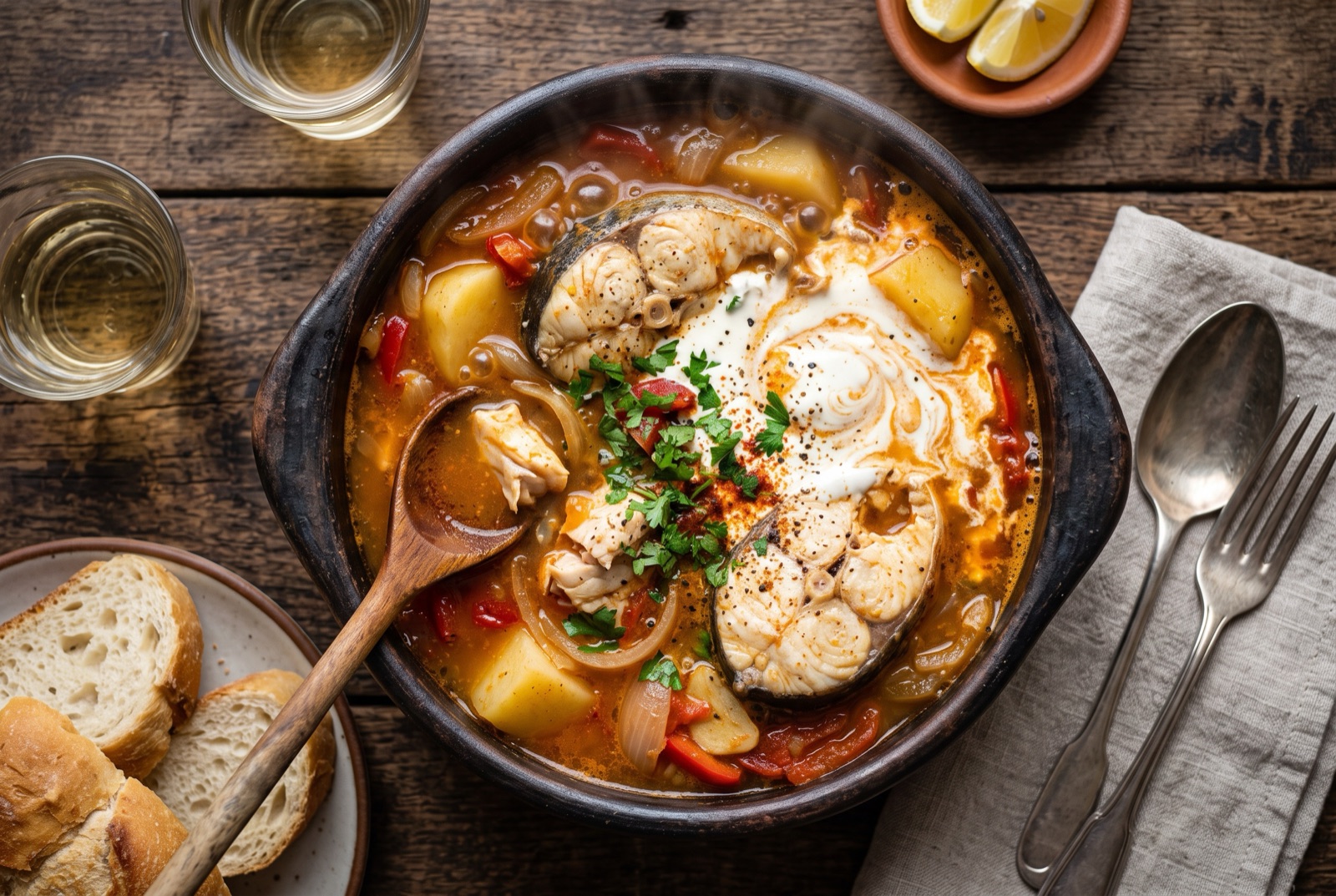
Keep exploring Chile.
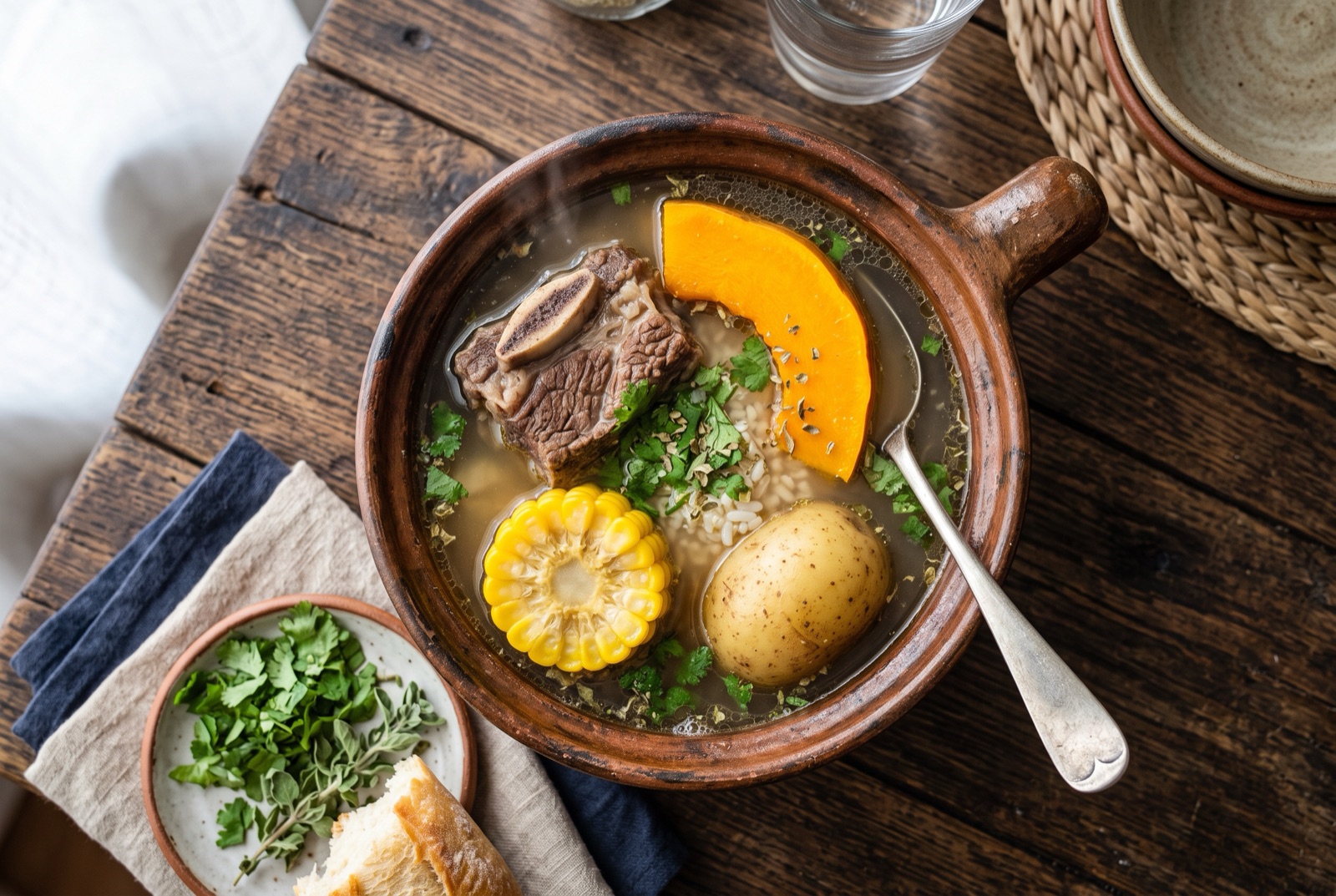
Chile has 9 more dishes in the atlas — Caldillo de Congrio and Cazuela de Vacuno, and 7 more.
Recipe by The DishRoute Kitchen · published August 20, 2026 · updated August 20, 2026