Ghana.
Ghana
Ghanaian cooking is organised around a simple pairing that almost every main meal repeats: something starchy and soft to carry, and something intensely seasoned to carry it in. The starch is pounded, stirred or boiled from cassava, plantain, yam, maize or rice, and it is deliberately bland — its job is to be a vehicle. Everything else happens in the pot beside it, where onion, tomato, ginger, garlic and chili are ground down into a base and then built up with palm oil, groundnut paste, smoked fish or meat until the flavour is loud enough to season a whole mouthful of starch at once. Fermentation runs underneath a lot of it: corn dough soured for days before it becomes banku or kenkey, cassava grated and pressed into gari, locust beans fermented into dawadawa in the north. The result is a cuisine that reads as deeply savoury and warm rather than delicately spiced, and one where texture — smooth, stretchy, grainy, crackling — matters as much as seasoning.

- Continent
- AfricaWest Africa
- Recipes in atlas
- 10
- Must-try dishes
- 3
- Pantry staples
- 10
Start with the classics.
Must tryThe dishes that explain the Ghana kitchen fastest — if you cook only a few things from this page, cook these.
Inside the Ghana kitchen.
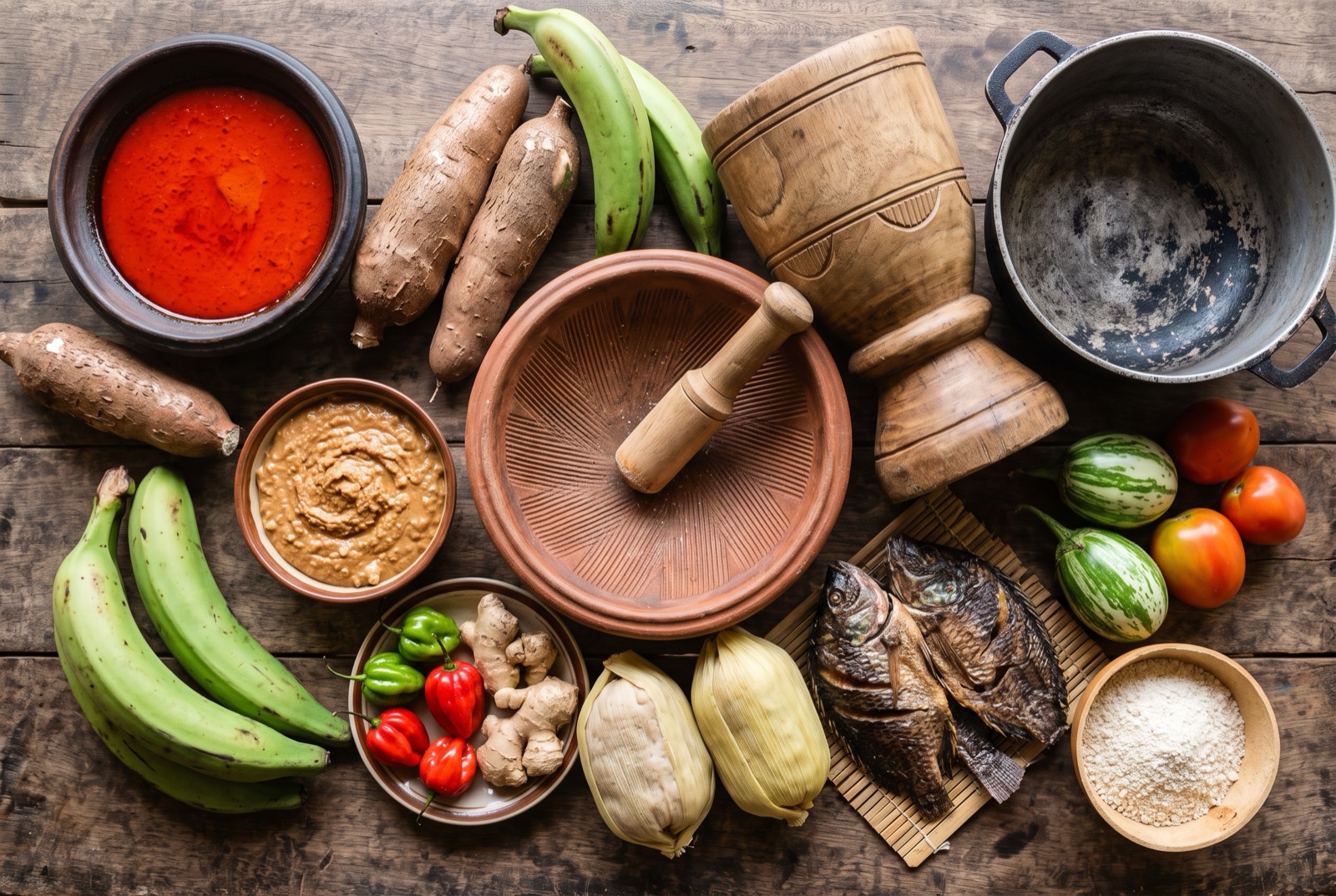
Start with the pepper. Almost every savoury Ghanaian dish begins with a grind of onion, fresh tomato and chili — usually scotch bonnet, sometimes the small green kpakpo shito that smells of bell pepper and bites like a wasp — with ginger and garlic worked in. Traditionally this is done in an asanka, a shallow ridged earthenware bowl, using a hardwood pestle called a ta; the ridges tear the ingredients rather than pulverising them, which is why a hand-ground base tastes coarser and brighter than a blender full of the same things. That base becomes stew for rice, the body of a soup, or the start of jollof, depending on what happens next.
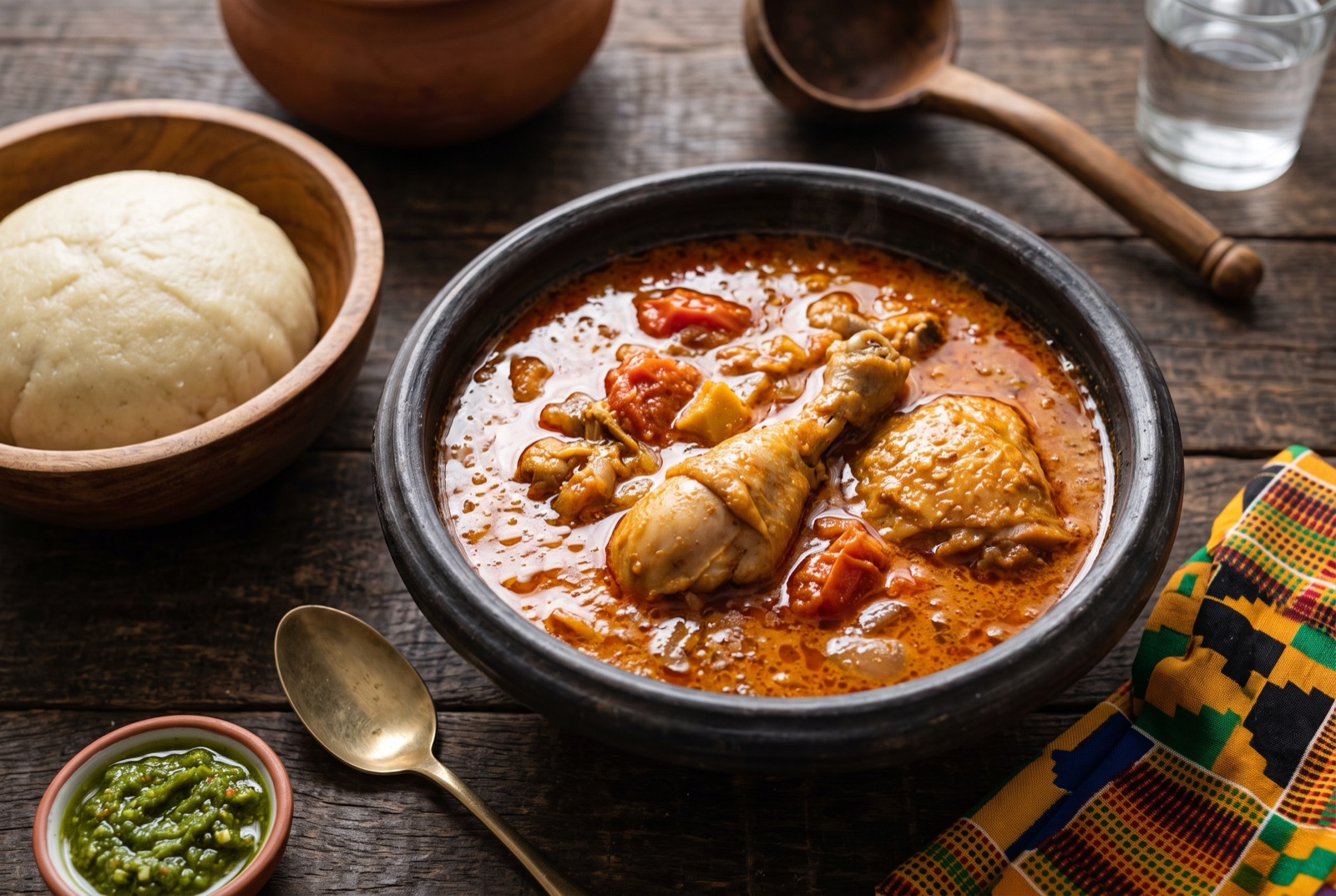
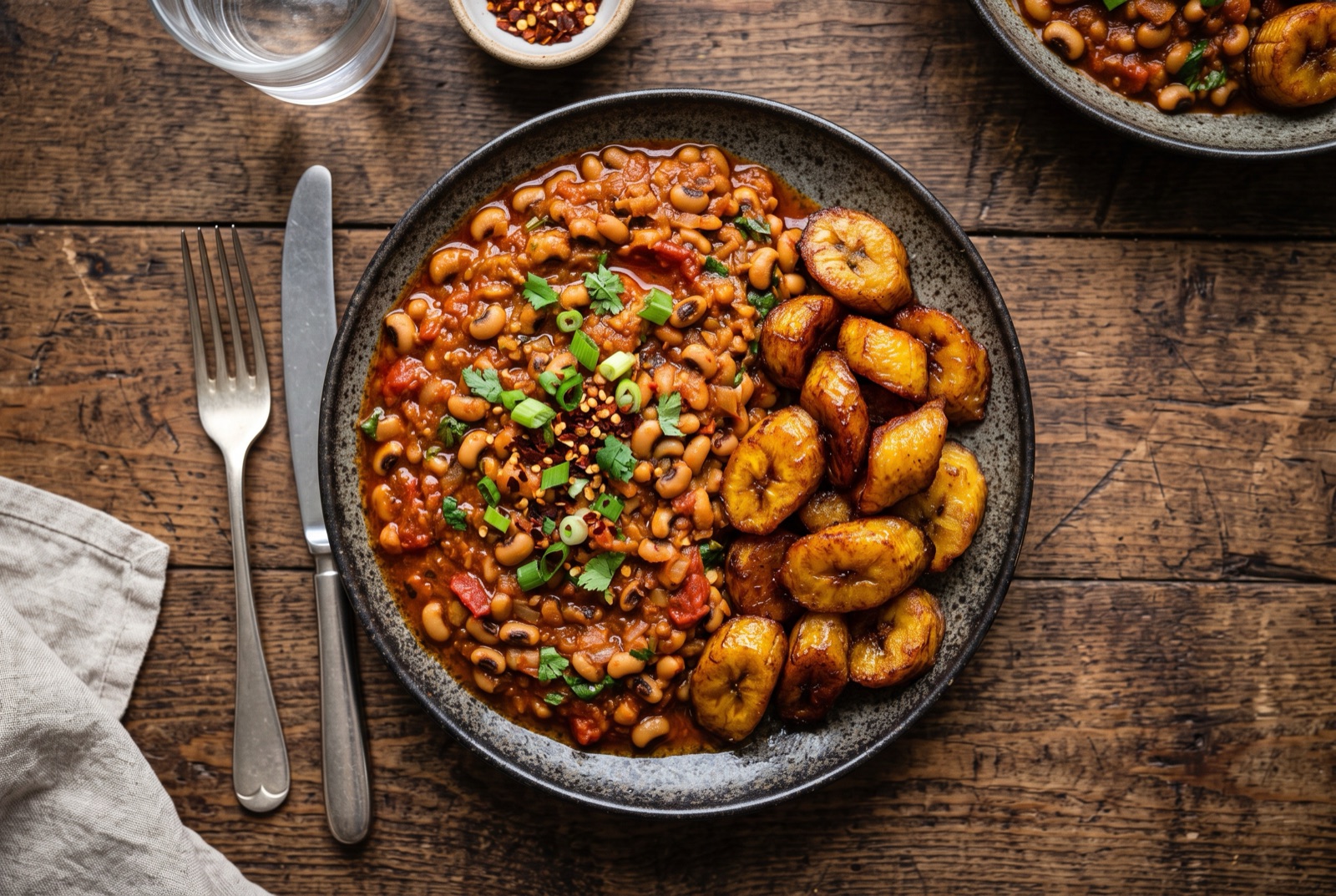
Fats do a lot of the identifying work. Red palm oil, pressed from the fruit of the oil palm, gives red red and palm nut soup their colour and a heavy, faintly savoury fruitiness; heated with spices and aromatics it becomes zomi, a finishing oil. Groundnut oil and coconut oil handle the frying, and groundnut paste itself — unsweetened, unhomogenised peanut butter — is thinned into stock to build nkatenkwan, the peanut soup that pairs with fufu across the Akan-speaking south.
Salted, smoked and fermented fish carry more seasoning weight here than fresh fish does. Smoked herring and mackerel go into stews, koobi is salted tilapia, momoni is fermented and pungent, and dried shrimp is ground into powders. None of it is subtle, and that is the point: a spoonful of shito, the near-black chili and dried-fish oil that Ghanaians keep in a jar year-round, will season a plate of plain rice on its own.
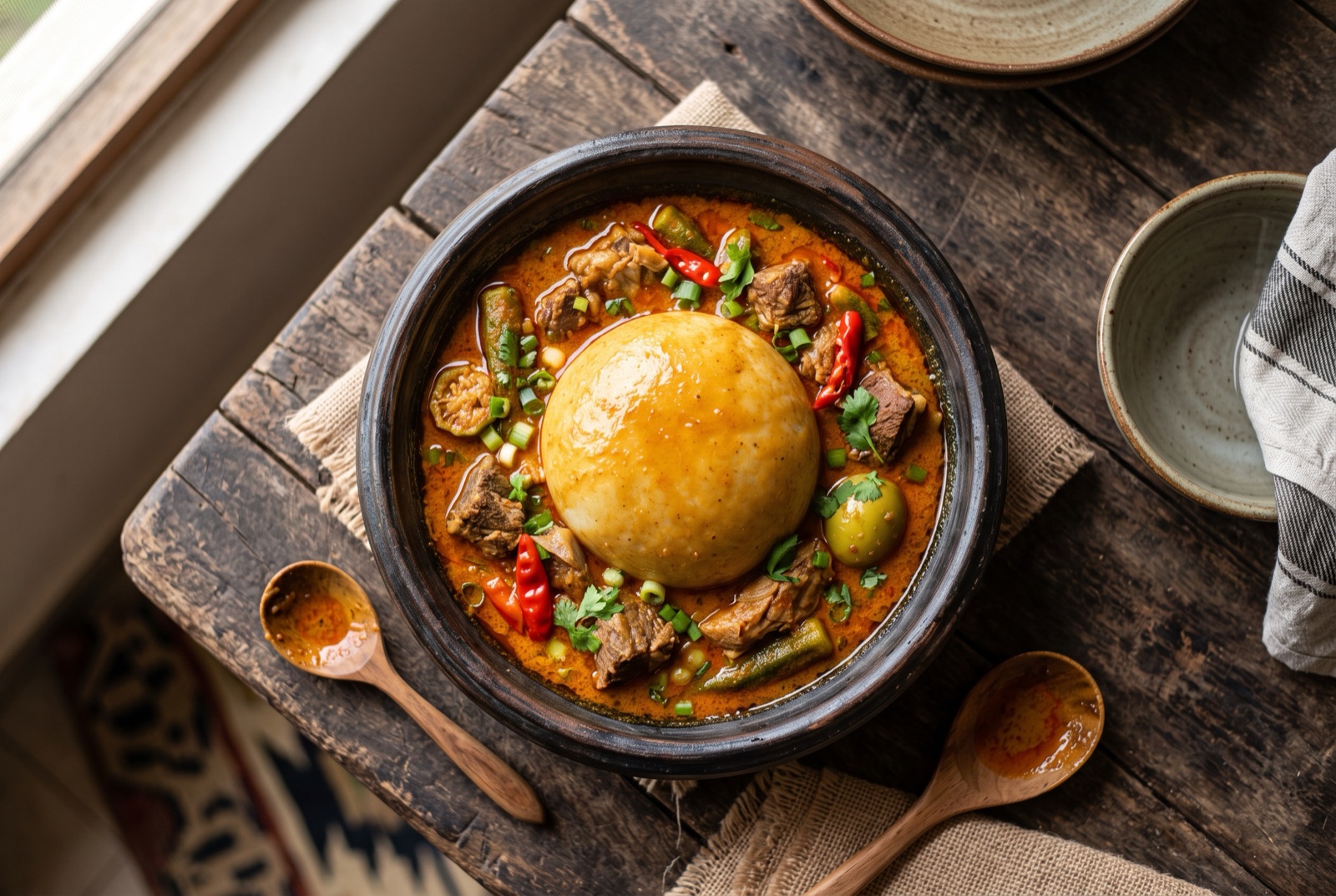
The starch half of the plate splits by region and by grain. In the Akan south, cassava and unripe plantain are boiled and pounded into fufu, and rice is beaten into omo tuo balls for Sunday soup. Ga and Ewe kitchens along the coast ferment corn dough for banku and kenkey, both sour, both stirred or steamed rather than pounded. In the north, maize or millet flour is stirred into tuo zaafi and eaten with soups thickened with dried okra or baobab leaf. Yam is eaten everywhere — boiled as ampesi, fried into chips, or pounded.
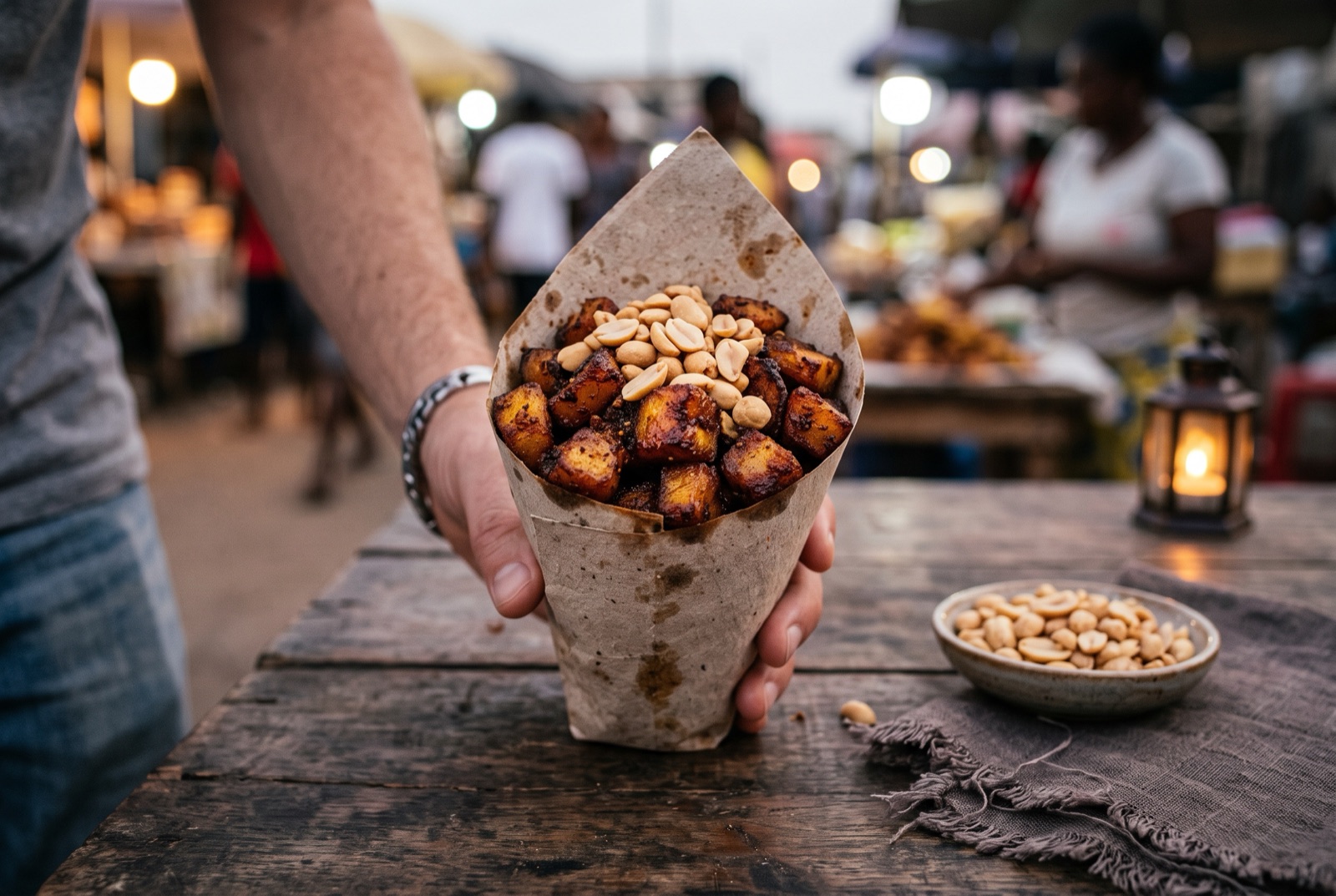
Meals are not divided into courses, and vegetables rarely arrive as a separate dish. Greens are cooked into the sauce instead: kontomire, the leaf of the cocoyam plant, is steamed and ground into a thick stew with palm oil, egusi seeds and smoked fish. Garden eggs — small white and green African aubergines — are boiled and mashed into stew or blended into light soup for body. Between meals the country eats standing up: kelewele from a paper cone at dusk, roasted plantain with a handful of groundnuts, bofrot doughnuts, koko porridge with bean fritters at dawn.
Signature pantry.
10 staplesThe ingredients this cuisine cannot function without.
- red palm oil
- cassava
- plantain
- groundnut paste
- scotch bonnet chili
- fermented corn dough
- smoked and salted fish
- ginger
- garden eggs
- gari
How people eat in Ghana.
Hands come before cutlery. A bowl of water goes round the table, everyone washes, and the right hand does the eating — fufu is pinched off, dipped in soup and swallowed whole rather than chewed, which visitors are usually warned about a beat too late. Soup arrives in the same bowl as the swallow, not beside it, and the meat sits on top where everyone can see how the portions were shared. Meals are one plate, not courses, and drinks are usually water taken after the food rather than with it. Sunday lunch after church is the fixed family meal, often fufu with light soup or groundnut soup. Street food is eaten on the move and eaten early; by mid-morning the waakye seller has usually sold out.
Regional kitchens.
Ghana cooks 4 distinctly different ways depending on where you stand — here is what changes between them.
- R1Greater Accra and the Ga coast
- Ga cooking built around the sea and around fermentation: kenkey wrapped in corn husks, grilled tilapia with pepper, and shito, the black chili sauce that started here and now sits on tables nationwide.
- R2Ashanti and the Akan interior
- Kumasi is fufu country. Cassava and plantain are pounded fresh and eaten with light soup, groundnut soup or palm nut soup, and the wooden mortar is still a normal piece of kitchen equipment.
- R3Volta Region
- Ewe kitchens along the Volta and the lagoons, where akple and banku meet freshwater fish, okro stew and a heavier hand with dried shrimp than anywhere else in the country.
- R4The Northern Regions
- Millet, sorghum and guinea fowl rather than cassava and plantain, with tuo zaafi as the daily swallow and dawadawa — fermented locust bean — giving soups a dark, funky depth found nowhere in the south.
All Ghana recipes.
10 recipes and counting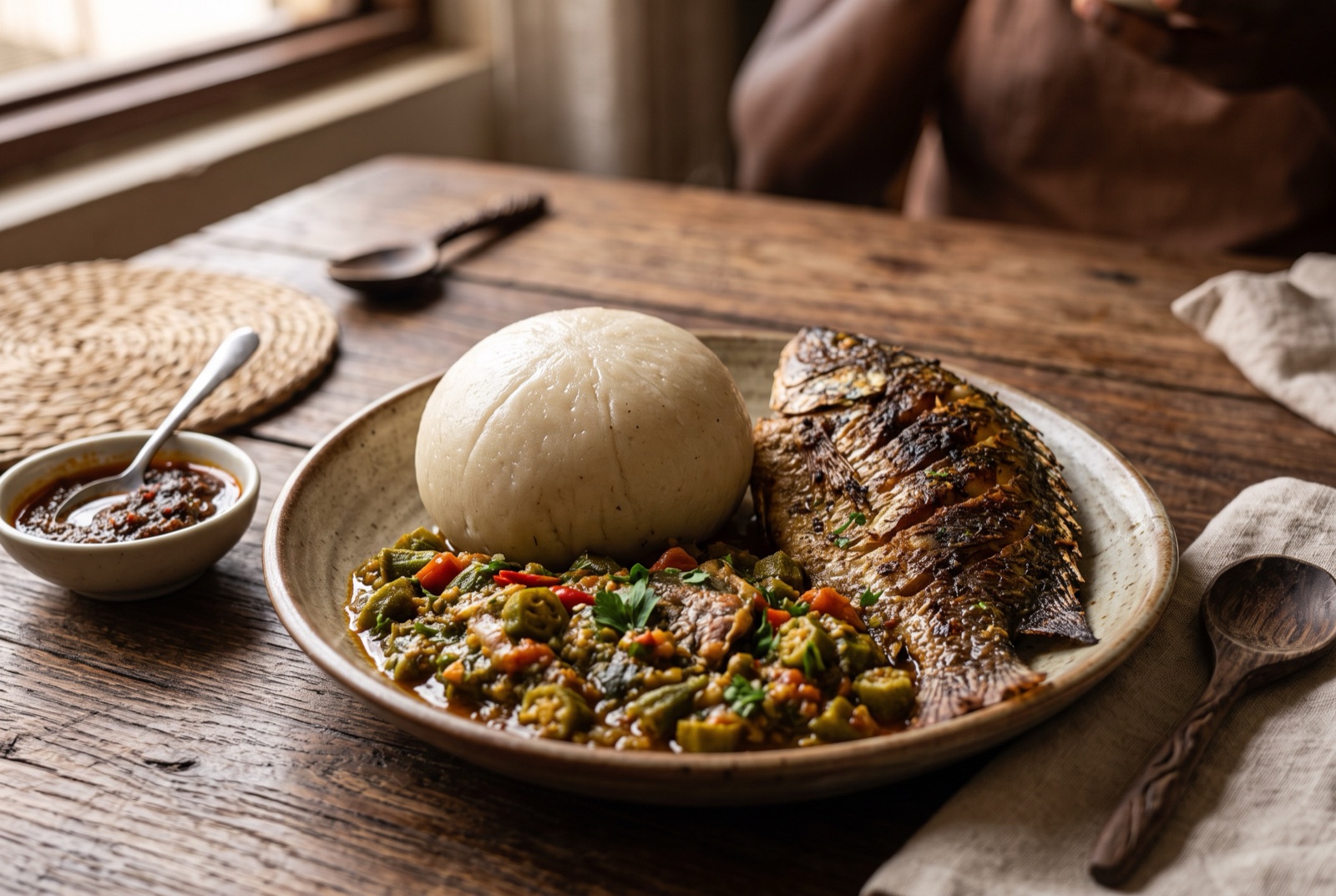
Ghana45 min
Banku
Ghanaian Fermented Corn and Cassava Dough
Ghana55 min
Fufu
Ghanaian Pounded Cassava and Plantain

Ghana1 hr 25 min
Ghana Jollof
Aromatic Rice Cooked in Its Own Stew
Ghana45 min
Kelewele
Ghanaian Spiced Fried Plantain
Ghana1 hr 10 min
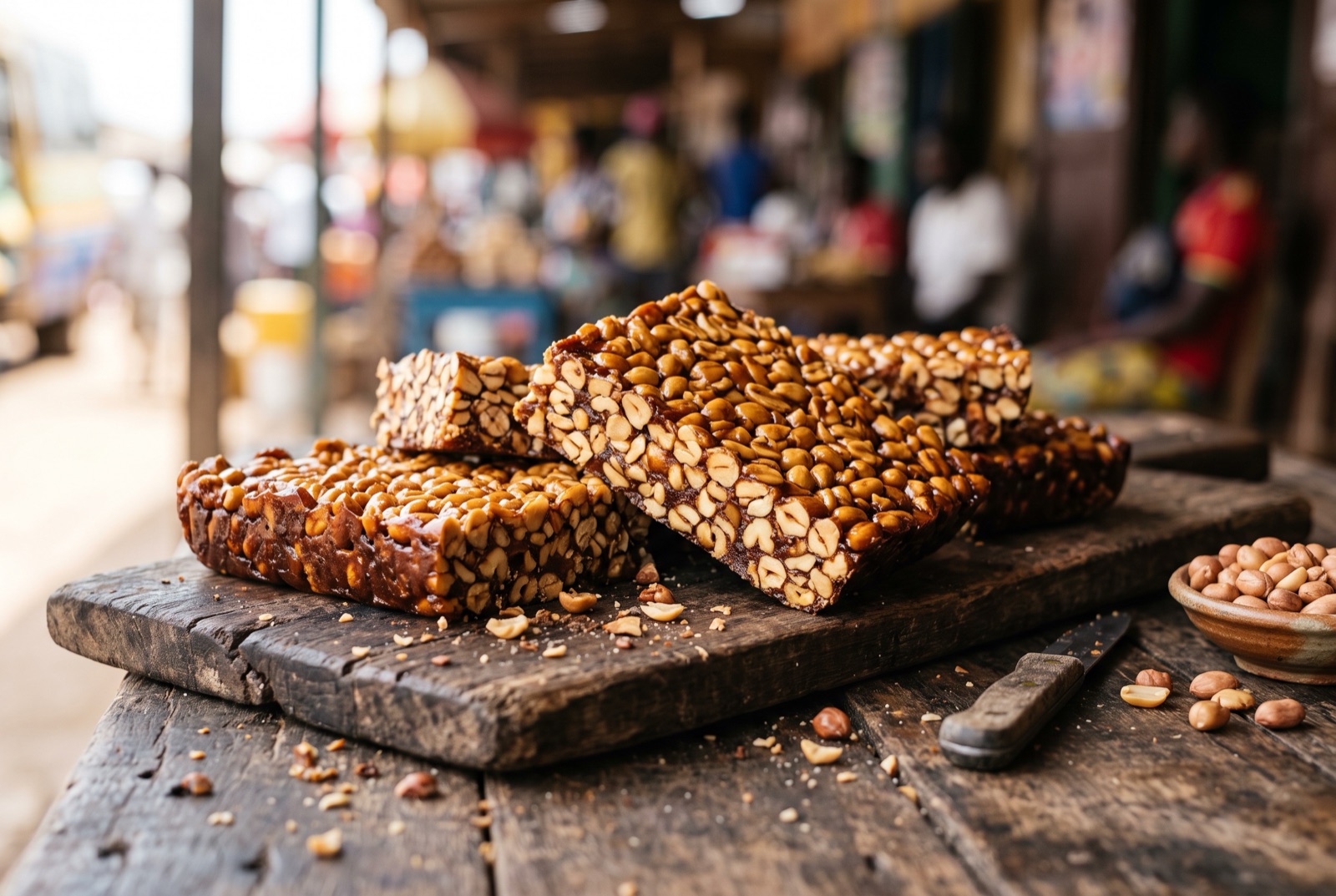
Nkate Cake
Ghanaian Peanut Brittle
Ghana1 hr 30 min
Nkatenkwan
Ghanaian Groundnut Soup with Chicken
Ghana1 hr 50 min
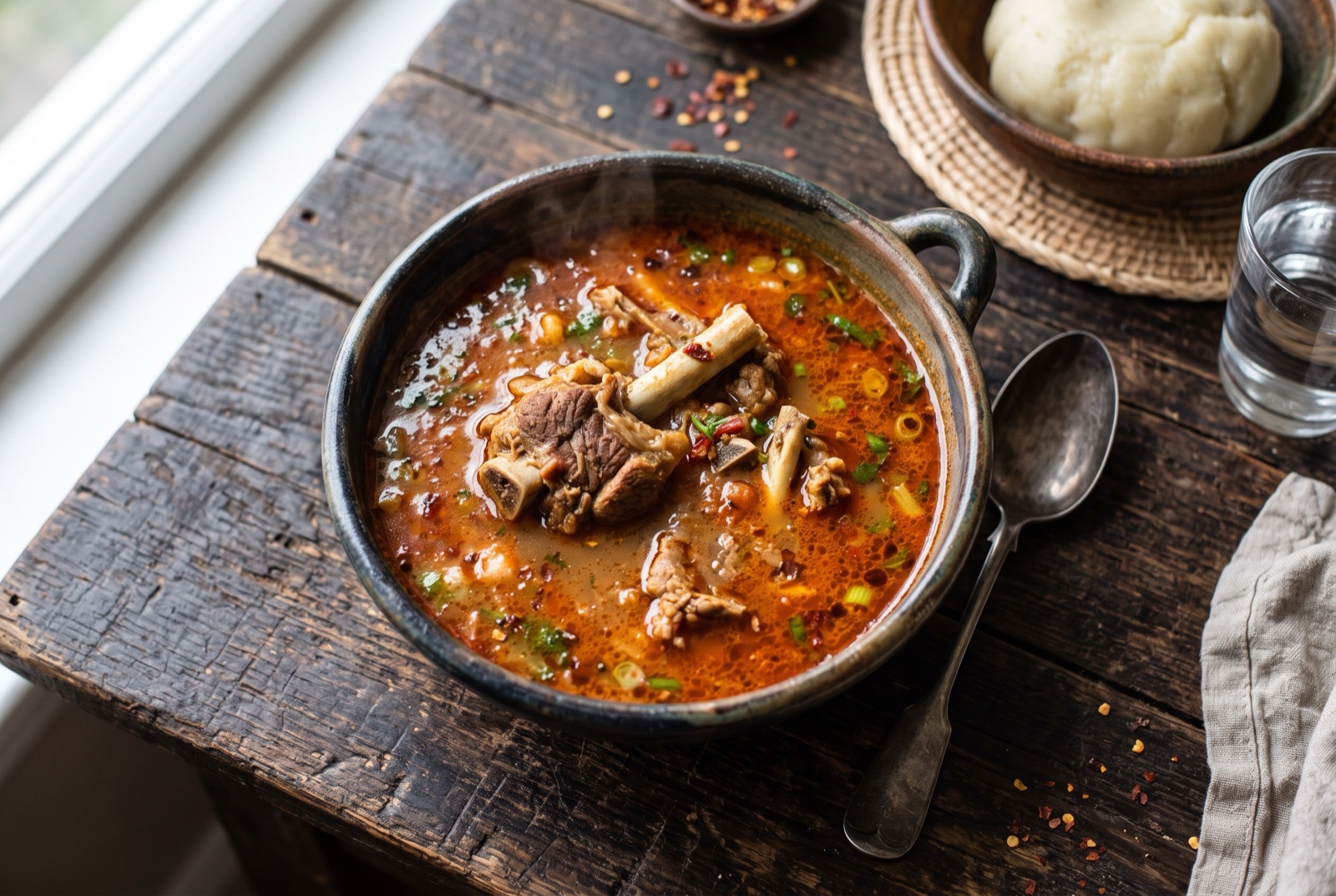
Nkrakra
Ghanaian Light Tomato and Ginger Soup
Ghana1 hr 20 min
Red Red
Ghanaian Bean Stew with Fried Plantain
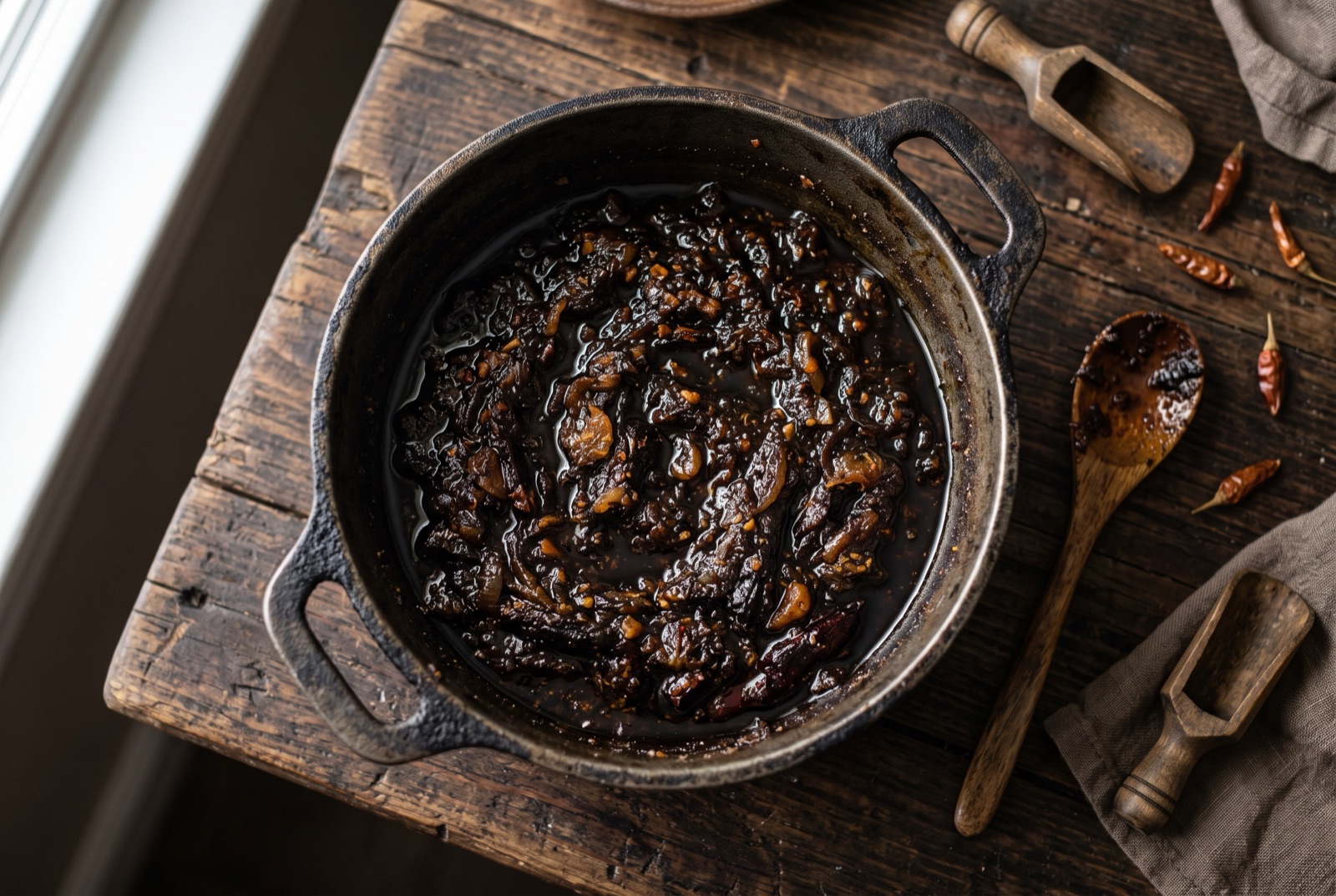
Ghana2 hr
Shito
Ghanaian Black Chili and Smoked Fish Sauce
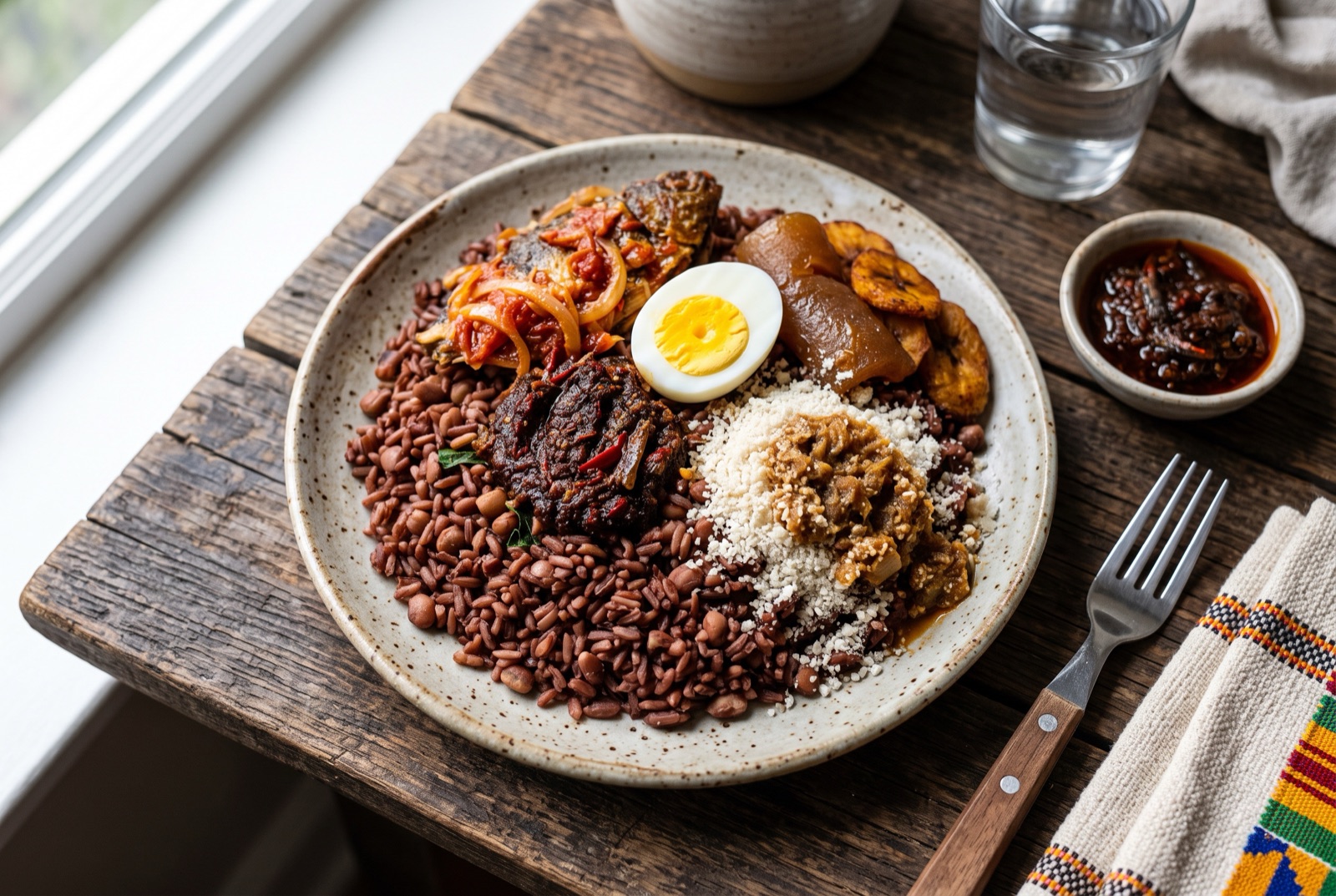
Ghana1 hr 35 min
Waakye
Ghanaian Rice and Beans Cooked with Sorghum Leaves
Keep traveling.
Ghana sits in West Africa, and its kitchen shares borders as well as ingredients with Algeria and Cameroon.
 Algeria
 Cameroon