Red Red.
Ghanaian Bean Stew with Fried Plantain
Red red · say it: red red
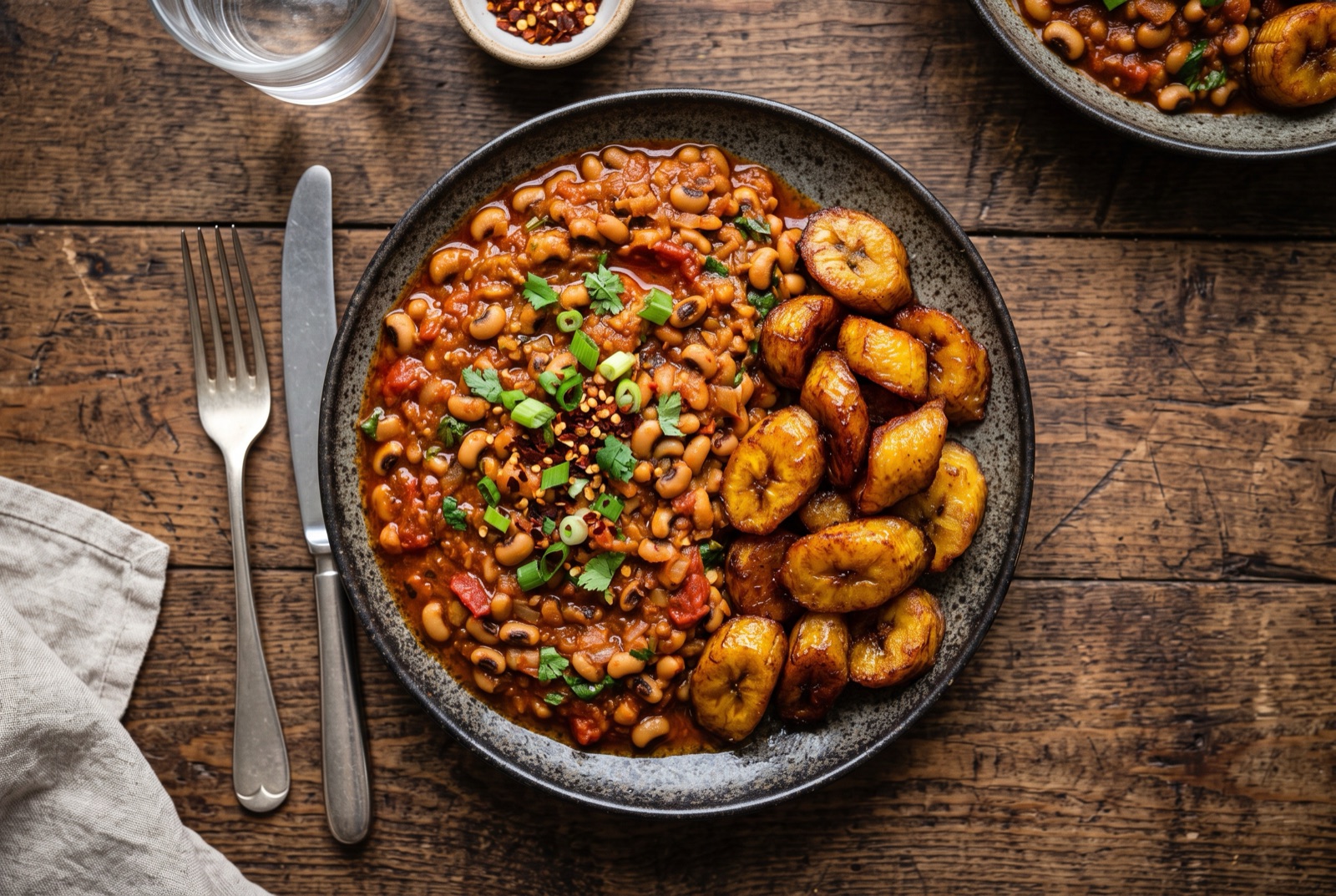
Red red is a bean stew and a plate of fried plantain that belong to each other. The beans — cowpeas, the same black-eyed peas used across West Africa — are cooked until creamy in a base of onion, tomato and chili loosened with red palm oil, which turns the whole pot a deep rust colour and gives it a heavy, fruity richness nothing else quite copies. Beside it goes very ripe plantain fried until the edges caramelise. The stew is savoury and warm with chili; the plantain is frankly sweet; eaten together in the same mouthful they make sense in a way neither does alone.

- Gate
- GhanaSouthern Ghana
- Prep
- 15 min
- Cook
- 1 hr 5 min
- Total time
- 1 hr 20 min
- Serves
- 4
- Status
- Easy
- Nutrition / serving · estimated
- Calories 590 kcal
- Protein 17 g
- Carbs 82 g
- Fat 22 g
- Fiber 14 g
- Sugar 22 g
- Sodium 610 mg
Why this recipe works.
- Cooks the beans to genuine creaminess before the palm oil goes in, so the stew thickens on its own instead of needing flour or paste.
- Adds the palm oil late enough that its aroma survives, which long boiling destroys.
- Times the plantain to come out of the pan while the stew is being plated, since fried plantain goes soft and greasy within minutes.
- Vegan as written, with a note on where smoked fish fits for anyone who wants the chop-bar version.
Ingredients.
13 itemsFor the beans
For the stew
For the plantain
To serve
Equipment
- Medium heavy pot
- Frying pan
- Slotted spoon
- Paper towels
Instructions.
Boil the beans
Drain the soaked cowpeas, cover them with fresh water by 5 cm, add the bay leaf and simmer uncovered for 35–40 minutes. They are ready when a bean crushes to a smooth paste between your fingers with no grainy centre. Drain, keeping 250 ml of the cooking water.
Tip Do not salt them yet — salt early in the boil keeps the skins tough.
Build the palm oil base
Warm the palm oil in a heavy pot over medium heat until it turns from semi-solid to clear orange and just begins to shimmer. Add the onion and cook for 7 minutes, until soft and starting to gild at the edges, then stir in the garlic, ginger and scotch bonnet for a minute more.
Tip Never take palm oil to smoking point. It loses its colour and turns acrid.
Cook down the tomato
Stir in the tomato paste and fry for 2 minutes, then pour in the blended tomatoes. Simmer for 12–15 minutes until the mixture darkens, thickens enough to hold a line when you drag a spoon through it, and orange oil separates around the rim.
Combine and thicken
Tip the drained beans into the stew with the reserved cooking water and the salt. Simmer for 10 minutes, then mash a ladleful of beans against the side of the pot and stir it back through so the sauce goes thick and glossy rather than watery.
Fry the plantain
Heat the frying oil to 170°C in a wide pan and fry the plantain slices in a single layer, about 2 minutes a side, until the edges are deep caramel brown and the centres yield to a fork. Drain on paper towels and salt lightly while hot.
Tip Fry these last. Plantain is at its best in the first five minutes out of the pan.
Plate it
Spoon the beans into shallow bowls, lean the hot plantain against the side rather than burying it, and scatter gari over the beans at the table. Taste the stew for salt one last time before it goes out.
Tips from our kitchen.
- Buy plantains that look past their best — heavily blotched with black, soft to a gentle squeeze. Yellow-and-firm plantain fries into something starchy and bland that misses the whole point of the plate.
- Salt the beans only once they are tender. Added at the start it slows softening, and cowpeas that stay firm never give the stew its body.
- Warm the palm oil rather than smoking it. Overheated palm oil loses its colour and picks up a harsh, acrid smell that will not cook out.
- Fry the plantain in a single layer with space between the pieces. Crowded slices steam each other and never develop the caramelised edge.
- Mash a ladleful of the cooked beans against the side of the pot and stir it back in. That is how chop bars thicken red red without adding anything.
- Scatter gari over the finished plate right before eating. Left to sit, it absorbs the sauce and turns to a paste.
Substitutions.
- Unrefined red palm oil → 4 tbsp neutral oil plus 1 tsp sweet paprika and a pinch of achiote
- This gets you the colour and a hint of the earthiness, but not the fruity weight that makes red red taste like itself. African and Caribbean grocers stock the real thing cheaply and it keeps for months; look for sustainably sourced brands.
- Dried cowpeas → 2 x 400 g tins of black-eyed peas, drained and rinsed
- Tinned beans cut the cooking time to about 15 minutes. Reduce the stew base a little further first, since you lose the starchy bean liquid that normally thickens the pot.
- Scotch bonnet → One habanero or two teaspoons of cayenne
- Red red is meant to be warm rather than punishing, and the sweetness of the plantain absorbs a surprising amount of heat, so err upward rather than downward.
Variations.
- Red red with smoked fish
- Flaked smoked mackerel or herring stirred in for the last ten minutes. This is the chop-bar standard and adds a salty, smoky layer under the palm oil.
- Red red with gari foto
- Served with gari fried with onion, tomato and egg instead of plain dry gari, turning the side into a dish in its own right.
- Ampesi-style plate
- Boiled yam or cocoyam in place of fried plantain for a less sweet, more filling version eaten in the Akan interior.
Storage & reheating.
The bean stew improves overnight and keeps 4 days refrigerated; reheat gently with a splash of water, since it thickens considerably as it cools. It freezes well for 3 months. Fried plantain does not keep in any useful sense — it goes limp within an hour and soggy in the fridge — so fry only what is going on the plate and fry fresh the next day. If you want to prep ahead, slice the plantains and keep them covered for a few hours before frying.
Serve with
Dry gari scattered over the beans, sliced avocado, and a cold bottle of something. Rice works too, but plantain is the point.
The story behind Red Red.
The name is literal and slightly deadpan. One red is the palm oil in the beans, the other is the reddish-gold of ripe plantain coming out of the frying pan, and Ghanaians simply named the plate after what it looks like. It is everyday food rather than ceremonial food — cooked at home, sold at lunch spots and chop bars, packed into containers for work — and it is one of the cheapest complete meals in the country, which is a large part of why it is so common.
Red palm oil is the ingredient doing the identifying. It is pressed from the fruit of the oil palm rather than the kernel, unrefined, and it is thick, orange-red and semi-solid at cool temperatures with a flavour that is faintly sweet and vegetal, closer to cooked carrot and tomato skin than to any neutral cooking oil. In Ghanaian kitchens it is not a frying medium so much as a seasoning: it goes into palm nut soup, into kontomire stew, into red red, and it is the reason those dishes look the way they do. It is worth being clear that unrefined red palm oil from West African and Caribbean grocers is a different product from the refined, deodorised palm oil in industrial food manufacturing, and it is the unrefined kind this dish needs.
How the plate is finished varies by household. Some cooks add smoked or dried fish to the beans for depth; some keep it entirely meat-free, which makes red red one of the few classic Ghanaian mains that is vegan without any adjustment. Gari is often scattered over the top for grit and a sour edge. And the plantain is non-negotiable in one respect: it has to be properly ripe, skin black-blotched and soft, or the sweetness that balances the chili simply is not there.
Questions, answered.
Why is it called red red?
Because of the two reds on the plate: the rust-orange bean stew coloured by red palm oil, and the reddish-gold fried ripe plantain served beside it. The name is descriptive rather than poetic, which is fairly typical of Ghanaian dish names.
Can I make red red without palm oil?
You can make a good bean stew, but it will not really be red red. Palm oil supplies the colour and a distinct fruity, slightly savoury richness that no other fat provides. Neutral oil with paprika and achiote approximates the look; if you can get unrefined red palm oil from an African or Caribbean grocer, use it, because it changes the dish entirely.
Are my plantains ripe enough?
If the skin is still mostly yellow, no. Red red needs plantain that is heavily black-blotched and yields to a gentle press, at the point where most people would assume it has gone off. That stage is when the starch has converted to sugar, which is what makes the fried pieces caramelise and taste sweet rather than dry and floury.
Is red red vegan?
As written here, yes — beans, palm oil, tomato, onion, chili and plantain, with nothing from an animal. Many Ghanaian cooks add smoked or dried fish for depth, so a version bought at a chop bar usually is not vegan. It is worth asking rather than assuming.
Can I use tinned beans to save time?
Yes, and plenty of people do on a weeknight. Use two 400 g tins of black-eyed peas, drained and rinsed, and add them once the stew base is thick, simmering for about 15 minutes. Reduce the base a little further than usual first, because tinned beans do not release the starchy liquid that normally thickens the pot.
You might also like.
All recipes →
Keep exploring Ghana.
Ghana has 9 more dishes in the atlas — Banku and Fufu, and 7 more.
All Ghana recipes Plantain recipes Tomato recipes Onion recipes mainveganvegetariangluten freedairy freeRecipe by The DishRoute Kitchen · published August 20, 2026 · updated August 20, 2026