Armenia.
Հայաստան
Armenian cooking is highland food: wheat, sour dairy, lamb and an almost aggressive quantity of fresh herbs, handled with a patience that comes from a short growing season and long winters. The seasoning list is deliberately narrow — salt, black pepper, onion, sometimes a little cumin or dried mint — because the point is to taste the ingredient rather than the spice cupboard. What Armenians spend effort on instead is preservation and structure: wheat hulled and dried into pokhindz and dzavar, herbs dried in bunches over the winter, fruit turned into leathers and sour pastes, milk soured into matsun and strained into cheese. Bread is not a side but a utensil and a wrapper, and the tonir, the clay pit oven sunk into the floor, shapes half the repertoire. Meals are built to be shared from the middle of the table, in a country where feeding a guest properly is treated as a moral obligation rather than a courtesy.
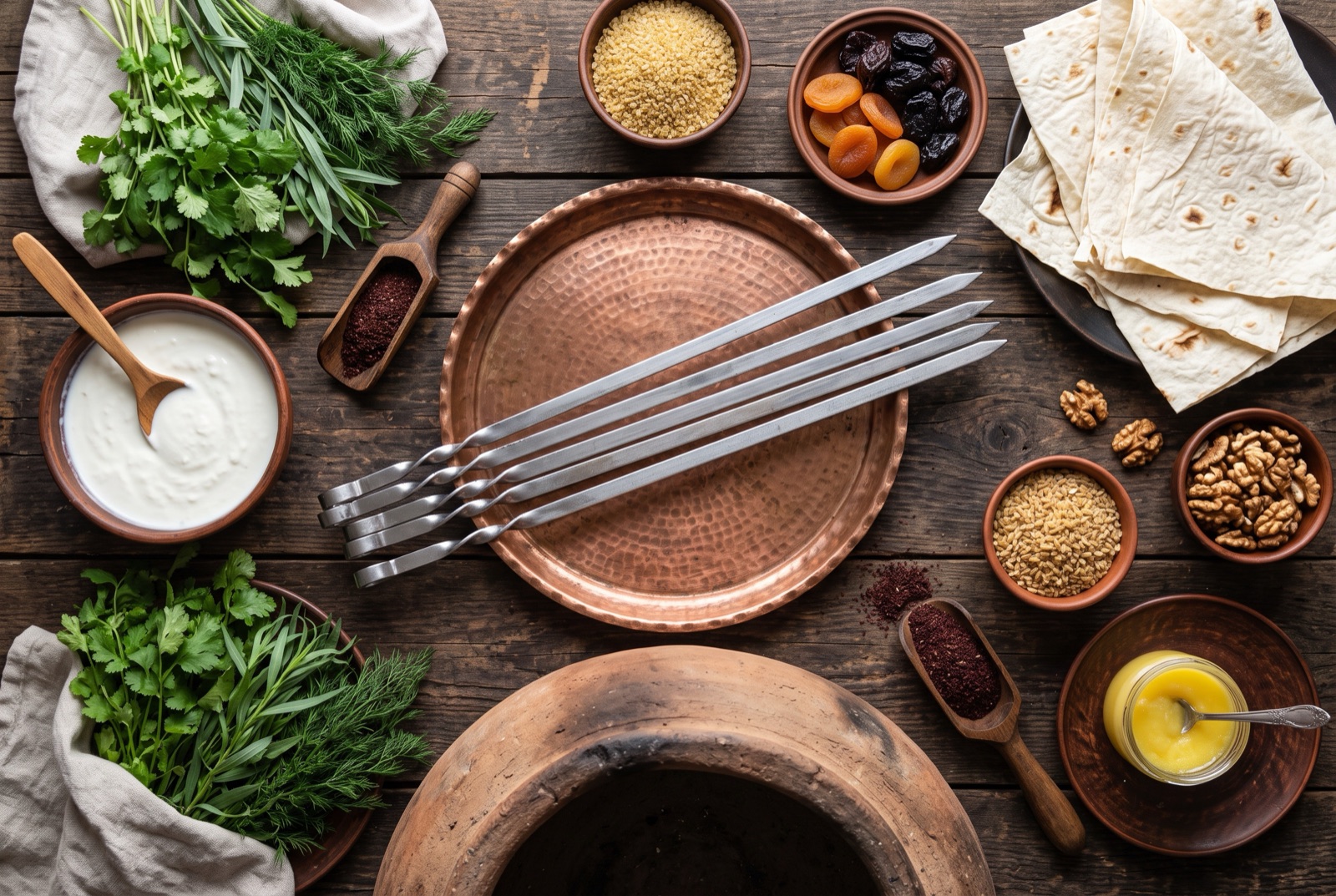

- Continent
- AsiaCaucasus
- Recipes in atlas
- 10
- Must-try dishes
- 3
- Pantry staples
- 10
Start with the classics.
Must tryThe dishes that explain the Armenia kitchen fastest — if you cook only a few things from this page, cook these.
Inside the Armenia kitchen.
Wheat is the spine of the cuisine, and it appears in more forms here than almost anywhere. Whole grains are hulled and cracked into dzavar and bulgur, boiled into porridges, folded into soups, and pounded with meat until the two become inseparable. Lavash — rolled paper-thin, slapped onto the wall of a tonir and baked in under a minute — is stacked, dried, and revived with a sprinkle of water months later. The same dough logic runs through the stuffed breads of the highlands and the layered pastries of the sweet table. When Armenians talk about a table being properly set, they mean bread first.
The second pillar is soured dairy. Matsun, the local cultured milk, is thicker and sharper than most commercial yogurt and does triple duty: eaten plain with bread, whisked into cold drinks, and cooked into hot soups where its acidity has to be tamed with egg and flour so it does not curdle. Strained matsun becomes a soft cheese; the whey is not thrown away. Alongside it sit the brined cheeses of the villages — chechil pulled into strings, lori and chanakh salted in barrels — that anchor a breakfast plate next to herbs, tomato and lavash.
Herbs are used at a scale that surprises visitors. A bunch of parsley, coriander, dill, tarragon, basil or purple reyhan is not a garnish but a component measured in handfuls; the flatbreads of Artsakh are stuffed with a dozen wild greens at once, and no spring table is complete without a plate of raw herbs to tear into every mouthful. In the mountains, foraged greens — sorrel, mallow, wild chervil, the shoots called sibekh — extend the range far past what a market sells.
Meat cooking splits into two traditions. One is fast and open-fire: khorovats, chunks of lamb or pork threaded on flat skewers and grilled over vine cuttings, with vegetables charred beside them until their skins blister off. The other is slow and enclosed: lamb and rice packed into leaves and vegetables for tolma, dumplings baked and then drowned in broth, whole pumpkins filled with dried fruit and baked until collapsing. Fruit crosses freely into savoury dishes — dried apricot, prune, sour cherry and pomegranate turn up in rice, in stews and beside grilled meat without anyone calling it fusion.
Regional differences are real and still argued about. Eastern Armenian cooking, centred on Yerevan and the Ararat valley, leans on fresh vegetables, grilled meat and abundant fruit. Western Armenian cooking, carried out of Anatolia by survivors of the genocide and now rooted in Beirut, Aleppo, Los Angeles and Marseille, brought bulgur, pepper paste, tahini and a lighter, more Levantine hand — dishes like eetch and lahmajo belong to that lineage. Artsakh contributes the wild-herb repertoire, and Javakhk and the northern highlands the heavy dairy-and-potato food of cold places.
Signature pantry.
10 staplesThe ingredients this cuisine cannot function without.
- matsun (cultured yogurt)
- lavash
- bulgur and hulled wheat
- lamb
- dried apricots and prunes
- walnuts
- pomegranate
- fresh coriander, tarragon and dill
- sumac
- clarified butter
How people eat in Armenia.
Nothing arrives in courses. The table is loaded at once with herbs, cheese, pickles, salads and bread, and the hot dishes join a spread that is already full. Lavash sits under and around everything: it lines the plate, wraps grilled meat, and is torn to pick up food instead of a fork. Guests are seated first and served more than they asked for, and refusing a second helping usually needs to be done twice before it is believed. At any gathering of size, someone takes the role of tamada and steers the toasts — to parents, to those absent, to peace — and each is drunk properly rather than sipped. Meals stretch for hours; leaving quickly reads as an insult, not efficiency.
Regional kitchens.
Armenia cooks 4 distinctly different ways depending on where you stand — here is what changes between them.
- R1Ararat Valley and Yerevan
- The fruit and vegetable heartland, with apricots, tomatoes and grapes that define the summer table. Khorovats grilled over vine cuttings and long, herb-heavy spreads are the standard of hospitality here.
- R2Artsakh
- Mountain cooking built on foraged greens, most famously zhingyalov hats — a flatbread packed with a dozen or more wild herbs. Lean, vegetable-forward food shaped by high altitude and short summers.
- R3Lori, Tavush and the Northern Highlands
- Forested, wet and cold, with a kitchen leaning on dairy, potatoes, mushrooms and preserved food. Brined cheeses and thick, wheat-based soups carry the winter.
- R4The Western Armenian Diaspora
- The cooking carried out of Anatolia after 1915 and rebuilt in Aleppo, Beirut, Marseille and Los Angeles — bulgur, red pepper paste, tahini and a Levantine lightness alongside the older highland repertoire.
All Armenia recipes.
10 recipes and counting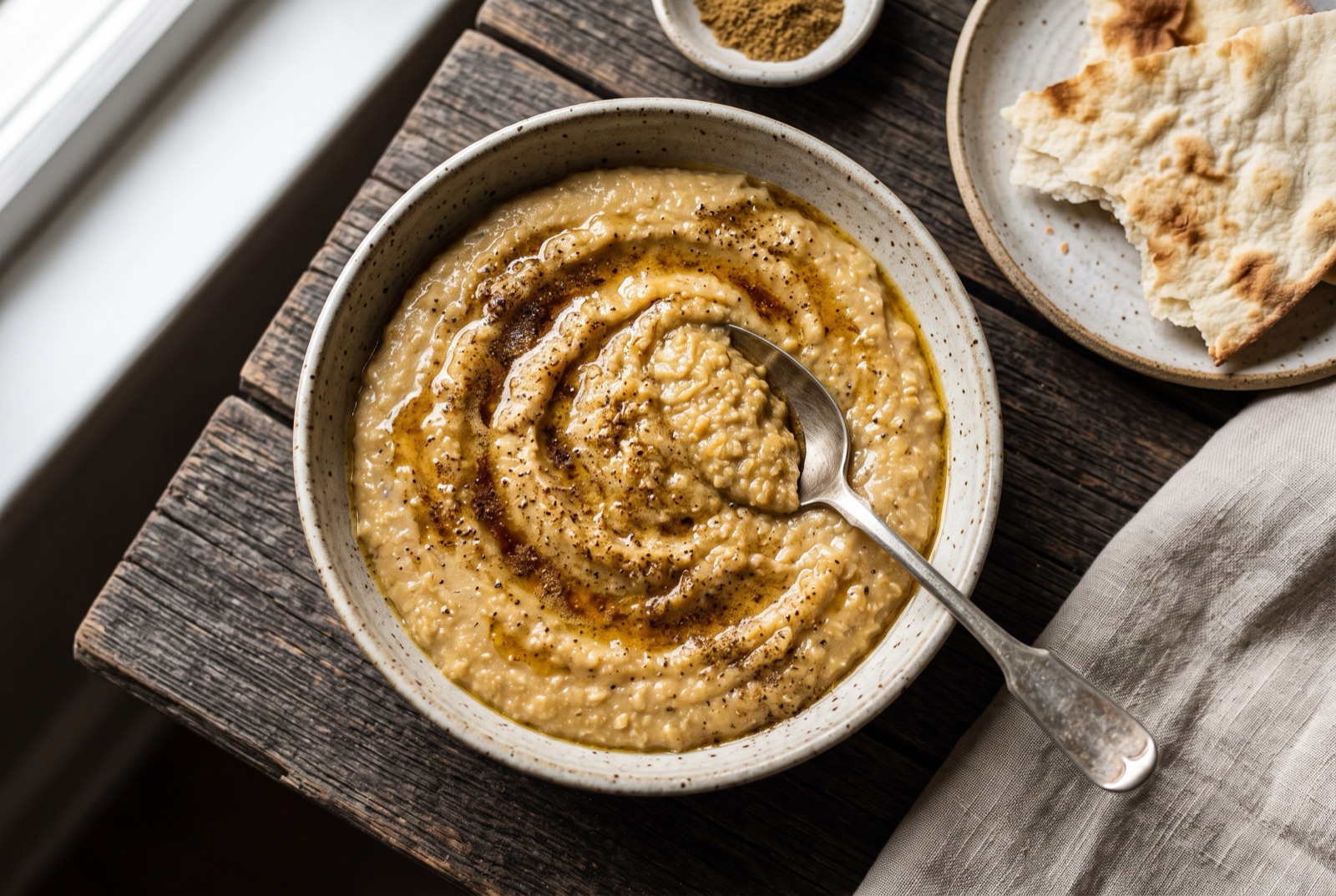
Armenia5 hr 5 min
Armenian Harissa
Wheat and Chicken Porridge
Armenia1 hr 7 min
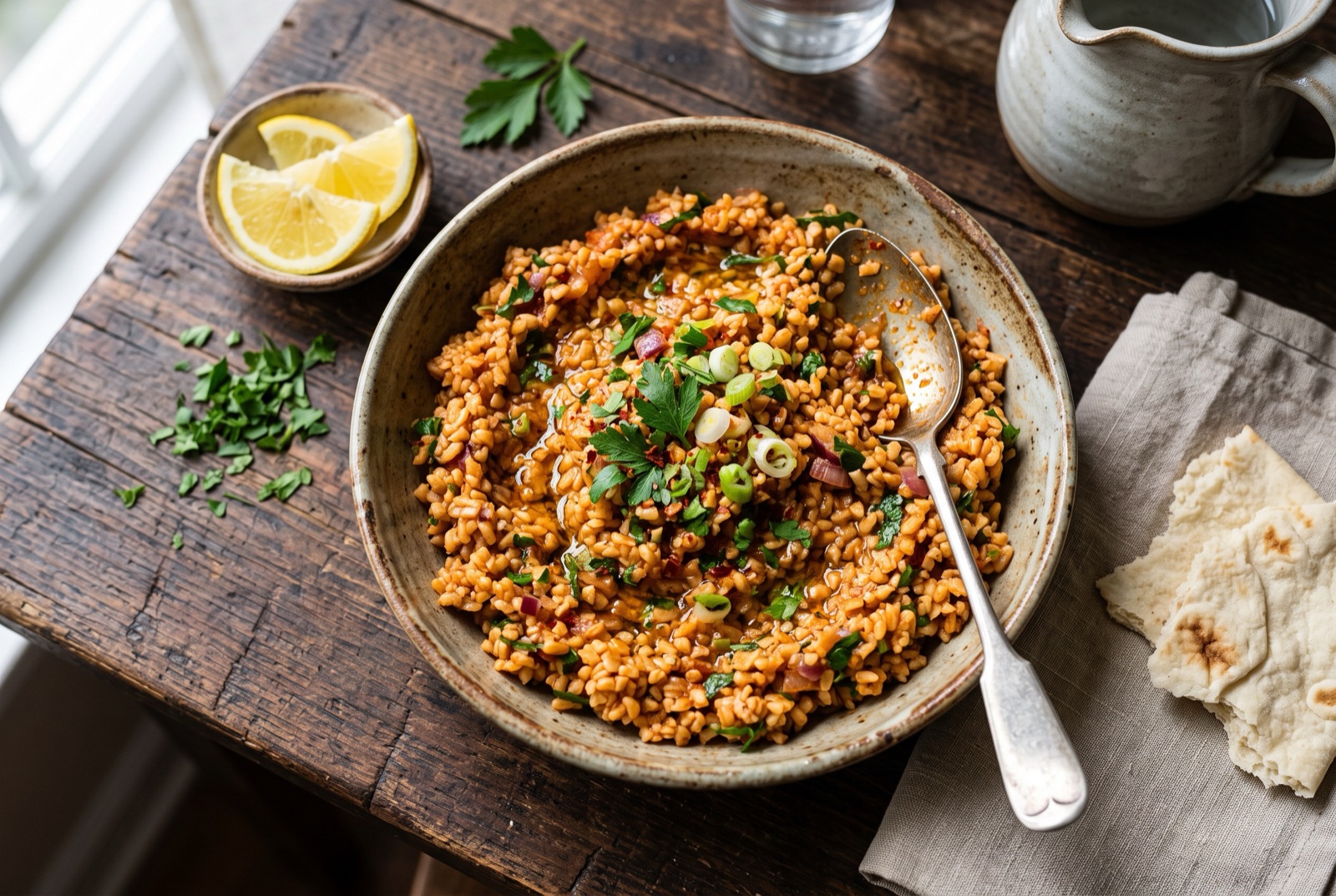
Eetch
Armenian Bulgur and Tomato Salad
Armenia2 hr 30 min
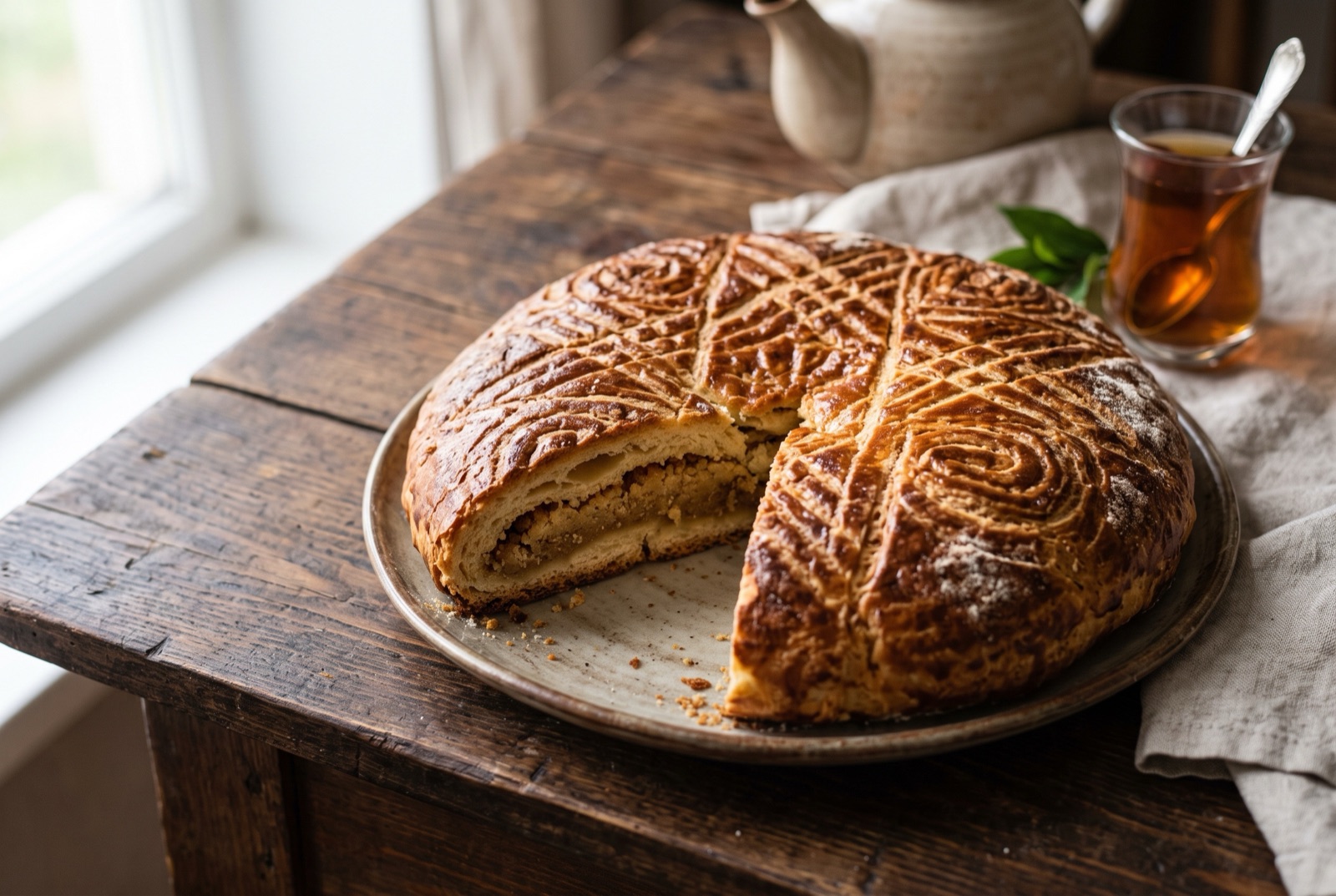
Gata
Armenian Sweet Layered Pastry
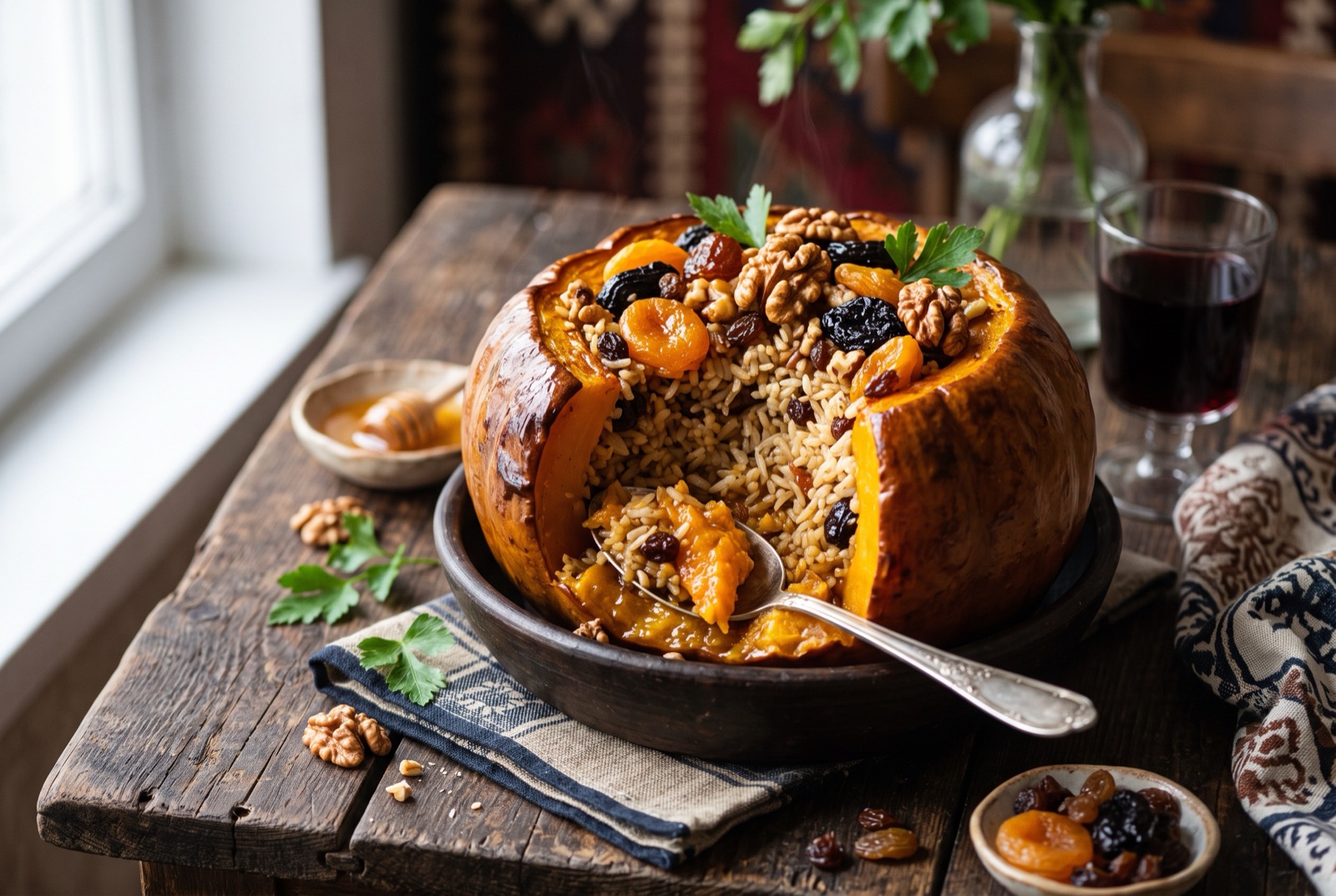
Armenia2 hr 40 min
Ghapama
Armenian Pumpkin Baked with Rice and Dried Fruit
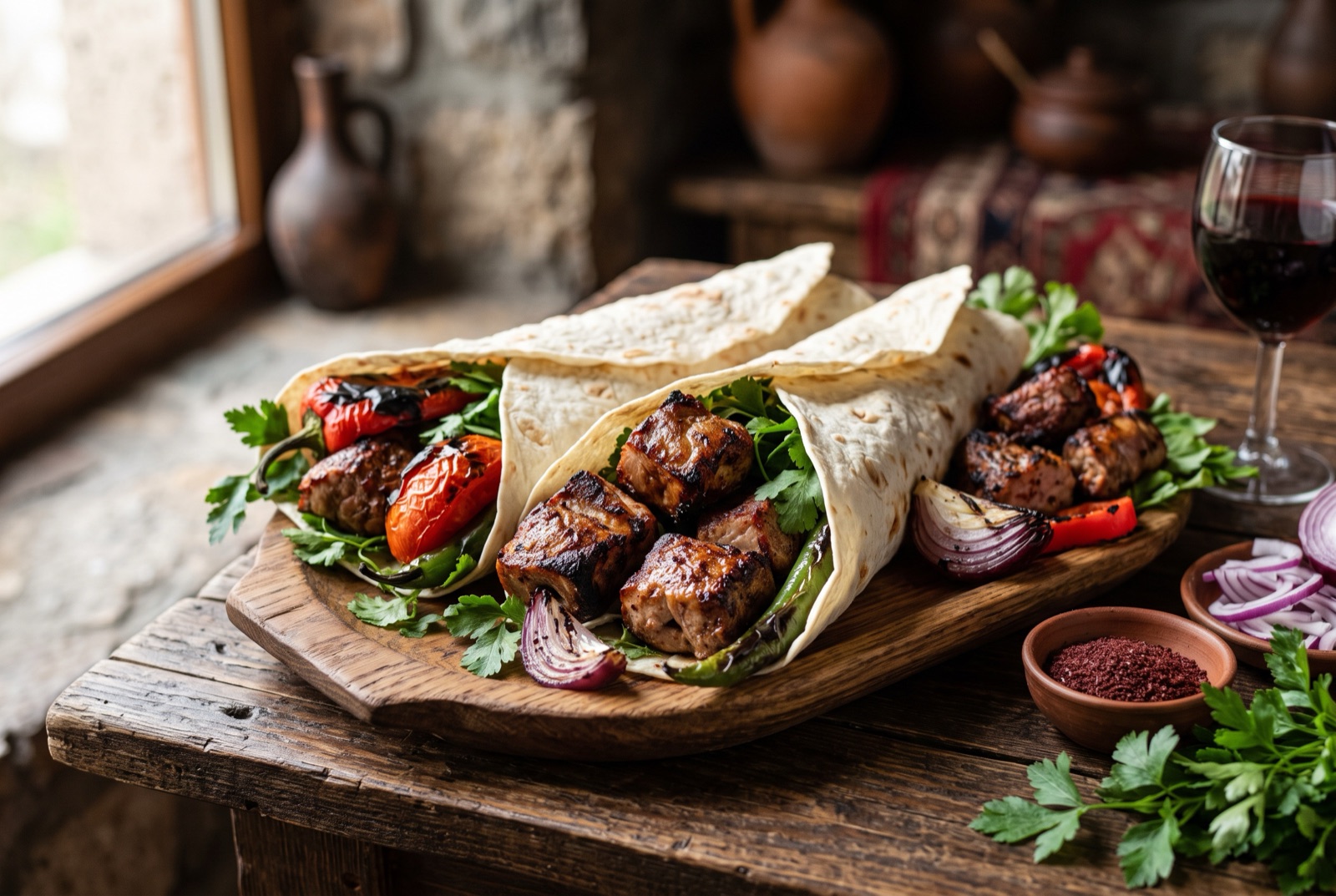
Armenia4 hr 50 min
Khorovats
Armenian Charcoal-Grilled Skewers
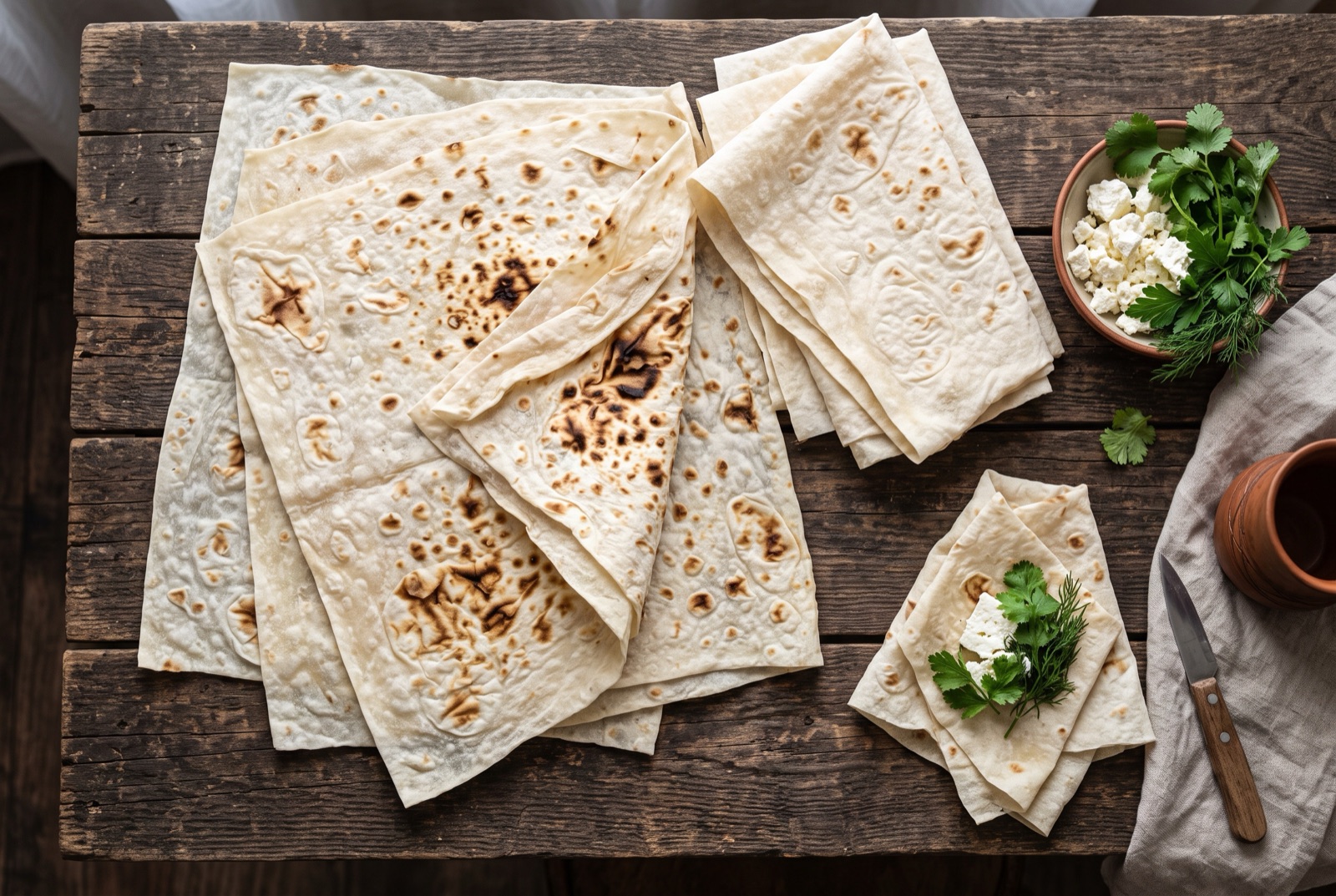
Armenia2 hr
Lavash
Armenian Thin Tonir Flatbread
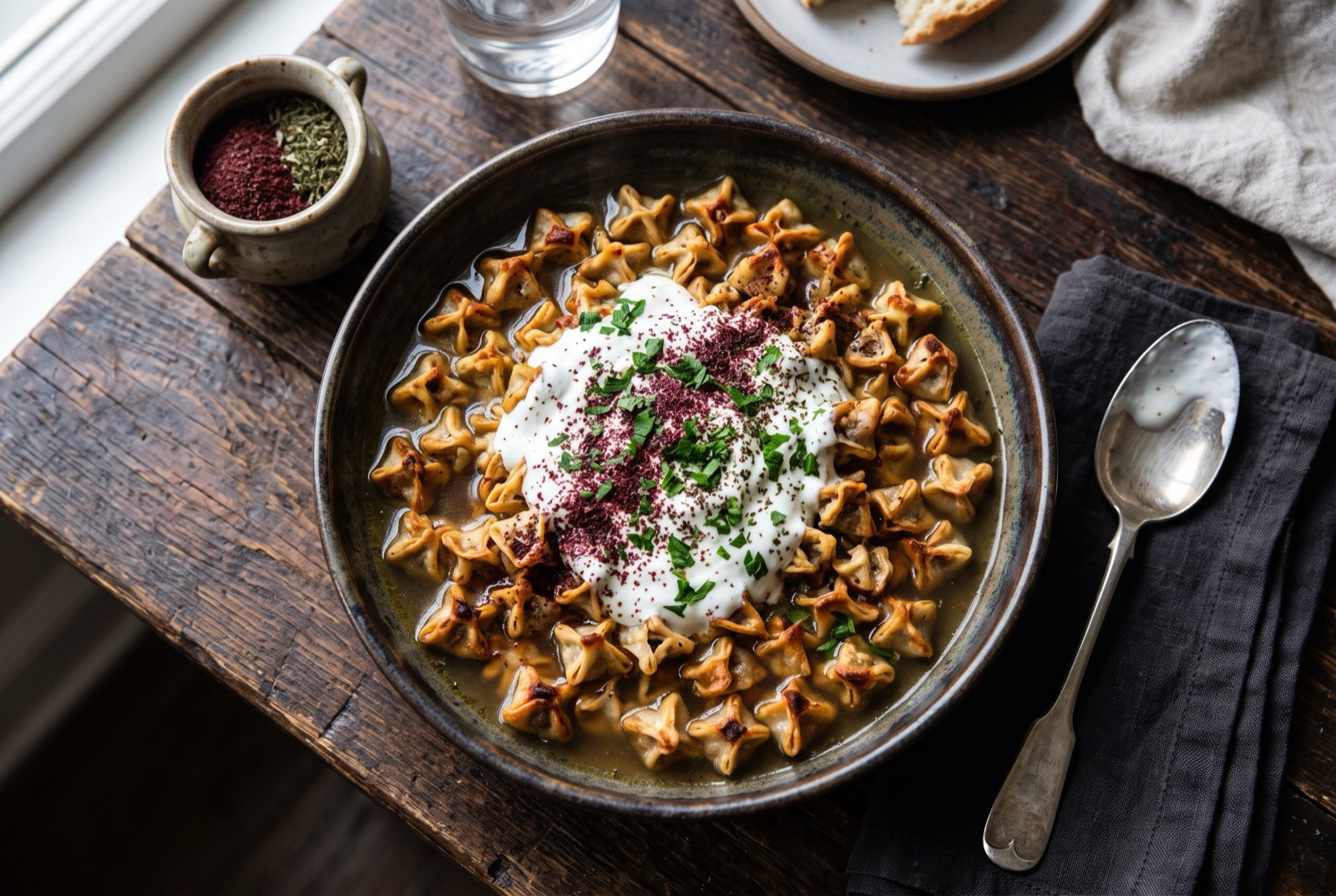
Armenia2 hr 15 min
Manti
Armenian Boat-Shaped Baked Dumplings
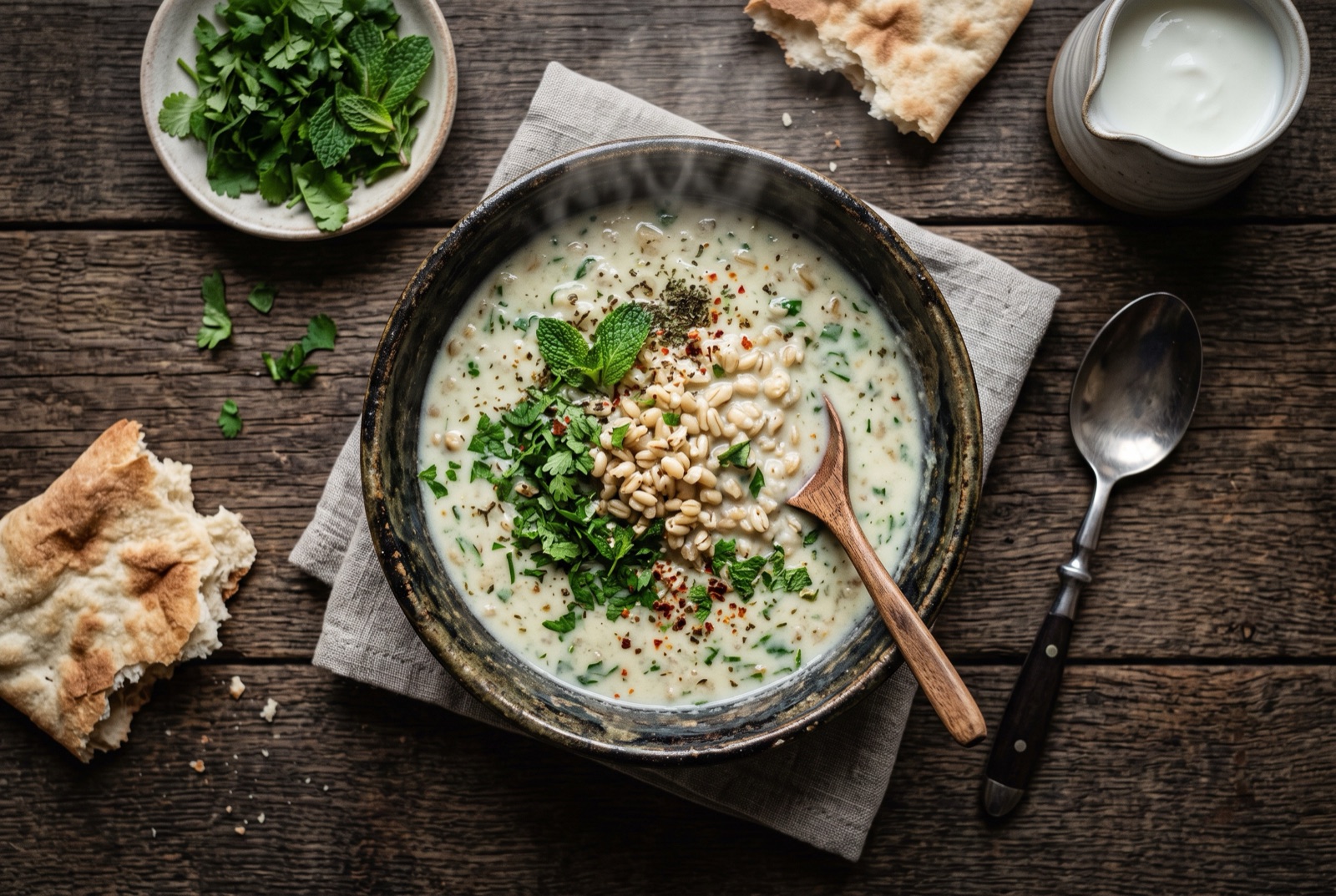
Armenia1 hr 15 min
Spas
Armenian Yogurt and Wheat Soup
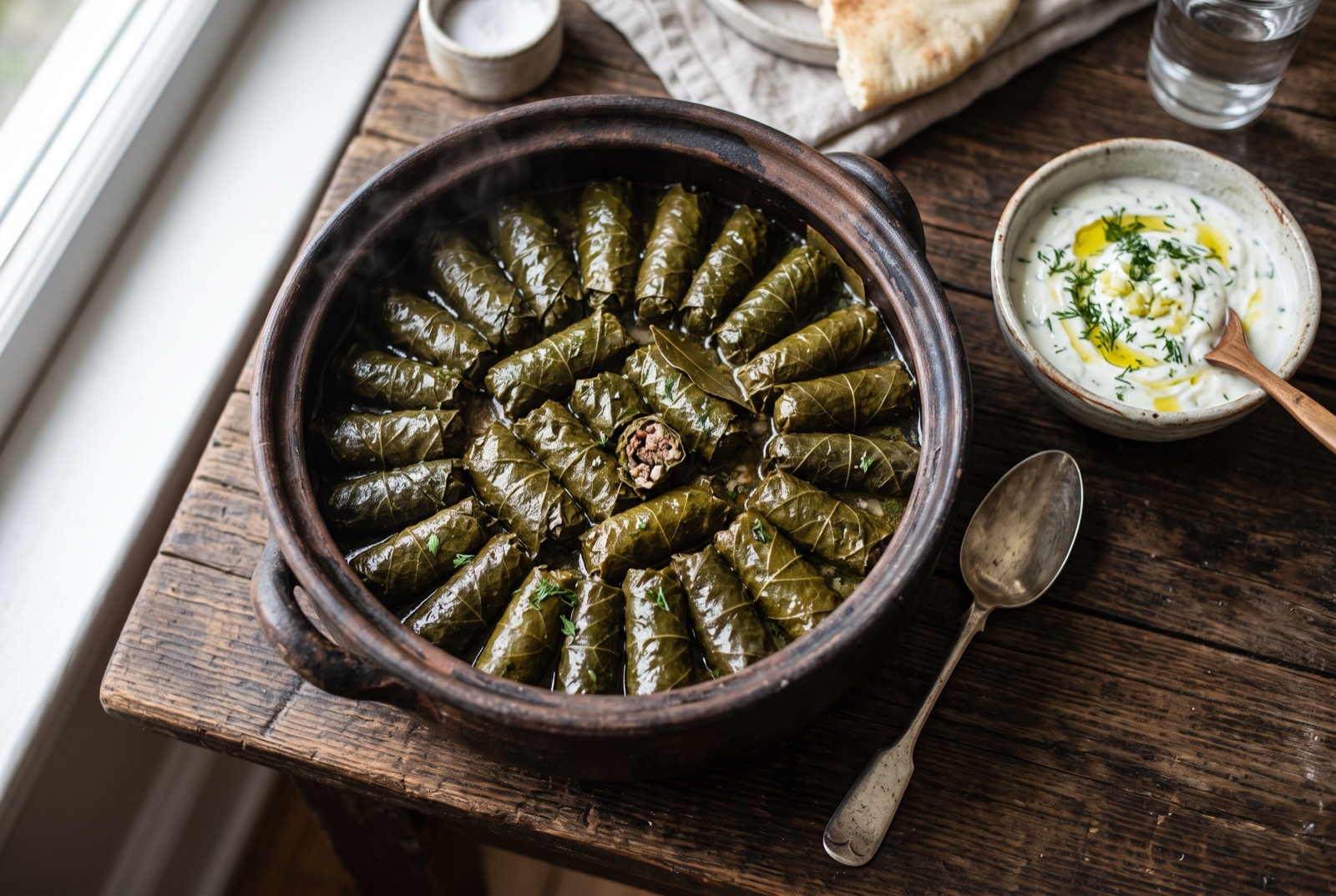
Armenia1 hr 55 min
Tolma
Armenian Stuffed Grape Leaves with Lamb and Rice
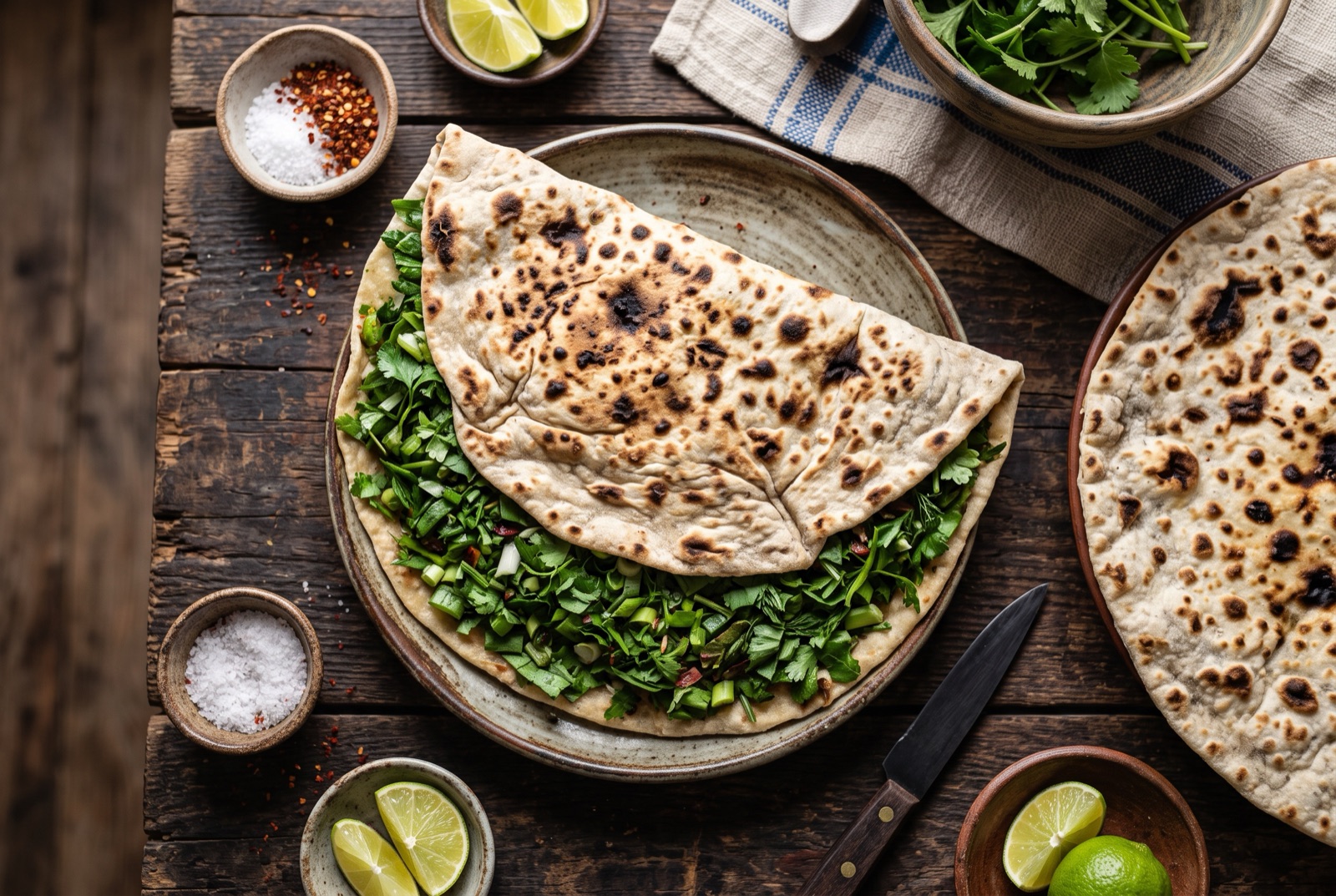
Armenia1 hr 40 min
Zhingyalov Hats
Armenian Herb-Stuffed Flatbread
Keep traveling.
Armenia sits in Caucasus, and its kitchen shares borders as well as ingredients with Bangladesh and Cambodia.
 Bangladesh
 Cambodia