Eetch.
Armenian Bulgur and Tomato Salad
Իչ · say it: eech
Eetch is a cold bulgur salad in which the grain is never boiled. Coarse bulgur is stirred into a warm base of softened onion, tomato paste and red pepper paste and left to swell in that mixture, so it takes on colour and savour instead of plain water. Once cool it is dressed with olive oil and a lot of lemon, then loaded with parsley, spring onion and diced tomato. The result is dense, tangy, faintly sweet from the tomato and gently warm from the pepper paste — closer to a grain-based meze than to a leafy salad, and eaten with lettuce leaves or lavash rather than a fork.
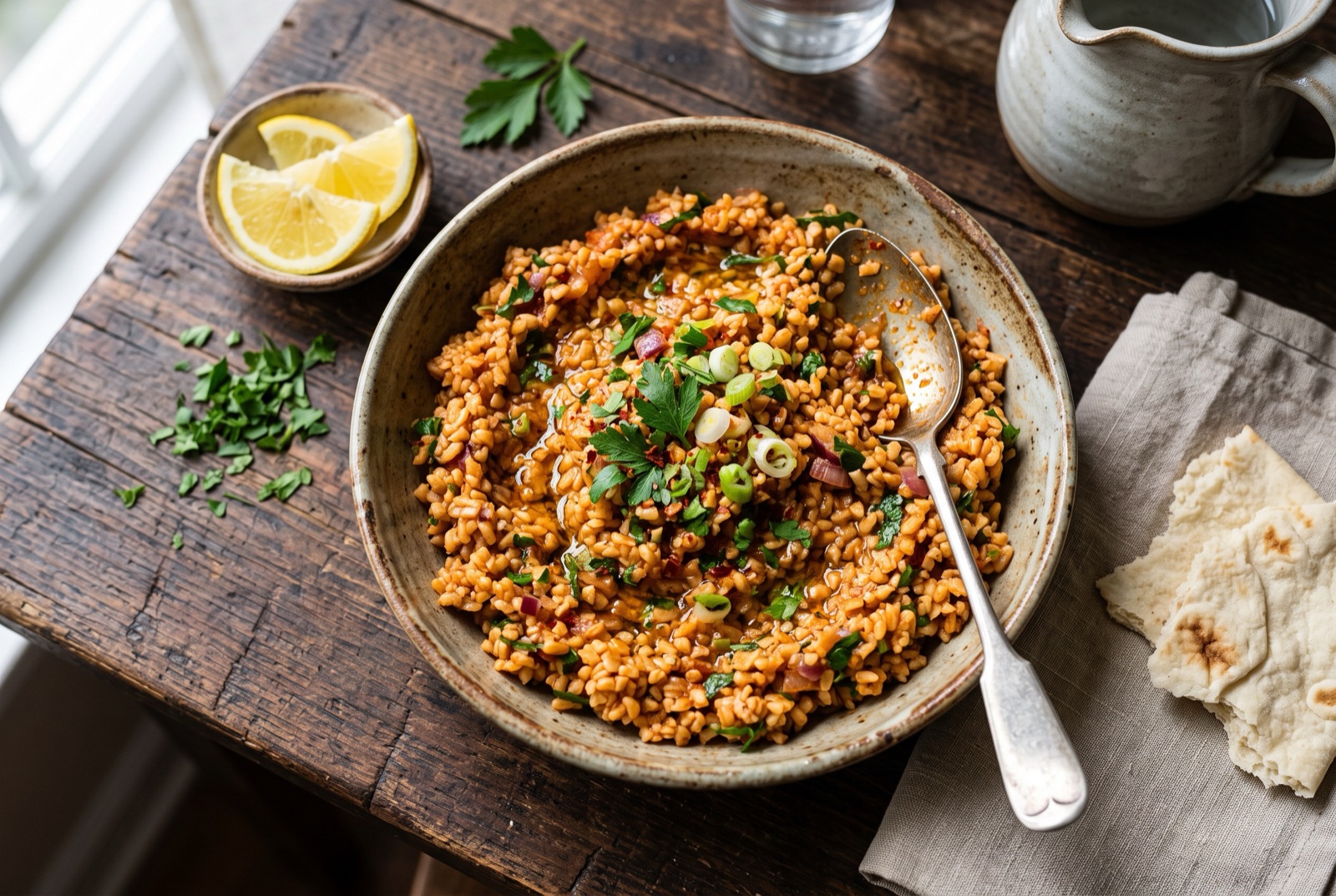

- Gate
- ArmeniaWestern Armenian tradition
- Prep
- 25 min
- Cook
- 12 min
- Total time
- 1 hr 7 min incl. 30 min rest
- Serves
- 6
- Status
- Easy
- Nutrition / serving · estimated
- Calories 340 kcal
- Protein 8 g
- Carbs 48 g
- Fat 13 g
- Fiber 9 g
- Sodium 620 mg
Why this recipe works.
- Softens the bulgur in the tomato and pepper base rather than water, which is what separates eetch from every other bulgur salad.
- Lemon quantity set high on purpose, with an explanation of what happens when it is not.
- A soaking method that gives distinct, chewy grains instead of a wet pile.
- No cooking beyond softening an onion, so it scales to any size without extra work.
Ingredients.
14 itemsFor the base
For the dressing
To finish
Equipment
- Wide saucepan with a lid
- Large mixing bowl
- Sharp knife
Instructions.
Soften the onion
Cook the chopped onion in the olive oil over medium-low heat for about 8 minutes, until it is completely soft and just beginning to turn golden at the edges. It should smell sweet, with no raw onion sharpness left.
Fry the pastes
Stir in the tomato paste and red pepper paste and cook for 2 to 3 minutes, pressing them against the base of the pan. The colour will deepen from bright red to brick and the mixture will start to smell sweet rather than metallic.
Add the bulgur and liquid
Tip in the bulgur and stir until every grain is coated red, then pour over the boiling water and the salt. Stir once, level the surface, and clamp on a lid.
Let it swell
Take the pan off the heat and leave it covered and undisturbed for 30 minutes. Do not stir or lift the lid — the bulgur is absorbing steam as well as liquid, and each peek costs you texture.
Fluff and cool
Fork the bulgur through to separate the grains — they should be tender with a distinct chew and no hard core — then spread it in a wide bowl and let it come down to room temperature.
Dress it
Work in the lemon juice, Aleppo pepper and black pepper with your hands or a fork, squeezing gently so the dressing reaches every grain. Taste and keep adding lemon until the salad tastes clearly sharp, not just tomatoey.
Fold in the fresh things
Just before serving, fold through the parsley, spring onion, diced tomato and mint. Check the salt one last time and mound it onto a platter with lettuce leaves for scooping.
Tips from our kitchen.
- Use coarse bulgur (number 3 or 4), not fine. Fine bulgur turns to paste in this method and gives you a dip rather than a salad.
- Cook the tomato and pepper paste in the oil for a couple of minutes before any liquid goes in — it should darken and smell sweet rather than tinny.
- Add the hot liquid, stir once, cover and leave it alone. Stirring while it swells breaks the grains and makes them gummy.
- Let it come to room temperature before the lemon and oil go in. Acid added to hot bulgur mostly evaporates and you lose the sharpness.
- Add the fresh tomato and herbs last and just before serving, or they weep and dull the colour of the whole bowl.
- Taste for salt and lemon after it has chilled, not before. Cold food reads noticeably blander than warm.
Substitutions.
- Red pepper paste (biber salçası) → An extra tablespoon of tomato paste plus a teaspoon of sweet paprika
- Pepper paste gives a fruitier, mellower heat. The substitute gets the colour and most of the sweetness but is a little flatter.
- Coarse bulgur → Medium bulgur, with 15 minutes less soaking
- Medium works but gives a softer texture. Do not use fine bulgur, which collapses entirely in this method.
- Fresh lemon juice → Pomegranate molasses, or half lemon and half molasses
- Pomegranate molasses is common in Aleppo Armenian versions and adds a darker sourness. Cut back on any added sweetness if you use it.
Variations.
- Hand-pressed eetch
- Made drier and squeezed into small ovals in the palm so each portion holds together, served on a platter as finger food.
- Eetch with pomegranate
- Fresh pomegranate seeds and a spoon of the molasses folded in at the end, giving pops of sweetness against the sour bulgur.
- Herb-heavy eetch
- Double the parsley and add mint and dill, pushing the salad closer to tabbouleh while keeping the cooked tomato base.
Storage & reheating.
Eetch keeps 4 days refrigerated and is genuinely better on day two, once the bulgur has finished absorbing the dressing. Store it without the fresh tomato and herbs if you can, and fold those in just before serving so they stay bright. Bring it to cool room temperature rather than serving it fridge-cold, which mutes the lemon. Do not freeze it — the bulgur turns mealy and the tomato weeps on thawing.
Serve with
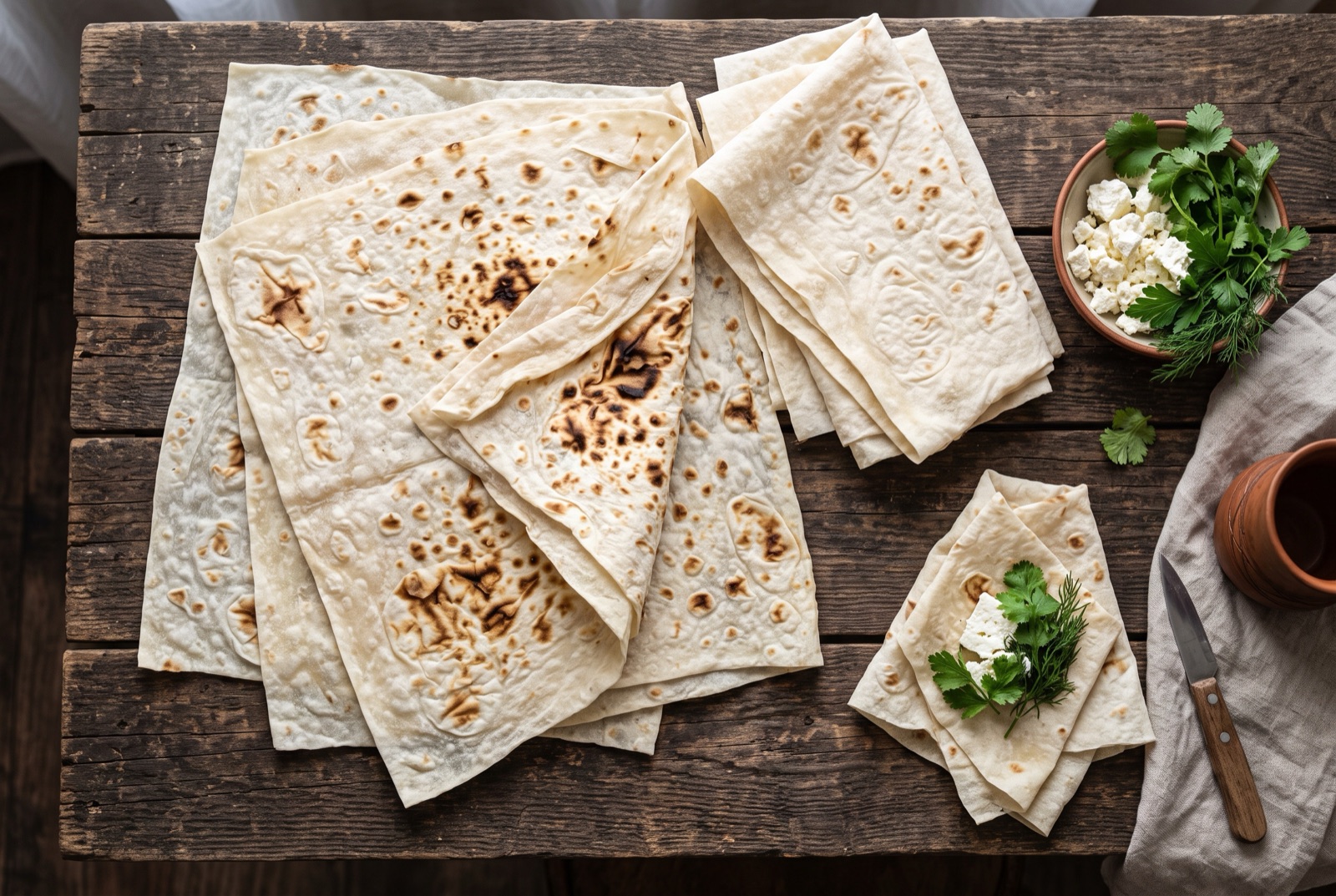
Whole lettuce leaves or lavash for scooping, alongside olives, white cheese and other cold meze.
The story behind Eetch.
Eetch belongs to the western Armenian kitchen, the cooking carried out of Anatolia after 1915 and rebuilt in Aleppo, Beirut, Marseille, Buenos Aires and above all in the Armenian-American communities of the eastern United States. It sits in a family of bulgur salads found across the region — the Turkish kısır is its nearest relative, and the two are close enough that arguing about priority is pointless. Where eetch distinguishes itself is in the cooking of the base: onion, tomato paste and pepper paste are softened together first, and the bulgur goes into that rather than into water, which makes it darker, deeper and less herbaceous than tabbouleh.
It is a dish built around what a household kept in the cupboard. Bulgur stores indefinitely, tomato paste and biber salçası were made in quantity each summer and sealed under a film of oil, and lemons and parsley were the two fresh things you could count on. That is why eetch turns up at every Armenian church picnic, funeral reception and community table in North America: it costs almost nothing, scales to a hundred people without any change in method, keeps for days, and improves overnight.
The recipes vary in one significant way. Some households make it soft and moist, closer to a spoonable relish; others make it drier and press it into small ovals in the palm, the way kibbeh is shaped, so it can be picked up. Both are correct. The one thing all versions agree on is the lemon, which should be assertive enough to make you check the bowl — under-acidified eetch tastes heavy and flat, and no amount of extra herbs will fix it.
Questions, answered.
What is the difference between eetch and tabbouleh?
Tabbouleh is overwhelmingly a parsley salad with a little bulgur in it, soaked in water and dressed with lemon and oil. Eetch is a bulgur salad first, with the grain softened in a cooked base of onion, tomato paste and pepper paste, so it is darker, denser and more savoury with herbs playing a supporting role.
Do I need to cook the bulgur?
No. Coarse bulgur is already parboiled and dried, so it only needs to absorb hot liquid. Pour the hot tomato base over it, cover, and leave it for about 30 minutes until the grains have swollen and are tender with a slight chew. Boiling it turns it to mush.
What is red pepper paste and where do I find it?
Biber salçası is a thick paste of sun-ripened red peppers, sold in jars in Turkish, Armenian and Middle Eastern shops in sweet and hot versions. It gives eetch its colour and fruity depth. If you cannot find it, extra tomato paste with sweet paprika gets you most of the way there.
My eetch tastes flat — what is missing?
Nine times out of ten it is lemon, and the rest of the time it is salt. Cold grain dishes absorb both and need noticeably more than they seem to while warm. Add lemon juice a tablespoon at a time and taste after each until the salad tastes clearly sharp rather than merely tomatoey.
Can I make it a day ahead for a party?
Yes, and it is better that way. Make the bulgur base a day early and refrigerate it, then fold in the diced tomato, parsley and spring onion an hour before serving so they keep their texture and colour. Check the seasoning again at that point.
You might also like.
All recipes →
Keep exploring Armenia.
Armenia has 9 more dishes in the atlas — Armenian Harissa and Gata, and 7 more.
All Armenia recipes Tomato paste recipes Onion recipes Parsley recipes appetizersideveganvegetariandairy freenut freeRecipe by The DishRoute Kitchen · published August 20, 2026 · updated August 20, 2026