Ecuador.
Ecuador
Ecuador is small enough to cross by road in a day, and it holds three separate kitchens while you do it. On the Pacific coast cooks build meals around shrimp, tuna, green plantain, peanuts and coconut milk, and reach for lime rather than chile. Two hours uphill in the Andes the same country eats potatoes — dozens of native varieties — alongside large-kernel hominy called mote, fresh unaged cheese, milk and pork, in soups thick enough to hold a spoon upright. East of the mountains, the Amazon provinces cook river fish and yuca, often wrapped in leaves and steamed over coals. What links all three is a spice logic that is deliberately gentle by Latin American standards: achiote for color, cumin and garlic for depth, cilantro stirred in at the end, and chile kept off the stove entirely. Heat arrives at the table instead, as ají criollo in a jug, so every diner seasons their own plate to the level they want.

- Continent
- South AmericaAndes
- Recipes in atlas
- 10
- Must-try dishes
- 3
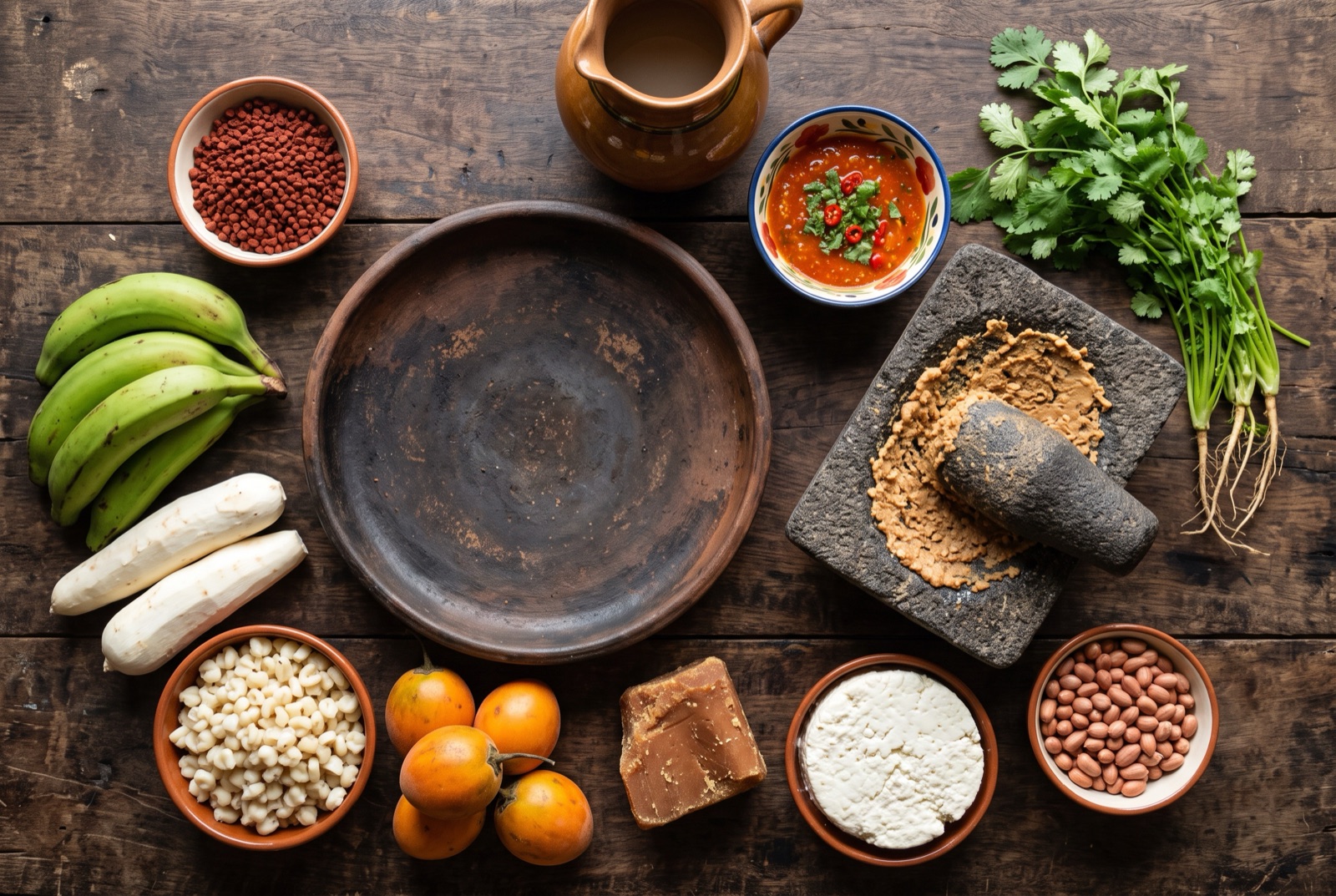
- Pantry staples
- 10
Start with the classics.
Must tryThe dishes that explain the Ecuador kitchen fastest — if you cook only a few things from this page, cook these.
Inside the Ecuador kitchen.
Almost every savory Ecuadorian pot starts with a refrito: onion, garlic and often tomato or bell pepper softened in oil colored with achiote, seasoned with cumin and a little oregano. The seeds are steeped in warm oil until it turns orange, then strained out — that oil is the country's base note, and it explains why so many dishes share the same warm terracotta color without sharing a flavor. Ecuadorian cooks generally stop the refrito before it browns, so the finished dish tastes sweet and rounded rather than caramelized.
In the Sierra, corn and potato do the structural work that wheat does elsewhere. Andean corn has huge starchy kernels, and it appears boiled as mote, toasted as tostado, and popped as canguil — the popcorn that lands on top of soups and seafood. Potatoes are treated as a thickener as much as a vegetable: floury varieties are cooked until they disintegrate into milk, giving highland soups their body without cream or flour. Fresh cheese, curdled that morning and barely salted, is crumbled into those soups off the heat, where it softens but never fully melts.
The coast runs on a different starch entirely. Green plantain is boiled, fried, mashed, re-fried and pounded flat, turning up at breakfast as a stuffed ball, at lunch as a mash, and beside everything as thin salted chips called chifles. Peanuts are ground into sauces rather than eaten as a snack, coconut milk carries the Afro-Ecuadorian cooking of Esmeraldas, and lime does what vinegar does in Europe — cures onion, tightens fish, lifts a heavy sauce.
The daily rhythm is set by almuerzo, the fixed-price midday meal served in every town. It arrives in a set order: a juice, then a soup, then a plate of rice with a stew or a fried protein and a small salad, sometimes a spoonful of something sweet to close. Ecuadorians eat their main meal at midday and something much lighter in the evening, often the same plantain-and-cheese food they had for breakfast.
Regional identity shows up most clearly at festivals. Colada morada and guagua de pan mark the Day of the Dead in the highlands; fanesca, a fifteen-legume soup with salt cod, appears only in Holy Week; hornado and cuy anchor Sunday markets in Cuenca and Ambato. On the coast the calendar matters less than the hour — encebollado is a morning dish, ceviche belongs to late morning and early afternoon, and ordering either at dinner marks you as a visitor.
Signature pantry.
10 staplesThe ingredients this cuisine cannot function without.
- achiote
- green plantain
- yuca (cassava)
- mote (Andean hominy)
- naranjilla
- panela
- queso fresco
- peanuts
- ají criollo
- cilantro
How people eat in Ecuador.
Lunch is the anchor of the day. The set almuerzo — juice, soup, main plate, sometimes a small dessert — is served everywhere from market stalls to offices, and skipping the soup course is genuinely unusual. Rice appears beside nearly every main, and a plate without it looks unfinished to most Ecuadorians. Chile is never cooked into the food; a bowl or bottle of ají criollo sits on the table so each person adjusts their own heat, and passing it to a guest before they ask is basic courtesy. Coastal dishes come with something crunchy on top — popcorn, toasted corn or plantain chips — and you are meant to add them yourself, in stages, so they never lose their snap.
Regional kitchens.
Ecuador cooks 4 distinctly different ways depending on where you stand — here is what changes between them.
- R1La Costa (Guayaquil, Manabí, Esmeraldas)
- Shrimp, tuna, green plantain and peanut sauces, with lime doing the seasoning. Esmeraldas adds the country's Afro-Ecuadorian repertoire, where coconut milk replaces stock in almost every fish dish.
- R2La Sierra (Quito, Cuenca, Ambato)
- Potato, mote and fresh cheese at altitude, cooked slowly and eaten hot. Roast pork, thick milk-based soups and toasted corn dominate the Sunday markets between the two Andean ranges.
- R3La Amazonía (El Oriente)
- River fish and yuca cooked in bijao leaves over coals, plus palm hearts, wild fruit and chontacuro grubs — the least exported and least standardized of Ecuador's regional kitchens.
- R4Galápagos
- A small island kitchen built on spiny lobster, wahoo and grouper, borrowing coastal technique from the mainland but working with whatever the day's boats bring in.
All Ecuador recipes.
10 recipes and counting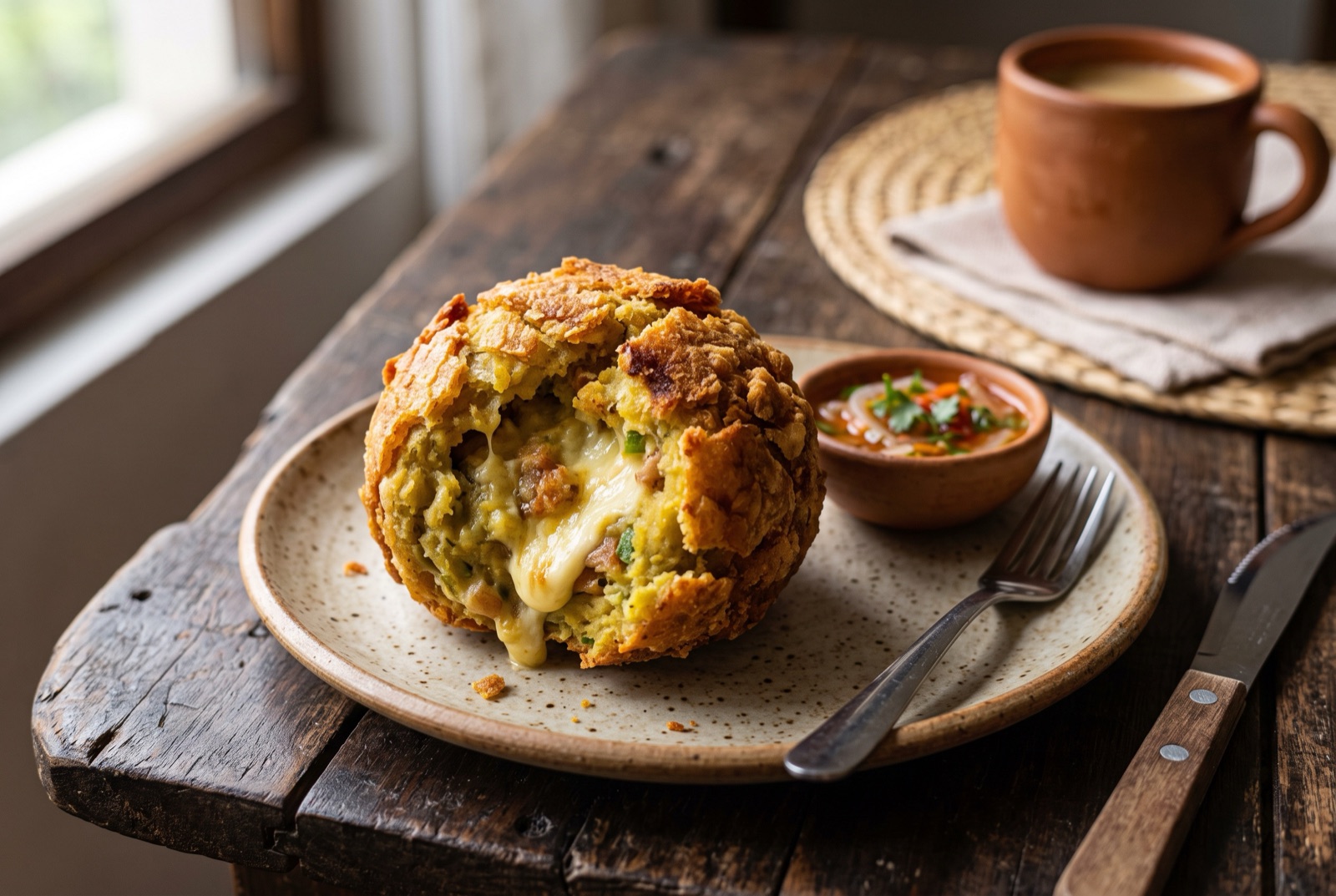
Ecuador40 min
Bolón de Verde
Ecuadorian Green Plantain and Cheese Ball
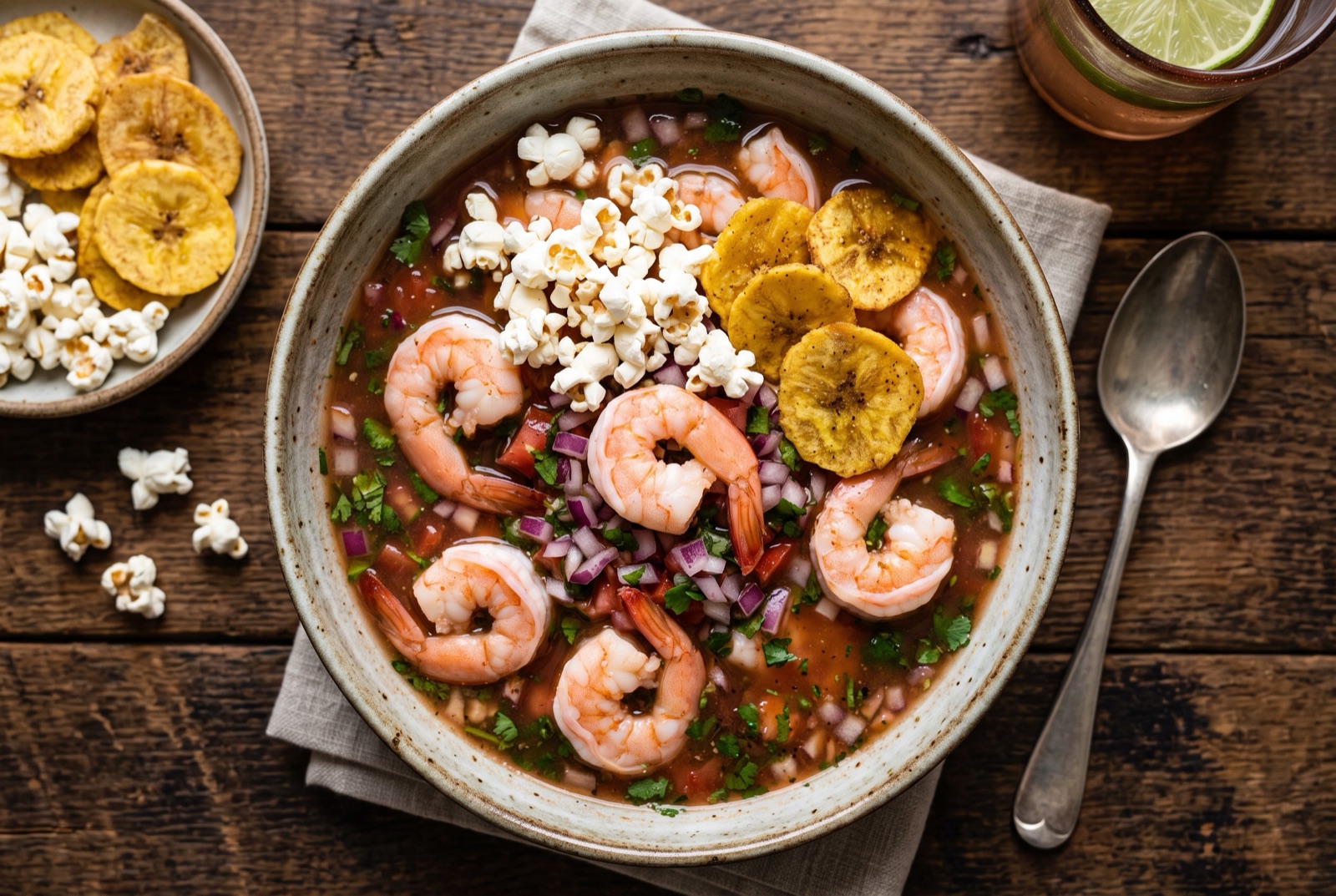
Ecuador1 hr 35 min
Ceviche de Camarón
Ecuadorian Shrimp Ceviche in Tomato Broth
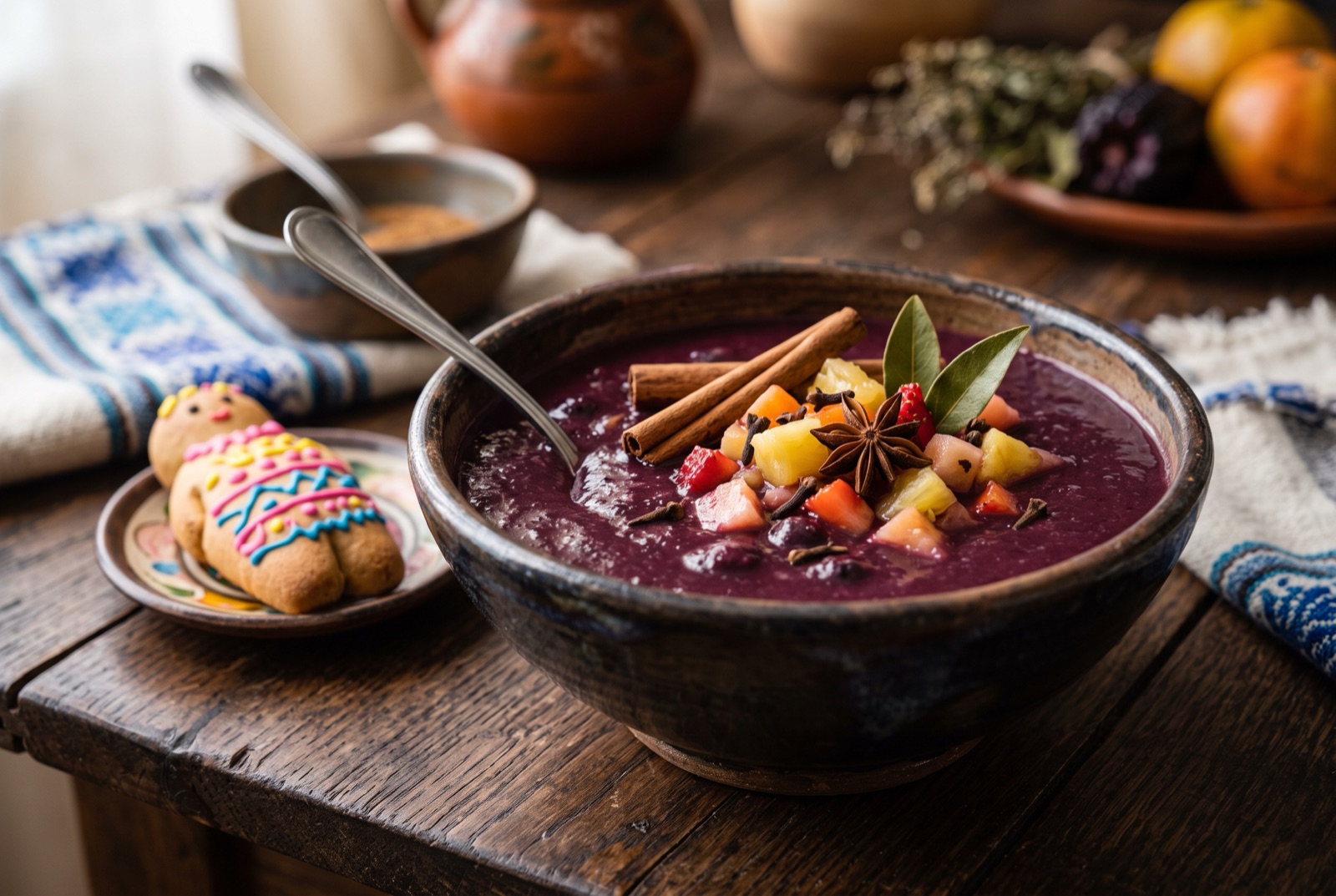
Ecuador2 hr
Colada Morada
Ecuadorian Spiced Purple Corn and Berry Drink
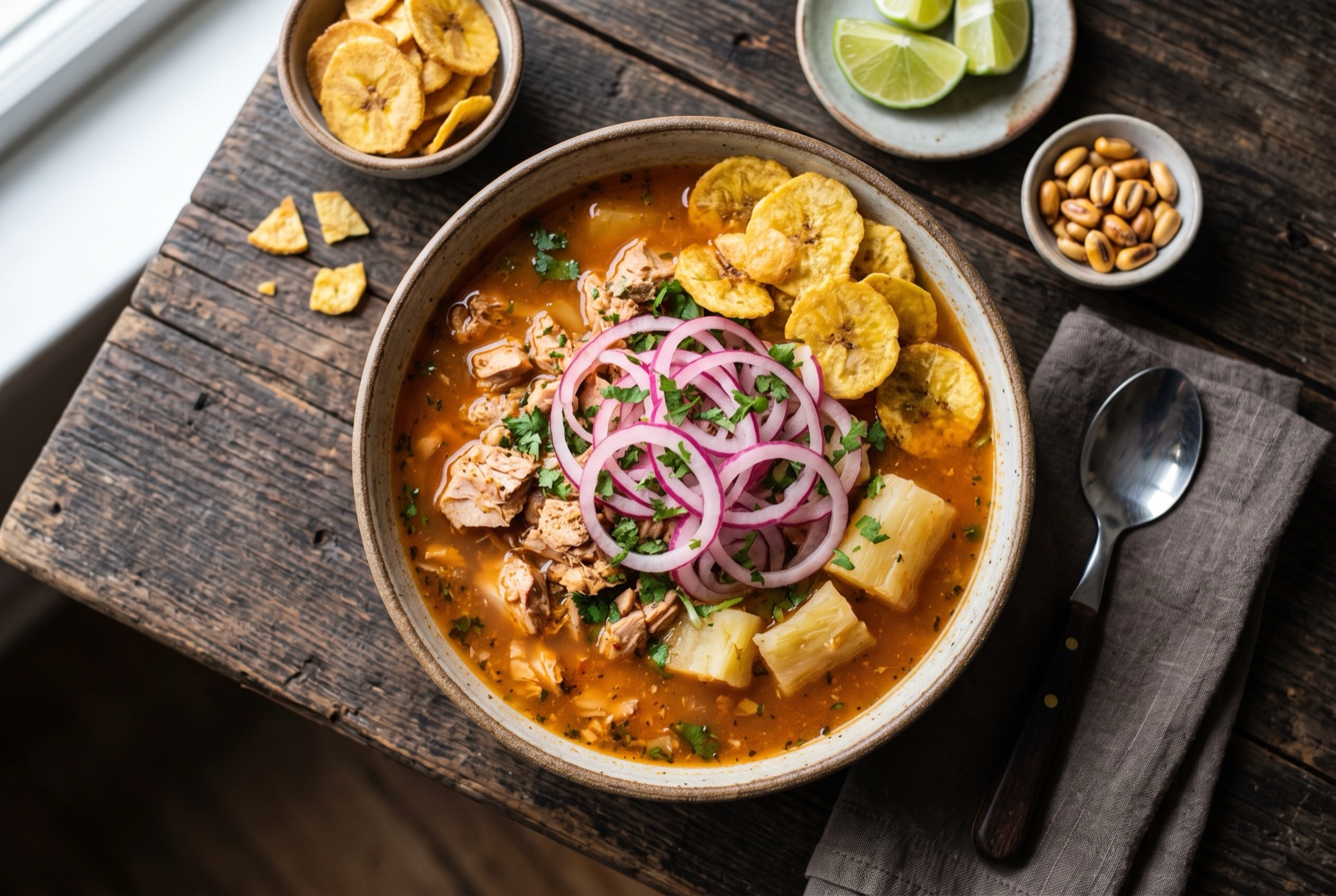
Ecuador1 hr 15 min
Encebollado
Ecuadorian Tuna and Cassava Soup
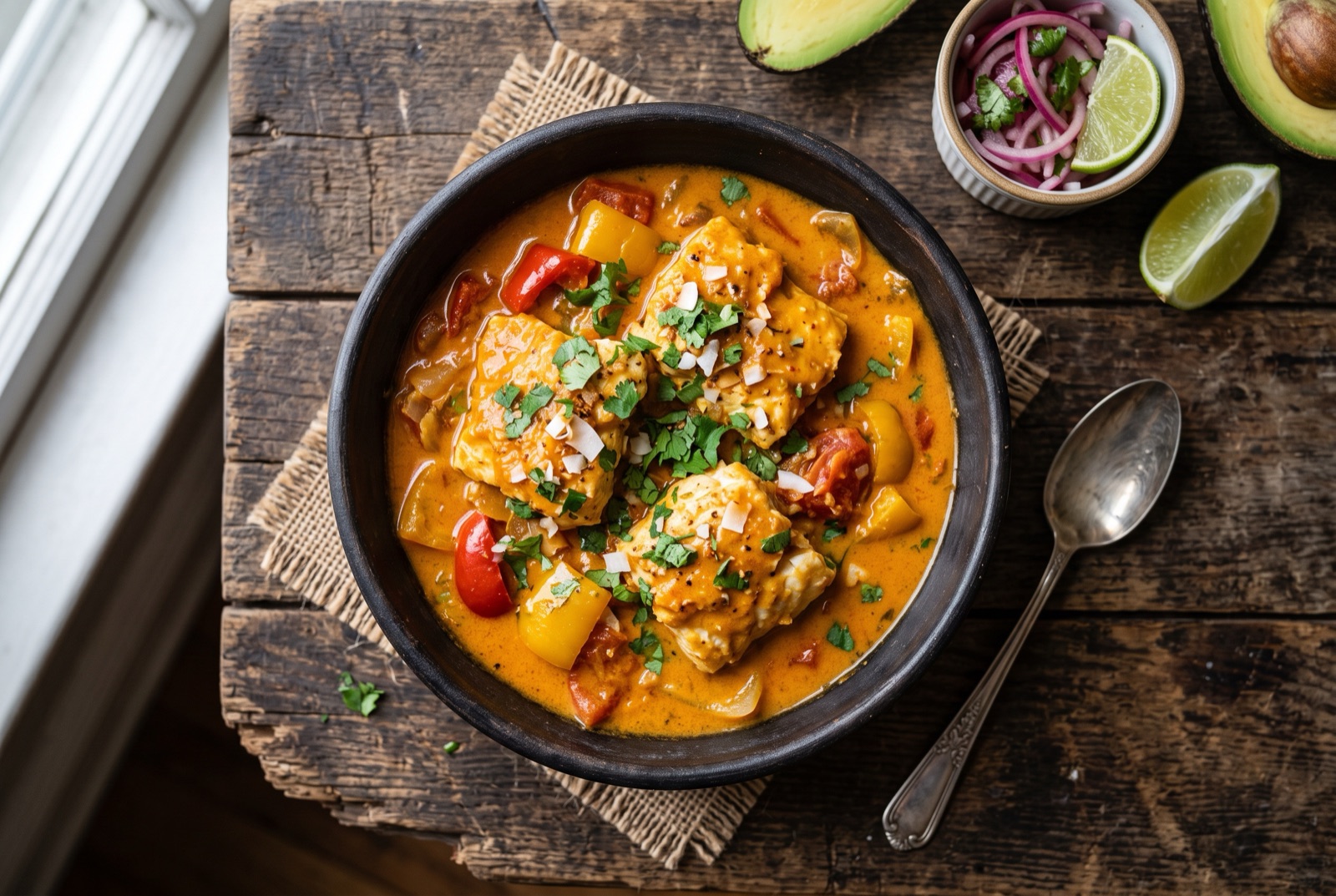
Ecuador1 hr 10 min
Encocado de Pescado
Esmeraldas Fish in Coconut Sauce
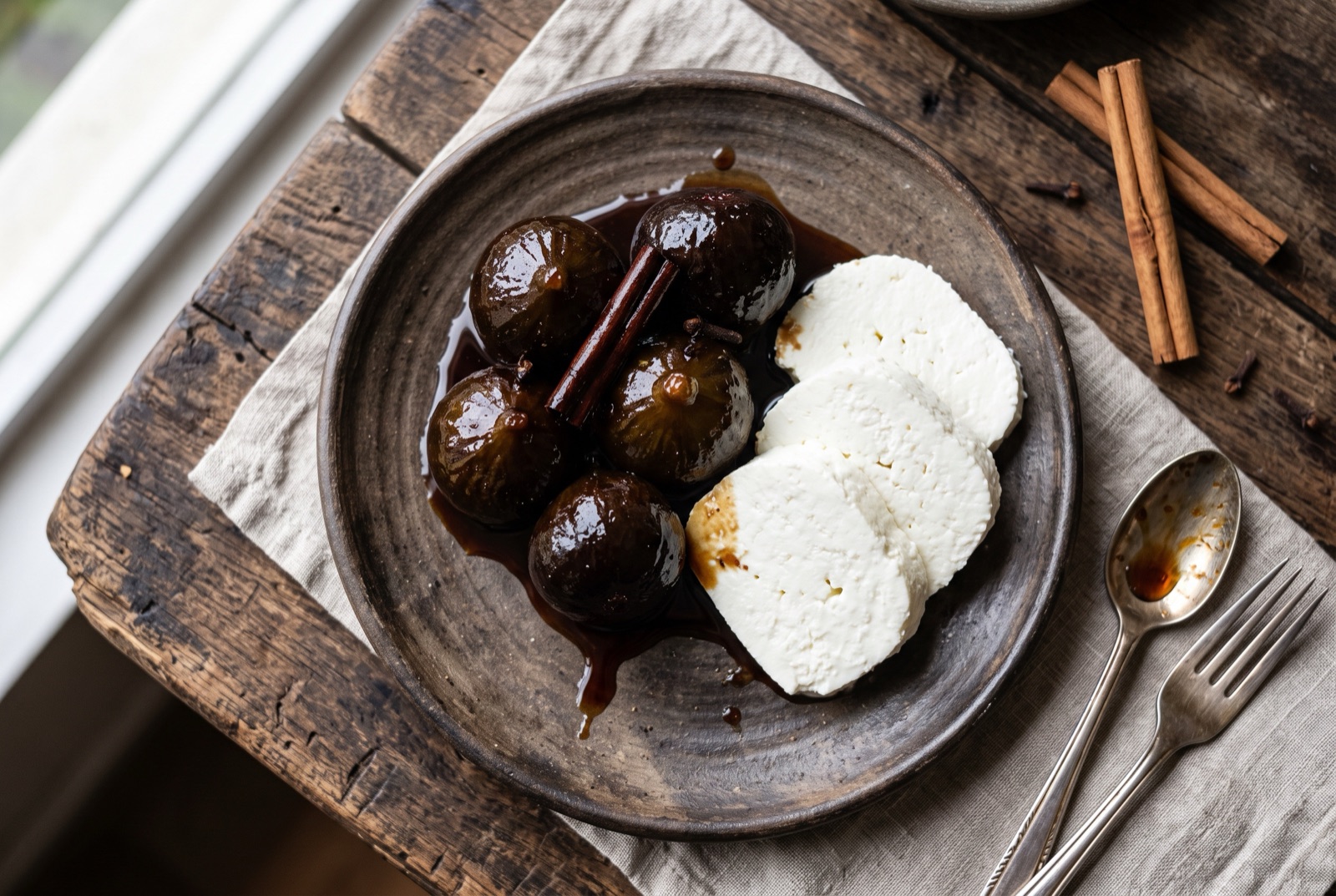
Ecuador10 hr 50 min
Higos con Queso
Ecuadorian Figs in Panela Syrup with Cheese
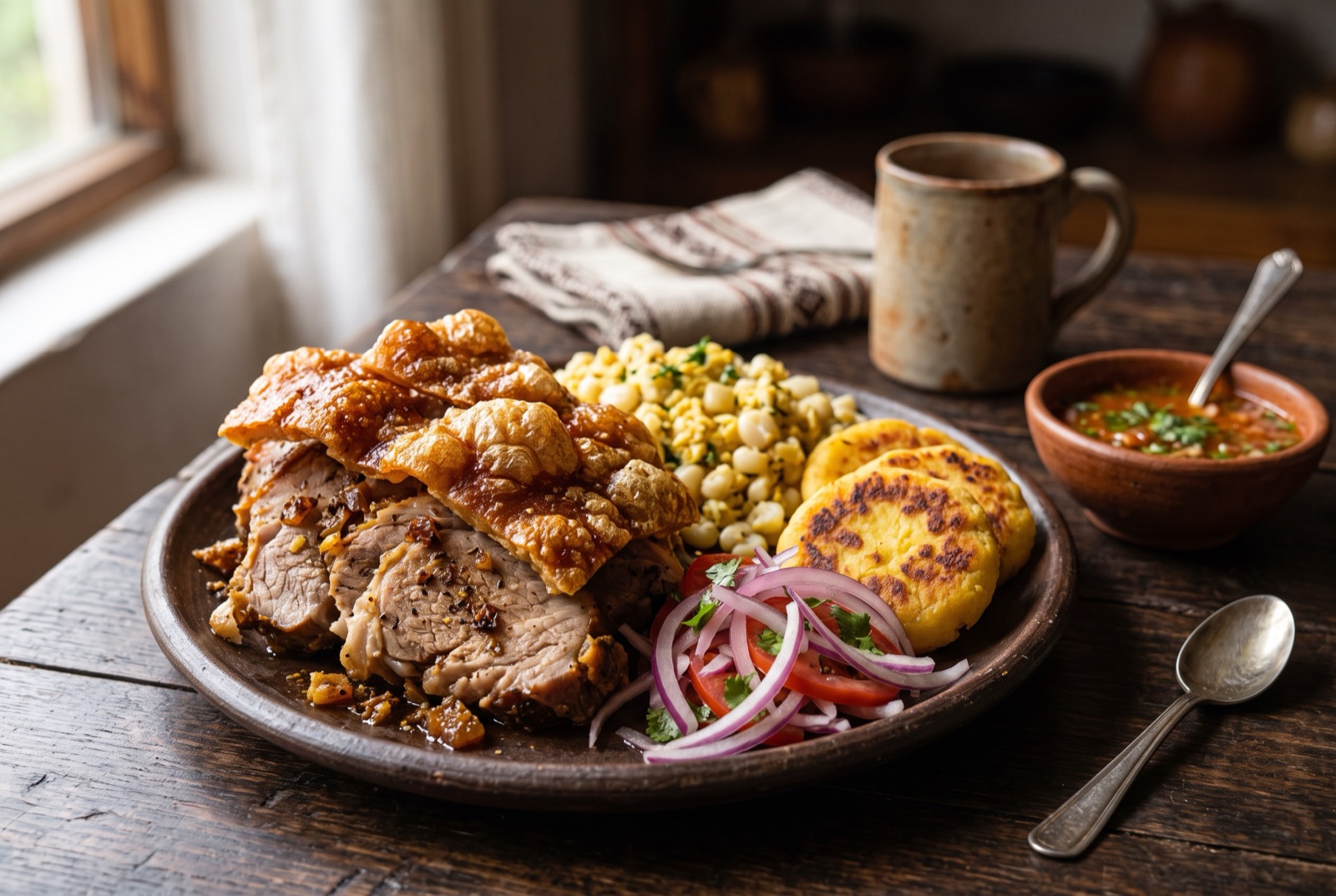
Ecuador17 hr 35 min
Hornado
Ecuadorian Slow-Roasted Pork with Crackling
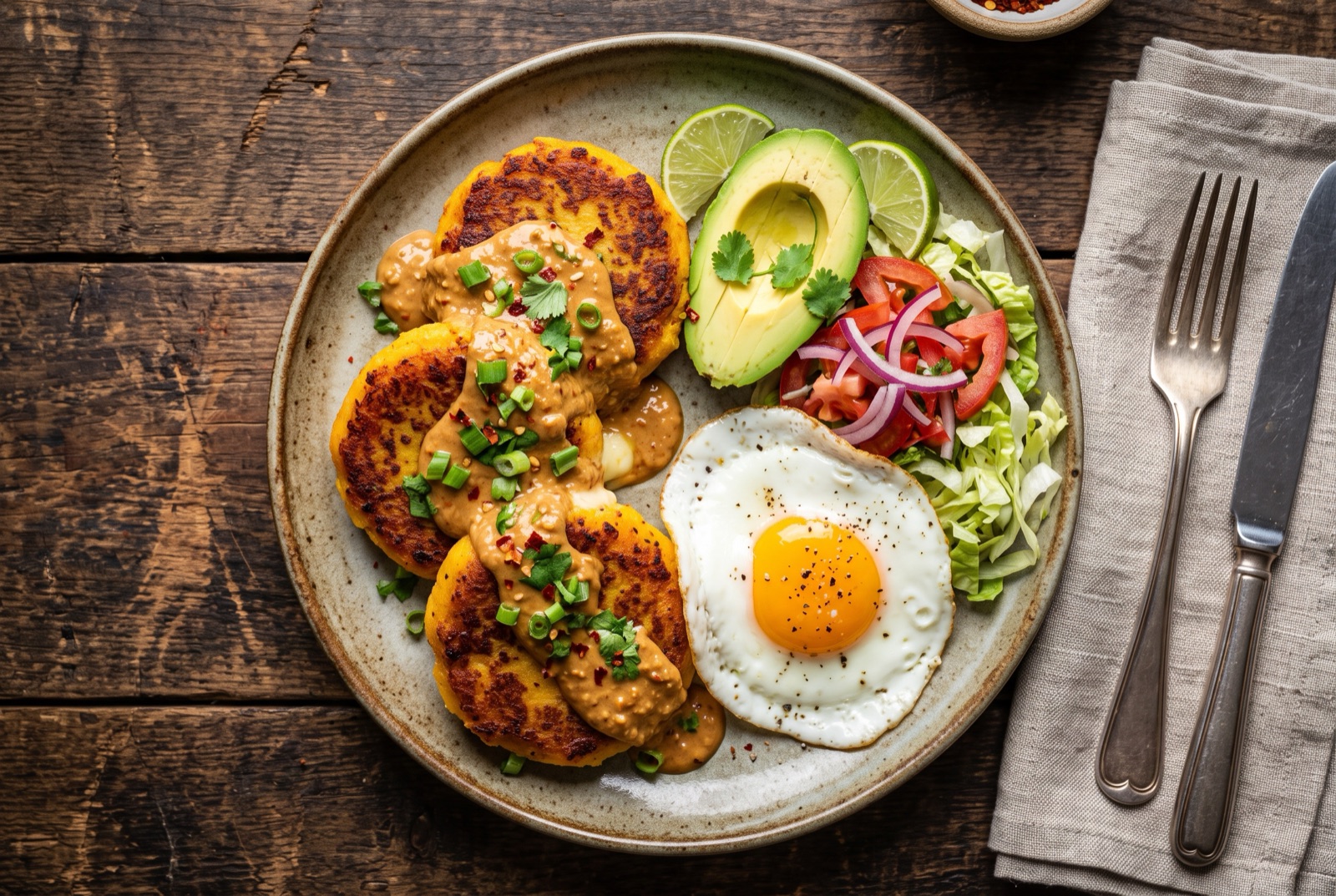
Ecuador1 hr 25 min
Llapingachos
Ecuadorian Cheese-Stuffed Potato Patties
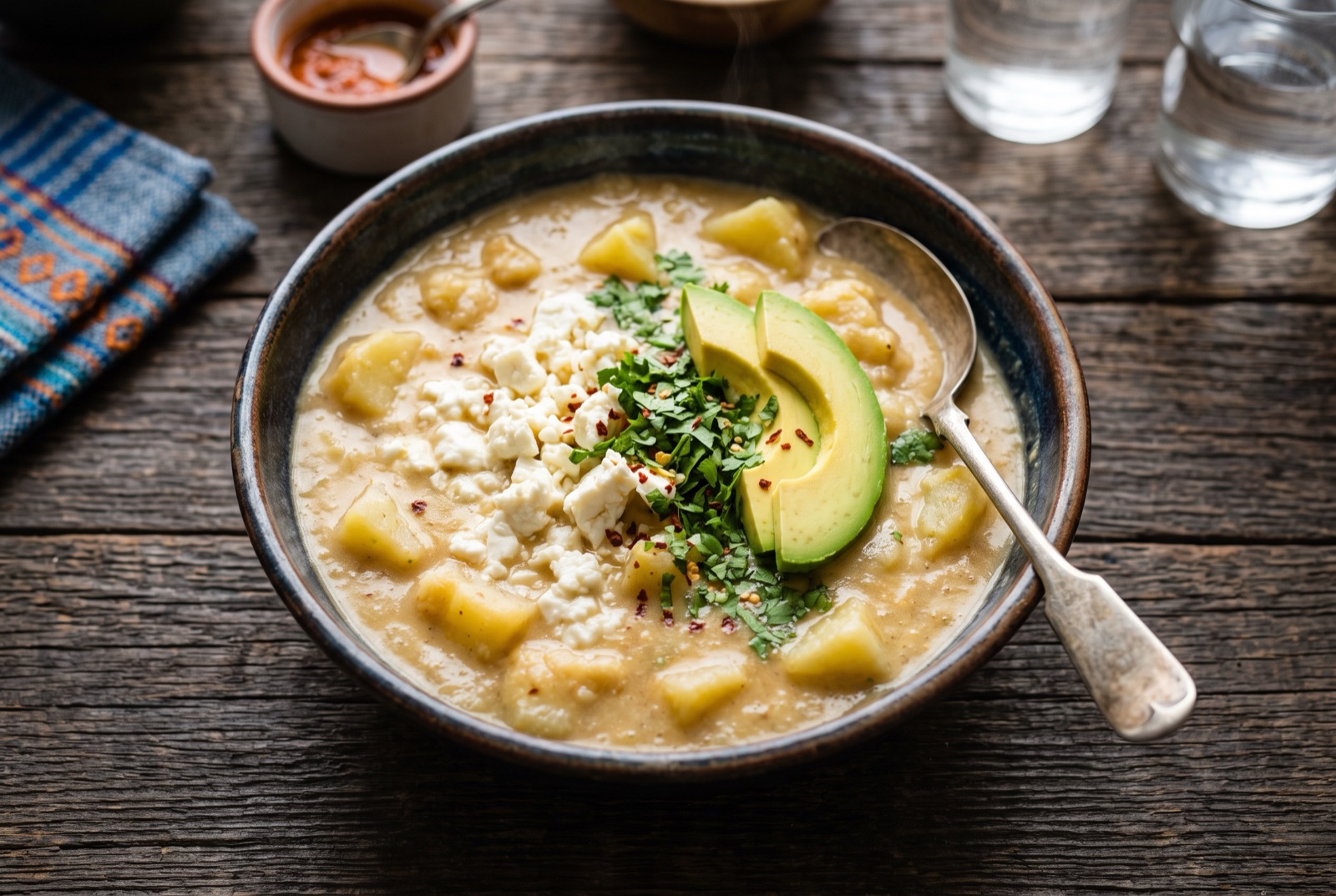
Ecuador55 min
Locro de Papa
Ecuadorian Potato and Cheese Soup
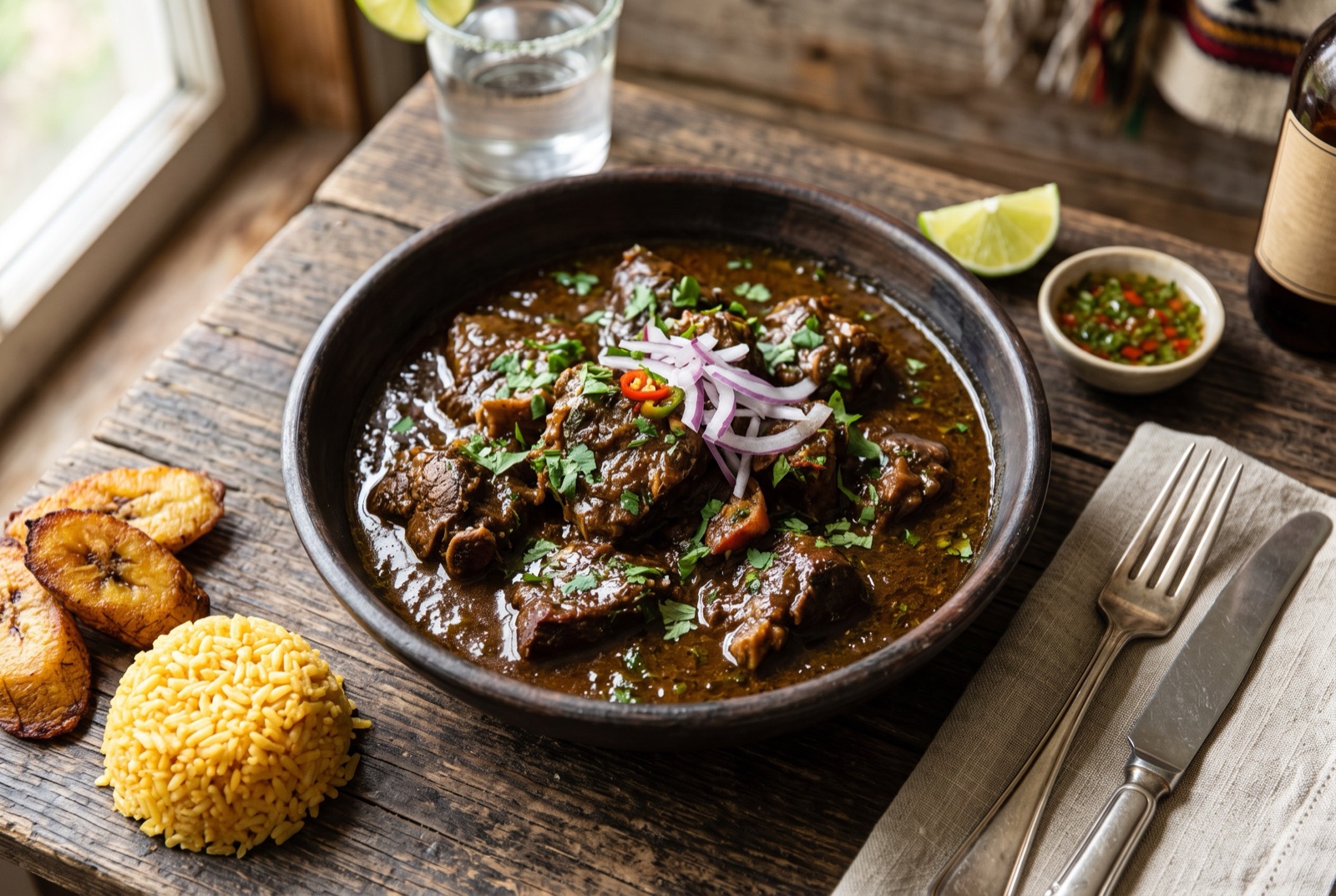
Ecuador2 hr 55 min
Seco de Chivo
Ecuadorian Goat Stewed in Naranjilla and Beer
Keep traveling.
Ecuador sits in Andes, and its kitchen shares borders as well as ingredients with Argentina and Bolivia.
 Argentina
 Bolivia