Locro de Papa.
Ecuadorian Potato and Cheese Soup
Locro de papa · say it: LOH-kroh deh PAH-pah
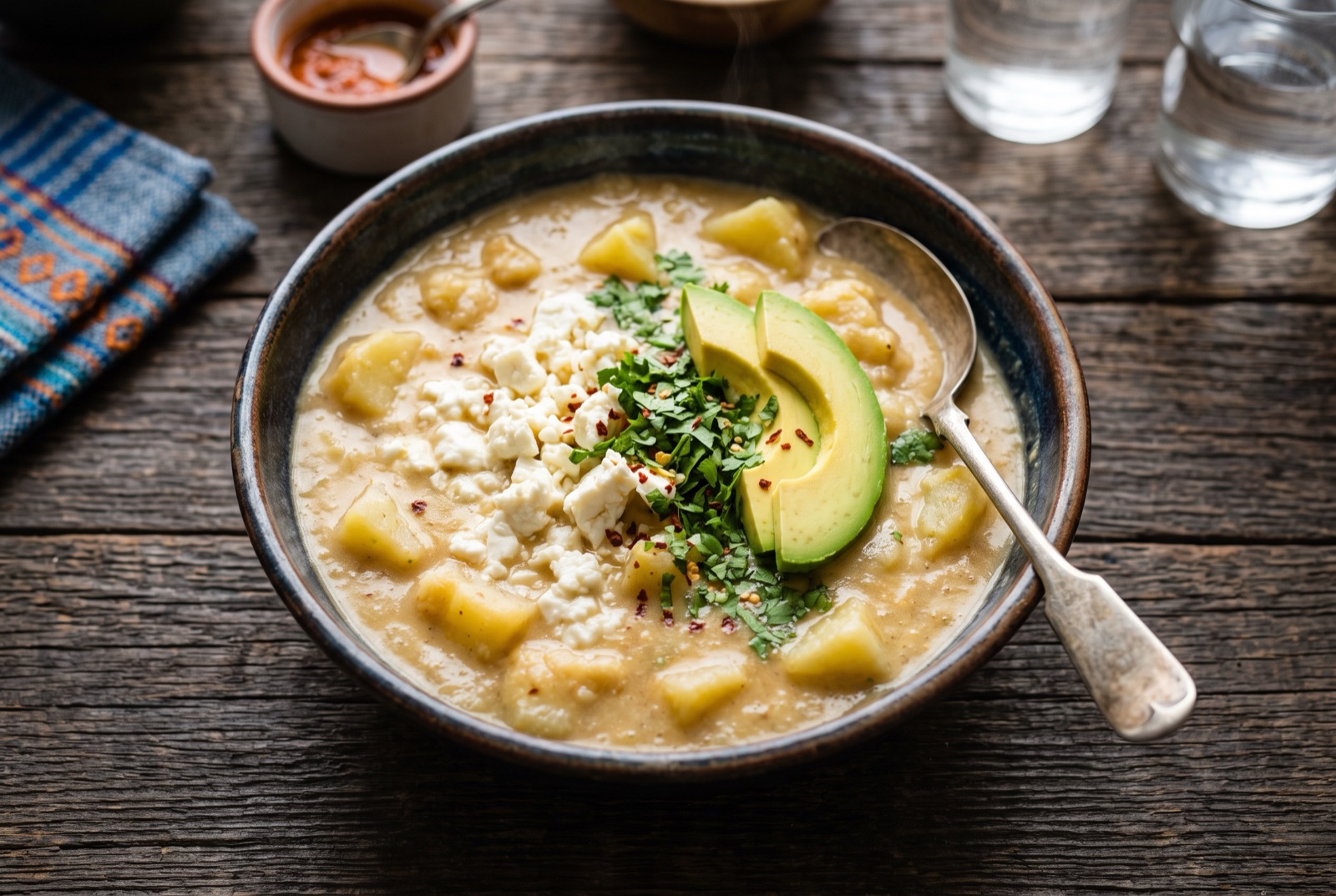
Locro de papa is a thick highland soup in which the potatoes provide their own thickening. Half go into the pot cut small and are cooked until they break down completely into a starchy, milky base; the rest go in later in chunks and stay whole, so every spoonful has something to bite. It is seasoned quietly — achiote, onion, garlic and a little cumin — and finished off the heat with crumbled fresh cheese, which softens into soft threads rather than melting. Sliced avocado on top is not a garnish but part of the dish, adding coolness and fat to a soup that is otherwise all starch and dairy. At altitude, this is what people eat when the afternoon turns cold.

- Gate
- EcuadorThe Andean Sierra
- Prep
- 15 min
- Cook
- 40 min
- Total time
- 55 min
- Serves
- 4
- Status
- Easy
- Nutrition / serving · estimated
- Calories 435 kcal
- Protein 18 g
- Carbs 49 g
- Fat 19 g
- Fiber 7 g
- Sugar 9 g
- Sodium 720 mg
Why this recipe works.
- Cooks the potato in two stages, so the soup thickens naturally and still has texture — no flour, no cream, no blender.
- Adds the cheese off the heat, which keeps it soft and stringy instead of squeaky and separated.
- Keeps the milk below a simmer, the point where most home versions curdle or catch on the base.
- Treats avocado as part of the dish rather than decoration, which is how it is actually served in the Sierra.
Ingredients.
14 itemsFor the base
For the soup
To finish
Equipment
- Heavy soup pot
- Wooden spoon
- Ladle
Instructions.
Build a gentle refrito
Warm the achiote oil over low heat and cook the onion and garlic with the cumin for 6 to 8 minutes, until the onion is completely translucent and smells sweet rather than sharp. Keep it pale — browning here would make the finished soup look muddy.
Dissolve the first batch of potato
Add the diced floury potatoes, stir them through the oil for a minute, then pour in the water and bring to a simmer. Cook for about 20 minutes, until the pieces collapse when you press them against the side of the pot and the liquid has turned cloudy and thick.
Crush and season
Crush most of the softened potato against the pot wall with a wooden spoon until the base looks like a rough purée with a few lumps left. Season with salt and white pepper now, tasting as you go — this is the layer that carries the seasoning.
Tip Resist the blender. It turns potato soup slick and gluey in about ten seconds.
Add the chunks
Drop in the waxy potato chunks and simmer for 12 to 15 minutes, until a knife slips into them easily but they still hold their edges. Stir occasionally, scraping the base, since the thickened soup catches easily from here on.
Bring in the milk
Pour in the milk and warm the soup through over low heat for 5 minutes without ever letting it bubble — the surface should barely move. Check the salt one more time; the milk will have dulled it.
Finish off the heat and serve
Take the pot off the stove, scatter in the crumbled cheese, and stir once so it softens into the soup without breaking apart completely. Ladle into bowls, lay avocado slices over each one, top with cilantro and scallions, and pass the ají separately.
Tips from our kitchen.
- If you can find two kinds of potato, use a floury one for the dissolving batch and a waxier one for the chunks. With a single variety, just cut the first batch much smaller.
- Crush the softened potatoes against the side of the pot with a spoon rather than blending. A blender makes the soup slick and gluey within seconds.
- Never let the soup boil after the milk is in — it will catch on the base and taste scalded even if nothing visibly burns.
- Salt in stages. Potato absorbs a surprising amount, and a pot seasoned only at the start tastes flat by the time it reaches the table.
- Crumble the cheese small. Large lumps sink and sit at the bottom instead of dispersing through the soup.
- Slice the avocado at the last moment and lay it on top rather than stirring it in, so it stays cool against the hot soup.
Substitutions.
- Queso fresco → Mild feta rinsed under water, fresh mozzarella torn small, or ricotta stirred in at the end
- Feta needs rinsing or the soup ends up too salty. Ricotta gives the creamiest result but none of the gentle stringiness of the original.
- Whole milk → Half milk and half single cream for a richer pot, or unsweetened oat milk
- Oat milk holds up better than most plant milks here because it does not split, though the soup loses some of its sweetness.
- Achiote oil → 1 tsp sweet paprika bloomed in oil, or a pinch of turmeric
- Locro should be pale gold rather than orange, so use a light hand — this is much less achiote than a coastal stew would take.
Variations.
- Locro de zapallo
- Made with Andean squash alongside or instead of some of the potato, giving a sweeter, deeper orange soup that is common in the southern highlands.
- Yaguarlocro
- The Quito market version: the same potato base served with fried lamb blood sausage, avocado and onion salsa. Powerful, and not a beginner's introduction to the family.
- Locro de habas
- Fresh broad beans cooked into the potato base, popular in the highlands during the bean harvest and noticeably greener and grassier.
Storage & reheating.
Keeps 3 days refrigerated and thickens considerably as it sits — loosen with milk or water when reheating. Warm it gently and stir often, since the potato starch on the base scorches easily. Do not freeze: potato soup goes grainy and the dairy separates on thawing. Add fresh cheese and avocado only to the portion you are serving, never to the pot going back in the fridge.
Serve with
Sliced avocado, a bowl of ají criollo, and toasted corn (tostado) scattered on top if you have it.
The story behind Locro de Papa.
Locro is a word that travels. Versions of it exist across the Andes and down into Argentina, where it means a heavy corn, bean and meat stew cooked for national holidays, and in parts of Peru and Bolivia it refers to squash-based dishes. The Ecuadorian sense is narrower and older-feeling: a smooth, pale, potato-thickened soup that stands at the head of the highland table and appears in some form in almost every household in Quito, Cuenca and the towns between them.
That range makes sense given where the potato comes from. The Andes are the plant's birthplace, and Ecuador still grows a great many native varieties that never make it into supermarkets — papa chola, papa chaucha, papa super chola among them — each with a different balance of starch and moisture. Cooks pick according to what they want the soup to do, and the two-stage method in this recipe is the household workaround for anyone who only has one type of potato to hand.
The cheese is the other decision that shapes the result. Ecuadorian queso fresco is made and sold within a day or two, barely salted and quite wet, and it is added after the pot leaves the heat so it warms through and slumps without ever forming the rubbery strings of a melted cheese. Get that right and locro de papa tastes like it has cream in it, which it does not. Alongside come the two fixed accompaniments: avocado, sliced not mashed, and a bowl of ají so anyone who wants heat can put it in themselves.
Questions, answered.
What kind of potato works best?
A floury, high-starch variety such as Russet, Maris Piper or King Edward for the batch that dissolves, and a firmer waxy potato such as Charlotte or Yukon Gold for the chunks. If you only have one type, use it for both and simply dice the first batch much smaller so it breaks down faster.
Why did my soup curdle?
The milk boiled. Dairy proteins tighten and separate above a simmer, especially in a pot that already contains acid from onion and starch from potato. Add the milk over low heat, keep the surface barely trembling, and take the pot off the heat entirely before the cheese goes in.
Is locro the same dish across South America?
No. The word covers several different dishes. In Argentina locro is a heavy stew of corn, beans and meat associated with national holidays; in parts of Peru and Bolivia it usually involves squash. The Ecuadorian version is specifically this potato-and-cheese soup, and it is much lighter and paler than any of the others.
Can I make it vegan?
Reasonably well. Use oat milk, which resists splitting, and replace the cheese with a few tablespoons of blended soaked cashews stirred in at the end for body. It will not taste like the original — fresh cheese is a defining flavor rather than an enrichment — but it holds together as a soup and keeps the avocado and ají intact.
How thick should it be?
Thick enough that a spoon dragged through leaves a track that closes slowly, but still pourable — closer to a loose porridge than a purée. If it has gone too far, thin it with hot milk rather than water so you do not dilute the flavor along with the texture.
You might also like.
All recipes →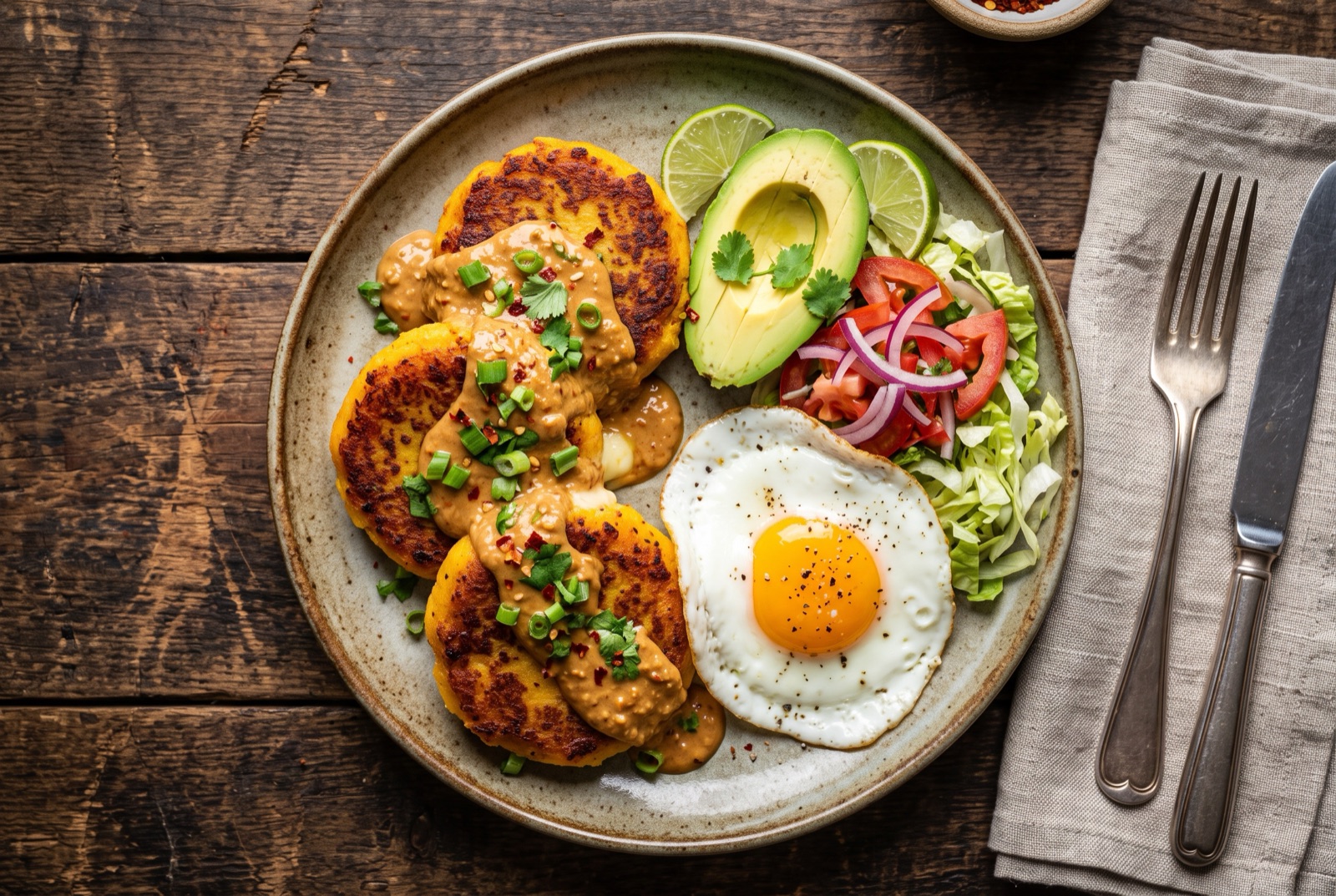
Ecuador1 hr 25 min
Llapingachos
Ecuadorian Cheese-Stuffed Potato Patties
Ecuador40 min
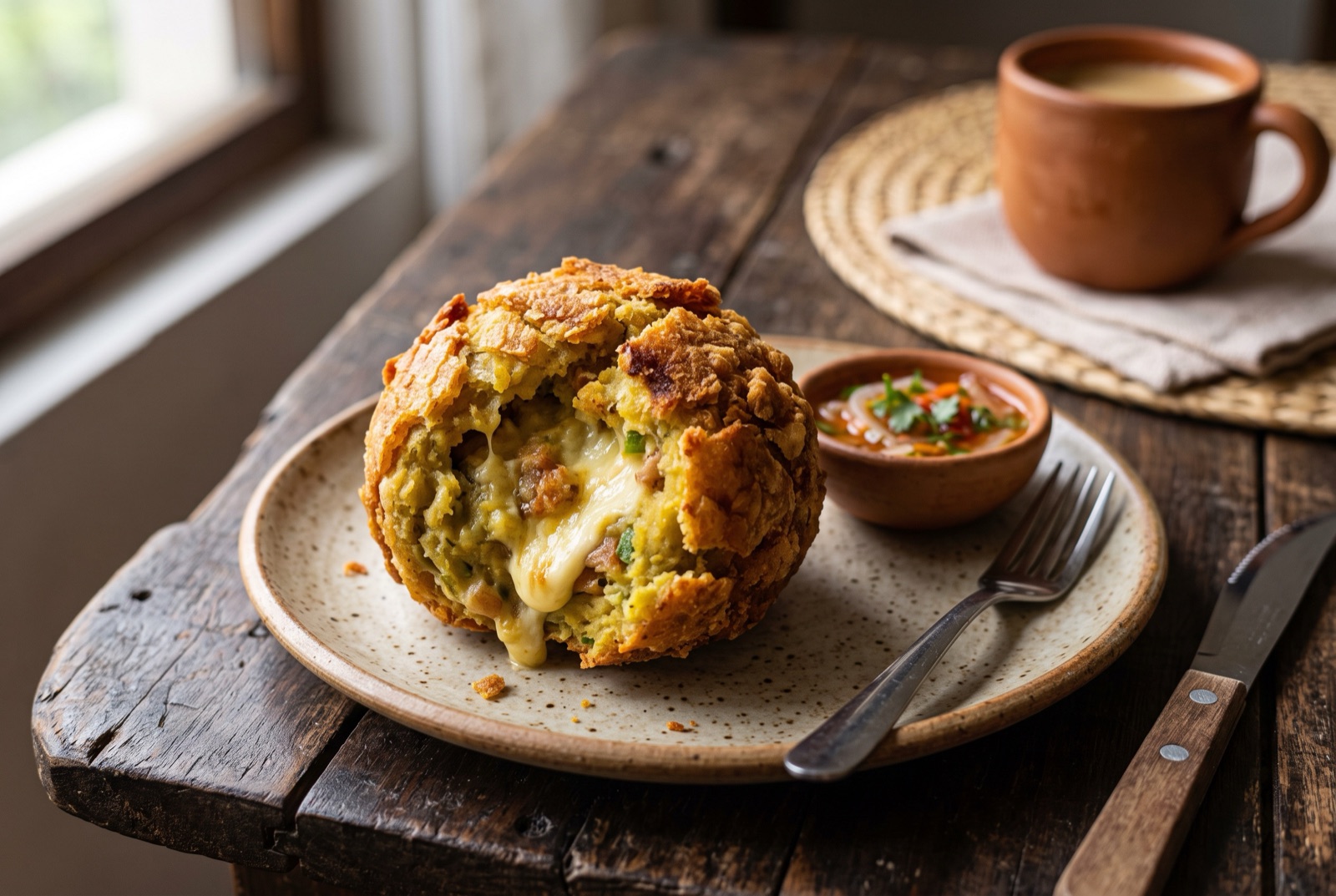
Bolón de Verde
Ecuadorian Green Plantain and Cheese Ball
Ecuador1 hr 15 min
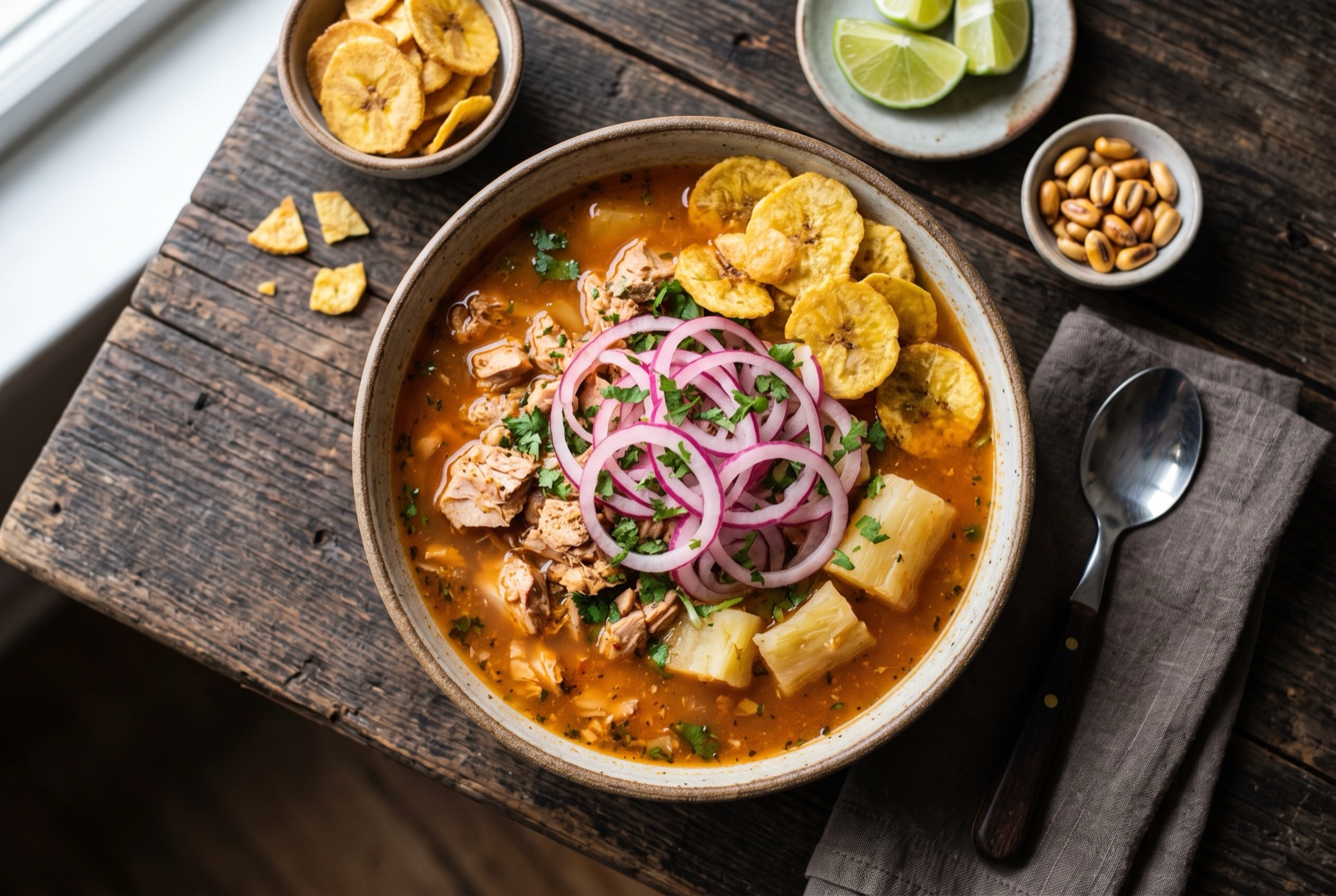
Encebollado
Ecuadorian Tuna and Cassava Soup
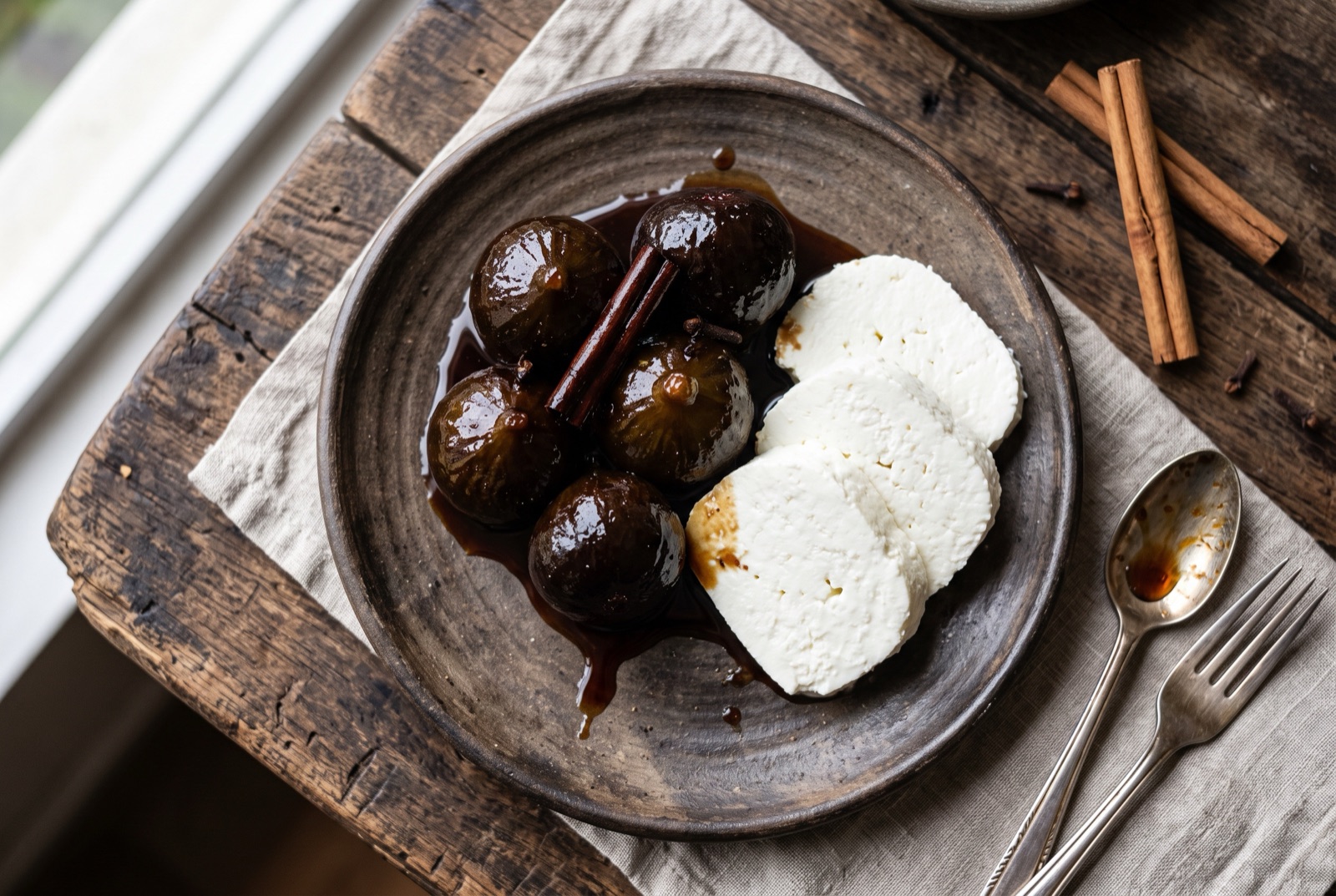
Ecuador10 hr 50 min
Higos con Queso
Ecuadorian Figs in Panela Syrup with Cheese
Keep exploring Ecuador.
Ecuador has 9 more dishes in the atlas — Bolón de Verde and Ceviche de Camarón, and 7 more.
Recipe by The DishRoute Kitchen · published August 20, 2026 · updated August 20, 2026