Encebollado.
Ecuadorian Tuna and Cassava Soup
Encebollado · say it: en-seh-boh-YAH-doh
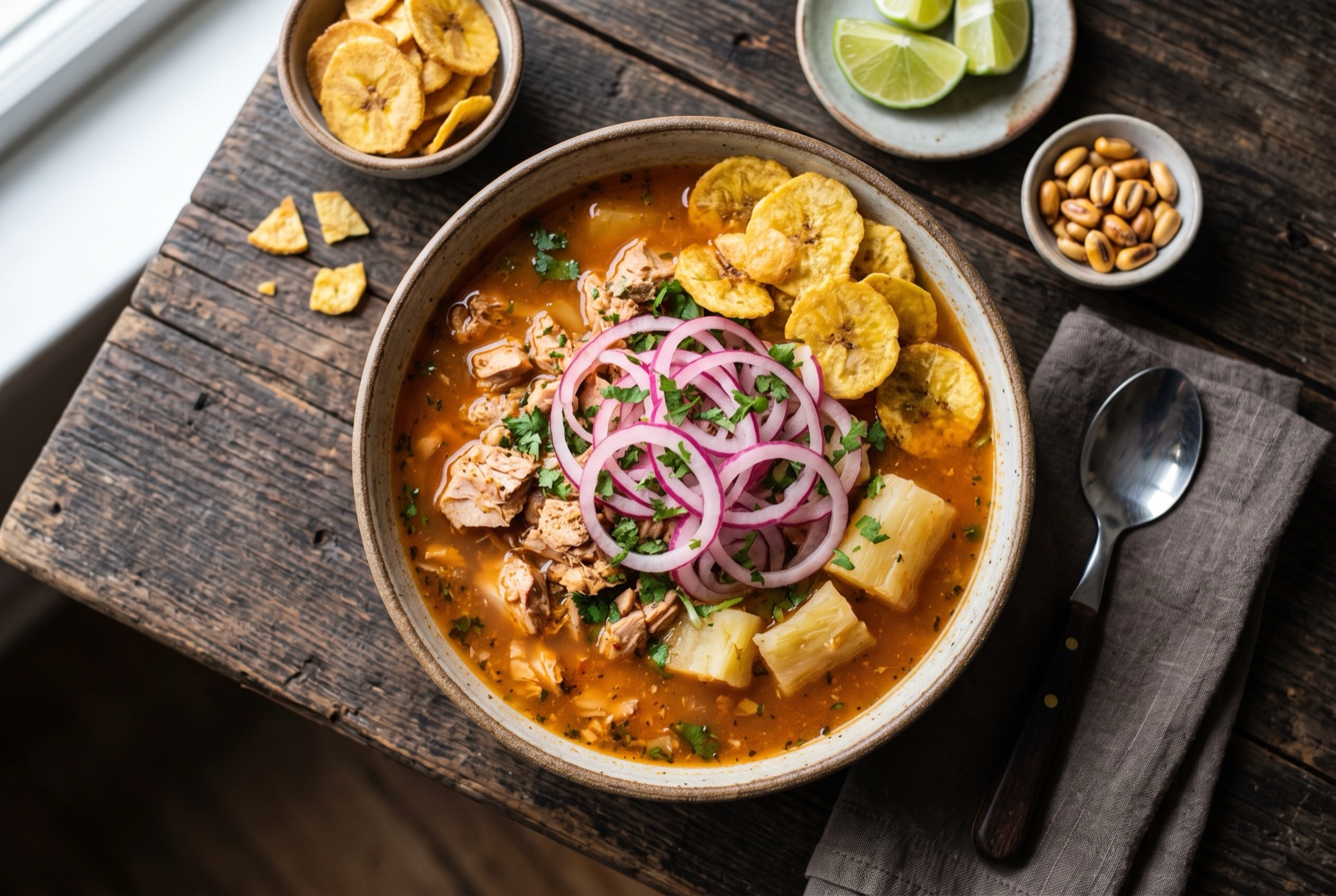
Encebollado is a hot, brothy tuna soup thickened by yuca and defined by cumin. A whole piece of fresh tuna poaches in a broth built on tomato, onion and garlic, then gets flaked back in beside cassava that has cooked long enough to go translucent at the edges and split at the touch of a fork. The name comes from what sits on top: rings of red onion salted, rinsed and steeped in lime until they turn pink and lose their bite. Everything is savory, faintly sweet from the yuca and sharply lifted by the onion, and it is eaten early — Guayaquil takes it at seven in the morning, most often after a long night.

- Gate
- EcuadorGuayaquil and the coast
- Prep
- 25 min
- Cook
- 50 min
- Total time
- 1 hr 15 min
- Serves
- 4
- Status
- Medium
- Nutrition / serving · estimated
- Calories 495 kcal
- Protein 46 g
- Carbs 56 g
- Fat 9 g
- Fiber 4 g
- Sugar 6 g
- Sodium 950 mg
Why this recipe works.
- Poaches the tuna whole in the broth instead of boiling it in cubes, so the fish stays in large moist flakes rather than fraying.
- Blends the cooked tomato and onion back into the broth, giving body without any thickener.
- Explains how to spot yuca that is properly done, which is the step most home cooks get wrong in both directions.
- Handles the onion the coastal way, so the topping is sharp and clean instead of raw and harsh.
Ingredients.
15 itemsFor the broth
For the onion topping
To serve
Equipment
- Large pot
- Fine sieve
- Blender or immersion blender
- Slotted spoon
Instructions.
Start the broth
Put the water, quartered onion, halved tomatoes, garlic, cumin, cilantro stems and salt in a large pot and simmer for 15 minutes, until the kitchen smells strongly of cumin and the tomato skins have loosened and curled away from the flesh.
Poach the tuna
Lower the whole piece of tuna into the barely-simmering broth and cook for 12 to 15 minutes, until a fork pushed into the thickest part meets no resistance and the flesh has gone pale all the way through. Lift it out onto a plate to cool.
Tip Keep the surface trembling, not bubbling. Boiled tuna goes dry and grainy very quickly.
Thicken the broth with its own vegetables
Scoop out the softened onion, tomato and garlic, discard the tomato skins, and blend them with a ladleful of broth until smooth. Stir this purée back into the pot with the achiote oil — the broth should turn opaque and orange and coat the back of a spoon lightly.
Cook the yuca
Slide the yuca logs into the broth and simmer for 25 to 35 minutes. They are ready when the edges look glassy rather than chalky and a fork splits them along the grain while the pieces still hold their shape. Break them into rough chunks in the pot.
Cure the onion rings
Rub the red onion rings with a teaspoon of salt, wait 10 minutes for them to soften and release liquid, then rinse well and squeeze dry. Toss with the lime juice, diced tomato and the reserved cilantro leaves and leave until the rings turn bright pink.
Flake in the fish and serve
Pull the cooled tuna into large flakes with your fingers, discarding any dark bloodline, and return it to the pot just long enough to heat through. Ladle into deep bowls, pile the onion topping on each one, and serve with chifles, lime and ají for everyone to add themselves.
Tips from our kitchen.
- Buy tuna in one thick piece rather than steaks. A single block poaches evenly and flakes into the chunks the dish is supposed to have.
- Yuca has a woody cord running down its center. Split each log lengthwise and pull it out before cooking or you will find it in the bowl.
- Frozen yuca works better than tired fresh yuca. Cassava spoils quickly and grey or blue streaks in the flesh mean it should go in the bin.
- Toast and grind your own cumin if you can be bothered. This soup carries more cumin than almost any other Ecuadorian dish, so stale powder shows immediately.
- Do not skip rinsing the salted onion. That single step is the difference between a bright pickled topping and a mouthful of raw onion breath.
- Keep the broth at a lazy simmer once the fish goes in — a rolling boil turns tuna dry and grainy in about four minutes.
Substitutions.
- Fresh tuna (albacora) → Bonito, mackerel or swordfish
- Any firm, meaty fish that flakes into large pieces will work. Skip delicate white fish, which disintegrates into the broth and leaves nothing to chew.
- Fresh yuca → Frozen peeled cassava, or waxy potato
- Frozen cassava is already cored and cooks in about the same time. Potato is a real departure — it goes floury rather than waxy — but it beats leaving the starch out.
- Chifles → Plantain chips from a bag, or toasted corn nuts
- Corn nuts (tostado) are also a standard Ecuadorian topping and give a harder, longer-lasting crunch than plantain.
Variations.
- Encebollado mixto
- Shrimp added in the last two minutes alongside the tuna, common in cevicherías that already have both on hand.
- With rice on the side
- Many stalls serve a small plate of white rice beside the bowl, to be tipped in or eaten separately. It stretches the soup and soaks up the last of the broth.
- Extra-sour Manabí style
- A more acidic build with a heavier hand on lime and onion and less tomato, so the broth tastes sharper and thinner. Common further north along the coast.
Storage & reheating.
Refrigerate the broth with the yuca and fish for up to 2 days and store the onion topping separately, since it goes slack overnight in the broth. Reheat to a simmer and no further; the tuna toughens on a second hard boil. Freezing is a bad idea — cassava turns mealy and weeps water on thawing, and the broth loses its body entirely.
Serve with
Chifles, popcorn, extra lime wedges and a jug of ají — plus a small plate of white rice if you want it to last until lunch.
The story behind Encebollado.
Encebollado belongs to the coast and specifically to Guayaquil, where it is sold from the same stalls at the same hours every day and treated as a functional food rather than a special one. It is the country's standard hangover remedy, and Ecuadorians are open about it: hot, salty, sour and starchy in one bowl, with enough protein to put a person back together. Vendors open before dawn and are often sold out by mid-morning, which is why encebollado is one of the few national dishes almost never served at dinner.
The fish is albacora, the tuna landed along the Pacific coast, and the choice matters more than it looks. Tuna holds together in large meaty flakes through a long simmer instead of shredding into threads, so each spoonful has something to chew. The yuca does the opposite job: cooked past the point where a potato would collapse, it turns waxy and slightly gelatinous, and it thickens the broth from the inside without any flour or cream. Between the two, the soup ends up dense enough to count as a meal from a single bowl.
The topping is not optional and it is not a salad. Curtido de cebolla — onion rubbed with salt, rinsed, then left in lime juice — is added by the diner, along with chifles and popcorn, ají and more lime. A bowl of encebollado arrives plain and gets assembled at the table, which is the reason regulars all have slightly different opinions about the correct ratio and are perfectly willing to share them.
Questions, answered.
Why do Ecuadorians eat encebollado for breakfast?
It is the coast's standard morning food and its best-known hangover cure — hot, salty, sour and rich in protein and starch all at once. Stalls in Guayaquil open before dawn and often sell out by late morning, so the eating window is genuinely early rather than a joke about it.
Can I use canned tuna?
It will make a soup, but not this one. Canned tuna is already fully cooked and packed in oil or water, so it breaks into small dry shreds instead of large moist flakes and gives the broth none of the flavor it should get from poaching. If canned is your only option, add it off the heat at the very end and expect a thinner result.
How do I know when yuca is properly cooked?
The pieces turn from opaque white to slightly translucent at the edges and split open along their grain when you press them with a fork, while still holding their shape. Undercooked yuca is chalky and squeaky; overcooked yuca dissolves into the broth and makes it gluey. It usually needs 25 to 35 minutes of gentle simmering.
Is encebollado spicy?
The soup itself is not. All the heat comes from ají criollo added at the table, which is standard practice across Ecuador — the pot is seasoned for everyone and the chile is personal. Serve a small bowl of it alongside and let people spoon in as much as they want.
Can I make the whole thing ahead for a crowd?
Yes, and it improves slightly overnight because the cumin settles into the broth. Cook the broth, fish and yuca a day early and refrigerate them together, but make the lime-cured onion no more than a couple of hours before serving, since it loses its crunch and its color fast.
You might also like.
All recipes →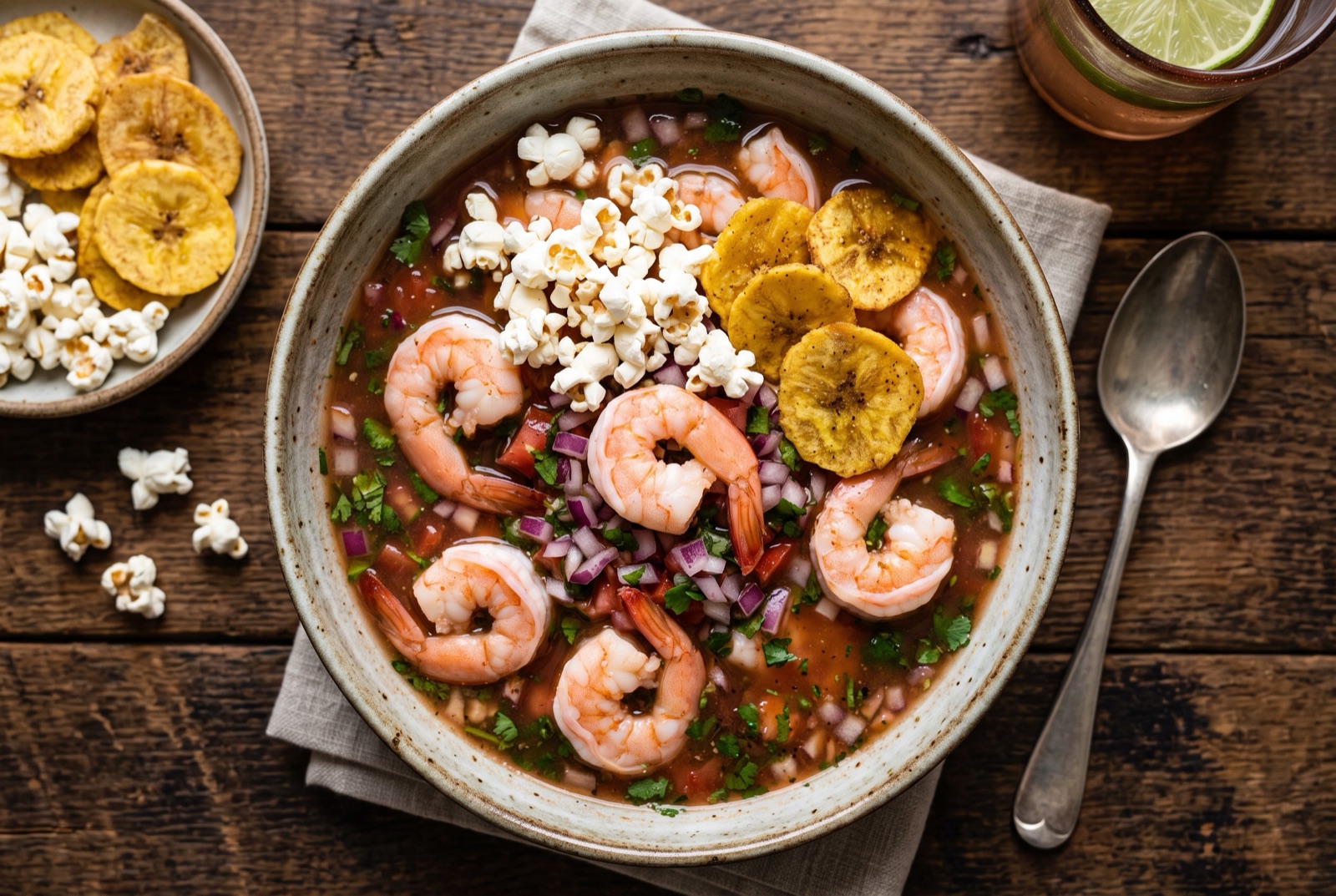
Ecuador1 hr 35 min
Ceviche de Camarón
Ecuadorian Shrimp Ceviche in Tomato Broth
Ecuador1 hr 10 min
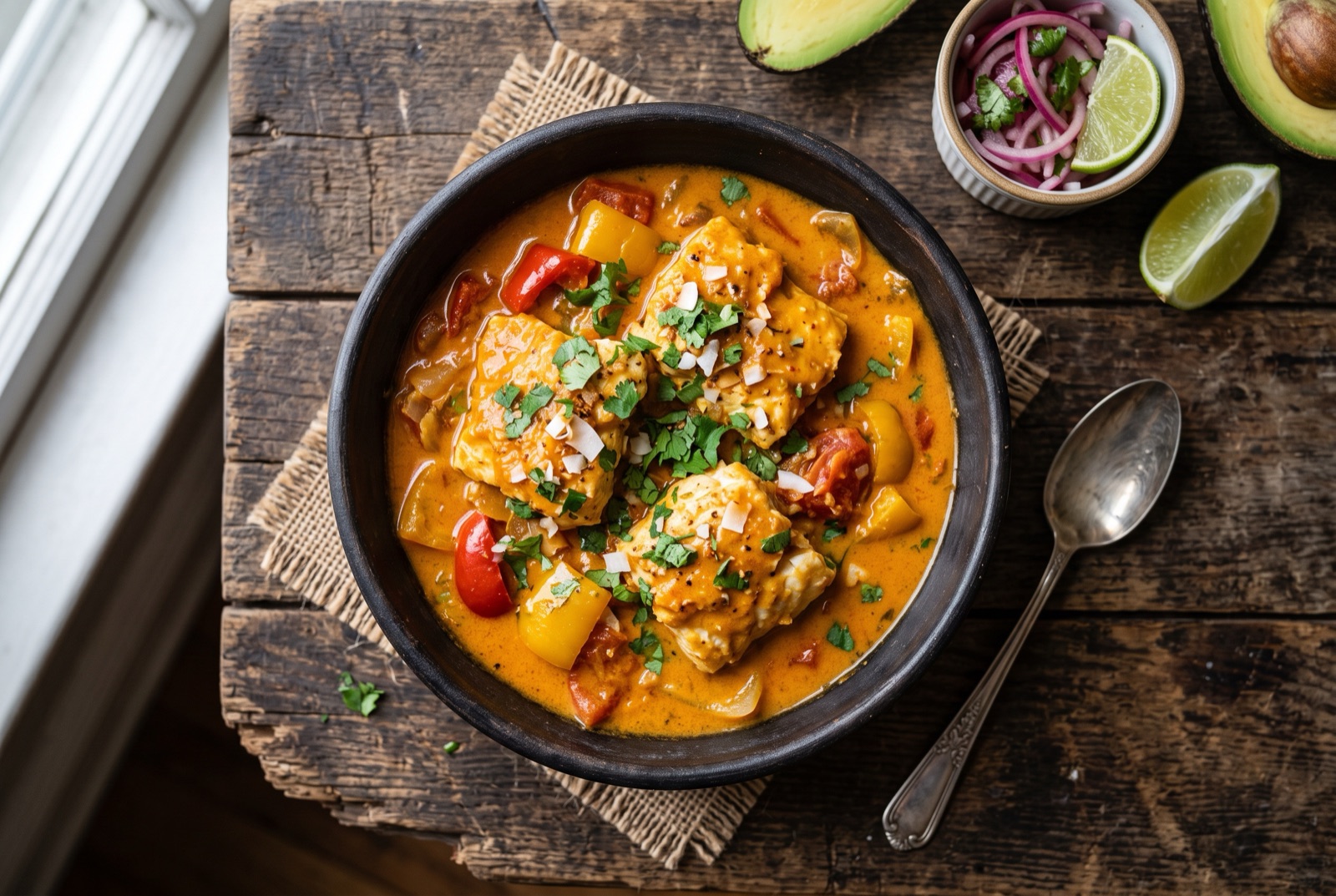
Encocado de Pescado
Esmeraldas Fish in Coconut Sauce
Ecuador2 hr 55 min
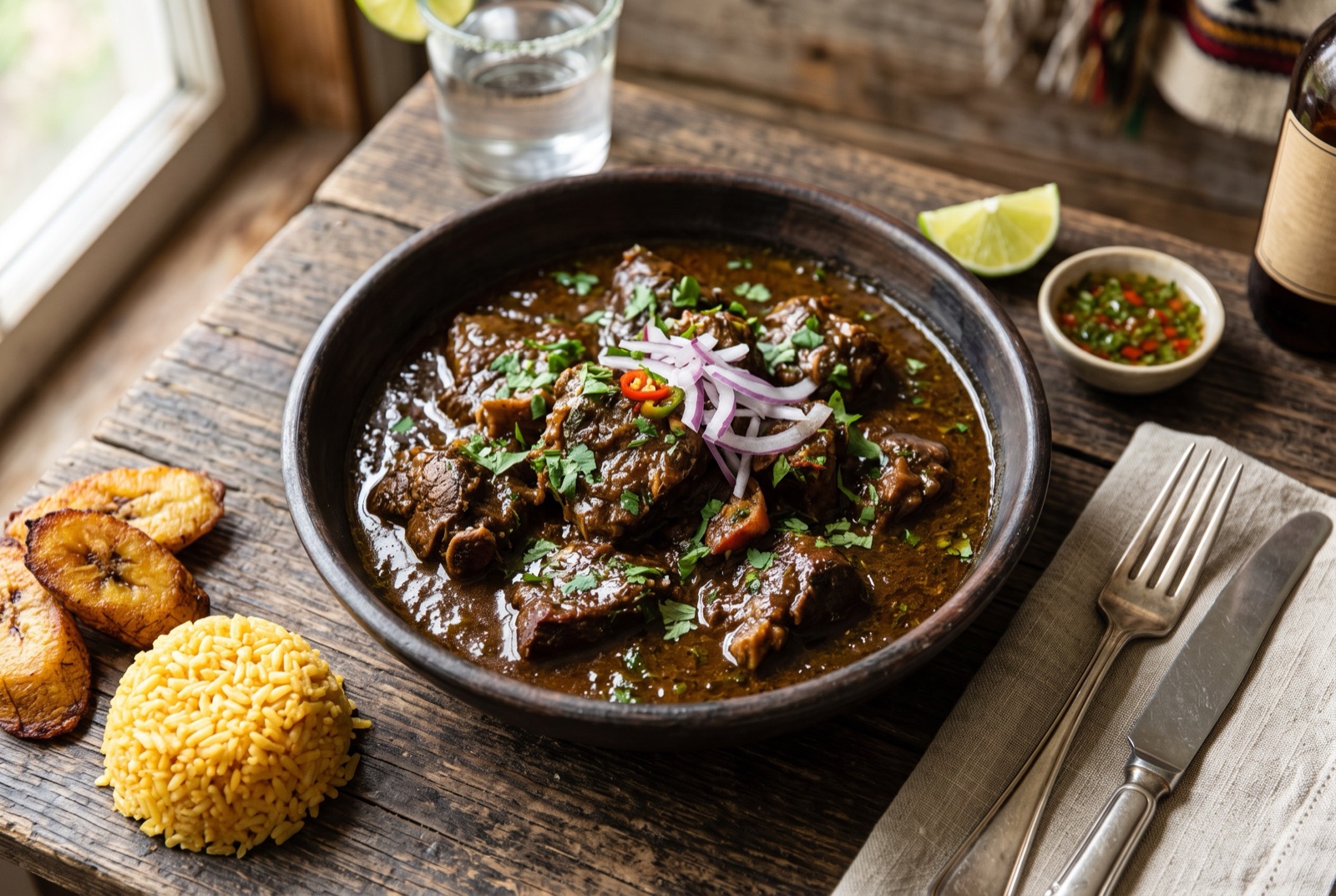
Seco de Chivo
Ecuadorian Goat Stewed in Naranjilla and Beer
Ecuador55 min
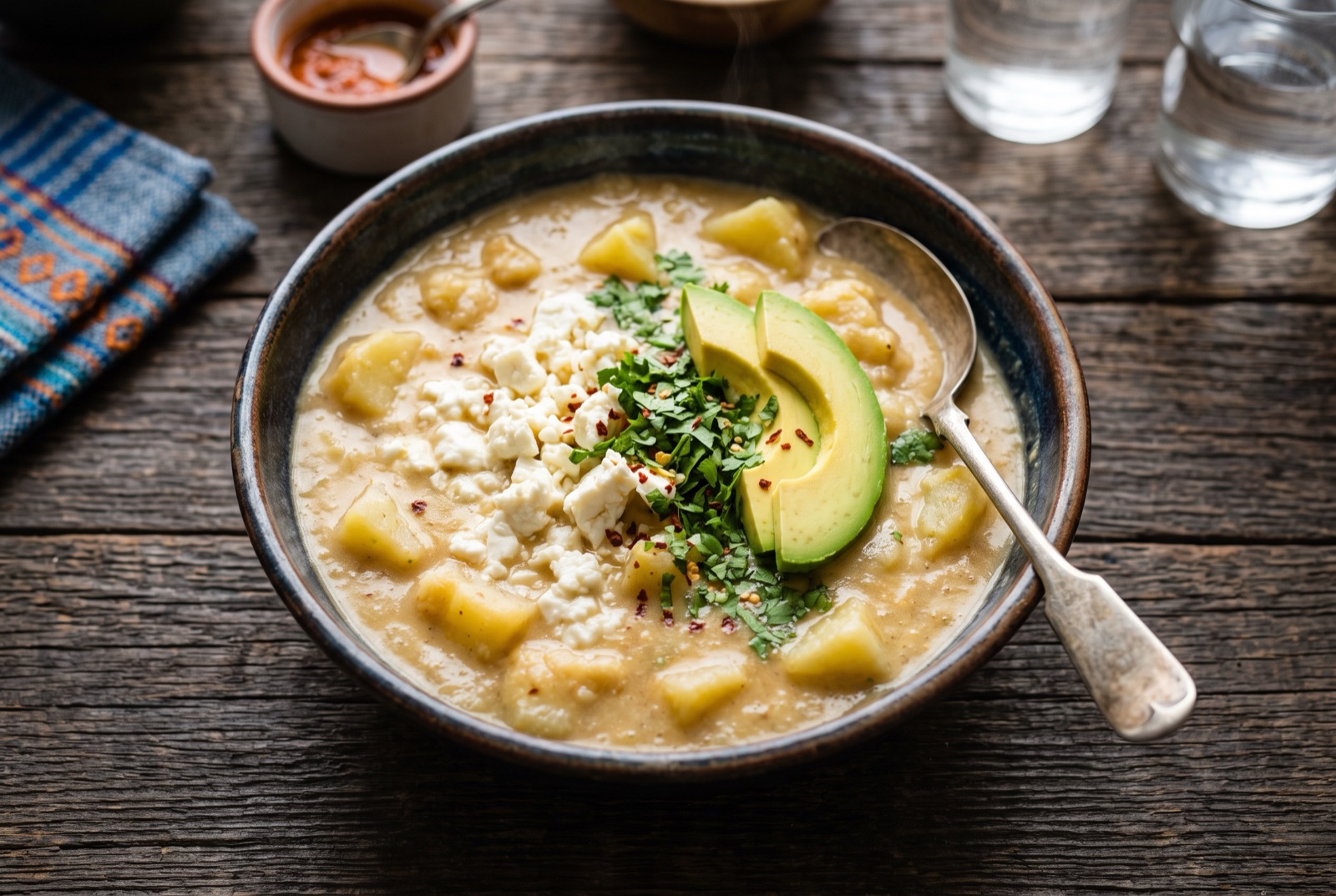
Locro de Papa
Ecuadorian Potato and Cheese Soup
Keep exploring Ecuador.
Ecuador has 9 more dishes in the atlas — Bolón de Verde and Ceviche de Camarón, and 7 more.
All Ecuador recipes Tuna recipes Cassava recipes Onion recipes soupbreakfastpescatariandairy freegluten freeRecipe by The DishRoute Kitchen · published August 20, 2026 · updated August 20, 2026