Colombia.
Colombia
There is no single Colombian kitchen, and Colombians are the first to say so. The country is cut into isolated pockets by three separate ranges of the Andes plus a Caribbean coast, a Pacific coast, the eastern plains and the Amazon, and each of those blocks eats differently enough that a Bogotano and a Cartagenero can find each other's lunch genuinely foreign. What they share is a small set of habits rather than a shared menu: almuerzo is the anchor of the day and it arrives as a sequence, soup first, then a plate with rice and something starchy beside the protein, then fresh fruit juice. Heat lives on the table in a jar of ají, never in the pot, so dishes taste of cumin, scallion, tomato and long-cooked pork rather than chile. Corn and cassava were here before anyone arrived; potatoes, panela, coconut and coffee did the rest.

- Continent
- South AmericaAndes
- Recipes in atlas
- 10
- Must-try dishes
- 3
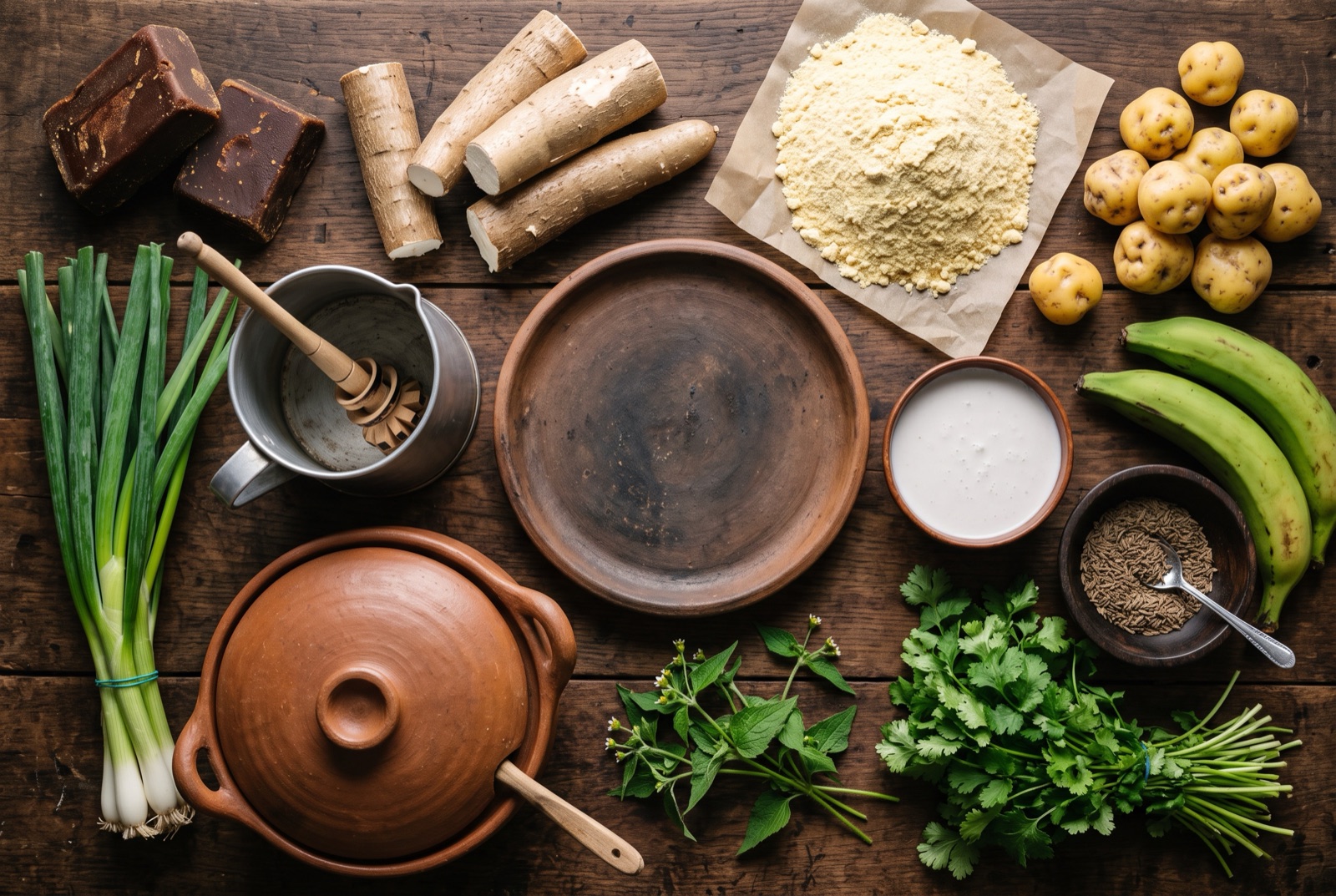
- Pantry staples
- 10
Start with the classics.
Must tryThe dishes that explain the Colombia kitchen fastest — if you cook only a few things from this page, cook these.
Inside the Colombia kitchen.
Almost every savory dish in the highlands and the interior starts from hogao — also called guiso — a slow sofrito of chopped tomato and cebolla larga (a fat, mild scallion), softened in oil with garlic and cumin until the tomato collapses and the mixture turns thick and orange. It is not a sauce so much as a seasoning system: it goes under braises, into empanada filling, over patacones, and beside beans. Cumin is the country's defining spice, used with a heavier hand than in most of Latin America, and achiote or a packaged color powder supplies the yellow-orange tint that Colombians expect a stew to have.
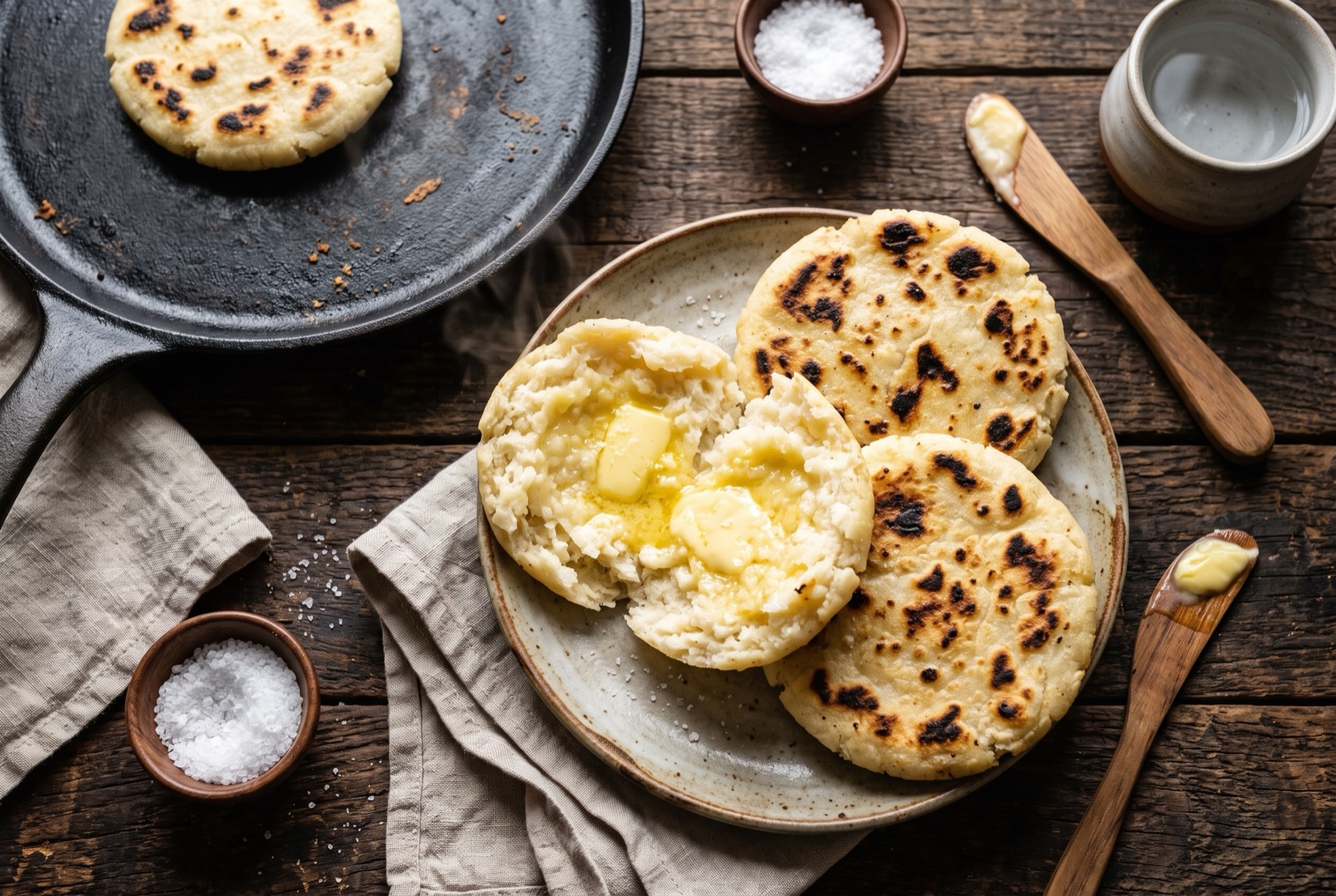
The starch on the plate is rarely just one thing. A single lunch can carry white rice, a boiled potato, a piece of cassava and a fried plantain without anyone considering it excessive, because each has a different job — rice absorbs, potato thickens, cassava goes dense and slightly fibrous, plantain adds sweetness or crunch depending on ripeness. Corn works in two directions: as masarepa, precooked corn flour that becomes arepas, and as whole cobs dropped into soups and sancochos. Panela, unrefined cane sugar sold in hard blocks, sweetens coffee, desserts and the everyday drink aguapanela.
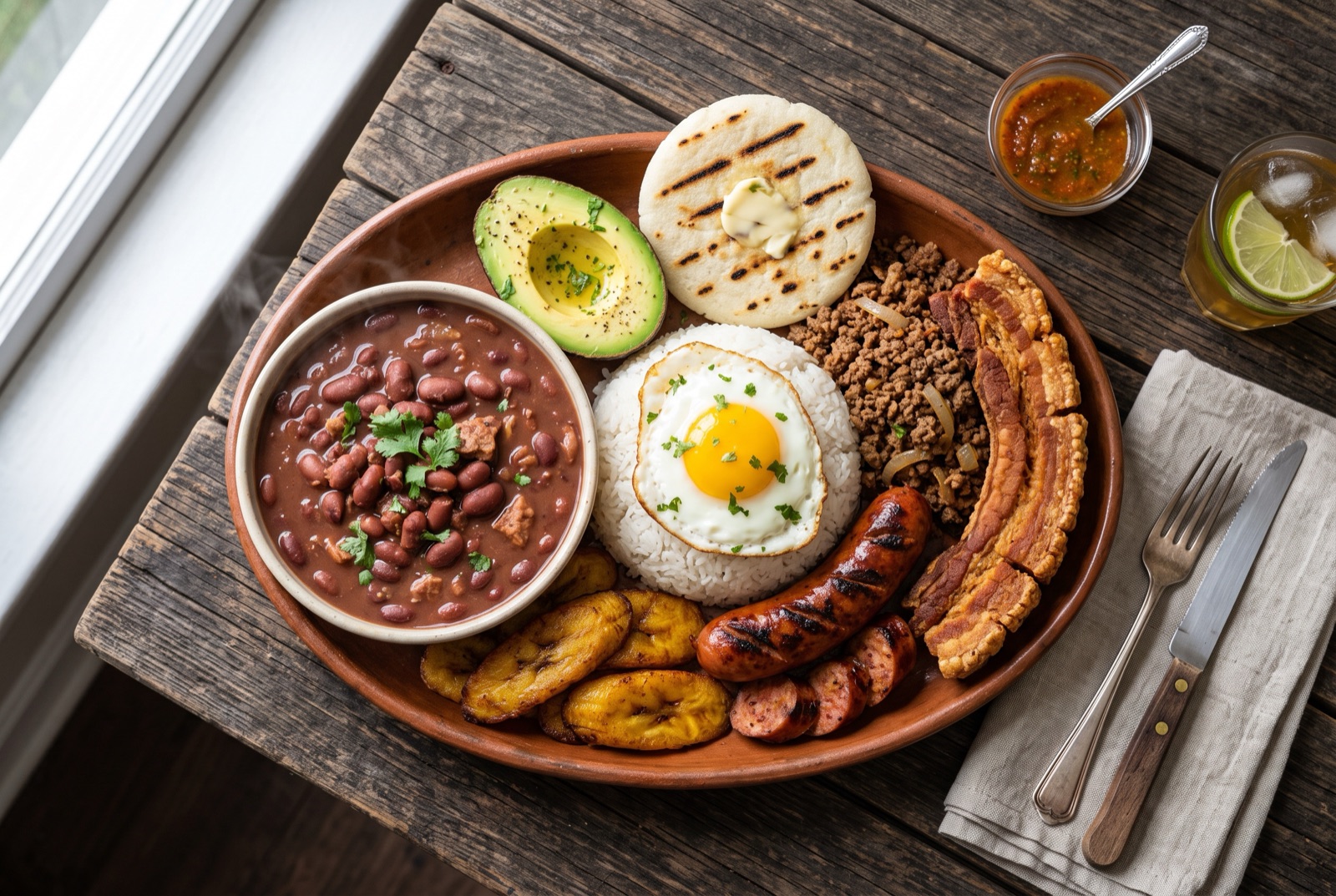
Regionally the country splits hard. Antioquia and the coffee-growing departments eat the heaviest food in Colombia: beans cooked with pork, chicharrón, chorizo, and the arepa paisa, thin and unsalted, treated as an edible napkin. The Cundiboyacense highlands around Bogotá sit at 2,600 metres and cook accordingly — potato soups, wheat bread, milk, cream and fresh cheese, dishes like ajiaco and changua that would make no sense in the heat below.
The two coasts are different countries again. The Caribbean side cooks with coconut milk, fries whole fish, sours everything with lime and suero costeño, and eats a salty crumbling cheese with almost everything sweet. The Pacific coast of Chocó, overwhelmingly Afro-Colombian and largely cut off by road, uses coconut, seafood and local herbs like chillangua and poleo in a way that has almost no overlap with Andean cooking. Tolima and Huila roast lechona and steam tamales in plantain leaves; the eastern plains cook whole quarters of beef upright on stakes around an open fire.
Drinks and sweets tie it together. Fresh juice is made to order with either water or milk, from fruit — lulo, guanábana, maracuyá, tomate de árbol, mora — most of which never leaves the region. Coffee is drunk small, black and sweet, called a tinto, and the good beans historically went abroad. In Bogotá, hot chocolate arrives with a block of fresh cheese meant to be dropped in and eaten with a spoon once it goes stringy, which is either the best or the worst thing about the city depending on who you ask.
Signature pantry.
10 staplesThe ingredients this cuisine cannot function without.
- panela
- cebolla larga (long scallion)
- masarepa (precooked corn flour)
- papa criolla
- plantain
- cassava (yuca)
- coconut milk
- cumin
- guascas
- cilantro
How people eat in Colombia.
Lunch is the meal that matters. The standard corrientazo served at midday runs as a soup, then a main plate carrying rice, a protein, a starch and a spoon of salad, then a jug of fresh juice, and it is eaten quickly and cheaply by everyone from bricklayers to bankers. Dinner is lighter and often just coffee with bread. Nothing arrives spicy: a bowl of ají — cilantro, scallion, vinegar and a little hot pepper, loose enough to spoon — sits on the table so each person adjusts their own plate. Sharing a sancocho on a Sunday, ideally cooked outdoors over wood, is the closest thing the country has to a national ritual. Offering a visitor a tinto within a minute of arrival is automatic, and refusing it reads as odd.
Regional kitchens.
Colombia cooks 4 distinctly different ways depending on where you stand — here is what changes between them.
- R1Antioquia and the Coffee Axis
- Paisa country, and the source of the food most outsiders picture: red beans stewed with pork, chicharrón, chorizo and the thin white arepa served with everything. Portions here are famously enormous.
- R2Bogotá and the Cundiboyacense highlands
- Cold-climate cooking at 2,600 metres — potato-thick soups, wheat breads, cream and fresh cheese. Ajiaco, changua and cheese dropped into hot chocolate all belong to this altitude.
- R3The Caribbean coast
- Cartagena, Barranquilla and the Guajira, where coconut milk goes into rice and seafood stews, fish is fried whole with patacones, and salty suero and coastal cheese sharpen everything.
- R4The Pacific coast and Chocó
- An Afro-Colombian kitchen with little in common with the Andes: shellfish and river fish in coconut, smoked and dried seafood, and herbs like chillangua and poleo that grow nowhere else in the country.
All Colombia recipes.
10 recipes and counting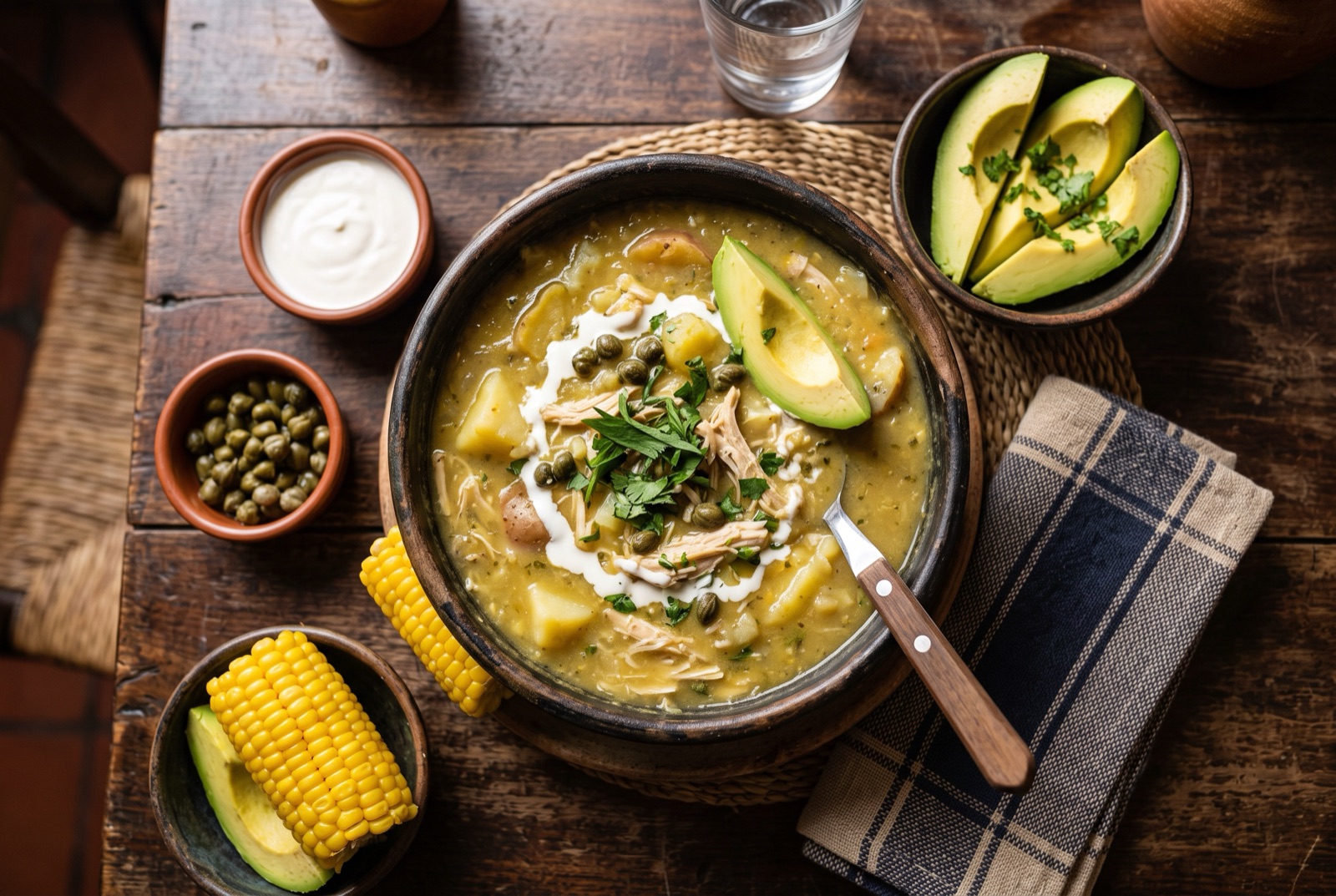
Colombia1 hr 35 min
Ajiaco Santafereño
Bogotá Chicken and Three-Potato Soup
Colombia45 min
Arepa de Maíz
Colombian Griddled Corn Cakes
Colombia11 hr 10 min
Bandeja Paisa
Antioquian Mixed Platter
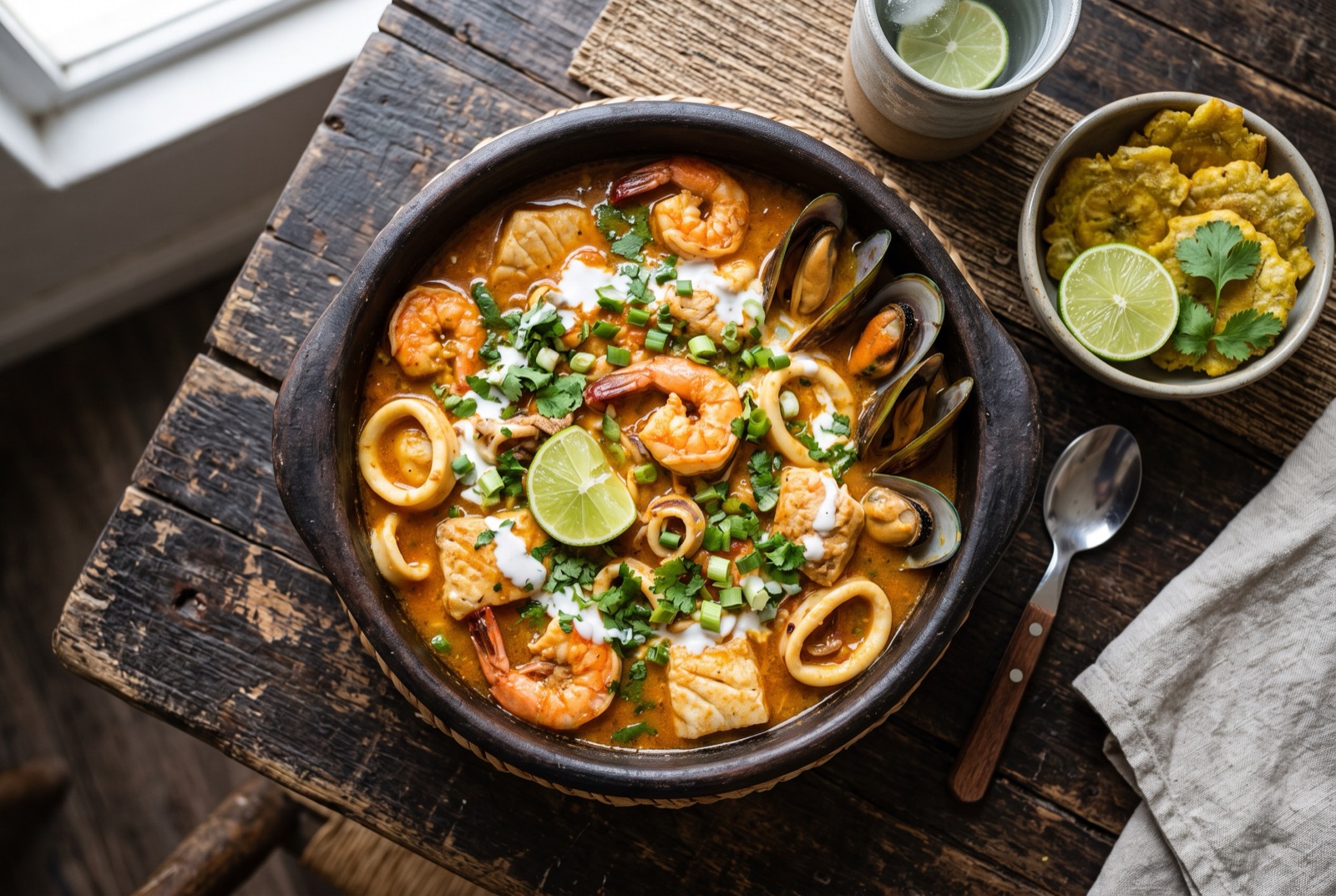
Colombia1 hr
Cazuela de Mariscos
Cartagena Coconut Seafood Casserole
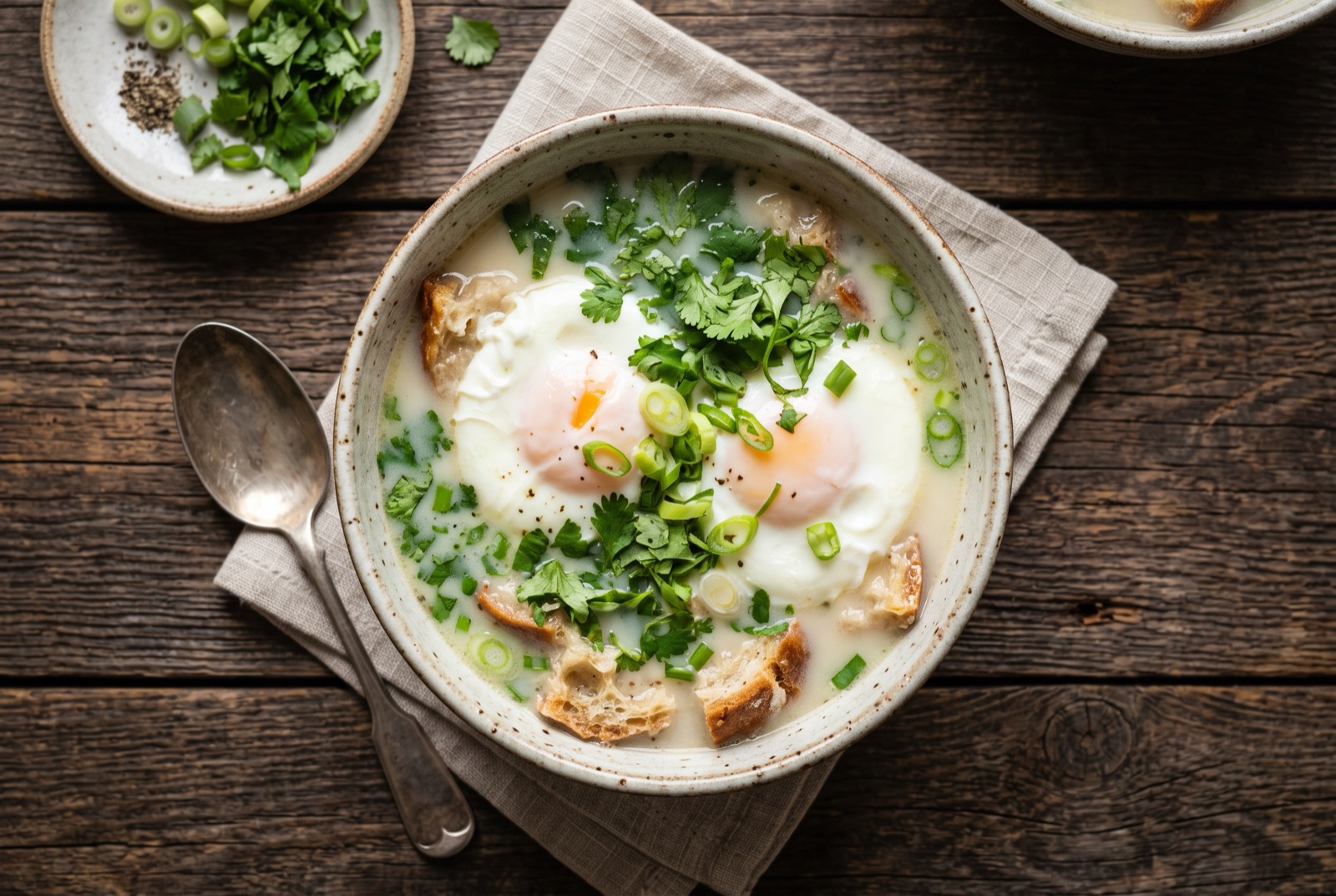
Colombia22 min
Changua
Bogotá Milk and Egg Breakfast Soup
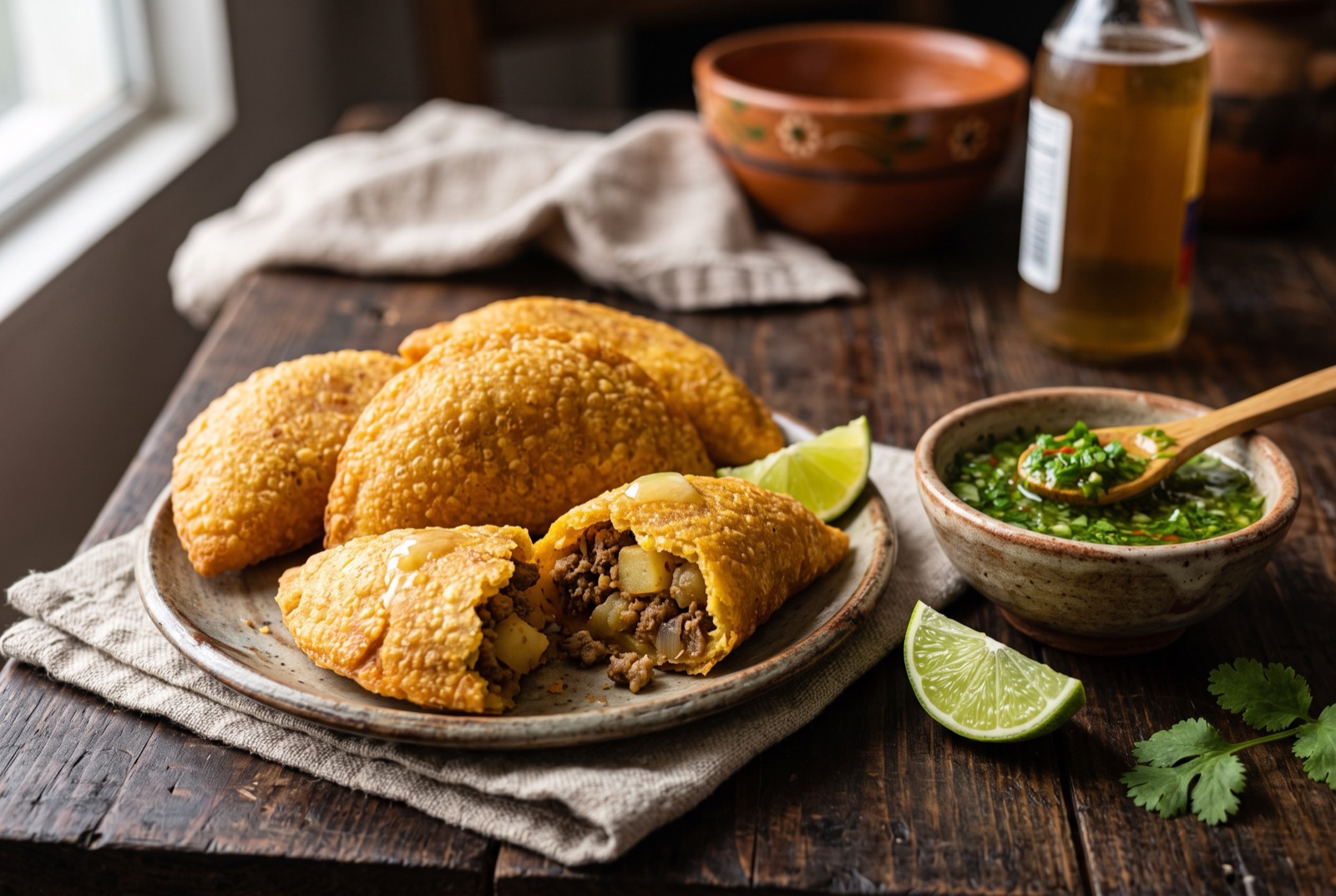
Colombia1 hr 40 min
Empanadas Colombianas
Fried Corn Pastries with Potato and Beef
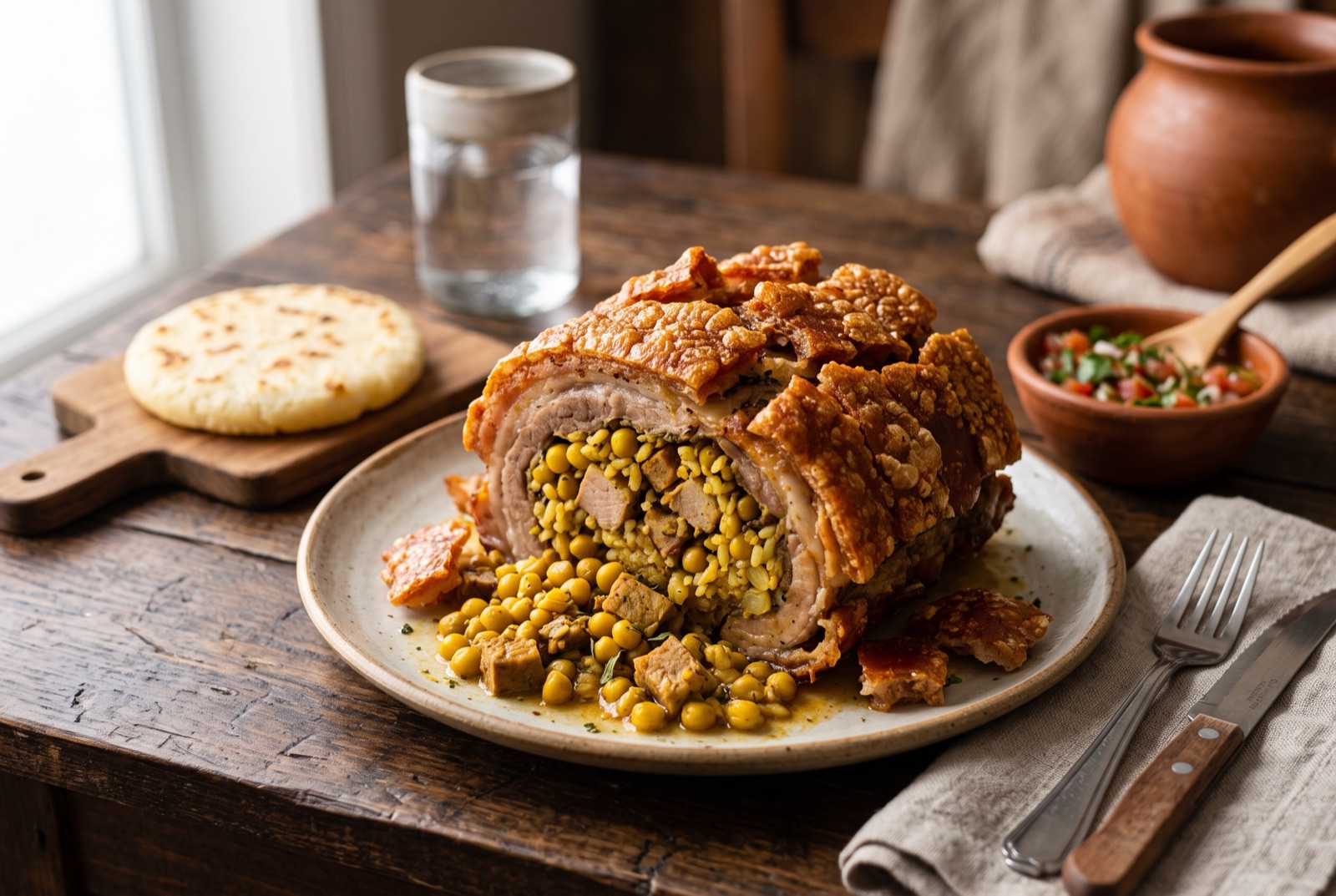
Colombia16 hr 55 min
Lechona Tolimense
Stuffed Roast Pork with Yellow Peas
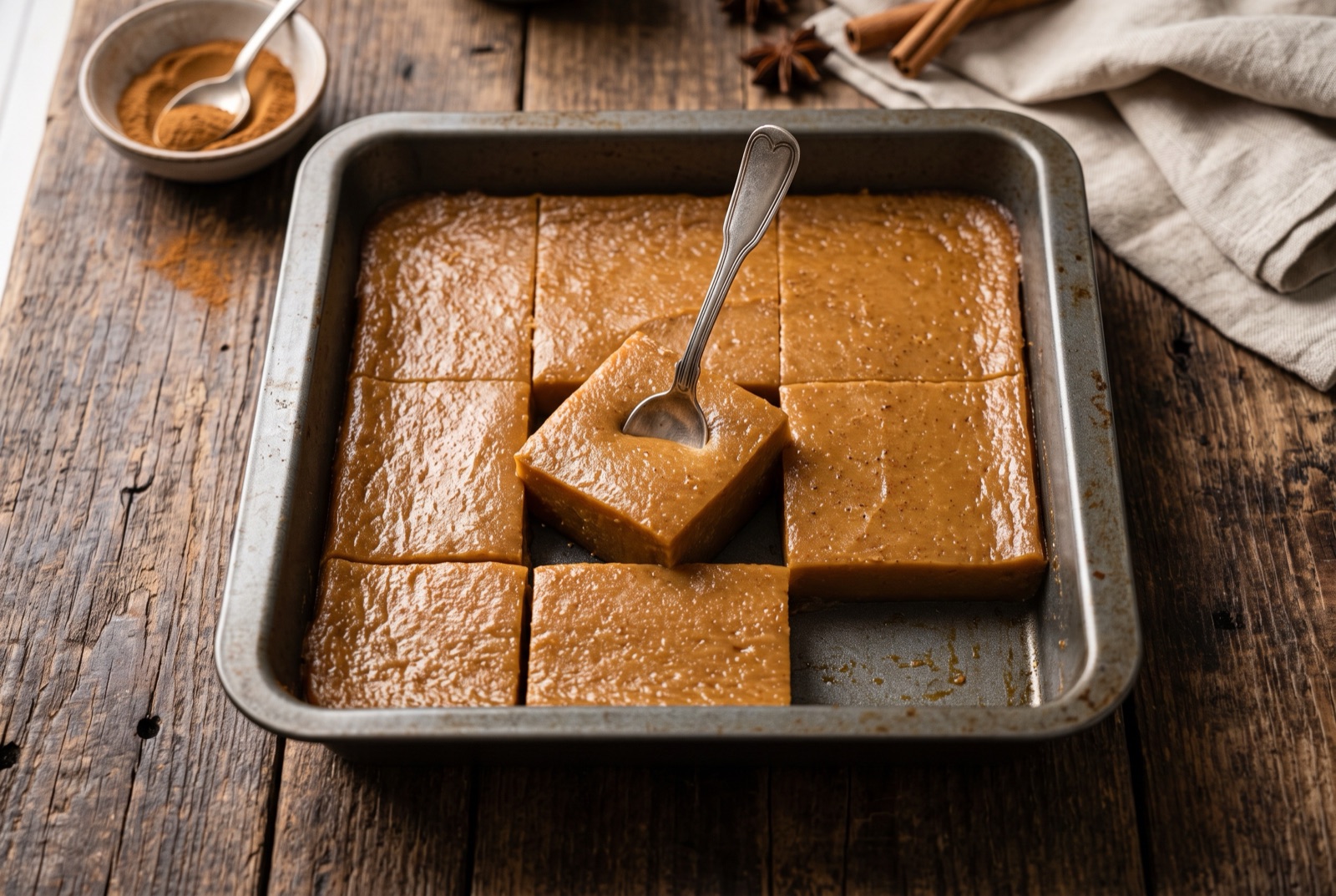
Colombia3 hr 40 min
Natilla Colombiana
Christmas Panela and Cinnamon Pudding
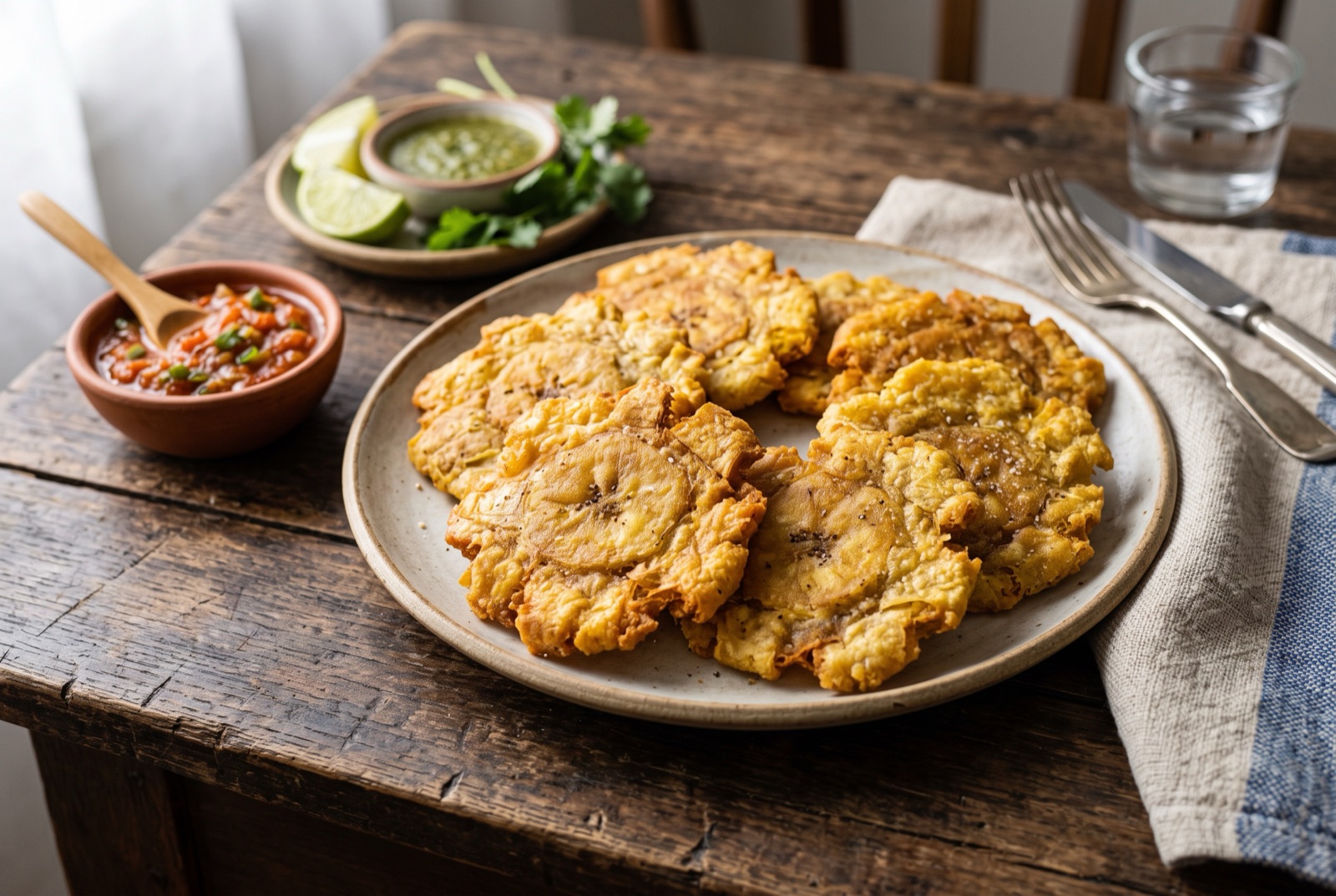
Colombia35 min
Patacones
Colombian Twice-Fried Green Plantains
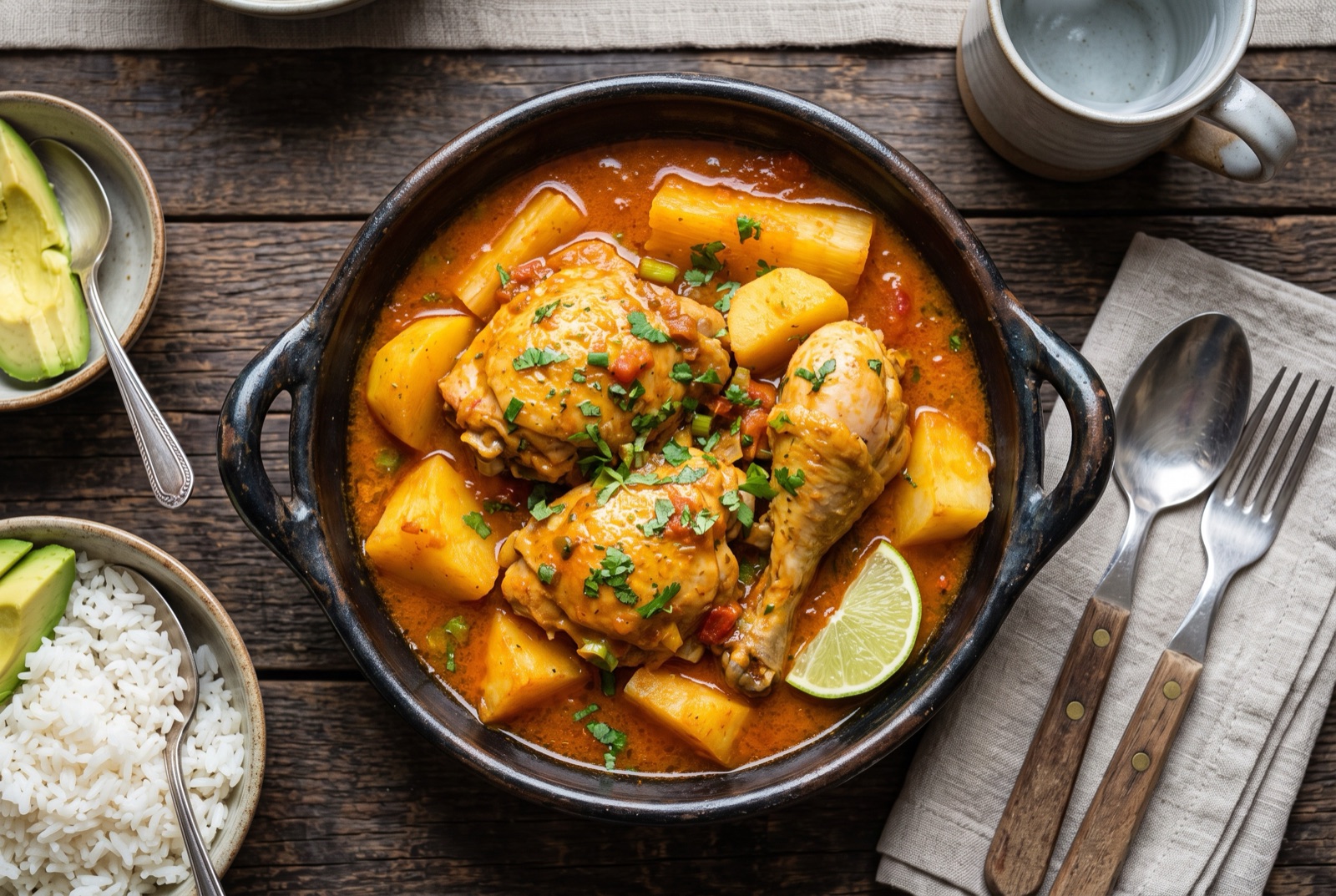
Colombia1 hr 15 min
Sudado de Pollo
Colombian Braised Chicken with Potato
Keep traveling.
Colombia sits in Andes, and its kitchen shares borders as well as ingredients with Argentina and Bolivia.
 Argentina
 Bolivia