Empanadas Colombianas.
Fried Corn Pastries with Potato and Beef
Empanadas colombianas · say it: em-pah-NAH-dahs koh-lom-bee-AH-nahs
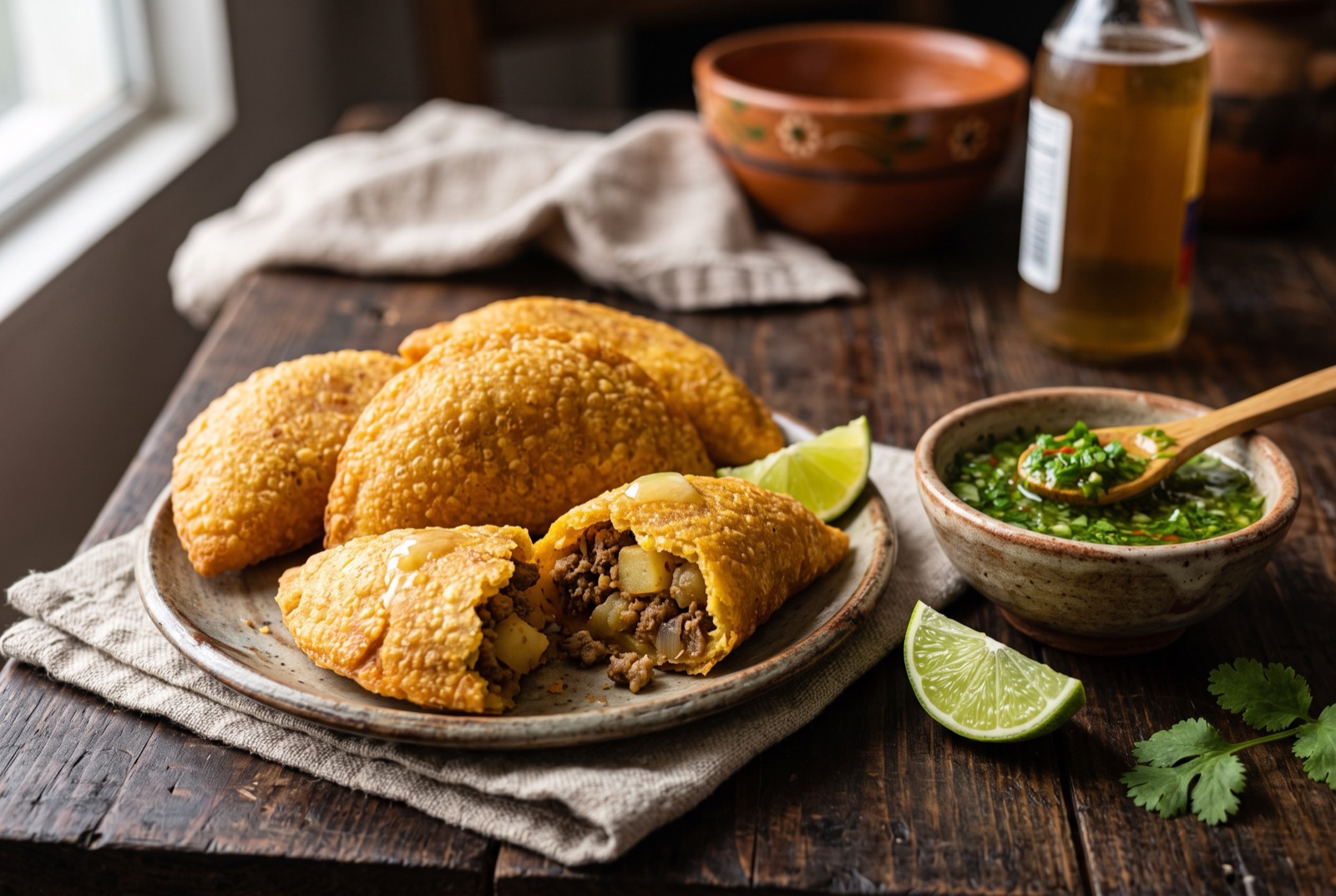
A Colombian empanada has a shell made of corn, not wheat — masarepa tinted yellow with achiote, rolled thin and deep-fried until it turns hard, blistered and audibly crisp. Inside is a soft, almost sloppy filling of potato mashed with stewed beef and hogao, which is why the contrast works: the shell shatters, the middle is warm and yielding. They are sold from carts and fryers on every busy street in the country, always with a wedge of lime and a bowl of ají to spoon into the opening after the first bite. Making them at home is straightforward but sequential — filling first, cooled completely, then dough, then frying — and the reward is an empanada far better than most street versions because the oil is clean.

- Gate
- ColombiaNationwide, strongest in Antioquia and Valle
- Prep
- 45 min
- Cook
- 25 min
- Total time
- 1 hr 40 min incl. 30 min rest
- Serves
- 4
- Status
- Medium
- Nutrition / serving · estimated
- Calories 530 kcal
- Protein 19 g
- Carbs 63 g
- Fat 22 g
- Fiber 6 g
Why this recipe works.
- The filling is cooked and cooled first, which is the only reliable way to stop empanadas bursting in hot oil.
- Dough hydration explained by touch, with the crack test that tells you whether the shells will seal.
- Includes the ají, because a Colombian empanada without it is only half the thing.
- Freezes raw and fries from frozen, so one afternoon of work covers several occasions.
Ingredients.
17 itemsFor the filling
For the dough
For frying
For the ají
Equipment
- Deep pot or fryer
- Kitchen thermometer
- Split freezer bag or two sheets of plastic
- Potato masher
- Slotted spoon
Instructions.
Boil and mash the potatoes
Cook the potato chunks in well-salted water for about 18 minutes, until a knife meets no resistance and the edges look chalky. Drain, keeping a cup of the water, and mash roughly so a few lumps remain.
Stew the beef base
Heat the oil in a frying pan and brown the ground beef over high heat until the liquid has cooked away and the meat begins to stick and catch. Lower the heat, add the onion and scallion and cook 6 minutes until soft, then stir in the garlic, cumin and grated tomato and cook 8 minutes more until the mixture is thick and rust-coloured.
Combine and cool the filling
Fold the beef mixture into the mashed potato with enough of the reserved cooking water to make it soft and scoopable but not runny, and season firmly with salt. Spread it on a tray and refrigerate until completely cold, at least 30 minutes.
Tip This is the step people skip and then wonder why their empanadas burst. Cold filling, every time.
Mix the dough
Stir the salt and achiote into the warm water until the colour is even, then rain in the masarepa while stirring. Leave it for 5 minutes to hydrate, then knead until smooth. Flatten a test ball with your palm: the edge must stay unbroken, so knead in more water a spoonful at a time if it cracks.
Shape and fill
Divide into 16 balls. Working inside a split freezer bag, press each ball into a 12 cm disc about 3 mm thick, spoon a heaped tablespoon of cold filling onto one half, lift the plastic to fold the dough over, and press the seam closed through the plastic. Trim to a neat crescent with the rim of a bowl.
Fry until they crackle
Heat the oil to 175 to 180°C and fry 3 or 4 empanadas at a time for 4 to 5 minutes, turning once, until deep golden with a blistered surface and the furious bubbling around them has quietened to a steady fizz. Lift onto a rack, not paper, so the underside stays crisp.
Make the ají and serve
While the empanadas fry, stir the cilantro, scallion, lime juice, chile and a good pinch of salt with 4 tablespoons of water to make a loose green sauce. Serve the empanadas hot with the ají and lime wedges, spooning sauce into each one after the first bite.
Tips from our kitchen.
- Yellow masarepa (masarepa amarilla) gives the traditional color; white masarepa works but produces a pale empanada, so add a little achiote to the dough.
- Cool the filling completely — warm filling steams inside the shell and blows the seam open in the fryer.
- Shape inside a split freezer bag: flatten the ball, spoon on the filling, lift one side of the plastic to fold, then press the seam through the plastic.
- Cut the sealed edge with the rim of a bowl or a saucer for a clean crescent, and press the trimmings back into the dough ball.
- Fry at 175 to 180°C. Cooler oil soaks into the corn shell and makes it greasy; hotter oil darkens the outside before the seam sets.
- Fry in small batches of three or four. Crowding drops the oil temperature and every empanada in the pan suffers for it.
Substitutions.
- Ground beef → Shredded stewed beef, ground pork, or a mix of beef and pork
- Shredded beef left over from a braise is arguably better than ground, and pork is standard in Valle del Cauca.
- Masarepa → No substitute for the shell
- Wheat pastry makes a perfectly good empanada, but a different dish. Masa harina behaves differently and will not give the same crisp shell.
- Hot pepper in the ají → Leave it out entirely
- Colombian ají is often barely hot. The cilantro, scallion and acid are what matter; the chile is optional even for locals.
Variations.
- Empanadas de pollo
- Shredded poached chicken folded into the same potato base with a little of its stock. Milder, and a common alternative on street carts.
- Vegetarian empanadas
- Potato with hogao alone, or potato with soft cooked lentils and cumin. The shell and the ají carry the dish, so the meat is less essential than it looks.
- Empanadas de añejo
- The Nariño version, made from corn dough left to ferment for days before shaping. Sour, deeply savory and almost impossible to find outside the department.
Storage & reheating.
Fried empanadas are best within the hour and soften as they sit; a hot oven at 190°C for 8 minutes brings back most of the crunch, while a microwave destroys it entirely. Raw shaped empanadas are the better option: freeze them in a single layer, bag them once solid, and fry straight from frozen at a slightly lower temperature for two extra minutes. The filling keeps 3 days refrigerated and freezes for 3 months on its own.
Serve with
Ají picante and lime wedges — spooned into the empanada after the first bite, not poured over the top.
The story behind Empanadas Colombianas.
Empanadas travelled to the Americas from Spain, where filled pastries had been made for centuries, but the Colombian version broke from the wheat-pastry tradition almost immediately. Corn was the local staple and corn dough was what the kitchen had, which is why a Colombian empanada looks nothing like an Argentine or Galician one — no folded rope edge, no baking, no flaky crust, just a smooth yellow shell that fractures into shards.
Regional differences are strong. The paisa empanada of Antioquia is filled with potato and shredded or ground beef and is the version most widely sold. In Valle del Cauca and Cauca the filling is often pork with a heavier hand on the cumin, and the empanadas are smaller. Nariño makes empanadas de añejo from fermented corn dough, sour and distinctive, unavailable almost anywhere else. On the coast, the deep-fried corn pastry logic reappears as the arepa de huevo with an egg cooked inside it. Ask a Colombian which empanada is the correct one and you will get an answer that depends entirely on where they grew up.
The ají served with them is a national habit rather than a regional one. Colombian ají is thin and green, built from cilantro, scallion, onion, vinegar or lime and only a modest amount of hot pepper, and it exists because the food itself is not spicy. It is spooned into the empanada, not onto it — you bite off a corner, tip the sauce into the cavity, and keep going. Skipping it is a real loss, and it takes five minutes to make.
Questions, answered.
Why do my empanadas open up in the oil?
Almost always warm or wet filling, which turns to steam and forces the seam apart. Cool the filling to fridge temperature before you shape anything, do not overfill, and press the seam firmly through plastic so the two dough surfaces bond rather than just touch. Dough that is too dry also fails to seal, so check that a flattened disc has a smooth, uncracked edge.
Can I bake or air-fry Colombian empanadas?
You can, but be clear about what you get. Corn dough without deep frying stays dense and dry rather than crisp, since there is no fat or gluten structure to give it lift. Brushing them with oil and baking at 200°C for 25 minutes produces an edible snack, not the shattering shell that defines the dish.
What is masarepa amarilla?
It is precooked yellow corn flour, the same product as the white masarepa used for arepas but milled from yellow maize. It gives the empanada its characteristic golden color and a slightly sweeter corn flavor. If you only have white masarepa, add half a teaspoon of achiote or a pinch of turmeric to the dough water.
How do I know when the oil is at the right temperature without a thermometer?
Drop in a small ball of the dough. It should sink briefly, rise within two or three seconds and be surrounded by steady bubbles. If it sits on the bottom the oil is too cool; if it browns within fifteen seconds it is too hot. Aim for 175 to 180°C and let the oil recover between batches.
What exactly is the ají served with them?
Colombian ají is a loose table sauce, not a chile paste. It is made from finely chopped cilantro, scallion and onion, slackened with water, vinegar or lime juice, salted, and given a small amount of hot pepper. It is spooned into the empanada as you eat, and it sits on the table for every meal in much of the country.
You might also like.
All recipes →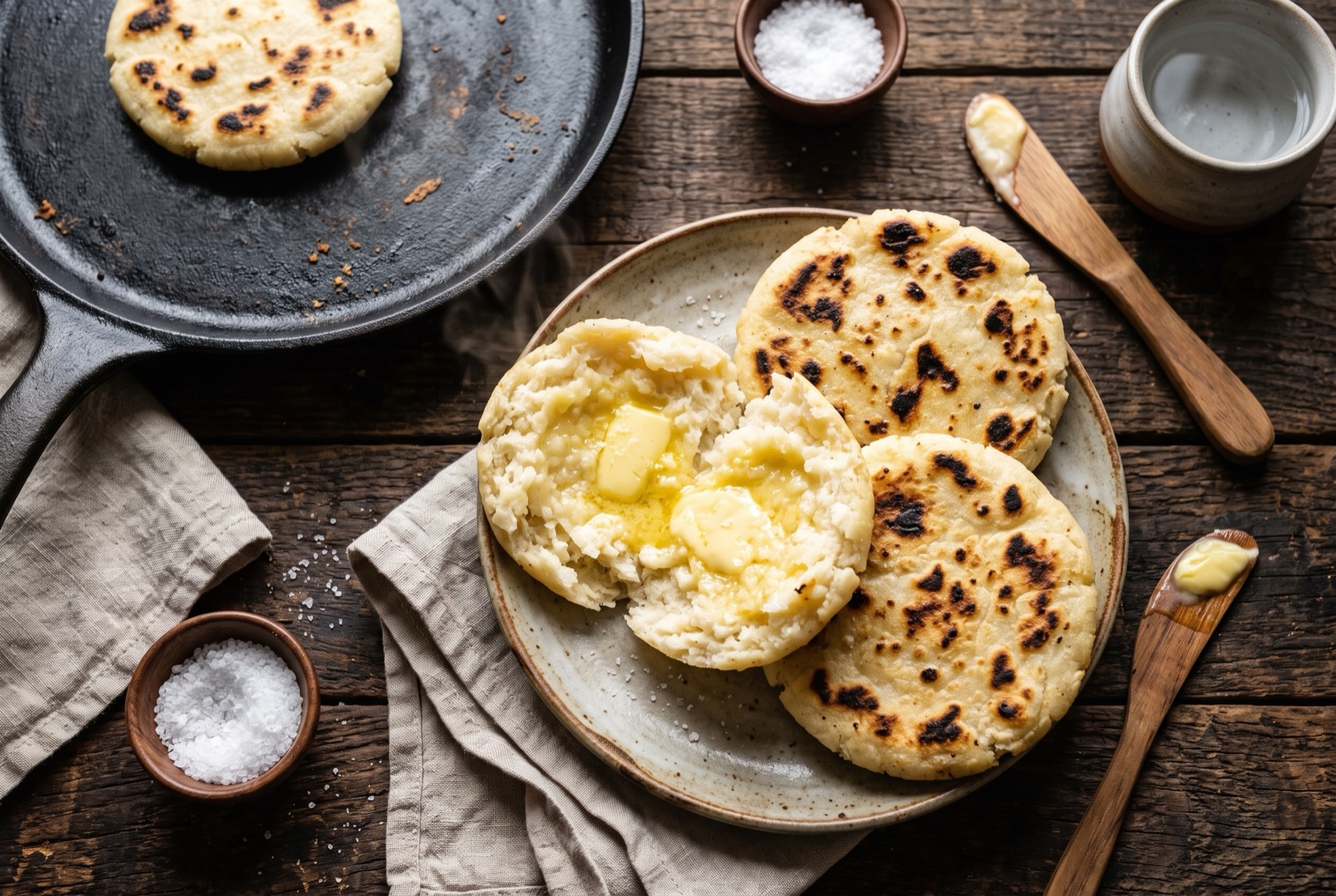
Keep exploring Colombia.
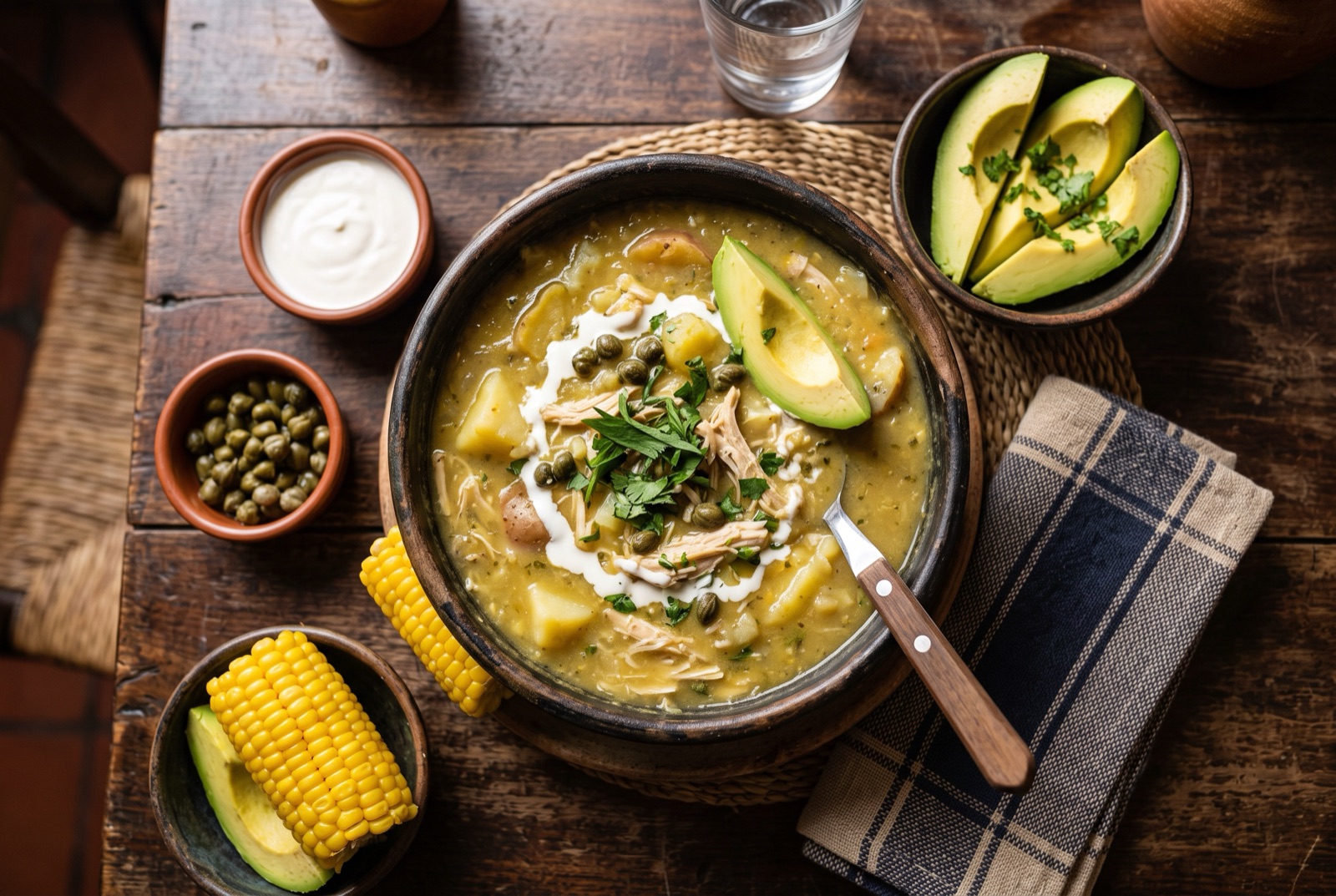
Colombia has 9 more dishes in the atlas — Ajiaco Santafereño and Arepa de Maíz, and 7 more.
All Colombia recipes Cornmeal recipes Potato recipes Ground beef recipes street foodsnackgluten freedairy freeRecipe by The DishRoute Kitchen · published August 20, 2026 · updated August 20, 2026