Bolivia.
Bolivia
Bolivian cooking is organised by altitude before it is organised by anything else. Between the Altiplano at close to four thousand metres and the Amazon lowlands a few hundred metres above sea level, the country stacks three climates on top of one another, and each feeds the others: freeze-dried potatoes and high-plains grains come down from the cold, maize and stone fruit come out of the temperate valleys, and rice, cassava, plantain and dried beef travel up from the east. What holds those three larders together is a pattern rather than a single signature spice — a base of onion, garlic, cumin and oregano, chilli ground into paste and used for colour and body as much as for heat, starch doubled or tripled on the same plate without apology, and a bowl of raw chilli sauce set down so every eater seasons for themselves. The result is filling, slow-simmered, unshowy food built for cold mornings and long working days, and its defining technical fact is that in most of the country water never actually reaches a hundred degrees.

- Continent
- South AmericaAndes
- Recipes in atlas
- 10
- Must-try dishes
- 3
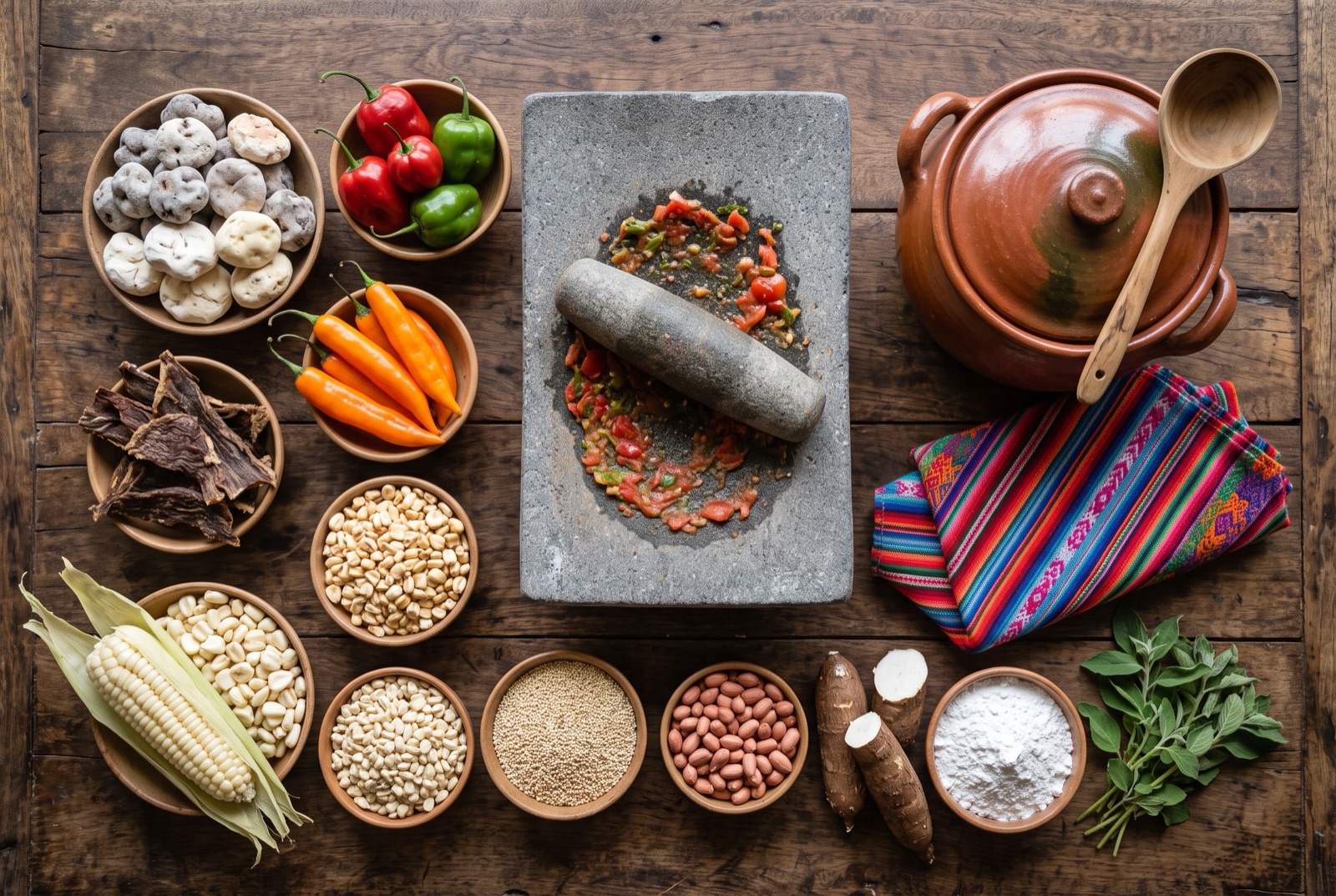
- Pantry staples
- 9
Start with the classics.
Must tryThe dishes that explain the Bolivia kitchen fastest — if you cook only a few things from this page, cook these.
Inside the Bolivia kitchen.
Three chillies do most of the flavour work. Ají amarillo is the yellow-orange one, fruity and only moderately hot, and it gives dishes like fricasé their colour and their thick body. Ají colorado, the dried red chilli, brings a deeper, almost raisiny background used in stews and in the fillings of baked pastries. Locoto is the outlier: a thick-walled, seriously hot chilli eaten raw rather than cooked, and the reason a Bolivian table always has a bowl of something fierce on it. In all three cases the chilli is soaked and ground to a paste, then fried in fat until the oil at the edge of the pan turns orange — that separation is the standard doneness signal for a Bolivian base, the same way it is in the Andes generally.
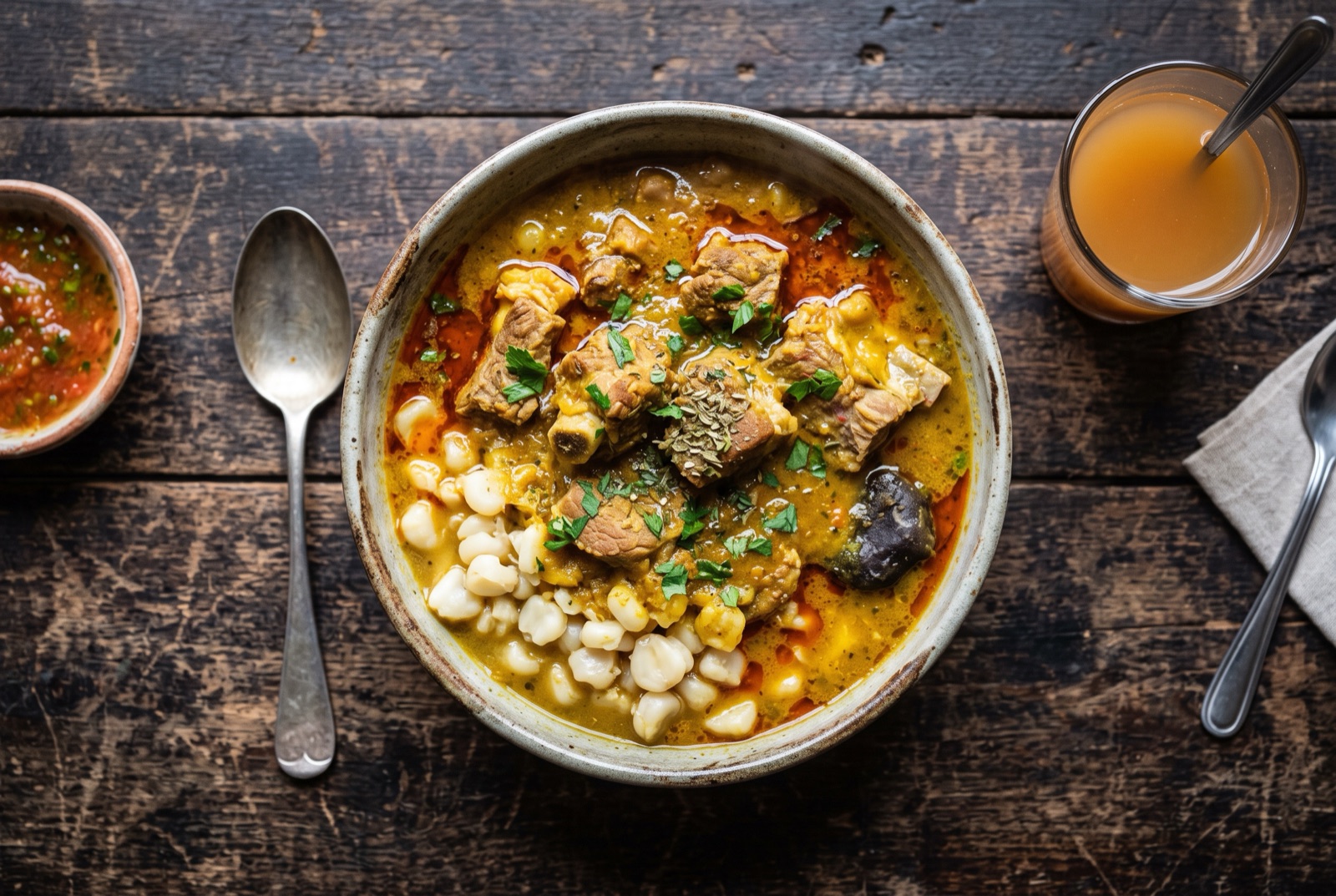
The potato is not an ingredient here so much as a family. Bolivia sits inside the crop's original homeland, and markets sell dozens of native varieties by name, colour and cooking behaviour. More striking is what the Altiplano does to them: potatoes are left out overnight in the freezing dry air, trodden underfoot to press out the water, then dried in the sun, producing black chuño and pale, washed tunta. It is freeze-drying invented centuries before the machine, it keeps for years, and the rehydrated result is chewy and absorbent in a way fresh potato never is — it exists to soak up broth.
Maize matters almost as much. Choclo, the big-kernelled Andean corn, is starchy rather than sweet and behaves quite differently from supermarket sweetcorn, which is why grated-corn dishes here taste savoury and mealy rather than sugary. Mote is hulled hominy, boiled and served in the bowl alongside meat instead of being mashed into anything. Purple maize is cooked down into api, the hot breakfast drink of highland markets, and quinoa and cañahua come off the same cold plains as the potatoes.
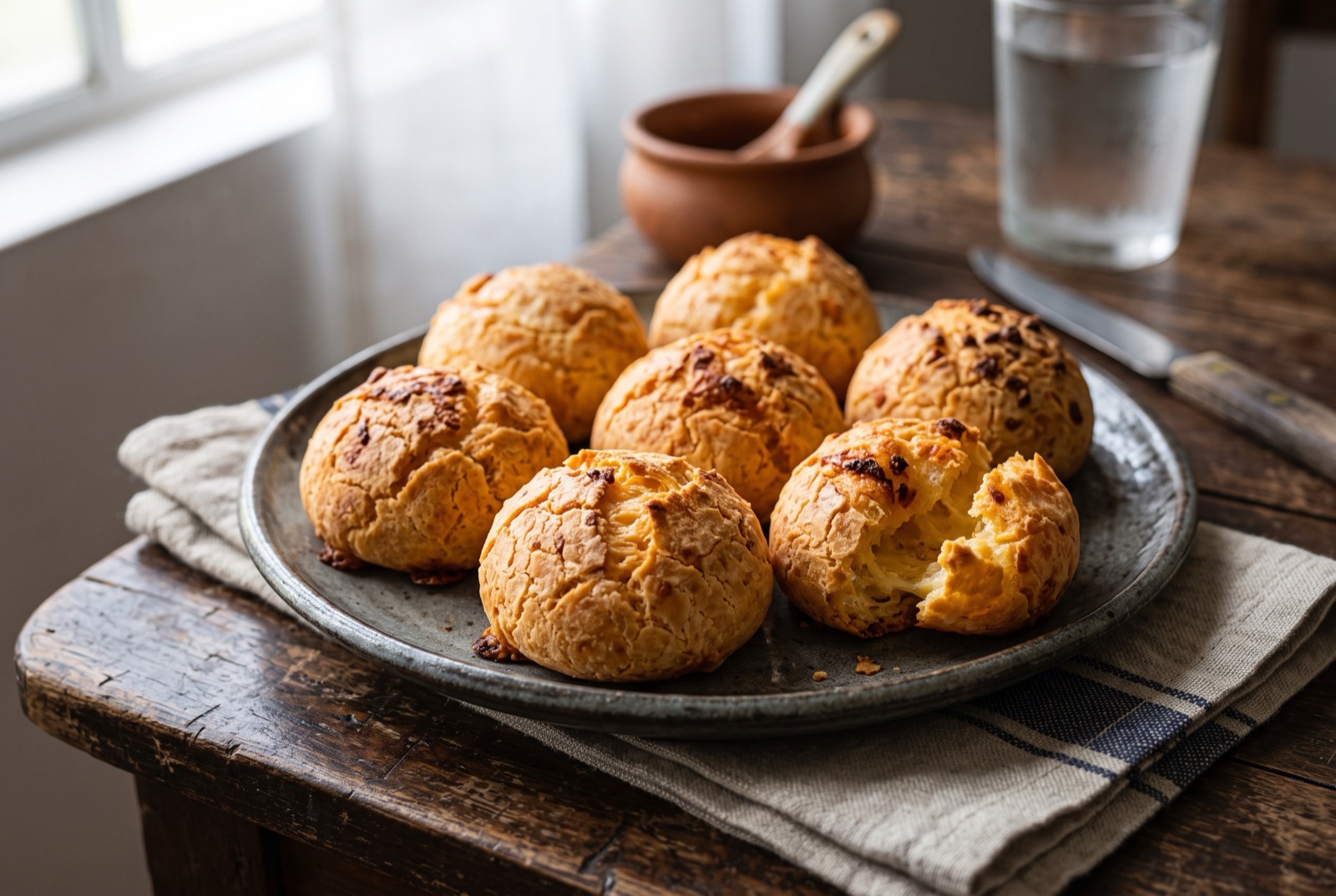
The east is a separate kitchen. Around Santa Cruz, Beni and Pando the staples are rice, cassava, plantain and charque — beef salted and sun-dried for keeping — with urucú, the same annatto seed used across lowland South America, colouring the fat orange. Cheese is baked into starch rather than melted over it, which is where cuñapé and sonso come from. This food has more in common with the border kitchens of Brazil and Paraguay than with anything cooked in La Paz.
Structure and time complete the picture. Lunch is the serious meal, and it comes in two acts: a soup, then a segundo of meat with rice and potato. Salteñas are a mid-morning interruption, api is drunk at market stalls before dawn light is properly up, and platters like pique macho exist to be attacked communally with several forks. Underneath all of it is the altitude: at 3,600 metres water boils at roughly 88 °C, so hominy and tough cuts need hours rather than minutes, pressure cookers are ordinary domestic equipment, and bakers work doughs slightly wetter because the dry thin air pulls moisture out faster than they are used to at sea level.
Signature pantry.
9 staplesThe ingredients this cuisine cannot function without.
- locoto chilli
- ají amarillo
- chuño and tunta (freeze-dried potato)
- quirquiña
- choclo and mote (Andean corn)
- raw peanuts
- charque (sun-dried beef)
- cassava and cassava starch
- quinoa
How people eat in Bolivia.
Lunch, eaten early and unhurriedly, is the meal that counts, and it arrives in two courses — soup first, then a plate of meat with rice and potato together. A bowl of llajua sits on the table the way salt does elsewhere, and reaching for it is expected rather than a criticism of the cook. Salteñas are a mid-morning habit with an unwritten deadline: shops sell out and stop by early afternoon, and nobody orders one at dinner. Platters such as pique macho are ordered for the table and eaten straight from the serving dish. In Aymara communities the apthapi keeps a much older shape: everyone brings something, it is laid out on woven cloths on the ground, and people eat standing, with their hands, from the shared spread.
Regional kitchens.
Bolivia cooks 4 distinctly different ways depending on where you stand — here is what changes between them.
- R1La Paz and the Altiplano
- The high, cold heart of the country, where chuño, mote and ají amarillo build heavy Sunday stews like fricasé. Market stalls sell api and fried pastry from before sunrise to warm people on the way to work.
- R2Cochabamba and the Valleys
- Bolivia's acknowledged eating capital, mild in climate and generous in portion. Silpancho and pique macho both came out of its kitchens, and both put more on one plate than most people expect to finish.
- R3Santa Cruz, Beni and the Lowlands
- Tropical and rice-based, with cassava, plantain, charque and annatto-tinted fat instead of potato and highland chilli. Cheese-and-starch baking is the local specialty, cuñapé above all.
- R4Tarija and the South
- Wine country on the Argentine border, with vineyards at some of the highest altitudes grapes are grown anywhere. The cooking leans on grilled meat and stone fruit, and the salteña is commonly said to have started here.
All Bolivia recipes.
10 recipes and counting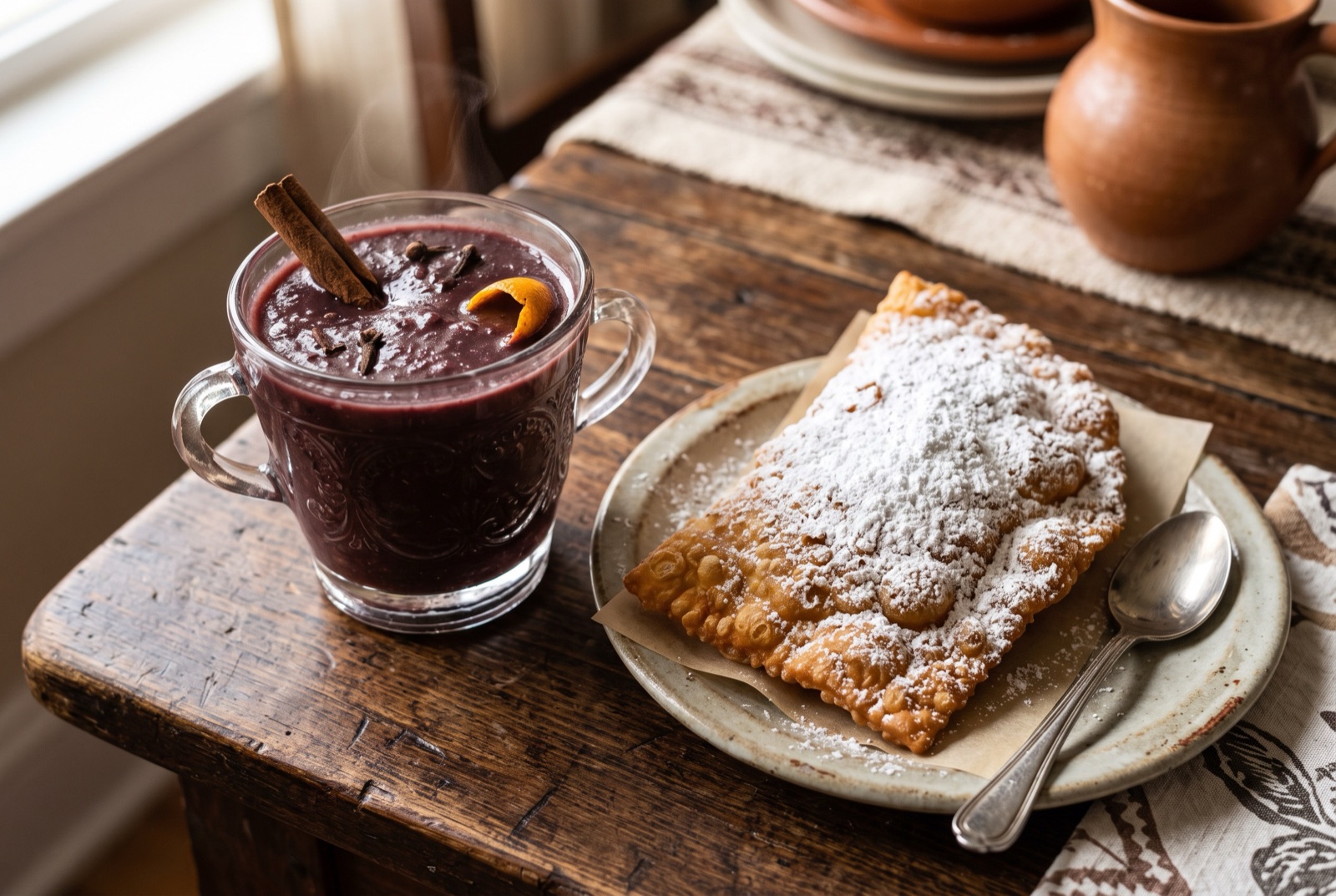
Bolivia1 hr 35 min
Api con Pastel
Purple Corn Drink and Fried Cheese Pastry
Bolivia55 min
Cuñapé
Santa Cruz Cassava and Cheese Rolls
Bolivia10 hr 55 min
Fricasé Paceño
La Paz Yellow Chilli Pork Stew
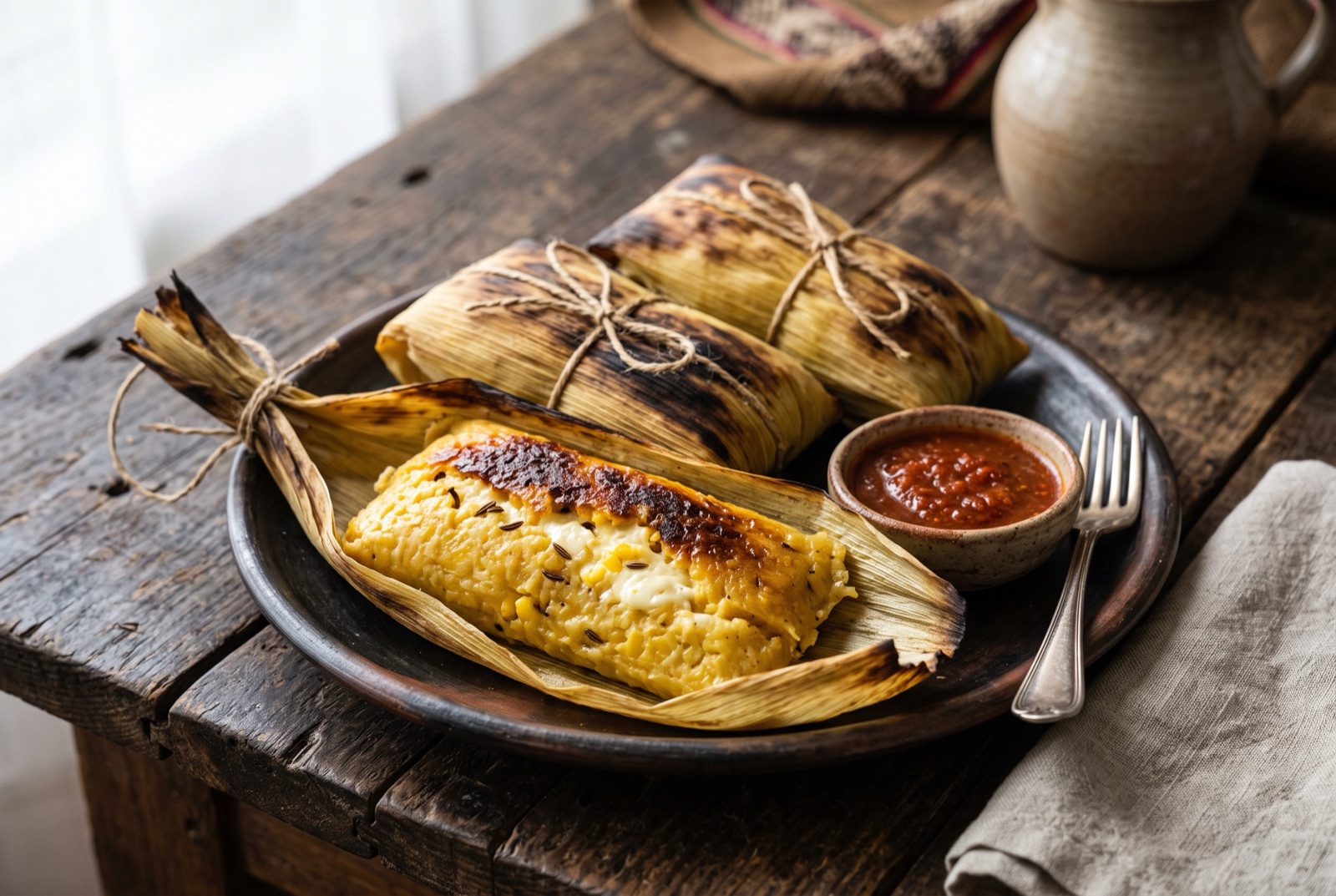
Bolivia1 hr 35 min
Humintas al Horno
Baked Corn and Cheese Parcels
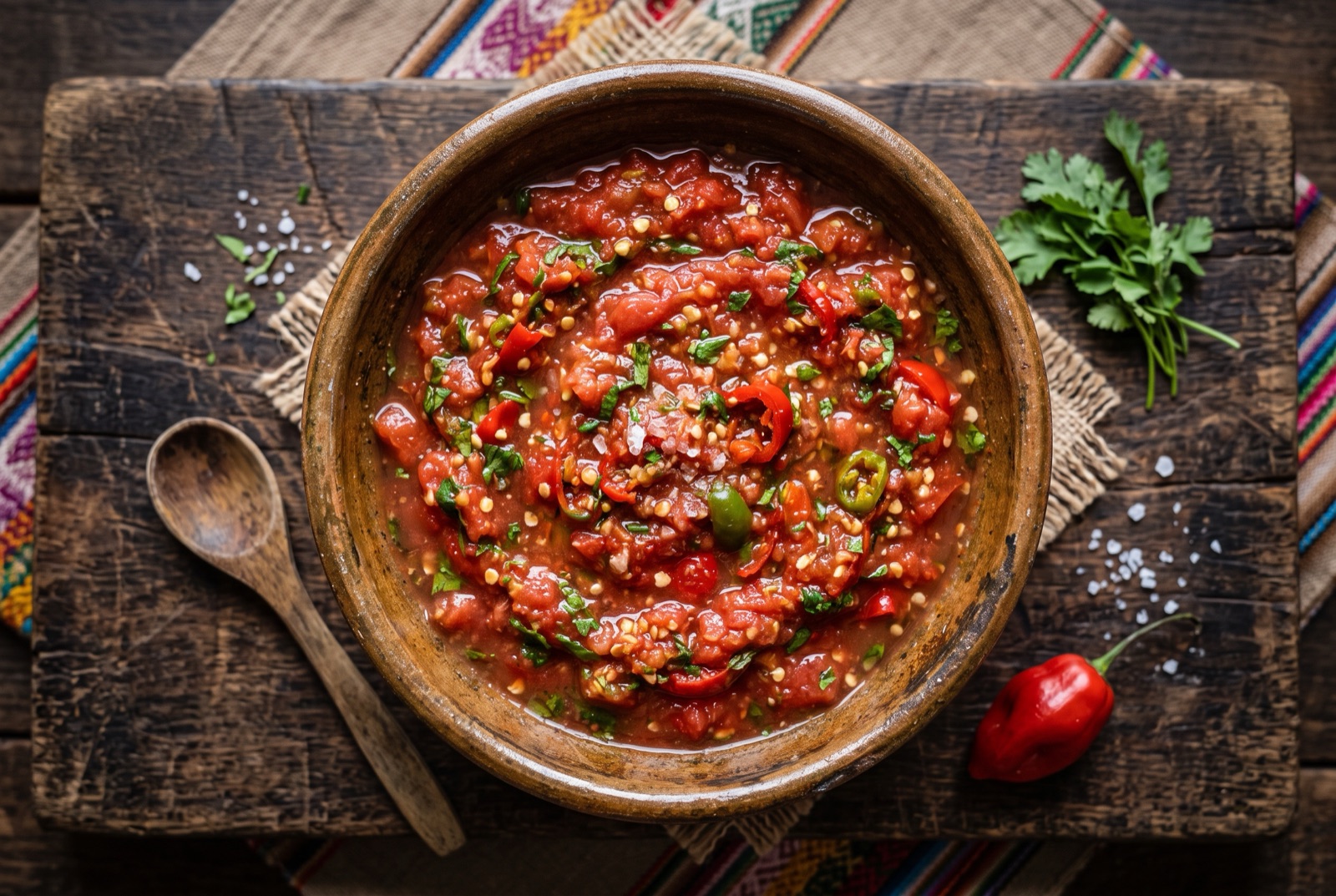
Bolivia12 min
Llajua
Bolivian Locoto and Tomato Table Salsa
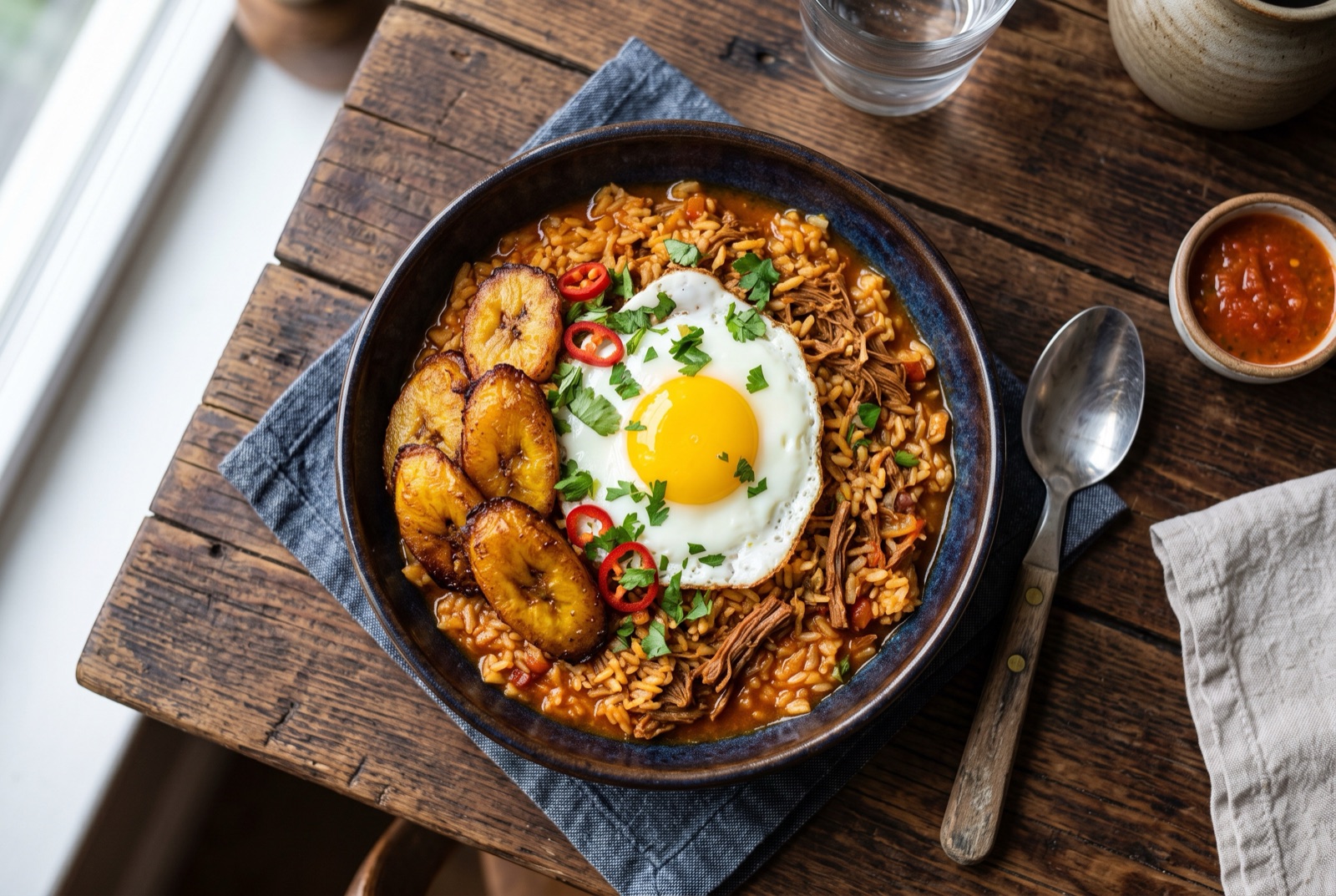
Bolivia3 hr 45 min
Majadito
Beni Rice with Dried Beef and Plantain
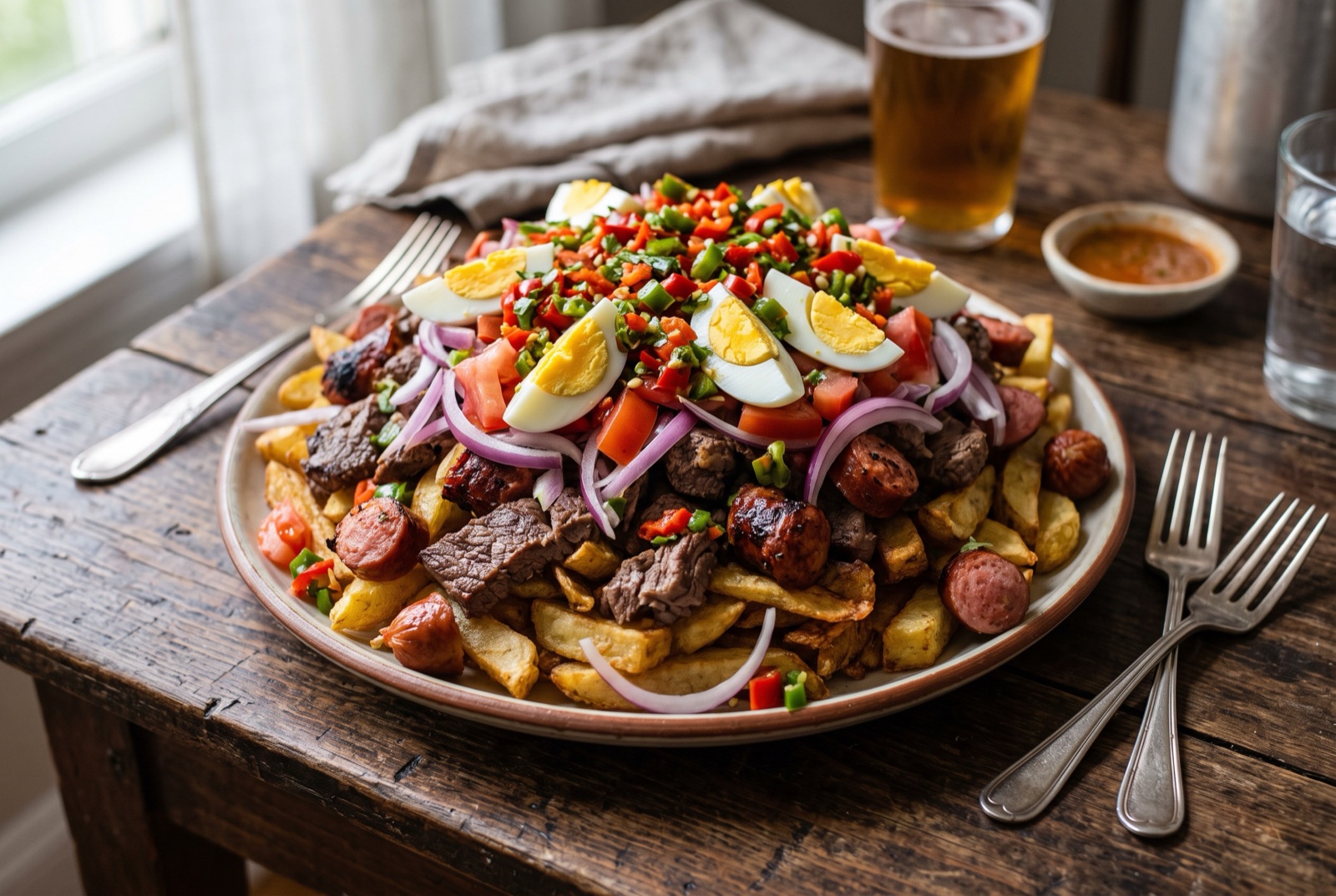
Bolivia1 hr 10 min
Pique Macho
Bolivian Beef and Chip Sharing Platter
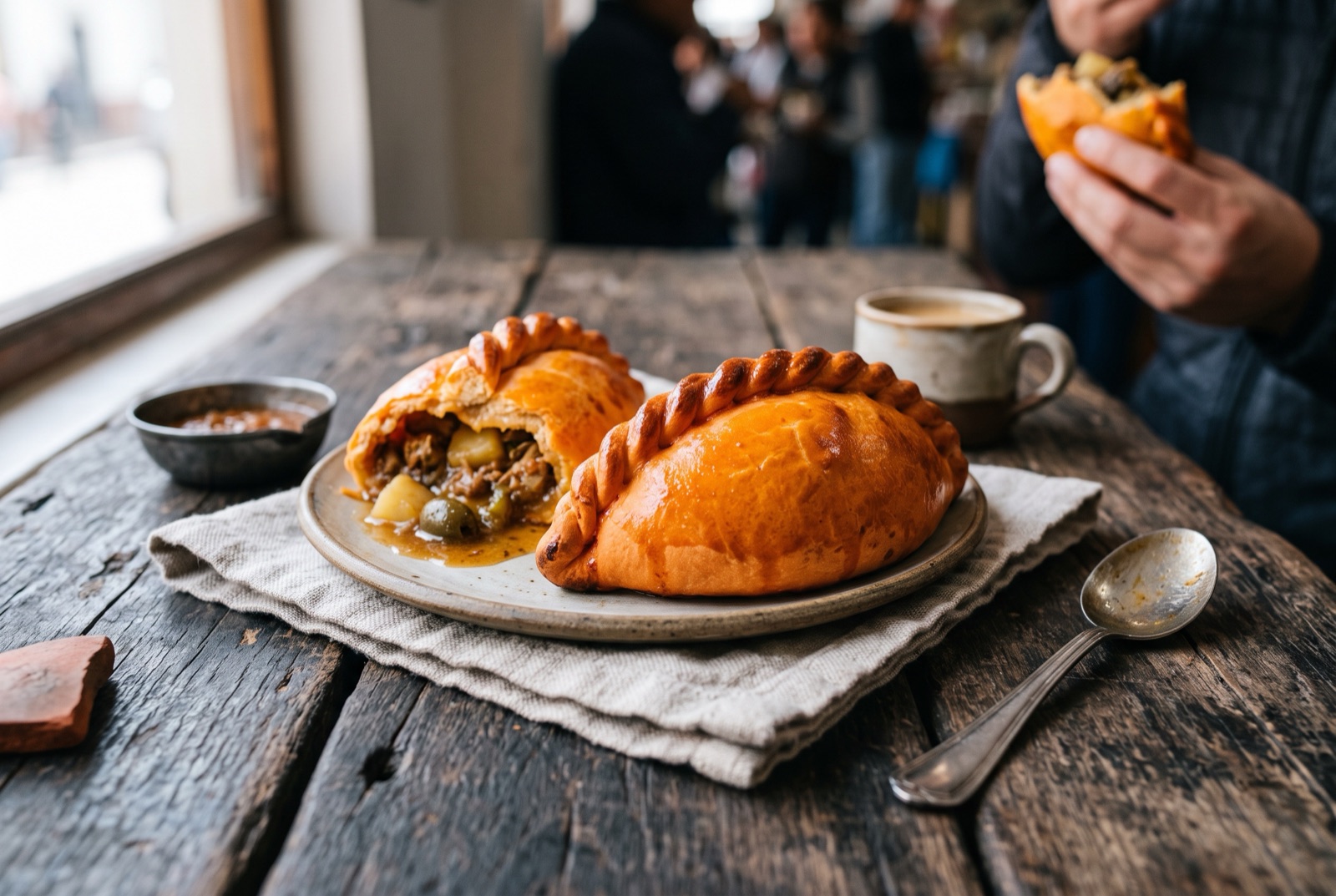
Bolivia13 hr 25 min
Salteñas
Bolivian Juicy Baked Meat Pastries
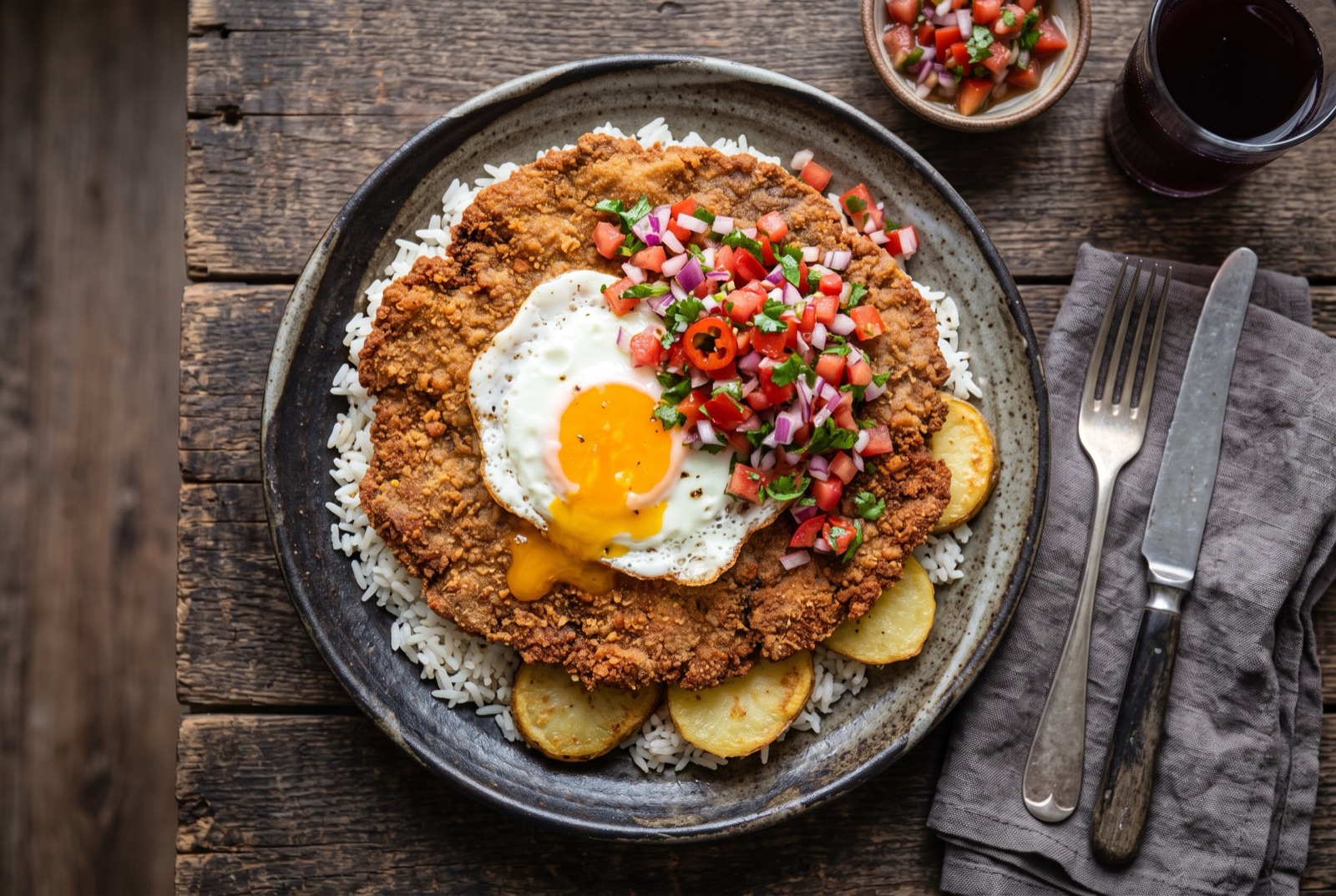
Bolivia1 hr
Silpancho
Cochabamba Breaded Steak Plate
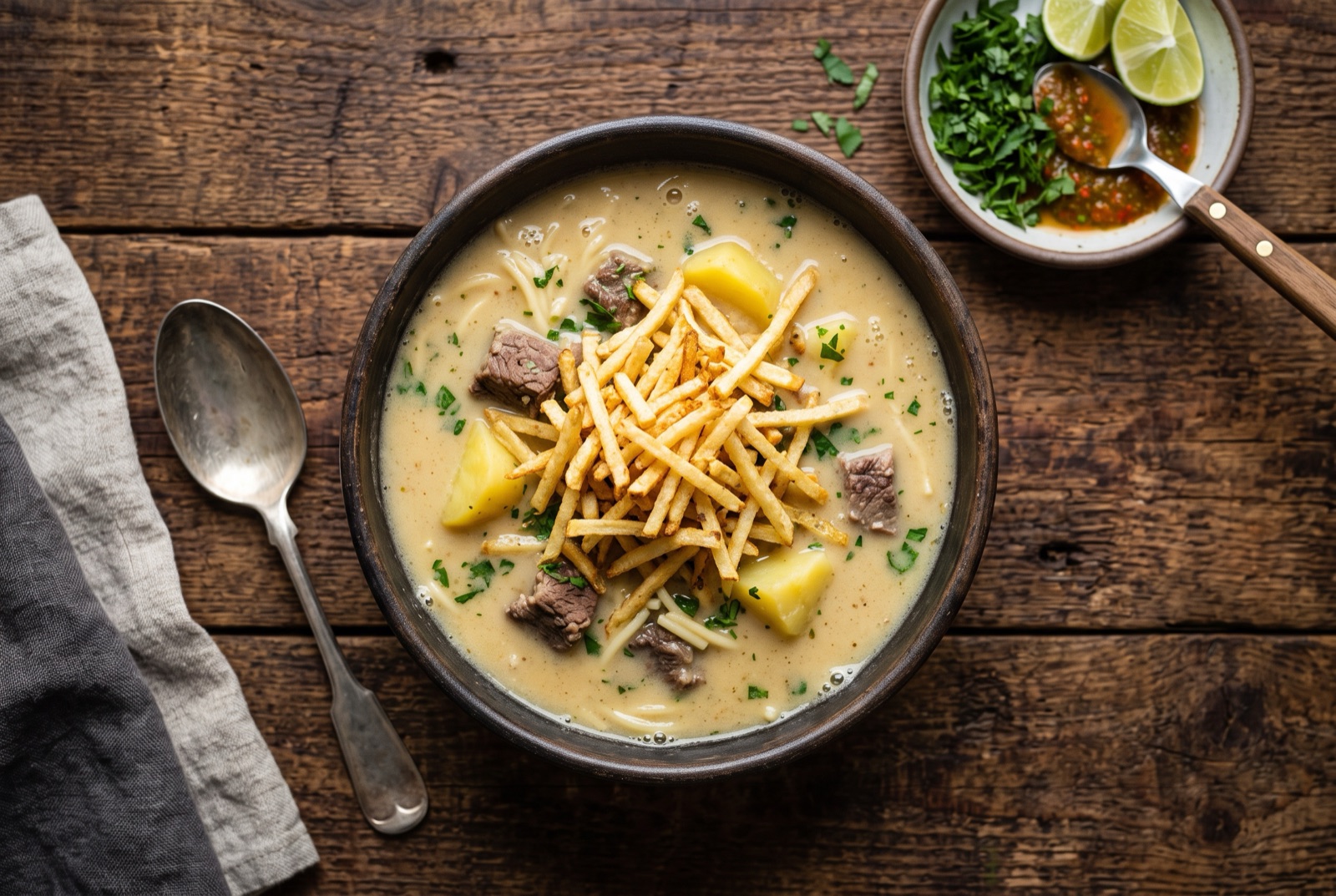
Bolivia2 hr 5 min
Sopa de Maní
Bolivian Peanut and Beef Soup
Keep traveling.
Bolivia sits in Andes, and its kitchen shares borders as well as ingredients with Argentina and Brazil.
 Argentina
 Brazil