Silpancho.
Cochabamba Breaded Steak Plate
Silpancho cochabambino · say it: seel-PAHN-cho
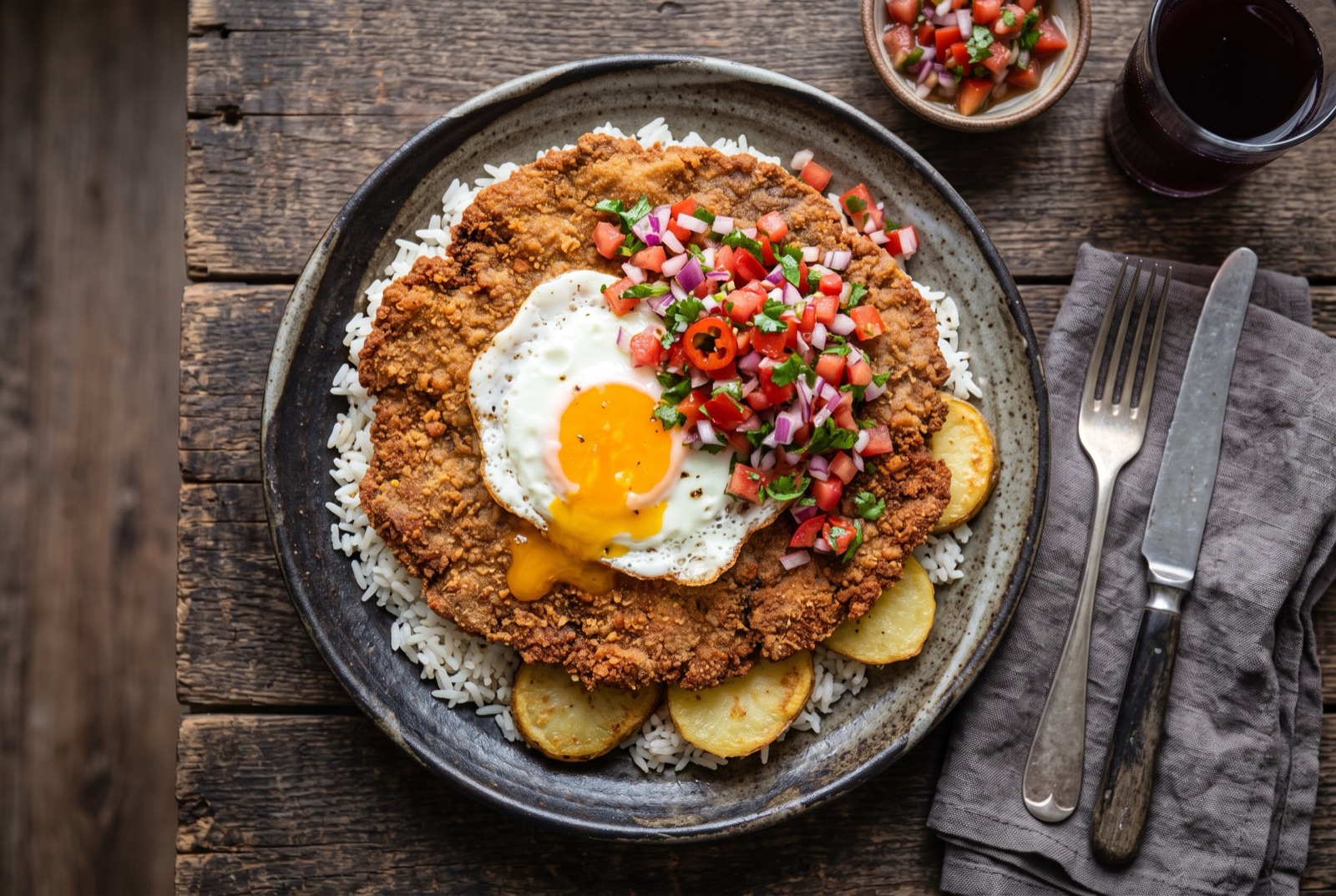
Silpancho is a plate built in layers, and the beef on top of it is the thinnest steak you will ever cook. A single portion is hammered out to two or three millimetres and a diameter wider than the plate it lands on, pressed into breadcrumbs and fried so fast that it stays tender rather than turning to leather. Under it sit white rice and slices of boiled potato crisped in the same pan; over it go a fried egg with a soft yolk and a cold, vinegary chop of tomato, onion and locoto. Nothing in it is complicated, and yet the assembly is exact — break the yolk and it runs down through the breadcrumbs into the rice, which is the entire idea.

- Gate
- BoliviaCochabamba
- Prep
- 30 min
- Cook
- 30 min
- Total time
- 1 hr
- Serves
- 4
- Status
- Easy
- Nutrition / serving · estimated
- Calories 780 kcal
- Protein 42 g
- Carbs 82 g
- Fat 30 g
- Fiber 5 g
- Sodium 690 mg
Why this recipe works.
- Pounding technique and thickness are specified, because a 3 mm steak and a 1 cm steak are two entirely different dishes.
- The potato is boiled first and then pan-fried, which is how it gets a crisp face without a raw, starchy centre.
- Salsa is dressed and left to sit, so the onion loses its harshness before it hits the hot plate.
- Everything is timed so the egg lands on the meat still runny, rather than sitting in a warm oven going hard.
Ingredients.
14 itemsFor the steak
For the base
To finish
For the salsa cruda
Equipment
- Meat mallet or heavy rolling pin
- Large heavy frying pan
- Saucepan for the rice
Instructions.
Dress the salsa first
Combine the tomato, onion, locoto, parsley, vinegar and a good pinch of salt in a bowl and leave it on the counter while you cook everything else. After 10 minutes the onion should smell sweet rather than sharp and there should be a pool of pink juice at the bottom.
Cook rice and potatoes
Rinse 300 g of rice until the water runs clear, then cook it your usual way and keep it covered and warm. At the same time boil the potatoes whole in salted water for about 20 minutes, until a knife enters with slight resistance, then drain, cool briefly and cut into 1 cm slices.
Tip Stopping the potatoes just short of fully soft is deliberate — they get their last few minutes of cooking in the frying pan.
Pound the beef flat
Lay each steak between two sheets of baking paper and beat it outwards from the centre with a mallet or rolling pin until it is 2–3 mm thick and clearly wider than a dinner plate. Rub both sides with the garlic, cumin, salt and pepper.
Crumb the steaks
Spread the breadcrumbs on a large tray and press each steak into them firmly on both sides, pushing with your palm so the crumbs bed into the surface rather than sitting on it. Shake off the loose excess and set the steaks aside in a single layer.
Fry the potato slices
Heat a few tablespoons of oil in a wide pan over medium-high heat and fry the potato slices in batches until each side is deep gold and crusted, about 3 minutes a side. Lift onto kitchen paper and salt them straight away.
Fry the steaks fast
Add fresh oil to the pan and raise the heat until a crumb dropped in sizzles immediately. Fry each steak for 60–90 seconds a side, until the crust is even amber and the edges have crisped and curled slightly. Drain and keep somewhere warm but uncovered.
Tip Covering the fried steak traps steam and softens the crust within a minute. Leave it open to the air.
Fry the eggs and build the plate
Fry the eggs in the same pan until the whites are set and lacy at the edges but the yolks still move. Spread rice over each plate, fan the potato slices beside it, lay the steak over the top so it overhangs, crown it with an egg and spoon the salsa cruda across the meat.
Tips from our kitchen.
- Pound between two sheets of baking paper or a split freezer bag, working from the centre outwards. Hitting bare meat with a mallet tears holes in it long before it is thin enough.
- Use a lean, even cut — top round, silverside or thin sirloin. Anything marbled or sinewy curls violently in the pan once it is this thin.
- The frying pan has to be properly hot before the meat goes in. Sixty to ninety seconds a side is the whole cook; a lukewarm pan steams the crumbs pale and grey.
- Boil the potatoes whole and slightly underdone, then cool them before slicing. Fully soft potato collapses into mush the moment it hits the frying pan.
- Dress the salsa with vinegar or lime and salt at least ten minutes ahead — it needs that time to soften the onion and pull juice out of the tomato.
Substitutions.
- Locoto chilli → One red jalapeño or half a habanero, finely chopped
- Locoto is thick-walled and hot with a green, grassy edge. Jalapeño gets the texture right and habanero gets the heat right; neither is exact, and leaving it out entirely is a normal Bolivian request anyway.
- Dried breadcrumbs → Fine cracker crumbs, or crushed corn flakes for a gluten-light version
- The coating needs to be fine and dry. Panko is too coarse and shatters off the thin steak when you cut it.
- Beef top round → Thin pork loin steaks or chicken breast butterflied and pounded
- Both are cooked this way in Bolivia. Pork needs an extra 30 seconds a side; chicken needs the pan slightly cooler so the crumb does not burn first.
Variations.
- Trancapecho
- The same components crammed into a split marraqueta roll — steak, rice, potato, egg and salsa in one hand, sold late at night in Cochabamba.
- Silpancho a lo pobre
- Two eggs instead of one and slices of fried plantain or banana alongside, borrowing from the a lo pobre plates found across the Andes.
- Silpancho de pollo
- Chicken breast opened flat and pounded to the same thinness, popular where beef is expensive and the plate is meant to be lighter.
Storage & reheating.
Silpancho does not survive as leftovers in one piece, because the breaded steak goes soft under the salsa within an hour. Store the components separately for up to 2 days: reheat the rice with a splash of water, crisp the potato and steak in a dry pan over medium heat, and fry a fresh egg. Never microwave the meat — it turns rubbery and the crumb slides off. Breaded raw steaks freeze well between sheets of paper for a month and fry from frozen with an extra minute per side.
Serve with
A bowl of llajua on the side, and a cold beer or mocochinchi — the sweet dried-peach drink sold on Bolivian streets.
The story behind Silpancho.
Cochabamba has a national reputation for eating more, and better, than anywhere else in Bolivia, and silpancho is its most exported argument. The city sits in a mild valley at around 2,500 metres, with agriculture on all sides and a long tradition of large, cheap, generously stacked plates sold in markets and neighbourhood restaurants. Silpancho belongs to that world rather than to any restaurant canon: it is lunch food, served fast at the busiest hour, and portions in Cochabamba routinely defeat visitors who thought they were ordering a steak.
The name is usually explained through Quechua, with the sense of something flattened or beaten thin, which matches what actually happens to the meat. Whether the dish descends from a European breaded cutlet adapted to local ingredients, or grew independently out of the Andean habit of pounding tough cuts thin to make them cook quickly, is not settled — both influences are plainly present, and the same argument surrounds breaded steaks across the whole southern cone. What is distinctly Bolivian is the architecture: rice and potato together as a base rather than as alternatives, and salsa cruda instead of a sauce.
There is also a variant with a small but fierce local following. Trancapecho takes exactly the same components and jams them inside a marraqueta, the crusty split roll that La Paz and Cochabamba both eat by the sackful, turning the whole plate into a sandwich you can carry. Order silpancho in Cochabamba and you may be asked which of the two you want; order it anywhere else in Bolivia and it will arrive on a plate with the egg already sliding off the edge of the meat.
Questions, answered.
How thin should the beef actually be?
Two to three millimetres, wide enough that it hangs over the edge of a dinner plate. That thinness is what defines the dish and what lets a cheap, lean cut cook through in about a minute without toughening. If your steak is still 5 mm thick it will taste fine but it is not silpancho, and it will need longer in the pan, which dries it out.
Why does my breaded steak lose its coating in the pan?
Usually because the meat surface was wet, or the crumbs were not pressed on firmly enough. Pat the pounded steak dry, season it, then press it into the crumbs from both sides with the flat of your hand so they bed into the meat. Some cooks dip in beaten egg first, which glues the crumb on more reliably but gives a slightly thicker, softer crust than the Cochabamba standard.
Is rice and potato on the same plate not too much starch?
It is deliberate. Doubling starches on one plate is standard across Bolivian cooking, and in Cochabamba especially the portion size is part of the local identity. If you want it lighter, halve the rice rather than dropping the potato, since the crisped potato slices carry much more of the flavour.
What is the difference between silpancho and trancapecho?
They contain the same things. Silpancho is served open on a plate with the fried egg on top of the steak; trancapecho packs the identical steak, rice, potato, egg and salsa inside a split marraqueta bread roll and is eaten by hand. Trancapecho is the later, portable version and is strongly associated with Cochabamba street stalls.
Can I make silpancho without a meat mallet?
Yes. A heavy rolling pin, the flat base of a small saucepan or an empty wine bottle all work — the goal is broad, even pressure rather than sharp impact. Cover the meat first, work outwards from the middle, and stop when the steak is translucent enough that you can see the paper through the thin spots.
You might also like.
All recipes →
Keep exploring Bolivia.
Bolivia has 9 more dishes in the atlas — Api con Pastel and Cuñapé, and 7 more.
Recipe by The DishRoute Kitchen · published August 20, 2026 · updated August 20, 2026