Llajua.
Bolivian Locoto and Tomato Table Salsa
Llajwa · say it: YAH-hwah
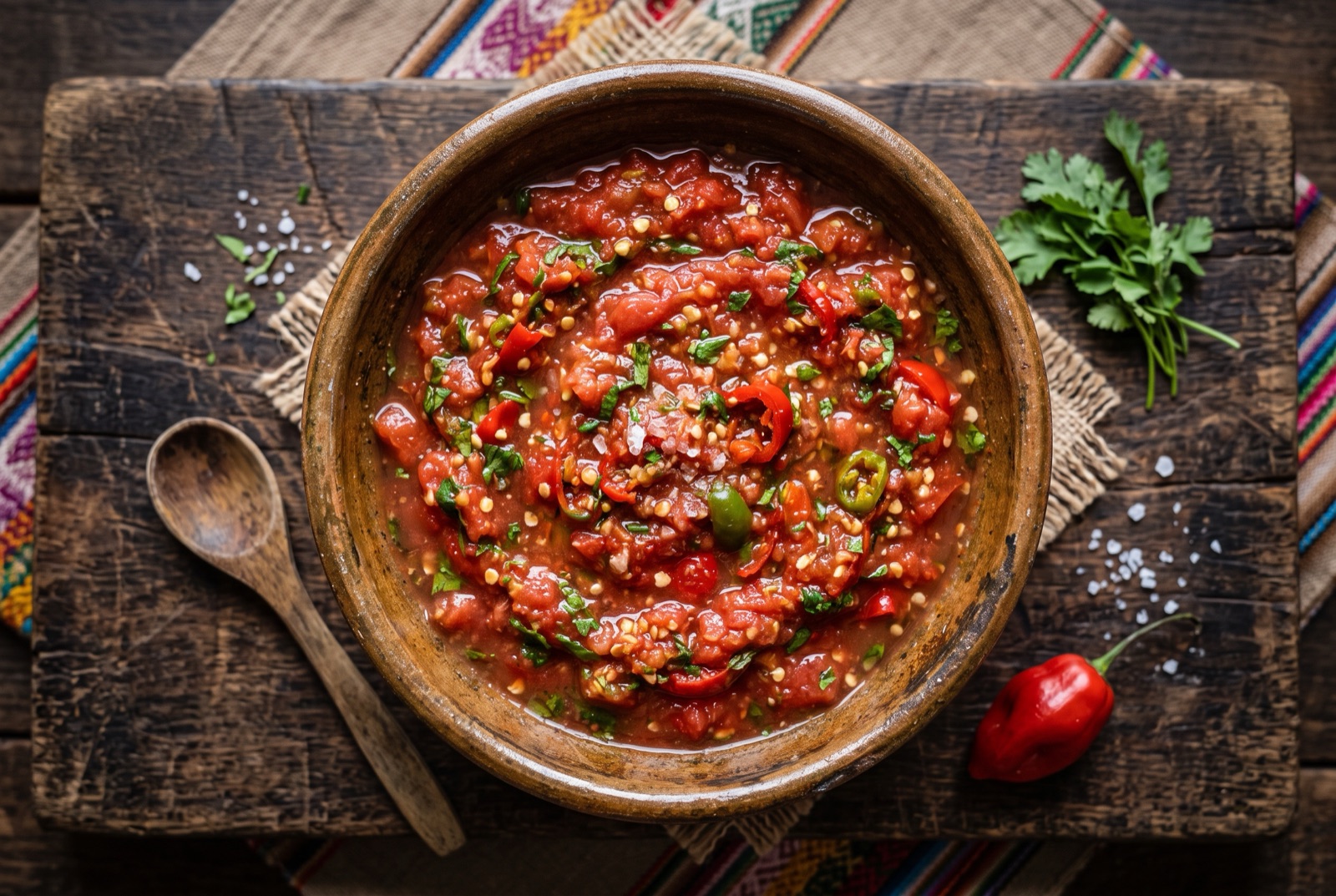
Llajua is an uncooked salsa of fresh hot chillies and tomato, ground rather than blended, seasoned with salt and a herb that grows across the Andes. It is thin, seedy, aggressively hot and startlingly fresh — nothing in it has seen heat, so the tomato tastes of raw tomato and the chilli hits immediately rather than smouldering. Bolivians do not treat it as a condiment you might add; it is a fixed part of the table setting, spooned over soup, rice, potatoes, grilled meat, pastries and anything else that arrives, and a restaurant that fails to bring a bowl has made a mistake it will hear about.

- Gate
- BoliviaNationwide, strongest in the highlands
- Prep
- 12 min
- Cook
- 0 min
- Total time
- 12 min
- Serves
- 6
- Status
- Easy
- Nutrition / serving · estimated
- Calories 25 kcal
- Protein 1 g
- Carbs 5 g
- Fat 0 g
- Fiber 2 g
- Sugar 3 g
- Sodium 390 mg
Why this recipe works.
- Explains why grinding beats blending in physical terms, then gives a workable method for cooks who only own a blender.
- Herb substitution that is honest about what quirquiña actually tastes like instead of pretending cilantro is identical.
- Heat is controlled by seed and vein ratio, so the same recipe gives you mild or genuinely fierce.
- Takes ten minutes with no cooking, and it is the sauce that makes half the Bolivian recipes on this site taste finished.
Ingredients.
7 itemsFor the sauce
Equipment
- Batán, molcajete or heavy mortar and pestle (or a blender used with restraint)
- Sharp knife
- Gloves for handling chillies
Instructions.
Prepare the chillies
Wearing gloves, split the locotos lengthways and scrape out the black seeds and the pale veins with a teaspoon. Keep them in a separate dish — how much you add back at the end sets the heat of the finished sauce.
Tip The veins carry more capsaicin than the seeds do. Removing both gives a warm, fruity sauce; adding half back gives the highland level.
Grind chilli and salt
Put the chilli flesh, the salt and the garlic if using onto the batán or into a mortar and work them with a rocking, dragging motion until they break down into a rough wet paste with no large pieces left, about 2 minutes.
Work in the tomato
Add the tomato a quarter at a time, crushing each addition into the chilli paste before the next goes in. The mixture should turn deep red and loose, with skin and pulp still visible — not a smooth purée.
Tip Rocking rather than pounding keeps air out and the colour dark.
Add the herb last
Pile the quirquiña on top and grind just until the leaves are bruised and distributed through the sauce, about 30 seconds. Working them any longer turns the whole bowl khaki and makes the herb taste bitter.
Season and adjust the heat
Scrape everything into a bowl, stir in the scallion if using, and taste. Correct the salt, add lime if the tomatoes were dull, and grind in some of the reserved seeds if you want it hotter. Let it sit 5 minutes and taste once more.
Serve at the table
Bring it out in its own bowl with a small spoon and leave it there for the whole meal. It should be loose enough to spoon over food and coat it, not thick enough to sit in a mound.
Tips from our kitchen.
- Choose tomatoes that are ripe and deeply red but still firm. Watery, underripe fruit makes a pale sauce that separates into liquid and pulp within the hour.
- Grind or pulse the chillies and salt first, before the tomato goes in. The salt gives the stone or blade something abrasive to work against and breaks the chilli down faster.
- Control the heat with the seeds and pale inner veins, not the number of chillies — that is where nearly all the capsaicin sits, and the flesh alone is comparatively gentle.
- Wear gloves or work with a fork and a spoon. Locoto and rocoto are hot enough to leave your fingers burning for hours and the oil transfers to eyes with no warning.
- If you must use a blender, pulse in one-second bursts and stop while the mixture is still visibly coarse with recognisable pieces. Running it smooth turns it pink and frothy.
- Season and taste at the very end, once the tomato juice has loosened everything. Salt levels that seem right on chilli alone read as flat once the tomato is in.
Substitutions.
- Locoto chillies → Rocoto peppers, or red jalapeños plus half a habanero
- Rocoto is the same species and the closest match, sold frozen or in paste form in Latin grocers. Red jalapeño alone gives the right texture and colour but not enough heat, hence the habanero.
- Quirquiña → Cilantro plus a small handful of rocket leaves
- Quirquiña is sharper and more resinous than either. The rocket supplies the bitter edge cilantro lacks. Use roughly two parts cilantro to one part rocket.
- Huacataya → A teaspoon of Peruvian huacatay paste, sold in jars
- Only if you are making the Cochabamba style. Use it sparingly — the paste is concentrated and will bulldoze the tomato.
Variations.
- Llajua de huacataya
- The Cochabamba version, made with huacataya instead of quirquiña for a muskier, more pungent sauce that stands up to fried food.
- Llajua con maní
- A spoonful of ground raw peanuts worked in, giving a thicker, milder sauce that clings to grilled meat instead of running off it.
- Llajua verde
- Made with green tomatoes or tomatillos and green locoto, sharper and more acidic, and usually served with fish or with cheese.
Storage & reheating.
Llajua is meant to be made and eaten the same day, and the difference is obvious — after twelve hours in the fridge the raw tomato dulls, the herb darkens and the heat flattens into something duller and more acidic. It is technically safe for three days in a sealed jar, and Bolivian households do keep a bowl going, but nobody pretends day-three llajua is the same sauce. If you want a head start, grind the chilli and salt into a paste and refrigerate that for up to a week, then add fresh tomato and herb five minutes before the meal.
Serve with
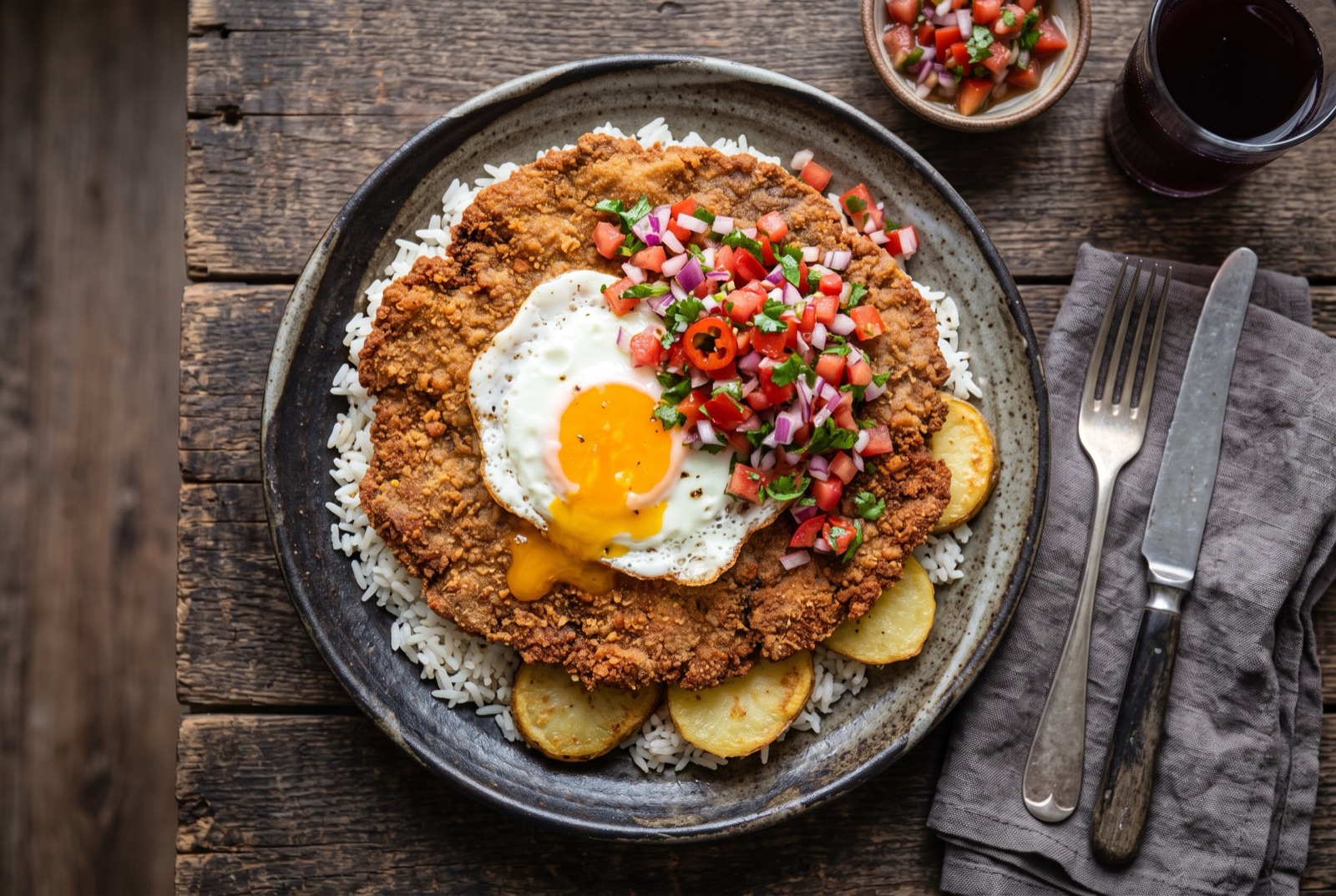
Everything: silpancho, pique macho, fricasé, salteñas, boiled potatoes with cheese, or plain bread when there is nothing else in the house.
The story behind Llajua.
The name is Quechua, and the sauce belongs to the long Andean habit of grinding raw chilli and herbs on stone. The tool is the batán: a large flat stone with a heavy rocking hand-stone, worked back and forth rather than pounded, and it is still ordinary kitchen equipment across the Bolivian highlands. What it does to the ingredients is not sentimental detail. Rocking stone crushes cell walls and presses juice out without whipping air in, so the sauce stays deep red, loose and glossy. A blender does the opposite: it aerates, lightens the colour to pink, foams the tomato and produces something that separates in the bowl within minutes. Bolivian cooks are unanimous about this and they are right about the mechanism.
The chilli is locoto, a thick-walled rocoto-type pepper with distinctive black seeds, grown on the eastern Andean slopes. It is genuinely hot, fruity rather than smoky, and — unlike the ají amarillo and ají colorado that get soaked and fried into Bolivian stews — it is almost always used raw. That division is a good way to understand the cuisine: cooked chilli builds the body of a dish, raw chilli sits on the table so each person decides their own heat. It is also why Bolivian food can seem mild in the pot and turn fierce on the plate.
The herb is where regional argument starts. Quirquiña, sometimes spelled killkiña, is a leafy Andean herb with a sharp, resinous flavour somewhere between cilantro, rocket and something faintly medicinal, and in the highlands it is not optional. Cochabamba often uses huacataya instead, a marigold relative that is muskier and stronger. Some households use both, some use neither and simply add more tomato. Every family runs its own ratio and considers the neighbours' version either bland or reckless. Outside Bolivia neither herb is easy to find, so the honest version abroad is cilantro with a handful of rocket for bite — not the same, but pointed in the right direction.
Questions, answered.
Why does my llajua turn pink and foamy?
You blended it too long. High-speed blades whip air into the tomato, lightening the colour and creating foam that separates in the bowl. The traditional stone batán crushes without aerating, which is why real llajua stays dark red and glossy. If a blender is all you have, pulse in short bursts and stop while the sauce still looks coarse.
How hot is llajua supposed to be?
Hot enough to notice immediately, but it is not a chilli-eating contest. Locoto is genuinely fierce, and the point of the sauce is that it sits on the table so each person doses their own plate. Start by removing all the seeds and veins for a warm, fruity sauce, and add some back if you want the real highland level.
What can I use instead of quirquiña?
Cilantro mixed with a little rocket is the closest widely available approximation. Quirquiña has a sharp, slightly resinous, almost medicinal note that cilantro alone does not carry, and the rocket supplies the bitterness. Some Bolivians abroad simply leave the herb out entirely and add more tomato, which is a legitimate choice rather than a failure.
Do I need a batán or a molcajete?
No, but a stone tool gives a visibly better sauce. A molcajete or a heavy mortar works well for small quantities. Without either, chop everything very finely by hand and crush it against the side of a bowl with a fork — slower, but closer to the right texture than any blender will get you.
Can I freeze llajua?
Not usefully. Freezing ruptures the raw tomato and it thaws into watery pulp with the fresh flavour gone, which is the entire point of the sauce. What does freeze well is the chilli: grind locoto with salt into a paste and freeze it in ice cube trays, then make fresh llajua from a cube plus tomato and herb whenever you need it.
You might also like.
All recipes →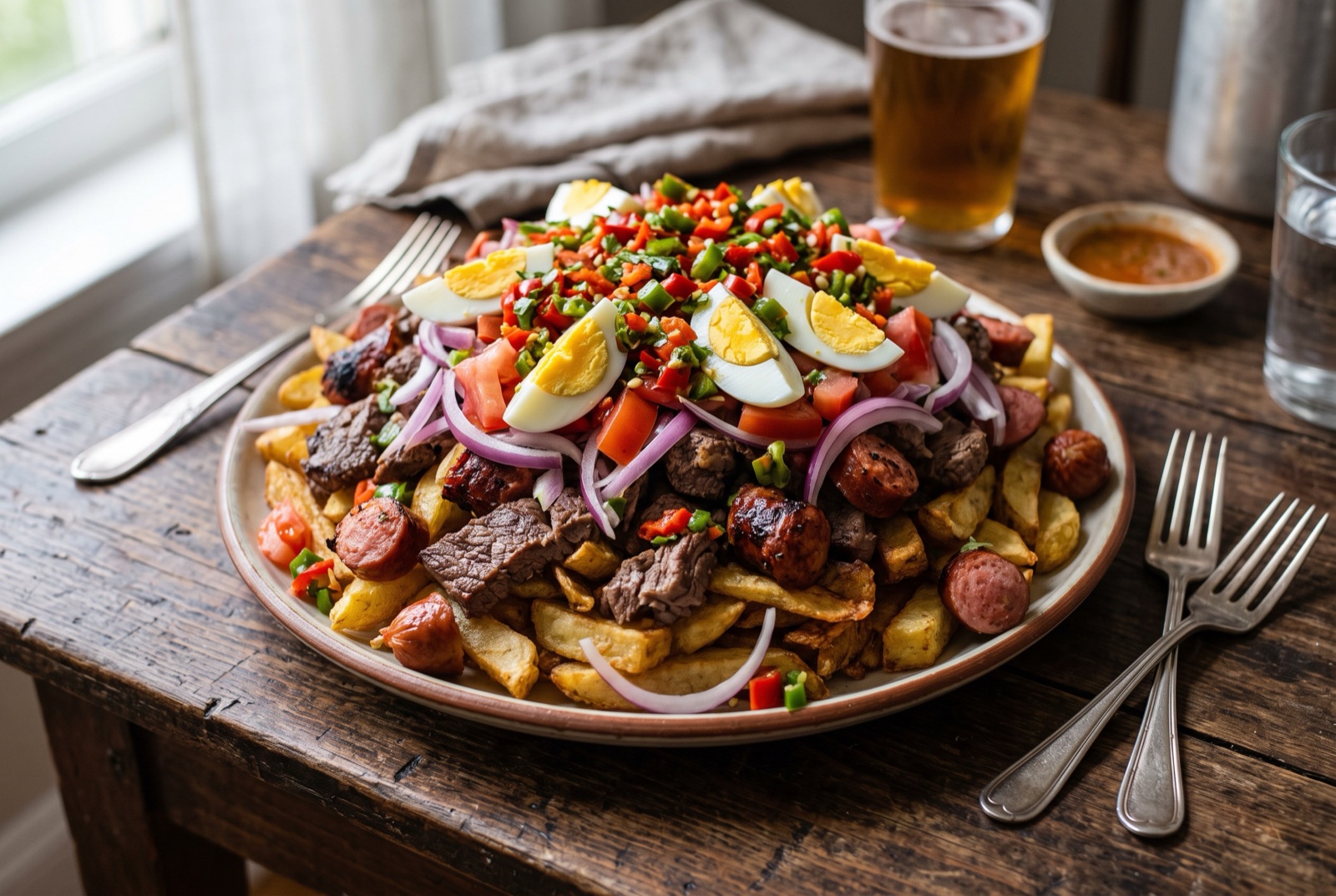
Keep exploring Bolivia.
Bolivia has 9 more dishes in the atlas — Api con Pastel and Cuñapé, and 7 more.
All Bolivia recipes Tomato recipes Cilantro recipes sauceveganvegetariangluten freedairy freenut freeRecipe by The DishRoute Kitchen · published August 20, 2026 · updated August 20, 2026