Sudado de Pollo.
Colombian Braised Chicken with Potato
Sudado de pollo · say it: soo-DAH-doh deh POH-yoh
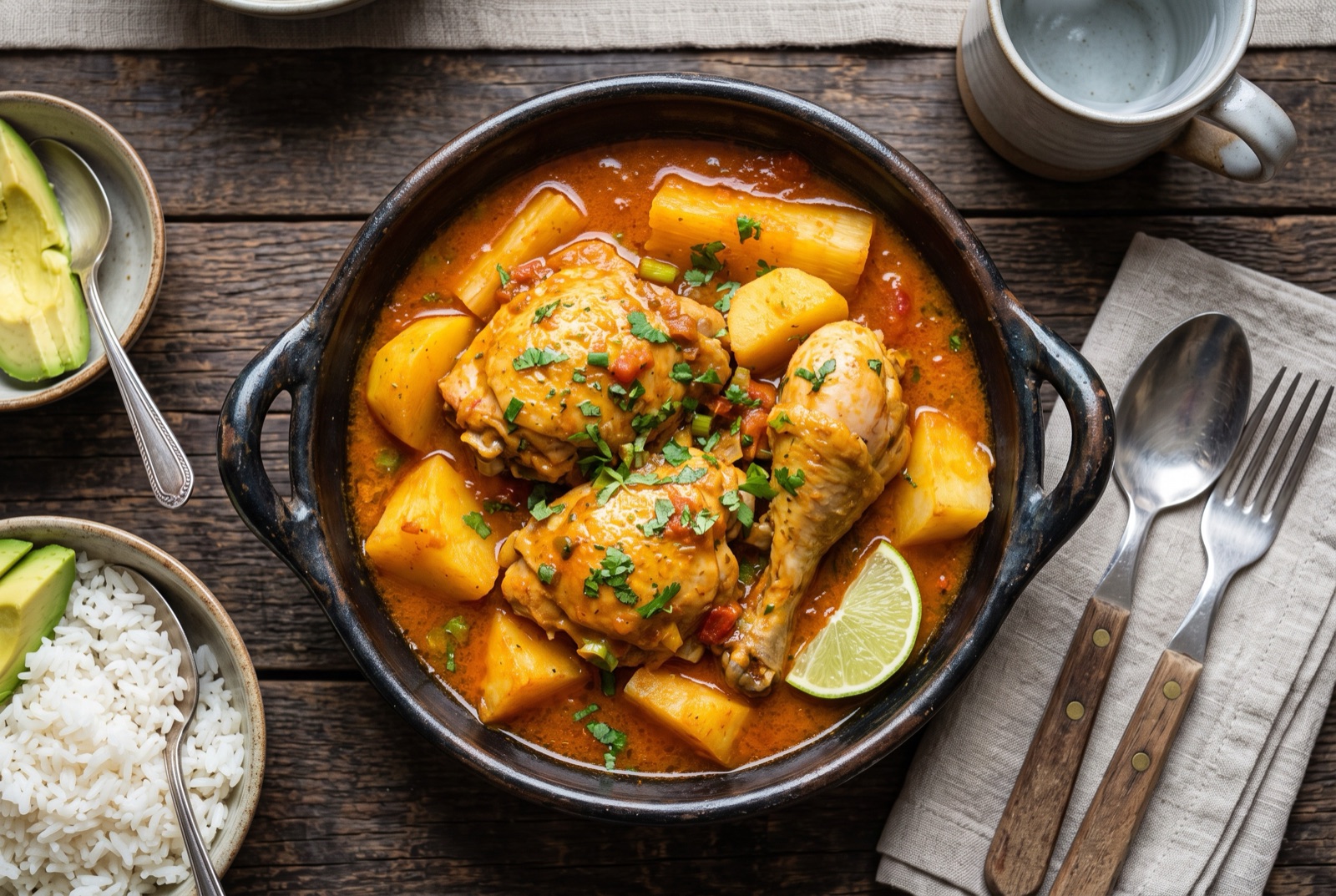
Sudado means sweated, and that is exactly the technique — chicken pieces cook covered over low heat in a base of tomato, long scallion, onion and cumin, releasing their own liquid instead of being boiled in stock. Potato and cassava go in partway through and finish soft, with the potato surrendering enough starch to pull the sauce together. What comes out is orange, thick and mild, with the sweetness of cooked scallion, the earthiness of cumin and chicken that slides off the bone. It is one of the most-cooked dishes in Colombian homes, faster than it looks, and it needs only one pot and a lid that fits properly.

- Gate
- ColombiaAndean interior
- Prep
- 15 min
- Cook
- 45 min
- Total time
- 1 hr 15 min incl. 15 min rest
- Serves
- 4
- Status
- Easy
- Nutrition / serving · estimated
- Calories 620 kcal
- Protein 43 g
- Carbs 54 g
- Fat 25 g
- Fiber 6 g
Why this recipe works.
- The hogao is cooked properly before the chicken goes back in, so the sauce tastes developed rather than of raw tomato.
- Two starches with different jobs: potato dissolves at the edges to thicken, cassava stays in dense pieces that soak up sauce.
- Very little added liquid, because the point of a sudado is that the chicken makes most of its own.
- One pot from start to finish, and roughly an hour of mostly unattended cooking.
Ingredients.
14 itemsFor the chicken
For the hogao
For the pot
To finish
Equipment
- Wide heavy pot or Dutch oven with a well-fitting lid
- Sharp knife
Instructions.
Season the chicken
Rub the chicken pieces all over with the cumin, garlic paste and salt and leave them at room temperature for 15 minutes. The surface should look damp and slightly stained yellow where the spice has taken hold.
Colour the pieces
Heat the oil in a wide heavy pot over medium-high and lay in the chicken skin-side down, in batches if it does not fit in one layer. Cook 4 minutes a side, until the skin is golden and releases from the pan on its own, then lift the pieces onto a plate.
Cook the hogao
Drop the heat to medium-low and soften the scallion and onion in the golden chicken fat left behind for 6 minutes without browning. Add the tomato and achiote and cook 10 minutes more, until the tomato has broken down entirely and the base is thick, orange and no longer watery.
Tip Scrape up the browned bits from the chicken as the tomato releases its liquid — that is where a lot of the flavor is.
Sweat the chicken
Return the chicken and any collected juices to the pot, turn the pieces to coat them in the base, cover tightly and cook over low heat for 15 minutes. Resist lifting the lid: the pot should be quietly ticking, and steam is doing the work.
Add the starches
Tuck the potato halves and cassava chunks around the chicken, pour in the stock and season with a little more salt. Bring back to a simmer, cover and cook 25 minutes, until a knife slides into the cassava without resistance and the potato edges have begun to fray into the sauce.
Thicken and finish
Uncover and simmer 5 minutes to reduce, mashing one potato half against the side of the pot to thicken the sauce until a spoon dragged across the base leaves a channel that closes slowly. Taste for salt, scatter over the cilantro and serve with rice and lime wedges.
Tips from our kitchen.
- Use bone-in, skin-on thighs and drumsticks. Breast meat dries out long before the cassava is tender and the sauce has body.
- Season the chicken with cumin, garlic and salt at least 15 minutes ahead so the spice reaches past the surface.
- Chop the scallion finely and use far more than feels reasonable — it melts away and becomes the sweetness in the sauce.
- Keep the lid on for the sweating stage. Lifting it repeatedly lets out the steam that is doing the cooking.
- Add the cassava in chunks no smaller than 4 cm, since it breaks apart readily once it softens.
- If the sauce is still loose at the end, mash one piece of potato into it rather than adding flour or cornstarch.
Substitutions.
- Cassava (yuca) → Frozen cassava chunks, or an extra 300 g of potato
- Frozen cassava is already peeled and cored and goes straight into the pot. Fresh cassava must be peeled thickly and the woody central fibre pulled out before cooking.
- Cebolla larga (long scallion) → A large bunch of spring onions, or one extra onion plus a handful of chives
- Colombian long scallion is thicker and milder than most spring onions, so use the whole bunch, greens included.
- Achiote or color powder → Sweet paprika, or a pinch of turmeric
- This is about the orange tone Colombians expect. The sauce tastes almost identical without it, it just looks paler.
Variations.
- Sudado de res
- The beef version, made with short ribs or shin. Same base, same starches, but it needs an extra 90 minutes of gentle cooking before the meat gives in.
- Sudado with plantain
- Add a peeled green plantain broken into pieces along with the cassava. It thickens the sauce further and turns it slightly sweet.
- Sudado costeño
- On the Caribbean coast the same method is applied to firm fish with a splash of coconut milk stirred in near the end, cooked for a fraction of the time.
Storage & reheating.
Keeps 3 days refrigerated, and most Colombians will tell you day two eats better than day one because the cumin settles into the sauce. Reheat covered over low heat with a splash of water, since the potato keeps absorbing liquid as it sits. Freezing works for up to 2 months but changes the texture of the cassava, which becomes grainy — if you plan to freeze, leave the cassava out and add it fresh when reheating.
Serve with
White rice, sliced avocado and a spoonful of ají — and a small salad of tomato and onion if you want the full corrientazo plate.
The story behind Sudado de Pollo.
Sudado is less a recipe than a household method, and every Colombian region applies it to something different — chicken in the interior, beef ribs in Antioquia, fish on the coast, guinea pig in parts of Nariño. What makes it a sudado is the covered pot and the low flame, a way of cooking that gets tenderness out of cheap cuts without needing much fat or attention. In a country where lunch is the main meal and it has to be on the table by noon, that matters more than technique for its own sake.
The dish sits on hogao, the tomato-and-scallion base that runs under a huge share of Colombian cooking. Cebolla larga, the thick mild scallion Colombians use by the bunch, is not interchangeable with a spring onion in spirit even if it is in a pinch — it is sweeter, and the amount that goes into a pot would look alarming to a cook from elsewhere. Cumin does the rest of the work. Colombian savory cooking leans on it heavily and on chile almost not at all, which is why an outsider expecting Latin American food to be hot finds this gentle and slightly surprising.
On a restaurant menu the sudado usually turns up as the second course of a corrientazo, the set lunch that starts with a soup and ends with a glass of fruit juice. At home it stretches: a chicken that would feed three roasted feeds five in a sudado, because the potato, cassava and sauce carry the plate as much as the meat does. Leftovers are eaten the next day with rice, and most cooks would tell you the second day is better.
Questions, answered.
What does sudado actually mean?
It means sweated, and it describes the method rather than any single dish. The main ingredient cooks under a tight lid over low heat with very little added liquid, so it braises in the moisture it releases itself. Colombians make sudados of chicken, beef, fish and vegetables using the same principle.
Why is my cassava still hard in the middle?
Cassava cooks unevenly and older roots can stay stubborn no matter how long they simmer. Peel it thickly, right through the pink layer under the skin, cut it into even chunks and pull out the woody fibre running down the centre. If a piece is still firm after 30 minutes it is unlikely to soften, so frozen cassava is a reliable shortcut.
Can I use chicken breast?
You can, but adjust the order of cooking. Breast meat is dry by the time the root vegetables are done, so cook the potato and cassava in the sauce first and add the breast, cut into large pieces, only for the last 12 to 15 minutes. Bone-in thighs remain the better choice for both flavor and texture.
Is this dish spicy?
No. It is seasoned with cumin, garlic, tomato and scallion, and contains no chile at all. Heat in Colombian food is added individually at the table from a jar of ají, a loose sauce of cilantro, scallion, vinegar and a little hot pepper, so each person controls their own plate.
Can I make it in advance for a crowd?
Yes. Cook it fully a day ahead and reheat gently, adding water to loosen the sauce as the potato will have drunk a good deal of it. If you want it fresher, make the hogao base up to a week ahead and keep it in the fridge, then the finished dish takes under an hour from a cold start.
You might also like.
All recipes →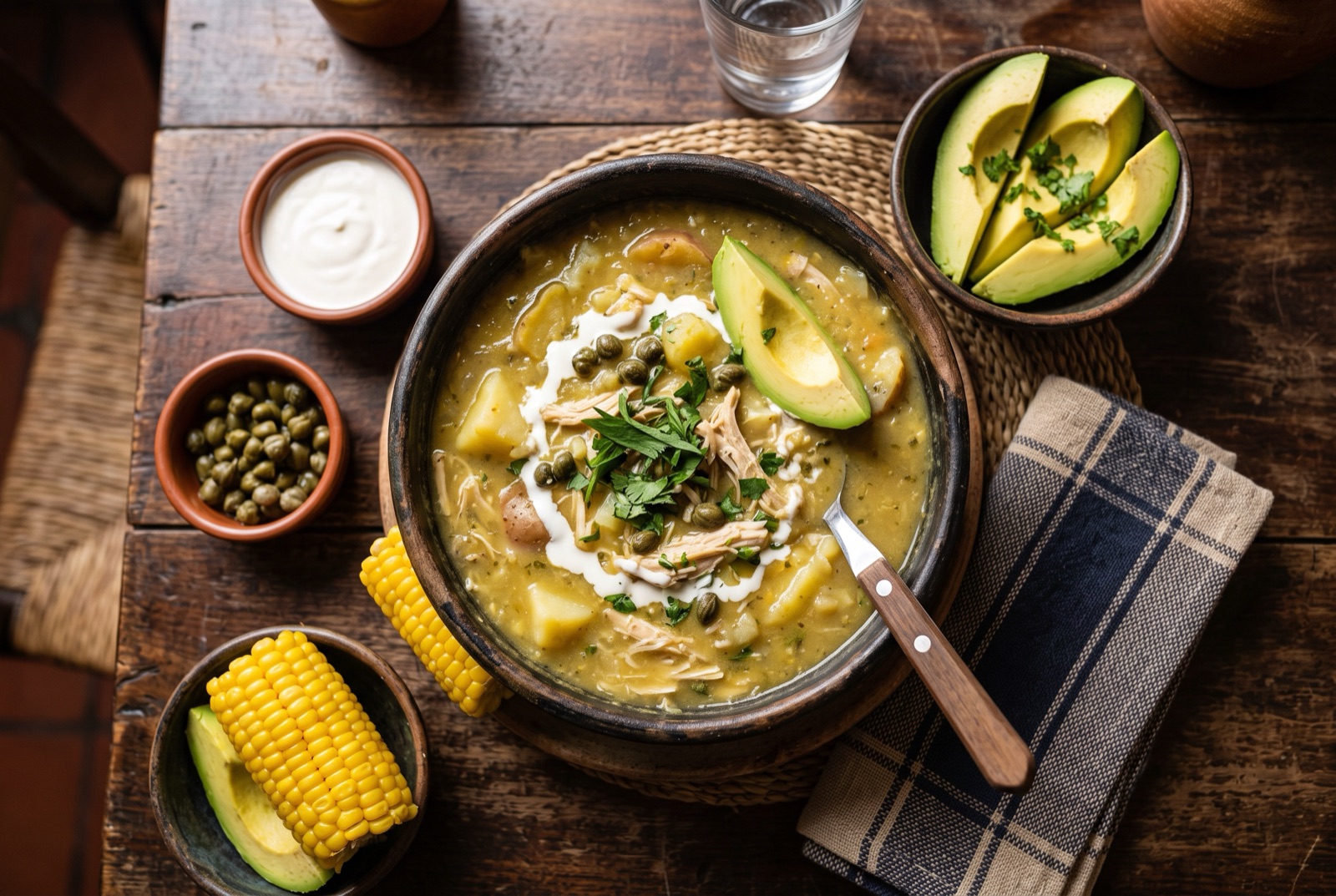
Colombia1 hr 35 min
Ajiaco Santafereño
Bogotá Chicken and Three-Potato Soup
Colombia1 hr 40 min
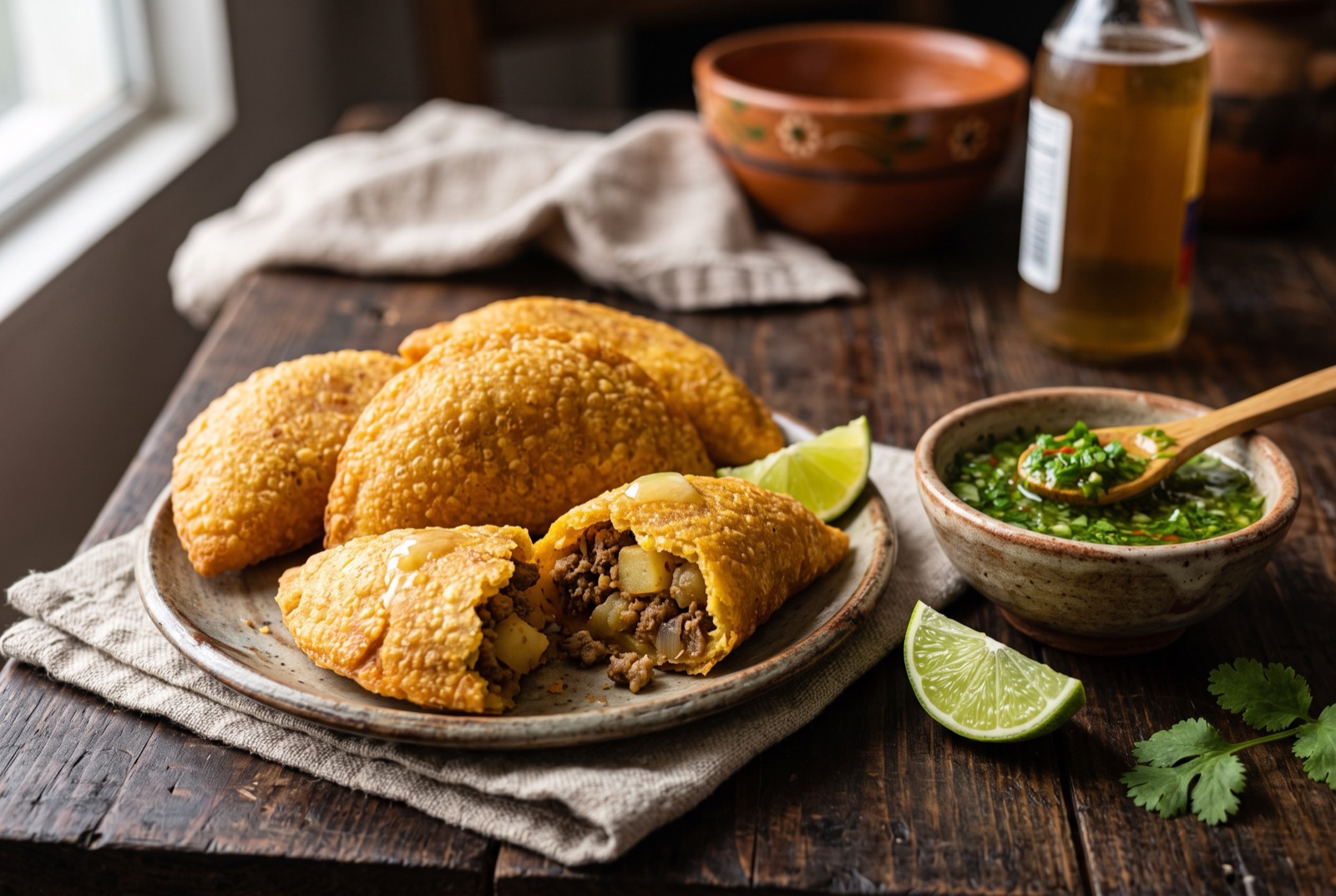
Empanadas Colombianas
Fried Corn Pastries with Potato and Beef
Colombia11 hr 10 min
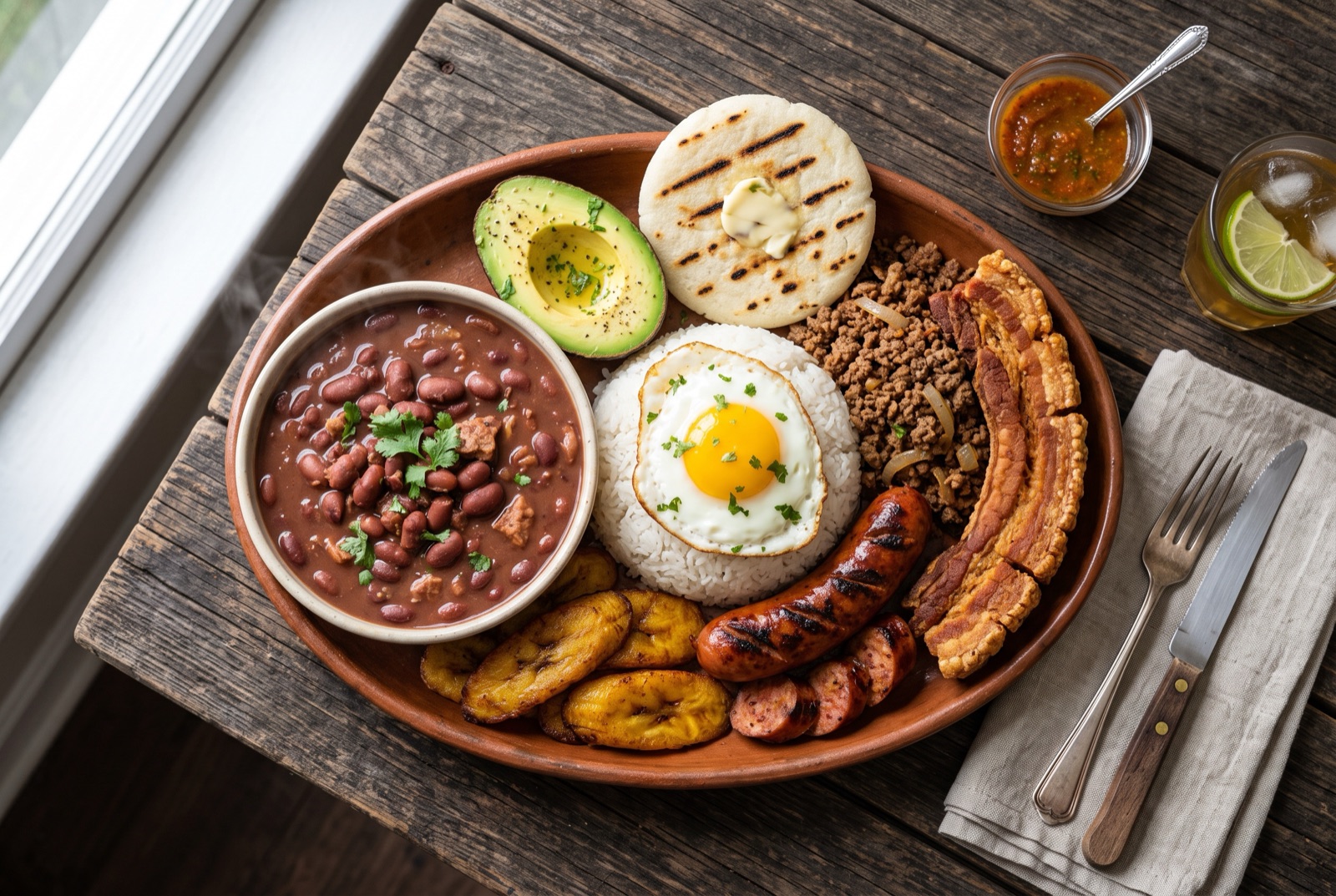
Bandeja Paisa
Antioquian Mixed Platter
Colombia1 hr
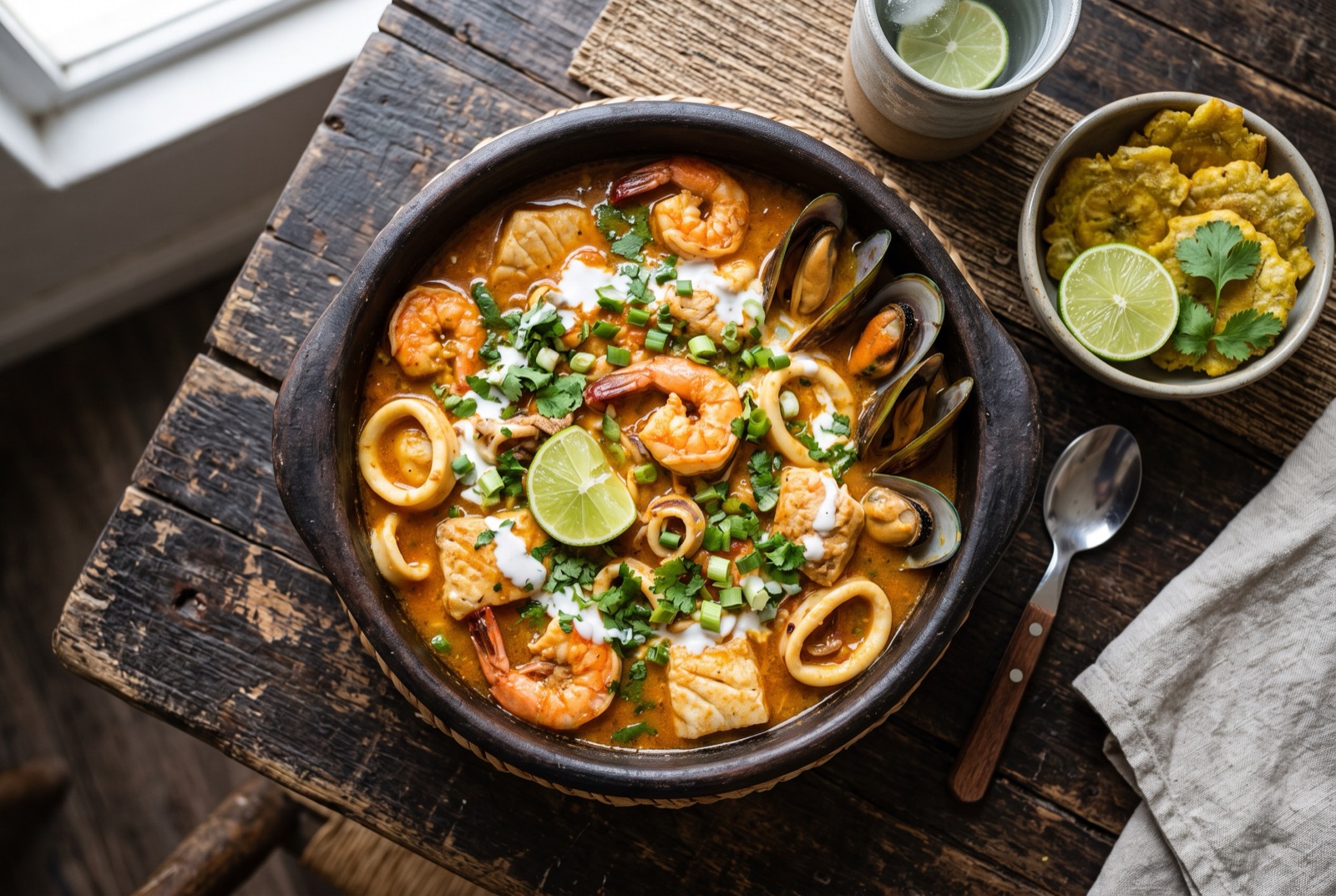
Cazuela de Mariscos
Cartagena Coconut Seafood Casserole
Keep exploring Colombia.
Colombia has 9 more dishes in the atlas — Ajiaco Santafereño and Arepa de Maíz, and 7 more.
Recipe by The DishRoute Kitchen · published August 20, 2026 · updated August 20, 2026