Nkrakra.
Ghanaian Light Tomato and Ginger Soup
Nkrakra · say it: n-KRAH-krah
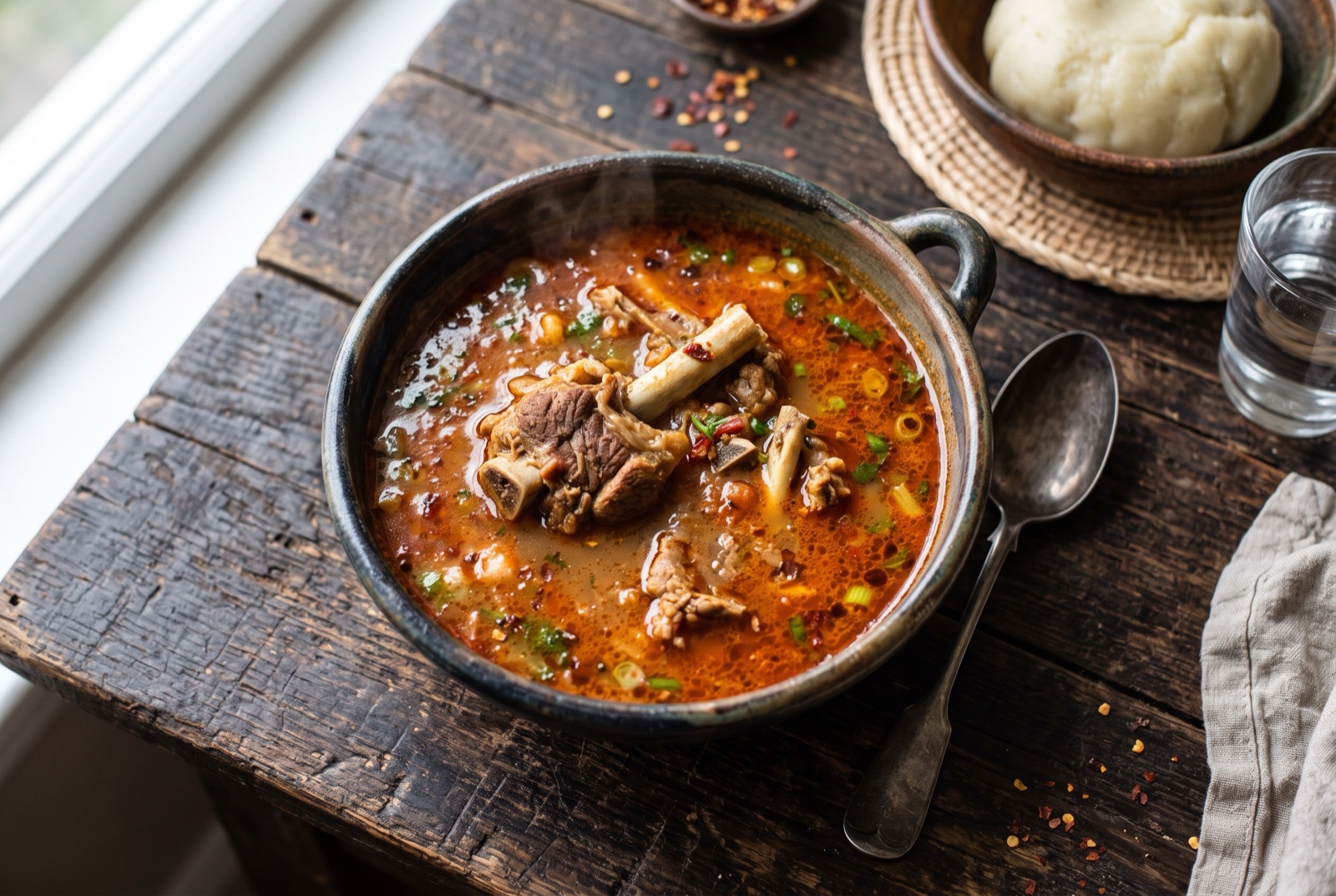
Light soup gets its English name honestly: there is no oil in it at all. Tomato, onion, ginger, garlic and scotch bonnet are blended raw and simmered with goat or fish until the broth turns clear orange-red, thin enough to drink and hot enough to clear a blocked nose. What it lacks in fat it makes up in aromatics — ginger dominates, chili follows a second later, and the meat gives the whole pot its depth. It is served over fufu or rice balls and is the standard thing to cook for someone who is unwell, which tells you how it is regarded.

- Gate
- GhanaAshanti and nationwide
- Prep
- 15 min
- Cook
- 1 hr 35 min
- Total time
- 1 hr 50 min
- Serves
- 4
- Status
- Easy
- Nutrition / serving · estimated
- Calories 320 kcal
- Protein 40 g
- Carbs 12 g
- Fat 12 g
- Fiber 3 g
- Sodium 890 mg
Why this recipe works.
- Keeps the pot completely oil-free, which is what distinguishes light soup from every other Ghanaian soup.
- Builds the broth from the meat first, so the liquid has body before the raw blended vegetables go in.
- Uses blended garden eggs for a little weight instead of flour or paste, the way Ghanaian cooks actually do it.
- Gives separate timings for goat, chicken and fish, since the same pot works for all three at very different speeds.
Ingredients.
9 itemsFor the broth
For the blend
Equipment
- Large heavy pot with a lid
- Blender
- Ladle and skimmer
Instructions.
Sweat the meat
Put the goat, the chopped onion and the salt in a dry heavy pot over medium heat, cover, and let it steam in its own juices for 10 minutes. Shake the pot occasionally — the meat should release liquid and smell savoury, with no browning and no oil added.
Start the broth
Pour in the water, bring to a boil and skim off the grey foam as it rises. Drop to a gentle simmer, cover and cook for 45 minutes, until the meat has begun to loosen from the bone.
Tip Skim properly. With no oil in the pot, anything left floating makes the finished broth look and taste muddy.
Blend the vegetables
While the meat simmers, blend the tomatoes, quartered onion, ginger, garlic and garden eggs to a smooth purée with a little of the hot broth. Leave the scotch bonnets whole if you want fragrance rather than full heat.
Add the purée
Pour the raw purée into the pot, add the chilies and return it to a simmer. Cook uncovered for 30–35 minutes, until the broth turns from cloudy pink to a clear orange-red and the raw tomato smell is gone.
Check the meat and the body
The goat should pull away from the bone under light pressure from a fork. The broth should still be thin enough to drink from a spoon — if it has reduced too far, loosen it with hot water rather than letting it thicken.
Season and finish
Fish out the whole chilies, grate in a little fresh ginger and taste for salt, which an oil-free broth needs more of than you expect. The soup should read hot, gingery and clean, with the meat flavour underneath.
Serve around the swallow
Set a ball of fufu or omo tuo in each bowl, ladle the broth around it, and place the meat on top where everyone can see it. Serve immediately, while it is hot enough to make your eyes water.
Tips from our kitchen.
- Season and sweat the meat with chopped onion in the dry pot before any water goes in. Ten minutes of that draws out juices that make the finished broth taste of meat rather than of water.
- Blend the tomatoes and aromatics raw and add them raw. Frying them first turns this into a different soup entirely.
- Drop the scotch bonnet in whole if you want the fragrance without full heat, then fish it out before serving; chop it if you want the burn.
- Skim the surface in the first twenty minutes. Since there is no oil to carry it, scum sits on top and clouds what should be a clear broth.
- Taste for ginger at the end, not the start. It fades over a long simmer, and a little extra grated in during the last five minutes brings the top note back.
- Keep the broth thin. If it has reduced to something syrupy, add hot water — light soup that coats a spoon has stopped being light soup.
Substitutions.
- Goat on the bone → Bone-in chicken thighs and drumsticks, or a whole tilapia cut into steaks
- Chicken cuts the simmer to about 35 minutes; fish needs only 12 minutes and should go in once the broth is already built, or it falls apart.
- Garden eggs → One small aubergine, or 2 tbsp of the blended tomato held back and reduced
- Garden eggs are milder and slightly bitter and are used here for body. Ordinary aubergine is close enough; the soup is still good with neither.
- Scotch bonnet → Habanero, or kpakpo shito if you can find it
- Kpakpo shito, the small green Ghanaian chili, is what many cooks prefer here for its bell-pepper aroma. Any fruity hot chili does the job.
Variations.
- Fish light soup
- Fresh tilapia steaks added to the finished broth for the last twelve minutes, with a coastal habit of adding more ginger and a little smoked fish for depth.
- Light soup with kontomire
- A handful of blanched cocoyam leaves or spinach blended into the pot at the end, giving a green, slightly grassy version.
- Chicken light soup
- The weeknight version — bone-in chicken, ready in under an hour, and the one most often cooked for someone with a cold.
Storage & reheating.
Light soup keeps 3 days refrigerated and the flavour deepens overnight, though the ginger dulls, so grate a little fresh in when reheating. Bring it back to a bare simmer rather than a rolling boil, which shreds the meat. It freezes well for 3 months without the fish version, which turns woolly. Store the soup separately from any fufu or rice balls — starch left sitting in the broth swells, breaks down and turns the whole pot cloudy.
Serve with
A ball of fufu in the same bowl, or omo tuo — rice pounded into balls — with the meat set on top and the broth poured around.
The story behind Nkrakra.
Nkrakra is the everyday soup of Akan-speaking Ghana and the one most likely to appear on a Sunday, ladled around a ball of fufu with a piece of goat resting on top. Its logic is the opposite of most West African cooking: where palm nut soup and groundnut soup are thick, heavy and enriched, this one is deliberately stripped back. No oil goes in, nothing is fried first, and the flavour comes entirely from long, gentle simmering of meat, aromatics and raw blended vegetables.
That restraint is why it doubles as convalescent food. Ghanaians cook light soup for people with a cold, for new mothers, for anyone who has been off their food, and the pepper-and-ginger heat is understood to do some work. Whether or not it does, a very hot, very gingery clear broth is a reasonable thing to want when you are ill, and there is no household argument about it — if someone is under the weather, this is the pot that goes on.
The cook's choices are mostly about protein and body. Goat on the bone is the benchmark and gives the richest broth; chicken is faster and lighter; fresh tilapia or smoked fish makes a coastal version cooked in half the time. Many cooks boil garden eggs — the small white and green African aubergines — alongside the meat and then blend them into the pot, which thickens the broth very slightly and rounds off the chili without turning it into a stew. Nkrakra is also the base for what Ghanaians call soup with abunuabunu or with a handful of greens stirred in, but the plain version remains the one everyone knows.
Questions, answered.
Why is it called light soup if it is this spicy?
Light refers to the body, not the heat. There is no oil, no groundnut paste and no palm nut in the pot, so the broth stays thin and clear compared with the rich Ghanaian soups. The chili content is entirely separate from that, and a good light soup is usually very hot indeed.
Can I use chicken instead of goat?
Yes, and many households do midweek. Bone-in chicken thighs and drumsticks give enough collagen to make a decent broth and are ready in around 35 minutes rather than an hour and a half. Boneless breast is the one cut to avoid, since it contributes nothing to the liquid and dries out.
My broth turned out bland — what went wrong?
Usually the meat was boiled from cold in plain water instead of being seasoned and sweated with onion first, so its juices went nowhere. Under-salting is the other cause; a thin oil-free broth needs more salt than a rich one to taste of anything. Adding fresh grated ginger at the end also lifts a flat pot noticeably.
What do I eat light soup with?
Fufu is the classic partner, placed in the bowl with the soup poured around it. Omo tuo, rice pounded into soft balls, is the other standard, especially on Sundays. Plain boiled rice or even the soup on its own works perfectly well if you are eating it because you are unwell.
Do I have to blend the tomatoes raw?
Yes, if you want light soup rather than stew. Frying tomatoes and onion in oil first is the base for Ghanaian stews and jollof, and it produces a sweeter, heavier, richer result. Light soup depends on the raw purée going straight into simmering broth, which keeps the flavour sharp and the liquid thin.
You might also like.
All recipes →

Keep exploring Ghana.
Ghana has 9 more dishes in the atlas — Banku and Fufu, and 7 more.
All Ghana recipes Goat recipes Tomato recipes Ginger recipes soupgluten freedairy freehalal friendlynut freeRecipe by The DishRoute Kitchen · published August 20, 2026 · updated August 20, 2026