Shito.
Ghanaian Black Chili and Smoked Fish Sauce
Shito · say it: SHEE-toh
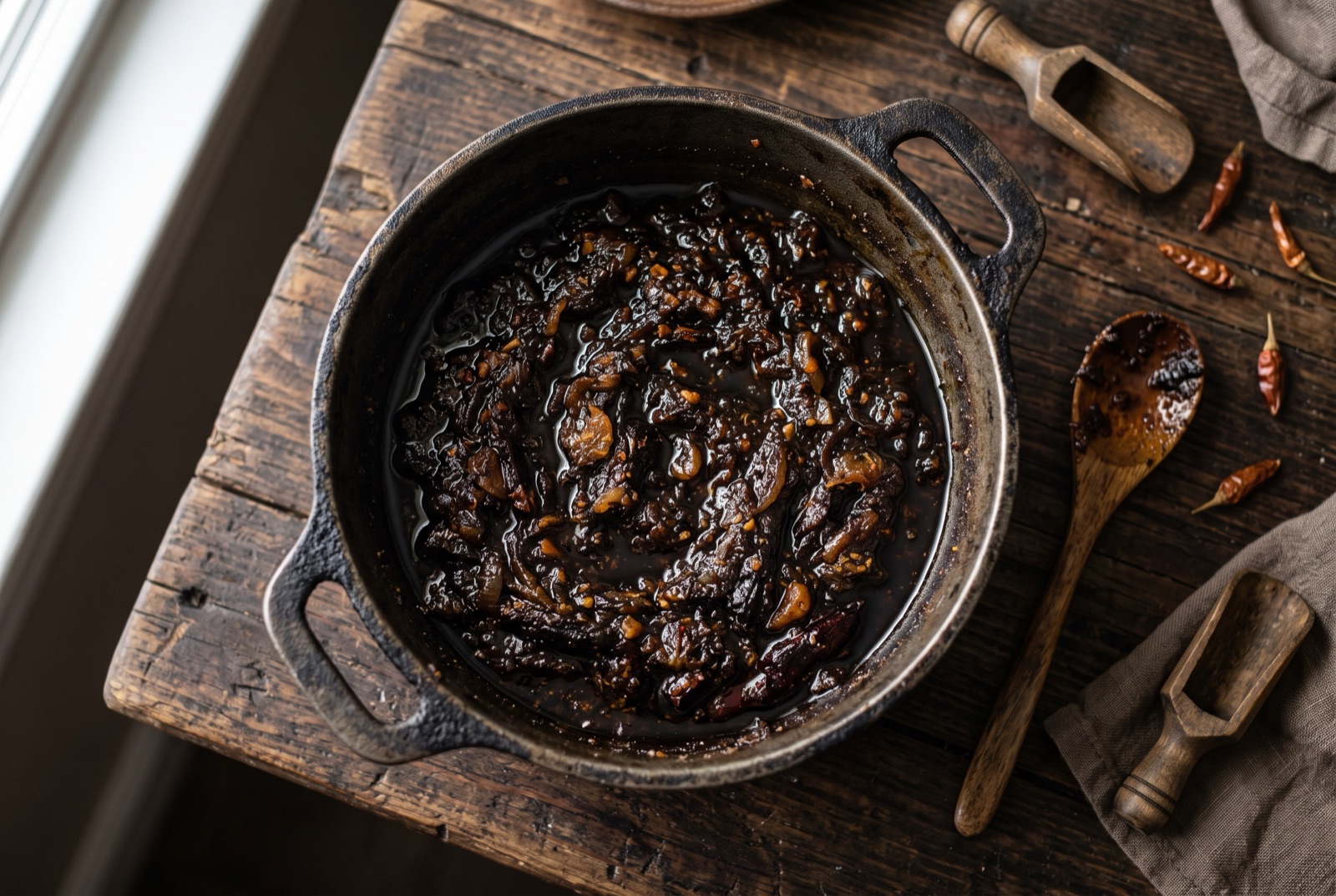
Shito is a dark, oily chili paste that Ghanaians keep in a jar and put on nearly everything: waakye, jollof, plain rice, kenkey, fried fish, boiled yam, bread. Onion is fried until it collapses, then ground dried chili, ginger and garlic go in, then powdered dried shrimp and smoked fish, and the whole thing cooks slowly until the moisture is gone and the paste turns near-black under a clear layer of oil. It is hot, deeply savoury, smoky and salty all at once, with a slow heat that keeps arriving after you have swallowed. The word simply means pepper in Ga.

- Gate
- GhanaGreater Accra
- Prep
- 25 min
- Cook
- 1 hr 35 min
- Total time
- 2 hr
- Serves
- 24
- Status
- Medium
- Nutrition / serving · estimated
- Calories 195 kcal
- Protein 5 g
- Carbs 4 g
- Fat 19 g
- Fiber 1 g
- Sodium 420 mg
Why this recipe works.
- Takes the onions all the way down before anything else goes in, which is where the depth under the chili comes from.
- Cooks the paste until the oil separates and floats clear, the only reliable indication that enough water has gone.
- Uses ground dried shrimp and smoked fish separately rather than one generic seafood powder, so you can tune the balance.
- Explains how to jar and keep it safely, including why the oil layer on top is not optional.
Ingredients.
12 itemsFor the base
For the pepper
For the seafood
For the seasoning
Equipment
- Large heavy pot
- Spice or coffee grinder
- Blender
- Sterilised glass jars
Instructions.
Prepare the seafood
Pull the smoked fish apart with your fingers, removing every bone and any tough skin, then grind it with the dried shrimp to a fine powder in a spice grinder. Set aside.
Tip Go slowly on the bones. You will be eating out of this jar for weeks.
Fry the onion base down
Heat the oil in a large heavy pot over medium heat and add the blended onion, ginger and garlic. Cook for 30–35 minutes, stirring often, until the purée has lost its water, darkened to a deep golden brown and the oil has begun to separate at the edges.
Tip It will spit hard for the first ten minutes as the water boils off. Use a splatter guard and keep stirring.
Add the tomato paste
Stir in the tomato paste and fry for 4 minutes, until it darkens from red to brown and stops smelling sharp. The base should now look like a thick, glossy, dark jam sitting in oil.
Bloom the chili
Turn the heat to low, add the ground chili and stir constantly for 3 minutes. The colour will deepen almost immediately and the kitchen will fill with fumes — open a window before this step, not during it.
Tip Chili scorches in seconds on high heat and burnt chili ruins the batch. Low heat, constant movement.
Stir in the seafood and spices
Add the ground shrimp and smoked fish, the cloves, aniseed, black pepper and salt, and stir until everything is evenly wet with oil. The mixture will tighten and look grainy at this stage, which is normal.
Cook it black
Cook on the lowest heat for 50–60 minutes, stirring every few minutes and scraping the base. The paste will darken through brown to near-black, stop spitting, sink under the surface, and leave a clear layer of dark oil floating on top. That oil is the finish line.
Cool and jar
Take the pot off the heat and leave it to cool completely — several hours is normal. Spoon into clean dry jars, pressing the paste down and making sure at least a centimetre of oil covers it, then seal and refrigerate.
Tip Never jar it warm. Trapped steam condenses on the lid and drips water back into the shito.
Tips from our kitchen.
- Grind the smoked fish and dried shrimp to a fine powder in a spice grinder before they go in. Coarse flakes stay stringy and never blend into the paste.
- Debone smoked fish carefully by hand. A single missed bone in a jar you will be eating from for two months is a genuine problem.
- Use more oil than feels reasonable. The solids must stay submerged in the pot and in the jar — this is what preserves it, not an indulgence.
- Keep the heat low once the chili is in. Ground chili scorches fast and burnt chili gives the whole batch a bitter, ashy taste that never lifts.
- Open a window and consider standing back when the chili first hits the oil. A kilo of frying dried chili will clear a kitchen.
- Let it cool completely before jarring. Sealing warm shito traps steam, which condenses on the lid and drips water back into the paste, shortening its life dramatically.
Substitutions.
- Smoked herring or mackerel → Any firm smoked fish, or an extra 60 g of dried shrimp
- Smoked fish supplies the smoke and the salt. Going shrimp-only makes a sweeter, more prawn-forward shito, which is a recognised style rather than a compromise.
- Ground dried Ghanaian chili → A mix of ground cayenne and mild ground dried chili
- Straight cayenne alone is fiercely hot and slightly one-dimensional, so cut it with a milder chili powder for colour and body. Aim for a blend that is hot but not only hot.
- Dried shrimp → Dried crayfish powder, sold in West African shops
- Ground dried crayfish is used interchangeably in many Ghanaian kitchens and gives a slightly deeper, funkier note. Use the same weight.
Variations.
- Green shito
- A fresh, uncooked-tasting version blended from green chilies, onion and herbs and used within a few days. Sharper and brighter, with none of the smoke.
- Shrimp shito
- Made with dried shrimp and no fish at all, giving a sweeter, more distinctly prawn-flavoured paste that suits plain rice and boiled yam.
- Vegetarian shito
- Dried mushrooms ground in place of the seafood, with extra ginger and a little soy for depth. Not traditional in any sense, but it holds together as a condiment.
Storage & reheating.
Jar the cooled shito in clean, dry glass with at least a centimetre of oil covering the paste, and it keeps 3 months refrigerated and several weeks in a cool cupboard. Always use a clean dry spoon — a wet or used spoon introduces moisture and bacteria and is the usual reason a jar spoils. Top up the oil layer if it drops below the surface after heavy use. It freezes for a year in small containers, though it is rarely necessary. Discard any jar that smells sour or fermented rather than smoky.
Serve with
A spoonful on the side of waakye, jollof, plain rice, kenkey with fried fish, or boiled yam. It is also very good on bread and on scrambled eggs.
The story behind Shito.
Shito comes out of Ga kitchens on the Accra coast and has spread to the point where it is effectively a national condiment — sold in jars in every Ghanaian supermarket, packed into suitcases by students leaving the country, and made in enormous batches by mothers who then distribute it to relatives abroad. It has an obvious practical logic behind it: fried in enough oil and cooked until dry, it keeps for a very long time without refrigeration, which mattered a great deal before it mattered less.
The two versions worth knowing are black shito and green shito. Black shito is the one described here, built on dried chili and dried seafood and cooked long. Green shito is fresh, made from kpakpo shito and other green chilies with onion and sometimes fresh herbs, and it is served immediately rather than kept. There is also a straightforward split between fish shito and shrimp-heavy shito, and households will tell you their proportion is the correct one.
Making it is not difficult but it demands patience and a willingness to stand at the stove. The onions alone want half an hour to go from raw to sweet and collapsed, and after everything is in, the paste needs another hour of low, watchful cooking while the water drives off and the colour deepens through brown into something close to black. The point of doneness is visible rather than timed: the solids sink, stop spitting, and a distinct layer of dark oil floats free on top. That oil layer is also the preservation, so shito is always jarred with enough of it to cover the paste completely. Most Ghanaians will tell you the batch is better after a week in the jar than on the day it was made.
Questions, answered.
How long does homemade shito actually keep?
About three months in the fridge and several weeks in a cool cupboard, provided the paste stays fully submerged under oil and you only ever dip a clean dry spoon into it. The oil layer excludes air and the long cooking drives off the water, which is what preserves it. Any moisture reintroduced afterwards shortens that considerably.
Why did my shito turn bitter?
The chili burnt. Ground dried chili scorches within seconds on high heat, and the acrid flavour spreads through the whole batch and cannot be cooked or diluted out. Lower the heat before the chili goes in, stir continuously for the first few minutes, and use a heavy pot that does not develop hot spots.
Is shito supposed to be this oily?
Yes. The oil is doing three jobs: carrying the chili heat, cooking the solids down without burning, and sealing the finished paste from the air so it keeps. A shito that is not sitting under a layer of oil has either been under-oiled or over-reduced, and it will not last as long in the jar.
Can I make shito without dried fish or shrimp?
You can make a chili paste, but the smoky, savoury depth that makes shito recognisable comes from the dried seafood. Ground dried mushrooms with extra ginger and a splash of soy sauce give a vegetarian version with real body. Call it what you like — it is useful, but it is not the same condiment.
How hot is shito meant to be?
Hot, but not only hot. A good batch has a slow heat that builds after swallowing, sitting on top of onion sweetness, smoke and salt. If yours is painfully sharp and tastes of nothing else, the chili blend was probably all cayenne — cut it with a milder ground dried chili next time for colour and body.
You might also like.
All recipes →
Keep exploring Ghana.
Ghana has 9 more dishes in the atlas — Banku and Fufu, and 7 more.
All Ghana recipes Dried shrimp recipes Onion recipes Chili flakes recipes saucegluten freedairy freepescatariannut freeRecipe by The DishRoute Kitchen · published August 20, 2026 · updated August 20, 2026