Completo Italiano.
Chilean Hot Dog with Avocado and Tomato
Completo italiano · say it: kom-PLEH-toh ee-tah-LYAH-noh
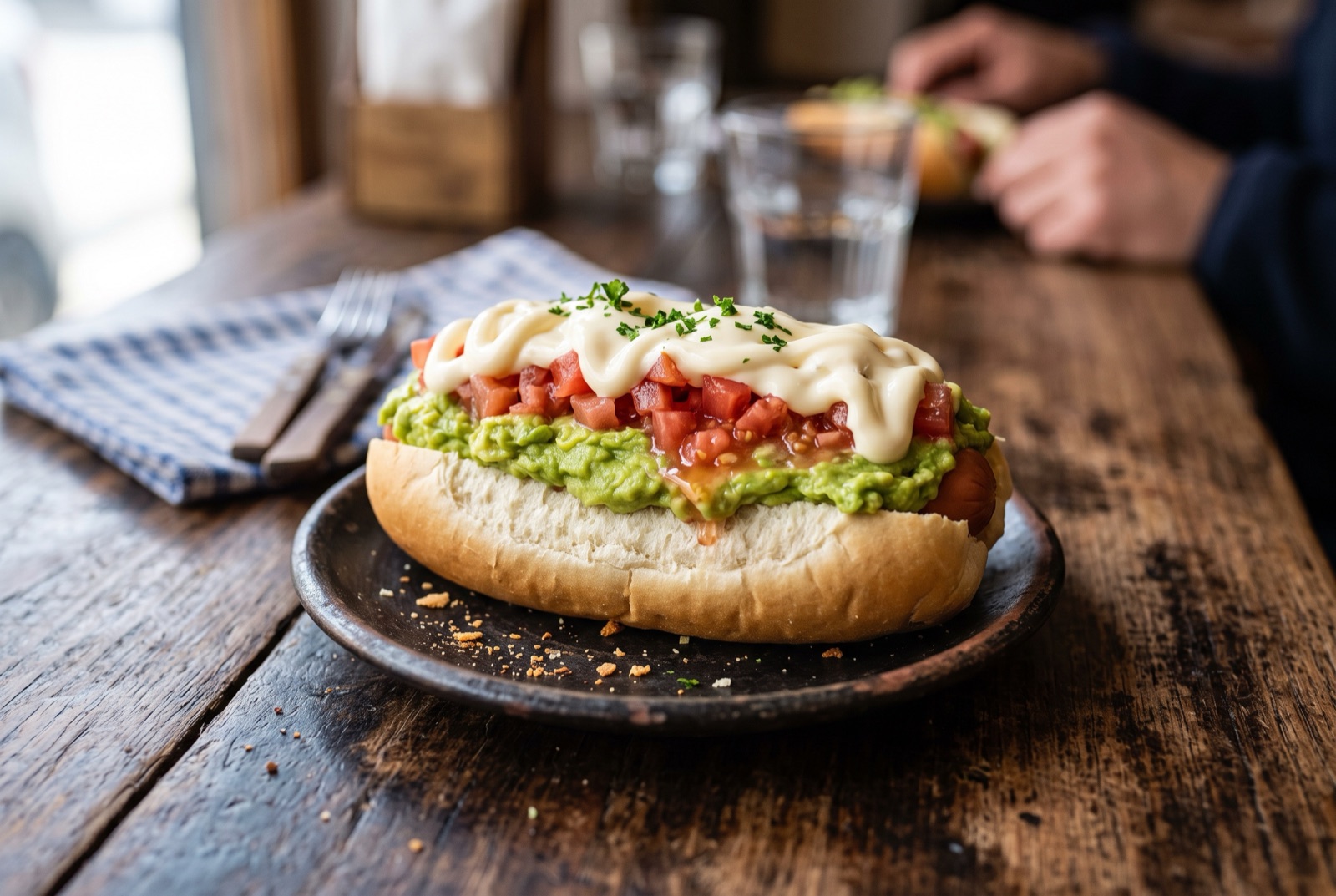
A completo italiano is a hot dog carrying three toppings and nothing else — mashed avocado, diced tomato, mayonnaise — piled on in quantities that make the sausage almost an afterthought. The name has nothing to do with Italy beyond the colours: green, white and red, in that order, matching the flag. It eats soft rather than crunchy, mild and rich and faintly cooling, with the tomato providing the only sharp note. There is no ketchup, no mustard, no onion in this particular version, and adding them makes it a different completo with a different name. Chileans eat them standing at fuentes de soda, from carts, at football, and at home when nobody wants to cook.

- Gate
- ChileSantiago
- Prep
- 15 min
- Cook
- 10 min
- Total time
- 25 min
- Serves
- 4
- Status
- Easy
- Nutrition / serving · estimated
- Calories 685 kcal
- Protein 15 g
- Carbs 38 g
- Fat 53 g
- Fiber 8 g
- Sugar 6 g
- Sodium 1180 mg
Why this recipe works.
- Heats the sausages in water held below a simmer, so the skins stay taut instead of splitting and going soft.
- Salts and drains the diced tomato first, which stops a puddle forming and turning the base of the bun to paste.
- Includes a two-minute blender mayonnaise that is much closer to Chilean carts than most jarred versions.
- Gets the assembly order and the proportions right — the toppings should outweigh the sausage, not decorate it.
Ingredients.
11 itemsFor the hot dogs
For the toppings
For the mayonnaise
Equipment
- Saucepan
- Cooking thermometer (helpful)
- Fine sieve
- Immersion blender or small food processor
- Fork
Instructions.
Make the mayonnaise
Put the egg, mustard, lemon juice and salt in a tall narrow jug with the oil poured on top, sink an immersion blender to the bottom and blitz without moving it until the base turns thick and white. Lift the blender slowly through the oil until everything has emulsified into a loose, pourable mayonnaise.
Tip A cold egg straight from the fridge is the usual reason this splits — leave it on the counter for twenty minutes first.
Salt and drain the tomato
Cut the tomatoes in half, scrape out the seeds and watery pulp, and dice the flesh into 5 mm cubes. Toss with a good pinch of salt in a sieve set over a bowl and leave for 10 minutes, then shake firmly to shed the liquid that has collected.
Mash the avocado
Scoop 3 of avocado flesh into a bowl, add half the lemon juice and a generous pinch of salt, and mash with a fork until it is spreadable but still has small lumps in it. Taste and add salt until it is clearly seasoned — bland avocado disappears under the mayonnaise.
Heat the sausages gently
Bring a pan of water to the boil, then pull it off the heat until the surface goes still and no bubbles break. Slide the frankfurters in and leave them for 6 minutes, until they are heated through and slightly plumper, with the casings still tight and unsplit.
Warm the buns
Set the buns in a steamer basket or a colander over the sausage pan, cover, and steam for 2 minutes until they are soft and warm all the way through but not wet. Open them along the top rather than cutting them fully in half, so they hold their load.
Build in order and eat standing up
Lay a sausage in each bun, spread a thick layer of mashed avocado over the top so the sausage all but disappears, scatter the drained tomato along its length, and finish with a wide zigzag of mayonnaise from end to end. Serve immediately, with napkins.
Tips from our kitchen.
- Use thin, mild, finely emulsified frankfurters rather than coarse smoked sausages. Chilean vienesas are soft and gently seasoned, and a heavily smoked sausage bulldozes the avocado.
- Never boil the sausages. Water at around 80°C, with no bubbles breaking the surface, heats them through in six minutes without bursting the casings.
- Dice the tomato small — 5 mm cubes — then salt it in a sieve for ten minutes and shake off what drains. Wet tomato is the single biggest cause of a collapsed bun.
- Mash the avocado with a fork and stop while it is still slightly lumpy. Blitzed avocado goes slack and slides straight off the sausage.
- Warm the buns properly, either in a steamer basket over the sausage pot or wrapped in foil in a hot oven. A cold bun makes the whole thing taste like a supermarket sandwich.
- Assemble one at a time and eat it immediately. A completo built five minutes early is a completo that has already leaked.
Substitutions.
- Vienesas (Chilean frankfurters) → Mild pork or chicken frankfurters, or German bockwurst
- Look for smooth-textured, lightly seasoned sausages sold in packs of six or more. Avoid anything labelled smoked, spicy or coarse-ground.
- Homemade mayonnaise → Good jarred mayonnaise loosened with a teaspoon of water and a squeeze of lemon
- Chilean cart mayonnaise is looser and less sharp than most European jars. Thinning it slightly gets you much closer, and skips the raw egg entirely.
- Hot dog buns → Soft finger rolls, or split marraqueta if you can find it
- The bun should be soft and slightly sweet with no crust to fight through. A crusty baguette pushes all the toppings out of the far end on the first bite.
Variations.
- Completo dinámico
- The italiano plus sauerkraut, ketchup and mustard — considerably messier and the version most often ordered at three in the morning.
- Completo alemán
- Sauerkraut, diced onion, tomato and mayonnaise, no avocado. The German-influenced south of Chile is where the name comes from.
- Churrasco italiano
- The same green-white-red topping on thinly sliced grilled beef in a bread roll instead of a sausage. Same idea, considerably more substantial.
Storage & reheating.
A completo does not keep and should not be built in advance; the tomato weeps, the avocado browns and the bun softens to paste within twenty minutes. The components fare better separately. Poached sausages hold 3 days refrigerated and reheat in hot water in four minutes. Salted and drained tomato keeps a day. Homemade mayonnaise keeps 3 days refrigerated and, because it contains raw egg, should not be left at room temperature for more than an hour. Mashed avocado is the awkward one: press cling film directly onto the surface so no air touches it and it will hold its colour overnight, but it is genuinely better mashed to order.
Serve with
A cold bottle of fizzy drink and a pile of paper napkins — this is not a sandwich you eat cleanly.
The story behind Completo Italiano.
The hot dog reached Chile in the first half of the twentieth century, arriving with the same wave of American food and diner formats that spread through South American cities, and it was immediately taken apart and rebuilt. Chilean cooks were already producing enormous quantities of avocado and already treated mayonnaise as something closer to a vegetable than a condiment, so both went on the bun. Exactly who did it first is contested, with Santiago sandwich counters and their descendants each claiming the origin, and there is no settled answer worth repeating as fact. What is clear is that the result stopped being an imported novelty a long time ago: the completo now sits alongside the empanada and the churrasco in the country's sandwich canon, and Chileans consume them at a rate that startles visitors.
The naming system is worth learning, because ordering wrongly gets you a different sandwich. Italiano is the three-colour version described here. A completo dinámico adds sauerkraut, ketchup and mustard to the pile. A completo alemán swaps the avocado for sauerkraut and onion. Simply asking for a completo generally gets you sauerkraut, tomato and mayonnaise, and the phrase completo con todo means what it sounds like. The same logic runs through Chilean sandwiches generally — a churrasco italiano, an as italiano and a chacarero all follow their own fixed rules — which is why a Chilean menu can look like a list of proper nouns.
The avocado deserves specific attention, because it is not a garnish here. Chileans call it palta, grow a great deal of it, and mash it plain: no lime beyond a little for colour, no garlic, no chilli, no coriander. Guacamole this is not, and treating it as such changes the sandwich into something else entirely. The mayonnaise, meanwhile, is applied in a layer thick enough to be structural, and cutting it back to a polite smear is the surest way to make a completo that tastes like a plain hot dog with vegetables on it.
Questions, answered.
Why is it called italiano if it is not Italian?
Purely for the colours. Green mashed avocado, white mayonnaise and red tomato reproduce the Italian flag when stacked on the bun, and Chilean sandwich naming took the joke and made it official. The dish has no connection to Italian cooking, and the same colour logic gives the country its churrasco italiano and as italiano.
How much avocado and mayonnaise is the right amount?
Far more than seems reasonable. Reckon on roughly two-thirds of an avocado and two generous tablespoons of mayonnaise per hot dog. In Chile the toppings clearly outweigh the sausage and the finished sandwich is difficult to pick up without spilling. Scaling them back to a modest smear produces something perfectly edible but distinctly not a completo.
Can I grill the sausages instead of poaching them?
You can, and some Chilean carts do give them a moment on the plancha, but it changes the sandwich. Grilling dries the sausage, browns it and adds a charred flavour that competes with the avocado, whereas poaching keeps it plump, juicy and mild — which is the role it plays under so much topping. If you do grill, keep it brief and turn often.
Should the avocado be seasoned like guacamole?
No. Chilean palta molida is mashed with salt and sometimes a little lemon juice to slow browning, and that is all. Garlic, chilli, coriander, onion and lime in quantity turn it into guacamole and give the sandwich an entirely different character. The point of the avocado layer here is that it is cool, plain and creamy against the salty sausage.
What is the difference between a completo and a completo italiano?
Ordering a plain completo in Chile usually gets you sauerkraut, tomato and mayonnaise; asking for an italiano gets you avocado, tomato and mayonnaise, with no sauerkraut. A dinámico piles on both plus ketchup and mustard. The names are fixed enough that staff will follow them exactly, so it is worth knowing which one you actually want.
You might also like.
All recipes →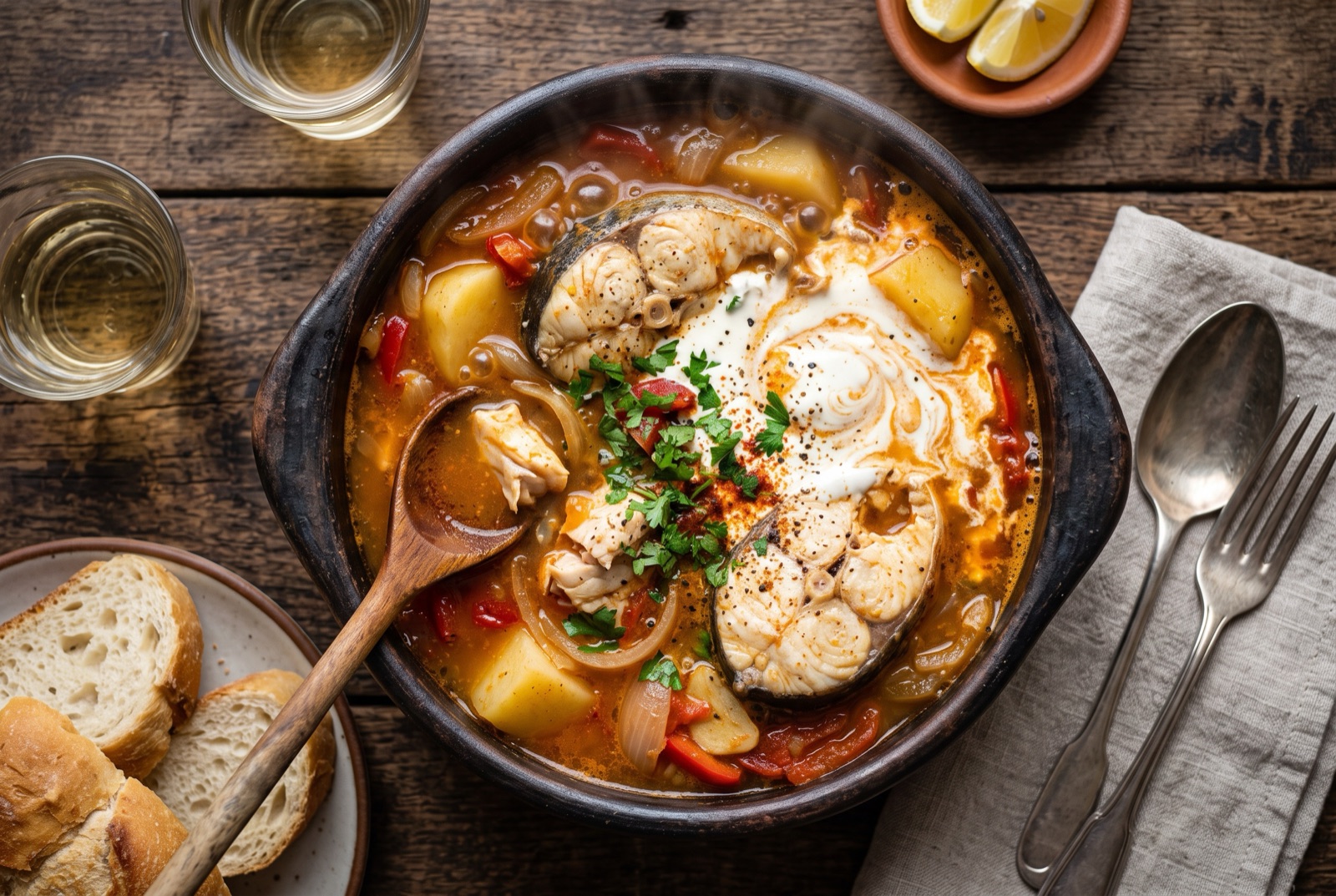
Keep exploring Chile.
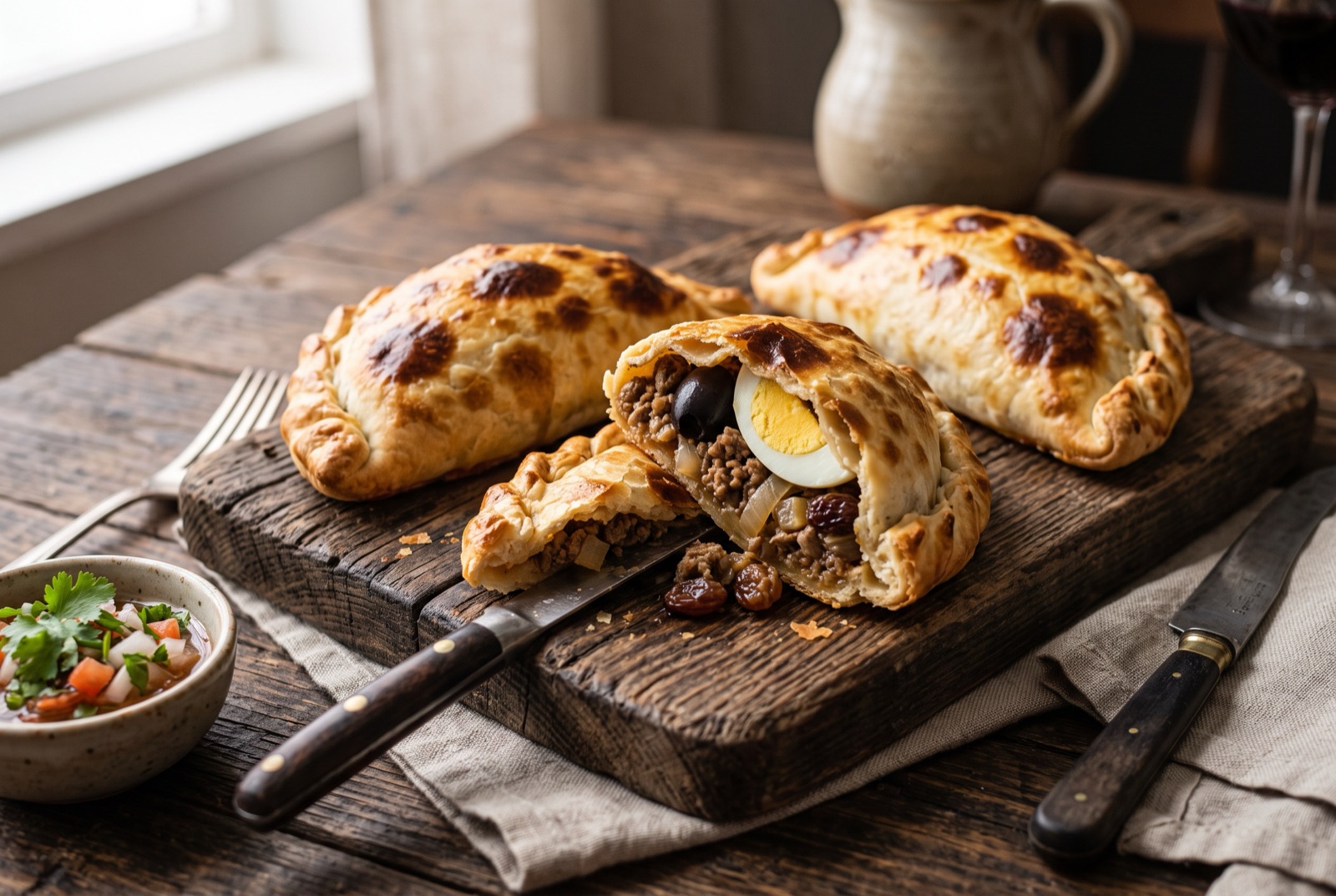
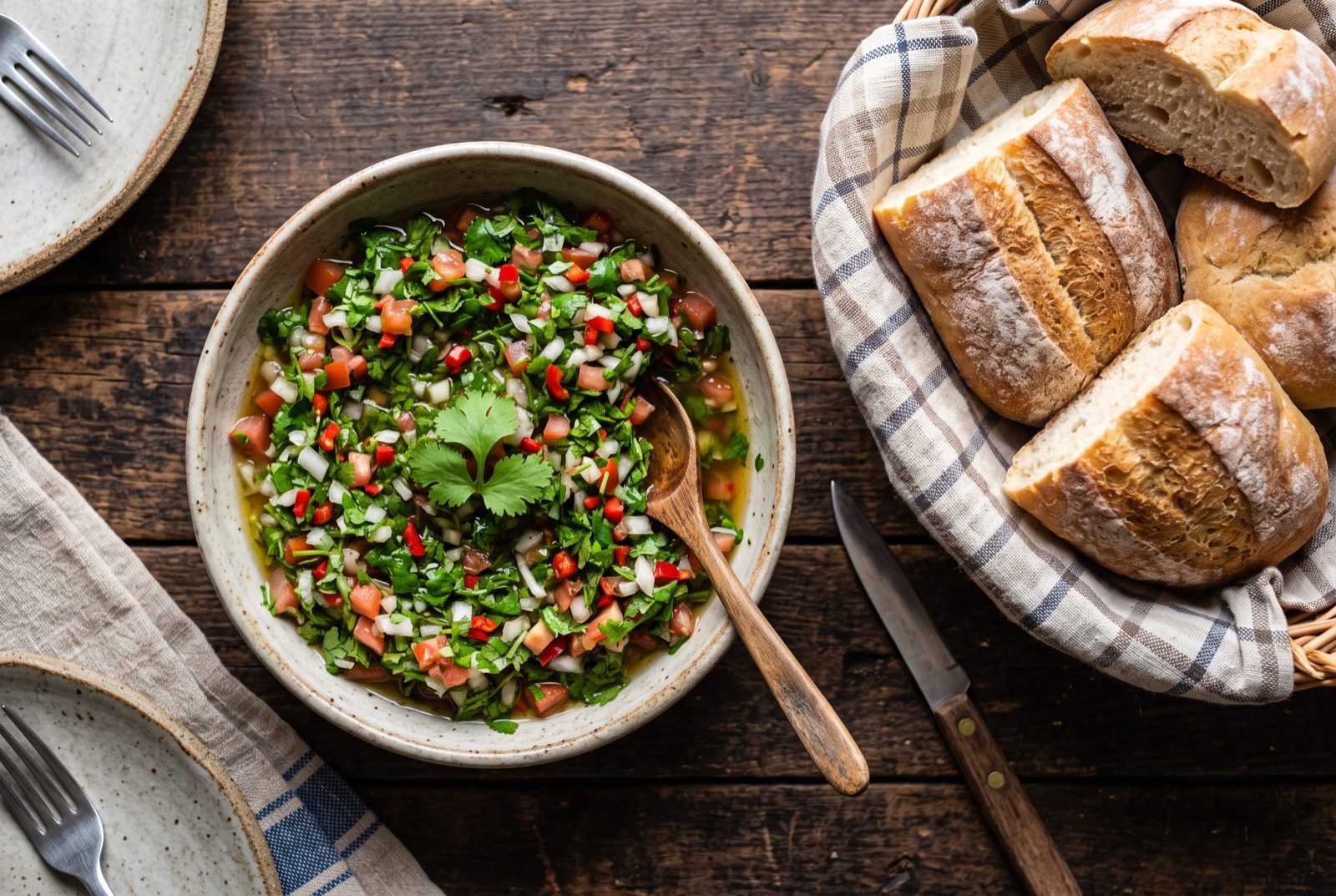
Chile has 9 more dishes in the atlas — Caldillo de Congrio and Cazuela de Vacuno, and 7 more.
Recipe by The DishRoute Kitchen · published August 20, 2026 · updated August 20, 2026