ANZAC Biscuits.
Oat and Golden Syrup Cookies
· say it: AN-zak
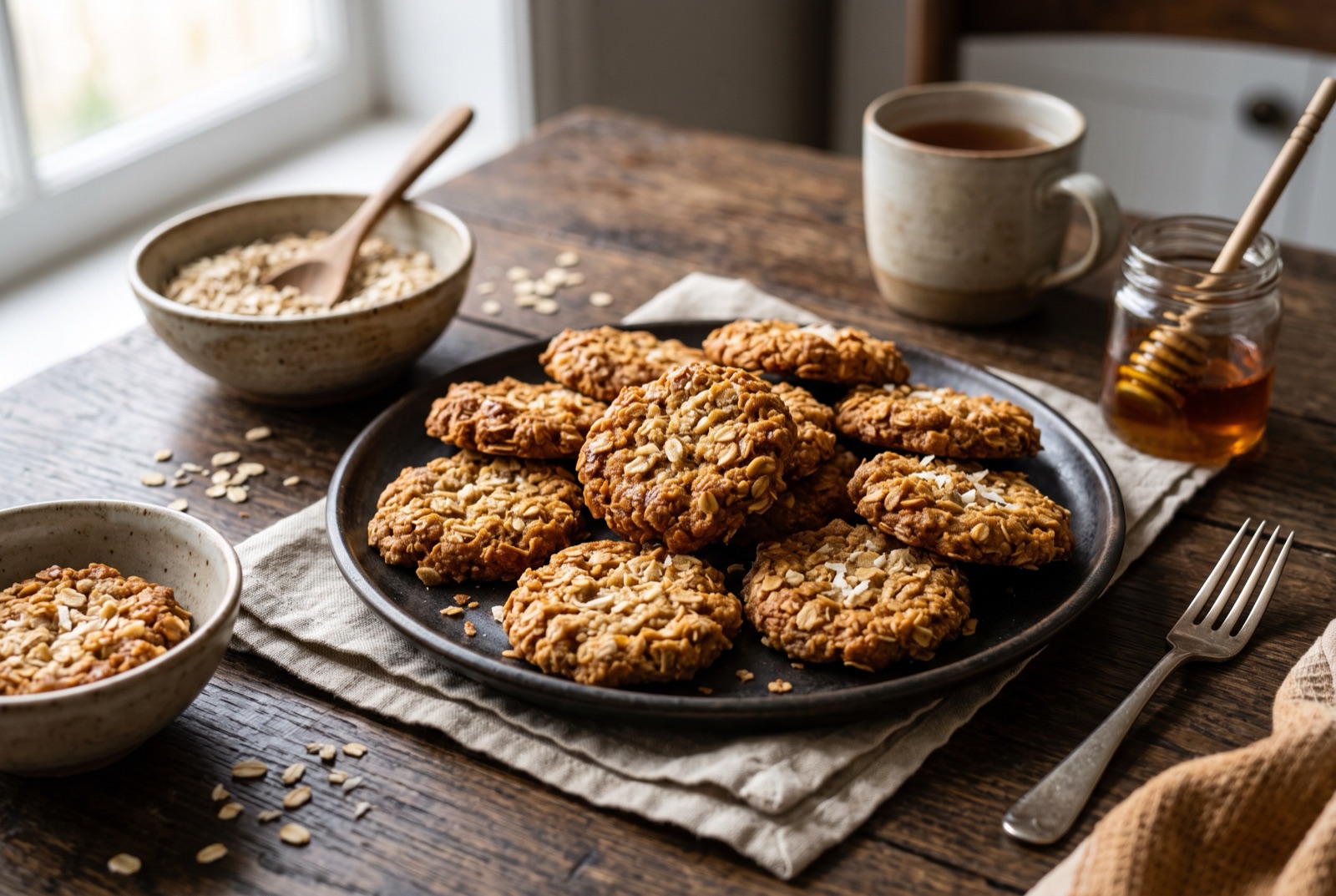
ANZAC biscuits are flat, golden, caramel-scented rounds made from rolled oats, desiccated coconut, flour and sugar, held together by melted butter and golden syrup rather than egg. That eggless construction is why they keep so well and why they taste the way they do: with no egg to set the crumb, the sugar and syrup caramelise into something toffee-like around the oats. Baked twelve minutes they stay chewy in the middle; baked eighteen they go hard enough to snap. Australians and New Zealanders bake them all year and especially around ANZAC Day, and the chewy-versus-crunchy question is a household argument.

- Gate
- Australia
- Prep
- 15 min
- Cook
- 15 min
- Total time
- 30 min
- Serves
- 24
- Status
- Easy
- Nutrition / serving · estimated
- Calories 145 kcal
- Protein 2 g
- Carbs 19 g
- Fat 7 g
- Fiber 1 g
- Sugar 10 g
Why this recipe works.
- Explains the bicarbonate-and-boiling-water step properly, which is the one piece of chemistry that decides whether the biscuits are light or leaden.
- Gives two clear bake times for chewy and crisp, instead of pretending there is one correct texture.
- Uses golden syrup rather than honey, which is what produces the caramel flavour the biscuit is known for.
- Honest about the war story: the keeping qualities are real, the mailing-to-Gallipoli origin is partly folklore.
Ingredients.
9 itemsDry ingredients
Wet ingredients
Equipment
- Two baking trays
- Baking paper
- Small saucepan
- Large mixing bowl
- Wire rack
Instructions.
Heat the oven and line the trays
Heat the oven to 160°C fan and line two baking trays with baking paper. The moderate temperature matters — these biscuits are full of sugar and syrup and will scorch at the edges before the centres set if the oven runs hot.
Combine the dry ingredients
Stir the rolled oats, flour, desiccated coconut, brown sugar and salt together in a large bowl, breaking up any lumps of sugar with your fingers so the mixture is loose and evenly coloured throughout.
Melt the butter and syrup
Warm the butter and golden syrup in a small saucepan over low heat, swirling until the butter has fully melted and the mixture is smooth and glossy. Take it off the heat before it starts to bubble.
Foam the bicarbonate of soda
Dissolve the bicarbonate of soda in the boiling water and pour it straight into the warm butter mixture — it will froth up pale and roughly double in volume. Stir once and use it immediately while it is still foaming.
Tip That foam is the leavening. If you let it collapse before mixing, the biscuits come out heavy.
Mix and roll
Pour the foaming butter mixture into the dry ingredients and stir until no dry flour remains and the dough clumps together when squeezed in your hand. Roll into walnut-sized balls and place them on the trays at least 5 cm apart, flattening each slightly with your palm.
Bake to the texture you want
Bake for 12 minutes for chewy biscuits — edges set and golden, centres still pale and soft — or 17–18 minutes for crisp ones, when the colour is even across the whole surface and the tops look dry and crackled.
Cool on the tray first
Leave the biscuits on the hot tray for 5 minutes to firm up before lifting them onto a wire rack to cool completely. They are extremely fragile straight from the oven and will break if moved early.
Tips from our kitchen.
- Dissolve the bicarbonate of soda in boiling water and pour it in while it is still foaming — this aeration is what keeps the biscuits from being dense.
- Use rolled oats, not quick oats. Quick oats absorb liquid too fast and give a pasty, uniform texture instead of a chewy one.
- Space the balls at least 5 cm apart. They spread a long way, and crowded biscuits merge into one sheet.
- For chewy biscuits pull them at 12 minutes, when the edges are set and gold but the centres still look pale and soft — they firm up as they cool.
- For crisp biscuits go to 17–18 minutes, until the colour is even right across the top and the surface looks dry and crackled.
- Leave them on the hot tray for five minutes before moving them. Straight off the oven they are fragile and will break in half.
Substitutions.
- Golden syrup → Honey, or light corn syrup with a teaspoon of brown sugar
- Honey works but its flavour dominates and browns faster, so check five minutes early. Golden syrup is what gives the classic caramel note.
- Butter → A firm plant-based block spread
- The biscuits are already eggless, so this makes them vegan. Use a block spread rather than a soft tub margarine, which has too much water.
- Plain flour → A gluten-free flour blend, with certified gluten-free oats
- They spread slightly more and are more fragile when hot, so leave them on the tray a couple of minutes longer before moving.
Variations.
- Chocolate-dipped ANZACs
- Half of each cooled biscuit dipped in melted dark chocolate and set on baking paper. Not traditional, and very popular anyway.
- ANZAC slice
- The same mixture pressed into a lined slab tin and baked for about 25 minutes, then cut into bars while still warm.
- Macadamia ANZACs
- Roughly chopped macadamias folded through the dry ingredients — an Australian nut in an Australian biscuit, and it suits the caramel flavour.
Storage & reheating.
These keep better than almost any other home-baked biscuit — that is the whole point of them. Store in an airtight tin at room temperature for up to 2 weeks; crisp ones stay crisp and chewy ones gradually firm up. Never store them with soft biscuits or cake, which transfers moisture and ruins the snap. The raw dough balls freeze for 3 months and bake from frozen with about 3 minutes added.
Serve with
Tea or coffee, and a glass of cold milk if the biscuits came out on the crisp side.
The story behind ANZAC Biscuits.
ANZAC stands for the Australian and New Zealand Army Corps, and these biscuits are tied to the First World War, though the popular version of the story overstates the link. The common claim is that wives and mothers baked them to post to soldiers at Gallipoli, and the biscuits' famous keeping qualities — no egg, high sugar, plenty of fat — are consistent with food that had to survive a two-month sea voyage. The historical record is less tidy: similar oat biscuits existed before the war, and much of the early ANZAC-branded baking was made for fundraising at home rather than for shipping abroad. Both purposes are real; the mailing story is the one people remember.
The name is protected in a way few foods are. In Australia the word ANZAC is legally restricted, and using it commercially requires permission from the Department of Veterans' Affairs, which grants it for biscuits on the condition that they follow the traditional recipe and are called biscuits rather than cookies. That is why you will not see an ANZAC cookie in an Australian supermarket. New Zealand has similar protections, and both countries take the matter seriously.
As baking goes, the recipe is nearly foolproof, with one piece of chemistry worth understanding. Bicarbonate of soda is dissolved in boiling water and stirred into the melted butter and golden syrup; the soda reacts with the acidic syrup, foams up dramatically, and that aeration is what stops the biscuits from being dense pucks. Do not skip the boiling water, and add the mixture while it is still frothing. Beyond that, the only real decision is how long to bake them, and the difference between chewy and crisp is about five minutes.
Questions, answered.
How do I make them chewy instead of crunchy?
Bake them for less time and take them out looking underdone. At around 12 minutes the edges should be set and golden while the centres still look pale, soft and slightly wet — they continue cooking on the hot tray and firm up as they cool. For crisp biscuits, keep going to 17 or 18 minutes until the colour is even across the whole surface.
Why do I dissolve the bicarbonate of soda in boiling water?
Two reasons. The water dissolves the soda so it disperses evenly instead of leaving bitter pockets, and the heat plus the acidic golden syrup starts the reaction immediately, producing a foam that aerates the butter mixture. Pour it into the pan while it is still frothing. Skipping this step gives dense, heavy biscuits that never quite lighten in the oven.
Why can I not call them ANZAC cookies?
Because the word ANZAC is legally protected in Australia. Commercial use requires permission from the Department of Veterans' Affairs, which is granted for these biscuits only if they follow the traditional recipe and are called biscuits, not cookies. New Zealand has comparable protections. At home you can call them whatever you like, but the convention is taken seriously in both countries.
Why are my biscuits spreading into one giant sheet?
Either the balls were too close together, the butter mixture was still hot when it met the dry ingredients, or the dough was too wet. Space them at least 5 cm apart, let the butter and syrup cool for a couple of minutes before combining, and if the dough will not hold a ball when squeezed, add a tablespoon of extra oats or flour rather than more liquid.
Did ANZAC biscuits really get sent to soldiers at Gallipoli?
Partly. Their eggless, high-sugar composition genuinely does survive long sea voyages, and food parcels were sent from home during the war. But similar oat biscuits existed beforehand, and a great deal of early ANZAC-named baking was made to raise funds at home rather than to be shipped. The Gallipoli mailing story is widely repeated and only partly supported by the record.
You might also like.
All recipes →
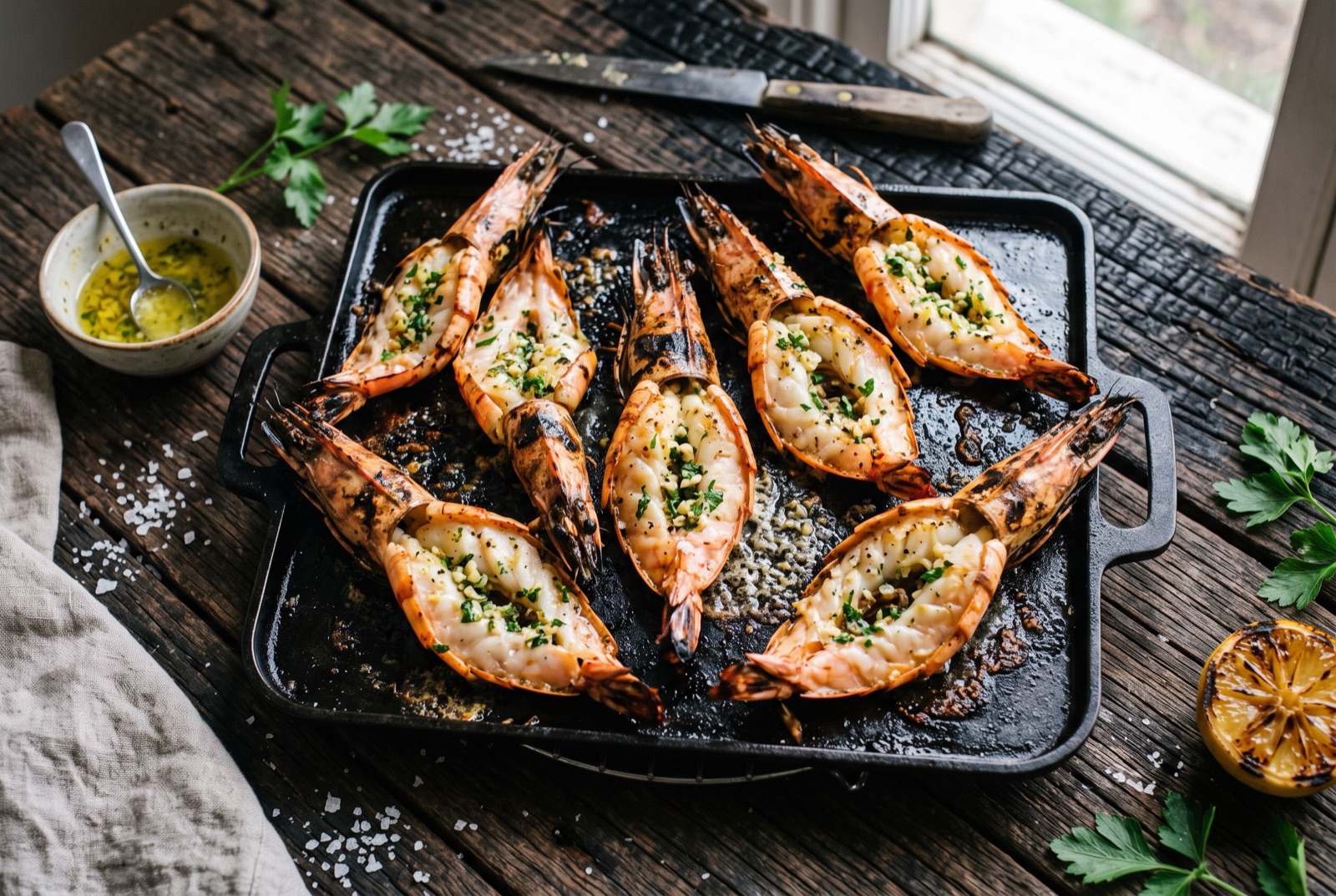
Keep exploring Australia.
Australia has 9 more dishes in the atlas — Aussie Meat Pie and Barbecued Prawns, and 7 more.
Recipe by The DishRoute Kitchen · published August 20, 2026 · updated August 20, 2026