Milanesa a la Napolitana.
Breaded Beef Cutlet with Ham and Cheese
Milanesa a la napolitana · say it: mee-lah-NEH-sah ah lah nah-poh-lee-TAH-nah
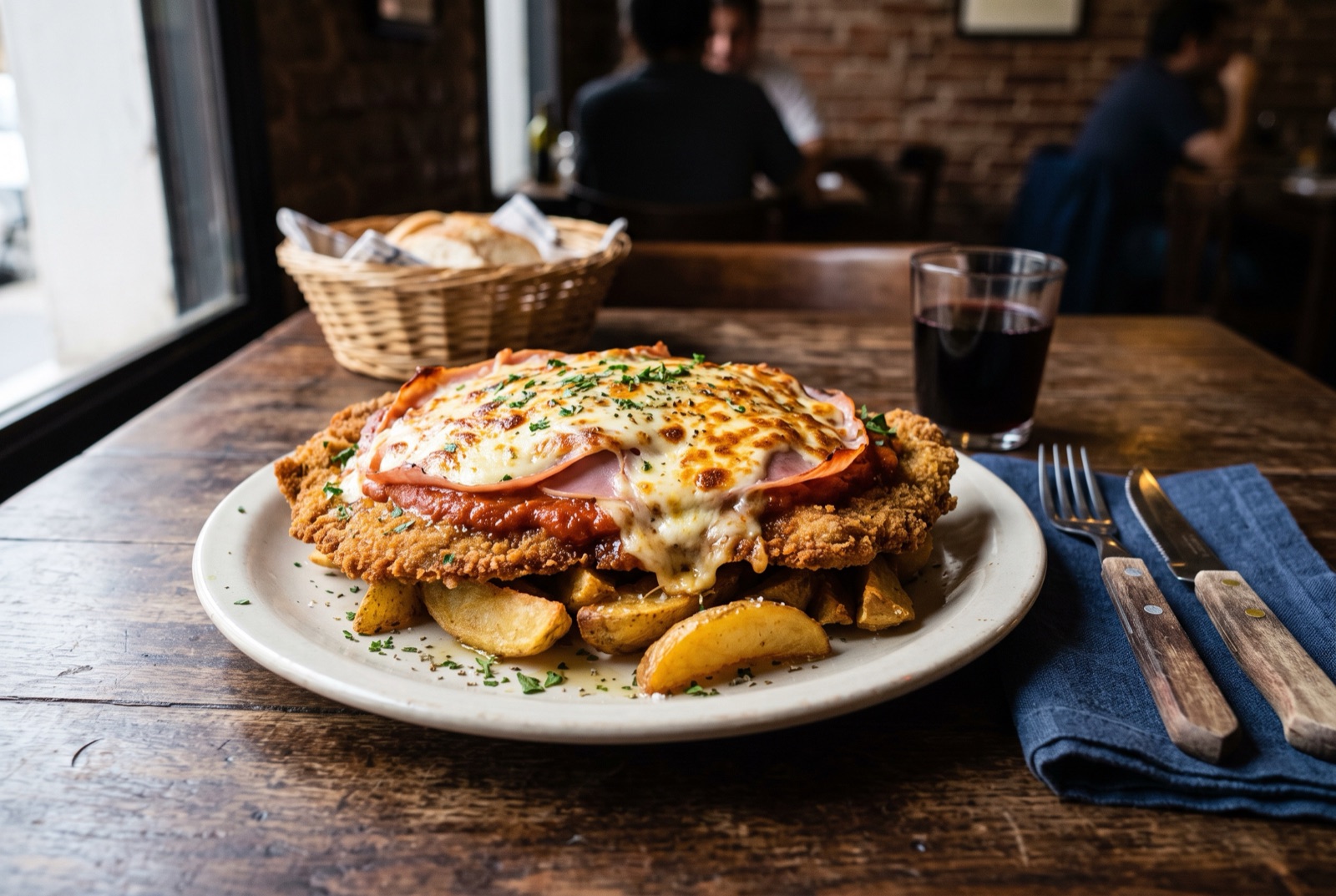
This is a fried breaded beef cutlet wearing a second dish on top — tomato sauce, a slice of ham and enough mozzarella to cover the edges, melted under a hot grill until it bubbles and browns in spots. Underneath, the milanesa itself is pounded thin, soaked in egg with crushed garlic and parsley, pressed into fine breadcrumbs and fried until the crust crackles. The contrast is the whole point: brittle crust and juicy beef beneath a soft, salty, molten top. It is a restaurant staple and a home dinner across Argentina, almost always served with french fries and eaten with a knife, fork and no ceremony.

- Gate
- ArgentinaBuenos Aires
- Prep
- 25 min
- Cook
- 25 min
- Total time
- 1 hr 20 min incl. 30 min rest
- Serves
- 4
- Status
- Easy
- Nutrition / serving · estimated
- Calories 880 kcal
- Protein 62 g
- Carbs 52 g
- Fat 46 g
- Fiber 4 g
- Sodium 1320 mg
Why this recipe works.
- Garlic and parsley go into the egg soak, so the seasoning is inside the crust rather than sprinkled on top.
- The crumb is rested before frying, which stops it sliding off in the pan.
- A short sauce reduced thick keeps the topping from turning the crust soggy.
- Grill finish rather than a long oven bake, so the cheese melts before the crust gives up.
Ingredients.
13 itemsFor the cutlets
For the topping
Equipment
- Meat mallet or heavy pan for pounding
- Wide frying pan
- Wire rack
- Oven grill or broiler
Instructions.
Pound and season the beef
Lay each slice of beef between two sheets of baking paper and beat it out with a mallet or the base of a heavy pan until it is an even 5 mm thick and noticeably wider than before. Season both sides with salt and pepper and pat the surface completely dry.
Make the garlic-parsley egg soak
Beat 3 of eggs in a wide dish with the garlic paste, chopped parsley, half a teaspoon of salt and a good grind of pepper. Slide the cutlets in, turn them so both faces are wet, and leave them in the egg for 10 minutes while you set up the crumbs.
Crumb and chill
Spread the breadcrumbs on a tray, lift each cutlet out letting the excess egg drip back, and lay it on the crumbs. Press firmly with your palm, flip and press again so the surface is matte and evenly coated with no wet patches, then rest the cutlets in the fridge for 30 minutes.
Tip Press with the flat of your hand rather than sprinkling crumbs on top — that is what makes the coating stay put.
Reduce the tomato sauce
Soften the onion in olive oil over medium heat for 5 minutes until translucent, add the tomatoes and oregano and simmer 12–15 minutes, until the sauce mounds on a spoon and a channel dragged across the pan base holds for a second before closing. Season and set aside.
Fry the cutlets
Heat the oil to 175°C in a wide pan — a crumb dropped in should sizzle briskly and rise straight away. Fry the cutlets one or two at a time for about 2 minutes a side, until the crust is even gold and crackles faintly when tapped, then drain them on a wire rack.
Tip If the crumb darkens before two minutes, the oil is too hot and the beef inside will still be raw. Drop the heat and wait.
Build and grill
Heat the oven grill to high. Sit the fried cutlets on a tray, spoon two tablespoons of thick sauce over each, lay on a slice of ham and cover with mozzarella right to the edges. Grill on the top shelf for 3–5 minutes, until the cheese has melted flat and taken brown blisters.
Serve immediately
Slide each milanesa onto a plate with the fries already there so nothing sits and steams. Eat straight away, while the crust under the cheese is still audible when you cut it.
Tips from our kitchen.
- Pound the beef to 5 mm and no thicker. A thick cutlet is still raw when the crumb has already darkened.
- Rest the breaded cutlets 30 minutes in the fridge. The crumb hydrates slightly and grips instead of falling away in the oil.
- Fry in oil about 1.5 cm deep at 175°C. Shallow oil steams one side while the other browns and the crust comes out patchy.
- Drain on a rack, never on paper. Paper traps steam under the cutlet and softens the bottom crust immediately.
- Keep the tomato sauce thick enough to hold a line when you drag a spoon through it, or it will soak straight into the breading.
- Grill on the top shelf for 3–5 minutes only, watching it, until the cheese blisters. Longer and the meat overcooks under its blanket.
Substitutions.
- Beef top round for the cutlets → Veal escalope, chicken breast butterflied, or thick slices of aubergine
- Chicken (milanesa de pollo) is equally standard in Argentina. Aubergine makes a genuinely common vegetarian version, salted and drained first so it does not water the crust.
- Cooked ham → Prosciutto cotto, back bacon, or leave it out
- The ham is there for salt and a soft layer under the cheese. Skipping it gives you a milanesa a la napolitana sin jamón, which nobody in Argentina finds strange.
- Fresh mozzarella → Low-moisture mozzarella or a mild grating cheese
- Fresh mozzarella releases water under the grill and can leave the top wet. If you use it, tear it and blot it dry on kitchen paper first.
Variations.
- Milanesa a caballo
- The same fried cutlet without the napolitana topping, crowned instead with one or two fried eggs so the yolk runs into the crust. Ordered constantly and arguably the better hangover version.
- Suprema napolitana
- Made with chicken breast rather than beef. Lighter, quicker to cook through, and the version most often eaten at home during the week.
- Milanesa al horno
- Baked on a rack at 200°C instead of fried, brushed with a little oil. The crust is drier and less rich, but it lets you cook eight cutlets at once without a pan of hot oil.
Storage & reheating.
Best eaten within minutes of leaving the grill. Plain fried milanesas, before topping, keep 2 days refrigerated and reheat well on a rack at 200°C for 8 minutes, after which you can add sauce and cheese and grill as normal. Breaded raw cutlets freeze cleanly for a month, layered between baking paper; fry them from frozen at a slightly lower temperature so the centre catches up with the crust.
Serve with
Thin french fries, a lettuce and tomato salad dressed only with oil and vinegar, and cold beer.
The story behind Milanesa a la Napolitana.
The milanesa came off the same ships as most of modern Argentine cooking. Italian migration between the 1880s and the 1950s brought the cotoletta alla milanese with it, the breaded veal cutlet of Lombardy, and Argentina adapted it to what its butchers sold in quantity: thin slices of beef from the round, pounded thinner still, and enough of them to feed a household. In the process it stopped being an occasional dish and became the default. Argentine supermarkets sell trays of meat already labelled and cut for milanesas, and the sandwich version at a corner shop is one of the cheapest hot meals in the country.
The napolitana topping is not from Naples. The usual account, repeated in Argentine kitchens and food writing, credits a Buenos Aires restaurant called Nápoli near Luna Park in the 1940s, where a cook is said to have salvaged a scorched cutlet by covering it with tomato, ham and cheese; the name would then refer to the restaurant rather than the city. The story is told everywhere and documented nowhere solid, so treat it as folklore. What is certain is the direction of travel: an Italian technique, an Argentine invention on top, and a name that misleads visiting Italians.
Eating it is governed by a few settled preferences. Fries are the standard partner, and a napolitana served over a bed of fries with a fried egg on top is a separate menu item with its own name. The cutlet should be wider than the plate. The cheese should be plain mozzarella rather than anything sharp, because the dish is not built on complexity — it is built on a crust that survives a wet topping, which is why the frying and the grilling are two separate steps done in the right order.
Questions, answered.
Why does the breading fall off when I fry it?
Three usual causes: the meat was wet when it went into the flour or egg, the crumb was not pressed on firmly, or the cutlets went straight from breading into the pan. Pat the beef dry, press the crumbs on with the flat of your hand, and chill the breaded cutlets for 30 minutes before frying so the coating sets.
Is milanesa a la napolitana actually from Naples?
No. It is an Argentine dish, and the topping has no counterpart in Neapolitan cooking. The commonly repeated explanation is that the name comes from a Buenos Aires restaurant called Nápoli in the 1940s rather than from the Italian city, but that account is folklore rather than documented history.
Can I make this without deep frying?
Yes. Bake the breaded cutlets on a wire rack at 200°C for about 15 minutes, turning once and brushing lightly with oil, or use an air fryer at the same temperature. The crust is drier and less golden than a fried one but holds up fine under the sauce and cheese.
What cut of beef should I use?
A lean, even slice from the round — top round, silverside or knuckle — cut across the grain about 1 cm thick and then pounded to 5 mm. Argentine butchers sell this pre-sliced as carne para milanesas. Avoid anything with heavy connective tissue, since a quick fry will not soften it.
Can I prepare these ahead for a crowd?
Bread the cutlets up to a day ahead and keep them chilled in a single layer, then fry them shortly before serving. You can also fry them a few hours early, hold them at room temperature on a rack, and do the sauce, ham, cheese and grill step just before the table sits down.
You might also like.
All recipes →
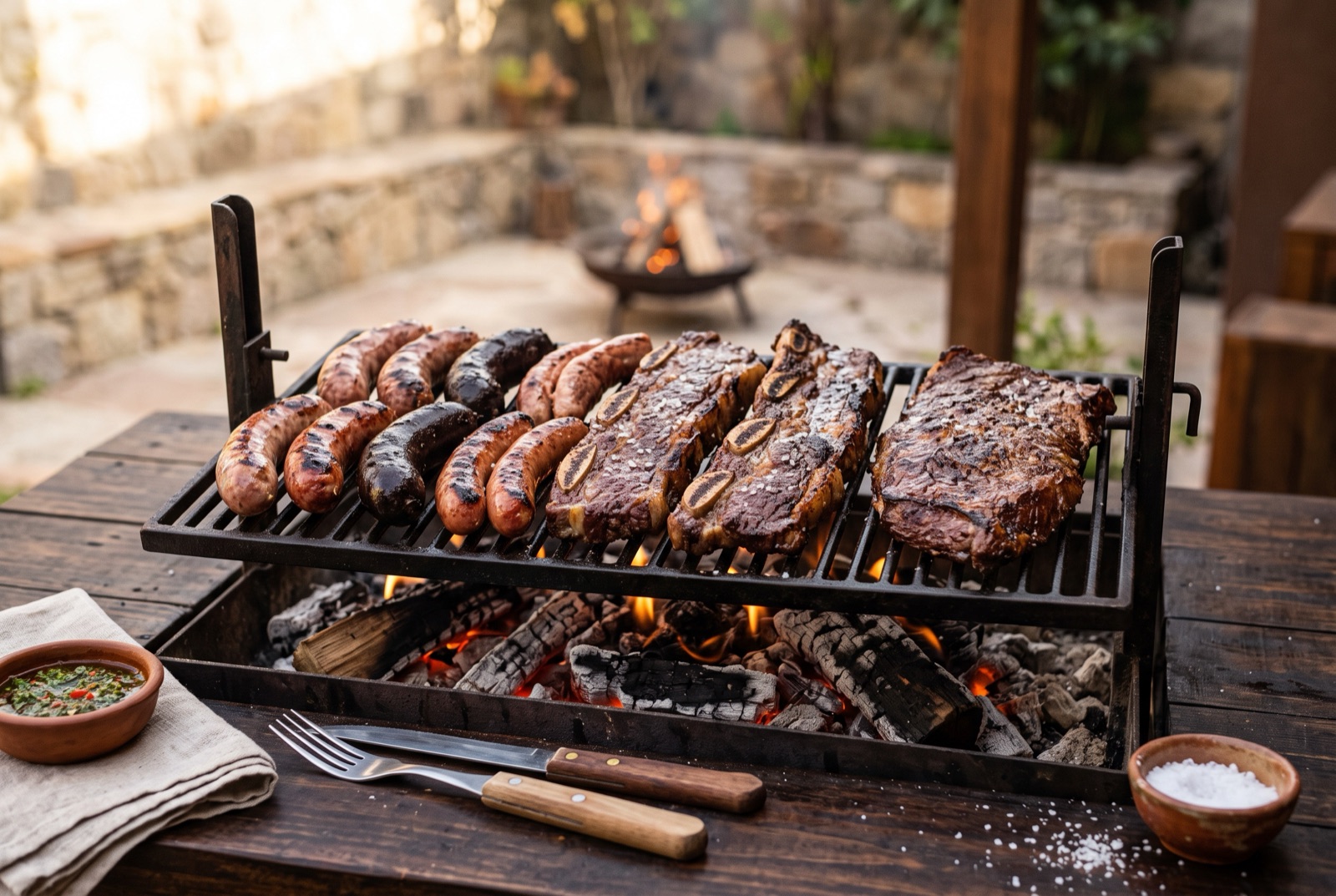
Keep exploring Argentina.
Argentina has 9 more dishes in the atlas — Alfajores de Maicena and Asado, and 7 more.
Recipe by The DishRoute Kitchen · published August 20, 2026 · updated August 20, 2026