Slovenia.
Slovenija
Slovenia eats like the crossroads it is: Alpine dairy and smoked pork in the north, olive oil and air-dried ham on the Karst, pumpkin-seed oil and paprika in the Pannonian east — all inside a country you can drive across in three hours. What holds it together is not a spice cabinet but a set of habits. A proper meal opens with soup. Buckwheat and millet are everyday grains here rather than health-food novelties. Fresh curd, skuta, is used as freely as other countries use cheese. And there is a national appetite for sour: soured turnip, sauerkraut, vinegar-sharp salads, tart apples baked into cake. Slovenian cooking is also unusually attached to shape and handwork. Štruklji are rolled around their filling and boiled inside a cloth, žlikrofi are pinched one at a time into little hats, potica dough is stretched until you can read the tablecloth through it. These are peasant dishes with fussy hands behind them, which is exactly why so many of them now carry formal EU protection.

- Continent
- EuropeCentral Europe
- Recipes in atlas
- 10
- Must-try dishes
- 3
- Pantry staples
- 10
Start with the classics.
Must tryThe dishes that explain the Slovenia kitchen fastest — if you cook only a few things from this page, cook these.
Inside the Slovenia kitchen.
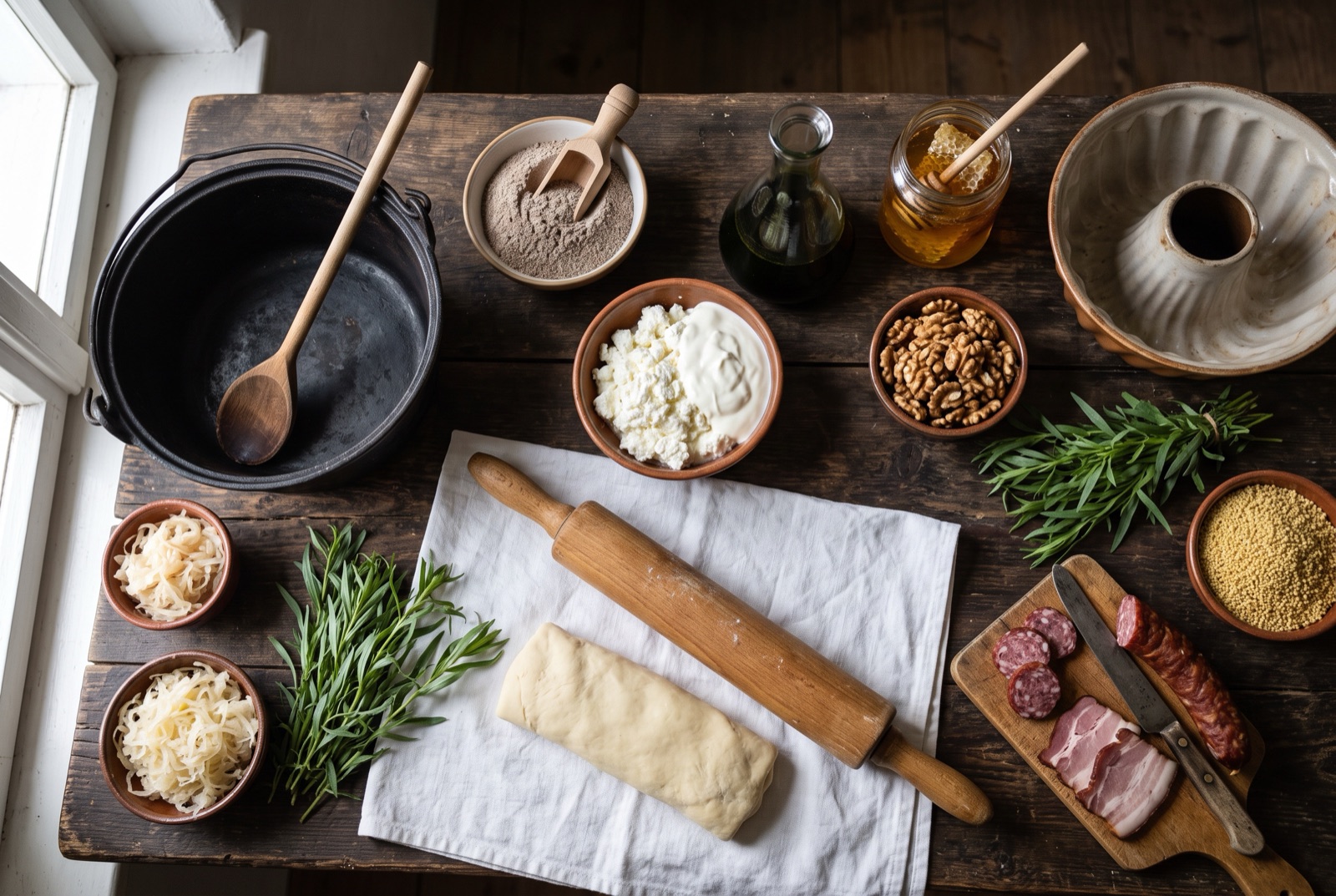
Start with the fats, because they draw the map better than anything else. In the Alpine north and the central belt, cooking begins with butter, cream and pork — lard, bacon, cracklings, and the smoked sausage that gave Carniola its most famous export. In the east, in Prekmurje and Štajerska, the defining fat is dark green Styrian pumpkin-seed oil, pressed from roasted hulless pumpkin seeds and used cold: a spoonful over sliced potato salad, over lettuce with a splash of vinegar, even over vanilla ice cream. On the Karst and down into Slovenian Istria, it is olive oil, and the whole register shifts Mediterranean — pršut air-cured in the bora wind, brodet on the coast, teran wine that is nearly black.
The grain story is just as regional. Buckwheat is the Slovenian grain of memory: not a true cereal at all, but ground into flour for žganci, kneaded into bread and struklji dough, and boiled into porridge across the hills. Millet still turns up in Prekmurje stews, barley thickens ričet in every region, and wheat is reserved for the good things — festive breads, strudel dough and potica. The result is a cuisine that reads dark and nutty rather than pale and floury.
Dairy runs through everything, but in a specific form. Skuta — fresh, loose, tangy curd, close to quark or dry-curd cottage cheese — is the workhorse. It fills štruklji, layers gibanica and povitica, sweetens with honey for breakfast and turns savoury with chives or tarragon for lunch. Sour cream goes into fillings and onto soups, and cream stretched into a paper-thin custard is the reason people queue for cake in Bled.
The herb that surprises visitors is tarragon. Slovenes use pehtran the way others use vanilla or cinnamon: chopped into sweet curd fillings for štruklji, folded into potica, scented through cakes. Alongside it sit marjoram in potato fillings, caraway with pork and cabbage, and horseradish grated raw over cured meat at Easter. Garlic is generous and unapologetic, particularly in the east, where it seasons soured turnip and pork stews.
A traditional Slovenian meal is structured, not piled. Soup comes first — beef broth with hand-cut noodles on Sundays, or a thick one-pot like jota or ričet that simply is the meal. The main course follows with meat, a starch and something sour or pickled to cut it. Salad arrives beside the main, not before it, and it is dressed at the table with oil and vinegar. Dessert is only occasionally daily and often calendar-driven: štruklji any Sunday, but gibanica and potica for Christmas, Easter and weddings, baked in quantities that assume guests.
Signature pantry.
10 staplesThe ingredients this cuisine cannot function without.
- buckwheat flour
- pumpkin seed oil
- skuta (fresh curd)
- tarragon
- soured turnip and sauerkraut
- walnuts
- smoked pork and cured sausage
- honey
- sour cream
- millet
How people eat in Slovenia.
Lunch, kosilo, is the real meal of the day, and traditionally it runs soup first, then a main with a starch and a sour salad eaten alongside rather than before. Bread sits on the table for the whole meal and is not treated as a course. Mid-morning malica — a snack break long enough to eat properly — is a genuine institution, backed by a meal allowance in most Slovenian jobs. Before anyone eats, someone says dober tek. Salads are dressed at the table, usually with pumpkin seed oil and vinegar in the east. Wine is local and specific: people drink the grape from their own region, and offering the neighbouring valley's bottle invites comment. Sweets are calendar food more than daily food.
Regional kitchens.
Slovenia cooks 4 distinctly different ways depending on where you stand — here is what changes between them.
- R1Gorenjska and the Julian Alps
- High-pasture dairy country: buckwheat žganci with cracklings, smoked pork, honey from Carniolan bees, and the cream cake that made Bled a pilgrimage for people who do not care about the lake.
- R2Prekmurje and the Pannonian East
- Flat, hot and Hungarian-adjacent. Paprika, garlic, millet, soured turnip and pumpkin seed oil define the table here, and its layered gibanica is the most ambitious cake in the country.
- R3The Karst, Primorska and Slovenian Istria
- Limestone, bora wind and the Adriatic. Olive oil replaces lard, pršut is cured in open sheds, jota is the winter staple, and the wine turns dark and mineral with teran and refošk.
- R4Dolenjska and Bela Krajina
- Rolling vineyard and forest country south-east of Ljubljana, home of the pale, sharp cviček wine and of Bela Krajina's protected flatbreads — povitica and pogača — baked for guests and holidays.
All Slovenia recipes.
10 recipes and counting
Slovenia45 min
Ajdovi Žganci
Buckwheat Spoonbread with Cracklings
Slovenia2 hr
Belokranjska Povitica
Flat Layered Curd Flatbread
Slovenia1 hr 55 min
Bujta Repa
Prekmurje Sour Turnip and Pork Stew
Slovenia1 hr 55 min
Idrijski Žlikrofi
Pinched Potato Dumplings from Idrija
Slovenia10 hr 15 min
Jota
Karst Sauerkraut, Bean and Potato Stew
Slovenia1 hr 5 min
Kranjska Klobasa
Carniolan Sausage with Sour Turnip
Slovenia4 hr 15 min
Potica
Slovenian Rolled Walnut Yeast Cake
Slovenia6 hr 10 min
Prekmurska Gibanica
Layered Poppy, Walnut, Apple and Curd Cake
Slovenia10 hr 5 min
Ričet
Slovenian Barley and Bean Pot
Slovenia1 hr 55 min
Štruklji s Skuto
Slovenian Rolled Curd Dumpling with Tarragon
Keep traveling.
Slovenia sits in Central Europe, and its kitchen shares borders as well as ingredients with Albania and Austria.
 Albania
 Austria