Spain.
España
Spanish cooking is product worship. The national genius is not elaborate technique but restraint: the best olive oil, a perfect tomato, shrimp hours from the boat, treated with as little interference as possible. Olive oil is the foundation — Spain grows more olives than any country on earth — and it is used generously, as a cooking medium and a sauce in itself. Garlic, smoked paprika and saffron do most of the seasoning. What unifies the country is less a single cuisine than a way of eating: tapas turn dinner into a social crawl, lunch remains the serious meal of the day, and everything runs hours later than in the rest of Europe. Beneath that shared rhythm sit fiercely distinct regional kitchens — Basque seafood temples, Valencian rice orthodoxy, Andalusian fried fish and cold soups, Galician shellfish — each convinced, with some justice, that it is the real Spain.

- Continent
- EuropeIberian Peninsula
- Recipes in atlas
- 10
- Must-try dishes
- 3
- Pantry staples
- 8
Start with the classics.
Must tryThe dishes that explain the Spain kitchen fastest — if you cook only a few things from this page, cook these.
Inside the Spain kitchen.
Olive oil is where every Spanish recipe begins, and it behaves differently here than elsewhere in Europe: it is not a finishing drizzle but the bulk medium. Potatoes for a tortilla are poached in it, garlic for gambas al ajillo infuses it, vegetables for a sofrito melt in it. That sofrito — onion, garlic and grated tomato cooked slowly in oil until sweet and jammy — is the flavor base under countless stews and rice dishes, the Spanish equivalent of a French mirepoix, but cooked further and darker.
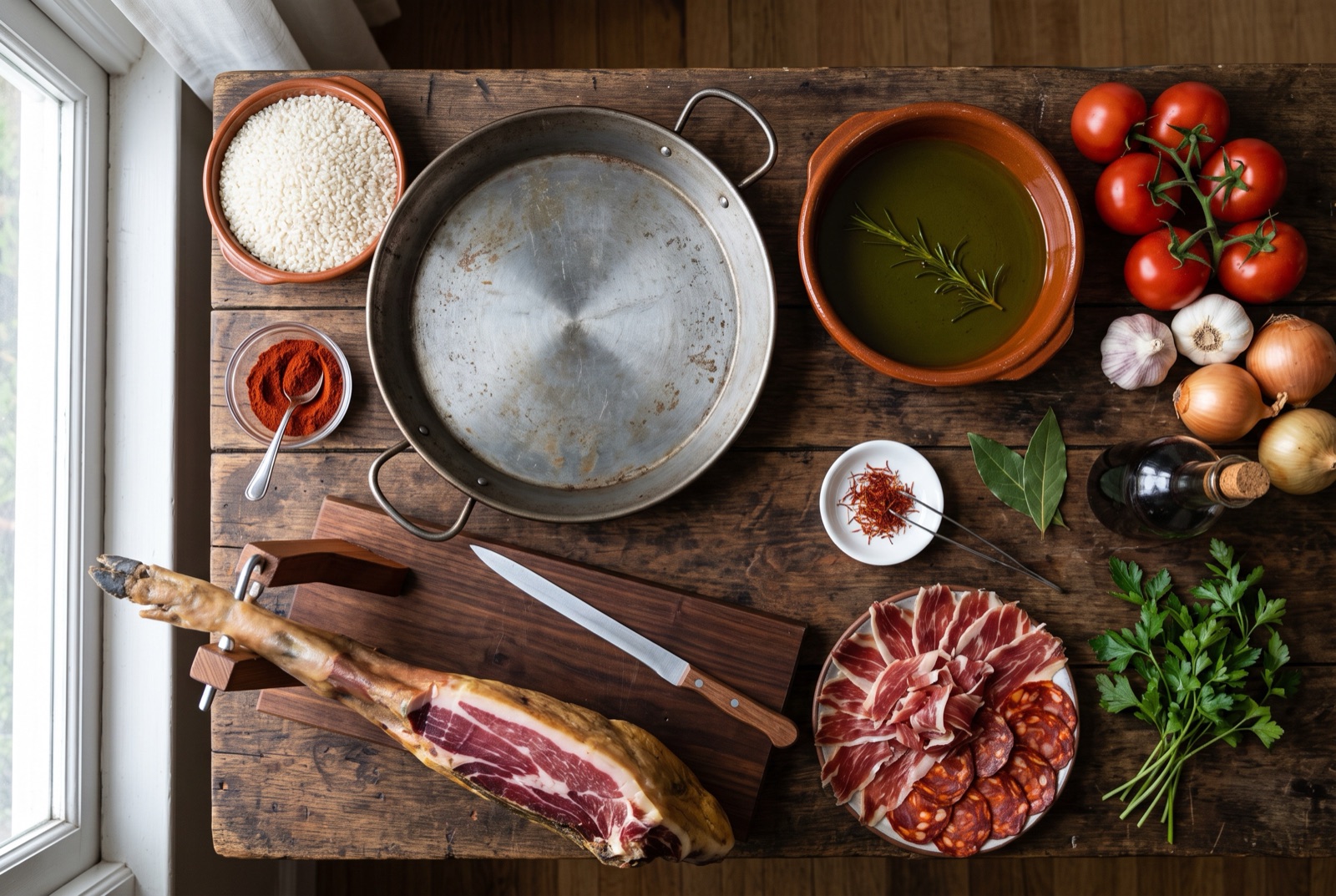
The spice cabinet is small and precise. Pimentón, paprika made from peppers dried over oak smoke in Extremadura or sun-dried in Murcia, gives chorizo its color and stews their backbone. Saffron, cultivated in La Mancha since the Moors introduced it, perfumes the great rice dishes. Sherry vinegar sharpens gazpacho and salads. Beyond these, seasoning mostly means salt, garlic and parsley — the confidence to stop there is the Spanish signature.
Pork is the historic protein of the interior. The pig is used completely: cured into jamón serrano and the acorn-fed jamón ibérico, seasoned into chorizo and morcilla, and its fat flavoring beans and greens. The coasts answer with an obsessive seafood culture — Galicia's octopus, mussels and goose barnacles, the Basque Country's hake and salt cod, Andalusia's fried fish, and the anchovies and prawns that anchor tapas bars everywhere. Rice belongs to the east: the paddies around Valencia's Albufera lagoon, planted under Moorish irrigation a thousand years ago, made the region the home of paella and a whole family of lesser-known rice dishes cooked in wide shallow pans.
The meal structure is its own institution. Lunch, eaten around two or three, is the anchor — often three courses even on a workday — while dinner arrives after nine and is frequently replaced altogether by tapas: small plates eaten standing, ordered round by round, ideally across several bars rather than one. A tortilla wedge, a plate of sizzling garlic shrimp, bread, olives and a glass of wine or cold beer constitute a complete and honorable dinner. Sweets are modest — flan, churros with thick hot chocolate, torrijas at Easter — because fruit and the meal itself were traditionally considered dessert enough.
Signature pantry.
8 staplesThe ingredients this cuisine cannot function without.
- olive oil
- garlic
- pimentón (smoked paprika)
- saffron
- jamón and cured pork
- tomatoes
- sherry vinegar
- short-grain rice
How people eat in Spain.
Meal times are the first culture shock: lunch at two or three in the afternoon, dinner rarely before nine, and kitchens that look closed to a foreigner are simply between services. Tapas are eaten standing at the bar, shared from the middle of the table, and paid for at the end; in parts of Andalusia and in León a tapa still arrives free with each drink. Bread is on every table and used without shame to mop sauces — leaving good olive oil in the dish is the real faux pas. The sobremesa, the long unhurried talk after the plates are cleared, is treated as part of the meal itself, and rushing it marks you as a visitor faster than any accent.
Regional kitchens.
Spain cooks 4 distinctly different ways depending on where you stand — here is what changes between them.
- R1Andalusia
- The olive-oil heartland of the south: gazpacho and salmorejo, sherry from Jerez, jamón from mountain villages, and pescaíto frito — lightly floured fish fried in olive oil — eaten in seaside chiringuitos.
- R2Basque Country
- Spain's most decorated food region: pintxos crowding bar counters in San Sebastián, salt cod al pil pil, txuleta steaks, and private gastronomic societies where cooking is a serious male-and-female civic sport.
- R3Valencia
- Rice country. The paddies of the Albufera lagoon feed paella valenciana and a whole canon of rice dishes — arroz a banda, arroz negro, fideuà — cooked wide and shallow, with the socarrat crust as the prize.
- R4Galicia
- The green Atlantic northwest: pulpo á feira (octopus with paprika and olive oil), empanada gallega, mussels and goose barnacles from cold rías, and padrón peppers — some hot, most not, all fried in oil and salted.
All Spain recipes.
10 recipes and counting
Spain1 hr 15 min
Chicken and Shrimp Paella
Spain55 min
Churros con Chocolate
Spanish Fried Dough and Drinking Chocolate
Spain4 hr 35 min
Crema Catalana
Catalan Lemon and Cinnamon Custard
Spain15 hr 20 min
Fabada Asturiana
Asturian Bean and Chorizo Stew
Spain18 min
Gambas al Ajillo
Sizzling Garlic Shrimp
Spain3 hr 20 min
Gazpacho Andaluz
Chilled Spanish Tomato Soup
Spain15 min
Pan con Tomate
Catalan Tomato-Rubbed Bread
Spain1 hr 10 min
Patatas Bravas
Crisp Fried Potatoes with Brava Sauce
Spain1 hr 35 min
Pulpo a la Gallega
Galician Octopus with Paprika
Spain1 hr
Tortilla Española
Spanish Potato Omelette
Keep traveling.
Spain sits in Iberian Peninsula, and its kitchen shares borders as well as ingredients with Albania and Austria.
 Albania
 Austria