Sweden.
Sverige
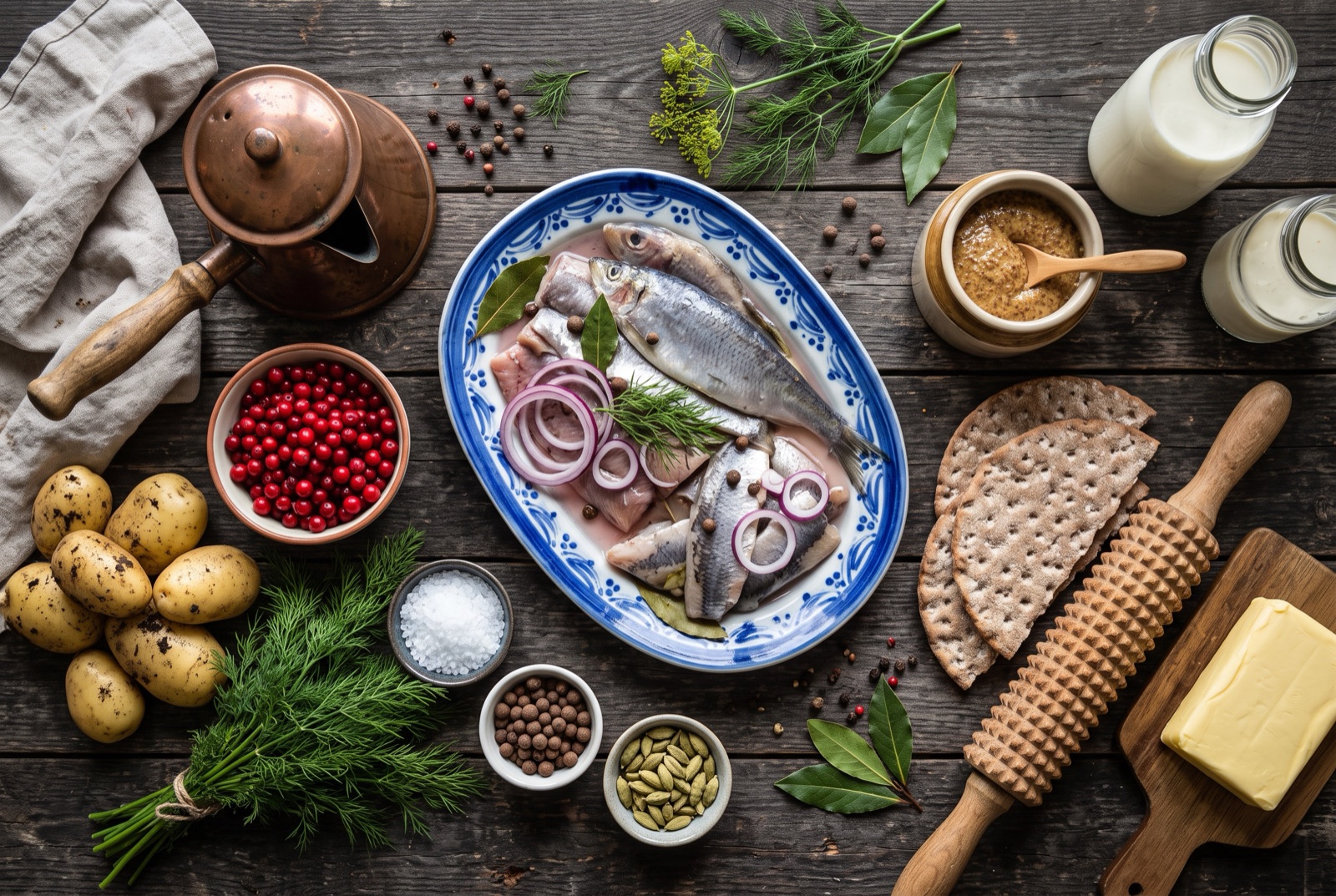
Swedish cooking is a preservation cuisine that learned to enjoy itself. For most of its history the country ate what it could keep through a winter that runs half the year: fish salted, sugar-cured or fermented; pork smoked and brined; cabbage soured; forest berries cooked down into jam; rye baked into crispbread hard enough to hang from a rafter until spring. Refrigeration did not retire those methods — it turned them into the flavour signature. The Swedish palate expects sour and sweet beside salt on the same plate, which is why meatballs arrive with cream gravy and lingonberry jam at once, and why pickled beetroot sits next to a beef stew without anyone finding it strange. Seasoning is narrow and deliberate rather than broad: allspice, dill, white pepper, caraway, cardamom, juniper, mustard. Butter, cream and potato do the structural work. The everyday version of all this has a name — husmanskost, plain household food cooked properly and portioned honestly — and it is still what most Swedes actually eat at home.

- Continent
- EuropeNordics
- Recipes in atlas
- 10
- Must-try dishes
- 3
- Pantry staples
- 9
Start with the classics.
Must tryThe dishes that explain the Sweden kitchen fastest — if you cook only a few things from this page, cook these.
Inside the Sweden kitchen.
The potato arrived late and then took over completely. Before the nineteenth century the Swedish staple was grain — porridge, gruel, and flatbread baked twice a year in enormous batches — but once potatoes took hold they became the default carbohydrate at nearly every warm meal, and a good half of the classic dishes are really potato dishes with something on the side. They appear boiled and pressed under meatballs, grated raw into raggmunk batter, sliced into matchsticks and drowned in cream for Janssons frestelse, and diced small and fried hard for pyttipanna. Learning to tell a floury potato from a waxy one is not a refinement in this kitchen; it is the difference between a dish working and failing.
The second organising idea is the sweet-sour-salt triangle. Almost every savoury Swedish plate carries a sharp or sweet counterweight: lingonberry jam, pickled cucumber, pickled beetroot, a sweet-strong mustard, or the sugar folded quietly into brines and cured fish. To an outsider it can read as odd — jam with meat, sugar in a herring pickle — but it is the same instinct that puts apple sauce next to pork elsewhere, simply applied more consistently and with more confidence.
Spicing is small and stubborn. Allspice is the flavour that makes a Swedish stew Swedish; dill is used by the fistful with fish and potatoes rather than as a garnish; white pepper is preferred to black in pale cream sauces; caraway goes into bread, cheese and aquavit. Cardamom belongs to the baking side, and Sweden uses staggering quantities of it — the buns, the doughs and the coffee-table cakes are built on freshly ground green cardamom, and using the pre-ground powder is the single fastest way to make Swedish baking taste flat.
Meal structure follows the calendar and the clock. Weekday food is husmanskost: one hot plate, potatoes, a pickle, and no courses. Thursday, by a tradition several centuries old, is yellow pea soup with mustard followed by pancakes. The great feasts are buffets — the julbord at Christmas, the midsommar table with new potatoes and cured herring, the August crayfish party eaten outdoors under paper lanterns — where you go up in rounds, cold dishes first, and nobody piles everything on one plate.
Regionally the country stretches far enough to hold different kitchens. The far north cooks reindeer, cloudberries, freshwater fish and the fermented Baltic herring that outsiders find alarming; the west coast is a shellfish coast; the deep south, closer to Denmark than to Stockholm, is richer and goose-eating, with the country's best farmland behind it.
Signature pantry.
9 staplesThe ingredients this cuisine cannot function without.
- potatoes
- dill
- lingonberries
- allspice
- cardamom
- cured and pickled herring
- butter and cream
- rye and crispbread
- sweet-strong mustard
How people eat in Sweden.
Fika is not a coffee break; it is an institution with its own verb, and Swedes take it seriously enough that many workplaces stop for it twice a day. The point is sitting down with people, not the caffeine, and something baked has to be on the table — a bun, a slice of cake, at minimum a biscuit. Meals run early by European standards: lunch around eleven or twelve, dinner often before six, and a weekday lunch is a hot plate rather than a sandwich. The table itself is unfussy and orderly — you serve yourself, take only what you will eat, and thank the cook with tack för maten before leaving. At festive dinners the drinking is choreographed: you sing first, then drink the snaps, and never the other way round.
Regional kitchens.
Sweden cooks 4 distinctly different ways depending on where you stand — here is what changes between them.
- R1Skåne and the South
- Sweden's farm country, and culturally half Danish — richer, sweeter cooking with goose, pork, eel and apples, plus the best grain and dairy in the country. Spettekaka and äggakaka belong here.
- R2Bohuslän and the West Coast
- A shellfish coast facing the North Sea: langoustines, mussels, oysters and the small hand-peeled shrimp that Swedes eat by the kilo. Fish is poached or cured rather than heavily sauced.
- R3Stockholm and the Mälaren Valley
- Where the restaurant canon was written — smörgåsbord service, toast Skagen, and the archipelago tradition of cured Baltic herring, new potatoes and dill eaten within sight of the water.
- R4Norrland and Sápmi
- The vast north, where reindeer, elk, cloudberries, freshwater char and the famously pungent fermented herring surströmming define the table, alongside Västerbotten cheese and thin soft tunnbröd.
All Sweden recipes.
10 recipes and counting
Sweden14 hr
Ärtsoppa
Swedish Yellow Pea Soup with Mustard
Sweden48 hr 25 min
Gravad Lax
Swedish Dill-Cured Salmon
Sweden1 hr 35 min
Janssons Frestelse
Swedish Potato and Sprat Gratin
Sweden2 hr 40 min
Kalops
Swedish Allspice Beef Stew
Sweden2 hr 42 min
Kanelbullar
Swedish Cardamom Cinnamon Buns
Sweden1 hr 25 min
Köttbullar
Swedish Meatballs in Cream Gravy
Sweden45 min
Pyttipanna
Swedish Potato, Meat and Onion Hash
Sweden50 min
Raggmunk
Swedish Crisp Potato Pancakes
Sweden2 hr 42 min
Semla
Swedish Almond Cream Bun
Sweden30 min
Toast Skagen
Swedish Shrimp and Dill Toast
Keep traveling.
Sweden sits in Nordics, and its kitchen shares borders as well as ingredients with Albania and Austria.
 Albania
 Austria