Tanzania.
Tanzania
Tanzania cooks two ways at once. On the mainland the plate is built around ugali, beans, greens and grilled meat — filling, direct, seasoned with salt, tomato and onion rather than with spice blends. On the coast and across Zanzibar the cooking runs on coconut and cardamom, because the islands spent centuries as a trading hub where Omani, Indian and Persian kitchens met the Swahili one and stayed. Coconut milk goes into rice, into octopus, into fish; cloves, cinnamon and cumin turn up where the mainland would use none of them. The two traditions are not in competition and most Tanzanians eat both, but they are genuinely different cuisines sharing a country, and treating them as one flattens the more interesting half of the story. What ties them together is a preference for slow-simmered, generously portioned food eaten with the hands, and a street-food culture built on grills, fried snacks and cardamom tea.

- Continent
- AfricaEast Africa
- Recipes in atlas
- 10
- Must-try dishes
- 3
- Pantry staples
- 10
Start with the classics.
Must tryThe dishes that explain the Tanzania kitchen fastest — if you cook only a few things from this page, cook these.
Inside the Tanzania kitchen.
Ugali is the mainland baseline: fine white maize flour stirred into boiling water until it stiffens into a dense, unsalted mound that is torn off with the right hand and pressed into a scoop. It is not seasoned because it is not meant to be — it is a vehicle for whatever it is eaten with, usually beans, sukuma-style greens, or a stew with enough sauce to soak in. Judging when ugali is done is the skill: it has to be worked hard against the side of the pot until it pulls away cleanly and stops tasting of raw flour.
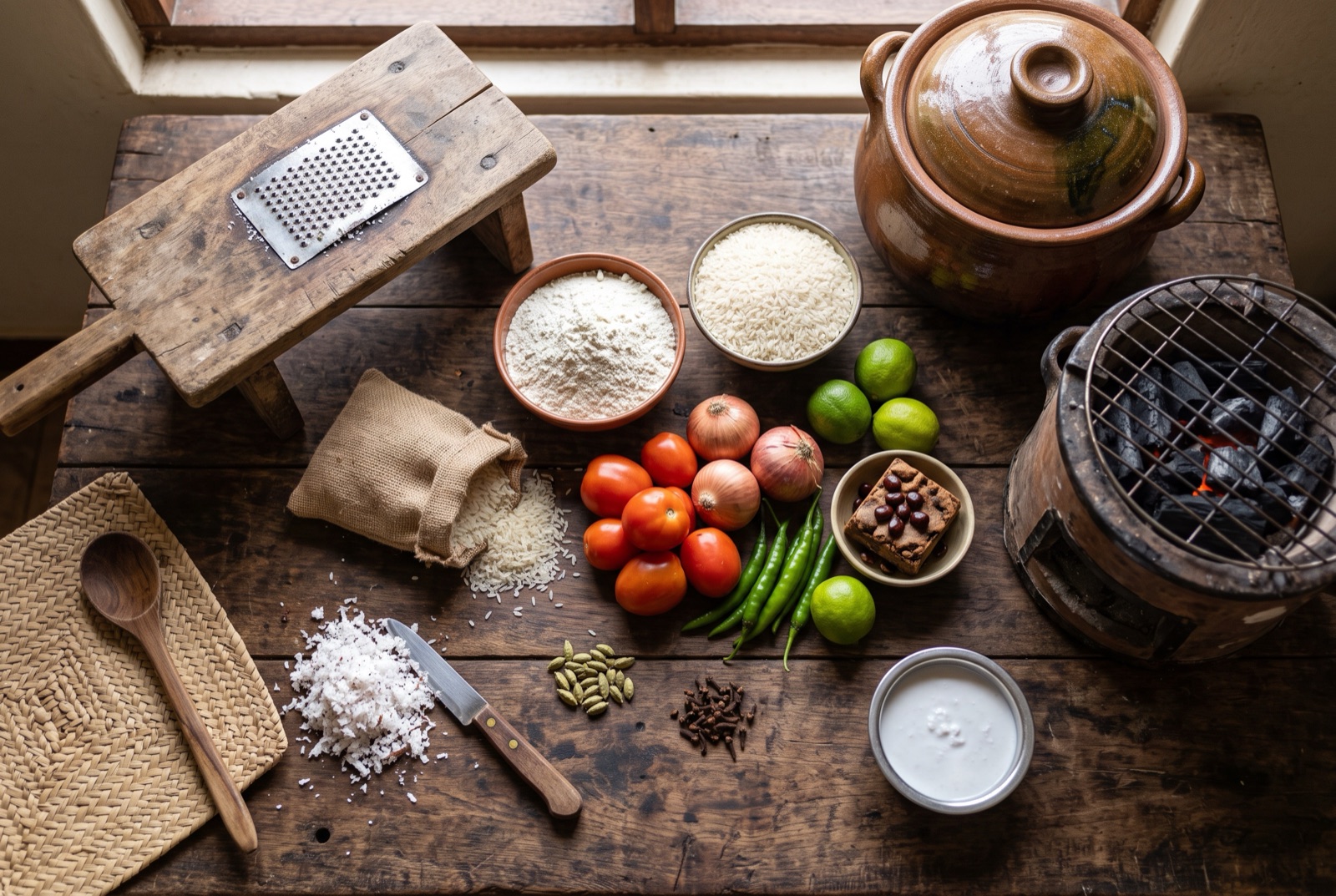
On the coast, coconut does the work that dairy does elsewhere. Fresh coconut is grated on a mbuzi, a low stool with a serrated blade, and squeezed for thick first-pressing milk and thinner second-pressing milk, each used for different stages of a dish. Rice cooked in coconut milk (wali wa nazi) is the standard accompaniment rather than a special occasion, and octopus simmered in coconut with lime and chilli is one of the best things eaten anywhere on the Indian Ocean.
Zanzibar's spice trade is not a marketing phrase — cloves became a plantation crop on the islands in the nineteenth century under Omani rule, with all the coercion that implies, and the spice cupboard that resulted is still visible in the biryani, the pilau and the sweet cardamom-heavy baking. Zanzibari biryani is layered and lighter on chilli than its South Asian relatives, and mkate wa kumimina, a soft rice bread cooked in a covered pan, sits at the point where Swahili and Arab baking meet.
Street food is its own category. Mishkaki — marinated meat skewers grilled over charcoal and cut with lime — sell from evening stalls in every town. Chipsi mayai, a chips omelette, is the informal national snack and exactly as good as it sounds after dark. Urojo, the Zanzibari soup usually called Zanzibar mix, is a tangy mango-and-turmeric broth loaded at the counter with bhajia, crisps, boiled potato and chutney, and no two stalls build it identically.
Drinks and sweets lean on the same trade routes: chai spiced with cardamom and ginger, sugarcane juice pressed with lime, and vitumbua, small coconut rice cakes cooked in a dimpled pan for breakfast or Ramadan iftar. Meals across the country are large, shared and unhurried, and the expectation is that a guest eats more than they intended.
Signature pantry.
10 staplesThe ingredients this cuisine cannot function without.
- coconut milk
- white maize flour
- cardamom
- cloves
- tamarind
- lime
- tomato
- onion
- rice
- green chilli
How people eat in Tanzania.
Food is eaten with the right hand from shared plates, and a bowl of water is brought round for washing before and after — accepting it is part of the meal rather than an option. Ugali is torn, rolled into a ball against the fingers and used to lift stew. Lunch is the main meal and it is unhurried; refusing food outright is awkward, so taking a small portion is the polite move if you are not hungry. On the coast and during Ramadan the rhythm shifts to evening, when the street stalls open and urojo, mishkaki and vitumbua sell until late. Chai with cardamom is offered to visitors at almost any hour and is meant to be accepted.
Regional kitchens.
Tanzania cooks 4 distinctly different ways depending on where you stand — here is what changes between them.
- R1Zanzibar and Pemba
- The spice islands: biryani, coconut curries and cardamom baking, shaped by centuries of Omani, Indian and Persian trade as much as by the Swahili coast itself.
- R2The Swahili Coast
- Dar es Salaam south to Mtwara — coconut rice, grilled fish, octopus and tamarind, with seafood bought whole at the morning market and cooked the same day.
- R3The Northern Highlands
- Around Kilimanjaro and Arusha, where bananas are a staple vegetable rather than a fruit and mtori, a plantain and beef soup, is everyday food.
- R4The Central Mainland
- Ugali country: maize, beans, greens and charcoal-grilled meat, seasoned plainly and served in portions built for physical work.
All Tanzania recipes.
10 recipes and counting
Tanzania2 hr 25 min
Biriani ya Zanzibar
Spiced Layered Rice with Beef
Tanzania45 min
Chipsi Mayai
Tanzanian Chip Omelette

Tanzania1 hr 20 min
Mchemsho
Arusha Boiled Plantain and Beef Pot

Tanzania4 hr 40 min
Mishkaki
Swahili Coast Marinated Beef Skewers

Tanzania7 hr 5 min
Mkate wa Kumimina
Zanzibar Rice Bread
Tanzania1 hr 25 min
Mtori
Chagga Green Banana and Beef Soup

Tanzania1 hr 25 min
Pweza wa Nazi
Octopus in Coconut Curry

Tanzania1 hr 15 min
Urojo
Zanzibar Mix Soup

Tanzania2 hr 40 min
Vitumbua
Swahili Coconut Rice Cakes

Tanzania42 min
Wali wa Nazi
Swahili Coconut Rice
Keep traveling.
Tanzania sits in East Africa, and its kitchen shares borders as well as ingredients with Algeria and Cameroon.
 Algeria
 Cameroon