Venezuela.
Venezuela
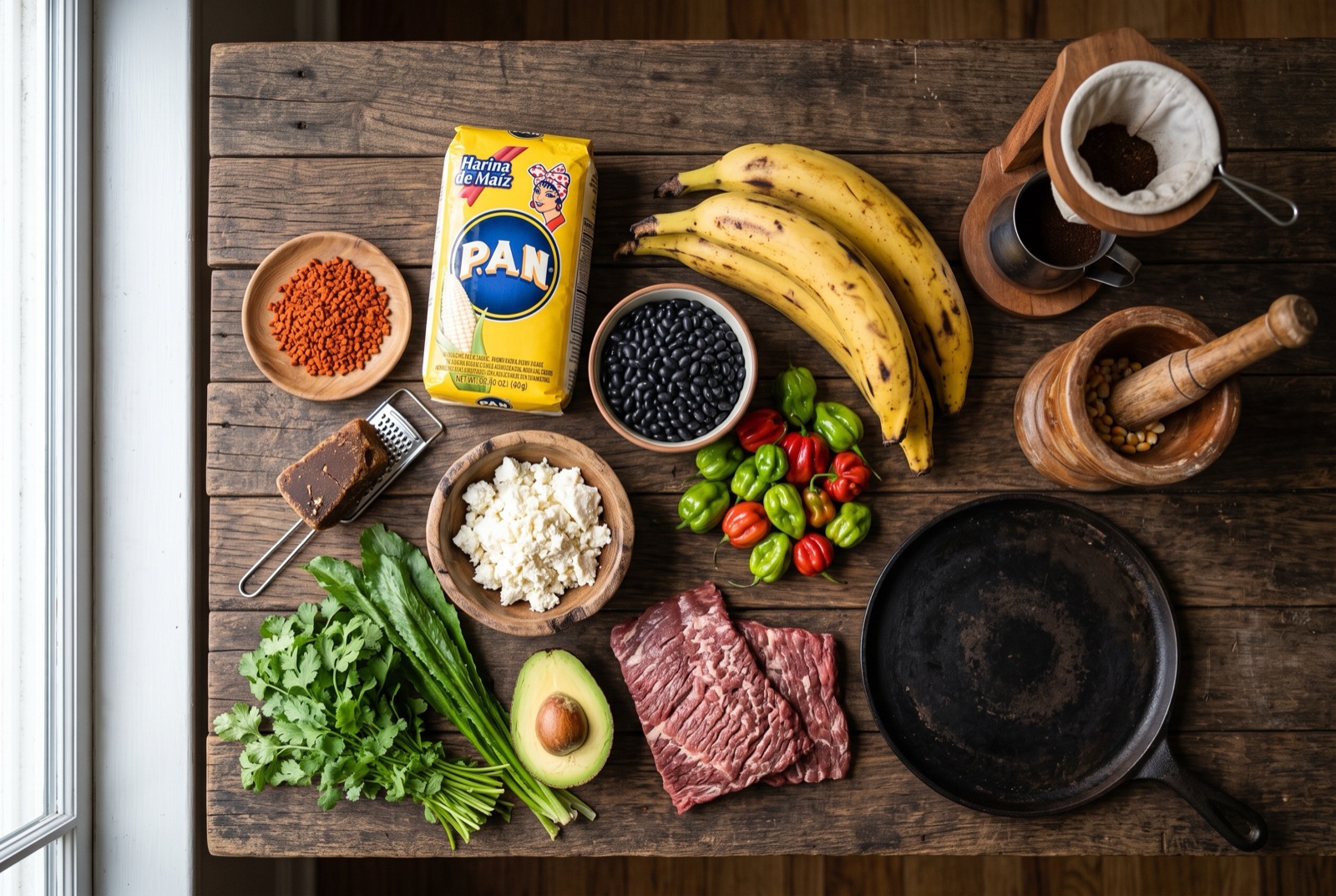
Venezuelan cooking is corn cooking, and the griddle matters more than the oven. A soft paste of precooked white corn flour and warm salted water becomes arepas at breakfast, empanadas at the beach, cachapa batter in corn season and hallaca dough at Christmas — one raw material carrying a whole calendar. Around that spine sits a kitchen that reads Caribbean rather than Andean: black caraotas, plantains used green for crunch and black-ripe for sweetness, unrefined cane sugar called papelón, and a chopped sofrito of onion, garlic, leek, scallion and sweet peppers softened in oil stained orange with annatto. The seasoning philosophy surprises people who expect Latin American food to bite. Venezuelan cooking is fragrant, faintly sweet and salt-forward rather than hot, because its signature chile — ají dulce, a wrinkled thumb-sized pepper related to the habanero — carries the perfume and almost none of the burn. Anyone who wants heat reaches for the bottle of picante already on the table. Fresh white cheese is eaten daily rather than saved for cooking, and a strip of fried plantain finishes plates that would otherwise be finished with bread.

- Continent
- South AmericaCaribbean Coast
- Recipes in atlas
- 10
- Must-try dishes
- 3
- Pantry staples
- 10
Start with the classics.
Must tryThe dishes that explain the Venezuela kitchen fastest — if you cook only a few things from this page, cook these.
Inside the Venezuela kitchen.
One industrial product reorganised the entire national kitchen. Until the middle of the twentieth century, making arepas meant soaking dried corn overnight, boiling it, pounding it in a wooden pilón and grinding the result — a job measured in hours and shared between hands. Precooked corn flour compressed that labour into five minutes of stirring, and it is now so ordinary that households measure the week in bags of it. It is not the same thing as Mexican masa harina: Mexican masa is nixtamalised in lime and tastes distinctly of it, while the Venezuelan flour is corn that has been cooked, dried and milled, which gives a milder, cleaner flavour and a softer, more elastic dough. The two are not interchangeable, and swapping them is the most common mistake made by cooks outside the country.
Almost every savoury dish starts with a guiso. Onion, garlic, leek, scallion, red pepper and ají dulce are chopped fine and softened slowly in oil that has been coloured by annatto seeds, then tomato goes in and the mixture cooks down until it no longer tastes raw. Nothing is browned aggressively and nothing is scorched; the goal is a sweet, aromatic, orange-tinted base that will carry shredded beef, fish, chicken or beans. Cilantro is used generously, and culantro — the long-leaved, stronger-smelling cousin — appears wherever cooks can find it.
Dairy is fresh rather than aged. Venezuelan cheeses are made to be eaten within days: queso de mano, a hand-stretched sheet that melts into strands inside a cachapa; queso guayanés, soft and slightly sour; queso telita, sold in stacked discs; and the very salty, very firm queso llanero and queso blanco duro that survive frying and grating. Nata, a thick cultured cream closer to clotted cream than to sour cream, is spread on arepas and spooned onto corn pancakes.
The day has a fixed shape. Breakfast is an arepa, an empanada or perico — eggs scrambled loose with tomato, onion and sweet pepper. Lunch is the substantial meal and is built as a plate rather than a course: rice, something braised in guiso, a contorno of salad or beans, and two or three slices of fried ripe plantain. Dinner is lighter and frequently means arepas again. December suspends all of it in favour of one enormous table — hallacas, pan de jamón, ensalada de gallina and slow-roasted pernil, eaten in the same combination for weeks and never considered repetitive.
Regionally, the country splits along altitude and coastline. The Andean states cook with potatoes, wheat, milk and trout and eat soup for breakfast; the central coast and Caracas produce the braises and the pastry-shop tradition; the llanos are cattle country, where beef is cooked on stakes over open fire and the cheese is aggressively salty; and the Caribbean east lives on fish, coconut and green plantain.
Signature pantry.
10 staplesThe ingredients this cuisine cannot function without.
- precooked white corn flour
- black beans (caraotas negras)
- plantains
- ají dulce
- annatto (onoto)
- papelón (unrefined cane sugar)
- fresh white cheese
- cilantro and culantro
- avocado
- beef
How people eat in Venezuela.
Lunch is the meal that counts, eaten between noon and two and served as one full plate rather than in courses. Cutlery is used for almost everything, but arepas, empanadas and tequeños are firmly hand food. Heat is a personal decision made at the table: bottles of picante and a bowl of guasacaca, the green avocado-and-herb sauce, sit beside the plates instead of going into the pot. Coffee runs through the whole day and is ordered by name — guayoyo long and weak, marrón with milk, negrito short and black — in cups that hold barely a mouthful. In December, trays of hallacas are carried to neighbours and relatives, and everyone quietly compares each family version against their own.
Regional kitchens.
Venezuela cooks 4 distinctly different ways depending on where you stand — here is what changes between them.
- R1Caracas and the central coast
- The braising and baking capital, home to asado negro, pan de jamón and the pastry counters that made tequeños a national party food. Cooking here is sweeter and more European-influenced than in the rest of the country.
- R2The Andes (Mérida, Táchira, Trujillo)
- Cold, high and dairy-driven: potatoes, wheat bread, trout, cured cheeses and pisca andina eaten at breakfast. Wheat flour appears where the lowlands would use corn.
- R3Los Llanos
- Cattle plains where beef is cooked slowly on stakes leaning over a wood fire, and where the hard, extremely salty queso llanero is made. Portions are large and seasoning is direct.
- R4Oriente and Isla de Margarita
- The Caribbean east, cooking fish, ray and shellfish with coconut, green plantain and a lighter hand with the guiso. Pastel de chucho and empanadas de cazón belong to this coast.
All Venezuela recipes.
10 recipes and counting
Venezuela1 hr
Arepa Reina Pepiada
Chicken and Avocado Stuffed Corn Pocket
Venezuela4 hr 10 min
Asado Negro
Caracas Beef Braised in Burnt Sugar
Venezuela50 min
Cachapas
Venezuelan Fresh Corn Pancakes with Melting Cheese
Venezuela17 hr
Hallacas
Venezuelan Christmas Corn Parcels in Banana Leaf
Venezuela3 hr 5 min
Pabellón Criollo
Venezuelan Shredded Beef, Beans and Plantain
Venezuela3 hr 45 min
Pan de Jamón
Venezuelan Christmas Ham, Olive and Raisin Loaf
Venezuela1 hr 55 min
Pastel de Chucho
Margarita Ray and Sweet Plantain Bake
Venezuela40 min
Pisca Andina
Mérida Potato, Milk and Egg Breakfast Soup
Venezuela5 hr 15 min
Quesillo
Venezuelan Caramel Milk Custard Full of Holes
Venezuela2 hr 35 min
Tequeños
Venezuelan Fried Cheese Sticks in Spiral Dough
Keep traveling.
Venezuela sits in Caribbean Coast, and its kitchen shares borders as well as ingredients with Argentina and Bolivia.
 Argentina
 Bolivia