Afelia.
Cypriot Pork Braised in Red Wine and Coriander
Αφέλια · say it: ah-FEH-lee-ah
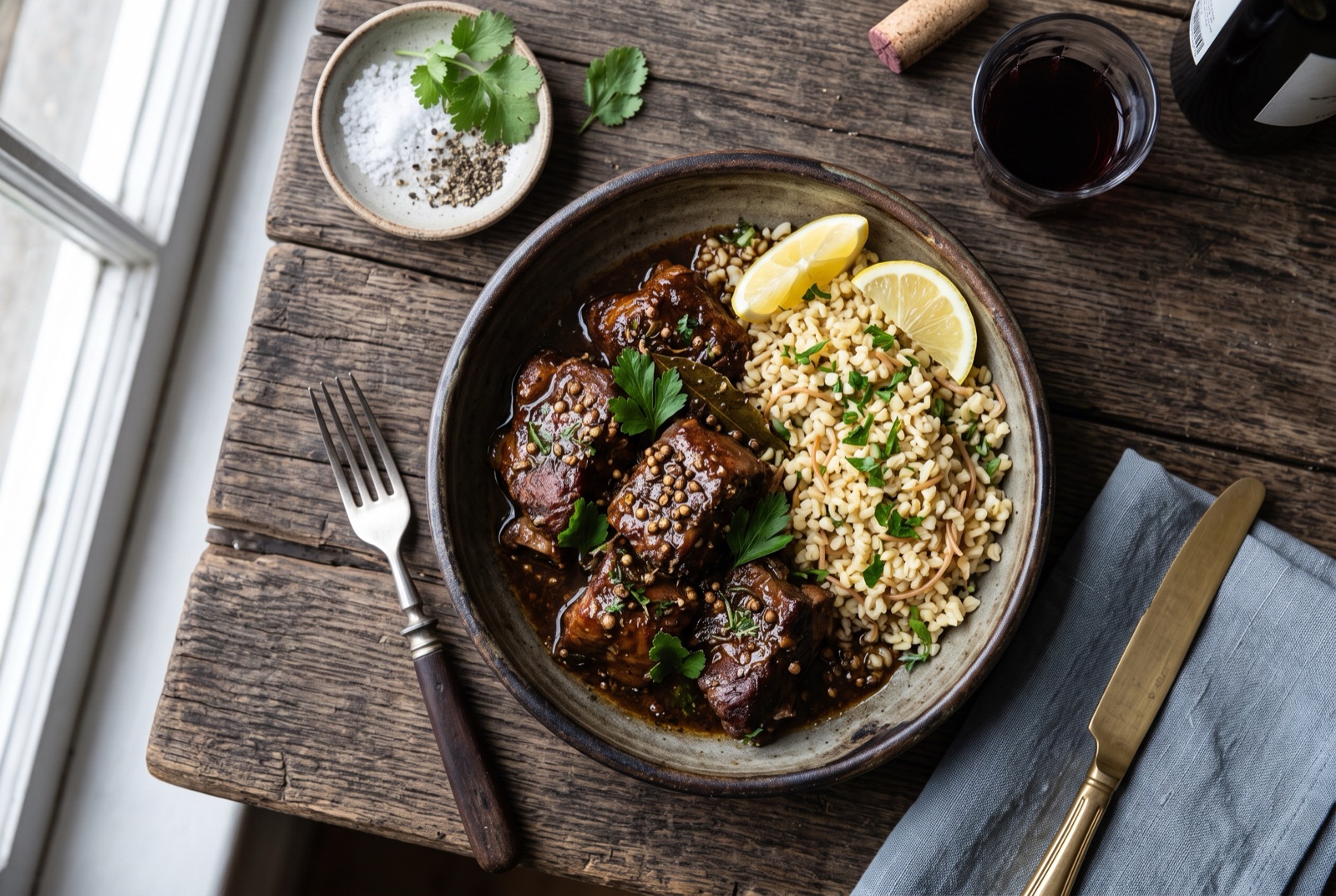
Afelia is cubed pork cooked in red wine and coriander seed until the liquid has almost entirely gone and what remains clings to the meat as a dark, glossy glaze. There are essentially four ingredients, and the dish lives or dies on one of them: coriander seed, cracked in a mortar rather than ground to dust, so it stays in warm citrusy fragments you actually bite. The taste is savoury and slightly sour from the wine, sweet where the meat has caramelised, and unmistakably perfumed. Cypriots make it on a weeknight without ceremony and serve it with pourgouri — cracked wheat pilaf — which soaks up the last of the glaze. It is the single dish that most clearly separates Cypriot cooking from Greek.

- Gate
- Cyprus
- Prep
- 20 min
- Cook
- 55 min
- Total time
- 9 hr 15 min incl. 8 hr rest
- Serves
- 4
- Status
- Easy
- Nutrition / serving · estimated
- Calories 520 kcal
- Protein 44 g
- Carbs 5 g
- Fat 32 g
- Sugar 2 g
Why this recipe works.
- Cracks the coriander seed coarsely instead of grinding it, which is the difference between fragrant afelia and dusty stew.
- Insists on drying and hard-browning the marinated pork — the step most home versions skip and most failures come from.
- Reduces the wine to a true glaze rather than leaving a thin sauce, which is how it is served in Cyprus.
- Includes the pourgouri pairing and the potato variation that turn it into a full Cypriot plate.
Ingredients.
10 itemsFor the marinade
For the braise
To serve
Equipment
- Mortar and pestle
- Wide heavy sauté pan or Dutch oven with a lid
- Non-reactive bowl for marinating
Instructions.
Marinate the pork
Put the pork cubes in a non-reactive bowl with the cracked coriander seed, black pepper and bay leaves, pour over 400 ml of red wine, and turn everything so the meat is submerged. Cover and refrigerate for at least 4 hours and ideally overnight — the pork will look dull maroon rather than pink when it has taken the wine.
Separate and dry
Lift the pork out with a slotted spoon and reserve the marinade, bay leaves and all. Spread the cubes on kitchen paper and blot them hard on every side until the surface is genuinely dry to the touch — this is the step that decides whether the finished dish glazes or stews.
Tip Some coriander fragments will stick to the meat. Leave them; they toast in the pan and taste better for it.
Brown in batches
Heat the olive oil in a wide heavy pan until it shimmers. Brown the pork in two or three batches with space around each cube, turning only when a deep russet crust has formed, about 3 minutes per side. Season with salt as each batch comes out and set the meat aside.
Tip If the pan starts to smoke or the fond blackens, pull it off the heat for 30 seconds — you want a dark brown base, not a burnt one.
Deglaze with the marinade
Add the garlic to the empty pan for 20 seconds, then pour in the reserved marinade and scrape the base hard with a wooden spoon until every brown patch has lifted and the liquid is deep red-brown. Let it bubble for 2 minutes to blow off the raw alcohol smell.
Braise until tender
Return the pork and any resting juices, bring to a gentle simmer, cover and cook for 40 minutes over low heat. The meat should give easily under a fork but still hold its cube shape, and the liquid will have dropped by about half.
Reduce to a glaze
Uncover, raise the heat and let the sauce reduce for 8 to 12 minutes, spooning it over the meat as it thickens. Stop when it coats the pork in a dark, syrupy film and only a spoonful or two pools at the base of the pan. Taste for salt, scatter with parsley and serve with lemon wedges.
Tip Watch it closely at the end — the gap between glossy glaze and burnt sugar is under a minute.
Tips from our kitchen.
- Crack the coriander seed in a mortar until it is in rough halves and quarters. Pre-ground coriander powder makes the sauce muddy and loses the citrus note entirely.
- Marinate overnight if you can, but at least four hours. The wine needs time to get past the surface of 3 cm cubes.
- Dry the meat aggressively with kitchen paper before browning. Wet pork steams, and steamed pork never builds the fond the sauce depends on.
- Brown in batches with space between the cubes. A crowded pan drops below searing temperature and you end up simmering in released juices.
- Use a wine you would actually drink but not an expensive one — a dry, dark, unoaked red. Oaky wines turn bitter as they reduce this far.
- Stop reducing while there is still a spoonful of syrupy sauce in the pan. Taken all the way to dry, the glaze catches and turns acrid within a minute.
Substitutions.
- Cypriot dry red wine → Any dry, medium-bodied red — a young Grenache, Merlot or Xinomavro
- Avoid heavily oaked reds and anything with residual sweetness; both distort badly once reduced to a glaze.
- Pork shoulder → Pork loin cubes, or rabbit
- Loin cooks faster and is leaner, so cut the braise to 30 minutes. Rabbit afelia is genuinely made in Cyprus and works with the same timings as pork.
- Whole coriander seed → Coarsely cracked coriander from a pepper mill on its widest setting
- Not ideal but workable. Ground coriander powder is the one thing to avoid — use two-thirds the quantity if it is genuinely all you have.
Variations.
- Patates afelia
- Baby potatoes cracked open with the flat of a knife, fried in olive oil until golden, then finished with red wine and coriander seed until the wine is absorbed. Served alongside the pork or on its own as meze.
- Manitaria afelia
- The mushroom version — whole button or wild mushrooms cooked the same way. Ready in 20 minutes and the standard vegetarian entry on a Cypriot meze table.
- Afelia with cinnamon
- Some households add a short stick of cinnamon to the braise, which rounds the wine's acidity. Purists in coriander country consider it an intrusion; it is common enough to be worth trying once.
Storage & reheating.
Afelia keeps 4 days refrigerated and is one of those braises that is better on day two, once the coriander has settled into the meat. Reheat gently in a covered pan with a tablespoon of water, since the glaze will have set solid in the fridge. It freezes well for 3 months — freeze it with slightly more sauce than you would serve, because reheating from frozen costs you liquid. Cold afelia sliced thin is excellent in a sandwich with yoghurt and rocket.
Serve with
Pourgouri — cracked wheat toasted with vermicelli and cooked in stock — plus a spoon of thick yoghurt to cut the wine's acidity.
The story behind Afelia.
Coriander seed is the island's fingerprint spice, and afelia is where that shows most plainly. Where a Greek cook reaches for oregano and a Turkish one for cumin, the Cypriot pantry has always held large quantities of whole coriander — used on olives, in sausages, on grilling meat and, above all, here. The pairing with wine is equally local: Cyprus has been making wine for something like five thousand years, and village reds, often rough and dark, were a cooking liquid long before they were a fine-dining pour. Marinating pork in wine also had a preserving function in a hot climate before refrigeration, which is likely how the technique settled in.
The word afelia describes a method more than a single dish. The same wine-and-coriander treatment is applied to potatoes — patates afelia, small potatoes cracked open with a knife so they absorb more, then fried and finished in wine — and to mushrooms, and each version turns up on a meze table alongside the pork. When a Cypriot menu says simply "afelia" it almost always means the pork, but a village table might carry all three at once.
Afelia also belongs to the island's pork culture, which is more central than outsiders expect for a place so often read as Levantine. The Greek Cypriot kitchen cures and preserves pork extensively — lountza, a wine-marinated smoked loin, and hiromeri, a pressed cured ham, are both close relatives of afelia in flavour, since they use the same wine and coriander logic in a longer form. That family resemblance is worth knowing, because if you like afelia you will recognise it immediately in a plate of grilled lountza with halloumi.
The method has one non-negotiable rule that home cooks routinely break: the meat must be dried thoroughly and browned properly after the marinade, before the wine goes back in. Skip that and you get boiled grey pork in purple liquid, which is edible and not remotely the same dish.
Questions, answered.
Why did my afelia turn out grey and watery?
The pork went into the pan wet. After marinating, the cubes must be lifted out and dried thoroughly with kitchen paper, then browned hard in batches so each piece takes colour. If you tip the meat and marinade into the pan together it simply simmers, and the sauce never develops the dark, glazed body afelia depends on.
Can I use ground coriander instead of whole seed?
It will taste of coriander, but it will not taste like afelia. Whole seed cracked in a mortar stays in fragments that release citrus aroma slowly during the braise and pop when bitten. Ground powder dissolves, dulls in long cooking and makes the sauce gritty. Use about two-thirds the volume if powder is truly all you have.
Do I have to marinate overnight?
Four hours gets you most of the way and overnight is better, but the dish is not ruined by a short marinade. If you are short on time, marinate for an hour at room temperature and add an extra splash of wine during the braise to compensate for the flavour the meat did not absorb beforehand.
What is the difference between afelia and other Cypriot pork dishes?
Afelia is defined by the combination of red wine and cracked coriander seed reduced to a glaze. Sheftalia are grilled minced-meat rolls wrapped in caul fat; lountza is a whole loin cured in wine and coriander then smoked and grilled. Afelia is the braised, everyday member of that family, and the fastest of the three to make.
What do I serve with afelia?
Pourgouri, the Cypriot cracked wheat pilaf, is the standard partner because it absorbs the glaze. Plain rice, boiled potatoes or good bread all work. A spoon of thick sheep's yoghurt on the side is common and useful, since the reduced wine is quite sharp and the yoghurt rounds it off.
You might also like.
All recipes →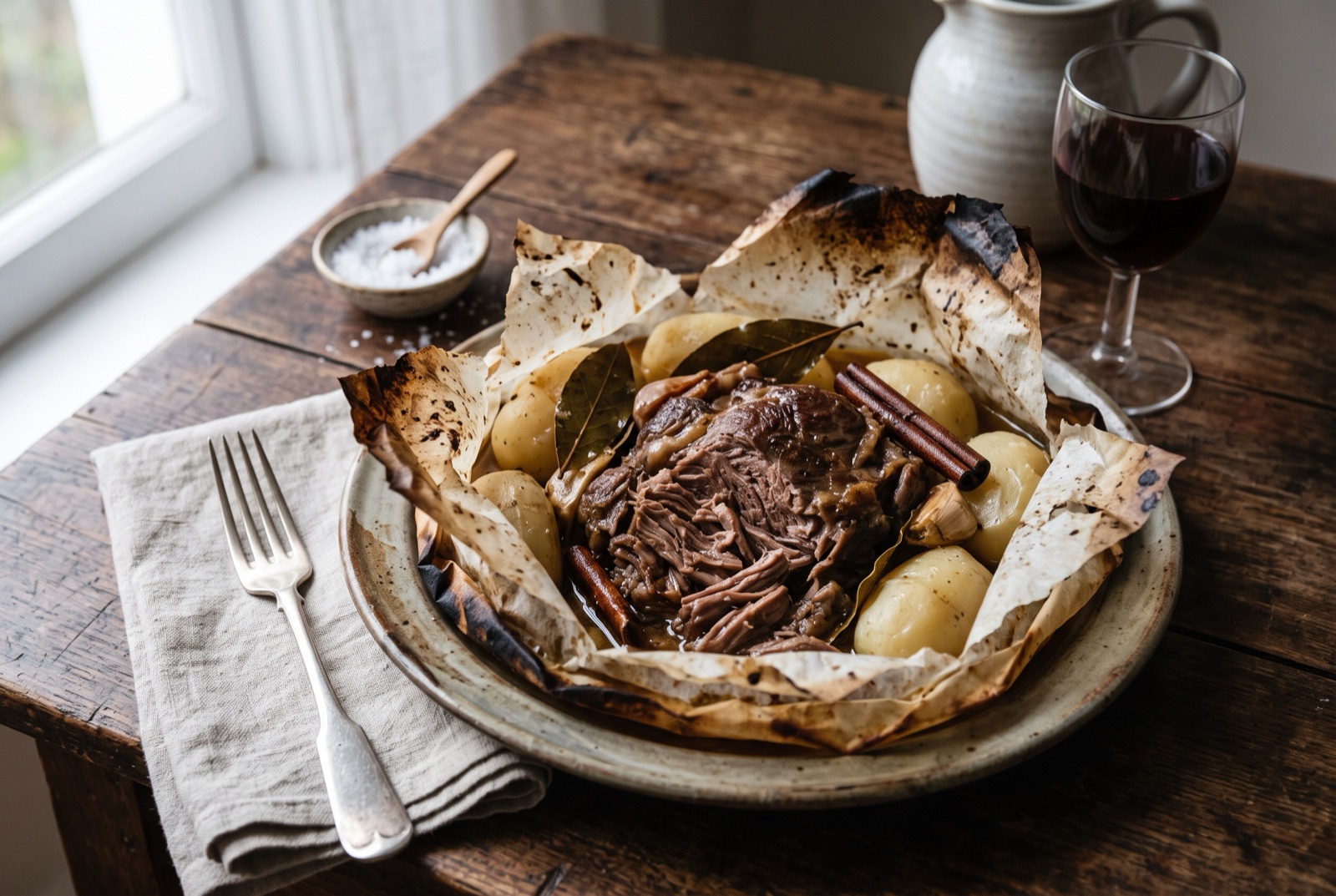
Cyprus5 hr 45 min
Kleftiko
Cypriot Lamb Slow-Baked in a Sealed Parcel
Cyprus2 hr 20 min
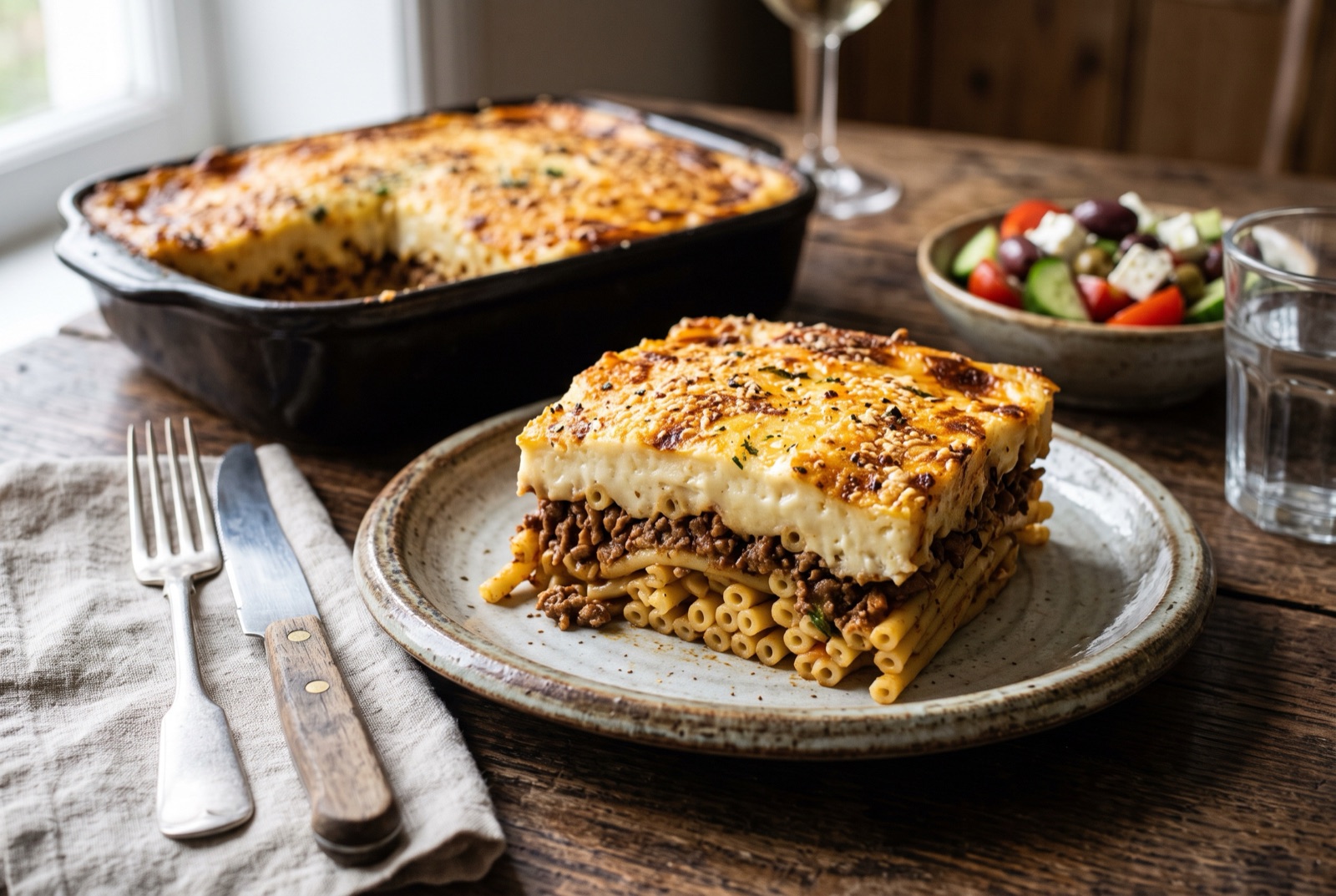
Makaronia tou Fournou
Cypriot Baked Pasta with Halloumi Béchamel
Cyprus16 min
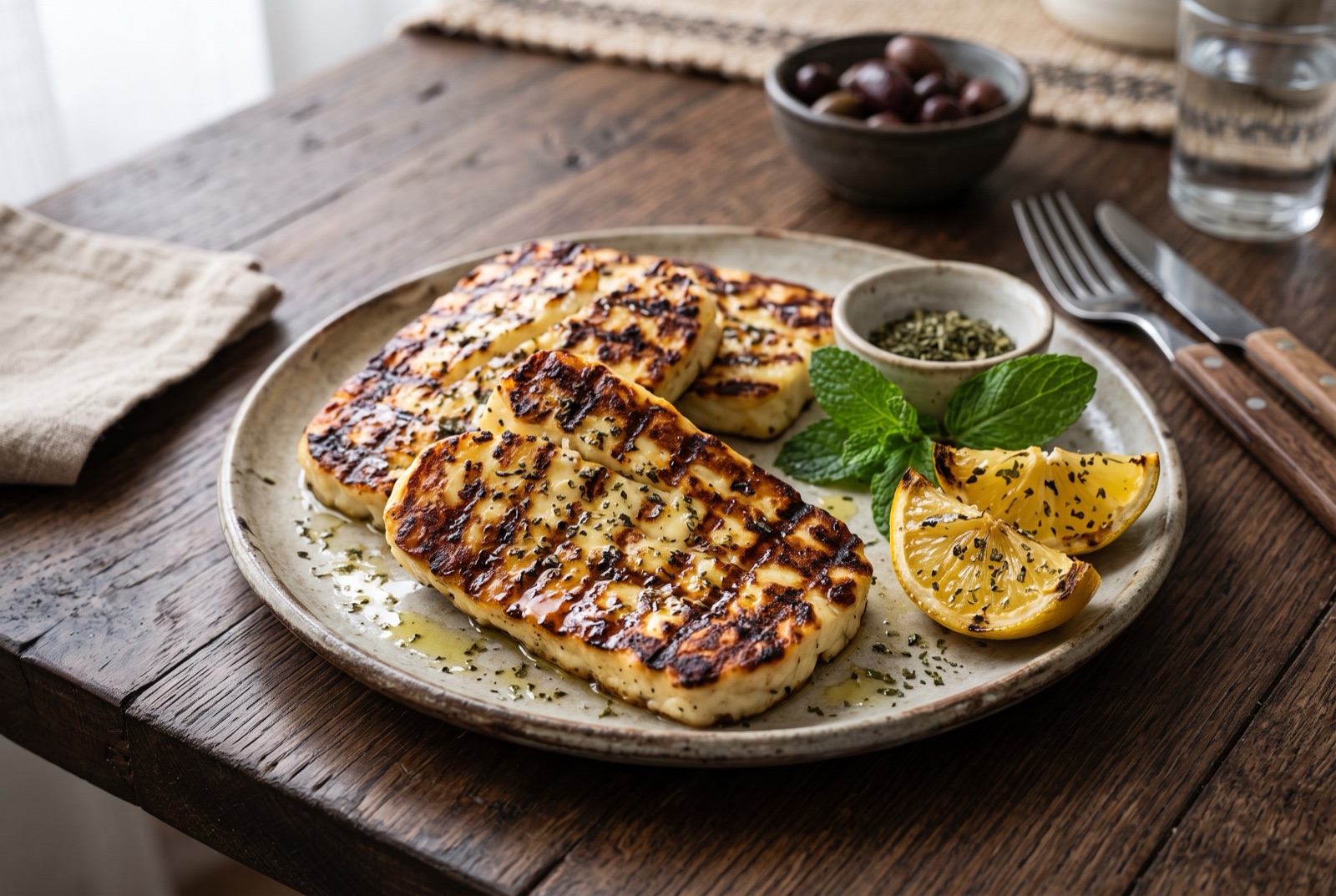
Halloumi sti Schara
Grilled Cypriot Cheese with Lemon and Mint
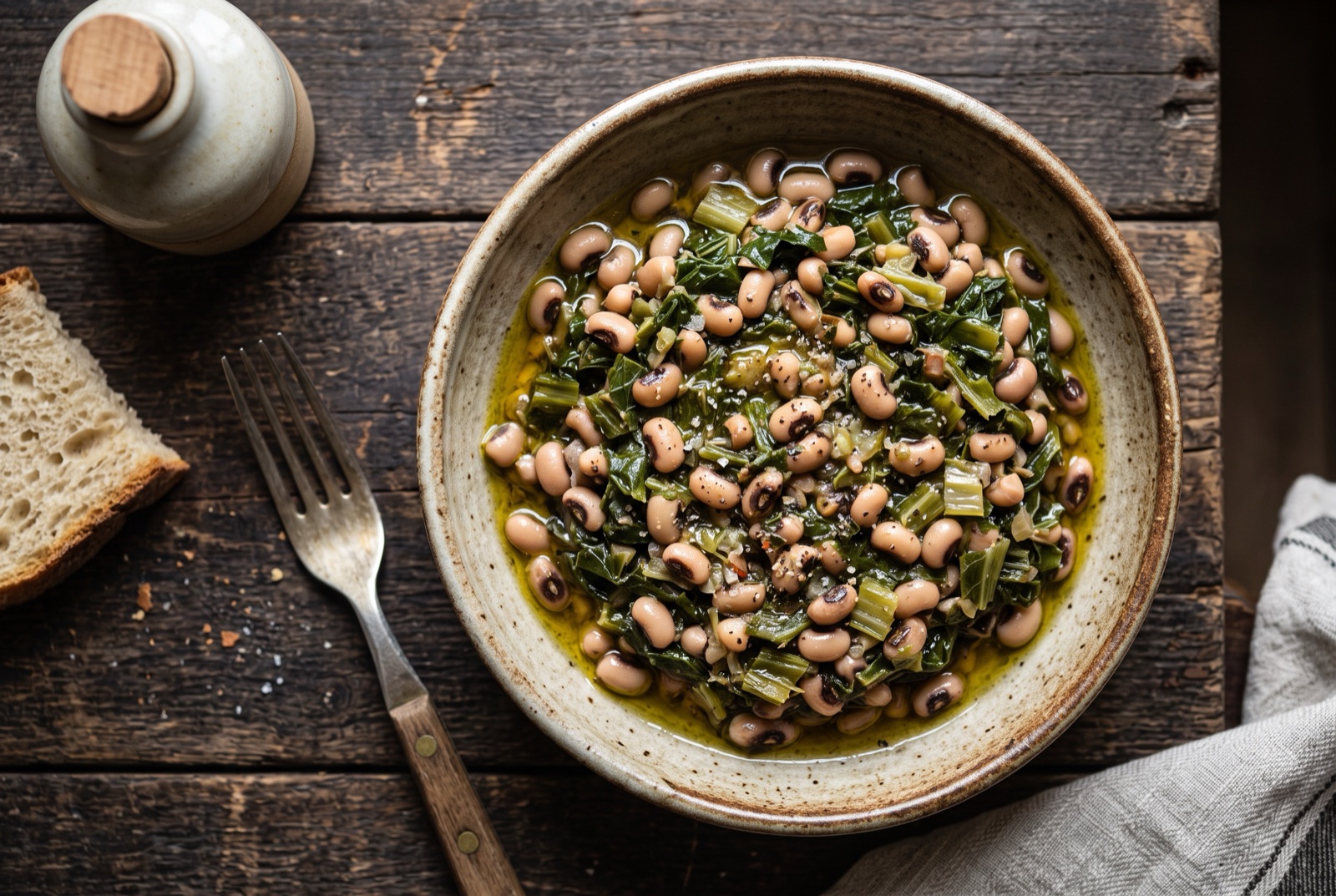
Cyprus1 hr 20 min
Louvi me Lahana
Cypriot Black-Eyed Peas with Chard
Keep exploring Cyprus.
Cyprus has 9 more dishes in the atlas — Daktyla and Flaounes, and 7 more.
Recipe by The DishRoute Kitchen · published August 20, 2026 · updated August 20, 2026