Badrijani Nigvzit.
Georgian Eggplant Rolls with Walnut Paste
ბადრიჯანი ნიგვზით · say it: bad-ri-JAH-nee NIG-vzeet
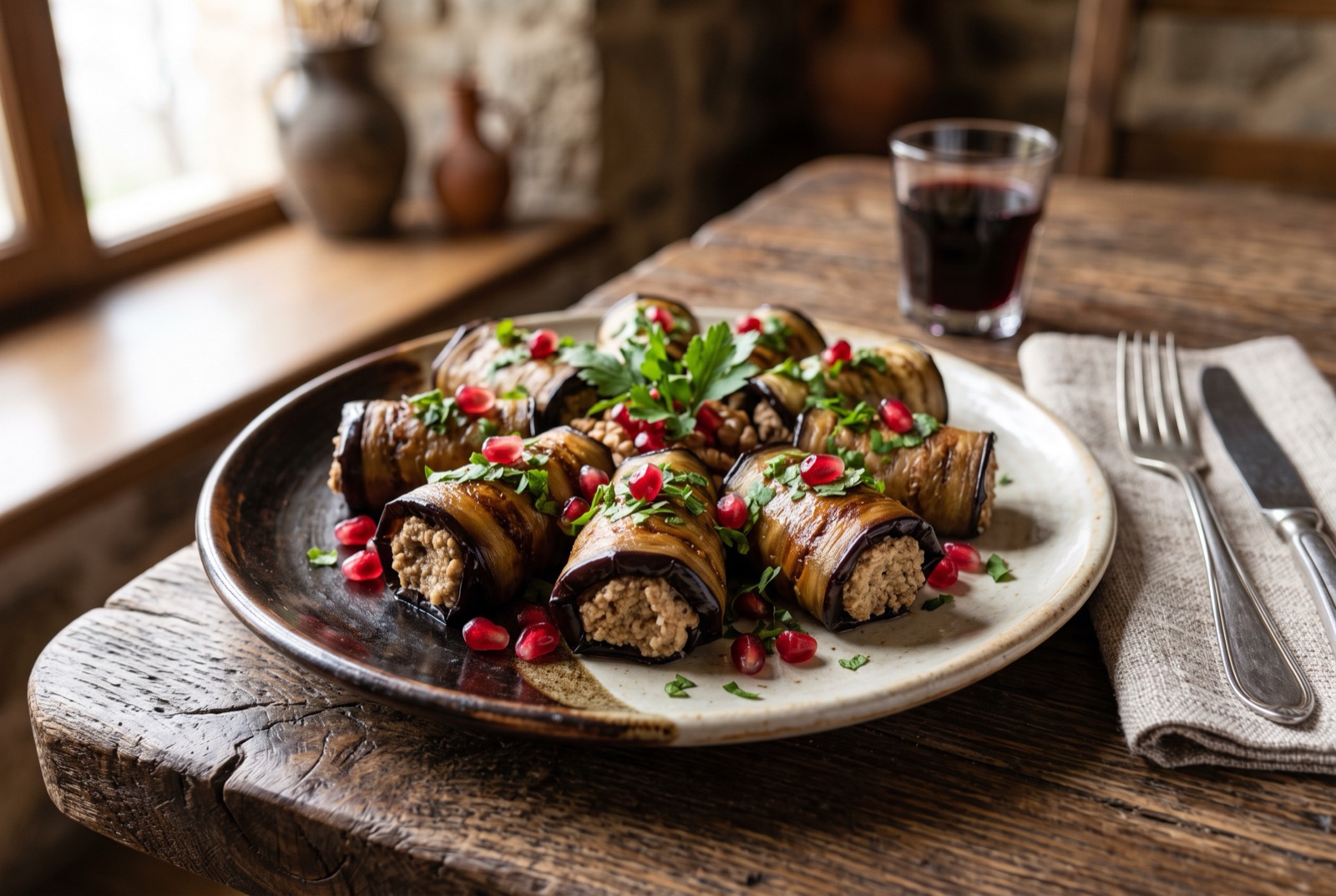
Badrijani nigvzit is aubergine and walnut paste, and the whole dish hangs on the contrast between them. Long slices of aubergine are fried until they are silky and deep gold, then cooled and rolled around a filling of ground walnuts, raw garlic, coriander and enough wine vinegar to make the paste taste bright rather than heavy. Chilled for an hour, the rolls firm up and the flavours stop being two separate things — the aubergine goes sweet and creamy, the filling stays sharp. Pomegranate seeds scattered over the top add pops of acid. They are eaten cold with the fingers or a fork, and they are on the table at essentially every Georgian gathering.

- Gate
- GeorgiaKakheti
- Prep
- 30 min
- Cook
- 25 min
- Total time
- 2 hr 25 min incl. 1 hr 30 min rest
- Serves
- 4
- Status
- Easy
- Nutrition / serving · estimated
- Calories 420 kcal
- Protein 10 g
- Carbs 18 g
- Fat 36 g
- Fiber 8 g
- Sugar 8 g
Why this recipe works.
- Salting is timed and explained, so the aubergine absorbs a fraction of the oil it otherwise would.
- The walnut filling is deliberately over-seasoned to account for how much the aubergine mutes it after chilling.
- A lighter oven method is given honestly, with what you gain and what you lose.
- Made entirely ahead — an hour in the fridge is a requirement, not a convenience.
Ingredients.
16 itemsFor the aubergine
For the walnut paste
To finish
Equipment
- Wide frying pan
- Food processor
- Wire cooling rack
- Colander
Instructions.
Salt the aubergine
Lay the slices in a colander, salting each layer as you go, and leave 30 minutes. Beads of water will collect on the surface and the slices will go slightly limp. Rinse briefly if they look heavily salted, then press them dry between kitchen towels.
Tip Dry slices are the difference between frying and deep-frying by accident.
Fry until silky
Heat a thin film of oil in a wide pan until it shimmers, then fry the slices in a single layer for 2–3 minutes a side, until they are deep gold, floppy and translucent at the edges. Add oil between batches only as needed and let it heat before the next slices go in.
Tip If a slice sits in the pan without sizzling, the oil is too cool and it will absorb everything.
Cool them flat
Lift the slices onto a wire rack in a single layer and leave until completely cool, at least 20 minutes. Stacking them or resting them on paper traps steam, and steamed aubergine tears the moment you try to roll it.
Make the walnut paste
Pulse 250 g of walnuts with the garlic until they form a damp paste that clumps around the blade. Add the fresh coriander, ground coriander, blue fenugreek, marigold, chilli, vinegar, grated onion and salt and pulse again to a thick green-flecked paste.
Loosen and over-season
Beat in the cold water a spoonful at a time until the paste is soft enough to spread but still holds a ridge from the spoon. Taste it: it should be aggressively garlicky and sharp, a step past comfortable, because the aubergine will flatten it considerably.
Roll
Lay a cooled slice flat, spread a heaped teaspoon of paste over the front two thirds, and roll it up from the narrow end, keeping it snug but not tight enough to squeeze the filling out. Set each roll seam down on a plate.
Chill, then finish
Cover and refrigerate at least 1 hour so the rolls firm up and the garlic settles. Just before serving, scatter over the pomegranate seeds and coriander leaves — add them earlier and the seeds bleed pink into the paste.
Tips from our kitchen.
- Slice the aubergines lengthways about 6–7 mm thick. Thinner slices tear when rolled; thicker ones stay firm in the middle and will not curl.
- Salt the slices for 30 minutes and pat them properly dry. Wet aubergine spits in the oil and soaks up far more of it.
- Get the pan genuinely hot before the first slice goes in. Aubergine dropped into warm oil absorbs it instead of frying in it.
- Cool the slices completely on a rack, not on kitchen paper — trapped steam makes the undersides soggy and they will tear as you roll.
- Loosen the walnut paste with cold water a spoonful at a time until it is spreadable but still holds its shape. Stiff paste splits the aubergine as you roll.
- Season the filling until it tastes slightly too sharp on the spoon. After an hour in the fridge with the aubergine, it will be exactly right.
Substitutions.
- Fried aubergine → Brush the slices with oil and roast at 220°C for 20–25 minutes, turning once
- Much less oil and far less work at the stove, but the slices are drier and lack the caramelised edges. Roast until floppy and clearly browned or they will not roll.
- Red wine vinegar → Pomegranate molasses, or 2 tbsp pomegranate juice
- Fruitier and less aggressive. Use about half again as much, and taste, since pomegranate molasses brings sweetness the vinegar does not.
- Blue fenugreek and marigold → 1½ tsp khmeli suneli
- A reasonable one-jar answer. Skipping the Georgian spices entirely still leaves a good garlic-walnut roll, just a more generically Mediterranean one.
Variations.
- Nigvziani badrijani with fresh herb layer
- A layer of coriander and dill leaves laid on the aubergine before the paste, so each roll has a green stripe through it. Common in Tbilisi restaurants.
- Aubergine and walnut salad
- Skip the rolling: fry the aubergine in cubes and toss with the same walnut paste and pomegranate. Faster, less pretty, and what people actually make on a weeknight.
- Badrijani with sulguni
- A modern restaurant version with a thin slice of brined cheese rolled in alongside the walnut paste. Not fasting food any more, but very good.
Storage & reheating.
Badrijani keeps 3 days refrigerated in a covered container and the flavour deepens by the second day. Keep them in a single layer if you can — stacked rolls press flat and the filling squeezes out. Add the pomegranate seeds only at the last minute, because they bleed pink juice and go soft overnight. Do not freeze: aubergine turns to mush on thawing and the walnut paste separates into oil and grit.
Serve with
Part of a cold Georgian table with pkhali, pickles and bread, or on their own with a glass of dry amber wine.
The story behind Badrijani Nigvzit.
This belongs to the Georgian cold table, the standing spread of dishes that arrives before anything hot and stays put for the rest of the night. Badrijani sits next to pkhali, pickled jonjoli and cheese, and it comes from the same logic: walnut paste as a way of making vegetables substantial enough to carry a meal, developed in a country where the Orthodox fasting calendar removed meat and dairy from the table for months at a time each year.
Aubergines arrived in Georgia from Persia and took hold most firmly in Kakheti, the eastern wine region, where the summers are hot enough to grow them well. The name is plain: badrijani is aubergine, nigvzit means with walnut. There is no folklore attached and nobody claims a founding story — it is simply a good use of two things that grow in the same place, and it spread across the country on merit.
The cooking argument is about the aubergine. Frying gives the best texture, full stop: the slices go silky and take on a caramelised edge that grilling and baking do not reproduce. The cost is oil, and aubergine drinks it in astonishing quantities if you let it. Georgian cooks salt the slices first to draw out water and firm the flesh, which reduces absorption significantly, and they fry in a hot pan rather than a moderate one so the surface seals before the interior can act like a sponge. Baking or griddling is a legitimate lighter alternative and many home cooks now use it — the rolls are still good, just less rich and slightly drier. What matters more than the cooking method is the filling: it should taste noticeably sharp and garlicky on its own, because the aubergine will mute it considerably once they are rolled together and chilled.
Questions, answered.
How do I stop the aubergine soaking up so much oil?
Salt the slices for 30 minutes, which draws out water and collapses the spongy cell structure, then dry them thoroughly. Fry in a properly hot pan so the surface sets immediately, and add oil in small amounts between batches rather than flooding the pan at the start. Roasting instead of frying cuts the oil further if that is the priority.
My rolls keep tearing. What am I doing wrong?
The slices are either too thin, undercooked, or still warm. They need to be floppy enough to bend without cracking, which means frying until they are properly soft, and completely cool before rolling. Aim for 6–7 mm thick slices, and start the roll from the narrow end with the filling spread only on the front two thirds.
Can I make badrijani nigvzit ahead of time?
You should — an hour in the fridge is part of the recipe, not a convenience. The rolls firm up so they hold their shape, and the garlic in the filling loses its raw bite. They are at their best made in the morning for the evening, or even the day before, with the pomegranate added just before serving.
What can I use instead of walnuts?
Nothing reproduces walnut properly here — its particular oiliness and slight bitterness are the point, and almonds or cashews give a sweet, flat filling. If nuts are off the table entirely, roll the aubergine around a garlicky white bean purée instead, which is a different dish but works on the same principles.
Do I need to peel the aubergines?
No, and you should not. The skin holds each slice together during frying and rolling, and without it the flesh collapses into a paste when you try to roll it. Just trim the stem end and slice lengthways, discarding the two outermost slices that are mostly skin.
You might also like.
All recipes →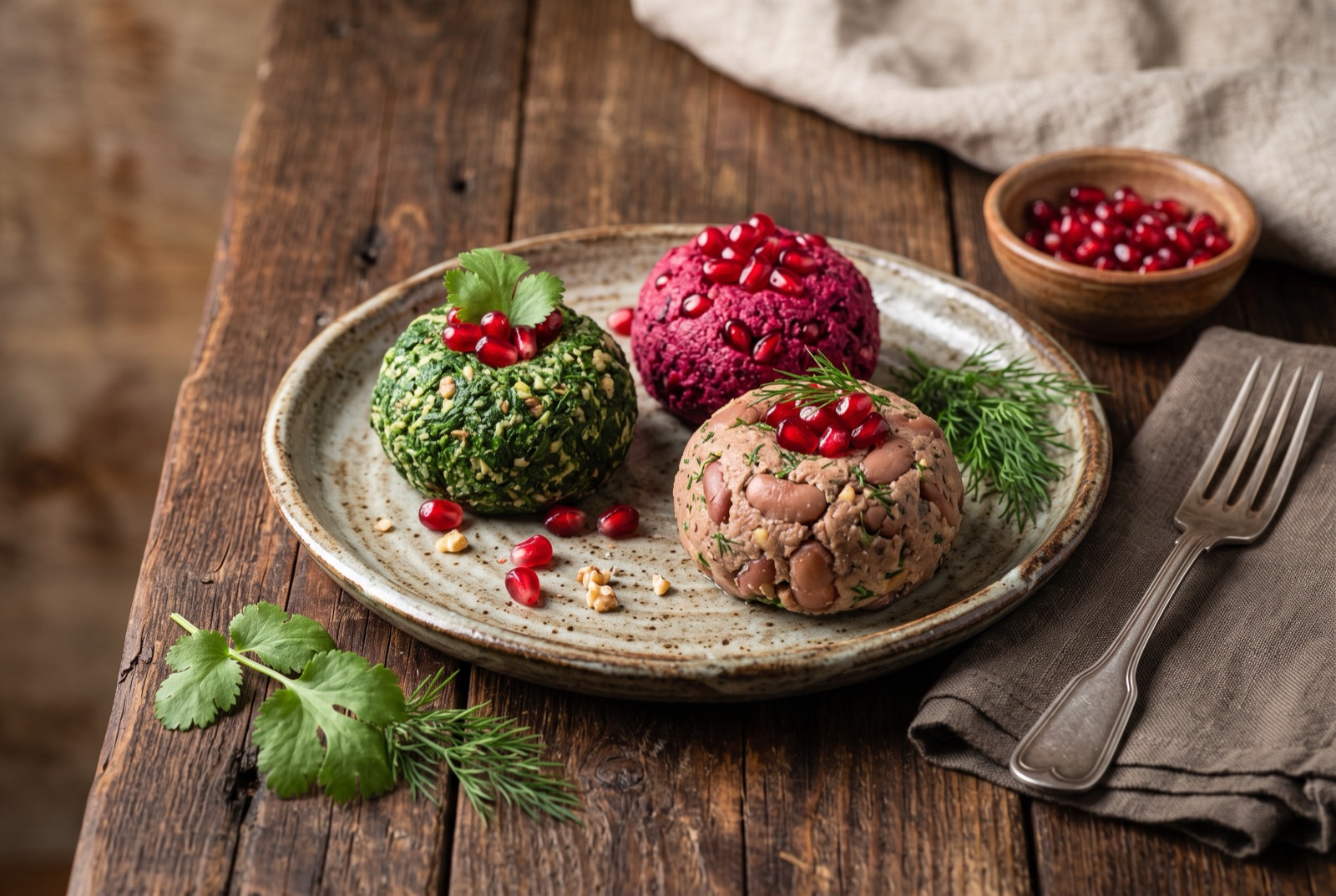
Keep exploring Georgia.
Georgia has 9 more dishes in the atlas — Adjarian Khachapuri and Chakhokhbili, and 7 more.
All Georgia recipes Eggplant recipes Walnuts recipes Garlic recipes appetizerveganvegetariangluten freedairy freeRecipe by The DishRoute Kitchen · published August 20, 2026 · updated August 20, 2026