Lozovi Sarmi.
Bulgarian Vine Leaf Rolls with Rice and Mint
Лозови сарми · say it: LOH-zoh-vee SAR-mee
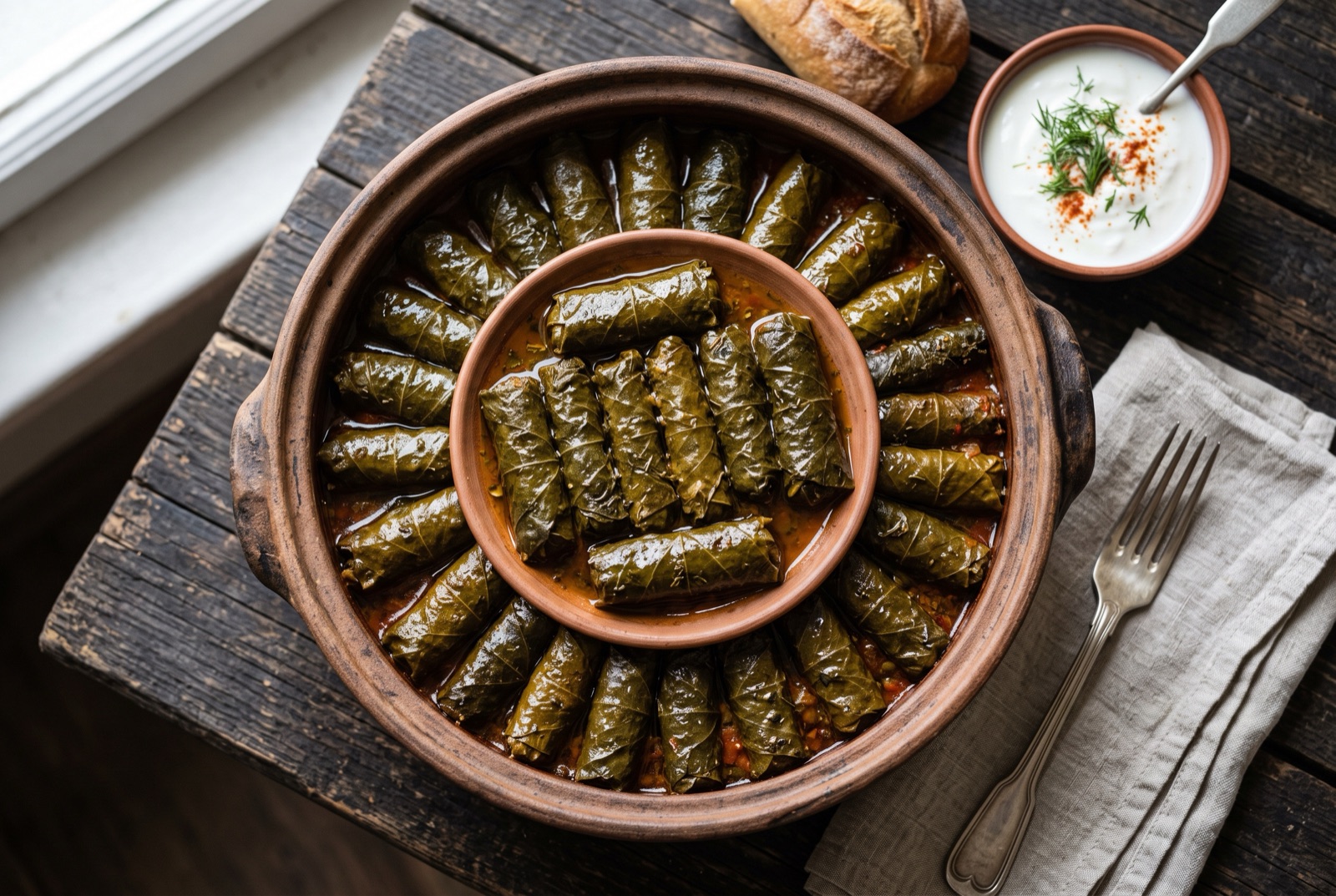
Lozovi sarmi are vine leaves rolled around a filling of rice, softened onion, mint, savory and parsley, then packed shoulder to shoulder in a pot, weighted with a plate and simmered until the rice swells and the leaves go dark and tender. Eaten warm they are savoury and herbal, with a lemony sourness from the leaves themselves; eaten cold, which is how the meatless version is usually served, they firm up and taste cleaner and more strongly of mint. The rolling looks fiddly and is not — after four or five you find the rhythm, and the whole batch takes about half an hour of hands-on work.

- Gate
- Bulgaria
- Prep
- 45 min
- Cook
- 1 hr
- Total time
- 2 hr 5 min incl. 20 min rest
- Serves
- 6
- Status
- Medium
- Nutrition / serving · estimated
- Calories 340 kcal
- Protein 6 g
- Carbs 46 g
- Fat 15 g
- Fiber 4 g
- Sugar 4 g
- Sodium 540 mg
Why this recipe works.
- Pre-cooks the onion and half-cooks the rice, so the filling is seasoned through instead of tasting like boiled grain.
- Uses the upturned plate on top of the pot — the traditional weight that stops the rolls unwinding as they simmer.
- Seasons with dried mint and savory in Bulgarian proportions rather than the Greek dill-and-lemon profile.
- Covers both the Lenten version served cold and the meat version served hot with yoghurt.
Ingredients.
14 itemsFor the rolls
For the filling
For the pot
Equipment
- Wide heavy pot with a lid
- Heatproof plate that fits inside the pot
- Frying pan
Instructions.
Prepare the leaves
Rinse brined leaves thoroughly under running water, then soak them in warm water for 15 minutes and drain. If using fresh leaves, blanch them in boiling water for 30 seconds until they turn olive green and go floppy. Trim off any hard stems.
Cook the filling base
Warm two-thirds of the oil in a frying pan and cook the chopped onions over medium-low heat for 12 minutes, until completely soft and translucent with no raw bite left. Stir in the spring onions and the paprika off the heat.
Tip Undercooked onion stays crunchy inside the roll and tastes raw even after an hour in the pot.
Half-cook the rice
Add the rinsed rice to the onions with 150 ml of water and cook, stirring, for about 5 minutes until the water is absorbed and the grains are swollen but still chalky in the centre. Take off the heat and fold in the mint, savory, parsley, dill, salt and pepper. Let it cool enough to handle.
Roll the sarmi
Lay a leaf shiny side down with the stem end towards you, put a teaspoon of filling in a short line near the stem, fold the bottom over it, fold both sides in, and roll up firmly into a cigar about the width of your thumb. Repeat, keeping the rolls loose enough that the rice has room to swell.
Tip If a leaf tears, patch it with a second small leaf rather than throwing it out.
Pack the pot
Line the base of a wide heavy pot with torn or leftover leaves, then pack the rolls seam side down in tight concentric circles, building a second layer if needed. Trickle the remaining oil and the lemon juice over the top and press an upturned heatproof plate down onto them.
Simmer slowly
Pour the hot water down the side of the pot until it just covers the plate, bring to a gentle simmer, then cover and cook on the lowest heat for 50 to 60 minutes. They are ready when a roll cut in half shows fully soft rice and the leaves have turned dark olive and silky.
Tip The liquid should barely move. A rolling boil pushes the rolls apart even under the plate.
Rest and serve
Take the pot off the heat, leave the plate in place, and let the sarmi stand for 20 minutes so they absorb the last of the liquid and firm up. Serve warm with yoghurt, or cool them completely and serve at room temperature with lemon wedges.
Tips from our kitchen.
- Choose leaves the size of your palm. Big ones are tough and need trimming; tiny ones tear and take forever to roll.
- Rinse brined leaves under running water and then soak them in warm water for 15 minutes. Skip this and the finished sarmi are inedibly salty.
- Put about a teaspoon of filling on each leaf, no more. Rice roughly doubles in the pot, and overfilled rolls burst along the seam.
- Roll shiny side out and matt, veined side in. The rolls hold their shape better and look right on the plate.
- Line the bottom of the pot with torn or damaged leaves. They sacrifice themselves so the good rolls do not scorch.
- Weight the rolls with an upturned heatproof plate before the liquid goes in — it is the single trick that keeps them from unravelling.
Substitutions.
- Fresh vine leaves → Jarred vine leaves in brine, rinsed and soaked
- Available in any Middle Eastern or Balkan shop and used in Bulgaria too. They are firmer and more sour than fresh leaves, so ease back on the lemon at the end.
- Vine leaves entirely → Blanched cabbage leaves or chard leaves
- Cabbage gives you a different dish closer to winter sarma; chard is closer in texture to vine leaves but much more delicate, so roll gently.
- Dried summer savory → Dried thyme with an extra pinch of black pepper
- Savory is peppery and slightly bitter. Thyme alone is milder, so the extra pepper compensates for what is missing.
Variations.
- Sarmi with minced pork
- The non-fasting version: half minced pork, half rice in the filling, simmered the same way and served hot with a spoonful of thick yoghurt on top.
- Christmas Eve sarmi
- Strictly vegan, made with generous oil, extra onion and often a handful of raisins or chopped walnuts, served cold as part of the Badni vecher table.
- Sarmi with sour cabbage
- Rolled in leaves of whole fermented cabbage instead of vine leaves — the winter dish, sharper and sturdier, usually cooked with smoked pork.
Storage & reheating.
Sarmi keep 4 days refrigerated in their cooking liquid and are widely considered better on the second day, once the herbs have settled into the rice. The Lenten version is meant to be eaten cold or at room temperature, so leftovers need nothing more than taking out of the fridge an hour ahead. To serve them warm, reheat gently covered with a little of their liquid rather than in a microwave, which dries the leaves. They freeze well for 3 months packed tightly with their liquid; thaw overnight in the fridge.
Serve with
Thick yoghurt or a lemon wedge, plus bread — and rakia if this is the Christmas Eve table.
The story behind Lozovi Sarmi.
Stuffed leaves belong to the entire eastern Mediterranean, and every country in that arc makes a version with a claim on it: dolma in Turkey, dolmades in Greece, warak enab in the Levant, yaprak sarma across the Balkans. The Bulgarian branch takes its name from sarma, from the Turkish sarmak, to wrap, and distinguishes itself mainly by seasoning — dried mint and chubritsa rather than the dill-and-lemon signature of the Greek version, and rarely any cinnamon or currants. Nobody owns the dish and the arguments over it are old and unproductive.
What is specifically Bulgarian is the calendar. The Orthodox fasting periods, which cover a substantial part of the year, exclude meat, dairy and eggs, and the meatless vine leaf sarma is one of the pillars of that cooking. Made with only rice, onion, herbs and oil, it appears at Christmas Eve dinner — the strictly fasting meal on 24 December — alongside beans, stuffed peppers and nuts. Outside the fasts, the same rolls are made with minced pork and rice and served hot with yoghurt, and Bulgarians treat these as two different dishes that happen to share a wrapper.
The leaves matter more than anything else. Fresh vine leaves are picked in late May and June, when they are palm-sized, pale green and pliable; older leaves toughen and develop hard veins that no amount of simmering fixes. Households with a vine blanch and freeze bags of them, or salt them into jars, which is why sarmi appear all year. Jarred brined leaves from a shop are a completely respectable substitute — they need a good rinse and a soak to get the salt out, and they are usually slightly thicker and more sour than fresh, which is not a bad thing in a dish that wants acidity.
Questions, answered.
Where do I get vine leaves and what size should they be?
Brined leaves in jars are sold in Middle Eastern, Greek, Turkish and Balkan grocers and keep for a year in the cupboard. If you are picking your own, take them in late spring while they are palm-sized, soft and pale green — older summer leaves are tough and stringy no matter how long you cook them. Blanch fresh leaves for 30 seconds in boiling water before rolling.
Why did my sarmi unroll in the pot?
Almost always because there was nothing holding them down. Pack the rolls tightly in concentric circles so they support each other, then press an upturned heatproof plate on top before adding the liquid. The plate stops them floating and turning in the simmering water. Loose packing and a hard boil rather than a bare simmer are the other two causes.
Should sarmi be served hot or cold?
Both are correct, and it depends on the filling. The meatless Lenten version, with rice, herbs and oil, is traditionally served cold or at room temperature with a lemon wedge, and it firms up and tastes cleaner that way. Versions made with minced pork are served hot with yoghurt. Reheating cold vegetarian sarmi is not wrong, just less usual.
How much filling goes in each leaf?
About a teaspoon for a palm-sized leaf, laid in a short line near the stem end. It looks like too little, but rice roughly doubles in volume as it cooks and absorbs liquid, and overfilled rolls split along the seam and spill into the pot. If your first roll bursts during cooking, use less in the next batch rather than rolling tighter.
Can I make these vegan?
The version here already is — rice, onion, herbs and oil, with no dairy or meat anywhere. This is not an adaptation but the standard Bulgarian fasting recipe, eaten during Orthodox Lent and on Christmas Eve. Serve it with lemon rather than yoghurt, and use a generous hand with the sunflower oil, since there is no other fat carrying the flavour.
You might also like.
All recipes →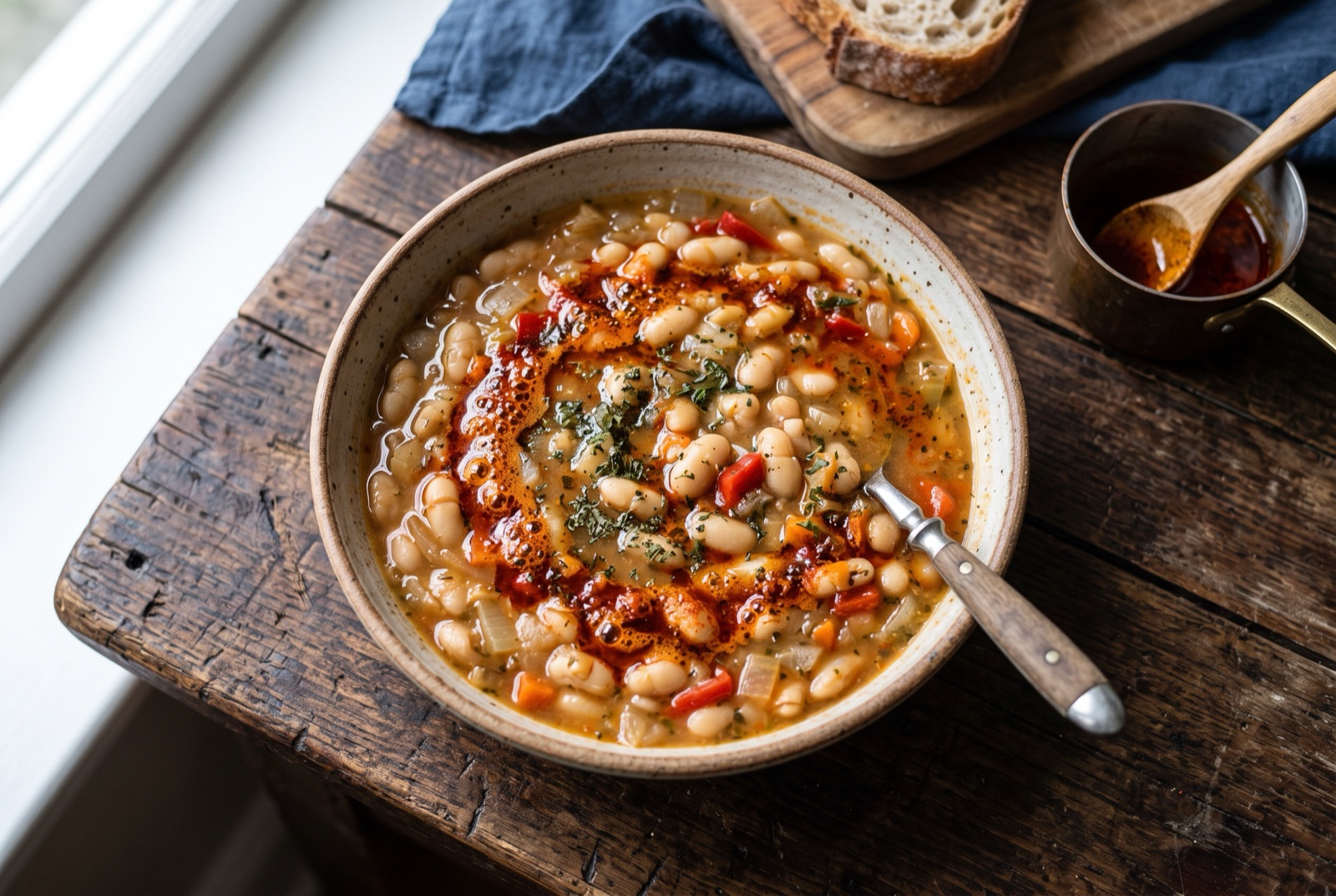
Bulgaria10 hr 10 min
Bob Chorba
Bulgarian Bean Soup with Savory and Mint

Bulgaria8 hr 40 min
Kyufte
Bulgarian Grilled Cumin and Savory Meat Patties
Bulgaria1 hr 45 min
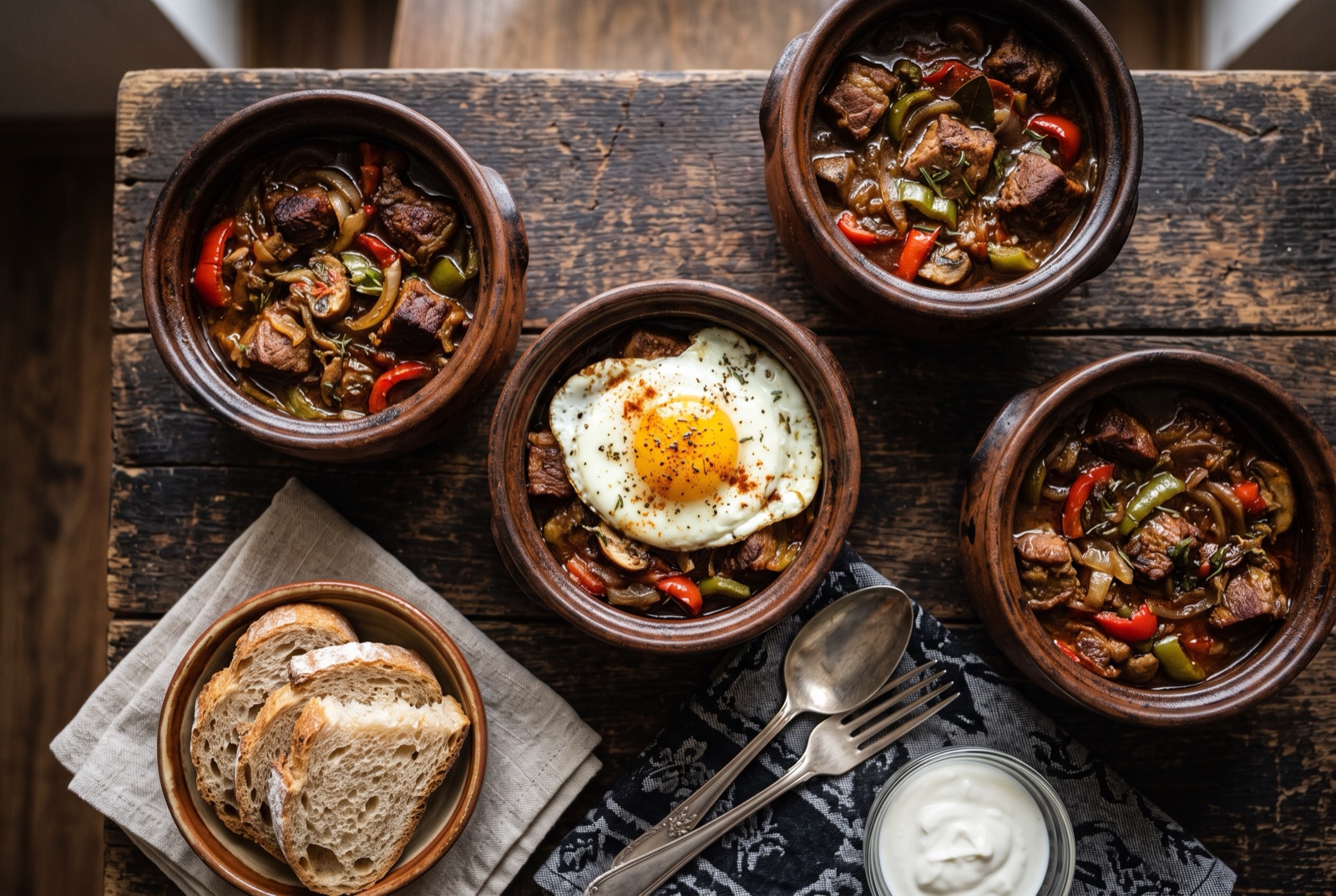
Kavarma
Bulgarian Clay-Pot Pork and Pepper Stew
Bulgaria25 min
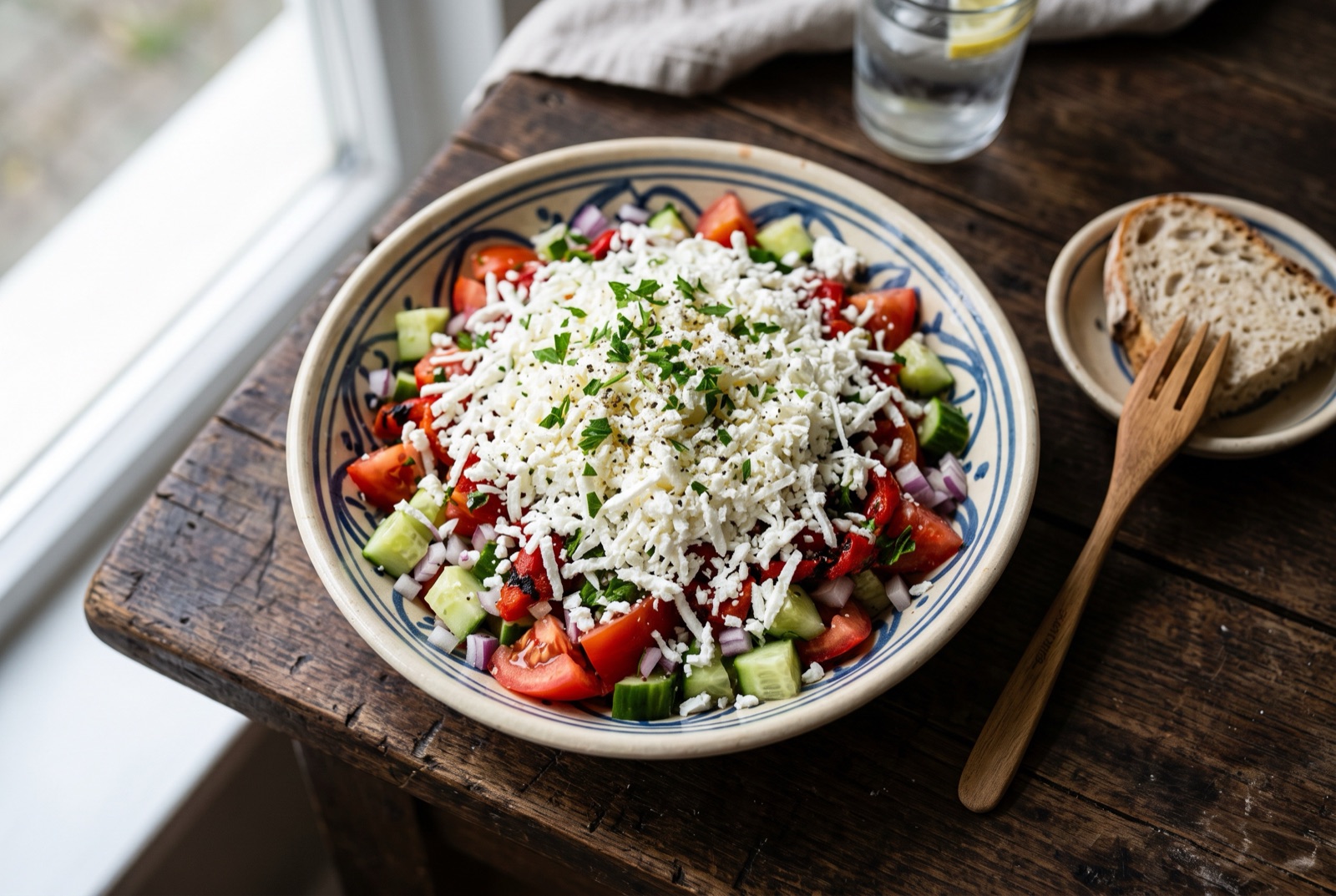
Shopska Salata
Bulgarian Tomato, Cucumber and Sirene Salad
Keep exploring Bulgaria.
Bulgaria has 9 more dishes in the atlas — Banitsa and Bob Chorba, and 7 more.
All Bulgaria recipes Rice recipes Onion recipes Mint recipes mainappetizerveganvegetariangluten freedairy freeRecipe by The DishRoute Kitchen · published August 20, 2026 · updated August 20, 2026