Chakhchoukha.
Biskra Torn Flatbread in Lamb Sauce
شخشوخة · Chakhchoukha biskria · say it: shakh-SHOO-kha
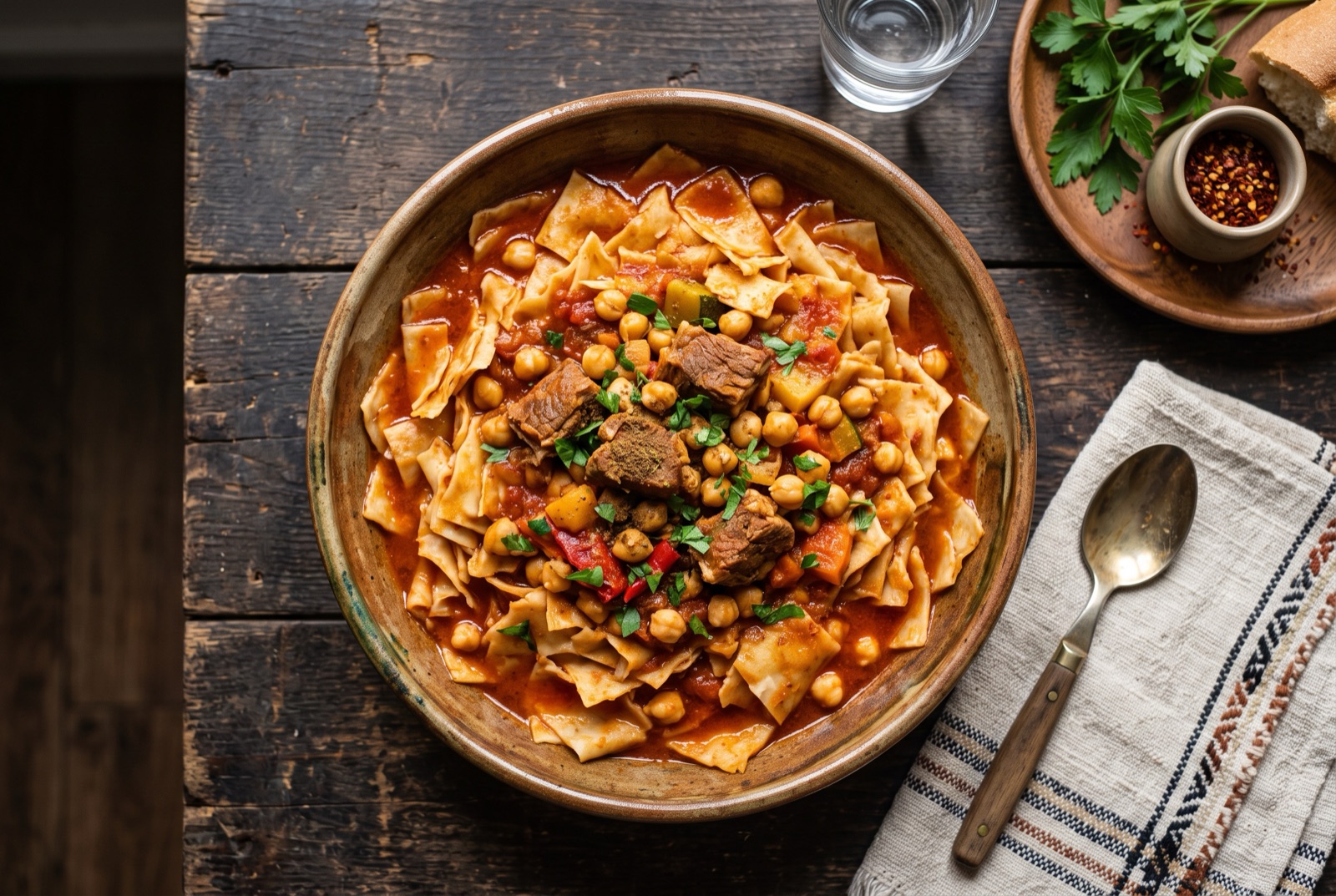
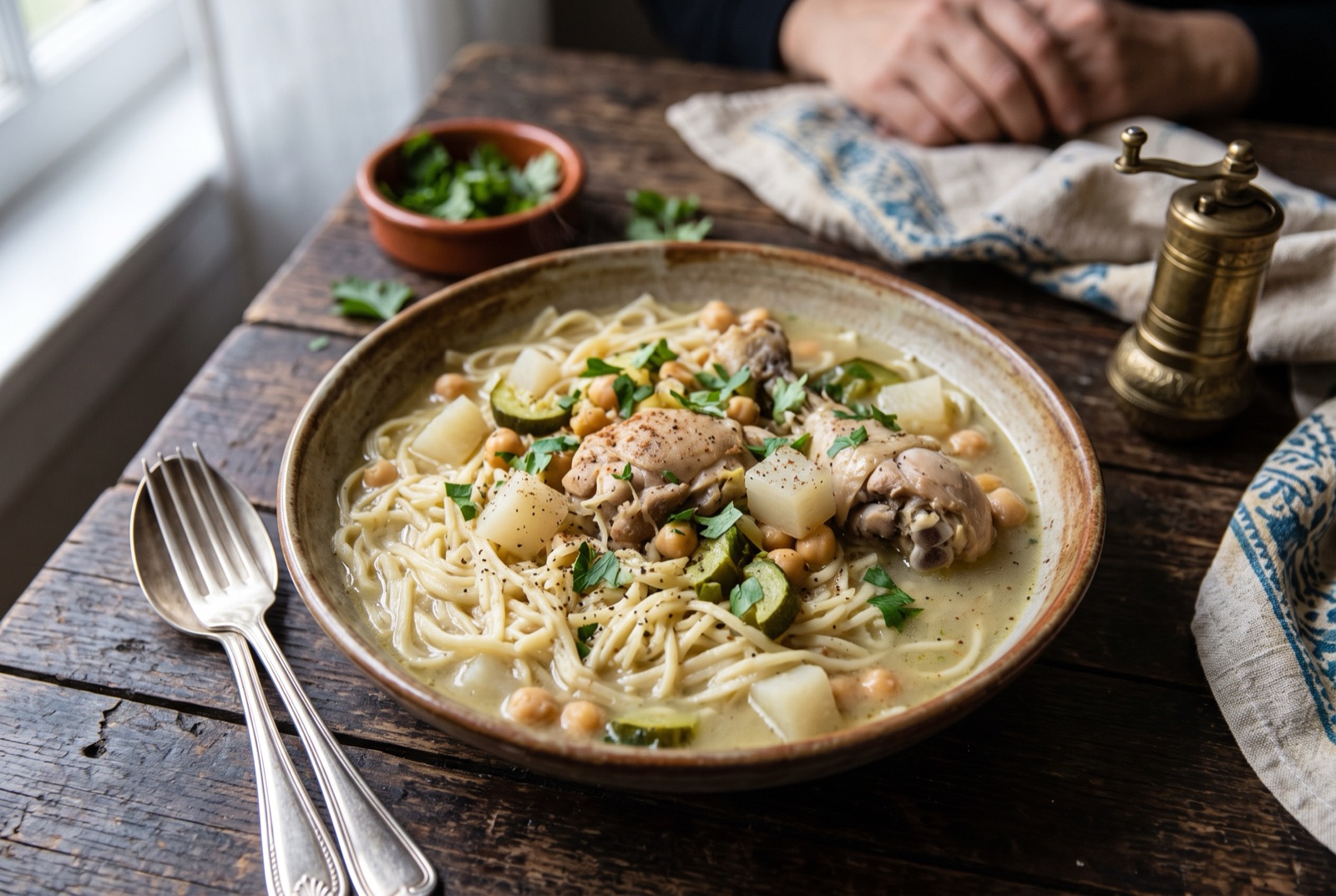
Chakhchoukha is torn flatbread eaten with a spoon. Thin unleavened semolina galettes called rougag are cooked dry on a hot plate, ripped by hand into small ragged pieces, steamed until they turn pliable, then flooded with a deep red lamb sauce heavy with paprika, tomato and chickpeas. The bread does not dissolve — it swells and holds, so every mouthful is soft, saucy and slightly chewy at once, with lamb fat and warm spice running through it. It takes real work: two doughs of patience, a griddle session, a steamer and a long simmer. It also feeds a table of six generously and is the dish Biskra puts out for guests.

- Gate
- AlgeriaBiskra and the Aurès
- Prep
- 1 hr 10 min
- Cook
- 1 hr 30 min
- Total time
- 3 hr 10 min incl. 30 min rest
- Serves
- 6
- Status
- Takes skill
- Nutrition / serving · estimated
- Calories 660 kcal
- Protein 33 g
- Carbs 78 g
- Fat 24 g
- Fiber 9 g
- Sodium 780 mg
Why this recipe works.
- Rougag made from scratch with the oiling and stretching described properly, not a shortcut using tortillas.
- The bread is steamed before saucing, which is what stops it turning to mush the moment liquid hits it.
- A red sauce built the Biskra way — tomato paste fried out first, paprika added off the boil so it does not scorch.
- Includes an honest shortcut path for a weeknight, and says exactly what you lose by taking it.
Ingredients.
21 itemsFor the rougag
For the red sauce
Equipment
- Heavy flat pan or tajine plate
- Steamer basket or colander with a lid
- Large heavy pot
- Wide platter for serving
Instructions.
Mix and rest the rougag dough
Combine the semolina, flour and salt, then add warm water gradually and knead for 10 minutes until you have a soft, tacky dough that stretches rather than tears. Oil the surface, cover, and rest for 30 minutes so the semolina fully hydrates and slackens.
Tip If the dough springs back hard when pulled, it is too dry. Wet your hands and knead the water in.
Stretch and cook the galettes
Oil your hands and the worktop. Divide the dough into eight balls and flatten each one out with your palms into a disc roughly 25 cm across and thin enough to be slightly translucent. Cook one at a time on a dry, hot flat pan for about 40 seconds a side, until it turns opaque and puffs in blisters but stays pale. Stack the finished galettes and let them cool completely.
Tip Patch any hole by pinching the edges together and pressing flat again — the galette will be torn up anyway.
Build the red sauce
Heat the oil in a large pot over medium, add the grated onion and cook for 8 minutes until soft and pale gold. Add the lamb and garlic and turn until the meat is sealed on all sides, then push the meat aside, add the tomato paste and fry it for 2 minutes until it darkens to brick red and smells sweet.
Simmer
Lower the heat, stir in the paprika, harissa, ras el hanout and black pepper and immediately pour in the water so the paprika does not scorch. Add the grated tomato, cinnamon stick and a teaspoon of salt, bring to a simmer and cook covered for 50 minutes, until the lamb is tender enough to press apart with a spoon.
Add the vegetables and chickpeas
Add the carrots, courgette and chickpeas and simmer uncovered for 20 minutes more. The sauce should reduce to a pourable consistency with a clear rim of orange fat around the edge of the pot, and taste sweet from the tomato with a slow paprika warmth behind it.
Tear and steam the bread
Tear the cooled galettes by hand into ragged pieces about the size of a thumbnail — a knife gives you neat squares that behave badly, so use your fingers. Pile them into a steamer over simmering water and steam for 8–10 minutes, until they turn from stiff and papery to pliable and warm through.
Dress and serve
Tip the steamed bread into a wide bowl, ladle over just enough sauce liquid to moisten it, and toss with a spoon until every piece is coated but the mixture is not swimming. Spread it across a large platter, hollow out the centre, and pile the lamb, carrots, courgette and chickpeas into the well with more sauce poured over. Serve immediately.
Tips from our kitchen.
- Work the rougag dough much softer than bread dough — it should be tacky and stretchy, closer to a batter you can just about handle. Dry dough will not stretch thin enough.
- Oil your hands and the worktop instead of flouring them. Flour makes the galette tear; oil lets it slide and spread.
- Cook the galettes only until they turn opaque and blister in spots, about 40 seconds a side. Browning makes them brittle and they refuse to soften later.
- Tear the bread while it is fully cool and slightly dry. Warm rougag stretches and shreds instead of breaking into clean small pieces.
- Add paprika off direct heat and stir it into liquid within seconds. It burns fast and turns the whole sauce bitter and grey.
- Sauce the bread just before serving, not in advance. Chakhchoukha left to sit turns from tender to sodden in about twenty minutes.
Substitutions.
- Homemade rougag → Shop-bought msemen or plain flour tortillas, dried out in a low oven then torn
- A real compromise rather than an equal. Tortillas are leavened and enriched, so they go soft faster and taste of themselves. If you use them, steam for half the time and sauce at the very last moment.
- Lamb shoulder → Chicken thighs, or beef chuck
- Chicken cuts the simmer to 30 minutes and makes a lighter dish. Beef chuck needs closer to two hours before the chickpeas go in.
- Harissa → Half a teaspoon of chilli flakes, or leave it out
- The sauce should be warm rather than hot. Traditionally the heat sits on the side of the platter so each person adjusts their own portion.
Variations.
- Chakhchoukha beida
- The white version, made without tomato or paprika — onion cooked pale, cinnamon and pepper for seasoning, and the sauce thickened only by chickpeas. Common in parts of the Aurès and much gentler in flavour.
- Chakhchoukha with dried meat
- Made with khlii or sun-dried lamb instead of fresh, which was the original preserving-season version. Deeply savoury, considerably saltier, and needs no extra salt in the sauce.
- Trid
- The Aurès cousin, where the galettes are torn into larger squares and layered rather than mixed through, so the bread stays in identifiable sheets under the sauce.
Storage & reheating.
Undressed rougag keeps a week in an airtight bag at room temperature and freezes for three months, which is why cooks make big batches. The sauce keeps four days refrigerated and improves. Assembled chakhchoukha does not keep — the bread continues absorbing and by the next day it is a paste. Store the two components separately and combine only what you will eat.
Serve with
Buttermilk (lben) in a tall glass, and a small dish of harissa thinned with a spoon of the sauce.
The story behind Chakhchoukha.
This is southern and eastern Algerian food, most strongly claimed by Biskra at the gateway to the Sahara and by the Chaoui Amazigh communities of the Aurès mountains above it. It belongs to a wide Maghreb family of dishes built on torn or shredded bread under sauce — Moroccan rfissa and trid, Tunisian versions under related names, Libyan ones too — and arguments about which town or which people invented the format are not resolvable and mostly serve local pride. What is specific to Biskra is the fineness of the tearing, the red paprika-driven sauce rather than a pale one, and the insistence that the bread be steamed rather than simply doused.
The name causes confusion abroad. Chakhchoukha sounds very close to chakchouka, the Maghrebi pepper-and-tomato dish that reached English as shakshuka, and the two are unrelated in every practical sense: one is a bread dish under meat sauce, the other is peppers and eggs in a pan. The shared root has to do with tearing and mixing, which describes what the cook does to the rougag rather than what ends up on the plate.
Making rougag is the part that separates a serious cook from a casual one. The dough is worked with oiled hands until it is soft enough to stretch, then flattened out on a greased surface into a disc so thin it is nearly translucent, and cooked briefly on a hot tajine plate — the flat clay griddle used across Algeria — until it dries and blisters without browning. In many families the galettes are made in a batch by several women at once, since the work goes faster with more hands and the tearing afterwards is genuinely sociable. Traditionally the finished dish is served on a single large platter, the sauce poured into a well in the centre, and everyone eats from their own segment of the rim inward.
Questions, answered.
What is rougag and can I buy it?
Rougag is an unleavened semolina galette stretched paper-thin and cooked dry on a flat plate, used specifically for tearing into dishes like this one. North African grocers sometimes stock it dried, often labelled as chakhchoukha bread or rougag, and it rehydrates perfectly in a steamer. Failing that, making it at home is time-consuming but requires no special equipment beyond a heavy flat pan.
Why does my chakhchoukha turn to mush?
Two usual causes: the galettes were torn too large so they collapse under their own weight when soaked, and the dish was assembled too early. Tear the bread roughly to the size of a thumbnail, steam it only until pliable rather than soft, and pour the sauce over at the table. The bread should still have a slight resistance when the first spoonful is eaten.
Is chakhchoukha the same thing as shakshuka?
No, despite the near-identical names. Shakshuka, from the same Maghrebi root, is a pan of peppers and tomatoes with eggs cracked into it. Algerian chakhchoukha is torn flatbread under a meat sauce and has no eggs at all. The two are regularly mixed up online, so recipes labelled one way sometimes describe the other.
Can I make this ahead for guests?
Partly, and that is how it is normally managed. Make the rougag up to several days early and keep it bagged, and cook the sauce a day ahead so it deepens. On the day you only need to tear, steam and assemble, which takes about twenty-five minutes and is the part that must happen fresh.
Do I need a couscoussier to steam the bread?
Any steamer works, including a metal colander set over a pot of simmering water with a lid on top. The torn bread only needs a few minutes of moist heat to go pliable, so the setup matters far less than it does for couscous. Line the basket with a cloth if the holes are large enough for pieces to fall through.
You might also like.
All recipes →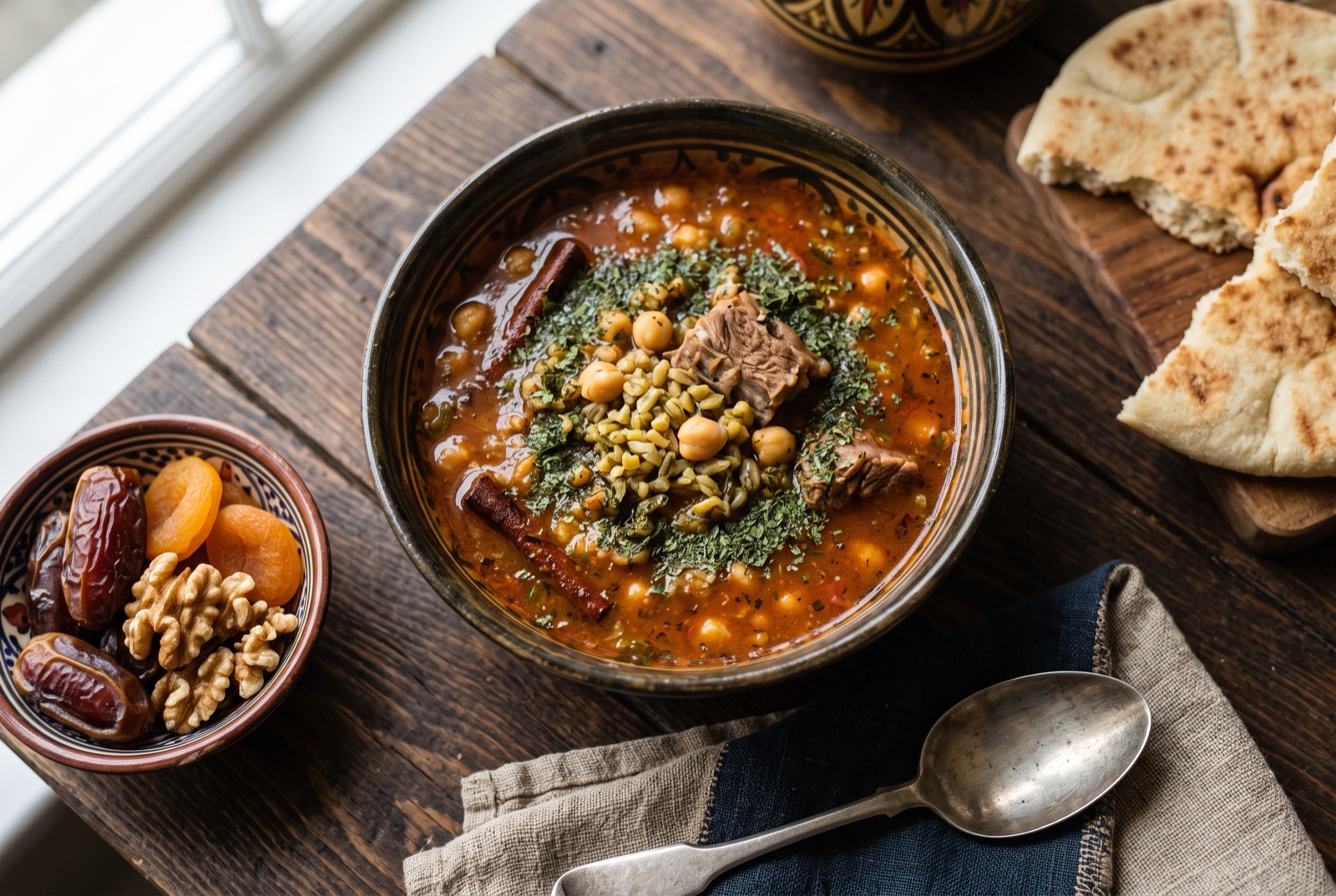
Keep exploring Algeria.
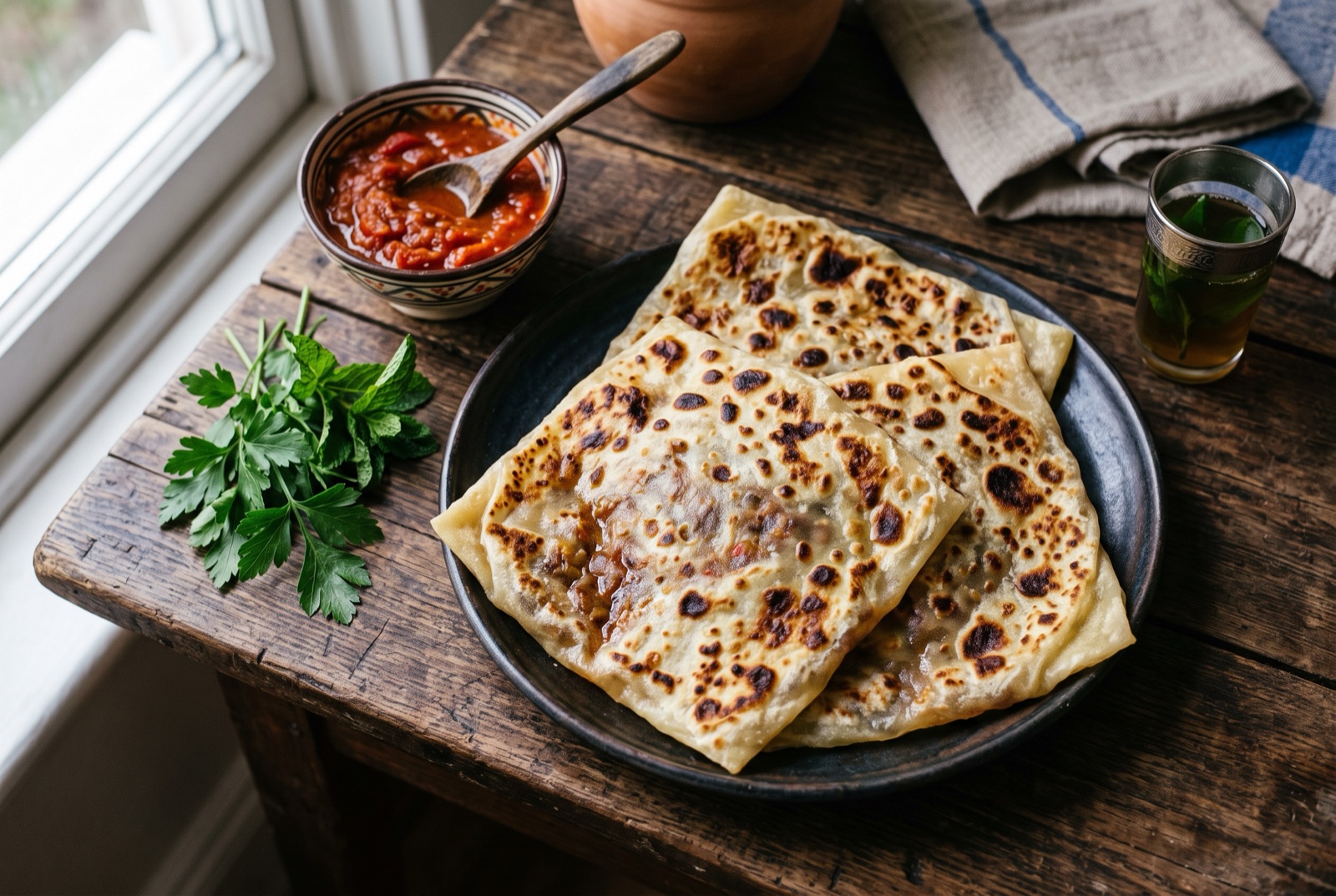
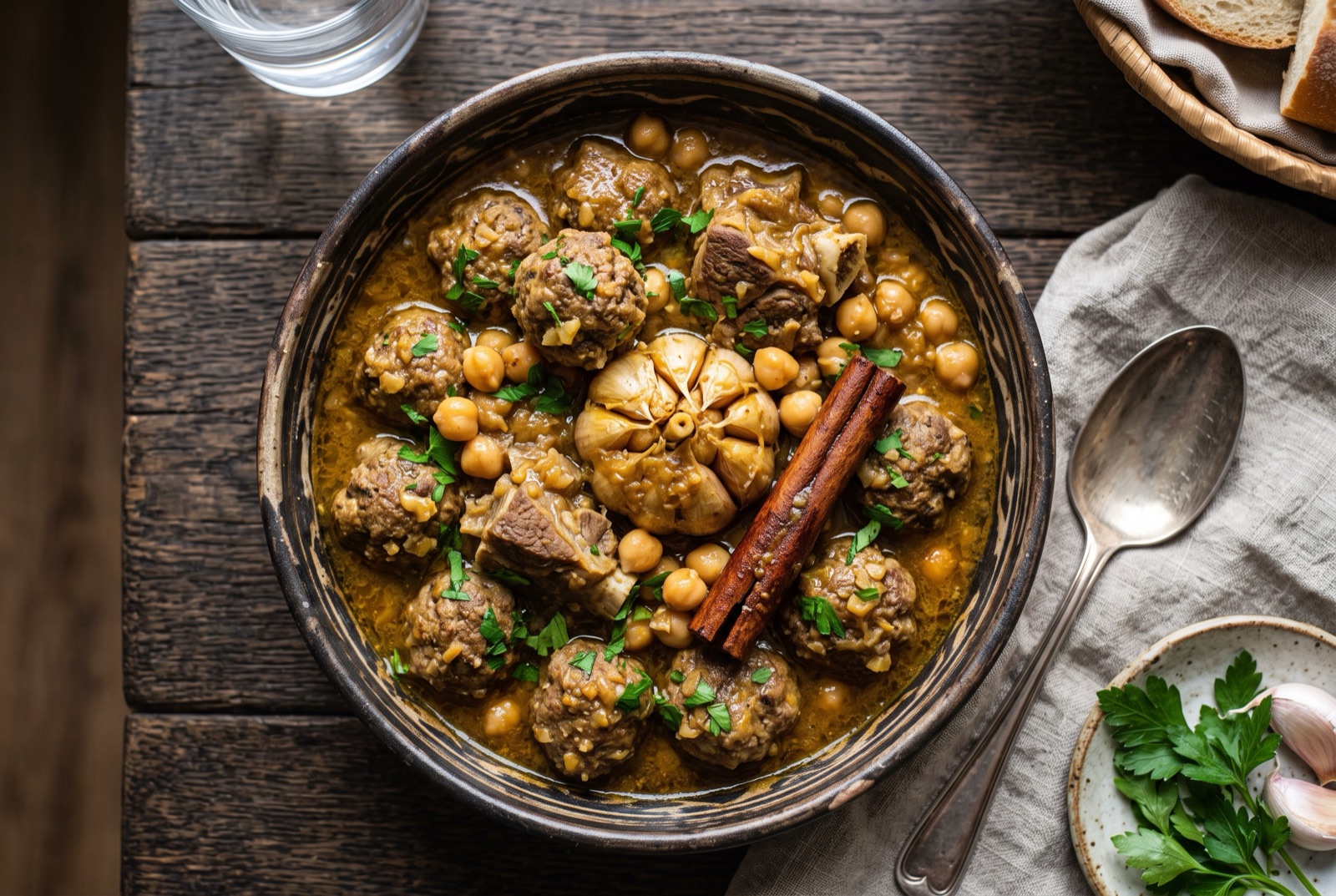
Algeria has 9 more dishes in the atlas — Algerian Chorba Frik and Bourek, and 7 more.
All Algeria recipes Lamb recipes Semolina recipes Chickpeas recipes maindairy freehalal friendlynut freeRecipe by The DishRoute Kitchen · published August 20, 2026 · updated August 20, 2026