Trahanas.
Cypriot Fermented Wheat and Yoghurt Soup
Τραχανάς · say it: trah-hah-NAHS
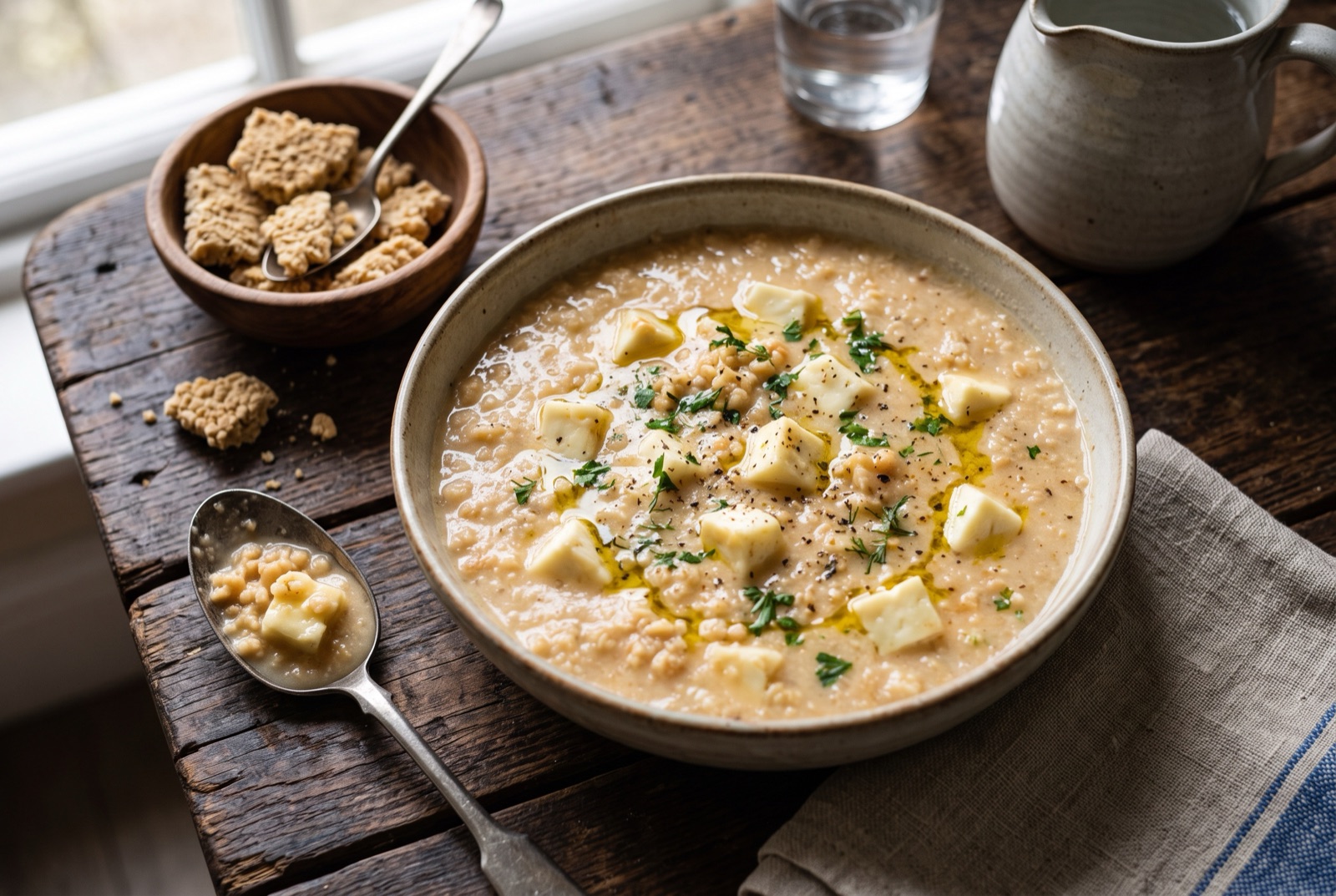
Trahanas is a soup made from a preserved ingredient of the same name: cracked wheat cooked in soured sheep's milk or yoghurt, spread out to dry, and broken into rough chips that keep for a year in a jar. Simmered in stock, those chips swell and dissolve into a thick, porridge-like soup with a pronounced sour tang — closer to a savoury yoghurt broth than to anything in the Western soup canon. Cubes of halloumi are dropped in at the end and go soft and stretchy without melting away. It is winter food, it is what Cypriots are given when ill, and the sourness is the whole point rather than a flaw to be corrected.

- Gate
- Cyprus
- Prep
- 10 min
- Cook
- 35 min
- Total time
- 2 hr 45 min incl. 2 hr rest
- Serves
- 4
- Status
- Easy
- Nutrition / serving · estimated
- Calories 390 kcal
- Protein 20 g
- Carbs 45 g
- Fat 15 g
- Fiber 5 g
Why this recipe works.
- Explains the soaking step that most recipes skip, which is what stops the grain staying gritty in the middle.
- Gets the ratio right — trahanas swells far more than people expect and will cement itself if underdiluted.
- Times the halloumi so it softens and stretches instead of turning into rubbery cubes in a sour broth.
- Tells you honestly what it tastes like, so nobody is surprised by the sourness halfway through a bowl.
Ingredients.
8 itemsTo serve
Equipment
- Heavy-bottomed saucepan
- Wooden spoon
- Bowl for soaking
Instructions.
Soak the trahanas
Put the broken trahanas in a bowl, cover with cold water by a couple of centimetres and leave for at least two hours or overnight in the fridge. The chips will swell, soften and lose their glassy edges — squeeze one and it should crush rather than crack.
Bring the stock to a simmer
Heat the stock in a heavy-bottomed pan until it is just trembling. Do not season it yet — the trahanas and the halloumi both bring plenty of salt, and the soup will reduce noticeably over the next half hour.
Cook it down, stirring
Drain the soaked trahanas and stir it into the stock. Simmer gently for 25 to 30 minutes, stirring every couple of minutes and scraping right into the corners of the pan. It will look thin for the first fifteen minutes and then thicken quickly into a porridge that holds the trail of a spoon.
Tip Loosen with a ladle of hot stock or water whenever it gets thicker than a loose porridge. It will keep tightening as it stands.
Check the grain
Taste a spoonful: the wheat should be completely soft with no chalky specks, and the flavour clearly sour and faintly cheesy. If you still feel grit, add a splash of liquid and give it another ten minutes.
Add the halloumi and butter
Turn the heat right down so the surface stops bubbling, then stir in the halloumi cubes and the butter. Leave for three minutes, until the cheese is soft and stretches slightly when pushed with a spoon but still holds its shape. Season with salt only now, if it needs any.
Serve immediately
Ladle into warm bowls, grind over black pepper and crumble the dried mint between your palms across the top if using. Serve with lemon wedges so each person can sharpen their own bowl, and eat it before it has time to set.
Tips from our kitchen.
- Soak the trahanas in cold water for at least two hours before cooking. Dropped straight into hot stock, the outside dissolves while the centre of each chip stays chalky.
- Stir often and use a heavy pan. Trahanas thickens suddenly at the end and sticks to the base within seconds of being left alone.
- Start with more liquid than seems right — about six parts stock to one part dry trahanas by volume. You can always cook it down.
- Add the halloumi off the boil, in the last three minutes. Boiled hard, it goes squeaky and tight instead of soft.
- Do not salt until the end. Both the trahanas and the halloumi carry salt, and the soup reduces considerably as it thickens.
- If it sets solid in the fridge, loosen it with stock rather than water, or the sourness overwhelms everything once the body is gone.
Substitutions.
- Cypriot sour trahanas → Turkish tarhana or Greek ksinos trahanas
- Turkish tarhana is usually a powder rather than chips and includes tomato and pepper, so it needs less soaking and gives a redder, milder soup.
- Chicken stock → Vegetable stock or plain water
- Water is entirely traditional in poorer village versions — the trahanas itself carries enough flavour. Vegetable stock keeps the soup vegetarian.
- Halloumi → Anari, feta, or a beaten egg stirred in off the heat
- Feta dissolves more and salts the soup, so use less. The egg version is a genuine household variant and gives a silkier body.
Variations.
- Trahanas with egg
- A beaten egg whisked into a ladle of hot soup and stirred back in off the heat, thickening it to a velvety consistency. Common when the soup is being made for someone unwell.
- Sweet trahanas
- Made with the milder "glykos" trahanas, produced from unsoured milk. Much gentler and often served to children, sometimes with a spoon of honey rather than lemon.
- Trahanas with fried onion and mint
- Finished with sliced onion fried dark in olive oil and a scatter of dried mint, in the style of Anatolian tarhana. Adds sweetness that offsets the sourness.
Storage & reheating.
The cooked soup keeps 3 days refrigerated and will set almost solid when cold — that is normal. Reheat gently with extra stock stirred in a little at a time until it loosens back to a spoonable thickness, and add the halloumi fresh rather than reheating what is already in it. It freezes for 2 months, though the texture becomes grainier on thawing. Dry trahanas itself, stored in an airtight jar away from light, keeps for a year or more.
Serve with
Bread rusks or day-old village bread for dunking, extra lemon wedges, and cracked black pepper ground at the table.
The story behind Trahanas.
Trahanas belongs to a preservation technique that stretches from the Balkans across Anatolia to Central Asia, appearing as tarhana in Turkey, trahana in Greece, tarhonya and kishk under other names further east. The logic is the same everywhere: milk spoils and grain does not, so combine them, let lactic fermentation acidify the mixture, then dry it hard enough that nothing can grow in it. The result is a shelf-stable food carrying both protein and carbohydrate, which mattered enormously in mountain villages with no refrigeration and long winters.
The Cypriot version is made in late summer, when the milk is plentiful and the sun is reliable. Coarse cracked wheat is simmered with soured sheep's or goat's milk until it thickens into a stiff paste, then either spread on cloths on a rooftop or shaped by hand into flat cakes and left to dry in the sun for days, being turned regularly. Once dry it is snapped into pieces and stored. Home production has declined but has not disappeared, and Cypriot supermarkets sell both the traditional sour version and a milder one, sometimes labelled sweet or "glykos", made with milk that has not been soured as heavily.
The soup itself is unadorned. Trahanas goes into stock — chicken traditionally, though water works — and is simmered until it collapses, stirred often because it catches on the base of the pan with real enthusiasm. Halloumi is the standard addition, cut into small cubes and dropped in for the last few minutes so it softens without dissolving. Some households finish with a beaten egg for richness, others with a knob of butter or a thread of olive oil, and lemon is added by the person eating, not the cook.
It is worth being honest about the taste. Trahanas is genuinely sour, faintly cheesy, and its texture is thick and slightly grainy — this is not a subtle soup, and people who did not grow up with it sometimes need a second attempt. If you like ayran, kefir or a sharp yoghurt, you will probably like it immediately.
Questions, answered.
What exactly is trahanas made of?
Coarse cracked wheat cooked with soured sheep's or goat's milk or yoghurt until it forms a thick paste, then dried hard in the sun and broken into chips. The lactic fermentation gives it its sourness and, together with drying, preserves it for a year or more without refrigeration. It is a preserved ingredient, not a spice blend.
Why is my trahanas soup gritty?
It was not soaked long enough. The dried chips are dense, and dropped straight into hot liquid the outside gelatinises and seals while the interior stays hard. Soak in cold water for at least two hours — overnight is better — and simmer for a full 25 to 30 minutes, stirring, until no chalky specks remain.
Why did my soup stick and burn on the bottom?
Trahanas is starch-heavy and thickens abruptly in the final minutes, at which point it grips the base of the pan almost immediately. Use a heavy-bottomed pot, keep the heat low once it starts to thicken, and stir right into the corners every couple of minutes rather than giving it an occasional swirl.
Is trahanas supposed to taste sour?
Yes, distinctly. The sourness comes from lactic fermentation of the milk during production and is the defining characteristic of the traditional version. If you find it too sharp, look for the milder "sweet" trahanas made with unsoured milk, or balance the bowl with a knob of butter rather than trying to cook the sourness out.
Can I make trahanas at home?
You can, but it takes days and reliable weather. Cracked wheat is simmered with soured milk or yoghurt into a stiff paste, then spread thin or shaped into cakes and dried in hot sun for three to five days, turned regularly until snap-dry. Without real sun and low humidity it will spoil rather than dry, which is why most Cypriots now buy it.
You might also like.
All recipes →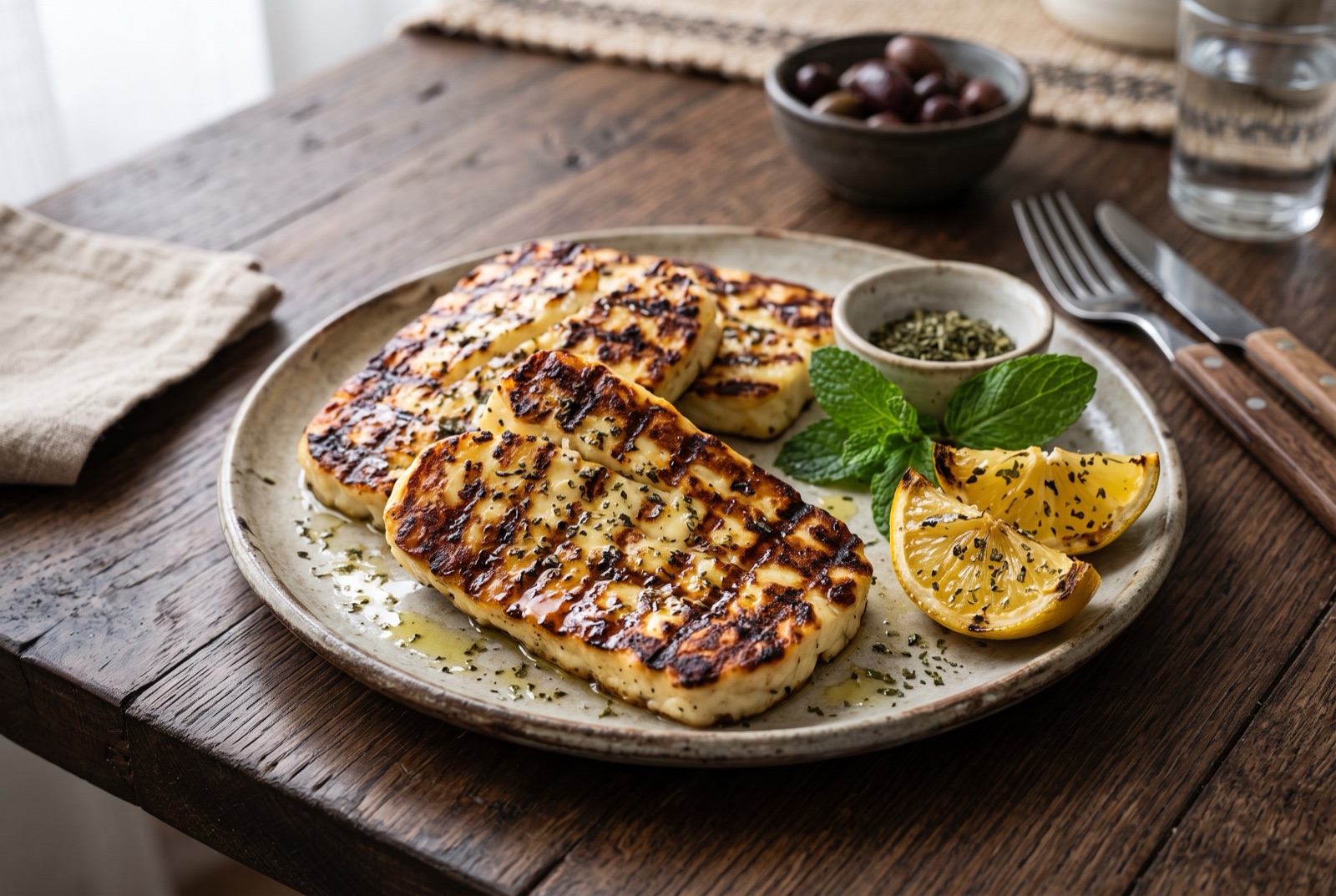
Cyprus16 min
Halloumi sti Schara
Grilled Cypriot Cheese with Lemon and Mint
Cyprus1 hr 45 min
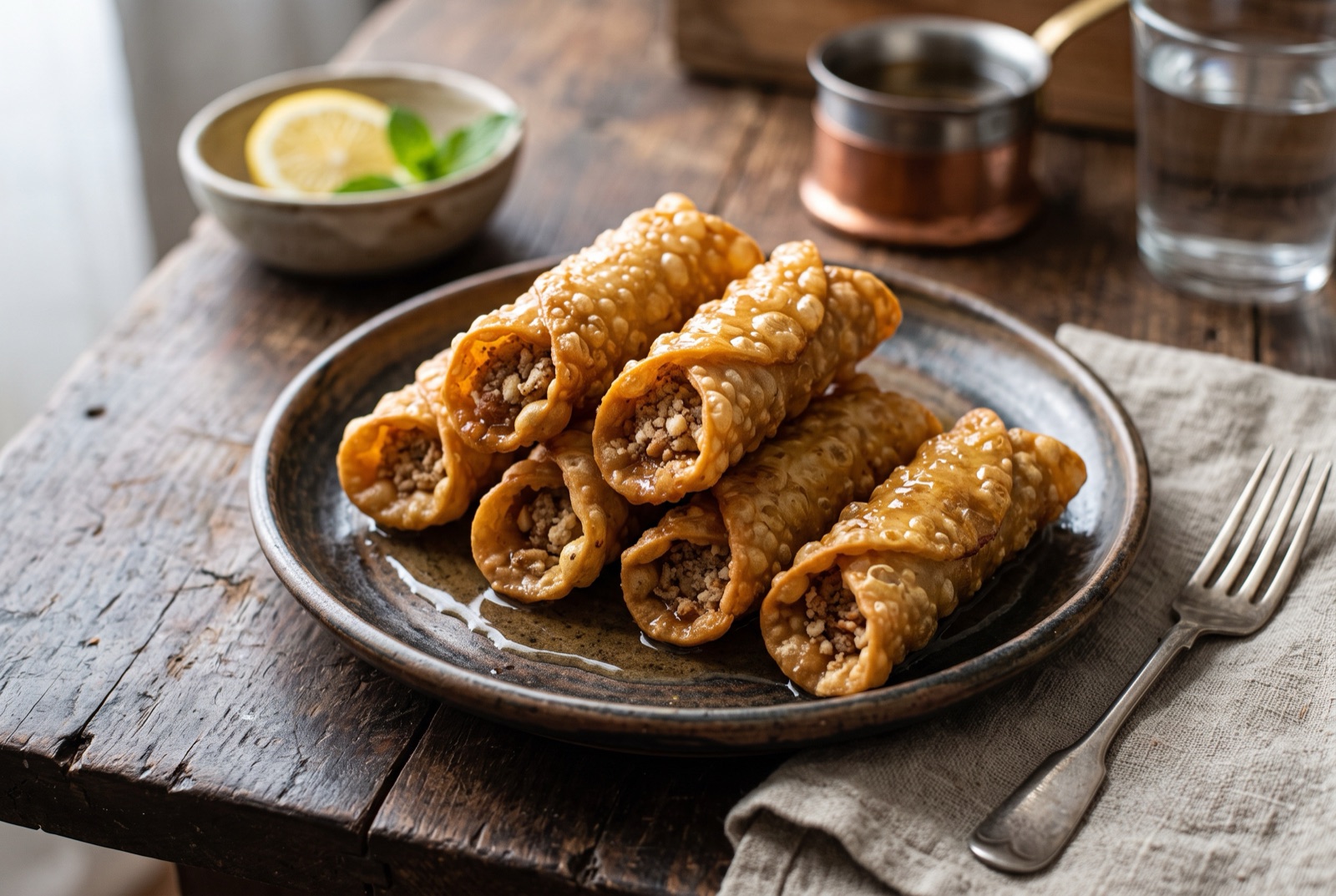
Daktyla
Cypriot Almond-Filled Pastry Fingers in Syrup
Cyprus5 hr 45 min
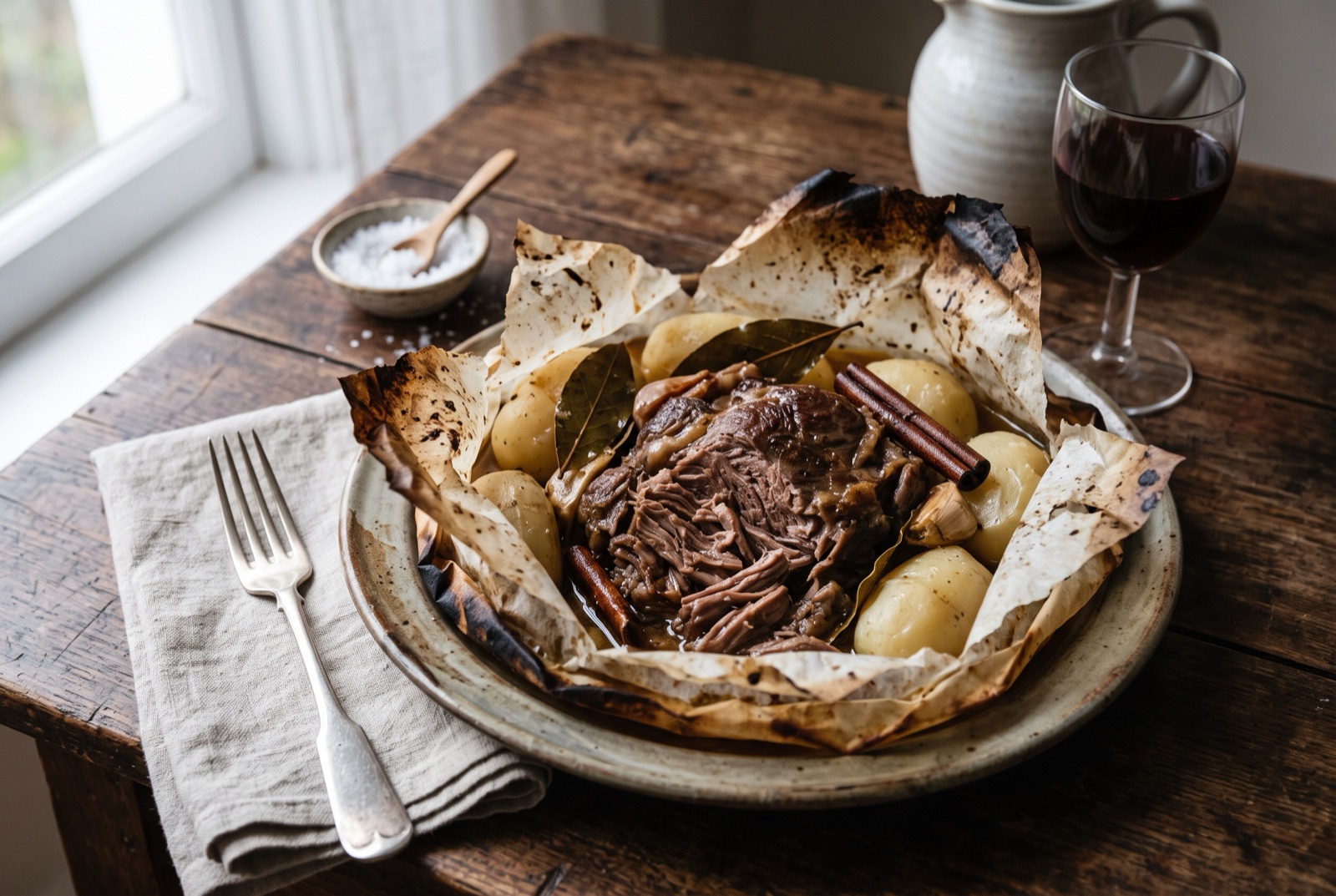
Kleftiko
Cypriot Lamb Slow-Baked in a Sealed Parcel
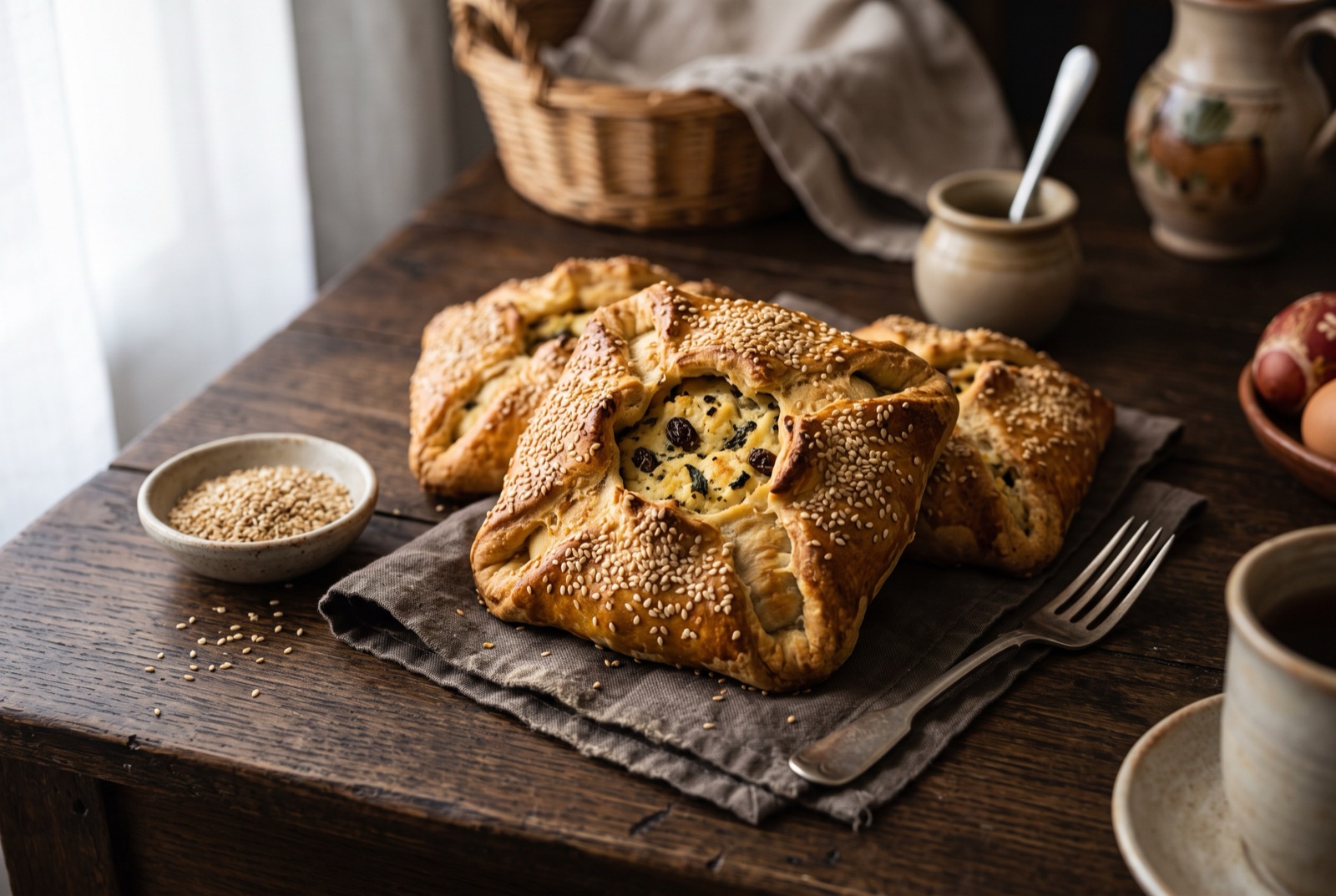
Cyprus3 hr 35 min
Flaounes
Cypriot Easter Cheese and Mint Pastries
Keep exploring Cyprus.
Cyprus has 9 more dishes in the atlas — Afelia and Daktyla, and 7 more.
Recipe by The DishRoute Kitchen · published August 20, 2026 · updated August 20, 2026