Egg Fried Rice.
Wok-Style Dan Chao Fan
蛋炒饭 · Dan chao fan · say it: dahn chow fahn
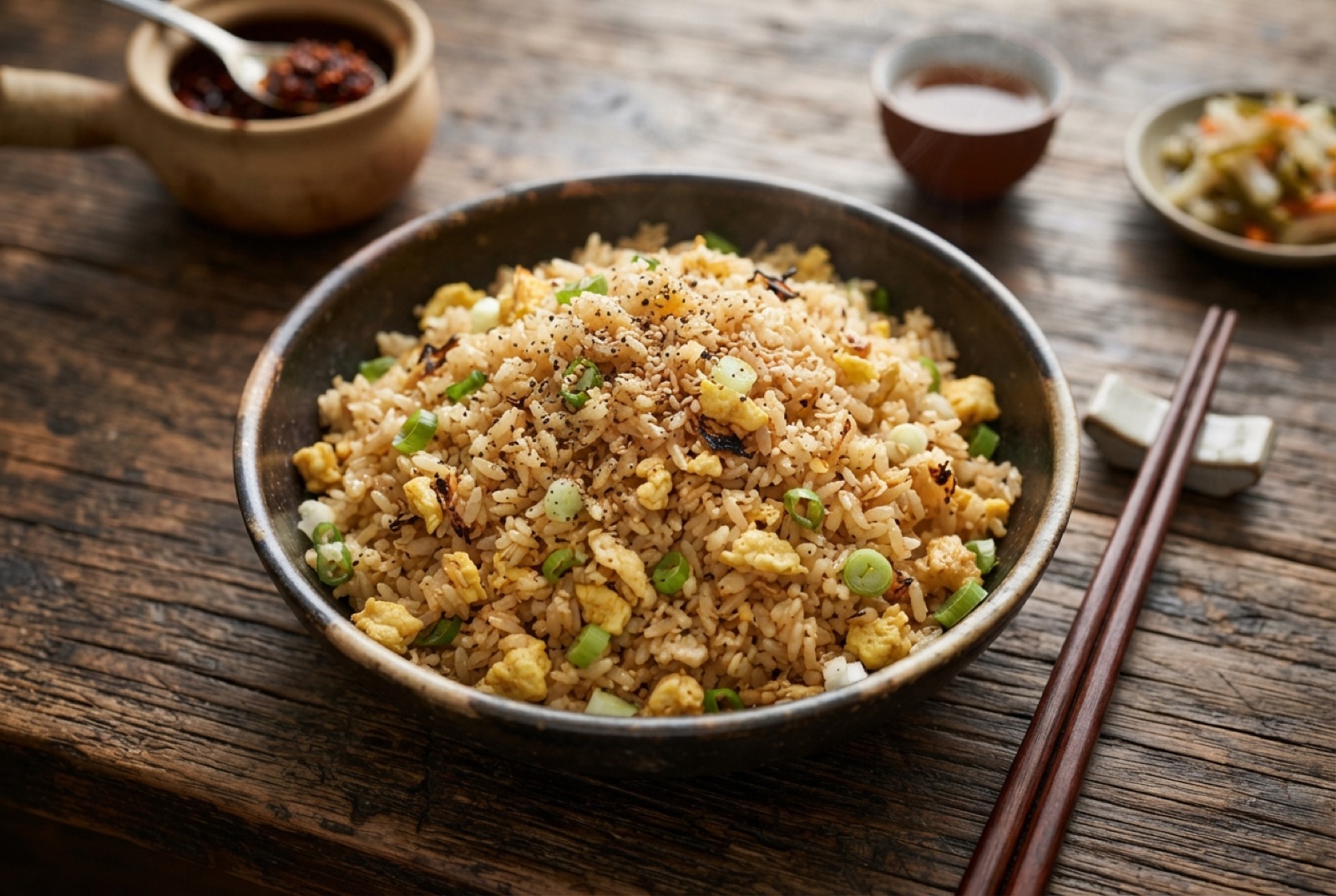
Egg fried rice is the simplest dish in the Chinese repertoire and one of the hardest to do perfectly, which is exactly why cooks in China use it to judge each other. Cold day-old rice goes into a very hot wok with beaten eggs, scallions, a restrained hand of soy sauce and not much else. Done right, every grain is separate, lightly toasted and slicked with egg, the scallions are fragrant rather than wilted, and the whole thing tastes faintly of smoke. There is no sauce to hide behind — just heat, timing and dry rice. This version explains the two decisions that matter (yesterday's rice, a screaming-hot pan) so a home stove gets you close to the real thing.

- Gate
- China
- Prep
- 10 min
- Cook
- 8 min
- Total time
- 18 min
- Serves
- 2
- Status
- Easy
- Nutrition / serving · estimated
- Calories 560 kcal
- Protein 17 g
- Carbs 72 g
- Fat 22 g
- Fiber 2 g
- Sodium 900 mg
Why this recipe works.
- Built on the day-old-rice principle — the single decision that separates fried rice from steamed mush.
- Honest about wok hei: what a home stove can and cannot do, and how to get closest.
- Eggs cooked in two stages, so you get both silky curds and egg-coated grains.
- Five ingredients and under ten minutes at the stove — a genuine weeknight dish, not a project.
Ingredients.
8 itemsEquipment
- Wok or largest heavy skillet you own
- Wok spatula or wooden spoon
- Small bowl for beaten eggs
Instructions.
Break up the rice
Wet your hands and crumble 500 g of cold rice into a bowl, breaking every clump until the grains are loose and separate. Set the beaten eggs, sliced scallions and soy sauce within arm's reach — once the wok is hot there is no time to fetch anything.
Tip Wet hands stop the rice sticking to your fingers and break clumps without crushing the grains.
Heat the wok properly
Set the empty wok over your largest burner on maximum heat until a drop of water flicked in skitters across the metal and vanishes within a second. Add 1 tablespoon of the oil and swirl to coat.
Scramble the eggs
Pour in the eggs — they should puff and bubble at the edges on contact. Push and fold them for 20–30 seconds until just set into soft, glossy curds that still look slightly wet, then scoop them out onto a plate.
Tip Undercook the eggs slightly here; they return to the wok later and would toughen if fully set now.
Fry the rice
Add the remaining oil, then the scallion whites, and stir for a few seconds until fragrant. Tip in the rice and toss and press it against the hot metal for 2–3 minutes, until the grains hop and separate, feel light under the spatula, and smell faintly toasted.
Season around the rim
Drizzle 1½ tbsp of soy sauce around the rim of the wok so it sizzles on the metal before reaching the rice, then toss until every grain is tinted pale gold with no dark wet patches. Season with the salt and a little white pepper.
Return the eggs and finish
Return the eggs, breaking them into bite-sized pieces with the spatula, and add the scallion greens. Toss for a final 30 seconds until the eggs are just heated through and the greens are barely wilted but still bright. Kill the heat, add the sesame oil if using, and serve immediately — fried rice waits for no one.
Tips from our kitchen.
- Use cold, day-old rice. Overnight refrigeration dries and firms the grains so they fry instead of steaming; fresh rice turns gummy no matter how good your technique is.
- If you must use fresh rice, spread it on a tray and refrigerate it uncovered for an hour — the surface moisture is the enemy, and airflow removes most of it.
- Break the rice clumps with wet hands before the wok, not with the spatula during cooking — smashing clumps in the pan crushes grains into paste.
- Get the wok fully heated before the oil goes in: a drop of water should skitter and vanish instantly. Most failed fried rice died of a timid flame.
- Season with soy sauce around the rim of the wok, not into the pile of rice — hitting hot metal first toasts it and spreads it evenly instead of soaking one wet patch.
- Cook in two batches if doubling. A crowded wok drops in temperature and you are steaming again.
Substitutions.
- Day-old white rice → Freshly cooked rice, cooked with 20% less water and cooled on a tray
- A workable rescue, not an upgrade — the grains will still be slightly softer than true day-old rice.
- Neutral oil → A teaspoon of the oil replaced with toasted sesame oil at the end
- Never fry in sesame oil from the start; it burns and turns acrid at wok temperatures. It is a finishing aroma.
- Soy sauce → Tamari
- Makes the dish gluten-free with no real flavor loss. Use the same amount.
Variations.
- Yangzhou-style (yangzhou chao fan)
- The famous deluxe version: add small cooked shrimp, diced ham or char siu, and peas with the rice. This is what most Western menus mean by "special fried rice."
- Golden fried rice
- Coat the raw rice in beaten egg yolks before frying so every grain wears a golden shell — a chef's technique that trades silky curds for uniform richness.
- Soy-free, salt-only
- Plenty of home cooks in China season dan chao fan with only salt and white pepper, keeping the rice pale and letting the egg and scallion lead. Try it once — it is the purist's version.
Storage & reheating.
Refrigerate leftovers within an hour and keep up to 2 days; reheat in a hot oiled pan until steaming and slightly re-toasted (a microwave makes it chewy but works in a pinch). Cooked rice is a known food-safety risk at room temperature, so do not leave fried rice sitting out. Freezing works for up to a month, though scallions dull; refresh with a few raw ones after reheating.
Serve with
A quick stir-fried green vegetable or a simple soup — fried rice is a complete plate, not a side, in a Chinese home meal.
The story behind Egg Fried Rice.
Fried rice began as thrift. In a rice-eating civilization, yesterday's cooked rice was too valuable to waste, and tossing it in a hot wok with whatever the kitchen held — an egg, a scallion, a splash of soy — turned it back into a meal. Chinese food writers often trace fried rice to the city of Yangzhou, and legend attaches it to the Sui dynasty official Yang Su more than a thousand years ago; the legend is unverifiable, but Yangzhou's name still marks the most famous elaborate version, yangzhou chao fan, studded with shrimp and ham. Egg fried rice is that dish stripped to its skeleton, and most Chinese cooks would say the skeleton is the harder test.
It is a test in a literal sense. A common piece of kitchen lore in China holds that you can measure a cook by their dan chao fan, because nothing conceals a mistake: wet rice clumps, low heat steams instead of fries, too much soy sauce drowns the egg. Restaurant woks reach temperatures no home burner can match, producing wok hei — the "breath of the wok," a fleeting smoky aroma created when food and oil vaporize against blazing metal. Home cooks cannot fully replicate it, and honest recipes admit that; what they can do is chase it with dry cold rice, small batches and the highest heat the stove offers, which lands surprisingly close.
The dish's other life is domestic and unglamorous: it is late-night food, student food, the thing a parent makes in ten minutes from an open fridge. Across China — and in Chinese households everywhere — it occupies the same emotional shelf as buttered toast or a fried egg sandwich elsewhere: nobody brags about it, everybody craves it.
Questions, answered.
Why does fried rice need day-old rice?
Freshly cooked rice is saturated with surface moisture, so in the wok it steams, sticks and clumps. After a night uncovered in the fridge the grains dry and firm up, and retrogradation makes the starch less sticky — they then toast and separate when fried. Day-old rice is the single biggest difference between fried rice and mush.
What is wok hei and can I get it at home?
Wok hei ("breath of the wok") is the faint smoky, seared aroma created when oil and food vaporize against a wok heated by a roaring restaurant burner. A home stove cannot fully produce it — the flame is simply too weak — but you can get close: maximum heat, a fully preheated pan, dry rice, small batches, and keeping the food moving only as much as necessary.
Can I use brown rice or jasmine rice for egg fried rice?
Yes to both. Jasmine is common in southern Chinese kitchens and fries beautifully once it is a day old. Brown rice works too — its grains are naturally firmer and separate — though the flavor is nuttier and less traditional. Whatever the variety, the day-old rule still applies.
Is egg fried rice vegetarian and gluten-free?
As written it is vegetarian: just rice, eggs, scallions, soy sauce and oil. It is not gluten-free, because standard soy sauce is brewed with wheat — swap in tamari and the dish becomes gluten-free without changing the flavor in any meaningful way.
Why did my fried rice come out greasy or soggy?
Greasy usually means the pan was not hot enough when the oil went in, so the rice absorbed oil instead of frying in it. Soggy means wet rice or a crowded pan — too much rice drops the wok temperature and everything steams. Hot pan, dry rice, small batches solves both.
You might also like.
All recipes →
Keep exploring China.
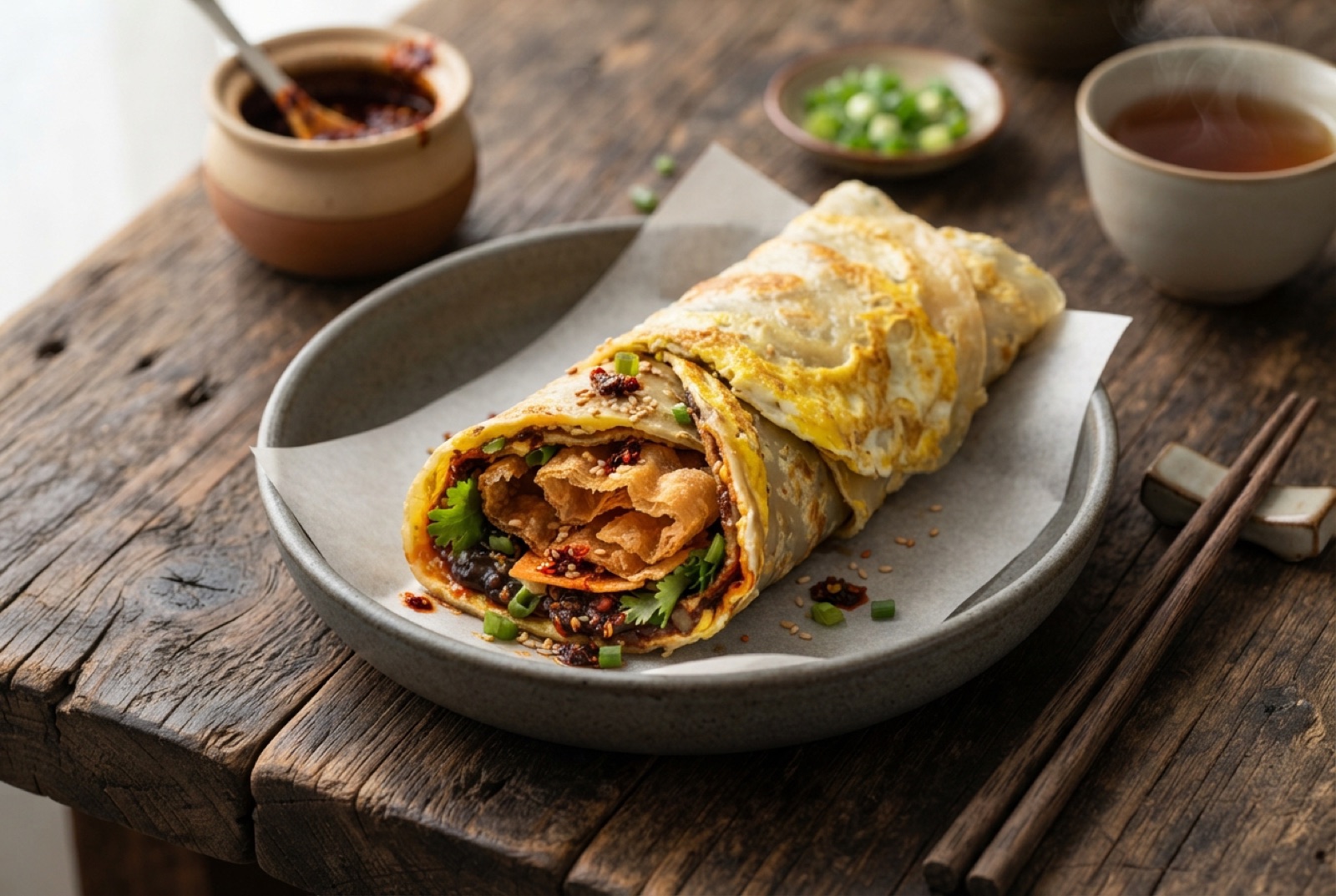
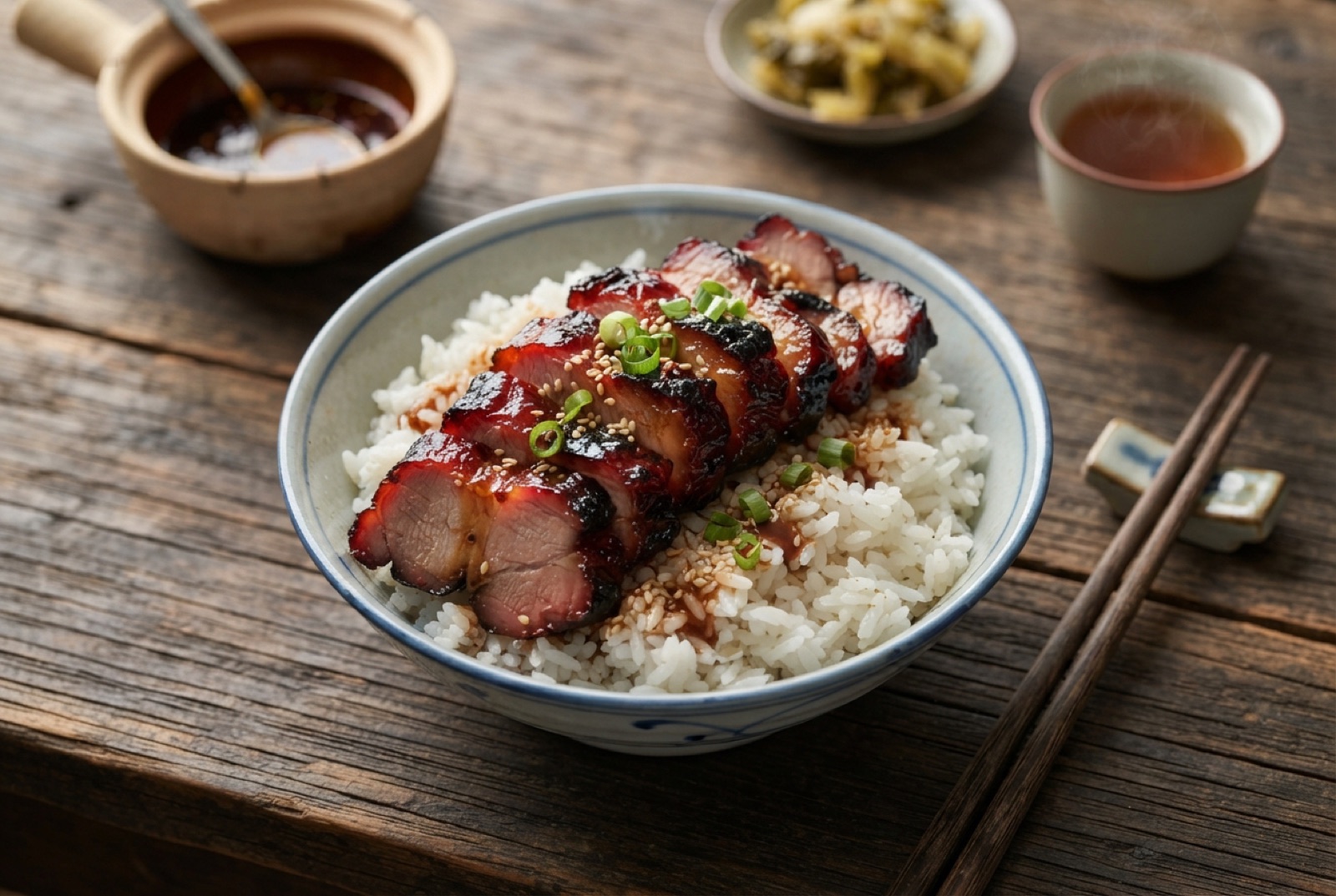
China has 9 more dishes in the atlas — Char Siu and Cong You Bing, and 7 more.
Recipe by The DishRoute Kitchen · published August 18, 2026 · updated August 18, 2026