Budaatai Khuurga.
Mongolian Mutton Fried Rice
Будаатай хуурга · say it: BOO-dah-tie HOOR-gah
Budaatai khuurga is fried rice with almost no seasoning in it: mutton sliced thin and browned hard, onion cooked until sweet, carrot and potato softened in the fat, and rice tossed through at the end until it glistens. Salt and black pepper are usually the whole spice cabinet. What makes it worth cooking is the fat — mutton renders a lot of it, and the rice absorbs it along with the browned bits scraped up off the pan, which is where the flavour lives. It is the dish Mongolian households make on an ordinary Tuesday, and the one homesick students learn first.
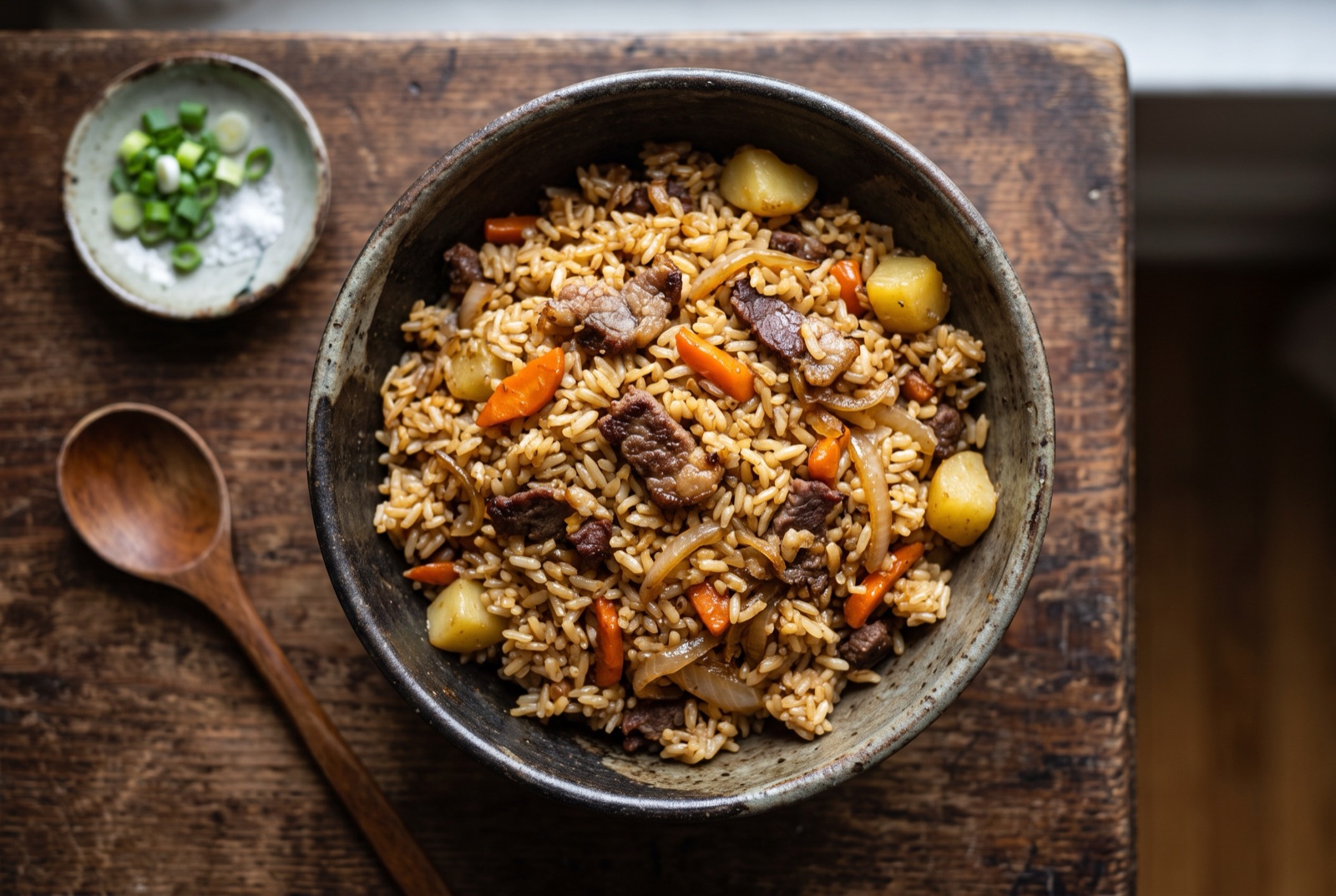

- Gate
- Mongolia
- Prep
- 15 min
- Cook
- 25 min
- Total time
- 40 min
- Serves
- 4
- Status
- Easy
- Nutrition / serving · estimated
- Calories 590 kcal
- Protein 28 g
- Carbs 68 g
- Fat 22 g
- Fiber 4 g
- Sodium 820 mg
Why this recipe works.
- Uses day-old rice and explains exactly why fresh rice ruins the texture.
- Builds flavour from browning rather than sauce, which is what makes this dish Mongolian rather than Chinese.
- Cooks the potato so it holds its shape instead of disintegrating into the rice.
- Ready in half an hour with ingredients any supermarket carries.
Ingredients.
11 itemsEquipment
- Wide heavy frying pan or sauté pan
- Spatula
- Rice cooked and chilled the day before
Instructions.
Break up the rice
Tip the chilled rice into a bowl and rub it between your fingers until every clump has separated into loose grains. Compacted rice will never distribute evenly in the pan and leaves cold lumps in the finished dish.
Brown the mutton
Heat 2 tablespoons of the fat in a wide heavy pan over high heat and lay 400 g of mutton in a single layer. Leave it untouched for 3 minutes until the undersides are properly browned and release from the pan on their own, then stir and brown the other side.
Tip If the meat sticks hard and looks grey, the pan was not hot enough. Wait rather than forcing it loose.
Cook the onion and potato
Add the remaining fat, then the onion, and cook until it turns golden at the edges while you scrape the browned residue off the pan base. Stir in the potato batons and fry 6 minutes until they lose their raw white look and start to take colour.
Add the carrot and garlic
Stir in the carrot and garlic and cook 4 minutes more, until the carrot is bendable but still has bite and the pan smells of sweet onion and roasted meat rather than raw garlic.
Fold in the rice
Tip the rice into the pan and fold it through with a spatula, lifting from underneath, until every grain has picked up fat and turned glossy and no white dry patches remain. This takes about 4 minutes over medium-high heat.
Season and finish
Add the salt, pepper and the soy sauce if using, fold once more, then taste and adjust — it should be clearly savoury and peppery. Let the base sit undisturbed for a final minute so the bottom layer crisps slightly, then scatter the scallions and serve.
Tips from our kitchen.
- Use rice cooked the day before and refrigerated uncovered. Fresh rice is too wet and turns the pan into a sticky mash.
- Slice the mutton thin against the grain and dry it on paper before it hits the pan — wet meat steams grey instead of browning.
- Cook the potato batons before the carrot goes in; potato needs about twice as long to lose its raw crunch.
- Scrape the browned residue off the pan base while the onion cooks. Those scraps carry most of the flavour into the rice.
- Fold the rice in with a spatula from underneath rather than stirring — stirring crushes grains and makes the dish claggy.
- Season at the end, after the rice has absorbed the fat. Salting early over-seasons the meat and leaves the rice bland.
Substitutions.
- Mutton → Lamb, beef sirloin trim, or leftover roast meat
- Any of these work. If using cooked leftover meat, add it with the rice rather than at the start, or it will dry out.
- Potato → Turnip or swede
- Common in the countryside and slightly sweeter. Cut it a little smaller, as it takes longer to soften.
- Long-grain rice → Short-grain rice
- Mongolian kitchens use both. Short-grain gives a stickier, softer result — rinse it well and cook it a touch dry.
Variations.
- With bell pepper and peas
- The city version, adding colour and a bit of sweetness. Not traditional, but standard in Ulaanbaatar canteens today.
- Fried egg on top
- A whole fried egg laid over each plate, the yolk broken and stirred through — a common home addition.
- Dried meat version
- Made with borts, air-dried shredded meat, soaked briefly and fried in extra fat when fresh meat is unavailable.
Storage & reheating.
Keeps 3 days refrigerated in a sealed container. Reheat in a hot dry pan rather than a microwave — the pan drives off the moisture the fridge added and re-crisps the rice, while a microwave leaves it damp. It freezes acceptably for a month but the potato turns mealy on thawing. Never leave cooked rice at room temperature for more than an hour before refrigerating, as cooled rice is a genuine food-safety risk.
Serve with
Salted milk tea, a shredded cabbage and carrot salad, and chili sauce on the side if you like heat.
The story behind Budaatai Khuurga.
The name is literal: budaa is rice, khuurga means something fried, and the dish is exactly the sum of those two words. Rice is not a native Mongolian crop — it came with trade, and it entered the kitchen the way most imports did, by being cooked with mutton and fat until it tasted Mongolian. That process is visible in the recipe. There is no soy sauce in the traditional version, no ginger, no wok tossing over a roaring flame. It is a heavy pan, a slow build, and a fold.
The vegetable list tells you about the growing season. Mongolia's climate supports very little arable farming, so root vegetables that store through winter — potato, carrot, onion, turnip — became the vegetables of the national kitchen, and they turn up in almost every savoury dish including this one. Nothing green is expected, and adding a handful of peas or pepper marks a dish as modern or urban rather than wrong.
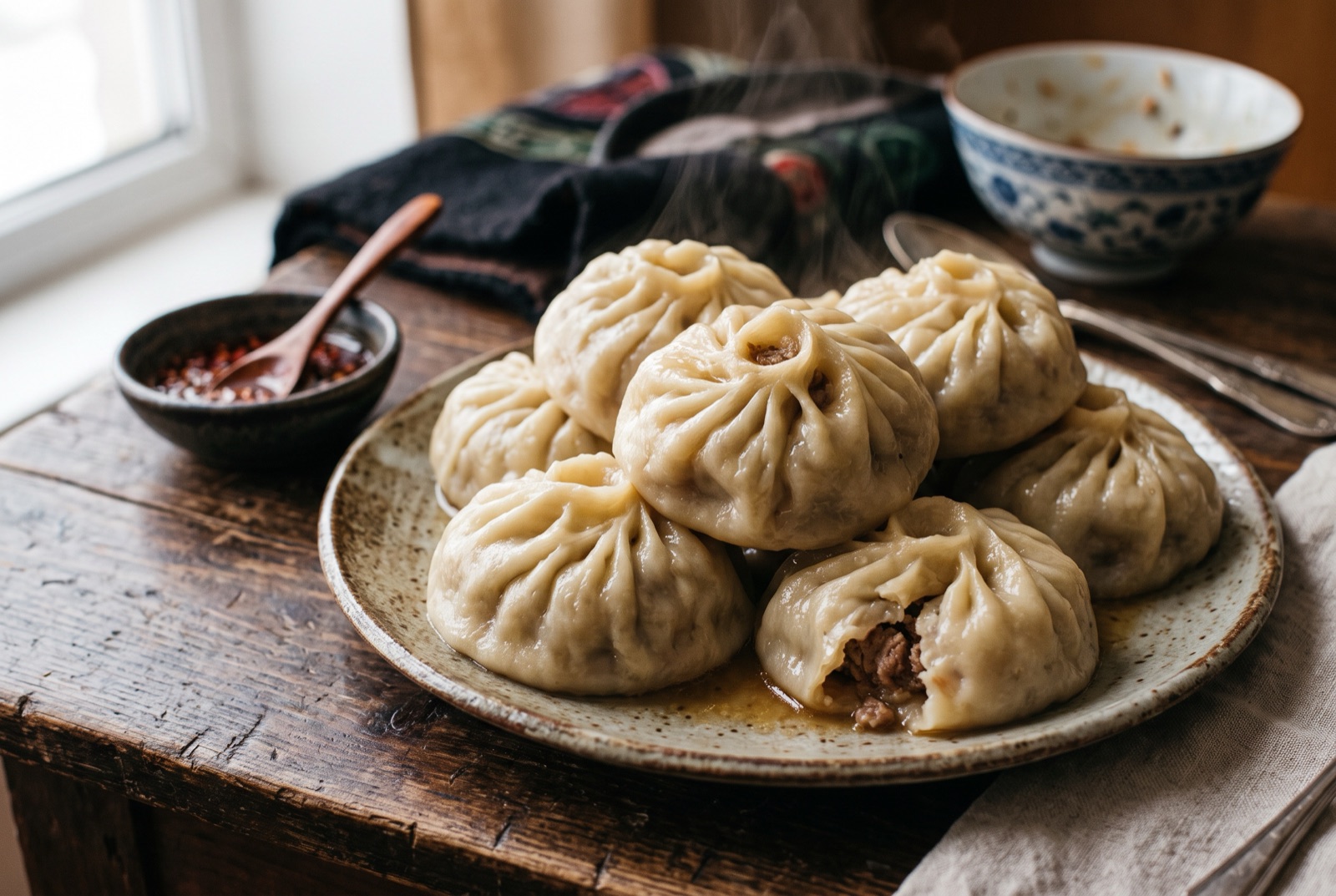
Budaatai khuurga also demonstrates the Mongolian attitude to meat portioning. Where a European fried rice might use meat as an accent, here it is the base of the pan and can easily be a third of the finished volume. The cut is unfussy — shoulder, leg trim, whatever is left after the better pieces went into buuz — and the fat is deliberately included, not trimmed off. In a country where until recently the diet ran on meat, milk and flour for most of the year, the fat was the calorie that got you through the cold, and the habit of cooking with it has stayed even where the cold no longer requires it.
Questions, answered.
Why does my fried rice turn out mushy?
Freshly cooked rice is the usual cause — it still holds surface moisture, which turns to steam in the pan and glues the grains together. Cook the rice the day before, spread it out to cool, and refrigerate it uncovered so the surface dries. Also avoid stirring, which breaks grains and releases starch.
Do I need a wok?
No. Mongolian home kitchens use a heavy frying pan or a deep saucepan, not a wok, and the dish is built by browning in stages rather than by high-heat tossing. What matters is a wide, heavy pan that holds its temperature when cold ingredients go in.
Can I make it with beef or chicken?
Yes, though it changes character. Beef is close and works well with the same timings. Chicken is much leaner, so add two extra tablespoons of oil or the rice will have nothing to absorb and the dish will taste flat and dry.
Is there really no soy sauce in it?
Traditionally no. The seasoning is salt and black pepper, and the flavour comes from rendered mutton fat and the browned bits scraped off the pan. Soy sauce appears in some modern city versions and does no harm, but it pushes the dish toward Chinese fried rice and away from what Mongolians recognise.
How much rice per person?
About 75 g of uncooked rice per person, which gives roughly 200 g cooked. This recipe uses 300 g uncooked for four, which sounds modest until you remember that meat and vegetables make up close to half the finished pan.
You might also like.
All recipes →
Keep exploring Mongolia.
Mongolia has 9 more dishes in the atlas — Aaruul and Bantan, and 7 more.
Recipe by The DishRoute Kitchen · published August 20, 2026 · updated August 20, 2026