Pašticada.
Dalmatian Beef Braised in Sweet Prošek Wine
Pašticada · say it: PASH-tee-tsah-dah
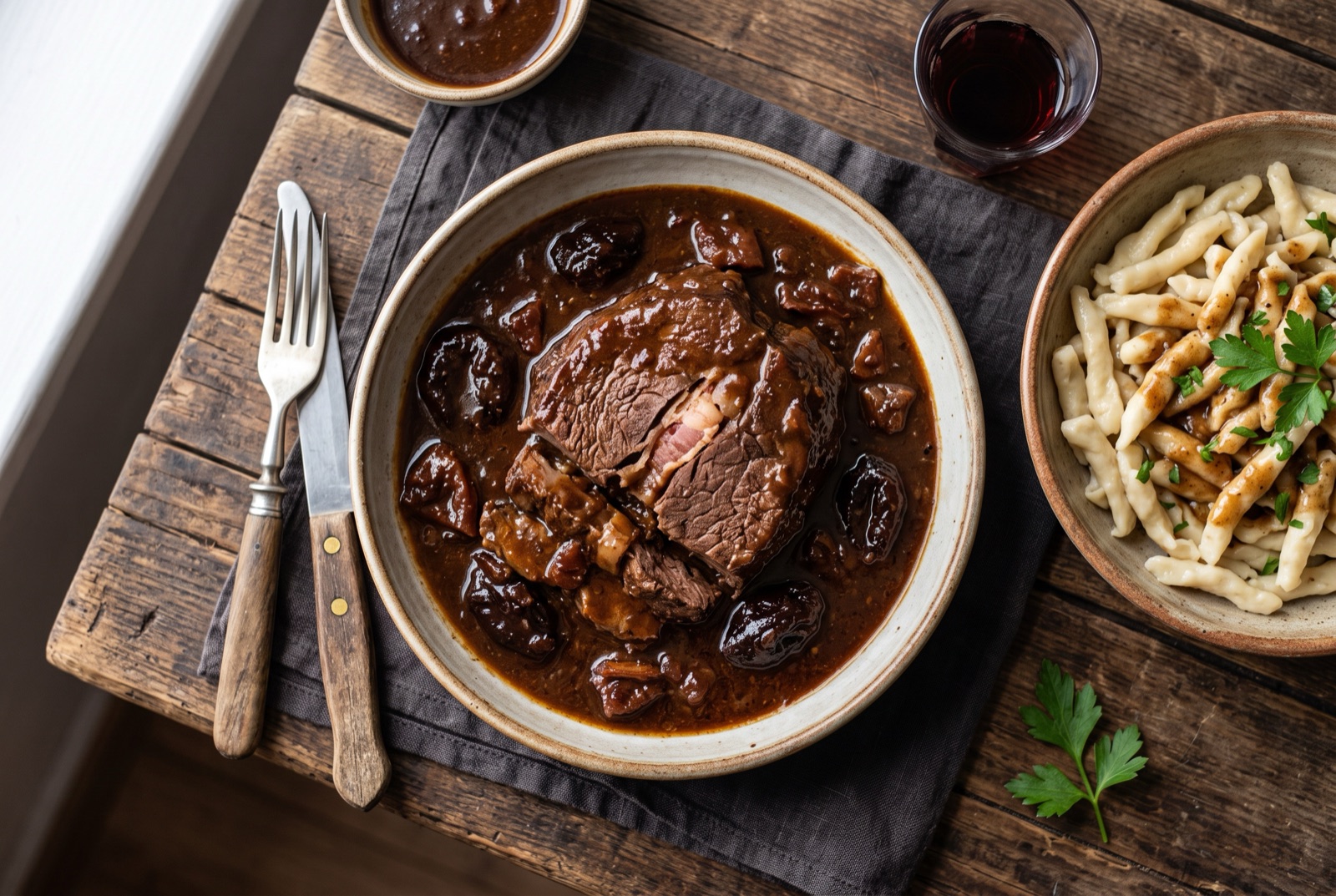
Pašticada is the dish a Dalmatian family cooks when something important is happening. A single lean piece of beef is pierced all over and stuffed with bacon, garlic and cloves, left overnight in vinegar or wine, then browned and braised for three or four hours with onion, prunes, tomato and a bottle of prošek, the sweet dried-grape wine of the coast. The result is not a stew: the meat comes out whole and is sliced across the grain, and the vegetables are pushed through a sieve into a dark, thick, sweet-sour sauce that tastes of nutmeg and dried fruit. It takes two days if you count the marinade, and every hour of that is doing something. Served with soft potato gnocchi, it is the closest thing Croatia has to a national celebration plate.

- Gate
- CroatiaDalmatia
- Prep
- 40 min
- Cook
- 3 hr 30 min
- Total time
- 16 hr 10 min incl. 12 hr rest
- Serves
- 6
- Status
- Takes skill
- Nutrition / serving · estimated
- Calories 620 kcal
- Protein 52 g
- Carbs 28 g
- Fat 28 g
- Fiber 4 g
- Sugar 17 g
Why this recipe works.
- Keeps the two steps most home versions skip — larding the meat with bacon and a full overnight vinegar marinade — because they are what make lean beef tender.
- Sieves the onions and prunes back into the sauce instead of thickening with flour, which is how it gets that dark, glossy body.
- Gives you an honest substitution for prošek and explains exactly what you lose without it.
- Times the braise by how the meat behaves under a fork, not by the clock alone.
Ingredients.
19 itemsFor the meat
For the marinade
For the braise
Equipment
- Heavy lidded casserole or Dutch oven just large enough to hold the meat
- Thin boning or paring knife for larding
- Stick blender or fine sieve
- Butcher's twine
Instructions.
Lard the beef
Make deep slits all over the joint with a thin knife, twisting to open each one, and push in a strip of bacon, a sliver of garlic and — in about six of them — a whole clove. Work around the whole piece so no future slice is left unstudded, then tie the joint with twine into a compact cylinder.
Tip Push the filling in with the back of the knife or a chopstick; fingers alone will not reach the centre.
Marinate overnight
Sit the larded beef in a snug dish with the vinegar, bay, rosemary and cracked peppercorns, topping up with cold water until the meat is nearly submerged. Cover and refrigerate for at least 12 hours, turning it once so both sides spend time under the liquid.
Dry and sear
Lift the beef out, discard the marinade, and pat it aggressively dry with paper towel — the surface should feel tacky, not wet. Heat the olive oil in a heavy casserole and brown the joint on every side, about 10 minutes total, until the crust is deep mahogany and the pan smells roasted rather than raw.
Tip Do not rush this. The colour of the finished sauce is set here, before a drop of wine goes in.
Soften the vegetables
Set the meat aside and add the onions, carrots and celery to the same pot with a pinch of salt. Cook over medium heat for 12–15 minutes, scraping up the browned residue, until the onions have collapsed to a soft golden mass and stopped smelling sharp.
Build the braising liquid
Stir in the tomato paste and fry it for a minute until it darkens from red to brick, then add the prunes, pour in the prošek and the red wine, and let it bubble for 3–4 minutes to burn off the raw alcohol. Return the beef, add hot stock to come two-thirds up the joint, and grate in the nutmeg.
Braise low and slow
Cover and cook over the lowest possible heat, or in a 150°C oven, for 3 to 3½ hours. Turn the meat every 45 minutes. It is ready when a skewer slides into the centre with no resistance but the joint still holds its shape when lifted.
Tip The liquid should barely move — one bubble breaking the surface every few seconds. A real simmer will shred the outside before the centre softens.
Finish the sauce
Lift the beef onto a board, cover it loosely and let it rest 15 minutes. Fish out the bay and rosemary, then blend the vegetables and prunes into the liquid with a stick blender, or push everything through a sieve, until you have a dark, smooth sauce that coats a spoon. Reduce uncovered if it is still loose.
Balance and serve
Taste the sauce: it should read sweet first and sour a beat later, with nutmeg behind both. Correct with a splash of prošek or a teaspoon of vinegar and season with salt. Remove the twine, carve the beef across the grain into 1 cm slices, lay them in the warm sauce for a few minutes, and serve over gnocchi.
Tips from our kitchen.
- Use a lean, tight-grained cut in one piece — topside, silverside or eye of round. Fatty braising cuts fall apart and you lose the sliced-meat presentation entirely.
- Lard generously. Aim for at least a dozen bacon-stuffed holes spread over the whole joint so no slice comes out dry.
- Dry the meat thoroughly after the marinade with paper towel. Wet meat steams grey instead of browning, and the sauce colour depends on that first sear.
- Keep the braise at a lazy blip, not a simmer. If the surface is moving briskly, the outside of the meat shreds before the middle is tender.
- Taste the sauce for the sweet-sour balance at the end and adjust with a spoon of prošek or a splash of vinegar — the two should be in visible tension, neither winning.
- Cook it a day ahead if you can. Slice the meat cold, return it to the sauce, and reheat gently — this is the version Dalmatian cooks actually serve.
Substitutions.
- Prošek → Vin santo, sweet Marsala, or a sweet Madeira, plus 1 tsp of extra prune purée
- Prošek is made from dried grapes and tastes of raisins rather than sugar. Vin santo is the closest relative. A dry wine plus honey is not a substitute — it goes flat and one-dimensional.
- Prunes → Dried figs, or half prunes and half dried apricots
- Figs give a rounder, seedier sweetness. Apricots push the sauce brighter and slightly sharper, which some Dalmatian households prefer.
- Bacon for larding → Strips of pancetta or fatty pršut
- What matters is soft fat that will melt into the meat. Very lean prosciutto adds salt but not moisture, so add a little extra olive oil to the pot.
Variations.
- With njoki
- The standard Dalmatian pairing: soft potato gnocchi, boiled and tossed straight into a ladle of the sauce before the sliced meat goes on top.
- Šibenik style
- Some families add a grated apple or a spoon of dried-fig jam to the pot, pushing the sauce further towards sweet and darker in colour.
- Bakalar-free lean version
- A lighter braise made without larding, using a fattier chuck instead and shortening the cook by an hour. Faster, more stew-like, and easier on a weeknight — but the meat will not slice cleanly.
Storage & reheating.
Pašticada keeps 4 days refrigerated and genuinely improves on days two and three. Store the sliced meat submerged in its sauce so it does not dry at the edges, and reheat covered over low heat or in a 150°C oven until the sauce steams. It freezes well for up to 3 months — freeze meat and sauce together, thaw overnight in the fridge, and refresh the finished sauce with a small splash of prošek, which loses aroma in the freezer.
Serve with
Soft potato gnocchi, or wide homemade pasta ribbons; a plain green salad afterwards, never alongside.
The story behind Pašticada.
Pašticada belongs to the Adriatic trading world rather than to the Balkan interior. Dalmatia spent centuries inside the Venetian orbit, and the dish shows it — the name comes from the Italian pasticciata, the technique of a larded, marinated, long-braised joint is northern Italian in bone structure, and the sweet-sour finish points to a Mediterranean taste for combining dried fruit with meat that Venice traded in and never lost. What made it Dalmatian is the wine. Prošek is made from grapes left to dry before pressing, giving a concentrated, raisin-like sweetness, and it is the ingredient that turns a good braise into pašticada specifically. Cooks who cannot get it reach for another sweet dessert wine, and every one of them will tell you it is not the same.
The cooking is ritualised in a way few home dishes are. The meat is usually beef topside or silverside — lean on purpose, so it needs the bacon threaded through it and the long slow braise to become tender. It is stabbed with a thin knife and each hole packed with a strip of bacon, a sliver of garlic and sometimes a clove, then it sits in vinegar and aromatics overnight so the acid begins to loosen the fibres. Many families dry the meat afterwards and hit it hard in hot fat before the pot goes on the lowest possible flame. The sauce is finished by blending or sieving the softened onions and prunes back into the liquid, and the prunes are what give it that dark, faintly jammy body without any need for flour.
On the coast pašticada is wedding food, patron-saint food, and the answer to a Sunday when relatives are coming. It is almost always served with njoki — potato gnocchi — because they hold sauce better than pasta and because the combination has hardened into a rule. It is also, by universal agreement, better on the second day: the sliced meat left in its sauce overnight absorbs it and the seasoning settles. If you are cooking it for guests, cook it the day before and reheat. Nobody in Dalmatia will consider that cheating.
Questions, answered.
Do I really need to marinate the beef overnight?
For the traditional cut, yes. Pašticada uses a lean joint like topside, and the overnight soak in vinegar and aromatics starts breaking down the connective tissue before any heat is applied, which is why the finished meat slices cleanly instead of shredding. If you are short on time, a minimum of 4 hours at room-temperature-cool will help, but the texture will be firmer.
What is prošek and can I use regular red wine?
Prošek is a Dalmatian dessert wine made from grapes dried before pressing, so it tastes concentrated and raisiny rather than simply sweet. Regular dry red wine will make a perfectly good braise, but it will not be pašticada — the dish is defined by the sweet-sour tension between the wine and the vinegar marinade. Vin santo, sweet Marsala or Madeira are the closest widely available stand-ins.
Why is my sauce thin?
Most likely the onions and prunes were not broken down and returned to the liquid. The sauce is thickened entirely by puréeing the softened vegetables and dried fruit, not by flour or starch. Lift out the meat, blend the sauce with a stick blender or push it through a sieve, then reduce it uncovered over medium heat until it coats the back of a spoon.
Can I make pašticada in advance?
It is better made in advance. Cook it completely a day ahead, cool it, slice the meat and keep it submerged in the sauce in the fridge overnight, then reheat gently before serving. The meat absorbs sauce as it sits and the seasoning rounds out, which is exactly how it is served at Dalmatian weddings and family celebrations.
What cut of beef works best?
A lean, tight-grained roasting cut in a single piece: topside, silverside, eye of round or rump. These hold their shape through a long braise so the meat can be carved into neat slices. Avoid chuck, brisket or short rib — they are excellent braising cuts, but they collapse into strands and turn the dish into a stew.
You might also like.
All recipes →
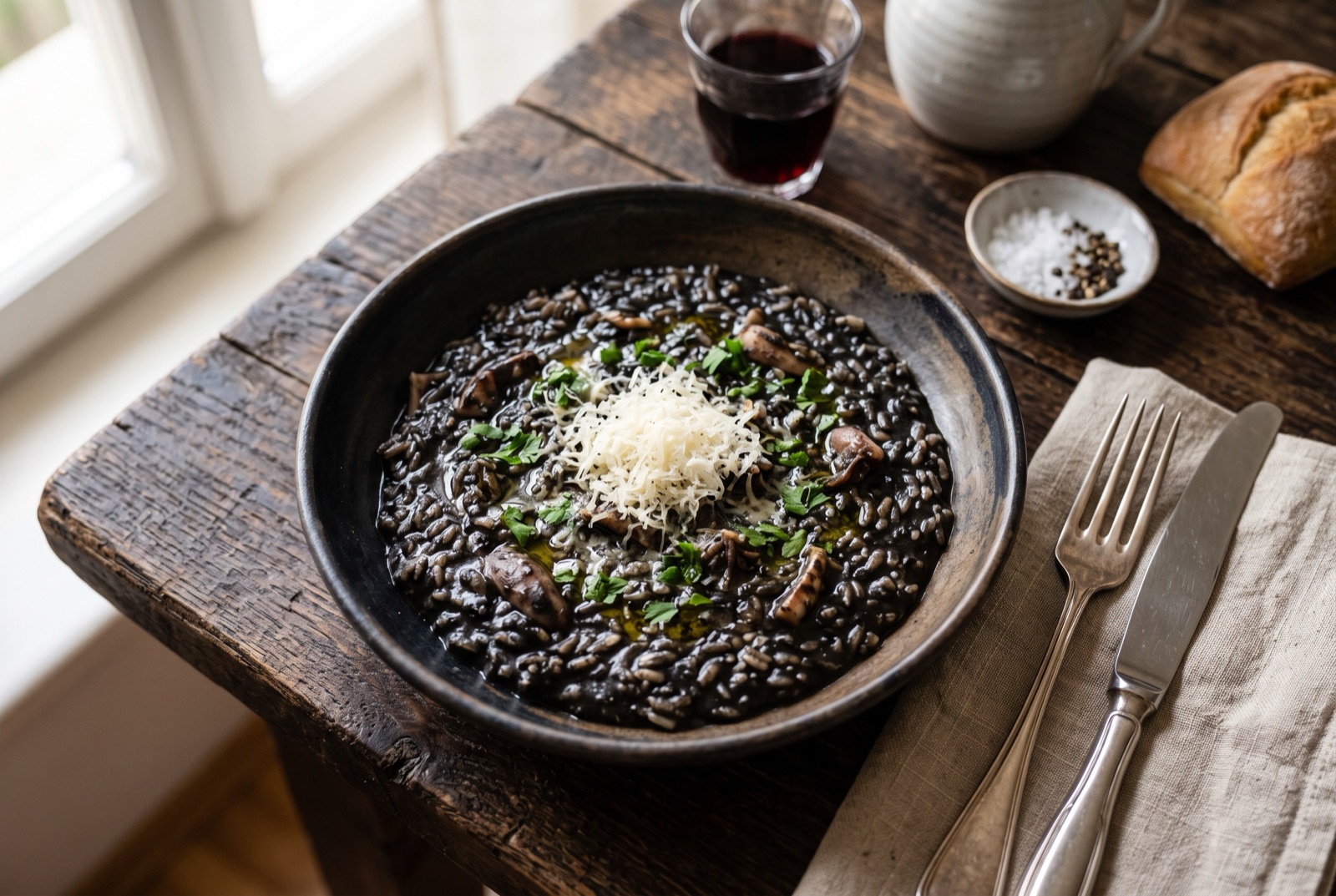
Keep exploring Croatia.
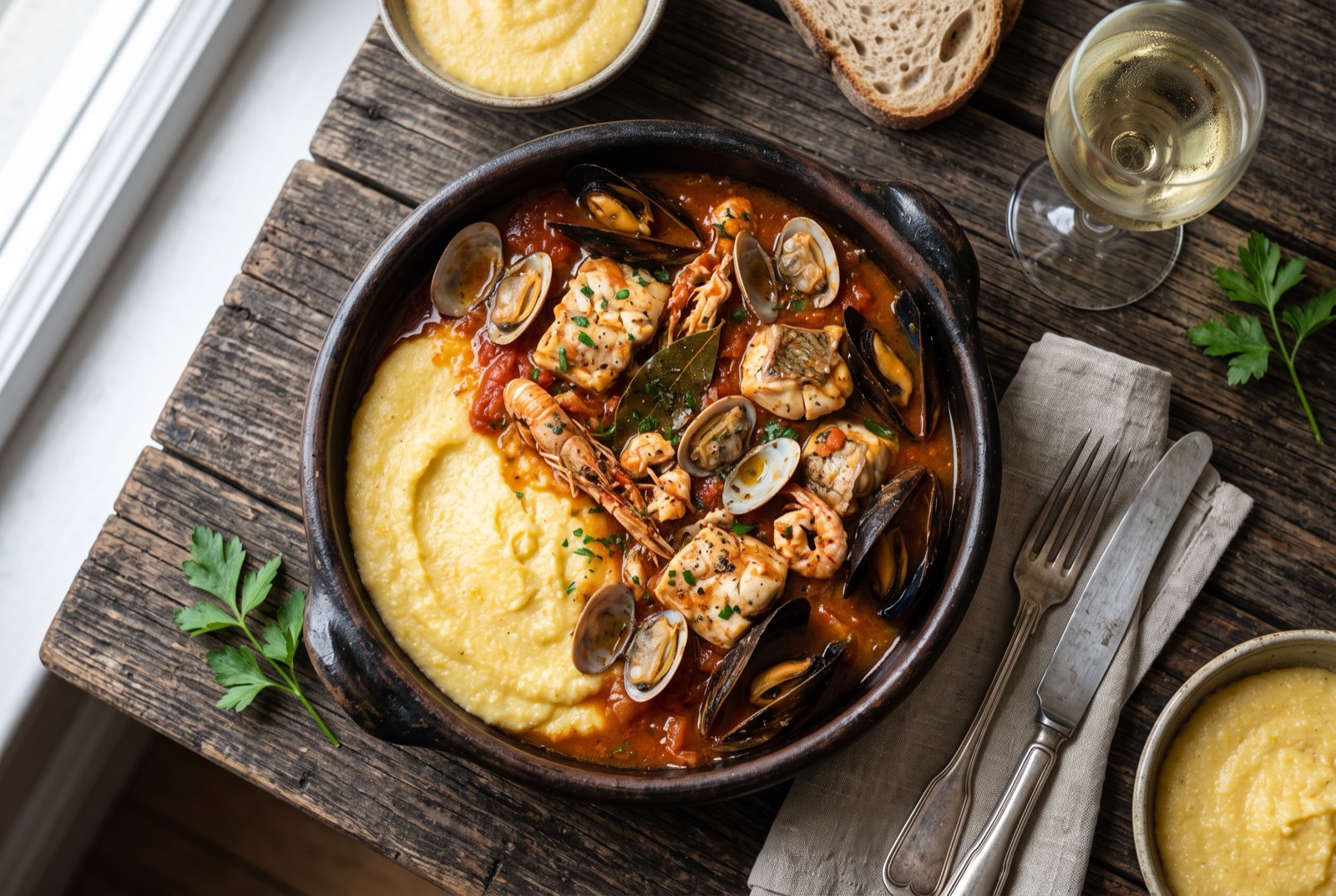
Croatia has 9 more dishes in the atlas — Brudet and Crni Rižot, and 7 more.
Recipe by The DishRoute Kitchen · published August 20, 2026 · updated August 20, 2026