Picadillo a la Habanera.
Beef with Olives and Raisins
Picadillo a la habanera · say it: pee-kah-DEE-yoh
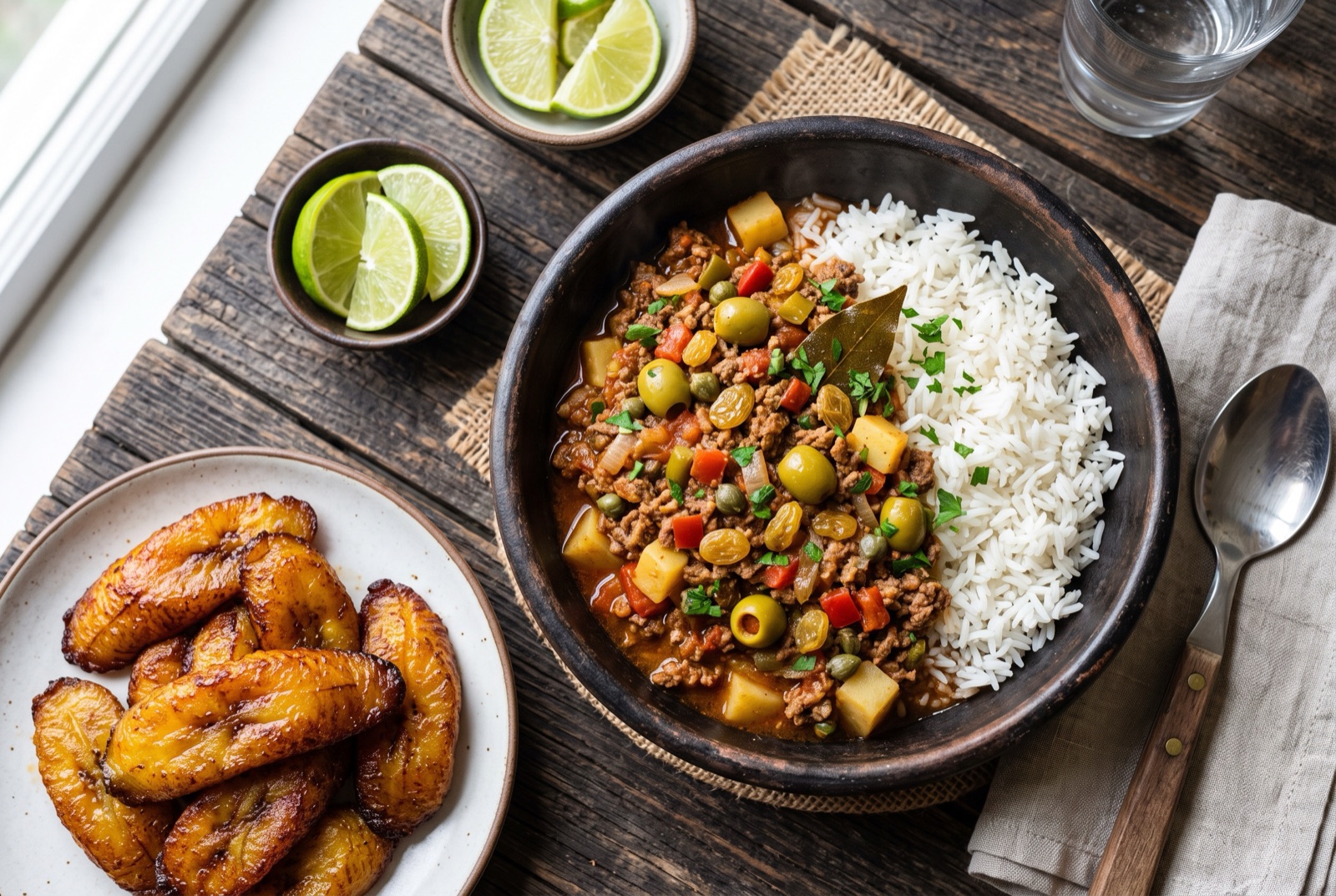
Picadillo is ground beef cooked down in sofrito until it is dark, glossy and just slightly loose, then pushed in two directions at once — green olives and capers for salt and sharpness, raisins for sweetness. That sweet-salty pull is the whole point, and it is what separates Cuban picadillo from any ordinary mince. It takes about forty minutes, most of it unattended, and it feeds a family cheaply, which is why it turns up on Cuban tables more often than any of the famous celebration dishes. Eat it over white rice with a fried egg on top and sweet plantains alongside; leftovers become the filling for empanadas or papas rellenas the next day.

- Gate
- CubaHavana
- Prep
- 15 min
- Cook
- 35 min
- Total time
- 50 min
- Serves
- 4
- Status
- Easy
- Nutrition / serving · estimated
- Calories 470 kcal
- Protein 33 g
- Carbs 21 g
- Fat 28 g
- Fiber 3 g
- Sugar 13 g
- Sodium 920 mg
Why this recipe works.
- The sweet-salty balance is measured rather than guessed, so the raisins register without turning the pan into a dessert.
- Draining the excess fat before adding tomato keeps the sauce glossy instead of greasy.
- Ready in about 40 minutes with one pan, and the leftovers are engineered to become empanada filling.
- Honest about the raisin argument, with a version for cooks who want the dish without them.
Ingredients.
15 itemsTo prepare first
For the sofrito
For the meat
For the sauce
To finish
Equipment
- Large heavy skillet or sauté pan
- Wooden spoon
Instructions.
Plump the raisins
Cover the raisins with warm water and leave them to swell for 10 minutes while you chop everything else, then drain. Skipping this leaves hard little beads in the finished pan instead of soft sweet pockets.
Cook the sofrito
Warm the olive oil in a large skillet over medium heat and cook the onion and green pepper for 8 to 10 minutes, until they slump, turn translucent and smell sweet. Add the garlic and cook 1 minute more, just until it stops smelling raw.
Brown the beef
Raise the heat to medium-high, add the ground beef and break it up with a wooden spoon. Cook for 8 to 10 minutes without crowding, until the liquid it releases has boiled away and the meat has caught brown colour on the base of the pan. Season with the cumin, oregano, bay leaf, 1½ teaspoons of salt and black pepper.
Tip If the pan looks like it is boiling rather than frying, turn the heat up and let the water go before you expect browning.
Drain the fat
Tilt the pan and spoon off most of the rendered fat, leaving about a tablespoon behind. This is what keeps the finished sauce glossy instead of leaving an orange slick on top.
Build the sauce
Stir in the tomato paste and fry it for 2 minutes until it darkens to brick red, then pour in the wine and scrape the base clean. Add the tinned tomatoes, bring to a simmer and cook uncovered for 10 minutes.
Sweet and salty finish
Add the drained raisins, olives and capers and simmer another 8 to 10 minutes, until the picadillo is glossy and moist but no longer pools liquid when you drag a spoon across the pan. Fish out the bay leaf, taste, and correct with salt, pepper or a spoonful of olive brine.
Serve
Spoon over hot white rice with black beans and fried sweet plantains alongside, and add a fried egg on top if you want the full Havana plate.
Tips from our kitchen.
- Brown the beef properly in an uncrowded pan before it starts to steam — grey mince makes a flat, watery picadillo.
- Soak the raisins in warm water or a splash of the wine for ten minutes so they plump instead of staying leathery.
- Drain off most of the rendered fat before the tomato goes in, or the finished sauce sits under a slick of orange grease.
- Use olives packed in brine, not oil, and add a spoonful of the brine at the end if the pan tastes flat.
- Picadillo should be moist but not soupy. If liquid pools when you drag a spoon through, simmer uncovered a few minutes longer.
- Ground beef with around 15 to 20 percent fat gives the best flavour; very lean mince turns dry and grainy.
Substitutions.
- Ground beef → Ground pork, or half beef and half pork
- Pork gives a softer, slightly sweeter picadillo and is common in Cuban homes when beef is scarce or expensive.
- Raisins → Omit them, or use 2 tsp of sugar stirred in with the tomato
- Leaving them out is a legitimate Cuban variation, not a compromise — plenty of families never use them.
- Dry white wine → Dry sherry, or 60 ml stock with 1 tsp white vinegar
- Sherry is arguably more traditional in older Cuban recipes and gives a rounder result.
Variations.
- Picadillo con papas
- Fry 2 diced potatoes separately until golden and fold them in at the very end so they stay firm rather than disintegrating into the sauce.
- Papas rellenas filling
- Cook the picadillo drier than usual, chill it, then wrap spoonfuls in mashed potato, coat in breadcrumbs and deep-fry until crisp.
- Picadillo a caballo
- Serve each portion over rice with a fried egg laid on top, the yolk left runny so it slackens into the meat when broken.
Storage & reheating.
Keeps 4 days refrigerated and freezes well for 3 months in portions. The flavour deepens overnight as the raisins and olives keep releasing into the sauce, so leftovers are usually better than the first serving. Reheat in a pan over medium heat with a splash of water, breaking the meat up as it warms. If you plan to use it as an empanada or papas rellenas filling, chill it thoroughly first — warm picadillo tears dough and mashed potato.
Serve with
White rice, black beans and sweet fried plantains; a fried egg on top turns it into a full plate.
The story behind Picadillo a la Habanera.
Picadillo means minced or chopped, and the name covers a whole family of dishes across the Spanish-speaking world that share only that technique. Mexican picadillo runs to potato and carrot and often chile. Puerto Rican picadillo is a close cousin of the Cuban one and mainly fills things — alcapurrias, pastelillos, mofongo. The Cuban version, specified as a la habanera when someone wants to be precise, is the one built on olives, capers and raisins, and that combination is a direct inheritance from Spain, where the medieval Andalusian habit of mixing dried fruit with meat never fully disappeared.
What makes picadillo interesting is its position in the Cuban kitchen: it is not special-occasion food and it is not humble filler either. It is the everyday dish that everyone has an opinion about. Some households put diced potato in and fry it separately so it stays crisp; others insist that potato belongs in the Mexican version and nowhere near a Cuban pan. Wine is standard in some families, a splash of the olive brine in others. The raisins are the real dividing line — a substantial minority of Cuban cooks leave them out and consider them a distraction, while others will tell you the dish is simply not picadillo without that sweetness turning up between bites.
Its other life is as a filling. Cuban bakeries and street counters run on picadillo: it goes inside empanadas, inside papas rellenas — mashed potato balls breaded and deep-fried — and inside tamal en cazuela. Because it holds and reheats so well, the standard household practice is to cook a large batch and let it become two or three different meals over the following days. That practicality is part of why it survived the leanest decades on the island largely intact, since it works with whatever meat is available and stretches with rice.
Questions, answered.
Are raisins really traditional in Cuban picadillo?
Yes, though not universal. The combination of olives, capers and raisins comes from Spanish cooking and is standard in the Havana style known as picadillo a la habanera. That said, plenty of Cuban households leave the raisins out entirely and consider them optional, so a version without them is not wrong, just different.
What is the difference between Cuban and Mexican picadillo?
Both are minced meat dishes, but the seasoning goes in opposite directions. Cuban picadillo is built on sofrito with cumin and oregano and finished with green olives, capers and often raisins, giving a sweet-salty result. Mexican picadillo typically includes diced potato and carrot, uses chiles for heat, and skips the sweet element entirely.
Can I make picadillo ahead of time?
Yes, and it is better on the second day. Cook it completely, cool it, and refrigerate for up to four days or freeze for three months. Reheat gently in a pan with a splash of water. Cuban home cooks routinely make a double batch precisely so that the leftovers can be turned into empanadas or stuffed potato balls later in the week.
Why is my picadillo greasy?
Too much fat was left in the pan after browning the meat. Ground beef at 20 percent fat renders a considerable amount, and if the tomato goes in on top of it the sauce cannot emulsify and separates into an orange slick. Tip most of the fat out after browning, leaving about a tablespoon behind for flavour.
What do Cubans serve with picadillo?
White rice almost always, usually with black beans on the side and sweet fried plantains called maduros. A fried egg on top is common enough to have its own name, a caballo. Bread and a simple tomato and avocado salad round out the plate in most households.
You might also like.
All recipes →
Keep exploring Cuba.
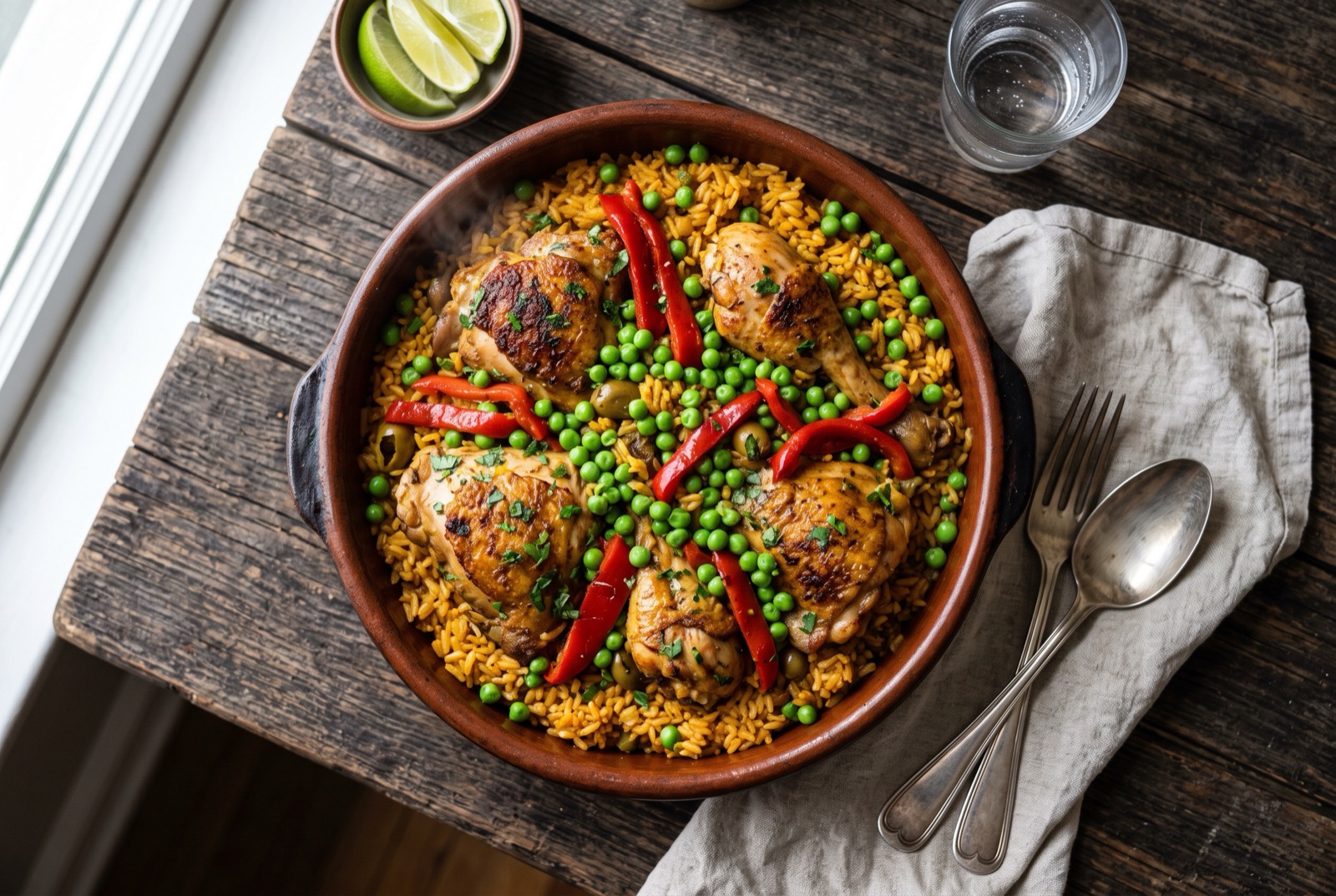
Cuba has 9 more dishes in the atlas — Cuban Arroz con Pollo and Flan Cubano, and 7 more.
Recipe by The DishRoute Kitchen · published August 20, 2026 · updated August 20, 2026