Habichuelas Guisadas.
Dominican Stewed Red Beans
Habichuelas guisadas · say it: ah-bee-CHWEH-las gee-SAH-das
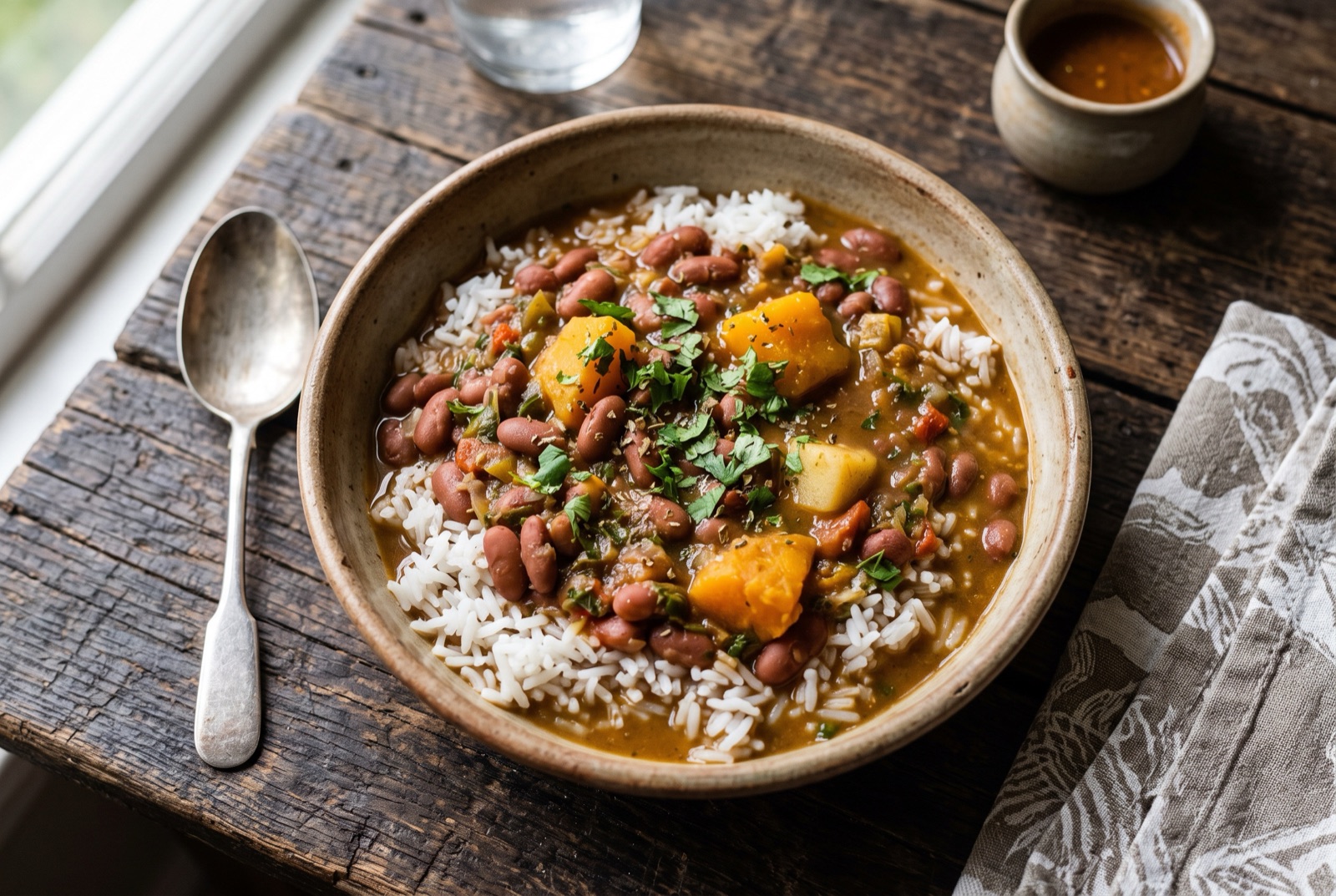
Habichuelas guisadas are red beans stewed in a garlic, onion and pepper base until the broth turns opaque and just thick enough to pour over rice without running off the plate. The distinguishing move is the auyama — a few cubes of West Indian pumpkin dropped in early, which collapse completely and thicken the liquid from the inside, so nothing needs mashing or blending. The flavour is savoury and rounded rather than sharp: sweet cooked pepper, garlic, dried oregano, a little tomato, and a green edge from culantro added at the end. Dominicans eat this most days of the week as the middle element of la bandera, and it is entirely meat-free as written, which surprises people who assume Caribbean beans are always cooked with pork.

- Gate
- Dominican Republic
- Prep
- 15 min
- Cook
- 40 min
- Total time
- 55 min
- Serves
- 6
- Status
- Easy
- Nutrition / serving · estimated
- Calories 240 kcal
- Protein 10 g
- Carbs 34 g
- Fat 8 g
- Fiber 11 g
- Sodium 420 mg
Why this recipe works.
- Thickened with squash the Dominican way, so the broth stays pourable instead of turning into a purée.
- Herbs added at the end, which keeps the culantro green and aromatic instead of stewed to nothing.
- Works from tinned beans on a weeknight or dried beans on a Sunday, with timings for both.
- Vegan as written, with no need for the bacon or ham most translations quietly add.
Ingredients.
12 itemsFor the stew
For the sofrito
To finish
Equipment
- Medium heavy saucepan
- Wooden spoon
- Ladle
Instructions.
Build the sofrito
Warm the olive oil in a heavy saucepan and cook the onion and pepper over medium heat for 6 to 8 minutes, until they slump and turn translucent with no browning at the edges. Add the garlic and cook one minute more, until it smells sweet rather than raw.
Fry the tomato paste
Stir in the tomato paste and the crumbled oregano and fry for a full minute, pressing the paste against the pan base until it darkens from bright red to brick and the oil around it takes on colour.
Tip This step is what stops the finished stew tasting thin and tinny. Do not rush it.
Add beans and squash
Tip in the beans with all their liquid, the cubed squash and the water, and stir to combine. Bring to a simmer, scraping any browned paste off the bottom of the pan so it dissolves into the broth.
Simmer until the squash collapses
Cook at a gentle simmer, uncovered, for 25 to 30 minutes. The squash should fall apart when pressed and the broth should turn from watery and see-through to opaque and slightly glossy.
Check the consistency
Crush a few pieces of squash against the side of the pan and stir them in. Dip a spoon: the broth should coat it and then run off in a stream. Loosen with hot water or simmer a few minutes longer as needed.
Season and finish
Add salt and black pepper now that the beans are fully soft, stir in the culantro and cilantro, and cook for two more minutes. Serve ladled over white rice while it is still steaming.
Tips from our kitchen.
- If you use tinned beans, do not drain them. The starchy liquid in the tin is doing part of the thickening work.
- Fry the tomato paste for a full minute before adding liquid — it should darken from bright red to brick and stop smelling raw.
- Add salt only after the beans are fully soft. Salting dried beans early can leave the skins tough, particularly if they are old.
- Judge the finished thickness with a spoon: the broth should coat it but still run off in a steady stream, not cling in a blob.
- Keep the culantro or cilantro for the last two minutes. Long cooking flattens it into something dull and vaguely grassy.
- A small piece of boiled plantain crushed into the pot is the standard trick if you have no squash and the broth is still thin.
Substitutions.
- Auyama (West Indian pumpkin) → Kabocha, butternut squash or one small floury potato
- Butternut is sweeter, so use about a third less. Potato thickens but does not add the same faint sweetness.
- Culantro → A larger handful of cilantro
- Culantro is stronger and more resinous, so use roughly three times as much cilantro to get near it.
- Tinned red kidney beans → 250 g dried beans, soaked overnight and simmered until tender
- Dried beans give a better broth. Keep their cooking liquid and use it in place of water in the stew.
Variations.
- Habichuelas negras guisadas
- The same method with black beans, which give a darker, earthier broth and are especially common in the east.
- With smoked pork
- A piece of smoked pork chop or a strip of bacon added with the sofrito — richer, common at weekends, and no longer vegetarian.
- Moro de habichuelas
- Rice cooked directly in the seasoned beans and their broth, producing a one-pot dish rather than two separate components.
Storage & reheating.
Keeps 4 days refrigerated and tastes better on the second day. The broth thickens considerably as it cools, so loosen it with hot water when reheating and check the salt again afterwards. It freezes well for 3 months — freeze before adding the fresh herbs, and stir in fresh cilantro or culantro after reheating so the flavour is bright again.
Serve with
Poured over white rice with concón, alongside stewed chicken or beef and a few slices of avocado.
The story behind Habichuelas Guisadas.
Beans arrived in Dominican kitchens the way they arrived across the Spanish Caribbean — as cheap, storable protein cooked in a sofrito base — but the Dominican treatment has a specific signature. There is no mashing, no blending and usually no bacon. The body of the broth comes from squash, sometimes supplemented with a piece of boiled plantain or a spoon of cooked yuca crushed into the pot, and the result is deliberately loose. It is meant to be poured, not spooned, because it will be landing on a plate of white rice and has to soak in.
Red kidney beans are the default, but the word habichuelas covers a range: habichuelas negras, blancas and rosadas all appear, and the north of the country uses more of the small pink beans than the capital does. What stays constant is the seasoning set — garlic, onion, ají cubanela, a spoon of tomato paste, dried oregano — and the timing of the herbs, with culantro or cilantro going in only at the very end so the green flavour survives.
The dish is so routine that its measurements are almost never written down. A Dominican cook makes it while the rice cooks and the meat braises, tasting and adjusting the thickness with hot water, and considers the correct consistency to be obvious. It is not obvious to anyone learning it, which is why the useful instruction is a visual one: the broth should coat the back of a spoon but still run off it in a stream, and when a ladle of it hits white rice it should spread rather than sit. Any thicker and you have made a bean purée; any thinner and the rice will not carry it.
Questions, answered.
How thick should habichuelas guisadas be?
Loose enough to pour. The standard test is a spoon: the broth should coat the back of it but run off in a steady stream rather than sitting in a lump. Remember that it will thicken as it sits, so pull it off the heat slightly looser than you want it. If it does over-reduce, hot water and a pinch of salt bring it straight back.
Can I make this without any meat?
Yes, and the everyday Dominican version usually has none. The depth comes from properly cooked sofrito, fried tomato paste and dried oregano rather than from pork. Smoked meat is a weekend enrichment rather than the baseline, so this recipe is genuinely vegan as written rather than a vegan adaptation of something else.
Do I have to use squash?
Not strictly, but something starchy needs to dissolve or the broth stays watery. Auyama is the traditional choice, and a floury potato or a piece of boiled plantain crushed into the pot will do the same job. As a last resort, scoop out half a cup of the beans, mash them and stir them back in — less elegant, but effective.
Are habichuelas the same as frijoles?
They are the same thing under different regional names. Dominicans, Puerto Ricans and Cubans generally say habichuelas for the beans themselves, while Mexicans and much of Central America say frijoles. In the Dominican Republic the word usually implies red kidney beans unless another colour is specified.
Why are my dried beans still hard after two hours?
Usually old beans, hard water, or salt and acid added too early. Beans more than a year old may never soften properly. Cook them in unsalted water with no tomato until they are tender, then season, and if your water is very hard try a pinch of bicarbonate of soda in the cooking water — but use it sparingly, as too much turns the skins slimy.
You might also like.
All recipes →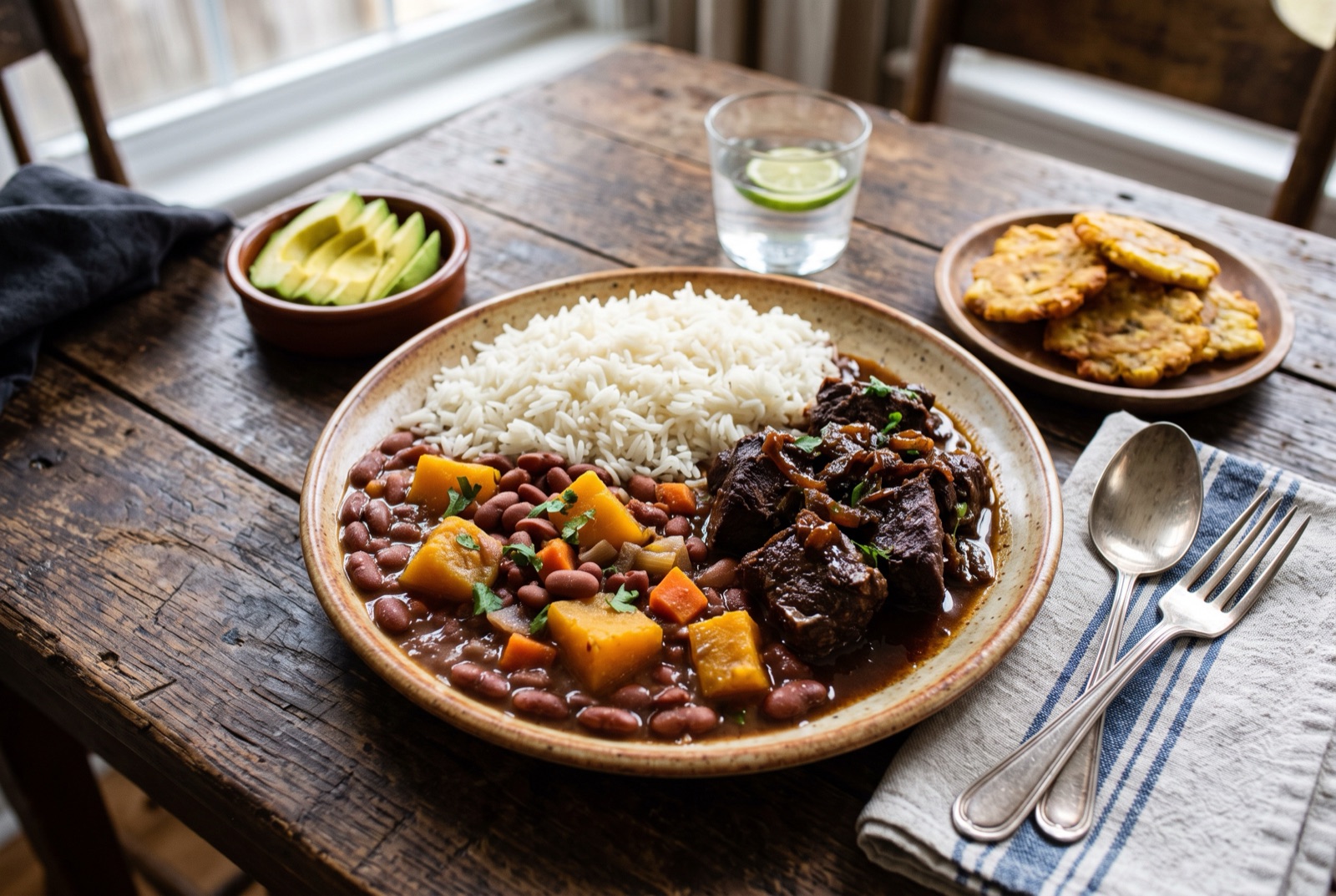
Dominican Republic2 hr 15 min
La Bandera Dominicana
The Dominican Flag Lunch Plate
Dominican Republic45 min
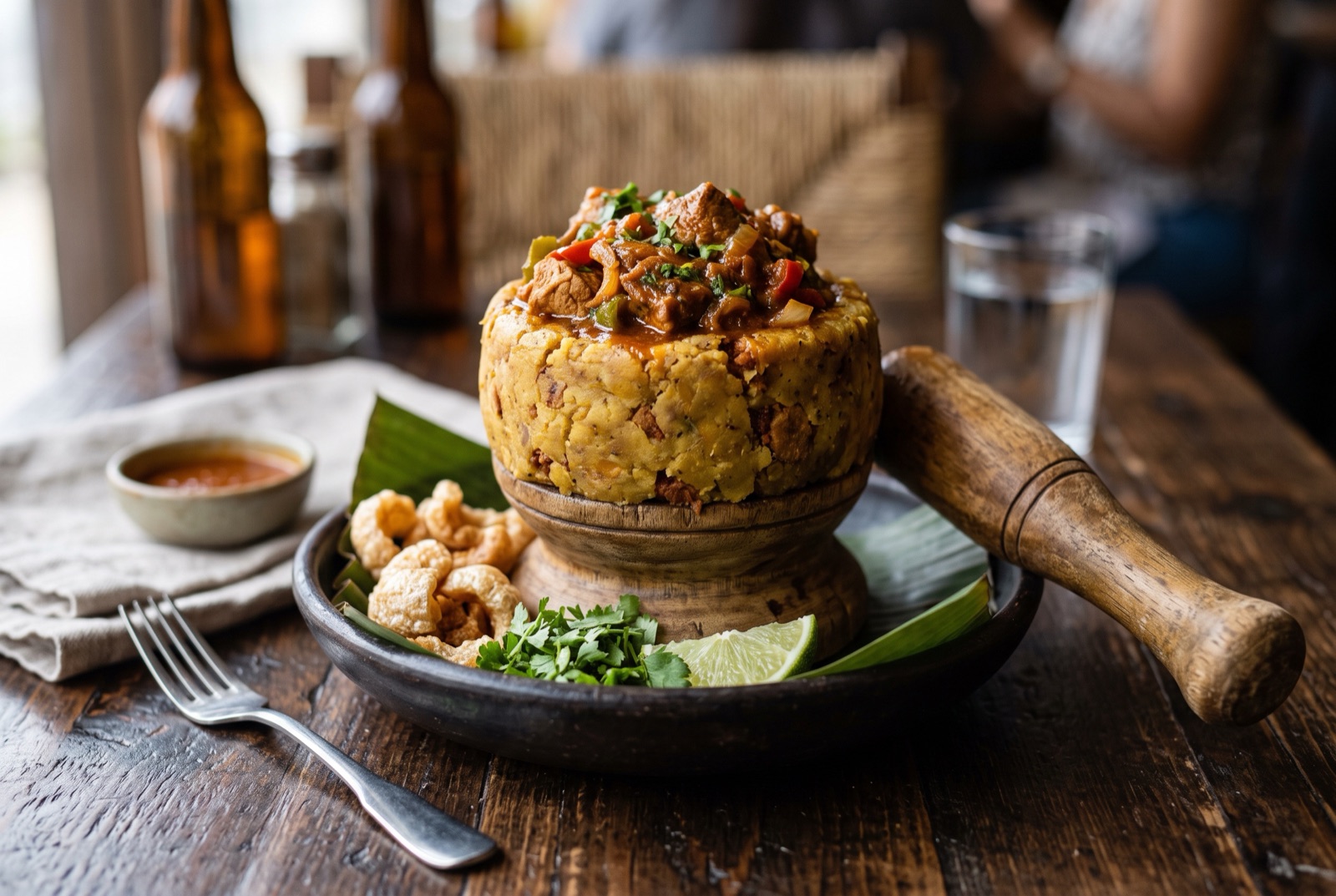
Mofongo
Pounded Plantain with Garlic and Crackling
Dominican Republic1 hr 35 min
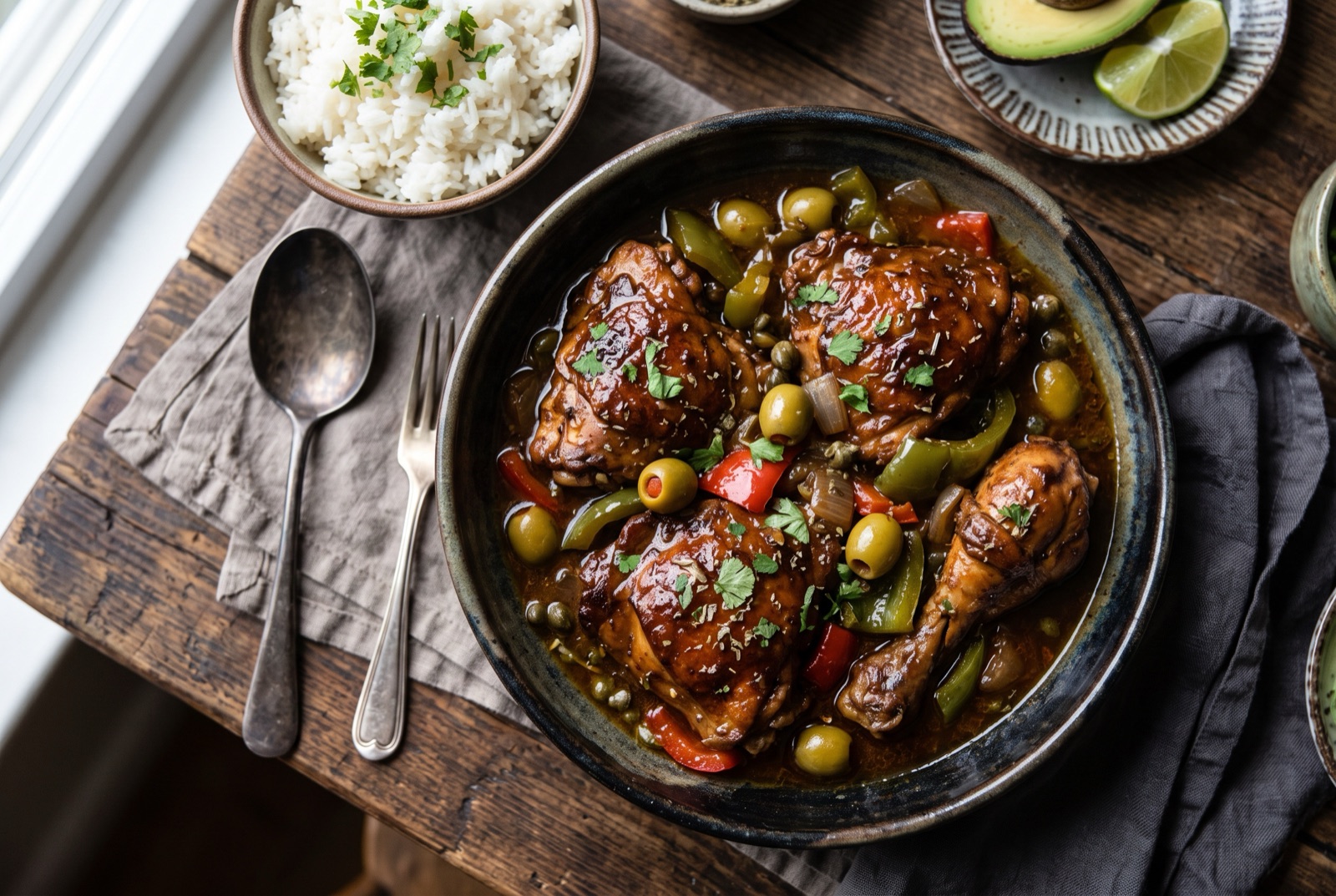
Pollo Guisado
Dominican Braised Chicken in Burnt Sugar
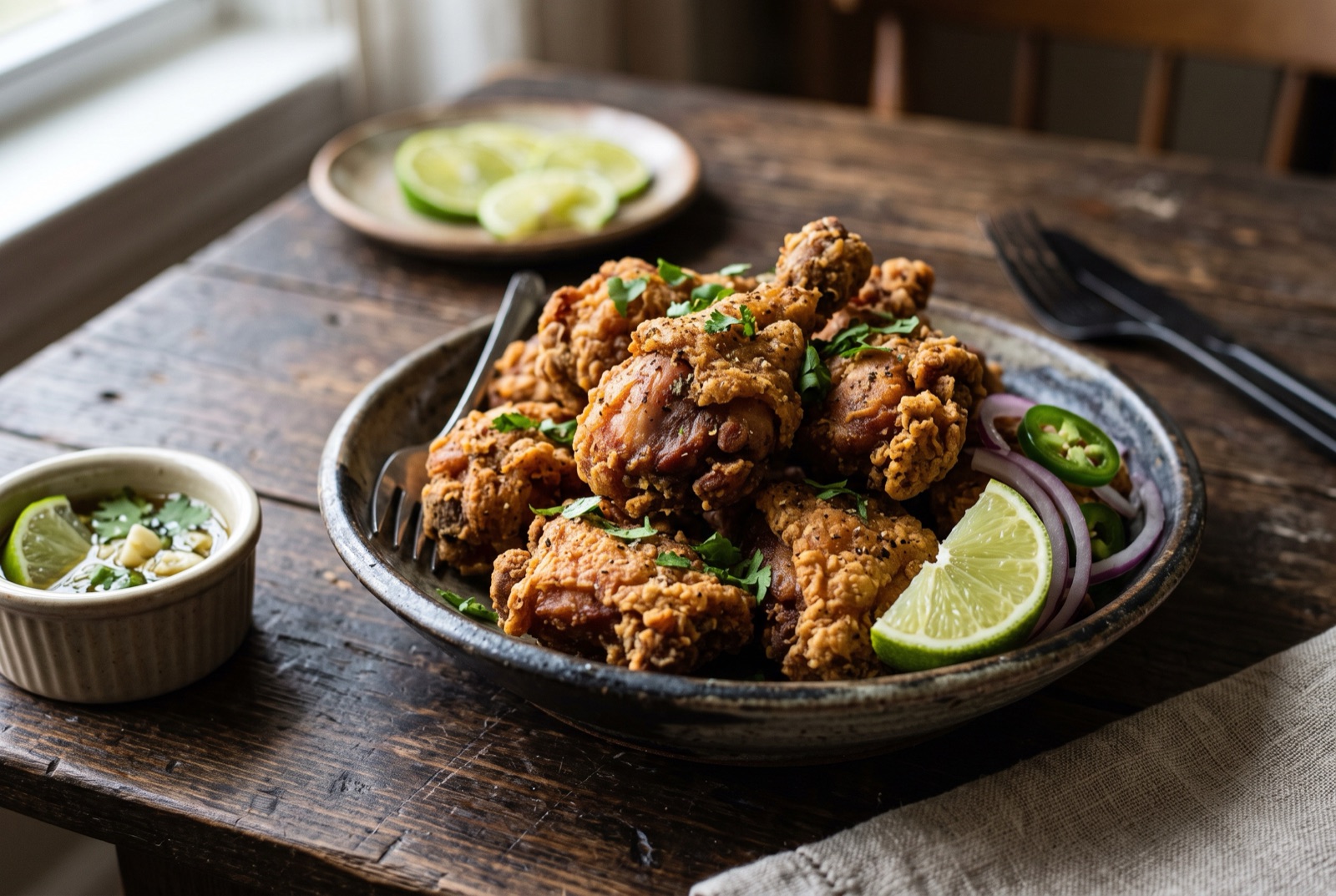
Dominican Republic1 hr 45 min
Chicharrón de Pollo
Dominican Crisp Fried Chicken Bites
Keep exploring Dominican Republic.
Dominican Republic has 9 more dishes in the atlas — Chicharrón de Pollo and Habichuelas con Dulce, and 7 more.
All Dominican Republic recipes Pumpkin recipes Tomato paste recipes Garlic recipes sidevegetarianvegandairy freegluten freeRecipe by The DishRoute Kitchen · published August 20, 2026 · updated August 20, 2026