Mofongo.
Pounded Plantain with Garlic and Crackling
Mofongo · say it: moh-FONG-goh
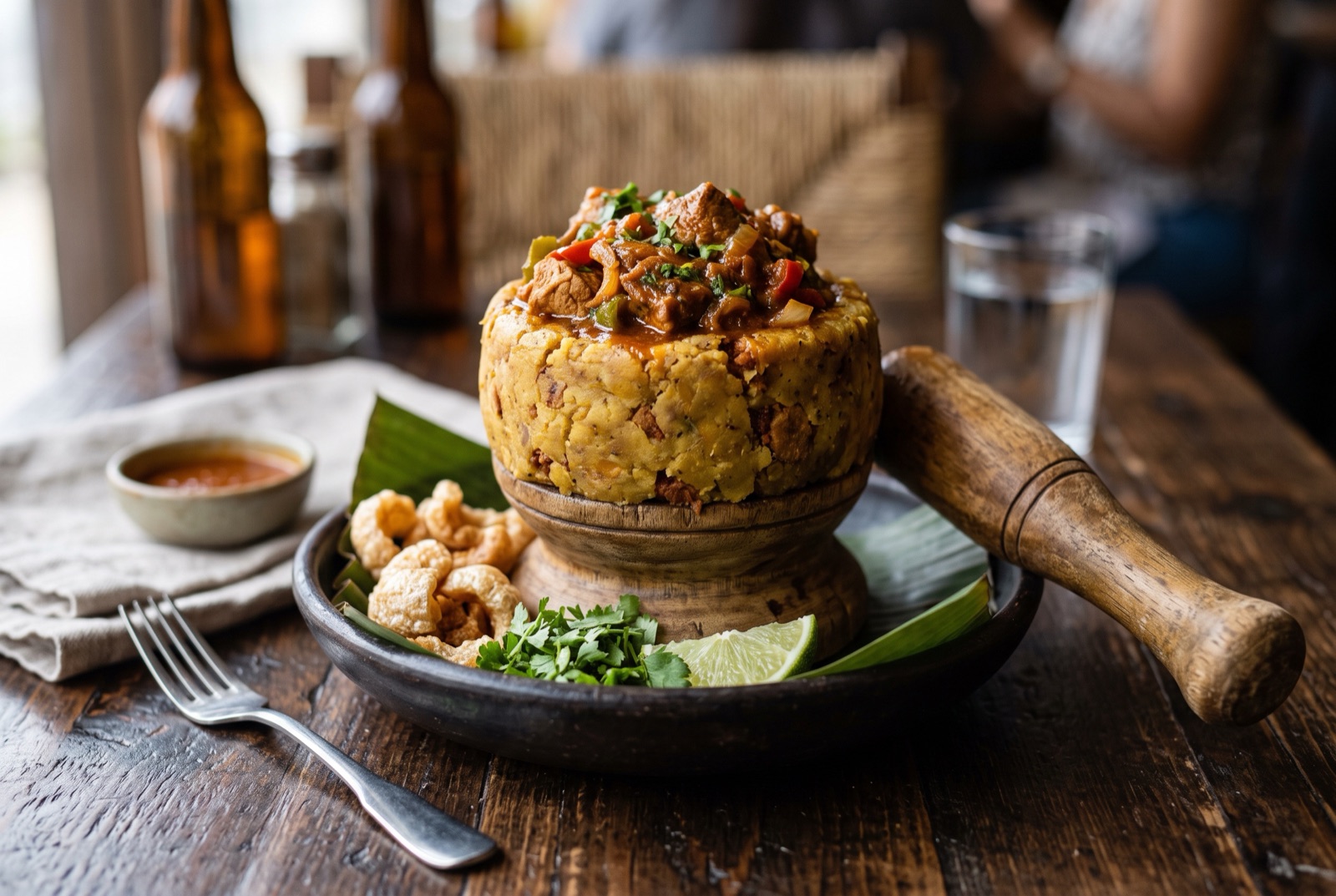
Mofongo is fried green plantain beaten in a wooden mortar with garlic, oil and chicharrón until it becomes a dense, savoury mash with the texture of very coarse mashed potato. It is not sweet in any way — green plantain is a starch, closer to a potato than to fruit — and the flavour is driven by raw garlic softened by hot plantain, salt from the pork crackling, and the faint bitterness of the frying oil. Traditionally it is packed into the mortar and turned out as a dome, then either eaten with a bowl of broth on the side or hollowed out and filled with stewed shrimp, chicken or beef. Made well it is heavy, garlicky and genuinely addictive; made badly it is dry and cements in the throat, and most of the technique below exists to prevent that.

- Gate
- Dominican Republic
- Prep
- 20 min
- Cook
- 25 min
- Total time
- 45 min
- Serves
- 4
- Status
- Medium
- Nutrition / serving · estimated
- Calories 610 kcal
- Protein 14 g
- Carbs 68 g
- Fat 33 g
- Fiber 5 g
- Sodium 760 mg
Why this recipe works.
- A broth-moistened mash, so the dome holds together without turning into a dry brick.
- Explains why the pilón beats a food processor, which turns pounded plantain into glue.
- Uses the frying oil and the crackling fat deliberately, the way street cooks do, instead of adding butter.
- Honest about the Dominican and Puerto Rican claims rather than pretending one invented it.
Ingredients.
11 itemsFor the mofongo
Optional filling
To serve
Equipment
- Wooden pilón or large heavy mortar and pestle
- Deep frying pan or small saucepan for frying
- Slotted spoon
Instructions.
Peel and cut the plantains
Cut the ends off each plantain, score the skin lengthwise in three places and prise it away under running water. Cut the flesh into 4 cm chunks and hold them in lightly salted water until you are ready to fry.
Tip Rub your hands and the knife with oil first — plantain sap is sticky and darkens everything it touches.
Fry the plantain
Heat the frying oil to 170°C and fry the drained, dried chunks in two batches for 6 to 8 minutes, until they are pale gold and a fork sinks in with light pressure. They should not brown; dark edges pound into hard flecks.
Crush the garlic
While the plantain fries, pound the peeled garlic cloves with the salt in the pilón until they form a rough, wet paste. Add the olive oil and stir it through so the garlic is suspended rather than sitting in a clump.
Pound the mash
Tip the hot plantain straight into the pilón with the garlic and beat it down with the pestle, turning and folding the mass with a spoon between strikes. Work in the chicharrón pieces as you go, keeping some of them coarse enough to bite.
Tip Speed matters more than force. Once the plantain drops below hand-hot it stops binding.
Moisten and shape
Add hot broth a tablespoon at a time until the mash holds together when squeezed but is still visibly textured, not smooth. Press portions firmly into a small bowl or back into the mortar and turn each one out as a dome.
Fill or serve plain
For plain mofongo, serve immediately with a mug of hot broth and lime wedges. To fill it, sauté the shrimp with the tomato and pepper for 5 minutes, hollow the domes with a spoon and pack the filling inside.
Tips from our kitchen.
- Buy plantains that are hard and fully green, with no yellow at the tips. Any ripeness at all makes the mash sweet and slightly gummy.
- Score the skin lengthwise with a knife and peel under running water — green plantain skin does not slip off like a banana and the sap stains hands and boards.
- Fry at a moderate 170°C. The chunks should go pale gold and yield to a fork but not brown, since dark edges pound into hard flecks.
- Pound while the plantain is genuinely hot. Once it cools the starch stops binding and no amount of beating will bring the mass together.
- Work broth in a tablespoon at a time. Mofongo goes from dry to soggy quickly, and you cannot take liquid back out.
- Serve it within minutes of shaping. Mofongo firms up as it cools and is at its best straight from the mortar.
Substitutions.
- Chicharrón (pork crackling) → Crisp bacon, or fried pork belly cubes
- For a meat-free version, use toasted garlic chips and a little extra olive oil — the texture changes but the mash still works.
- Wooden pilón → A large heavy mortar, or a sturdy bowl and the end of a rolling pin
- Avoid the food processor entirely. Blades develop the starch and turn the mash into something closer to wallpaper paste.
- Chicken broth for moistening → The sauce from any stewed meat, or vegetable stock
- Dominican cooks often use the liquid from whatever guisado is being served with it, which ties the plate together.
Variations.
- Mofongo relleno de camarones
- The dome hollowed out and filled with shrimp stewed in tomato, garlic and cubanela pepper, then covered back over with the plantain lid.
- Mangú
- The boiled Dominican relative: green plantain simmered rather than fried, mashed smooth with its own cooking water and topped with pickled red onion.
- Trifongo
- Plantain pounded together with yuca and ripe plantain for a softer, sweeter, more complex mash — common in Dominican restaurants.
Storage & reheating.
Mofongo is a make-and-eat-now dish and does not hold well; refrigerated, it turns dense and chalky within hours. If you have leftovers, break them up, moisten with broth and pan-fry the pieces in a little oil until crisp at the edges — a good second life, but not the same dish. The fried plantain chunks themselves can be fried a few hours ahead and reheated briefly before pounding.
Serve with
A mug of hot chicken broth poured over the dome at the table, plus stewed shrimp or chicken and a squeeze of lime.
The story behind Mofongo.
Mofongo is the clearest surviving link between Caribbean cooking and West African fufu, the pounded starch eaten across much of the region the transatlantic slave trade drew from. The method is the same — starch boiled or fried, then beaten in a tall wooden mortar until it binds — and the Spanish Caribbean substituted plantain, itself an African crop that took to the islands immediately. The word is generally traced to Kikongo-Kongo roots, and the wooden pilón used to make it is close to identical to mortars used in West Africa today.
Who owns mofongo is a live question. Puerto Rico has the strongest claim in terms of international profile, and mofongo relleno is a fixture on menus from San Juan to New York. The Dominican Republic makes it too and has done for as long as anyone can trace, though Dominicans reach more often for mangú, its boiled and smoother relative, and treat mofongo as restaurant food or weekend food rather than daily food. There is no clean verdict here, and any recipe that declares one is inventing it: the technique is older than either national cuisine and belongs to the whole region.
The pilón matters more than it sounds. A food processor overworks the starch into glue, and a potato masher cannot bind the pieces at all. Pounding breaks the fried plantain unevenly, so some of it becomes paste that holds the dome together while ragged pieces stay distinct, and the garlic gets crushed directly into hot starch, which mellows its raw bite without cooking it away. Dominicans usually serve mofongo with a cup of hot chicken broth alongside, poured over the mound at the table or sipped between bites — the single most important thing you can do to keep it from being dry.
Questions, answered.
Is mofongo Dominican or Puerto Rican?
Both, and the argument is not settled. The technique descends from West African fufu and arrived in the Spanish Caribbean with enslaved Africans, so it predates either modern national cuisine. Puerto Rico gave mofongo its international profile and makes it far more often; the Dominican Republic makes it too but relies more on mangú, the boiled version. Claiming a single inventor is a marketing move rather than a historical one.
Why is my mofongo dry and crumbly?
Either it cooled before you pounded it, or it needs more fat and liquid. Fried plantain binds only while hot, so work fast and keep the mortar warm. Then add broth a spoonful at a time along with the oil from the crackling until the mass holds when you squeeze it in your fist. Under-fried plantain also crumbles — the chunks must be soft enough to mash easily with a fork.
Can I use ripe or yellow plantains?
Not for mofongo. Ripe plantains have converted much of their starch to sugar, so they mash sweet and sticky and will not hold a dome. Yellow plantains belong in maduros, fried until caramelised and served as a sweet side. For mofongo you want plantains that are hard, deep green and difficult to peel.
Can I bake the plantain instead of frying it?
You can boil or air-fry it and still get an edible mash, but it will not be mofongo in the strict sense — frying is what gives the dish its slightly toasted flavour and its crisp flecks. If you boil it instead, you are effectively making mangú, which is a genuine Dominican dish in its own right and worth making deliberately rather than as a compromise.
What do I serve with mofongo?
Always something wet. A cup of hot chicken or beef broth alongside is the classic Dominican service, and the mound is either dipped into it or has it poured over. Beyond that, stewed shrimp, pollo guisado or braised beef with plenty of sauce all work, and a wedge of lime and hot sauce belong on the table.
You might also like.
All recipes →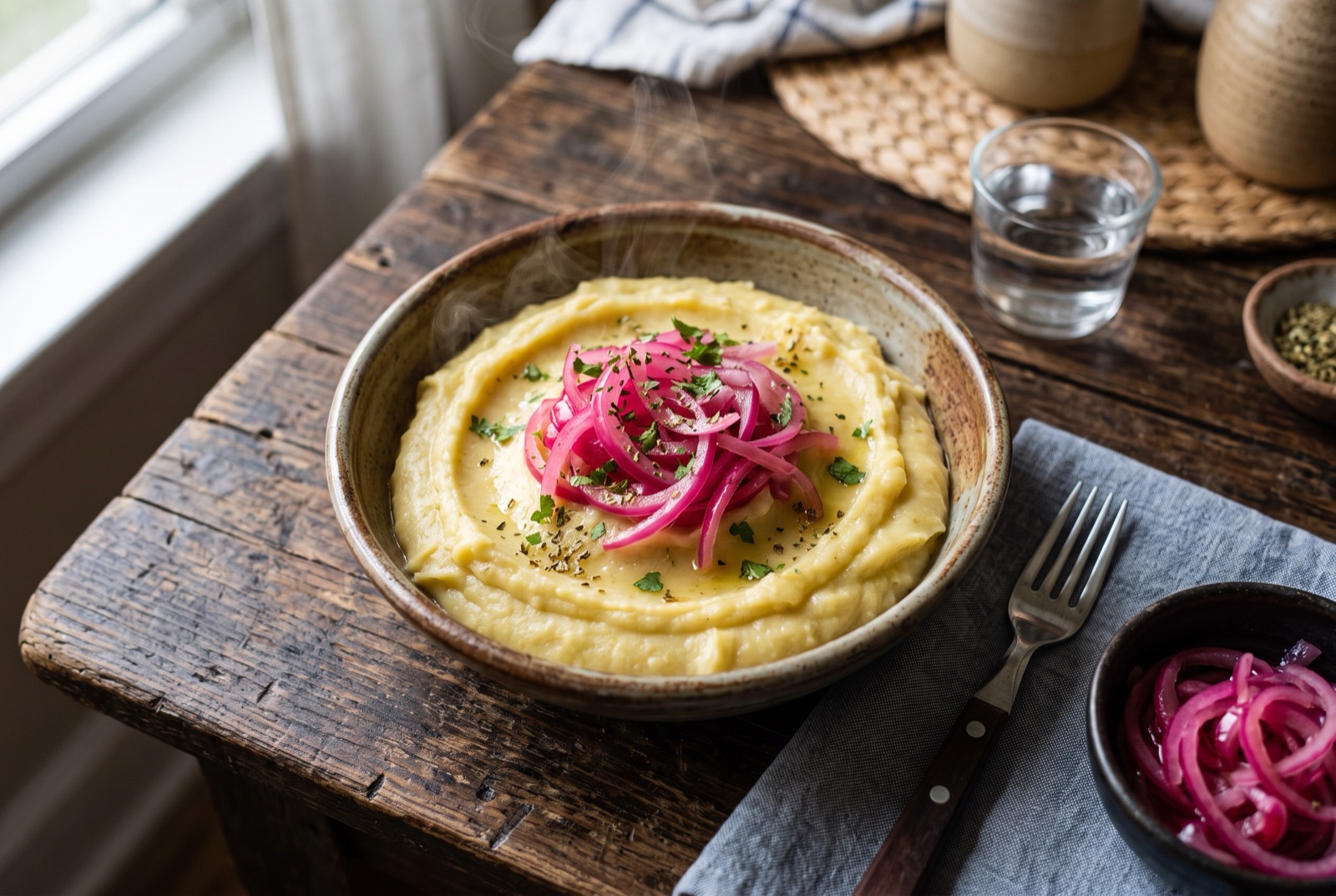
Dominican Republic35 min
Mangú
Dominican Mashed Green Plantains
Dominican Republic1 hr 45 min
Chicharrón de Pollo
Dominican Crisp Fried Chicken Bites
Dominican Republic3 hr 15 min
Sancocho de Siete Carnes
Dominican Seven-Meat Root Stew
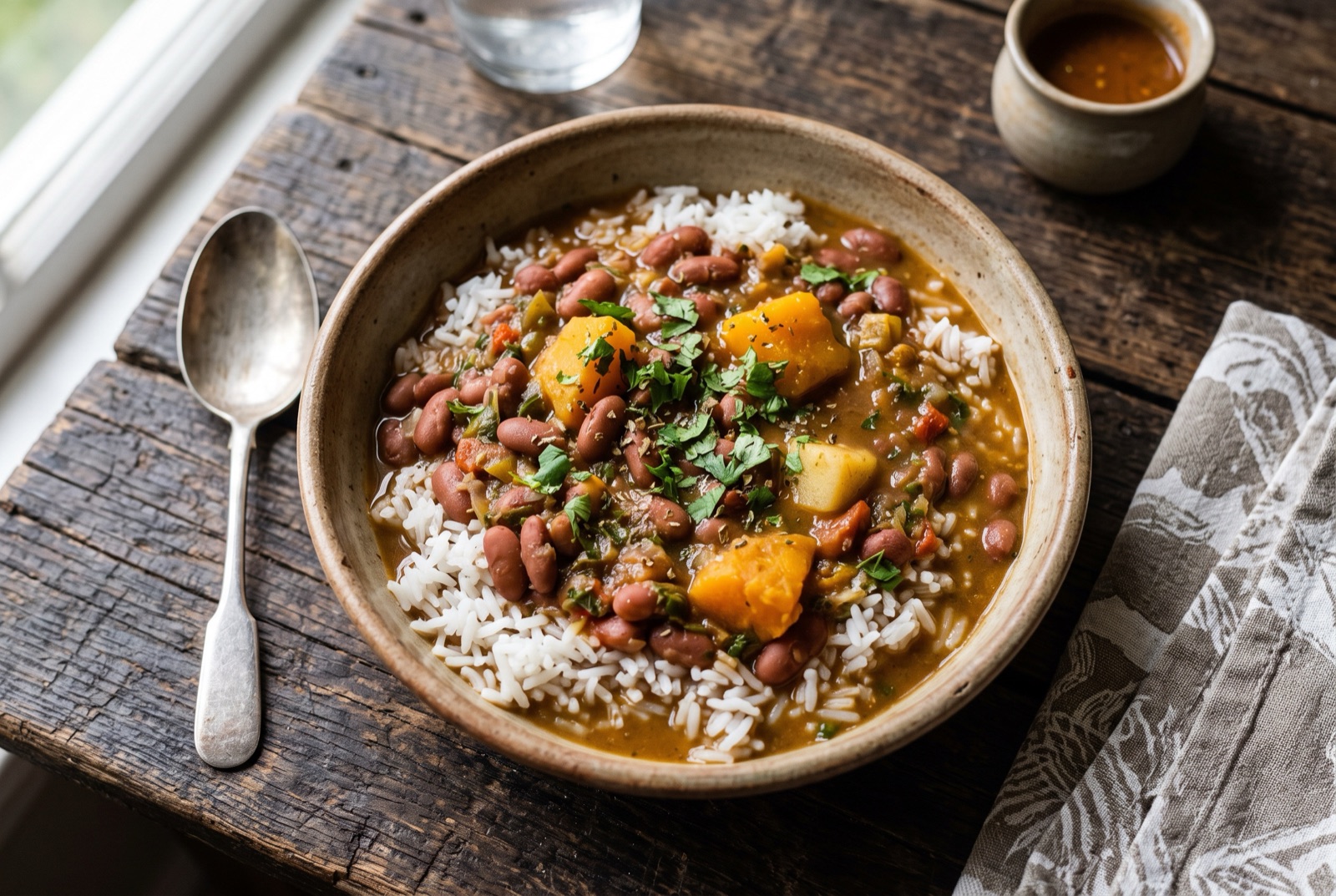
Dominican Republic55 min
Habichuelas Guisadas
Dominican Stewed Red Beans
Keep exploring Dominican Republic.
Dominican Republic has 9 more dishes in the atlas — Chicharrón de Pollo and Habichuelas con Dulce, and 7 more.
All Dominican Republic recipes Plantain recipes Garlic recipes Pork belly recipes mainsidedairy freegluten freeRecipe by The DishRoute Kitchen · published August 20, 2026 · updated August 20, 2026