Sancocho de Siete Carnes.
Dominican Seven-Meat Root Stew
Sancocho de siete carnes · say it: san-KOH-choh deh SYEH-teh KAR-nes
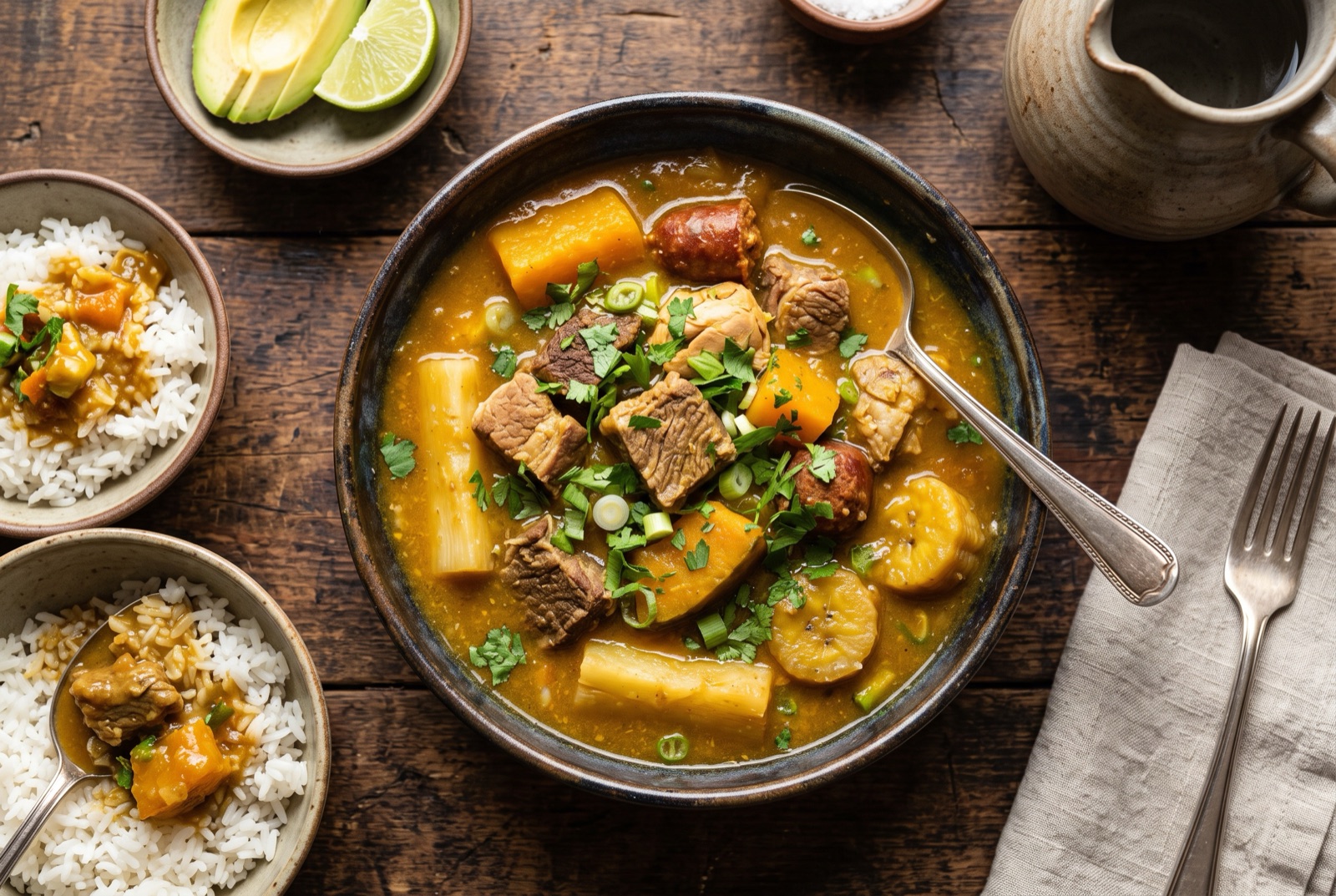
Sancocho de siete carnes is the stew Dominicans cook when there is a reason to gather. Seven different meats — beef shank, pork shoulder, chicken, goat, smoked pork, sausage and pork ribs — go into one pot in sequence, each given the time it needs, and then a mountain of root vegetables goes in after them. The broth is not thickened with flour or cream: the auyama collapses, the yautía dissolves, and the starch they release turns the liquid into something between a soup and a gravy, coloured deep gold and tasting of oregano, garlic and long-cooked meat. It is served in bowls over a scoop of white rice with avocado on the side, and it takes most of an afternoon, which is the point rather than the problem.

- Gate
- Dominican RepublicEl Cibao
- Prep
- 45 min
- Cook
- 2 hr 30 min
- Total time
- 3 hr 15 min
- Serves
- 8
- Status
- Takes skill
- Nutrition / serving · estimated
- Calories 720 kcal
- Protein 48 g
- Carbs 55 g
- Fat 34 g
- Fiber 7 g
- Sodium 980 mg
Why this recipe works.
- Meats go in staggered by toughness, so the goat is tender and the chicken has not turned to threads.
- The broth is thickened the Dominican way — mashed auyama and dissolved yautía, no flour or cornstarch.
- A sour-orange and oregano marinade seasons the meat from the inside instead of only flavouring the liquid.
- Written for a home stockpot and an ordinary supermarket, with honest swaps for goat and yautía.
Ingredients.
23 itemsThe meats
Seasoning
The víveres
To finish
Equipment
- Large heavy stockpot, 8 litres or more
- Sharp heavy knife for the root vegetables
- Ladle and a sturdy wooden spoon
Instructions.
Season the meats
Combine the garlic paste, oregano, sour orange juice, grated onion, half the peppers and a generous tablespoon of salt in a large bowl. Rub it into all the meats except the sausage, cover and refrigerate for at least 2 hours or overnight.
Tip Keep the meats in separate bowls or bags if you can — it makes the staggered cooking far easier to manage later.
Start the tough cuts
Heat the olive oil in a large stockpot and brown the beef shank and goat in batches until the surfaces are deeply coloured, not grey. Add the diced onion and remaining peppers, cook until soft, then pour in 2 litres of hot water and bring to a simmer.
Simmer and skim
Cook the beef and goat at a lazy simmer for 60 minutes, skimming the grey foam that rises in the first quarter hour. The meat should be starting to yield when pressed but not yet falling off the bone.
Add the rest of the meats
Add the pork shoulder, ribs and smoked pork with another 500 ml of hot water and simmer for 30 minutes. Then add the chicken and the sliced longaniza and cook for 15 minutes more, until the chicken is firm and the sausage has stained the broth orange.
Layer in the víveres
Add the yuca, yautía and plantain first and simmer for 15 minutes, then add the sweet potato, corn and auyama. Top up with hot water only if the pot looks dry — the roots release liquid as they cook.
Tip Keep the cut roots submerged in cold water until this moment so they do not oxidise into grey.
Thicken the broth
Simmer another 20 to 25 minutes, until a knife slides through the yuca and the auyama is falling apart. Crush four or five pieces of auyama against the side of the pot and stir them back in; the broth should turn opaque and coat the spoon.
Rest, correct and serve
Stir in the culantro, take the pot off the heat and let it sit for 10 minutes so the fat rises and the flavours settle. Correct with salt, black pepper and a squeeze of lime, then ladle over white rice with avocado alongside.
Tip Taste for salt again after the rest — a hot pot always reads saltier than one that has settled.
Tips from our kitchen.
- Season the meats the night before if you can. Sour orange and oregano need hours to get past the surface, and the difference is obvious in the finished broth.
- Do not peel and cut the root vegetables early and leave them dry — yuca and yautía discolour fast. Hold them in cold water until the moment they go in.
- Yuca has a woody central cord running through each piece. Pull it out after peeling or your guests will find it in their bowls.
- Add the auyama last but crush a few pieces against the pot wall before serving; that is what thickens the broth, and skipping it leaves you with meat soup.
- Skim the grey foam in the first fifteen minutes of the beef and goat. After that, leave the fat alone — the golden slick on top is part of the dish.
- If the pot tastes flat at the end, it is almost always salt and lime, not more oregano. Correct with both and taste again.
Substitutions.
- Goat → Lamb shoulder, or simply more beef shank
- Goat is the most characteristic meat and the hardest to buy outside a halal or Caribbean butcher. Lamb is closest; more beef shank makes a milder but still correct sancocho.
- Yautía (taro/malanga) → Extra yuca plus one waxy potato
- Yautía is the root that dissolves and thickens. Potato does part of that job, though the broth ends up slightly less silky.
- Sour orange (naranja agria) → Equal parts orange juice and lime juice
- A standard Caribbean substitution and close enough that most cooks abroad use it permanently.
- Longaniza → Spanish chorizo or any coarse garlicky pork sausage
- Dominican longaniza is more sour and oregano-heavy; chorizo adds paprika the original does not have, so use a little less.
Variations.
- Sancocho de pollo
- The weeknight version: chicken only, the same víveres and seasoning, ready in about an hour. This is what most Dominican households actually eat.
- Sancocho de habichuelas
- A meat-free Cibao version built on red beans and the full range of root vegetables, thickened the same way with auyama.
- Sancocho prieto
- A darker variation where the meats are browned in caramelised sugar first, giving a near-black broth and a deeper, faintly bittersweet flavour.
Storage & reheating.
Sancocho keeps 3 days refrigerated and improves overnight as the root starch continues to thicken the broth. It will set almost solid when cold; loosen with a splash of water or stock and reheat gently, stirring, until it steams. It freezes acceptably for up to 2 months, though the yuca turns slightly grainy on thawing — freeze mostly broth and meat and add fresh víveres when reheating if you care about texture.
Serve with
White rice, sliced avocado and hot sauce — the rice goes in the bowl first and the stew is ladled over it.
The story behind Sancocho de Siete Carnes.
Sancocho exists across Latin America — Colombia, Panama, Venezuela and Puerto Rico all have their own — and the family resemblance points back to the Iberian olla podrida, the everything-pot that Spanish settlers brought across the Atlantic. What made the Dominican version distinct was what was already growing here. Yuca and yautía were Taíno staples, cultivated and processed on Hispaniola long before 1492; plantains and the habit of pounding and boiling them arrived with enslaved West Africans; the pork, beef and the technique of a slow seasoned braise came from Spain. Sancocho is the clearest single plate of that three-way inheritance.
The seven-meat version is deliberately excessive. An everyday sancocho might use one or two meats — sancocho de pollo, or de res — and be a perfectly normal weeknight dinner. Siete carnes is what appears at baptisms, birthdays, election-night gatherings and Christmas, and the number is less a strict rule than a statement of intent: you emptied the butcher counter for these guests. Dominicans also regard it as the national hangover cure and the standard response to heavy rain, and it is one of the few dishes reliably served after midnight at a party rather than before it.
The cooking itself is unhurried and communal. Someone peels víveres at a table outside, someone else watches the pot, and the meats go in staggered so that the goat and beef shank have an hour's head start on the chicken. Nothing is puréed and nothing is strained. Toward the end the cook mashes a few pieces of auyama against the side of the pot with a spoon and stirs them back in — the only thickening step, and the one that turns a good pot of boiled meat into sancocho. It arrives at the table with white rice, sliced avocado, and hot sauce for anyone who wants it, and the leftovers are considered better the next day.
Questions, answered.
Do I really need seven meats?
No. Seven is a festive convention rather than a rule, and Dominican families make excellent sancocho with three or four. If you are cutting the list, keep one tough cut for body (beef shank or goat), one fatty cut (pork shoulder), chicken for flavour, and a smoked or cured element such as sausage. Below three meats the broth loses its layered depth and becomes a plain boiled dinner.
Why is my sancocho broth thin and watery?
Almost always one of two things: too much liquid at the start, or not enough starchy root. The broth thickens because auyama collapses and yautía dissolves into it, so if you skipped those or used only yuca and potato there is nothing to thicken with. Crush several cooked pieces of auyama against the side of the pot and stir them in, then simmer uncovered for ten more minutes.
Can I make sancocho in a pressure cooker?
You can pressure-cook the tough meats — goat and beef shank — for about 25 minutes to save an hour, then release, add the remaining meats and the root vegetables, and finish uncovered on the stove. Do not pressure-cook the víveres with the meat: yuca and auyama disintegrate completely and you lose the distinct pieces that make sancocho recognisable.
What is yautía and where do I find it?
Yautía is the corm of the tannia plant, sold in Latin and Caribbean markets as malanga or, close enough for cooking, as taro. It has a nutty, slightly earthy flavour and a starch that melts into broth, which is why it is the thickening root in sancocho. If your market has none, use extra yuca and one potato and accept a slightly thinner broth.
How far ahead can I make it for a party?
A day ahead is ideal and is what most Dominican cooks do for a large gathering. Cook it completely, cool it fast, refrigerate, then reheat slowly with a little added water. The flavour deepens overnight. Add the avocado, rice and any fresh herbs only at serving time.
You might also like.
All recipes →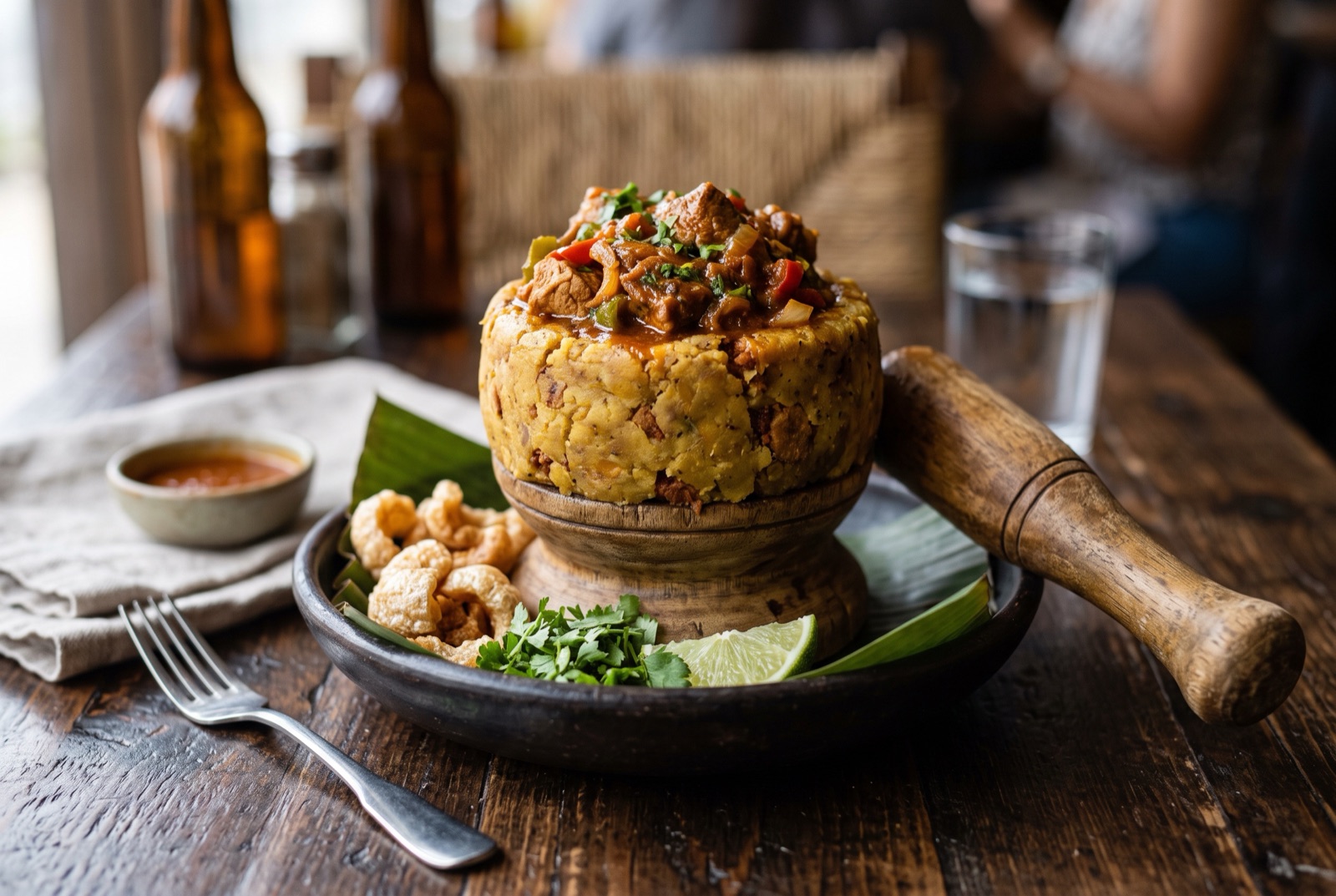
Dominican Republic45 min
Mofongo
Pounded Plantain with Garlic and Crackling
Dominican Republic1 hr 45 min
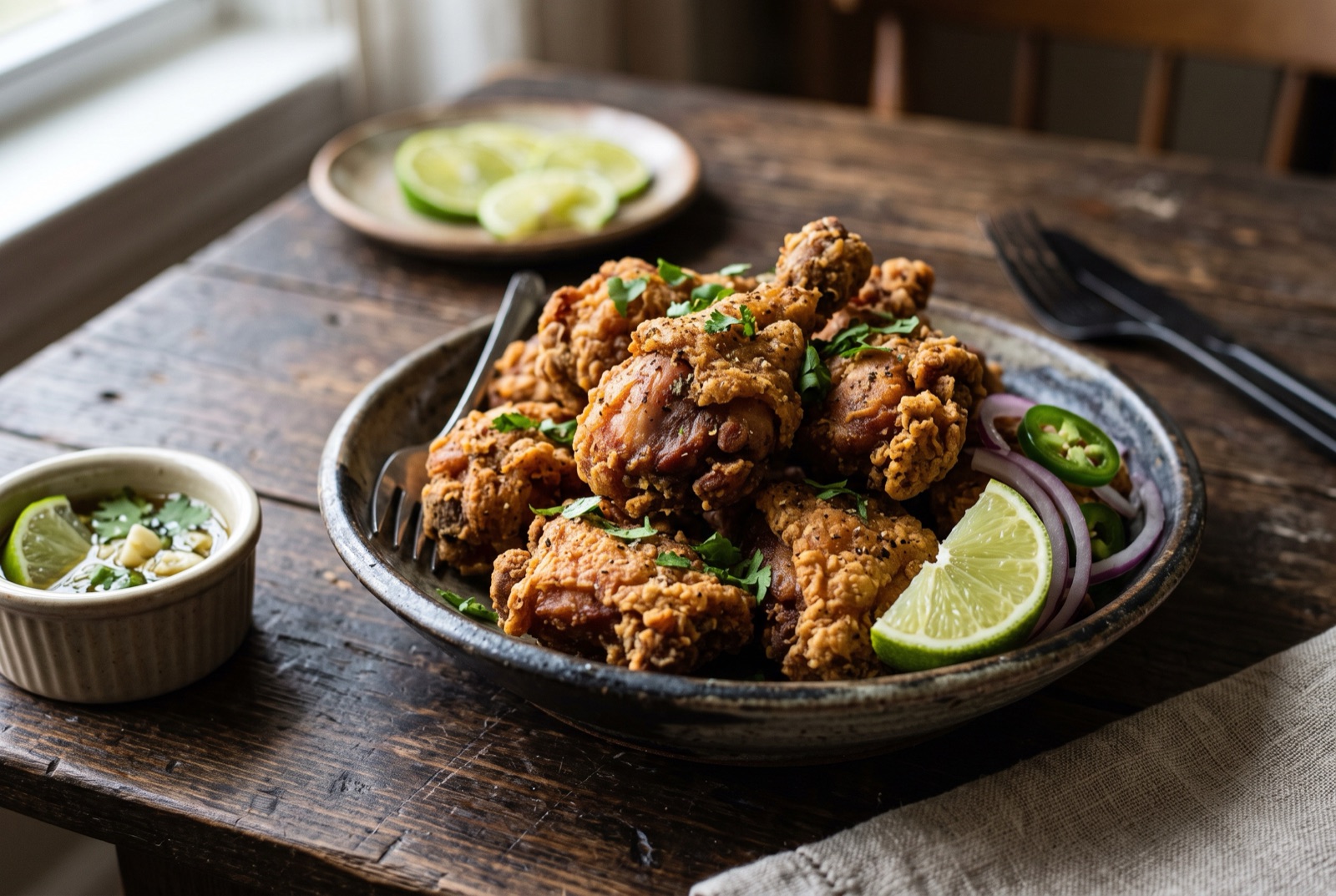
Chicharrón de Pollo
Dominican Crisp Fried Chicken Bites
Dominican Republic2 hr 15 min
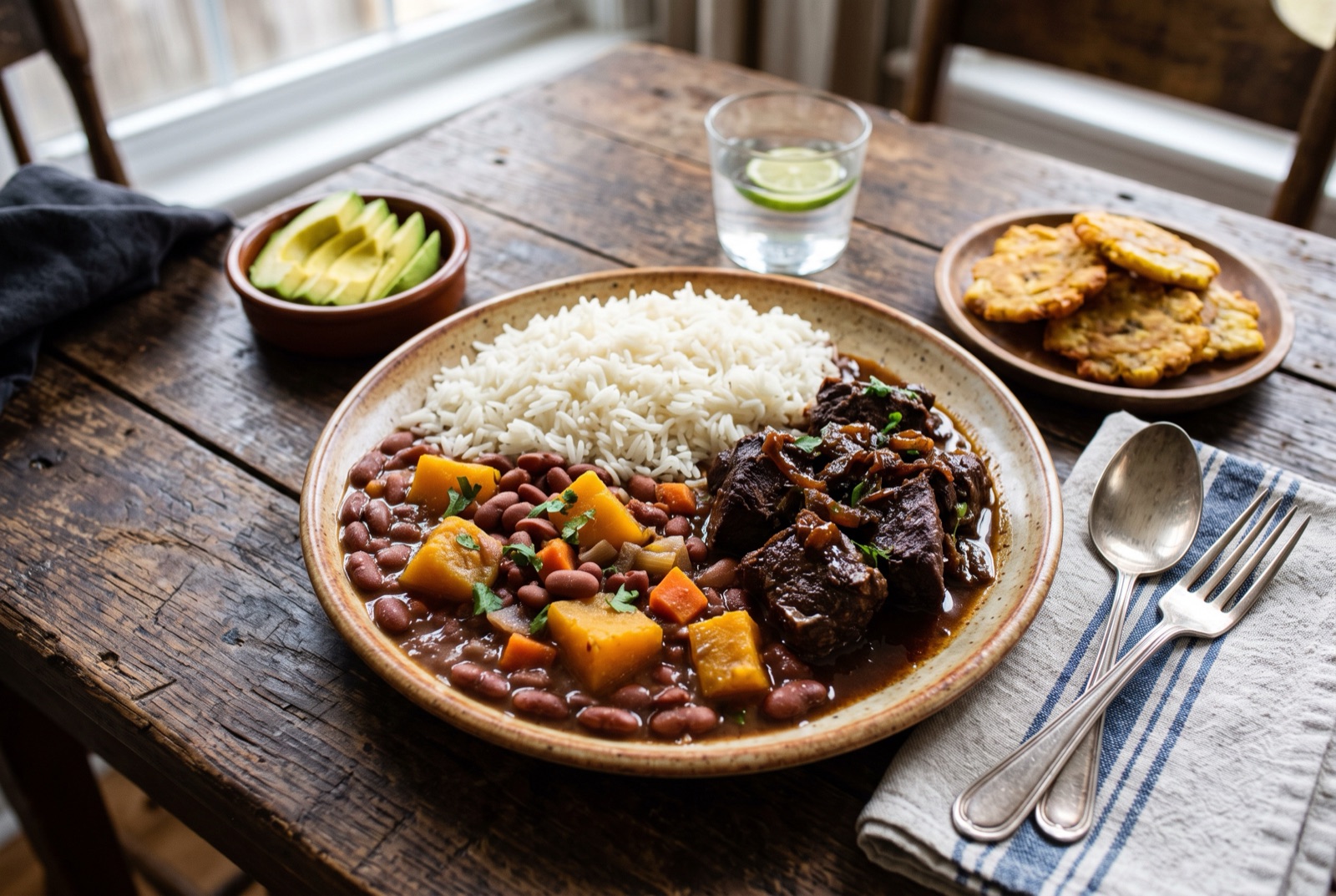
La Bandera Dominicana
The Dominican Flag Lunch Plate
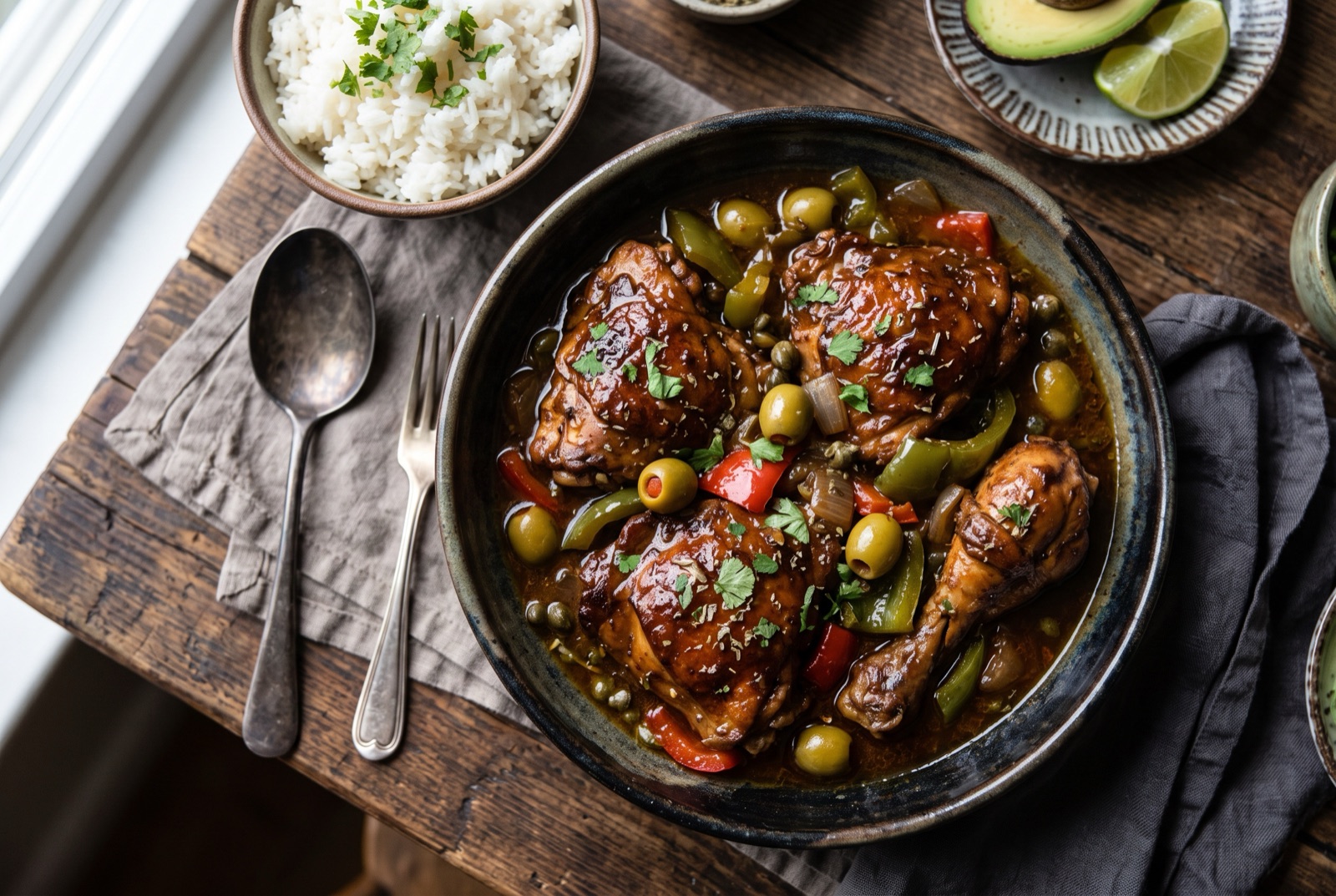
Dominican Republic1 hr 35 min
Pollo Guisado
Dominican Braised Chicken in Burnt Sugar
Keep exploring Dominican Republic.
Dominican Republic has 9 more dishes in the atlas — Chicharrón de Pollo and Habichuelas con Dulce, and 7 more.
All Dominican Republic recipes Beef shank recipes Pork shoulder recipes Chicken recipes soupmaindairy freeRecipe by The DishRoute Kitchen · published August 20, 2026 · updated August 20, 2026