Mangú.
Dominican Mashed Green Plantains
Mangú · say it: man-GOO
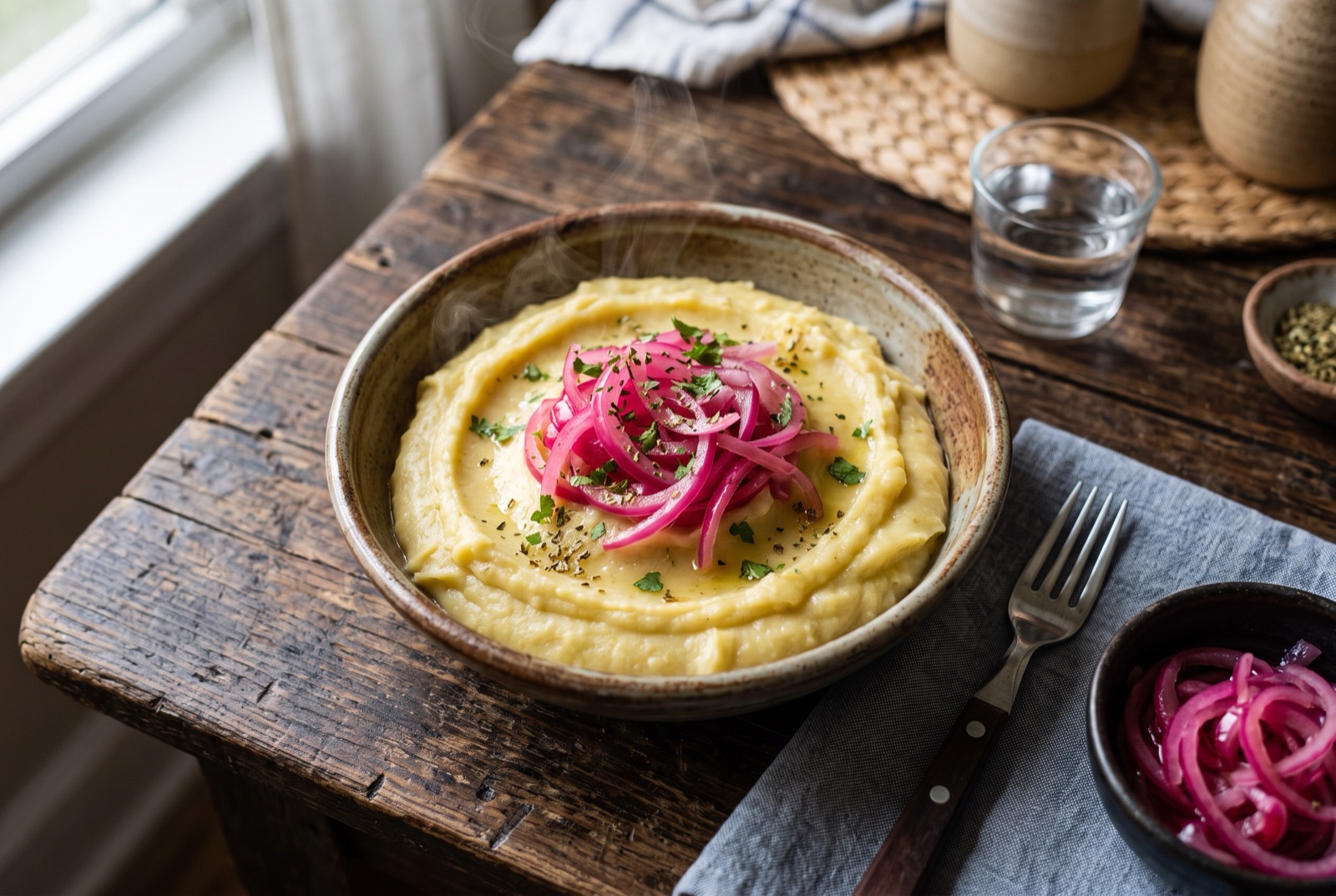
Mangú is boiled green plantain mashed to a smooth, dense purée with a little of its cooking water and olive oil, served warm under a tangle of red onion softened in vinegar. It tastes mild, faintly starchy and clean, closer to a very firm potato purée than to anything sweet, and the sharp pickled onion on top exists precisely to cut through that mildness. This is the Dominican breakfast: on its own it is a plain, cheap, vegan plate, and dressed with fried cheese, fried salami and eggs it becomes los tres golpes, the three hits, which is what most of the country eats on a weekend morning. It takes twenty-five minutes and the only real technique is keeping the mash hot and wet enough to stay soft.

- Gate
- Dominican Republic
- Prep
- 10 min
- Cook
- 25 min
- Total time
- 35 min
- Serves
- 4
- Status
- Easy
- Nutrition / serving · estimated
- Calories 340 kcal
- Protein 3 g
- Carbs 62 g
- Fat 11 g
- Fiber 5 g
- Sugar 28 g
- Sodium 480 mg
Why this recipe works.
- Mashes with hot cooking water rather than milk, which is how the texture stays silky instead of gluey.
- A proper vinegar-steeped onion topping, made while the plantains boil, so nothing waits around.
- Explains the ice-water trick Dominican cooks use to keep the mash from stiffening as it cools.
- Naturally vegan as written, with the full tres golpes breakfast laid out if you want it.
Ingredients.
9 itemsFor the mash
For the onions
Equipment
- Large saucepan
- Potato masher or sturdy fork
- Small bowl for the onions
Instructions.
Peel and boil the plantains
Trim the ends, score the skin lengthwise and peel the plantains under running water. Halve them crosswise and boil in well-salted water for 18 to 20 minutes, until a knife slides through with no resistance at all.
Tip Underboiled plantain will not mash smooth. Test the thickest half and give it more time if the centre still grips the knife.
Soften the onions
While the plantains cook, warm the olive oil in a small pan and cook the sliced onions over low heat for 4 minutes, just until they lose their raw crunch but keep some colour. Do not let them brown.
Pickle them
Pour the vinegar over the warm onions, season with salt and pepper, and take the pan off the heat. Leave them to steep while you finish the mash; they will turn glossy and their bite will soften into sharpness.
Mash while hot
Reserve 250 ml of the cooking water, then drain the plantains and mash them immediately with the olive oil, adding the hot cooking water a splash at a time until the purée is smooth and just holds a soft peak.
Tip Work fast. Plantain that cools below hand-hot turns stiff and refuses to smooth out.
Finish with cold water
Beat in the ice-cold water a tablespoon at a time — the mash will lighten slightly and turn silkier. Taste for salt; it should be seasoned enough to eat on its own.
Serve under the onions
Spread the mangú into warm bowls, pile the vinegared onions on top with a spoonful of their liquid, and serve straight away with coffee, or with fried salami, cheese and eggs for the full breakfast.
Tips from our kitchen.
- Salt the boiling water properly — plantain absorbs seasoning only while it cooks, and salting the mash afterwards never tastes the same.
- Mash with the plantain hot and add the cooking water hot too. Cold liquid makes the starch seize and turns the purée pasty.
- Use a fork, potato masher or ricer, never a blender or food processor. Blades develop the starch into something closer to glue than to mash.
- A splash of ice-cold water beaten in at the very end keeps mangú soft for longer — a common household trick and genuinely effective.
- Slice the red onions as thin as you can manage. Thick slices stay harsh and never fully soften in the vinegar.
- Serve immediately in a warm bowl. Mangú stiffens noticeably within ten minutes of leaving the pot.
Substitutions.
- Olive oil in the mash → Butter, or the oil left from frying salami
- Butter is common in Dominican homes and makes a richer mash, though it stops the dish being vegan or dairy-free.
- Red onion → White or yellow onion
- Red is standard because it holds colour in vinegar, but any onion works. Shallots are milder and pickle faster.
- White vinegar → Apple cider vinegar or sour orange juice
- Cider vinegar is softer and slightly fruity; sour orange gives a version closer to what you find on the north coast.
Variations.
- Los tres golpes
- The full Dominican breakfast: mangú topped with fried Dominican salami, fried queso de freír and eggs fried in the same pan.
- Mangú mixto
- Plantain boiled together with yuca, ñame or auyama and mashed as one, giving a sweeter and slightly looser purée.
- Fried mangú cakes
- Leftover mash shaped into patties and pan-fried until crusted on both sides — the standard second-day treatment.
Storage & reheating.
Mangú is best eaten straight from the pot and stiffens within hours. Refrigerated it keeps 2 days but sets almost solid; revive it by warming with a few tablespoons of hot water and beating hard, or shape the cold mash into patties and fry them. It does not freeze well — the texture turns grainy on thawing. The pickled onions, by contrast, keep a week in the fridge and get better.
Serve with
Fried Dominican salami, fried queso de freír and eggs for los tres golpes, with strong black coffee alongside.
The story behind Mangú.
Mangú belongs to the same family as mofongo and fufu — pounded or mashed starch, a technique that came to Hispaniola with enslaved West Africans and settled here around the plantain. The difference is the cooking method: mangú is boiled rather than fried, which makes it softer, plainer and cheaper, and that is exactly why it became breakfast rather than restaurant food. An often-repeated story claims the name comes from an American soldier saying "man, good" during one of the twentieth-century occupations. It is a charming story and almost certainly folk etymology; linguists generally point instead to West African roots, and the honest answer is that the origin is not firmly established.
What is not in doubt is its place in daily life. Mangú with los tres golpes — queso frito, salami frito and fried eggs — is the country's breakfast signature, and Dominican salami, a soft, deep-red, heavily seasoned sausage sold in thick tubes, is an object of real national affection despite being a mass-produced product rather than an artisanal one. Dominicans abroad ship it home in suitcases. The plate is enormous by breakfast standards elsewhere, and it is built for a working day that starts early.
The pickled onion on top is not a garnish. Red onion is sliced thin, briefly softened in hot water or oil and then steeped in vinegar, and it lands on the mash with some of its liquid so the acid runs into the plantain. Without it, mangú is honestly a little dull, and Dominicans will tell you as much. The same mash also turns up at dinner beside stewed meats, and any leftovers are usually rolled and pan-fried the next morning.
Questions, answered.
What is the difference between mangú and mofongo?
Cooking method and texture. Mangú is boiled and mashed smooth, so it is soft, plain and pale, and it is eaten mostly at breakfast. Mofongo is fried and then pounded in a wooden mortar with garlic and pork crackling, so it is dense, coarse, savoury and usually a main course. Both start from green plantain and both descend from the same West African tradition.
Why did my mangú turn out gluey?
Almost certainly a blender or food processor. Plantain starch turns elastic and sticky when it is worked by blades, and there is no way to recover it. Mash by hand with a fork, a masher or a ricer, and stop as soon as the lumps are gone. Adding cold liquid to hot plantain causes a milder version of the same problem.
Can I make mangú with yellow plantains?
Not really — yellow plantains are sweet and will give you a sticky, dessert-leaning purée rather than mangú. Use plantains that are hard and completely green, with no yellow at the tips. If yours have started to turn, boiling them a couple of minutes longer helps the texture but will not remove the sweetness.
What are los tres golpes?
The "three hits" that traditionally sit on top of mangú at breakfast: fried Dominican salami, fried queso de freír (a firm white cheese that holds its shape in the pan), and fried eggs. Mangú on its own is a complete and common breakfast too, particularly on weekdays; the three hits are more of a weekend or holiday matter.
How do I keep mangú soft until everyone sits down?
Beat in a splash of ice-cold water at the end, which is what Dominican cooks do, and hold the mash covered in a warm bowl rather than in the cold pot. If it stiffens anyway, add two or three tablespoons of hot water and beat it again — it comes back completely. Never reheat it uncovered, as the surface dries into a skin.
You might also like.
All recipes →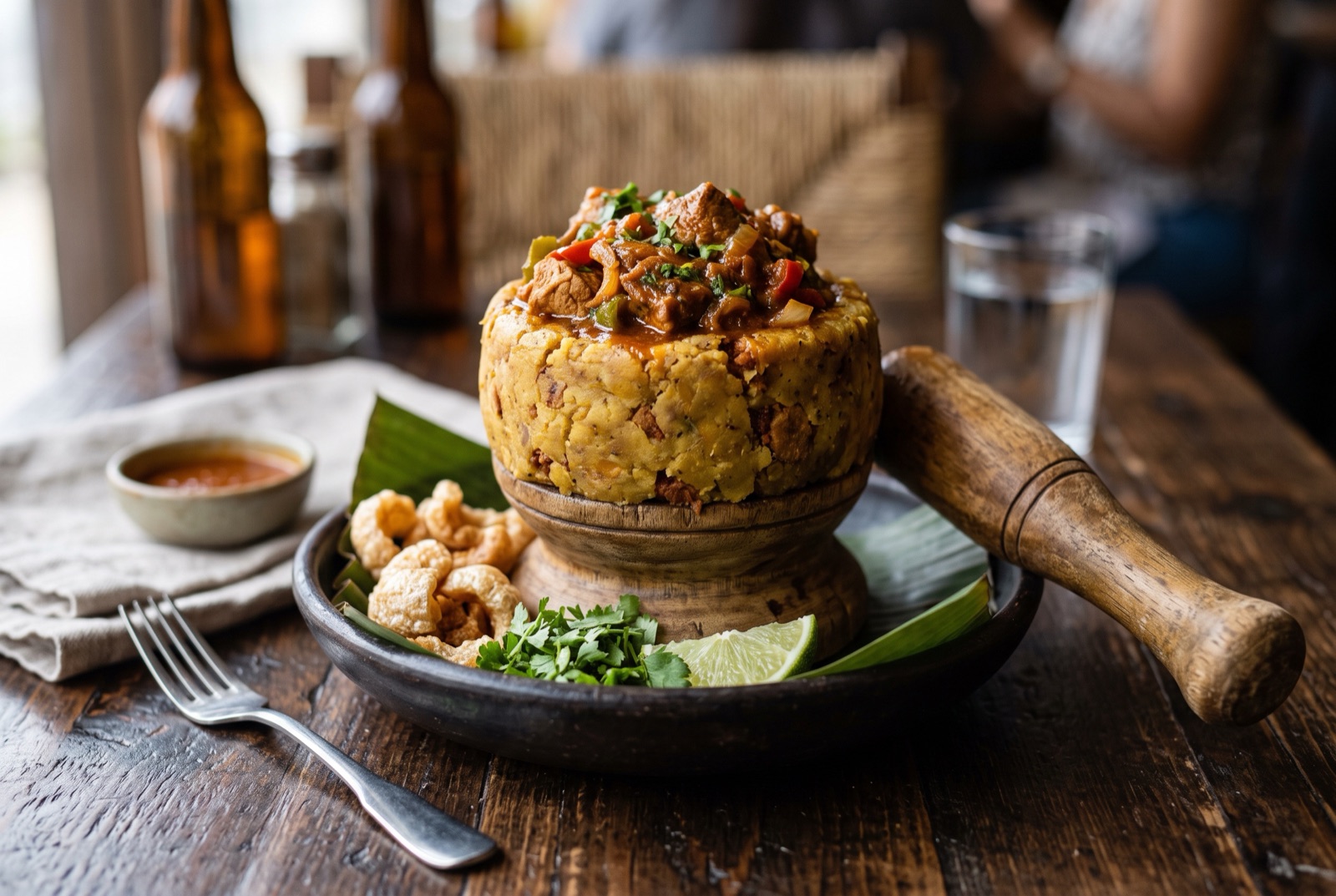
Dominican Republic45 min
Mofongo
Pounded Plantain with Garlic and Crackling
Dominican Republic3 hr 15 min
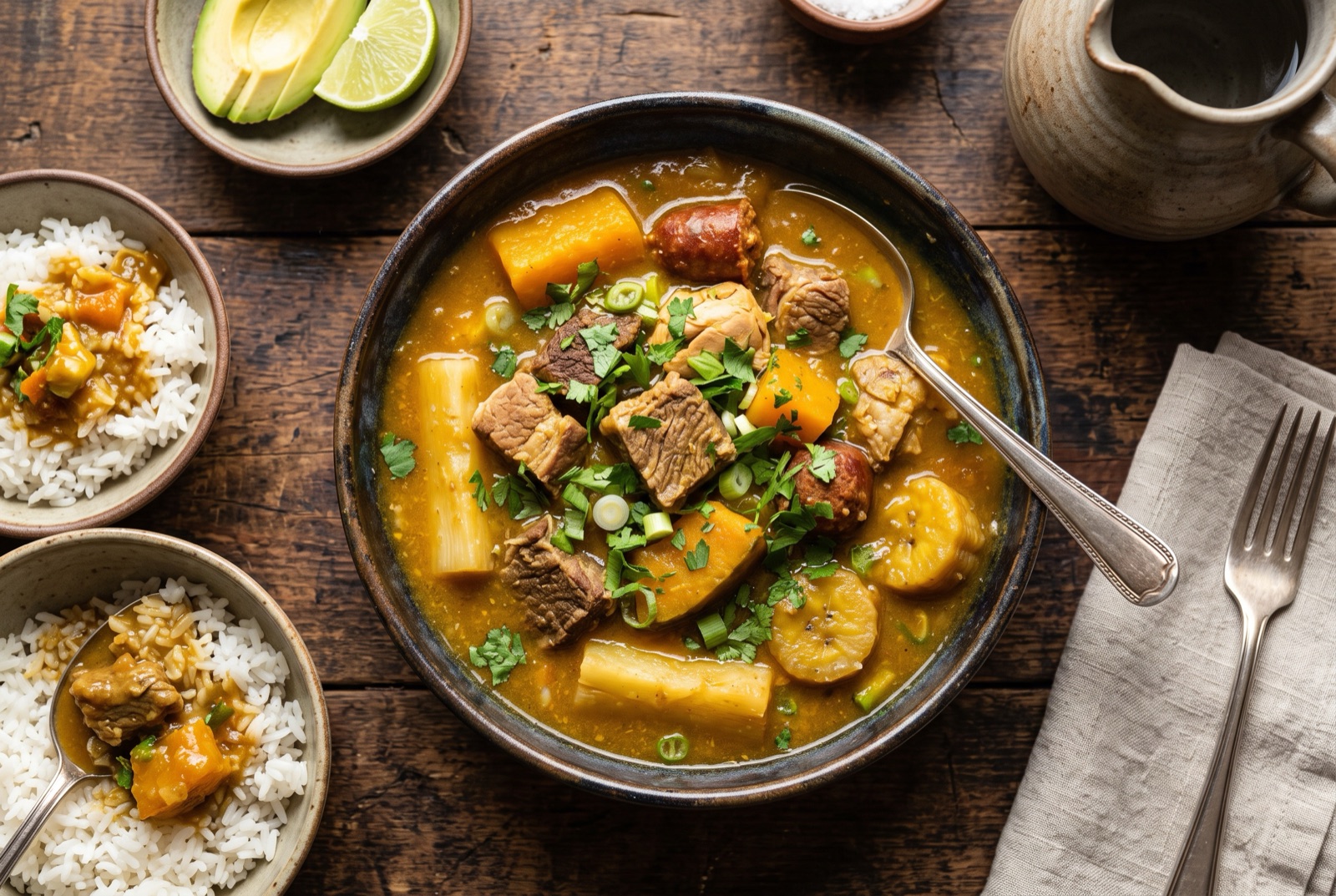
Sancocho de Siete Carnes
Dominican Seven-Meat Root Stew
Dominican Republic55 min
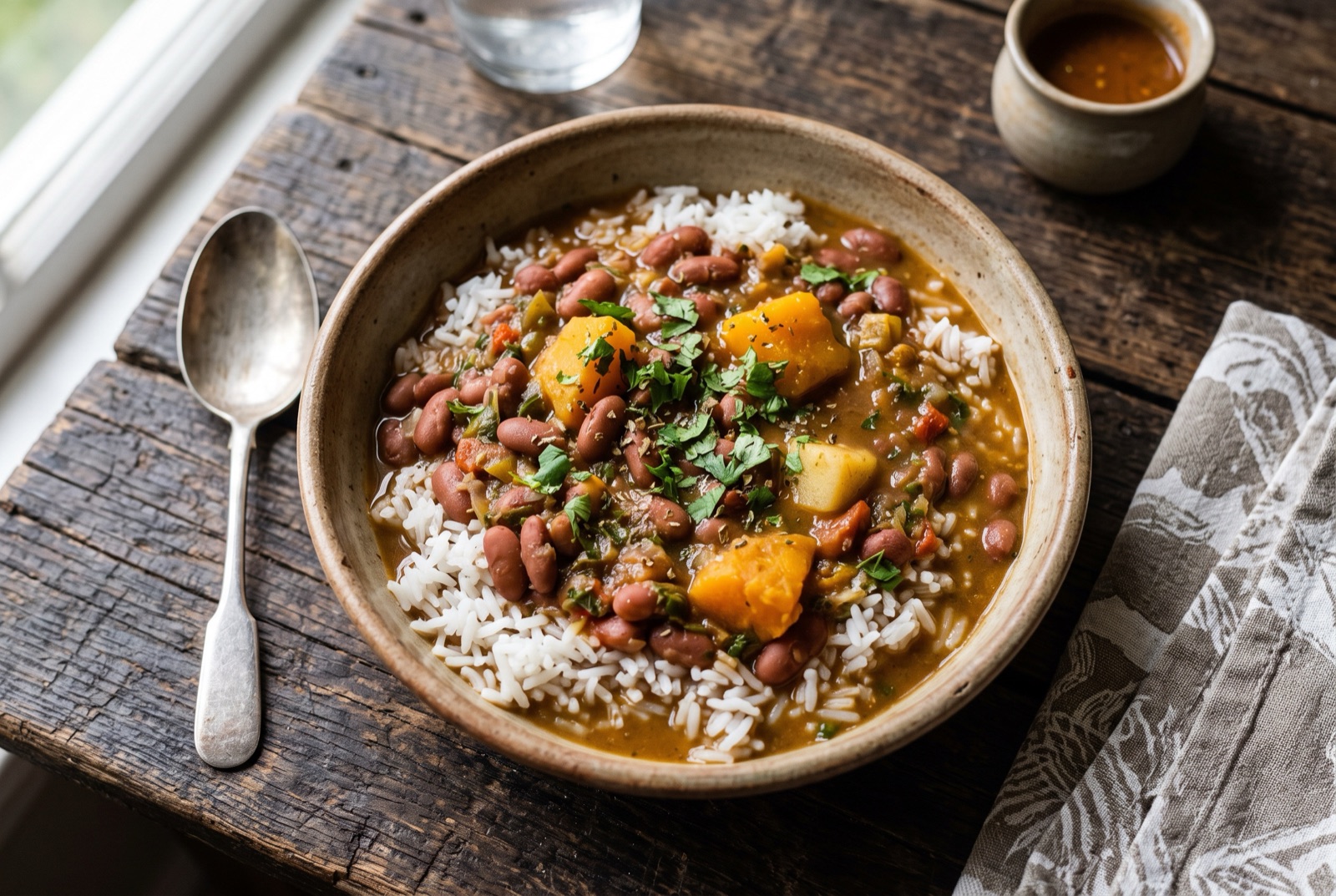
Habichuelas Guisadas
Dominican Stewed Red Beans
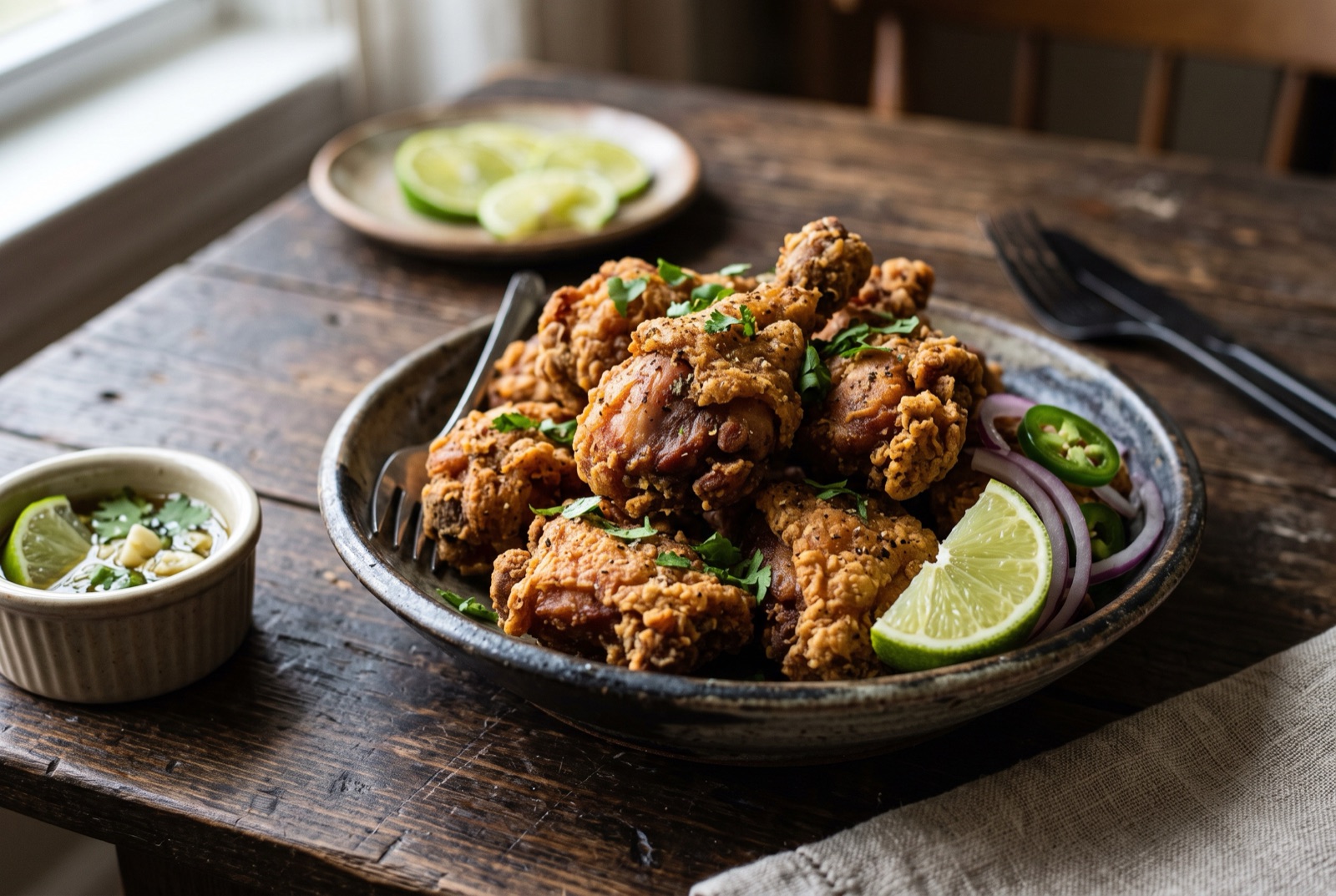
Dominican Republic1 hr 45 min
Chicharrón de Pollo
Dominican Crisp Fried Chicken Bites
Keep exploring Dominican Republic.
Dominican Republic has 9 more dishes in the atlas — Chicharrón de Pollo and Habichuelas con Dulce, and 7 more.
All Dominican Republic recipes Plantain recipes Onion recipes Olive oil recipes breakfastsidevegetarianvegandairy freegluten freeRecipe by The DishRoute Kitchen · published August 20, 2026 · updated August 20, 2026