Elote.
Mexican Grilled Street Corn
Elote asado · say it: eh-LOH-teh
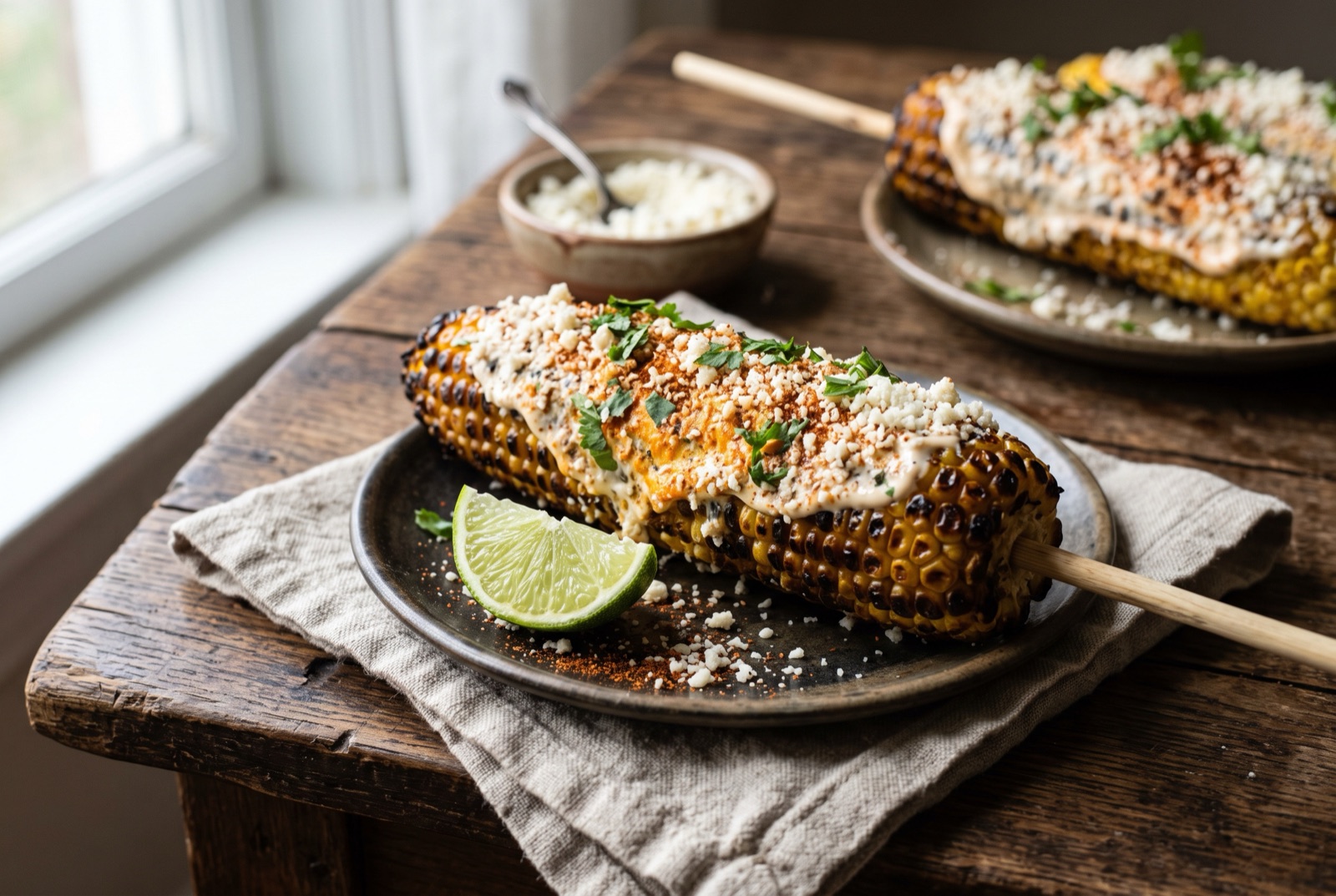
Elote is a whole cob of corn cooked over fire until parts of it blacken, then coated while still too hot to hold: a slick of mayonnaise and crema first, so everything else sticks, then a heavy snowfall of crumbled cotija, a dusting of ground chile, and lime squeezed over the top. What you get in one bite is sweet, smoky, salty, sour and mildly hot all at once, with kernels that pop rather than slump. It takes fifteen minutes and four ingredients you already recognise, and it is the reason people who claim not to like corn change their minds standing on a street corner.

- Gate
- MexicoNationwide
- Prep
- 10 min
- Cook
- 12 min
- Total time
- 22 min
- Serves
- 4
- Status
- Easy
- Nutrition / serving · estimated
- Calories 320 kcal
- Protein 8 g
- Carbs 27 g
- Fat 22 g
- Fiber 3 g
- Sugar 7 g
- Sodium 480 mg
Why this recipe works.
- Grilled with the husk pulled back into a handle, so the cob chars properly and you still have something to hold.
- The coating is mixed to a spreadable consistency first, which stops the cheese sliding off in clumps.
- Cotija is treated correctly as a dry, salty grating cheese, with substitutions that actually behave the same way.
- Includes the esquites conversion, which is what to do when you have no grill and it is raining.
Ingredients.
9 itemsFor the corn
For the coating
To finish
Equipment
- Charcoal or gas grill (or a ridged cast-iron pan)
- Tongs
- Small bowl
- Fine grater or fork for crumbling cheese
Instructions.
Prepare the cobs
Peel the husks back from each cob without detaching them, pull off and discard all the silk, then twist the husks together and tie them with a torn strip of husk to make a handle. Rinse and pat the kernels dry so they char instead of steam.
Mix the coating
Stir the mayonnaise, crema and grated garlic together in a small bowl until smooth and thick enough to cling to a spoon but still spreadable. Keep it beside the grill — you will use it the moment the corn comes off.
Grill until blistered
Set the cobs directly over hot coals or a high gas flame, husk handles hanging off the edge, and grill for 10–12 minutes, turning every 2 minutes. Stop when a scatter of kernels has gone properly black and the rest are deep yellow and glossy, with a popcorn smell coming off the grill.
Tip Resist turning them constantly. Each side needs two uninterrupted minutes on the metal to blister.
Coat while steaming hot
Working fast, brush or spoon the mayonnaise mixture over each cob and turn it until every kernel is slicked. The heat should thin the coating slightly and pull it down into the grooves between the rows.
Press on the cheese and chile
Scatter the crumbled cotija over a plate and roll each cob through it, pressing with your palm so the cheese sticks in a thick layer. Dust generously with the ground chile and add a little flaky salt if the cheese is on the mild side.
Finish with lime and eat
Squeeze a lime wedge over each cob, scatter the cilantro if using, and serve immediately with more lime on the side. Eat them standing up, straight off the husk handle, before the coating cools and sets.
Tips from our kitchen.
- Buy corn in the husk and check that the silk at the tip is pale and slightly damp — dry brown silk means the sugars have already turned starchy.
- Peel the husks back rather than off, tie them at the base with a strip of husk, and you have a built-in handle that also stops your fingers burning.
- Let the grill get properly hot and turn the cobs every couple of minutes. You want scattered blackened kernels for smoke, not an evenly scorched cob.
- Coat the corn while it is still steaming. The heat loosens the crema mixture so it slides into the gaps between kernels instead of sitting on top.
- Crumble the cotija finely and press it on with your palm. Loose crumbs on wet mayonnaise fall off on the first bite.
- Add the lime last, at the table. Squeezed on early it thins the coating and makes the cheese slide.
Substitutions.
- Cotija → Ricotta salata, dry feta, or aged pecorino romano
- You need a hard, salty, non-melting cheese that crumbles. Parmesan works at a push but is nuttier and less sharp than cotija.
- Mexican crema → Sour cream loosened with a splash of milk, or crème fraîche
- Some vendors skip the crema entirely and use mayonnaise alone. Both are common; the crema version is richer and slightly tangier.
- Ground chile piquín → Ancho or guajillo powder for mildness, cayenne plus a pinch of paprika at the hot end, or a commercial chile-lime seasoning
- If you use a chile-lime blend, cut back on the salt — those powders are heavily salted already.
- Charcoal grill → A ridged cast-iron pan or a gas burner with the cobs held in tongs
- A dry cast-iron pan over high heat blisters kernels well. Boiling is also authentic — plenty of carts sell boiled elote — you simply lose the smoke.
Variations.
- Esquites
- Cut the kernels off after grilling, warm them in a pan with a knob of butter and a sprig of epazote, then dress with the same coating and serve in a cup with a spoon.
- Elote con mantequilla
- Butter instead of mayonnaise, rubbed on hot, with cheese, chile and lime. Common where boiled corn is the rule, and lighter on the tongue.
- Elote negro
- Made with huitlacoche, the corn fungus, stirred into the coating for an earthy, mushroom-dark version sold in some Mexico City markets.
Storage & reheating.
Elote is a fifteen-minute dish meant to be eaten immediately, and coated cobs go soggy within the hour as the corn releases steam under the sauce. If you want to prep ahead, grill the corn up to a day early, refrigerate it bare, then reheat on the grill or in a hot dry pan and coat at the last moment. Leftover coated corn is best rescued as esquites: cut off the kernels and warm them in a pan.
Serve with
A cold michelada or agua de jamaica, and napkins — more than you think you need.
The story behind Elote.
Corn is not a side dish in Mexico; it is the foundation the entire cuisine is built on. Maize was domesticated in the Balsas river valley thousands of years ago and the nixtamalization process that turns it into masa is a Mesoamerican invention of enormous consequence — it unlocks nutrients that raw ground corn withholds, and it made large settled populations possible. Elote sits at the other, simpler end of that relationship: fresh corn, eaten as a vegetable, cooked over fire the way people have cooked it for as long as there has been fire and corn.
The street version is a modern urban ritual rather than an ancient one. Eloteros push carts through neighbourhoods in the evening, often signalling with a whistle or a bell, boiling cobs in a covered tank or grilling them over a charcoal grate, and they sell two things from the same cart. Elote is the cob on a stick or in a corn husk sleeve. Esquites is the same treatment in a cup — kernels cut off and simmered, sometimes with epazote, then dressed identically and eaten with a spoon. In practice the choice comes down to whether you want to walk while you eat.
Regional habits vary more than the dish's simplicity suggests. Plenty of vendors boil rather than grill, especially in Mexico City, where a tank of corn kept hot in salted water with a little lime is the standard cart setup. Butter appears in some places instead of, or alongside, the mayonnaise. The chile is whatever the vendor prefers — piquín is common and fierce, ancho is milder and sweeter, and commercial chile-lime powders are everywhere. What stays constant is the logic: fat to carry flavour, salty aged cheese for depth, acid to stop it becoming heavy, and chile to keep you eating. The version that spread across the United States as "Mexican street corn", frequently with the kernels cut off and mixed into a salad, is a real descendant, but the original is eaten with two hands and a napkin you will need.
Questions, answered.
What is the difference between elote and esquites?
They use identical seasoning and differ only in format. Elote is a whole cob, usually on a stick, eaten with your hands. Esquites are the kernels cut off the cob, warmed in a pan or in a little broth, and served in a cup with a spoon. Street carts typically sell both from the same setup.
Should I grill the corn in the husk or out of it?
For char, out of it — bare kernels touching the grate is what produces the blistered black spots and smoky flavour. Peel the husks back to the base and tie them so they act as a handle. Grilling fully inside the husk steams the corn instead, which is gentler but gives you none of the smoke.
Is elote supposed to be sweet corn?
Not traditionally. Mexican field corn used for elote is starchier and chewier than the very sweet hybrids sold in most supermarkets elsewhere. Sweet corn works and tastes excellent, but if you can find a starchier variety at a Latin market, it holds up better to the heavy coating and gives a more authentic texture.
Can I make elote without mayonnaise?
Yes. Rub the hot cobs with butter instead — it is a genuine street version, not a compromise — or use Mexican crema alone. Both carry the cheese and chile perfectly well. For a vegan version, use a plant-based mayonnaise and swap the cotija for crumbled firm tofu tossed with salt and nutritional yeast.
How do I keep the toppings from falling off?
Mix the mayonnaise and crema together into a smooth paste and spread it on while the corn is still steaming hot, so it melts into the gaps between kernels. Then press the crumbled cheese on with your hand rather than sprinkling it, and dust the chile over the top. Add lime only when you are about to eat.
You might also like.
All recipes →
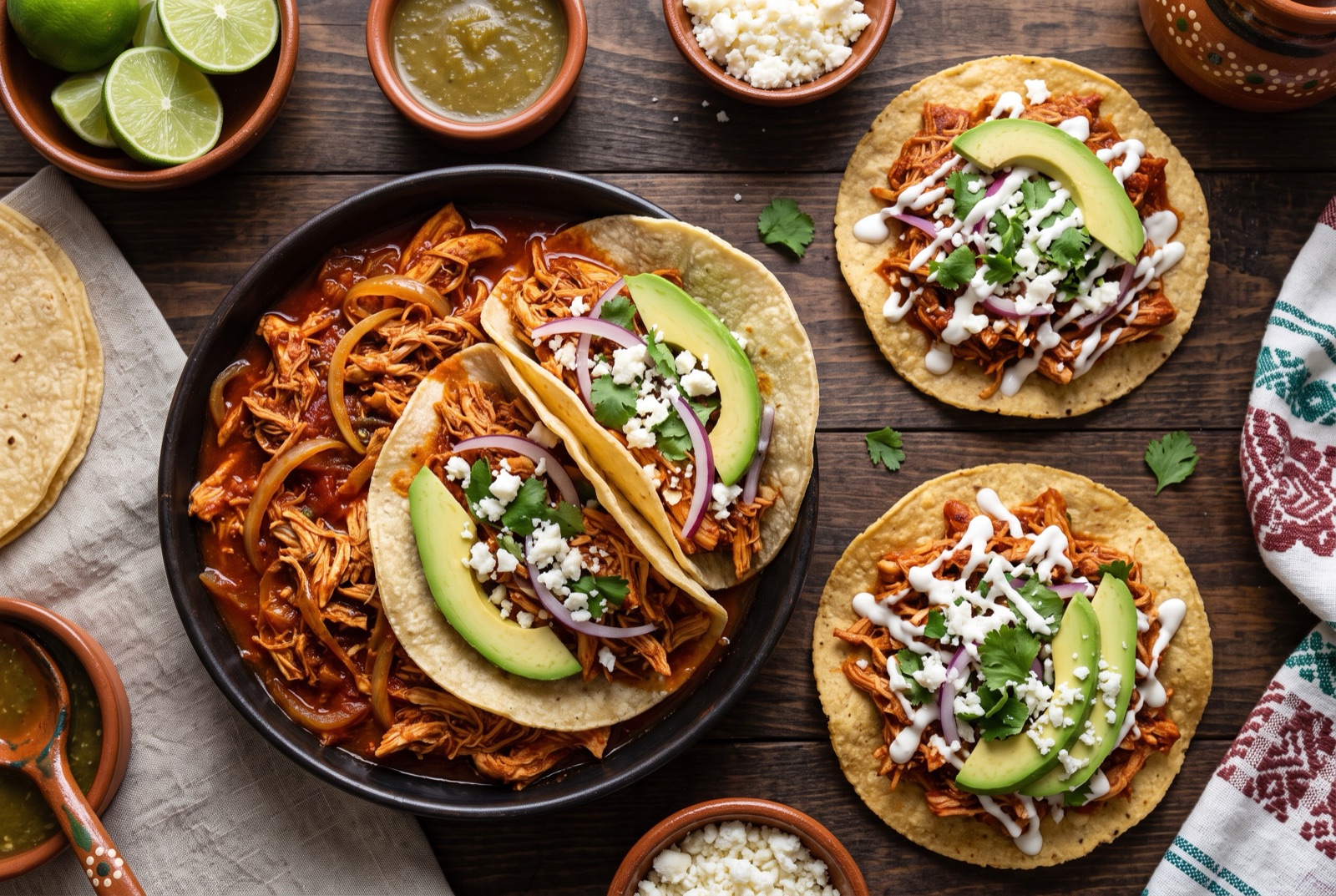
Keep exploring Mexico.
Mexico has 9 more dishes in the atlas — Chicken Tinga and Chilaquiles Verdes, and 7 more.
Recipe by The DishRoute Kitchen · published August 19, 2026 · updated August 19, 2026