Mexico.
México
Mexican food is one of the oldest continuous cuisines on earth — UNESCO lists it as intangible cultural heritage — built on a trinity domesticated millennia ago: corn, beans and chiles. Corn is not an ingredient here so much as a civilization; transformed by nixtamalization into masa, it becomes tortillas, tamales, sopes and a hundred other forms. Onto that ancient base, the Spanish conquest layered pork, dairy, wheat and Old World aromatics, and the collision produced dishes of astonishing depth: moles with dozens of ingredients, slow adobos, and tacos in endless regional dialects. What outsiders flatten into one spicy cuisine is really a dozen distinct regional kitchens, from Yucatecan achiote and citrus to the smoky chile heat of Oaxaca. Heat is a tool, not the point — chiles are chosen for flavor first, fire second.

- Continent
- North AmericaLatin America
- Recipes in atlas
- 10
- Must-try dishes
- 1
- Pantry staples
- 8
Start with the classics.
Must tryThe dishes that explain the Mexico kitchen fastest — if you cook only a few things from this page, cook these.
Inside the Mexico kitchen.
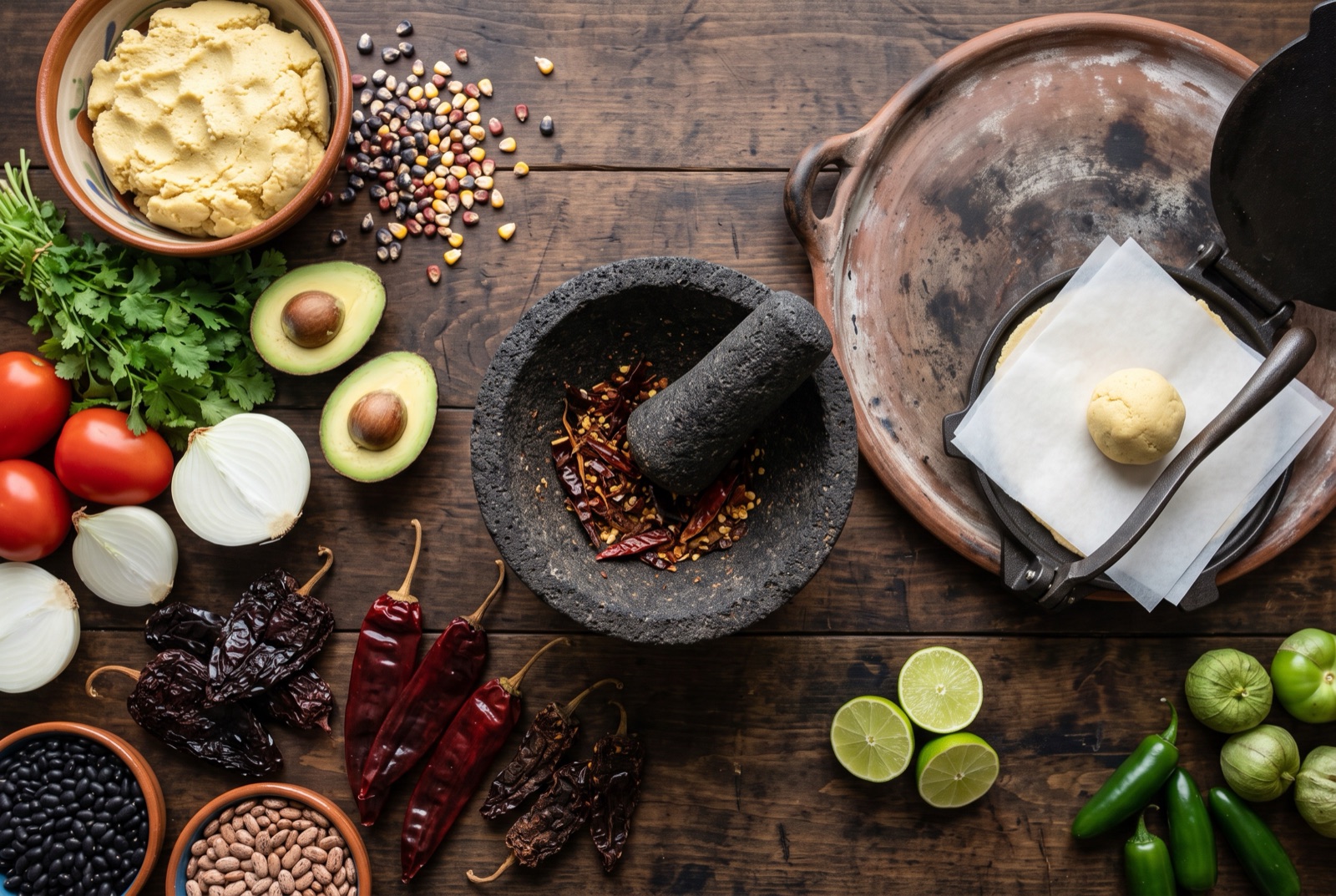
Everything starts with corn and the ancient alkaline process called nixtamalization: dried kernels simmered and steeped with slaked lime, which loosens the hulls, unlocks niacin, and creates the aroma that defines masa. Fresh masa pressed and cooked on a comal becomes the tortilla — the plate, utensil and bread of the entire cuisine. A taco is simply the tortilla doing its job.
Dried chiles are the second pillar, and they function like a spice cabinet: fruity ancho, tangy bright guajillo, fiery árbol, smoky chipotle (a dried, smoked jalapeño). Toasted, soaked and blended, they form adobos and the great mole sauces. Fresh chiles — jalapeño, serrano, poblano, habanero — play a different role, bringing grassy heat and crunch to salsas. Every serious kitchen keeps both kinds and does not treat them as interchangeable.
Technique revolves around fire and patience. Charring on a comal — tomatoes, onions, garlic, chiles blistered until blackened in spots — is the signature move behind salsa depth. Slow cooking rules the celebratory dishes: barbacoa in pit ovens, cochinita pibil wrapped in banana leaves, carnitas confited in lard. The vertical trompo spit of tacos al pastor, adapted from Lebanese immigrants' shawarma in the twentieth century, is proof the cuisine keeps absorbing and transforming outside influences.
Beans simmered with little more than onion and salt (frijoles de olla) accompany almost everything, mashed and refried the next day. Rice arrived with the Spanish and settled in as sopa seca. Lime and salt are the universal finishers; crema, queso fresco and pickled onions the standard toppings. Street food is not a lesser tier of the cuisine but its proving ground — the taquería, the torta stand and the tamal cart are where regional styles compete and evolve nightly.
The herb-and-garnish layer deserves its own mention, because it is applied with more precision than outsiders notice: cilantro and finely chopped white onion on tacos, never yellow onion and never cheese on a street taco; epazote simmered into black beans; hoja santa wrapping fish in the south. Avocado appears as guacamole at the table, or simply sliced with salt. And the drinks are part of the food culture — agua frescas of hibiscus and tamarind, chocolate whisked with cinnamon, and mezcal treated with the reverence other countries give wine.
Signature pantry.
8 staplesThe ingredients this cuisine cannot function without.
- corn (masa)
- dried chiles
- beans
- lime
- tomatoes
- avocado
- cilantro
- white onion
How people eat in Mexico.
The main meal, comida, traditionally lands mid-afternoon between two and four, and Sunday family comida remains a serious institution. Tacos are hand food — eaten standing at the taquería, tilted sideways so the juices run down the tortilla and not your arm — and asking for cutlery for a street taco marks you as a tourist. Salsas at a taquería are self-serve and calibrated; taste before you commit. Fresh tortillas arrive wrapped in cloth and are torn, not cut. Almost nothing is eaten without a squeeze of lime and a pinch of salt.
Regional kitchens.
Mexico cooks 4 distinctly different ways depending on where you stand — here is what changes between them.
- R1Mexico City (CDMX)
- The melting pot where every regional style collides — and the undisputed home of tacos al pastor, carved off vertical trompo spits in thousands of taquerías every night.
- R2Oaxaca
- The land of the seven moles, tlayudas, string cheese (quesillo) and chapulines — the most distinct and celebrated regional kitchen in the country, with deep indigenous roots.
- R3Yucatán
- A peninsula apart: achiote, bitter orange and banana leaves define cochinita pibil and recados, with Mayan technique and Caribbean brightness rather than central-Mexican chile heat.
- R4The North
- Cattle and wheat country — flour tortillas, carne asada, machaca and burritos were born here, in a ranching kitchen leaner and simpler than the corn-based south.
All Mexico recipes.
10 recipes and counting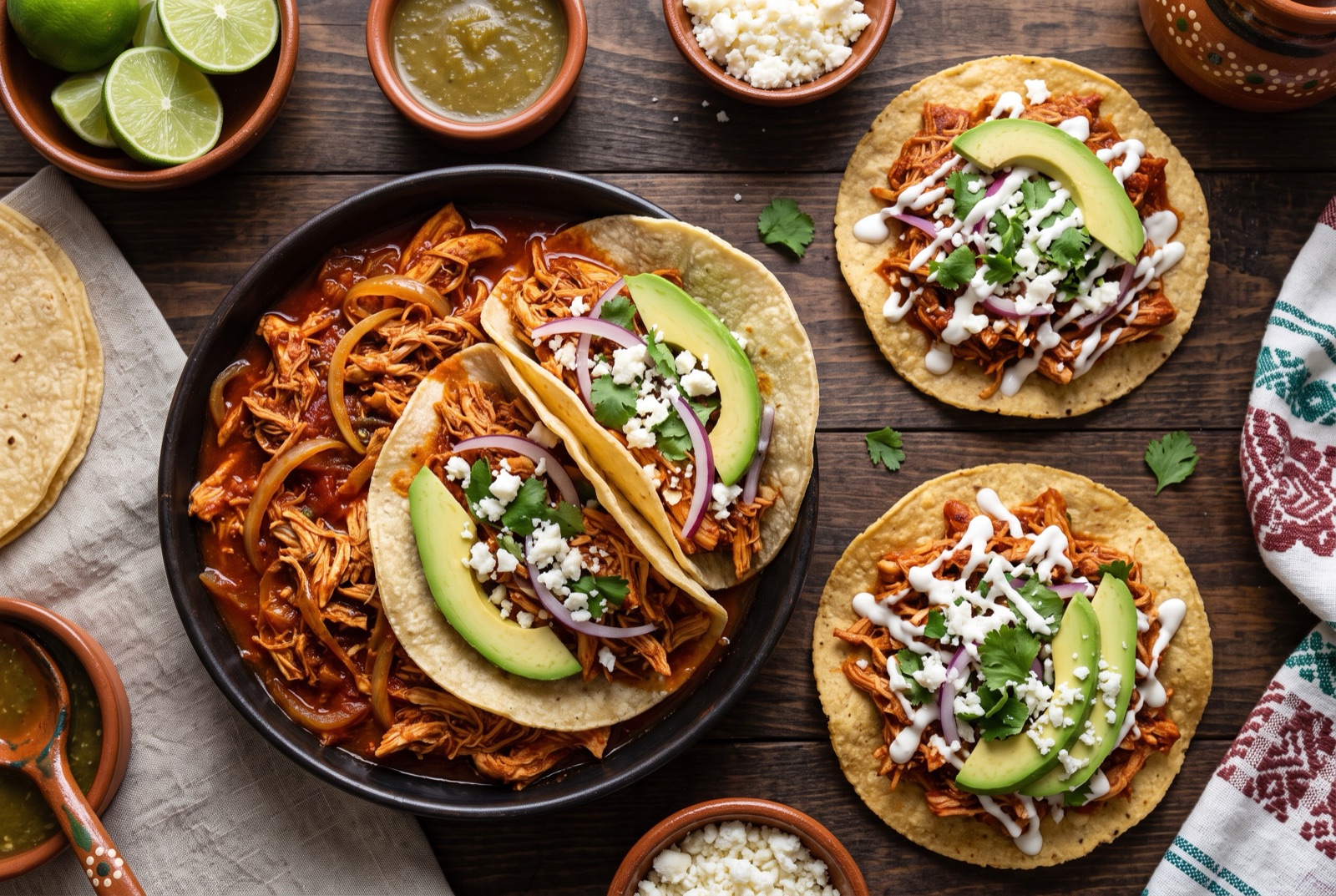
Mexico1 hr 5 min
Chicken Tinga
Tinga de Pollo
Mexico40 min
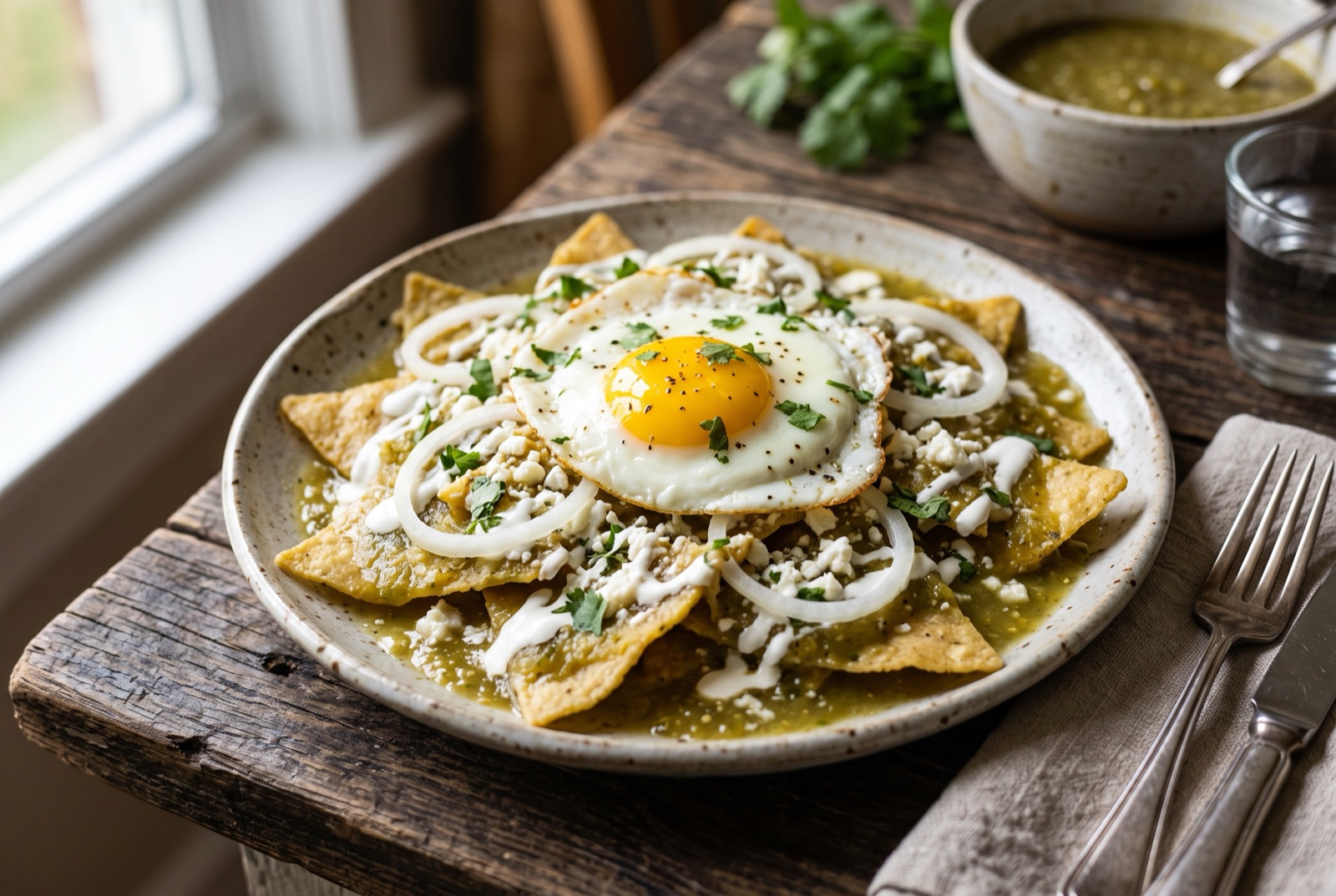
Chilaquiles Verdes
Tortilla Chips in Tomatillo Salsa
Mexico2 hr 15 min
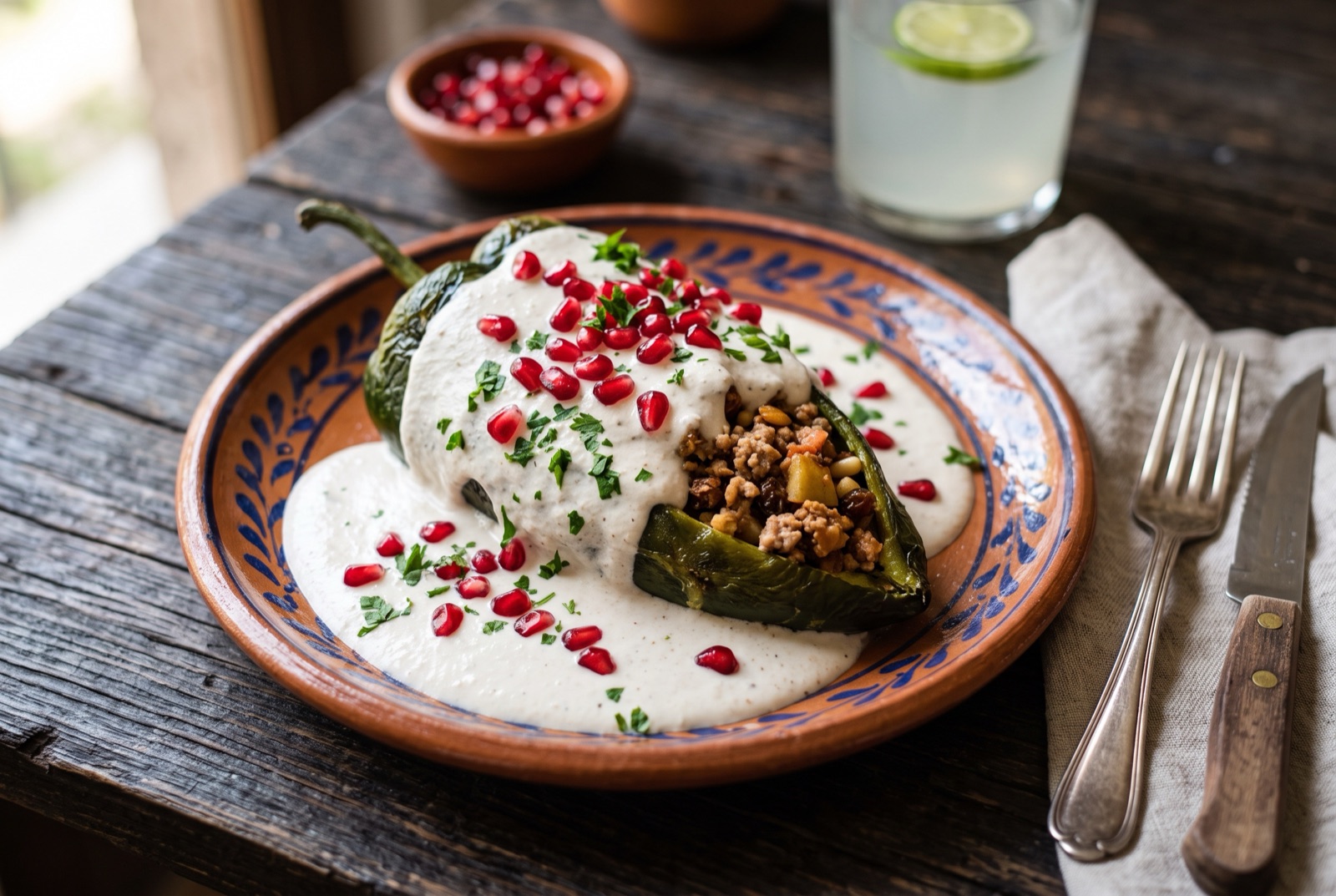
Chiles en Nogada
Stuffed Poblanos in Walnut Cream
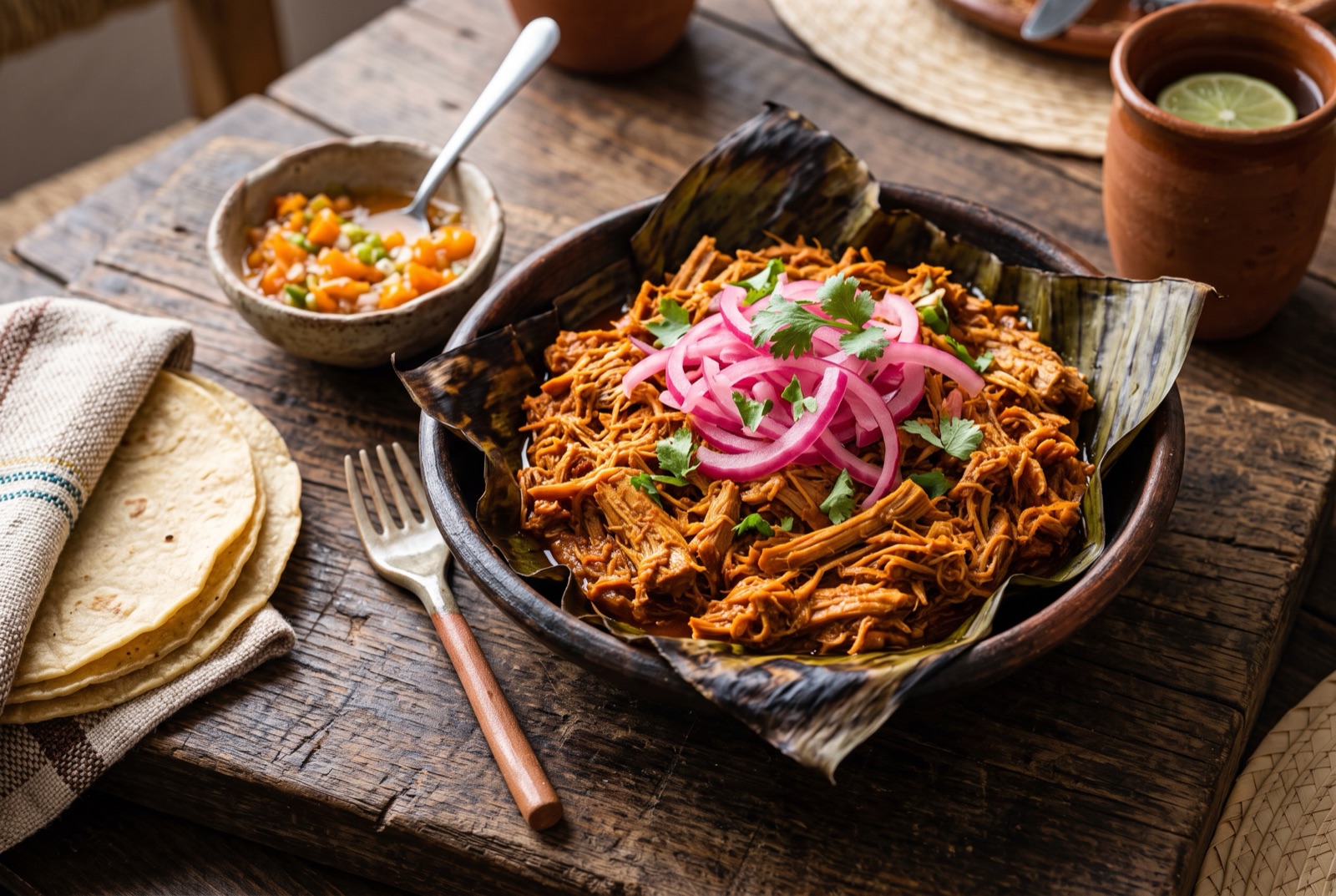
Mexico16 hr 30 min
Cochinita Pibil
Yucatán Achiote-Roasted Pork
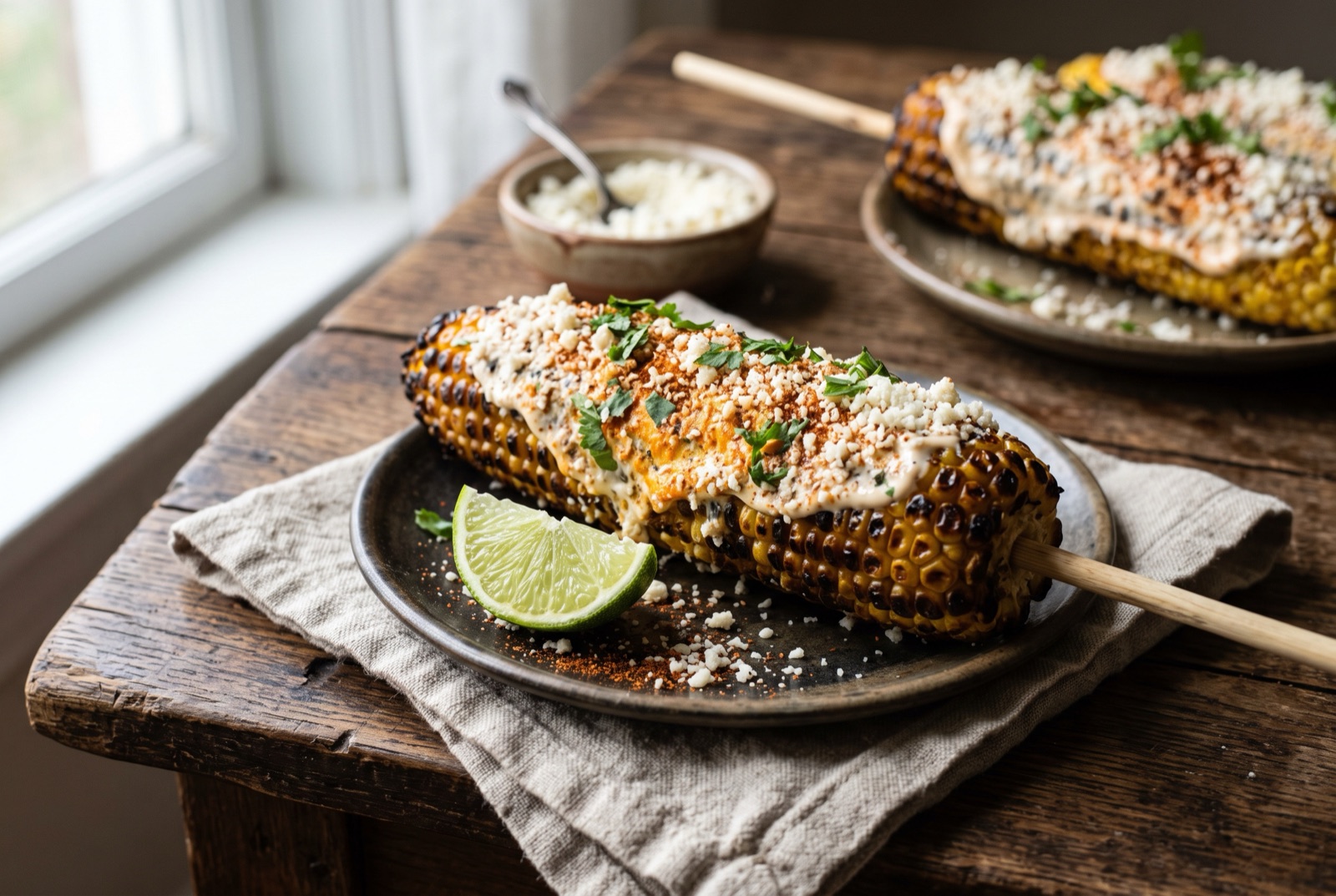
Mexico22 min
Elote
Mexican Grilled Street Corn
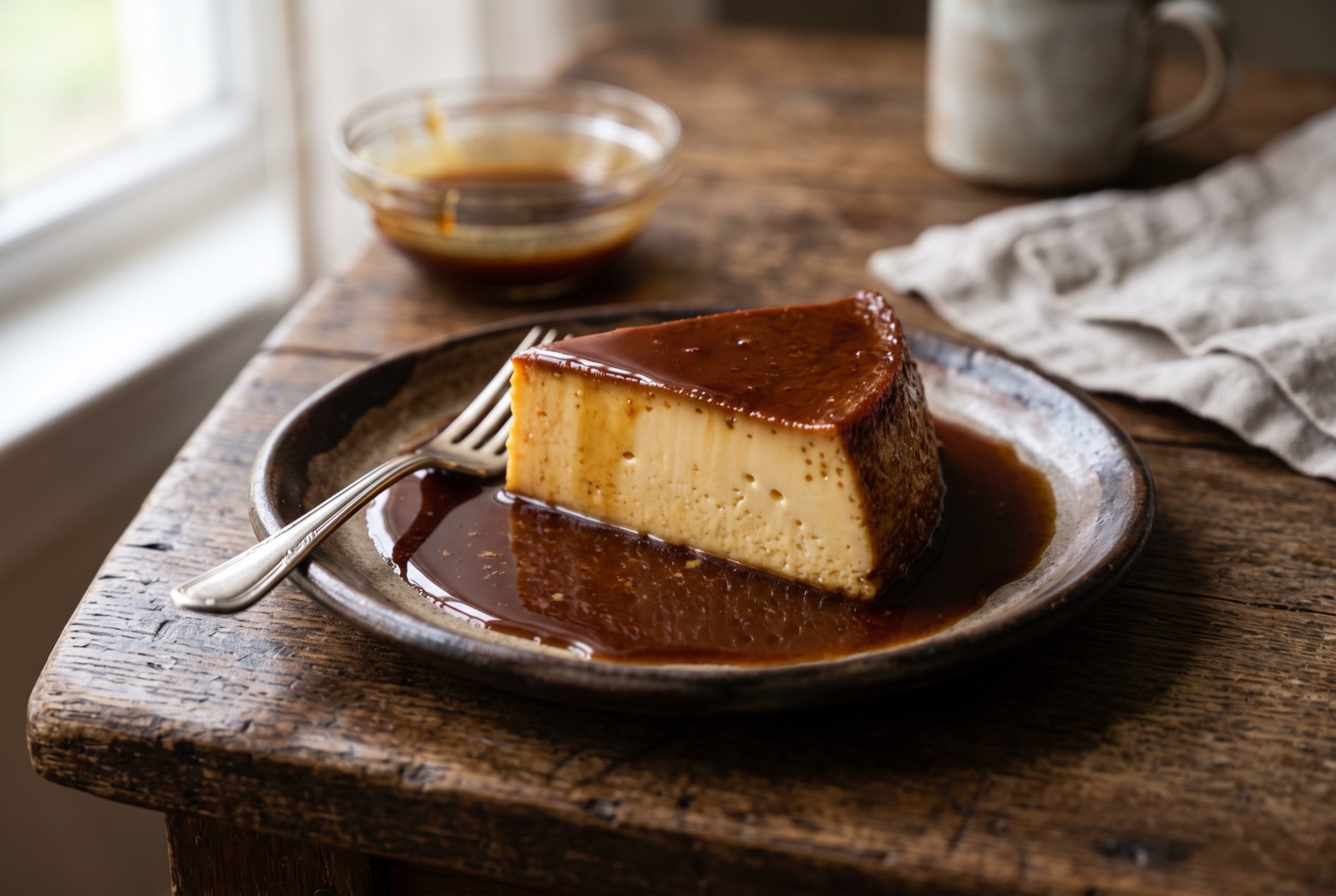
Mexico7 hr 20 min
Flan Napolitano
Mexican Cream Cheese Caramel Custard
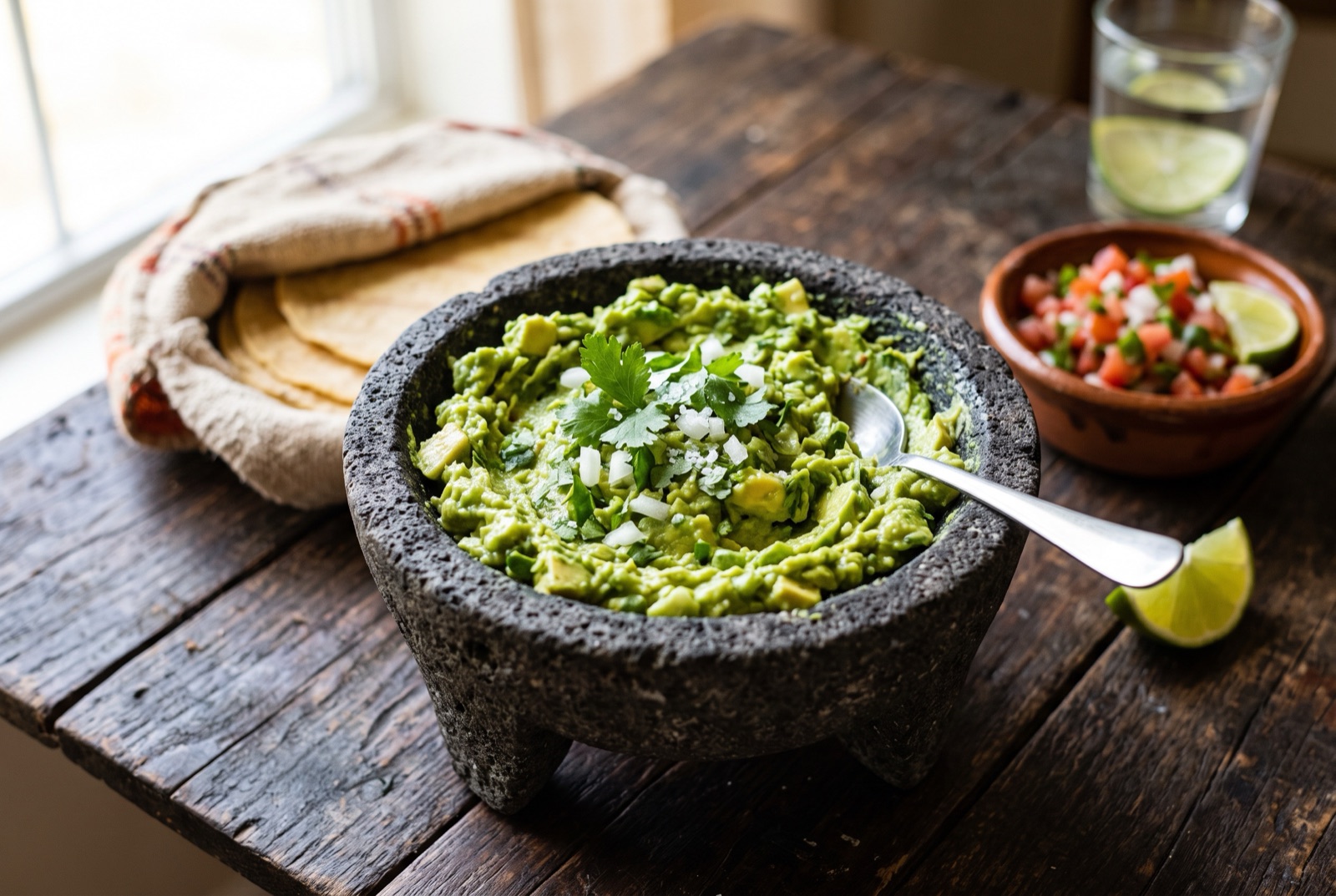
Mexico15 min
Guacamole
Molcajete-Style
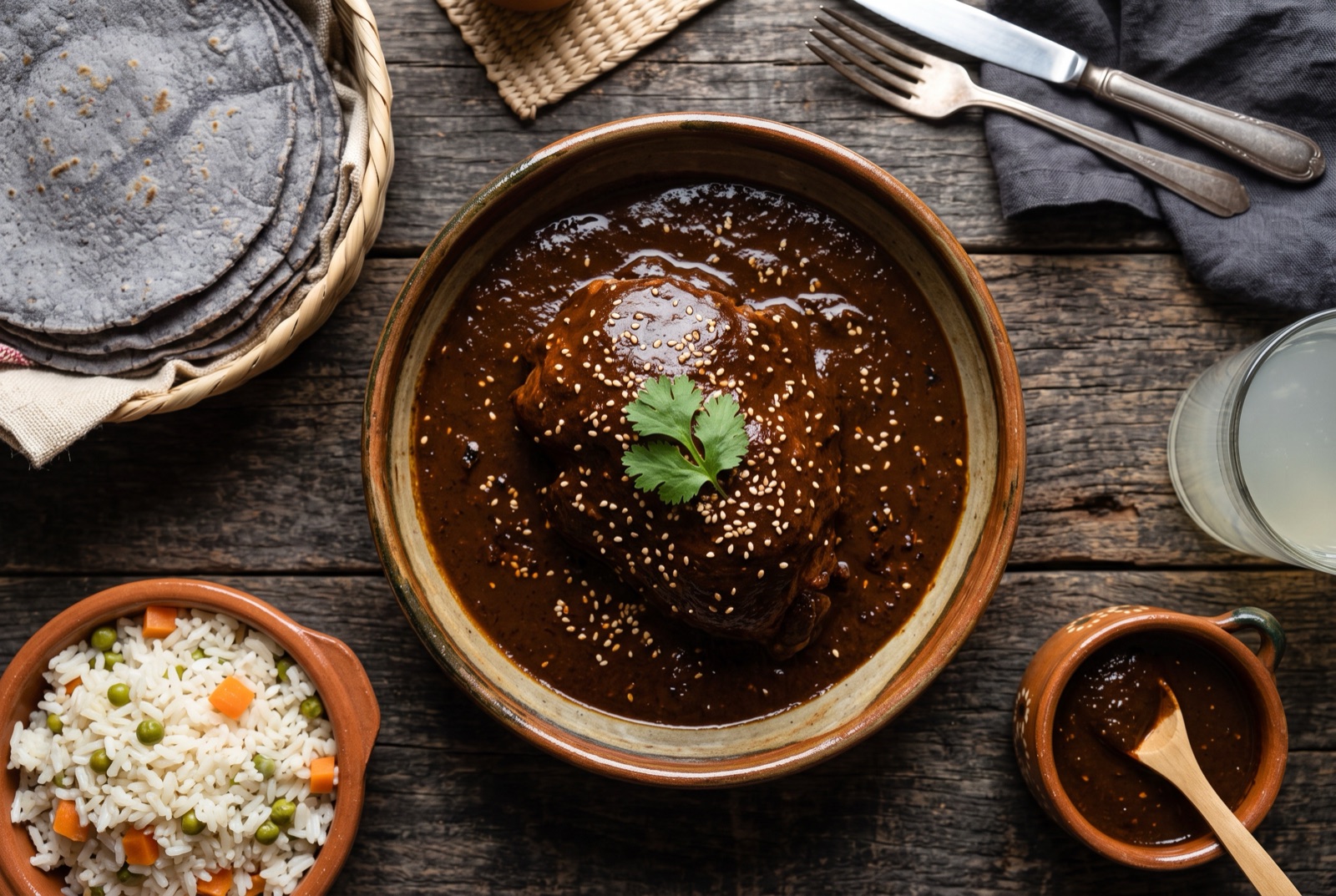
Mexico3 hr
Mole Poblano
Chile and Chocolate Sauce with Turkey
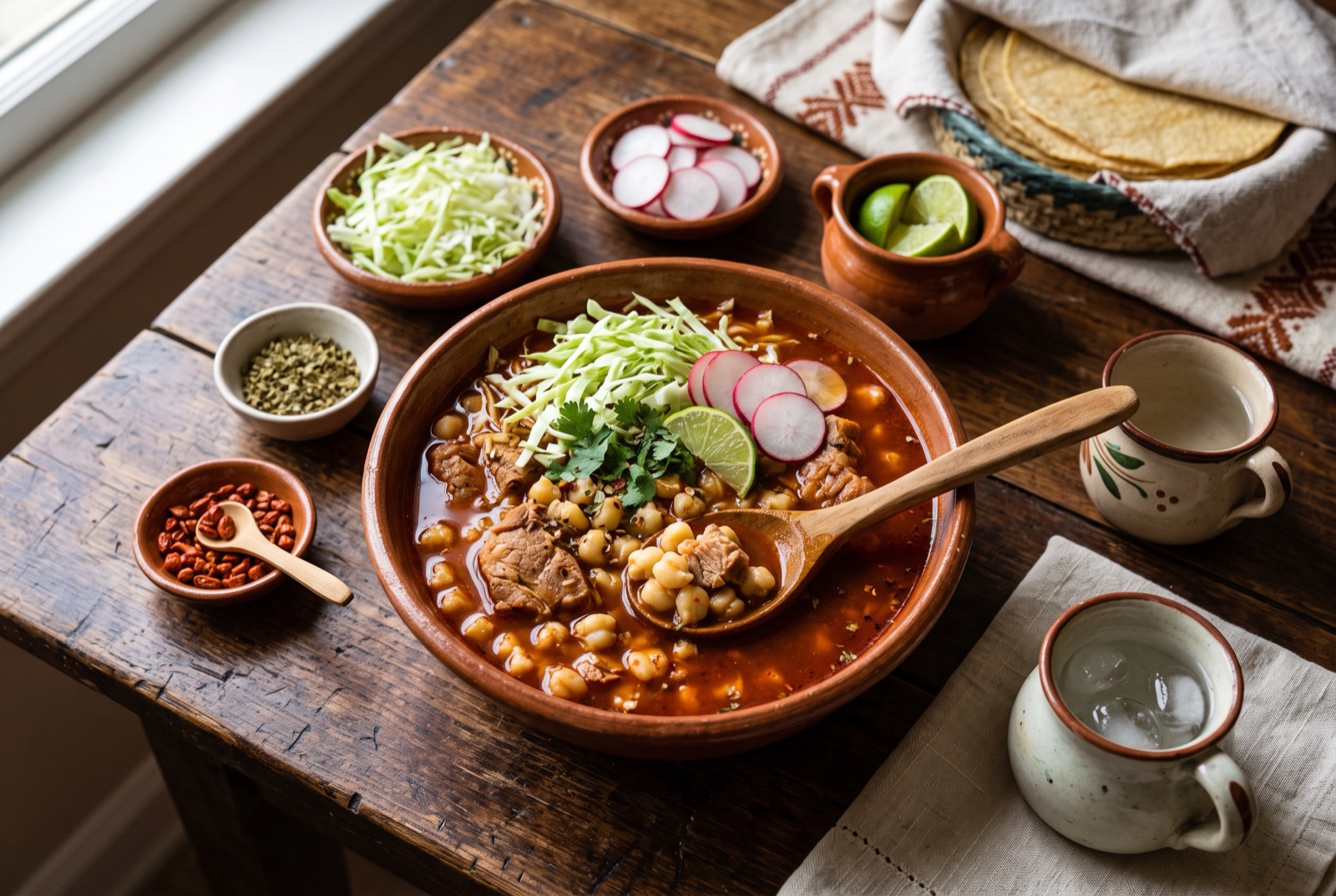
Mexico2 hr 55 min
Pozole Rojo
Red Hominy and Pork Stew
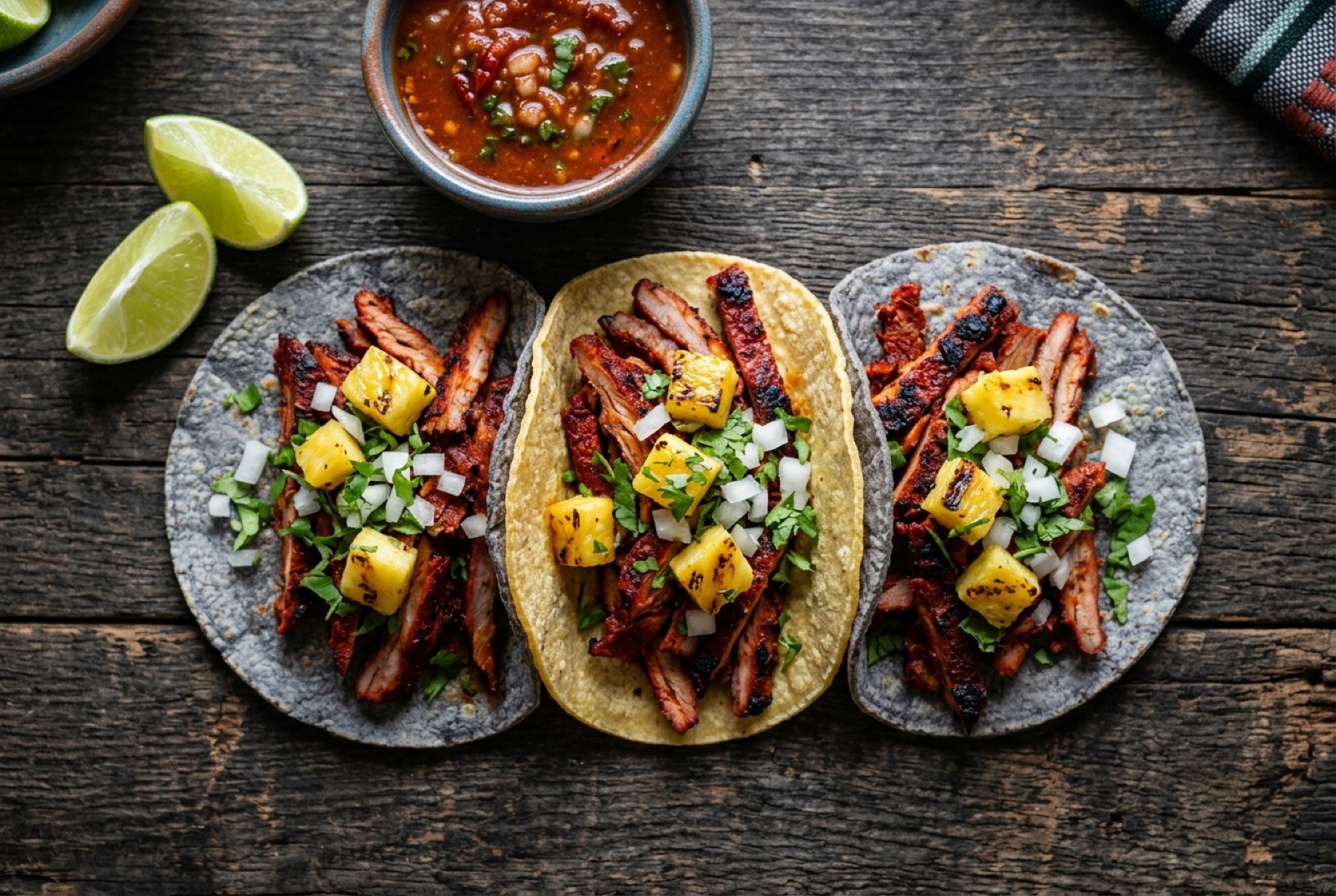
Mexico5 hr 25 min
Tacos al Pastor
Adobo-Marinated Pork Tacos
Keep traveling.
Mexico sits in Latin America, and its kitchen shares borders as well as ingredients with Canada and Costa Rica.
 Canada
 Costa Rica