Chilaquiles Verdes.
Tortilla Chips in Tomatillo Salsa
Chilaquiles verdes · say it: chee-lah-KEE-less VER-des
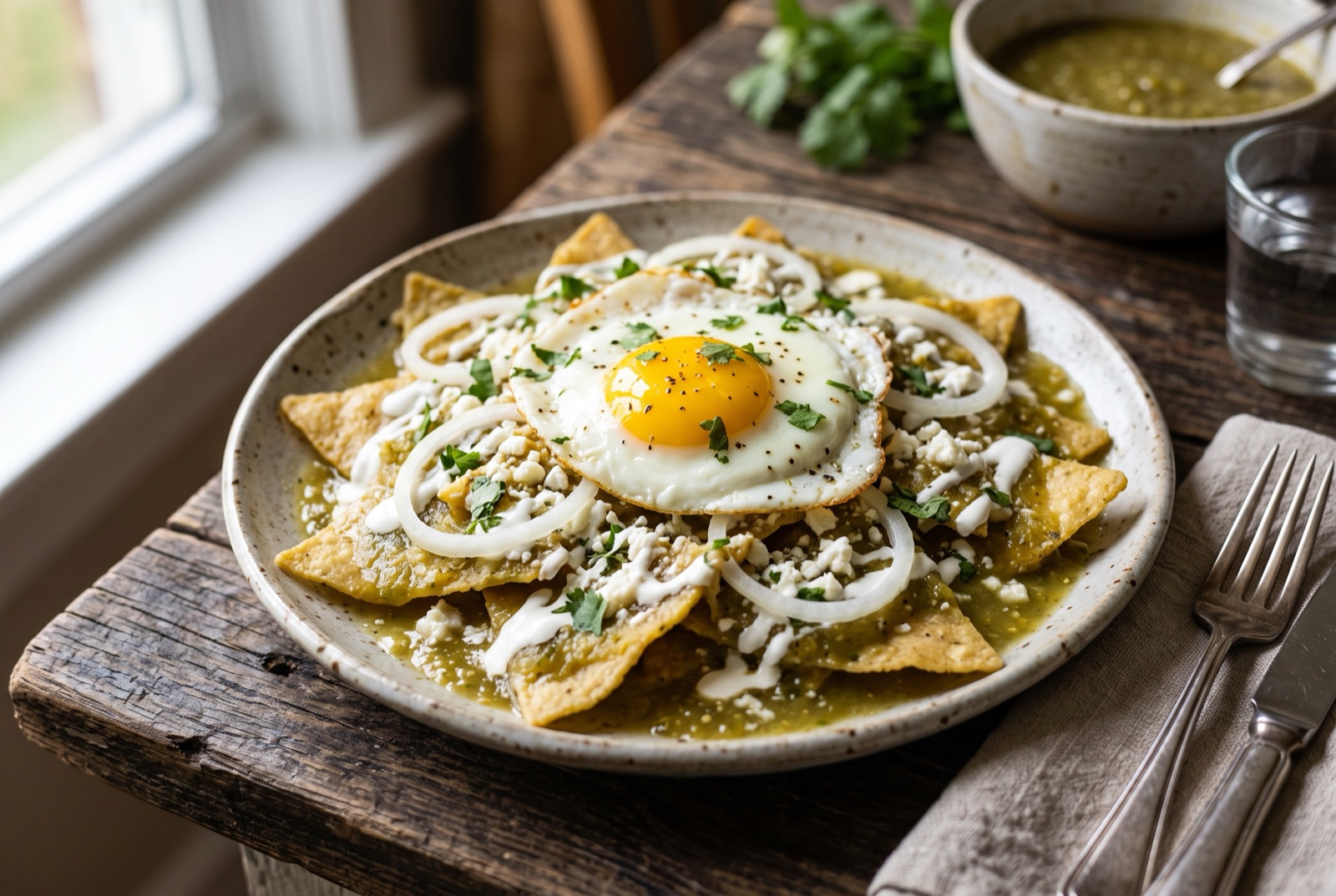
Chilaquiles verdes is what a Mexican kitchen does with yesterday's tortillas: cut them into triangles, fry them crisp, then drown them for barely a minute in a hot, tart tomatillo salsa so they turn silky on the outside while the middle still gives a little resistance. The flavour is sharp and green — tomatillo acidity, raw onion bite, the grassy heat of serrano — softened by cool crema and salty queso fresco. It is breakfast, hangover cure, and cheap dinner all at once, and the entire thing comes together in the time it takes coffee to brew. The one rule that matters is timing: salsa hits chips, chips hit plate.

- Gate
- MexicoCentral Mexico
- Prep
- 15 min
- Cook
- 25 min
- Total time
- 40 min
- Serves
- 4
- Status
- Easy
- Nutrition / serving · estimated
- Calories 520 kcal
- Protein 17 g
- Carbs 48 g
- Fat 30 g
- Fiber 7 g
- Sugar 8 g
- Sodium 780 mg
Why this recipe works.
- Salsa is charred under the broiler rather than boiled, which builds smoky depth in ten minutes instead of flat, sour tomatillo water.
- Tortillas are fried from stale, not fresh — the drier chip drinks salsa without collapsing into mush.
- The sauce-to-chip ratio and the 60-second window are spelled out, which is the whole difficulty of the dish.
- Vegetarian as written, with honest notes on turning it into the chicken or bean version.
Ingredients.
16 itemsFor the salsa verde
For the chips
To finish
Equipment
- Baking tray and broiler (or a comal / heavy skillet)
- Blender
- Deep skillet for frying
- Slotted spoon
Instructions.
Char the salsa vegetables
Spread the tomatillos, chiles, onion wedges and unpeeled garlic on a foil-lined tray and set it under a hot broiler for 8–10 minutes, turning once. Pull them when the tomatillos have collapsed and gone khaki with blackened blisters and the garlic skins are papery and browned.
Tip A dry comal or cast-iron skillet does the same job — cook the vegetables over high heat until spotted black on all sides.
Blend and fry the salsa
Squeeze the garlic out of its skins into a blender, add the charred vegetables with any juices from the tray plus the cilantro, and blend to a slightly coarse purée. Heat the tablespoon of oil in a wide pan until shimmering and pour the salsa in all at once — it should hiss and spit.
Tip Frying blended salsa, rather than just simmering it, is what turns raw sourness into rounded flavour. Stand back for the first few seconds.
Simmer and season hard
Add 200 ml of stock and simmer for 8 minutes, stirring now and then, until the salsa darkens slightly and thickly coats a spoon. Salt it more aggressively than seems right — it should taste sharp and almost too seasoned on its own.
Fry the tortilla chips
Heat the frying oil in a deep skillet to 175°C. Fry the tortilla triangles in three or four batches for about 2 minutes each, until they stop bubbling furiously, turn pale gold and snap cleanly when you break one. Drain on paper and salt them while hot.
Tip A chip that bends instead of snapping needs another 20 seconds. Bendy chips go soggy the instant the salsa hits.
Combine at the last second
Bring the salsa back to a hard simmer, tip in all the chips at once and fold them over with a spatula for 30–60 seconds, until every piece is coated and the edges have softened but the centres still resist the spoon. Take the pan off the heat immediately.
Plate and load the toppings
Divide between warm plates and drizzle generously with crema, then scatter the queso fresco, onion rings and cilantro. Slide a fried egg onto each portion, add avocado if using, and carry the plates to the table straight away.
Tips from our kitchen.
- Use tortillas that are a day or two old and slightly leathery. Fresh ones hold moisture, spatter in the oil and fry up greasy instead of brittle.
- Taste the salsa before it meets the chips and make it slightly too salty and too tart — the tortillas absorb liquid and dull it within seconds.
- Fry in batches so the oil stays above 175°C. Crowded chips steam, go pale and turn leathery rather than snapping.
- Toss the chips in the pan for 30–60 seconds only, then plate straight away. Every extra minute in the sauce moves you toward porridge.
- Keep the crema, cheese and onion cold. The contrast between hot salsa and cold toppings is half the pleasure of the plate.
- If you want to prep ahead, make the salsa the night before and reheat it — but fry the chips fresh, they lose their edge overnight.
Substitutions.
- Fresh tomatillos → Tinned tomatillos, drained (about 500 g drained weight)
- Tinned are already cooked and quite acidic, so skip the broiling step, blend straight away, and expect to add a pinch of sugar to balance them.
- Mexican crema → Sour cream thinned with a splash of milk, or crème fraîche
- Mexican crema is looser and less sour than American sour cream — thinning it to a pourable drizzle matters more than the exact brand.
- Queso fresco → Mild feta rinsed under water, or ricotta salata
- You want salt and crumble, not melt. Avoid cheddar or mozzarella; they turn stringy and change the dish completely.
- Serrano chiles → Jalapeños (milder) or a pinch of dried chile flakes
- Serranos are hotter and grassier than jalapeños. Use two jalapeños where the recipe asks for two serranos and you will land somewhere gentler.
Variations.
- Chilaquiles rojos
- Swap the tomatillo salsa for a red one: roasted tomatoes blended with rehydrated guajillo and ancho chiles, garlic and a little of the soaking water. Rounder, sweeter, less sharp.
- Chilaquiles con pollo
- Fold shredded poached chicken into the salsa before adding the chips. The most common restaurant version and a good way to use leftover roast chicken.
- Divorciados
- Half the plate green, half red, separated by a line of beans or crema. Ordered constantly at Mexico City breakfast counters by people who cannot choose.
Storage & reheating.
Chilaquiles do not keep. Once sauced they continue softening in the fridge and reheat into a dense, sour cake. The components, however, store well: the salsa keeps 4 days refrigerated or 3 months frozen, and fried chips keep a week in an airtight container at room temperature. Assemble only what you will eat in the next ten minutes.
Serve with
Refried black beans, sliced avocado and strong coffee — the standard Mexican almuerzo plate.
The story behind Chilaquiles Verdes.
The word chilaquiles comes from Nahuatl — chīlāquilitl, usually glossed as something like "chiles and greens" — and the dish belongs to a deep Mesoamerican habit of never wasting nixtamalized corn. Tortillas were made fresh daily and went stale fast; frying the leftovers and softening them in salsa turned a problem into a meal. That logic runs through Mexican cooking everywhere you look, from migas to sopa seca to totopos, and it is why chilaquiles read as thrift food rather than restaurant food even when a restaurant charges properly for them.
Green or red is the first question anyone asks, and it splits along salsa lines rather than regional ones: verdes are built on tomatillos, serranos and cilantro, rojos on ripe tomato with dried guajillo or ancho. Both are eaten across the country, though the green version is the default in Mexico City and much of the central highlands, where tomatillos are cheap and excellent. In Sinaloa the chips are left crunchier; in parts of Guerrero and Michoacán the salsa is looser and the plate closer to a soup. Adding shredded chicken, or a layer of refried beans underneath, or a couple of fried eggs on top, are all normal and none of them make the dish less traditional.
What people do argue about is texture. One camp wants the chips still audibly crisp, sauced at the last second. The other wants them fully surrendered, soft and almost lasagna-like, the way an abuela who cooked them in a big clay cazuela would serve them. There is no settling this, and the practical consequence is simple: chilaquiles are made to order and eaten immediately, because the clock starts the moment the salsa goes in.
Questions, answered.
What is the difference between chilaquiles and nachos?
Nachos are crisp chips topped with melted cheese and eaten with fingers. Chilaquiles are chips deliberately simmered in salsa until they soften into a fork dish — closer to a savoury bread pudding than to a snack. The chips are meant to lose some of their crunch, which is the opposite of what nachos are trying to do.
Can I use bagged tortilla chips instead of frying my own?
Yes, and plenty of Mexican home cooks do on a rushed morning. Choose thick, unsalted or lightly salted corn chips — thin, heavily seasoned ones dissolve almost instantly and make the salsa taste of their seasoning. Reduce the tossing time to about 30 seconds since they are drier and absorb faster.
Why did my chilaquiles turn to mush?
Either the chips sat in the salsa too long, or the salsa was too thin. The sauce should coat a spoon rather than run off it, and the chips should be tossed for under a minute before plating. If you need to hold the dish for a few minutes, keep the salsa hot in the pan and combine at the table.
Are chilaquiles a breakfast food?
Most often yes — they are a fixture of the late-morning almuerzo in Mexico, frequently with eggs on top and beans on the side. But they are eaten at any hour, particularly late at night, and there is nothing odd about serving them for dinner.
Can I make this vegan?
Easily. The salsa and chips are already vegan if you use water or vegetable stock. Replace the crema with cashew cream or a thinned unsweetened plant yoghurt, skip the cheese or use a crumbly vegan feta, and top with avocado instead of egg for richness.
You might also like.
All recipes →
Keep exploring Mexico.
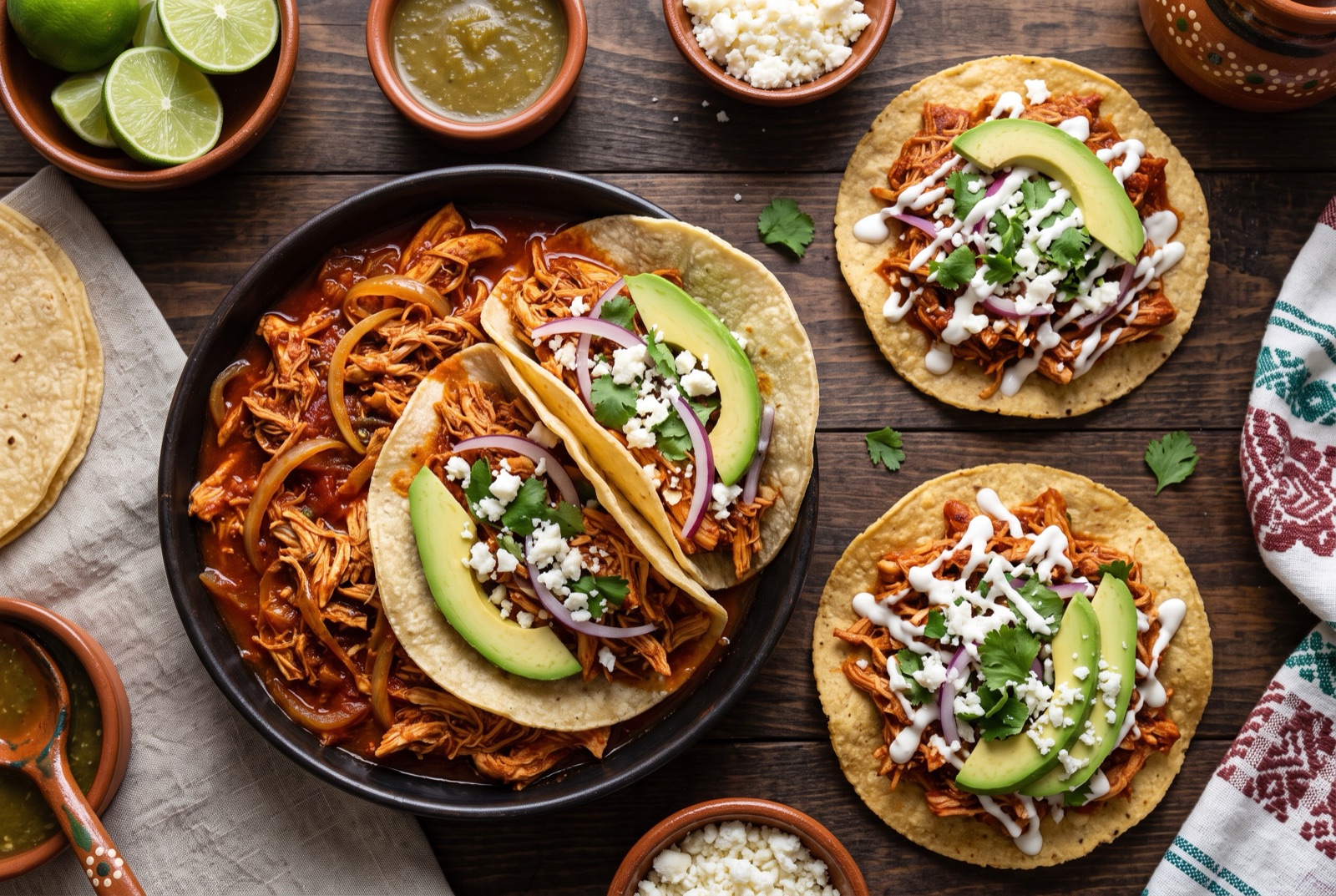
Mexico has 9 more dishes in the atlas — Chicken Tinga and Chiles en Nogada, and 7 more.
All Mexico recipes Queso fresco recipes Eggs recipes Cilantro recipes breakfastvegetariangluten freeRecipe by The DishRoute Kitchen · published August 19, 2026 · updated August 19, 2026