Mole Poblano.
Chile and Chocolate Sauce with Turkey
Mole poblano de guajolote · say it: MOH-leh poh-BLAH-noh
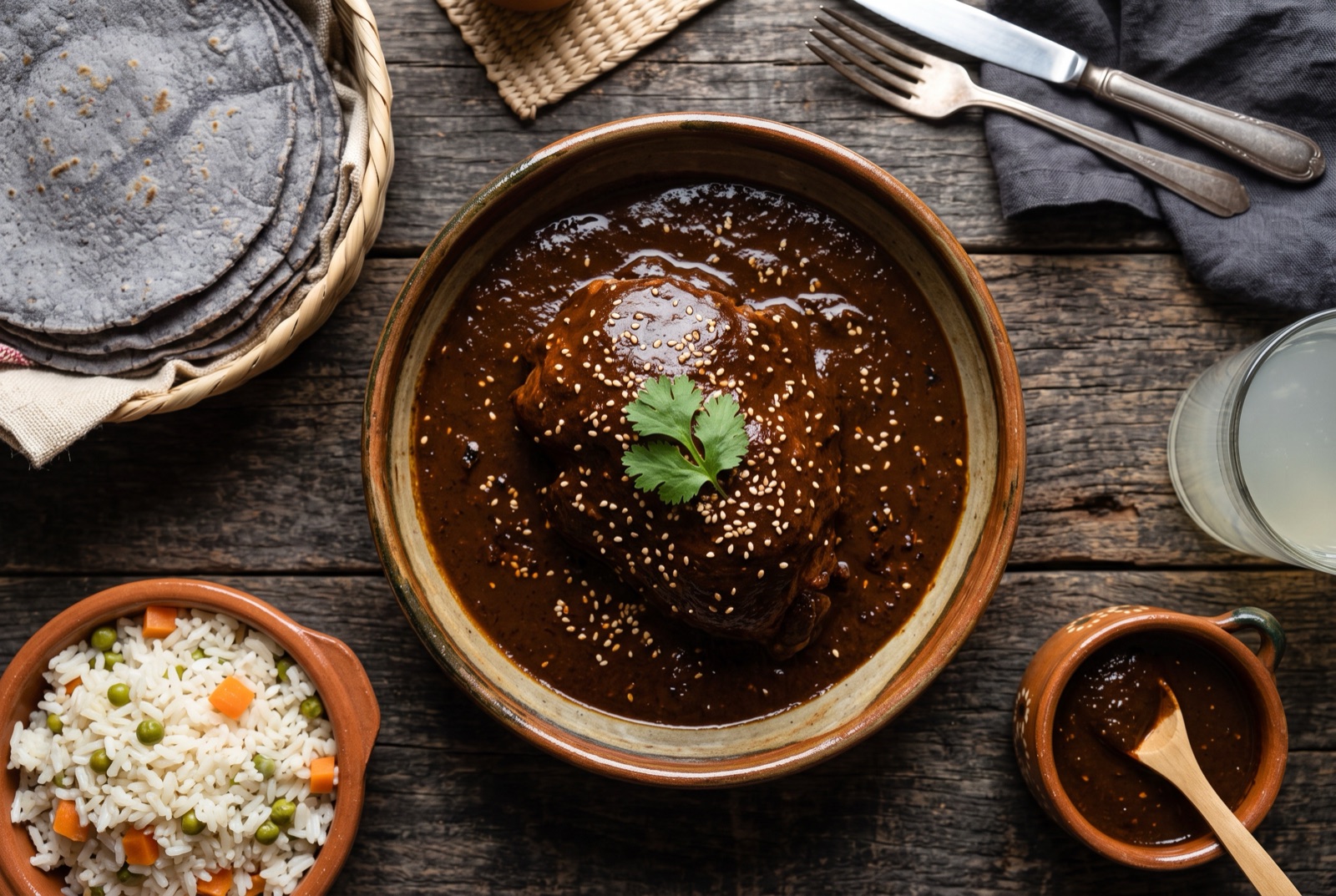
Mole poblano is a thick, near-black sauce built from three dried chiles, a handful of nuts and seeds, warm spices, dried fruit, fried tortilla and a small amount of chocolate, all fried and ground into a paste and then loosened with broth until it coats a spoon like melted velvet. It does not taste like chocolate. It tastes of toasted chile skins first, then raisin sweetness, then sesame and clove, with a slow smoulder of heat underneath and a faint bitterness at the finish that keeps the whole thing from tipping into dessert. Mexicans cook it for weddings, baptisms and Day of the Dead, ladled over poached turkey with rice, sesame seeds and warm tortillas — food that announces an occasion before anybody sits down.

- Gate
- MexicoPuebla
- Prep
- 50 min
- Cook
- 2 hr 10 min
- Total time
- 3 hr
- Serves
- 8
- Status
- Takes skill
- Nutrition / serving · estimated
- Calories 640 kcal
- Protein 45 g
- Carbs 32 g
- Fat 38 g
- Fiber 7 g
- Sugar 15 g
Why this recipe works.
- Every element is fried before grinding — the step that separates real mole from a blended chile smoothie.
- Chile quantities are balanced for depth rather than heat, so the sauce reads rich and layered instead of merely hot.
- The turkey is poached first and its broth becomes the sauce liquid, so nothing is bought that the bird can supply.
- Scaled to a home blender and a large pot, with clear guidance on straining and on the crucial final frying of the paste.
Ingredients.
24 itemsFor the turkey
For the mole
Equipment
- Large heavy pot or Dutch oven
- Comal or heavy frying pan
- Blender
- Medium-mesh sieve
Instructions.
Poach the turkey and save the broth
Cover 1.6 kg of turkey with cold water in a large pot, add the halved onion, unpeeled garlic and salt, and simmer uncovered for 75 minutes until the meat pulls easily from the bone. Lift out the turkey, strain the broth and keep about 2 litres — this is the liquid for the sauce.
Tip Skim the grey foam in the first ten minutes so the finished broth stays clean-tasting.
Toast the chiles
Press the opened chiles flat onto a dry hot comal for 10–15 seconds a side, until they puff slightly, smell nutty and turn pliable. Pull them off the second the aroma sharpens — any chile that blackens goes in the bin, not in the pot.
Tip Work in small batches. Crowding the pan means uneven toasting and at least one burnt chile.
Soak the chiles
Put the toasted chiles in a bowl, pour over enough hot turkey broth to cover, and weigh them down with a plate. Soak 25 minutes until completely soft and floppy, then reserve them with their soaking liquid.
Fry the nuts, seeds and fruit
Heat a third of the lard in a heavy pan and fry each element separately, in this order: almonds and peanuts until golden, sesame seeds until they hop and smell toasted, raisins until they swell and puff, plantain until deep brown at the edges, and finally the torn tortilla until crisp. Move each to a bowl as it is done.
Tip Sesame seeds go from pale to burnt in about twenty seconds — keep them moving and take them out one shade lighter than you want.
Char the vegetables and toast the spices
On a dry comal, char the tomato halves, sliced onion and peeled garlic until blistered and blackened in patches, about 8 minutes. Toast the cinnamon, cloves, peppercorns and aniseed for 30 seconds until fragrant.
Blend in batches
Blend the soaked chiles with their liquid until completely smooth, then blend the fried nuts, seeds, fruit, tortilla, charred vegetables and spices with enough broth to move, in two or three batches. Push both purées through a medium sieve, working the solids with a ladle until only dry grit remains.
Tip Blend far longer than feels necessary — a full three minutes per batch — or the sieve will reject half your mole.
Fry the paste
Heat the remaining lard in the large pot until it shimmers, then pour in the strained purée all at once and stand back — it will spit hard. Stir constantly over medium heat for 12–15 minutes, until the paste darkens visibly, thickens to the consistency of tomato paste and smells roasted rather than raw.
Tip This step is not optional. Skipping the fry gives a flat, slightly raw-tasting sauce with no gloss.
Loosen and simmer
Whisk in 1.5 litres of the reserved broth, bring to a bare simmer and cook uncovered for 45 minutes, stirring often and scraping the base. The mole is ready when it coats the back of a spoon thickly and a line drawn through it holds for a second before closing.
Season with chocolate and salt
Stir in the chopped chocolate until it melts completely, then add sugar and salt a little at a time, tasting after each addition. Aim for a sauce that is savory first, faintly sweet second, with warmth arriving after you swallow — never for a sauce that tastes of chocolate.
Serve over the turkey
Pull the turkey into large pieces, warm them through in the mole for 5 minutes, and serve with sauce spooned generously over the top. Finish each plate with toasted sesame seeds and thin rings of raw onion, with rice and warm tortillas alongside.
Tips from our kitchen.
- Buy whole dried chiles, not powder. Mulato gives the dark chocolate-raisin base, ancho the sweetness, pasilla the smoky bitterness — the three together are the sauce.
- Toast the chiles for seconds, not minutes. The moment they smell nutty and turn slightly flexible, they are done; a chile that browns turns the whole batch acrid and there is no rescuing it.
- Fry the ground paste in hot lard before adding broth. It should sputter, darken and smell roasted — this frying step is what gives mole its gloss and its depth.
- Strain the blended paste through a medium sieve. Home blenders never fully break down chile skins and almond grit, and the difference between grainy and velvet is one push through a sieve.
- Mole tastes better on day two. If you can, make the sauce a day ahead, refrigerate it, and reheat with a splash of broth before serving.
Substitutions.
- Mexican table chocolate (Ibarra, Abuelita) → 40 g dark chocolate (70%) plus 1 tbsp sugar and a pinch of ground cinnamon
- Mexican tablets are coarse, sugary and cinnamon-scented rather than fine dark chocolate, so plain dark chocolate needs sugar and cinnamon added to match.
- Turkey → Bone-in chicken thighs and legs
- Chicken mole is entirely normal in Mexico and cooks in half the time. Poach it the same way and use the broth for the sauce.
- Lard → Neutral oil
- It works, but lard carries the fried chile flavor better and is what Puebla uses. Do not use olive oil — its flavor fights the chiles.
Variations.
- Mole negro oaxaqueño
- Oaxaca's darker cousin, using chilhuacle chiles and deliberately charring some chile seeds to black for a smoky bitterness. Different chiles, different city, fierce local pride.
- Enmoladas
- Corn tortillas dipped in warm mole, folded around shredded chicken or cheese, and finished with crema, onion and sesame — the standard way leftovers get eaten.
- Mole with pork
- Simmered pork shoulder in place of turkey, cooked until it shreds. Common at family gatherings and cheaper than a whole bird.
Storage & reheating.
Mole keeps 5 days refrigerated and freezes exceptionally well for 3 months — freeze the sauce separately from the meat, in portions. It thickens hard when cold; reheat gently with broth or water whisked in until it flows again. Never boil hard while reheating, as the fat splits out and the surface turns oily. Many cooks deliberately freeze half the batch as concentrated paste, then reconstitute it with fresh broth months later.
Serve with
Mexican red rice, warm corn tortillas, and a scatter of toasted sesame seeds over each plate.
The story behind Mole Poblano.
Mole poblano belongs to Puebla, and Puebla has never let anyone forget it. The city's convent kitchens — Santa Rosa and Santa Clara are the ones usually named — are where the sauce is said to have taken its finished form in the colonial period, when indigenous chile-and-seed sauces met almonds, cinnamon, cloves and raisins arriving through the Spanish trade. The much-repeated tale of a nun improvising the sauce overnight for a visiting archbishop is a good story rather than a documented one, and Pueblans tell it with a shrug; what is genuinely true is that the dish is a colonial-era fusion, and that the word mole comes from the Nahuatl mulli, meaning sauce, which existed here long before any convent did.
The chocolate confuses foreigners more than any other element. It is not a chocolate sauce with chile in it; it is a chile sauce with a tablet of coarse Mexican drinking chocolate — cacao ground with sugar and cinnamon — stirred in near the end to round the edges and deepen the color. Leave it out and you still have mole; leave out the chiles and you have nothing. The same goes for the frying: every component, from the chiles to the raisins to the stale tortilla, is fried separately in lard before grinding, and that step is where the flavor is actually made.
Mole is also the great communal dish of central Mexico. A family making mole for a fiesta makes fifteen litres of it, freezes half, and gives jars away. Cooks in Puebla and Oaxaca buy ready-made paste at the market from a stall they have used for thirty years and finish it at home with their own broth, which is not cheating — it is how most of Mexico actually eats mole. This recipe is scaled to a Sunday rather than a wedding, and it is honest about the work: this is a two-pot, three-hour project with a blender running in the middle of it.
Questions, answered.
Does mole poblano actually taste of chocolate?
No. The chocolate is a background note, used in a small quantity to soften the chiles and deepen the color, in the same way a cook adds a square of dark chocolate to a beef stew. What you taste first is toasted dried chile, then dried fruit sweetness, then spice and sesame. Anyone expecting a sweet chocolate sauce will be surprised in the other direction.
Is mole poblano very spicy?
Mulato, ancho and pasilla chiles are all mild to medium, so a well-made mole poblano is warming rather than hot — the heat sits underneath the sweetness and builds over a few bites. If you want more, add one or two dried chipotle chiles to the toasting stage, which also brings smoke.
Can I use store-bought mole paste?
Yes, and most families in Mexico do. Buy a jar or a block of paste, whisk it into hot broth over low heat until it loosens to a coating sauce, then taste and adjust with a little sugar, salt or chocolate. It is a legitimate shortcut rather than a compromise, though homemade paste has a fresher toasted-chile aroma.
Why did my mole turn bitter?
Almost always burnt chiles. Dried chiles scorch in seconds on a hot pan, and once they blacken the bitterness spreads through the entire batch and cannot be balanced out with sugar. Toast them briefly over medium heat until they smell nutty and flex, and discard any that darken. A small amount of bitterness is correct; harsh, ashy bitterness is not.
Can I make mole ahead of time?
It is better made ahead. Cook the sauce up to three days before serving, refrigerate it, and reheat with extra broth to loosen. The flavors settle and integrate overnight, which is exactly why Mexican families make it the day before a fiesta rather than on the morning of it.
You might also like.
All recipes →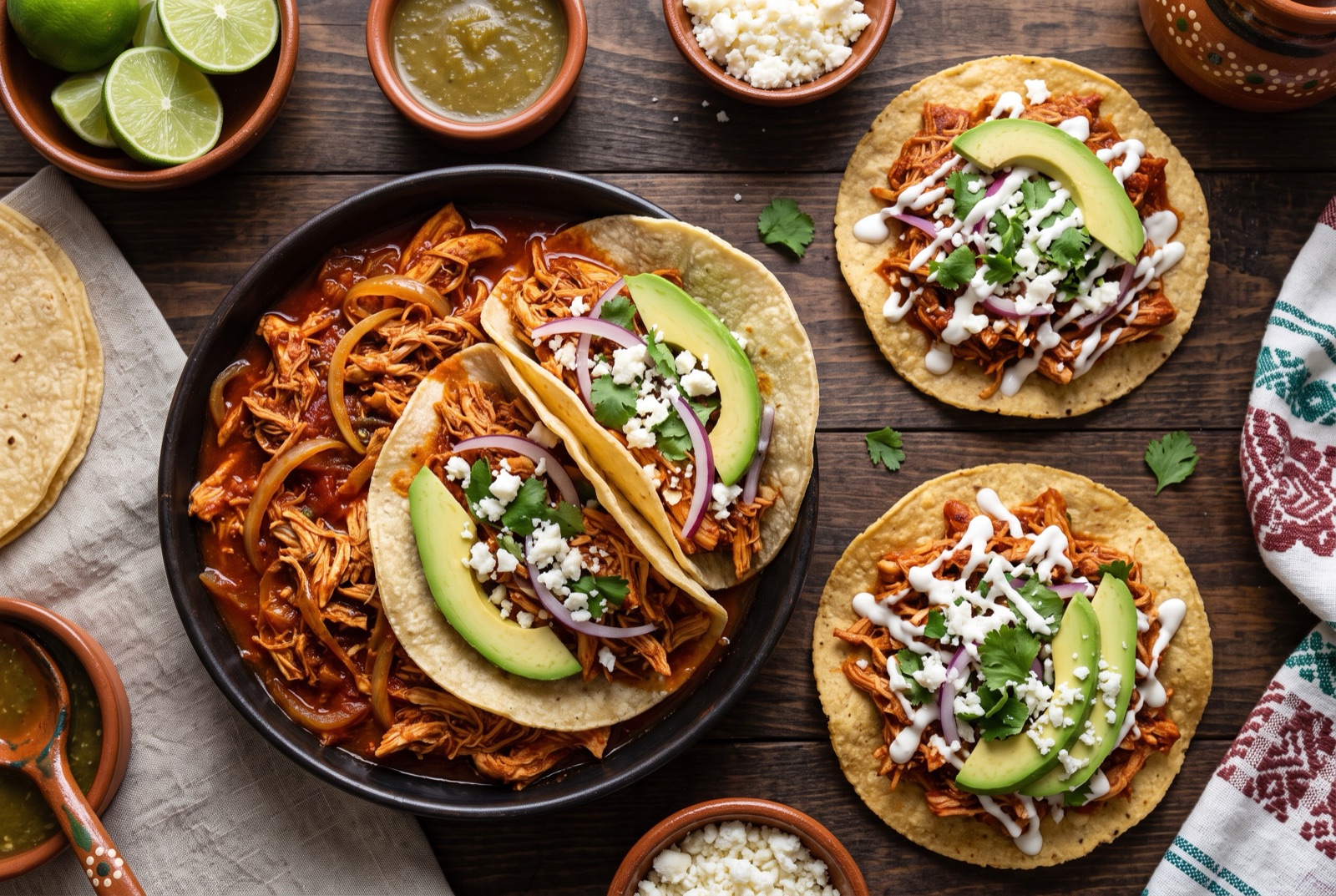
Keep exploring Mexico.
Mexico has 9 more dishes in the atlas — Chicken Tinga and Chilaquiles Verdes, and 7 more.
Recipe by The DishRoute Kitchen · published August 19, 2026 · updated August 19, 2026