Diri Djon Djon.
Haitian Black Mushroom Rice
Diri djon djon · say it: dee-REE jon-JON
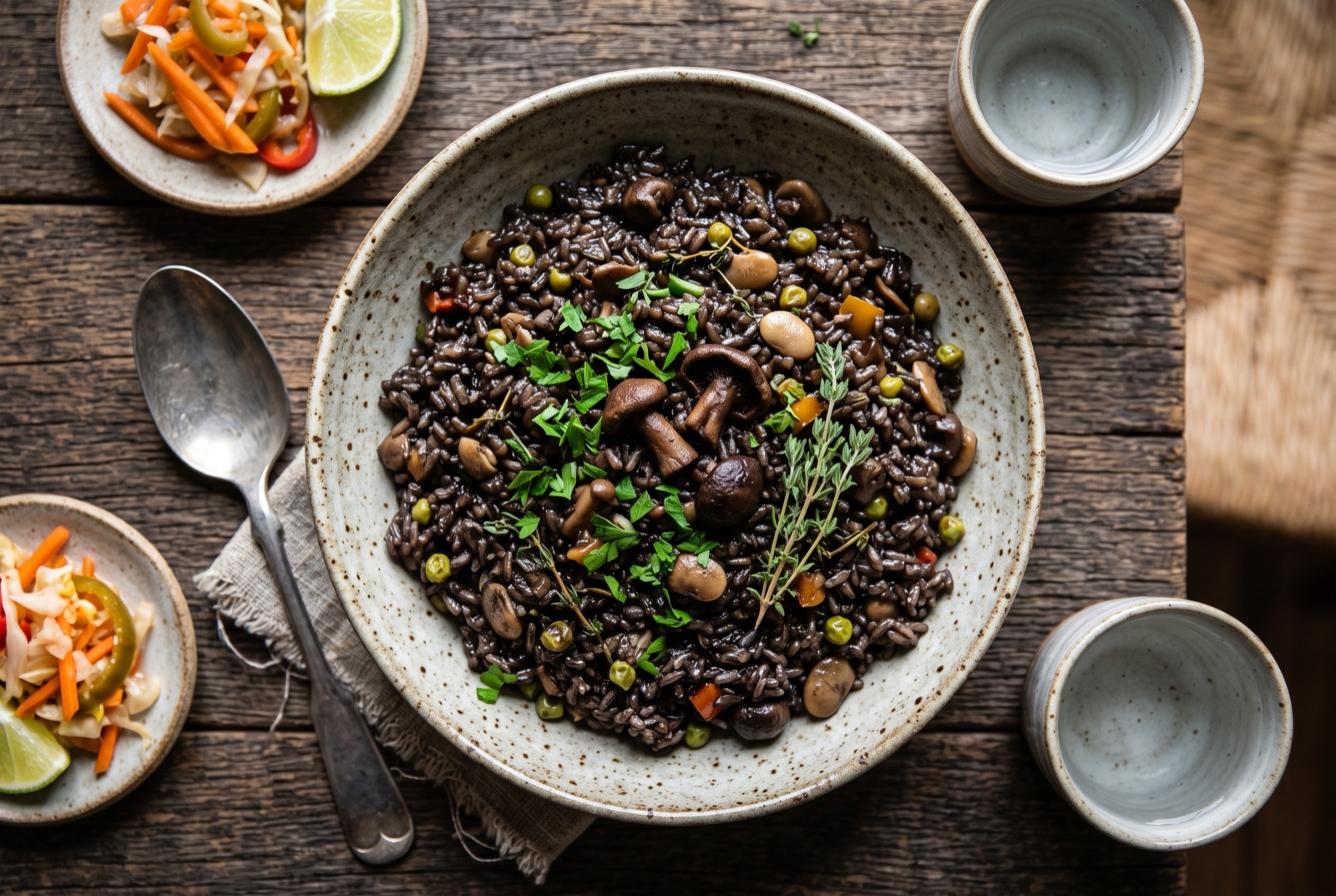
Diri djon djon is white rice cooked not in water but in the dark steeping liquid of djon djon, a small dried mushroom that grows in northern Haiti and stains everything it touches a glossy near-black. The grains come out separate and slate-coloured, smelling faintly of forest floor and tasting savoury in a way that has nothing to do with meat. It is the special-occasion rice — the one that appears at weddings, Christmas tables and Sunday lunches next to griyo or stewed fish, while everyday meals get rice and beans instead. Lima beans and a whole Scotch bonnet go in for texture and perfume, and the pot is finished the way all Haitian rice is: covered, on the lowest heat, until every drop of liquid is gone.

- Gate
- HaitiNord
- Prep
- 15 min
- Cook
- 35 min
- Total time
- 1 hr incl. 10 min rest
- Serves
- 4
- Status
- Medium
- Nutrition / serving · estimated
- Calories 430 kcal
- Protein 9 g
- Carbs 78 g
- Fat 10 g
- Fiber 4 g
- Sodium 520 mg
Why this recipe works.
- Uses the mushroom liquor as the entire cooking liquid, which is what actually makes the rice black.
- Straining and squeezing technique explained, so you extract colour instead of grit.
- Written meat-free by default, with the classic shrimp and crab upgrades noted separately.
- Haitian rice discipline: correct liquid ratio, lid on, lowest heat, no stirring once it steams.
Ingredients.
13 itemsFor the liquor
For the rice
Equipment
- Heavy-bottomed pot with a tight lid
- Fine sieve or muslin cloth
- Measuring jug
Instructions.
Steep the mushrooms
Rinse the djon djon quickly under cold water, put them in a bowl and pour over the hot water. Leave for 20 minutes, pressing them down occasionally, until the liquid is as dark as strong black coffee.
Strain the liquor
Pour the liquid through a fine sieve or muslin into a jug, squeezing the mushrooms firmly to get the last of the colour out, then discard them. You should have around 700 ml of black liquor; top up with water if short.
Tip Strain properly — djon djon carry sand, and grit in the pot ruins the whole dish.
Build the base
Warm the olive oil in a heavy pot over medium heat and cook the onion, garlic and scallions for 3–4 minutes until soft and fragrant but not coloured. Stir in the epis, thyme and cloves and let them sizzle for a minute.
Toast the rice
Add the drained rice and stir for 2 minutes so every grain is coated in the seasoned oil and turns slightly chalky at the edges. This step keeps the grains separate once the black liquor goes in.
Add the liquor and simmer
Pour in the mushroom liquor, add the lima beans, drop in the whole Scotch bonnet and season with salt until the liquid tastes just a shade too savoury on its own. Bring to a boil, then cook uncovered until the liquid falls level with the rice, about 8 minutes.
Cover and steam
Turn the heat to its lowest setting, cover the pot tightly and leave it for 20 minutes without lifting the lid. The rice is done when the grains are tender, glossy black and completely dry at the bottom of the pot.
Tip If your lid is loose, lay a sheet of foil over the pot before putting the lid on.
Rest and fluff
Take the pot off the heat and rest it, still covered, for 10 minutes. Lift out the Scotch bonnet, thyme stalks and cloves, then fluff the rice gently with a fork from the edges inwards and serve hot.
Tips from our kitchen.
- Rinse the rice until the water runs almost clear, then drain it well — starchy grains clump and dull the colour.
- Steep the mushrooms in water just off the boil, not boiling water, and give them a full 20 minutes to bleed out.
- Strain the liquor through a fine sieve or cloth; djon djon carry grit that will sit in the bottom of the pot.
- Keep the Scotch bonnet whole and lift it out before serving unless you want real heat in every grain.
- Once the liquid drops below the surface of the rice, cover tightly and do not lift the lid for 20 minutes.
- If the rice tastes flat, it is under-salted rather than under-mushroomed — season the liquor before the rice goes in.
Substitutions.
- Dried djon djon mushrooms → Djon djon bouillon powder (2 cubes), or 20 g dried black trumpet mushrooms
- Bouillon powder gives the colour but brings salt with it. Black trumpets are the closest wild substitute for both colour and aroma; porcini gives a brown rice with a very different smell.
- Lima beans → Frozen petits pois, or leave them out
- Lima beans (pwa souch) are traditional and add a starchy softness. Peas are a common diaspora swap and look good against the black rice.
- Long-grain rice → Basmati
- Basmati works and stays separate, though the grains are longer and thinner than the parboiled long-grain most Haitian cooks use.
Variations.
- Diri djon djon ak kribich
- The festive version: shrimp sautéed in epis and folded through the rice for the last five minutes of steaming, so they cook in the trapped steam.
- With crab
- Whole crab pieces are simmered in the mushroom liquor before the rice goes in, then returned to the pot on top — common along the coast.
- Vegan pot
- Skip the butter finish and use olive oil throughout; the mushroom liquor already provides all the savoury depth the rice needs.
Storage & reheating.
Cooked diri djon djon keeps 3 days refrigerated. Reheat it covered with a tablespoon of water per portion, either in a low oven or in a covered pan over the lowest heat, so the grains re-steam rather than fry. It freezes acceptably for a month but the texture softens. The strained mushroom liquor itself can be made ahead and refrigerated for 3 days or frozen in portions, which is the practical way to spread out the cost of the mushrooms.
Serve with
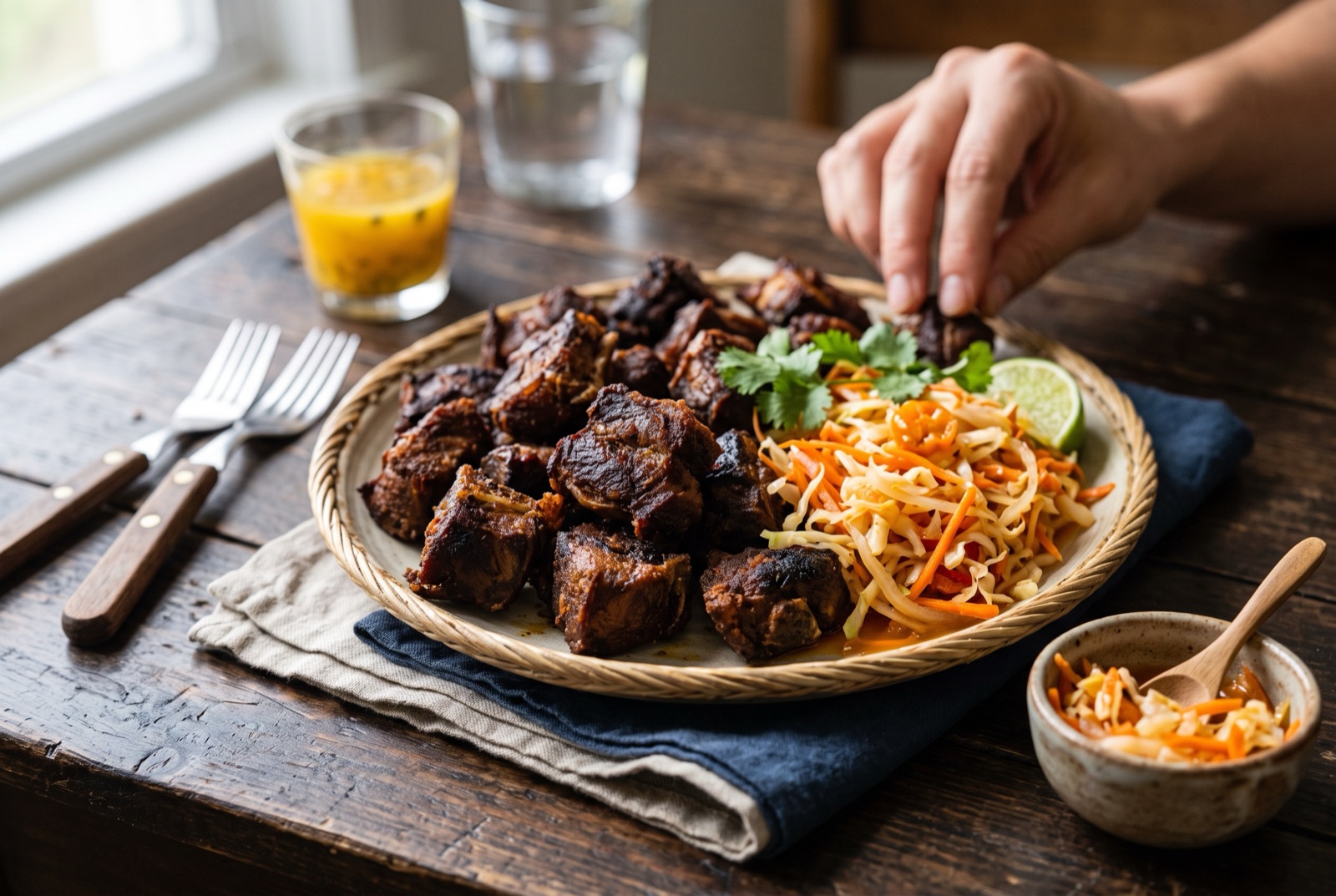
Stewed or fried meat with plenty of sauce — griyo, poul an sos or a whole fried fish — plus pikliz on the side.
The story behind Diri Djon Djon.
Djon djon are gathered, not farmed. The mushrooms grow seasonally in the north of Haiti, particularly around Cap-Haïtien and the surrounding plain, and they are sold dried in small bundles with the stems and caps still attached. Only the caps carry the pigment worth having; the stems are woody and are usually discarded or tied in a bundle for the pot and pulled out later. Because the harvest is limited and demand from the diaspora is large, dried djon djon is expensive — often startlingly so per gram — which is precisely why the rice reads as celebratory rather than everyday.
What makes the dish work is that the mushrooms are used as a dye and a stock, not as an ingredient you chew. They are steeped in hot water until the liquid runs black, then strained out, and the rice absorbs that liquor as it steams. The flavour is glutamate-rich and slightly smoky, closer to a dark broth than to the mushrooms most people know. Cooks who try to substitute porcini or shiitake get a good mushroom rice, but it is brown, not black, and the aroma is quite different — worth knowing before you serve it to anyone Haitian.
The rice sits at the top of a hierarchy that every Haitian household understands. Plain white rice is the baseline. Diri kole ak pwa — rice cooked with red or black beans in their dark cooking water — is the standard daily plate. Diri djon djon is what you make when the occasion deserves it, and it is almost always paired with something that contrasts: fried pork, stewed chicken, a whole fried fish, or sauce made from crab or lambi. Adding shrimp directly to the pot is a common festive upgrade, though the plain version is the one that lets the mushroom liquor speak.
Outside Haiti, powdered djon djon bouillon cubes are widely sold and widely used, including by very good cooks. They give the colour reliably and save the steeping step, but they carry salt and additives, so if you go that route, hold back on the salt until you taste.
Questions, answered.
What are djon djon mushrooms?
Djon djon are small wild mushrooms that grow seasonally in northern Haiti and are sold dried. They are not eaten as such — they are steeped in hot water to release an intensely black, savoury liquor, which is then strained and used as the cooking liquid for rice. Haitian and Caribbean grocers stock them dried or as a bouillon powder.
Why is my rice brown instead of black?
Either the mushrooms were under-steeped or too little was used relative to the rice. The liquor should look like strong black coffee before the rice goes near it. Substituting porcini or shiitake also gives brown rice, because those mushrooms lack the pigment that makes djon djon distinctive.
Can I use djon djon bouillon cubes instead of the dried mushrooms?
Yes, and plenty of Haitian home cooks do. Two cubes dissolved in the cooking liquid give a reliable black colour without the steeping and straining. The trade-off is added salt and seasoning, so taste before you add any further salt to the pot.
Is diri djon djon vegetarian?
The rice itself is, as written here — the savoury depth comes from the mushroom liquor rather than meat. Restaurant versions often add shrimp, crab or a meat bouillon cube, so it is worth asking. Using water or vegetable stock to top up the liquor keeps it fully plant-based.
How much liquid does the rice need?
Roughly 1.5 times the volume of the rice for long-grain, measured after rinsing and draining. Haitian cooks judge it by eye — the liquid should sit about one finger-joint above the level of the rice — and then never lift the lid once the surface liquid disappears.
You might also like.
All recipes →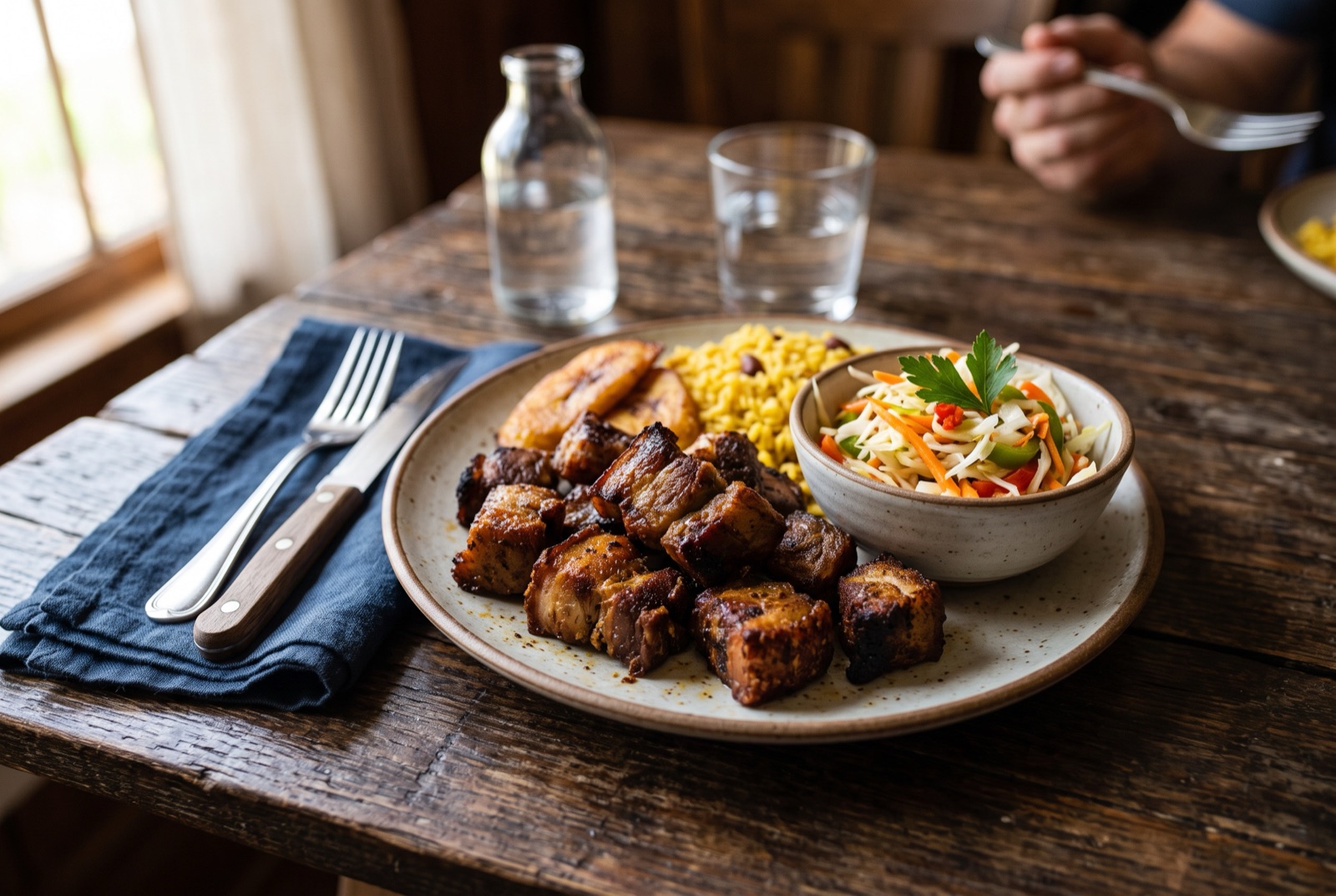
Keep exploring Haiti.
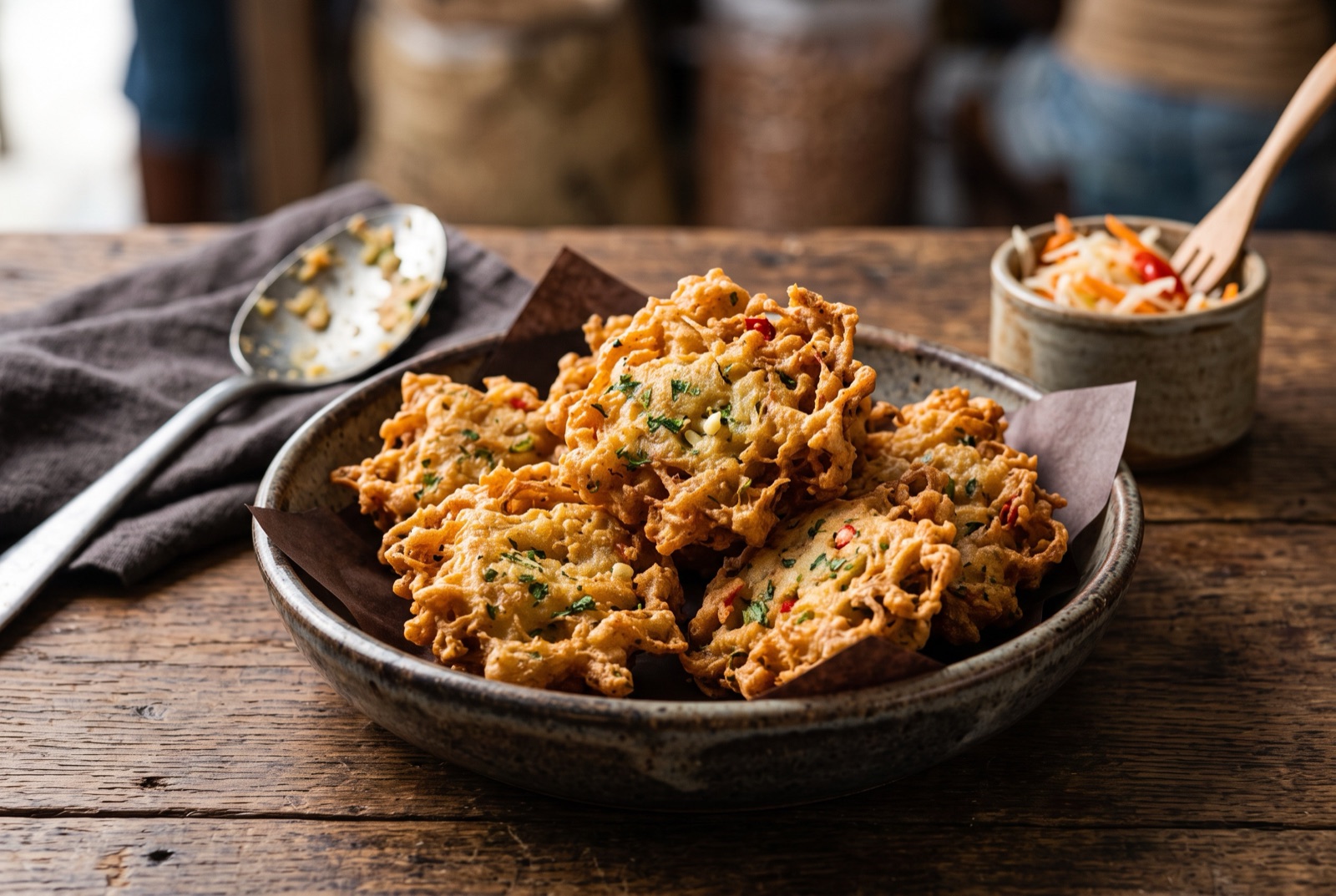
Haiti has 9 more dishes in the atlas — Akra and Bannann Peze, and 7 more.
All Haiti recipes Rice recipes Garlic recipes Scotch bonnet recipes mainsidevegetarianvegangluten freedairy freenut freeRecipe by The DishRoute Kitchen · published August 20, 2026 · updated August 20, 2026