Tasso Kabrit.
Haitian Twice-Cooked Goat
Tasso kabrit · say it: tah-SO kah-BREET
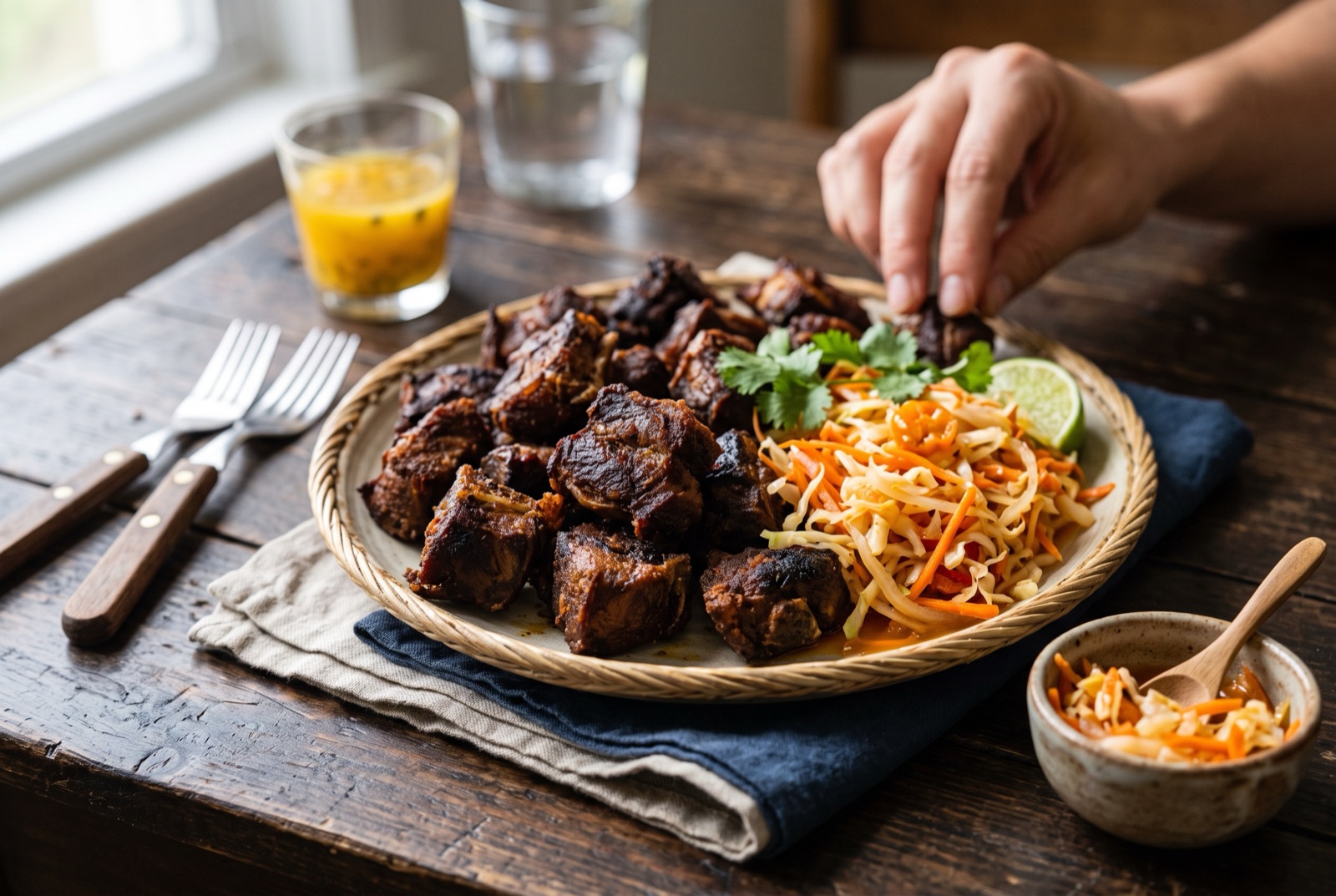
Tasso kabrit is goat cut into small pieces, marinated in epis and citrus, simmered until the meat gives, and then fried until the surface goes dark, dry and chewy rather than crisp. That texture is the point: unlike griyo, which is juicy inside a crackling shell, tasso is meant to be firm and a little jerky-like, so it can sit on a table for hours at a party and still taste good. Goat brings a mineral, faintly grassy flavour that stands up to the clove, thyme and Scotch bonnet in the marinade, and the sour orange keeps the whole thing from being heavy. You eat it with your fingers, with pikliz, and usually standing up.

- Gate
- Haiti
- Prep
- 25 min
- Cook
- 1 hr 35 min
- Total time
- 8 hr incl. 6 hr rest
- Serves
- 4
- Status
- Medium
- Nutrition / serving · estimated
- Calories 480 kcal
- Protein 52 g
- Carbs 5 g
- Fat 27 g
- Fiber 1 g
- Sodium 820 mg
Why this recipe works.
- Correct two-stage cooking with a genuinely dry fry, so you get tasso texture and not just fried goat.
- Handles goat honestly: the citrus wash, the long simmer, and what to do if your meat is on the tough side.
- Uses the simmering broth rather than wasting it — it becomes the dipping sauce.
- Works with beef or turkey by the same method, with timings adjusted and stated.
Ingredients.
16 itemsFor the goat
For the marinade
For cooking
Equipment
- Blender for the epis
- Heavy lidded pot
- Wire rack
- Deep frying pan or air fryer
Instructions.
Wash the goat
Cover the goat with cold water in a large bowl, squeeze in two limes and rub the pieces hard for a couple of minutes. Drain, rinse under running water and pat completely dry — the meat should smell clean and faintly citric.
Blend and apply the marinade
Blitz the scallions, parsley, garlic, onion, bell pepper, thyme, cloves, black pepper, salt, vinegar, sour orange and the last lime into a coarse paste. Rub it into 1.2 kg of goat, add the whole Scotch bonnet, cover and refrigerate for at least 6 hours or overnight.
Simmer until tender
Tip the goat and all its marinade into a heavy pot with the water, bring to a bare tremble and cook covered for 70–90 minutes. It is done when a piece pulls apart under light fork pressure but still holds its shape.
Tip Never let it boil hard — goat muscle tightens and will not soften again.
Make the dipping sauce
Lift the meat onto a wire rack, then strain the cooking liquid and boil it down hard until you have a small amount of dark, concentrated sauce. Taste and add lime or salt as needed, and keep it warm.
Dry the meat
Leave the goat on the rack for at least 20 minutes so the surface loses its shine and feels tacky rather than wet. Wet meat will spit in the oil and steam instead of colouring.
Fry until dark and dry
Heat the oil to 180°C and fry the goat in batches for 6–8 minutes, turning, until the pieces are dark brown, dry-looking and firm when pressed with tongs. Tasso should look almost overdone compared with griyo.
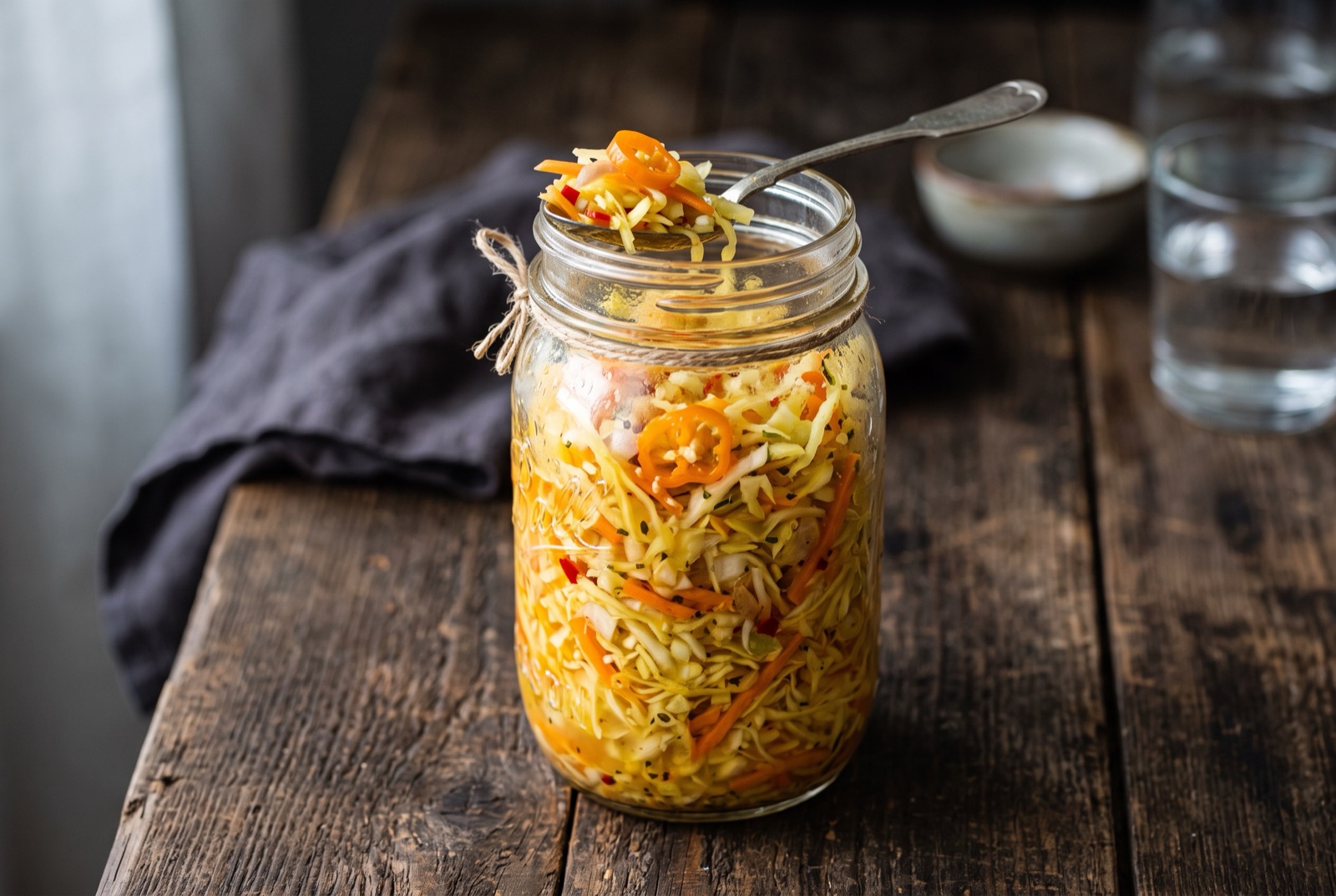
Serve with pikliz
Drain briefly, salt lightly and pile the tasso onto a platter with the reduced sauce in a bowl alongside. Serve hot or at room temperature with pikliz and pressed plantains.
Tips from our kitchen.
- Wash the goat with lime and water and rinse it well before seasoning; this is standard practice and it genuinely helps.
- Ask the butcher for bone-in shoulder or leg cut into 4 cm pieces — bones add flavour to the simmering broth.
- Simmer at a bare tremble, not a rolling boil. Hard boiling tightens goat muscle and it never softens afterwards.
- Dry the pieces properly on a rack for 20 minutes before frying, or the oil will spit and the surface will steam.
- Fry hotter and longer than you would for pork — tasso should look almost too dark before you pull it out.
- Reduce the strained cooking broth with a little epis to make a dipping sauce that rescues any piece that fried too dry.
Substitutions.
- Goat → Beef chuck or turkey thigh
- Beef tasso needs about the same simmering time; turkey needs only 30–35 minutes. Both fry the same way.
- Sour orange → Equal parts orange juice and lime juice
- Sour orange is the traditional acid. The blend is what most cooks outside the Caribbean use and it is close enough.
- Deep frying → Air fryer at 200°C for 12–15 minutes, or a hot oven at 230°C for 20 minutes
- Tasso suits these better than griyo does, because the goal is a dry surface rather than a puffed crust.
Variations.
- Tasso bèf
- Beef version, usually made from chuck or flank and fried until the edges are almost crunchy. The everyday alternative when goat is expensive.
- Tasso kodenn
- Turkey tasso, common at Christmas and New Year in the diaspora. Much faster to simmer, and the drier meat takes the dark fry particularly well.
- Tasso ak sos ti malis
- Served under a sharp cooked sauce of onion, Scotch bonnet and sour orange instead of dry with pikliz — better if your tasso ended up on the tough side.
Storage & reheating.
Tasso is built to keep. Fried, it holds 4 days refrigerated and reheats well on a rack in a 200°C oven for 8 minutes, or straight from cold in a dry pan. The simmered stage freezes for 3 months in its broth; thaw, dry and fry to order. Because the meat is deliberately dry, it also travels well and is one of the few fried dishes that is genuinely good at room temperature.
Serve with
Pikliz, bannann peze and a cold beer — the standard Haitian party plate, eaten with fingers.
The story behind Tasso Kabrit.
The word tasso is shared across the Caribbean and the Gulf — Louisiana tasso is a smoked, heavily spiced pork used as a seasoning meat — and the common thread is preservation. Meat cooked twice and dried out keeps far longer than meat cooked once, which mattered a great deal in a hot climate before refrigeration. Haitian tasso kept that logic and turned it into a texture people came to prefer. It is made with goat most often, but beef tasso (tasso bèf) and turkey tasso (tasso kodenn) follow exactly the same method.
Goat has a particular standing in Haitian cooking. It is the meat of celebration and of Vodou ceremony, raised on rough terrain where cattle do not thrive, and prized for a flavour that is stronger than lamb and leaner than beef. The animal is used completely; the tougher cuts go into stews and tasso, where long simmering handles the connective tissue. Because goat can carry a strong smell, the pre-wash with lime or sour orange is treated as essential rather than optional, and older cooks will scrub the meat twice.
Marinating is where households differ. Some go overnight with a wet epis marinade; others rub the meat with dry seasoning and citrus and let it sit only a few hours. What nobody skips is the clove — whole cloves in the simmering pot are the smell that identifies Haitian tasso from across a room — and the whole Scotch bonnet, which perfumes the broth without necessarily setting it on fire.
At a Haitian party the fritay platter is the centre of gravity: tasso kabrit next to griyo, bannann peze, akra and marinad, with a bowl of pikliz in the middle and everyone reaching in. Tasso earns its place there because it holds. An hour after it comes out of the oil it is still exactly as good, which is more than can be said for most fried food.
Questions, answered.
What is the difference between tasso and griyo?
Both are Haitian twice-cooked fried meats, but griyo is pork fried only until the outside crisps while the inside stays juicy, and tasso is usually goat, beef or turkey fried much longer until the meat is dry and chewy throughout. Tasso keeps far better; griyo is best eaten straight from the pan.
How do I stop goat from tasting too strong?
Wash the raw meat with lime or sour orange and water, rinse it, and pat it dry before seasoning. Then marinate with plenty of epis, thyme and cloves for several hours. Trimming heavy external fat also helps, since most of the strong flavour sits in the fat rather than the muscle.
My goat is still tough after simmering. What now?
Keep simmering — goat is unpredictable and an older animal can need two hours rather than one. Add a little water if the pot runs dry, keep the heat at a bare tremble rather than a boil, and only move to the frying stage when a piece pulls apart under light pressure from a fork.
Can I make tasso without a deep pan of oil?
Yes, and it works better here than for most fried dishes. Because tasso should be dry rather than puffed, an air fryer at 200°C for 12–15 minutes or a very hot oven for 20 minutes gets close to the traditional texture with a fraction of the oil.
Do I have to marinate overnight?
Four hours is enough to season the surface and the outer layer, but overnight lets the clove, citrus and garlic reach the middle of each piece. Since the meat then simmers in that same marinade, some seasoning gets in regardless — overnight simply makes the difference between good and noticeably better.
You might also like.
All recipes →
Keep exploring Haiti.
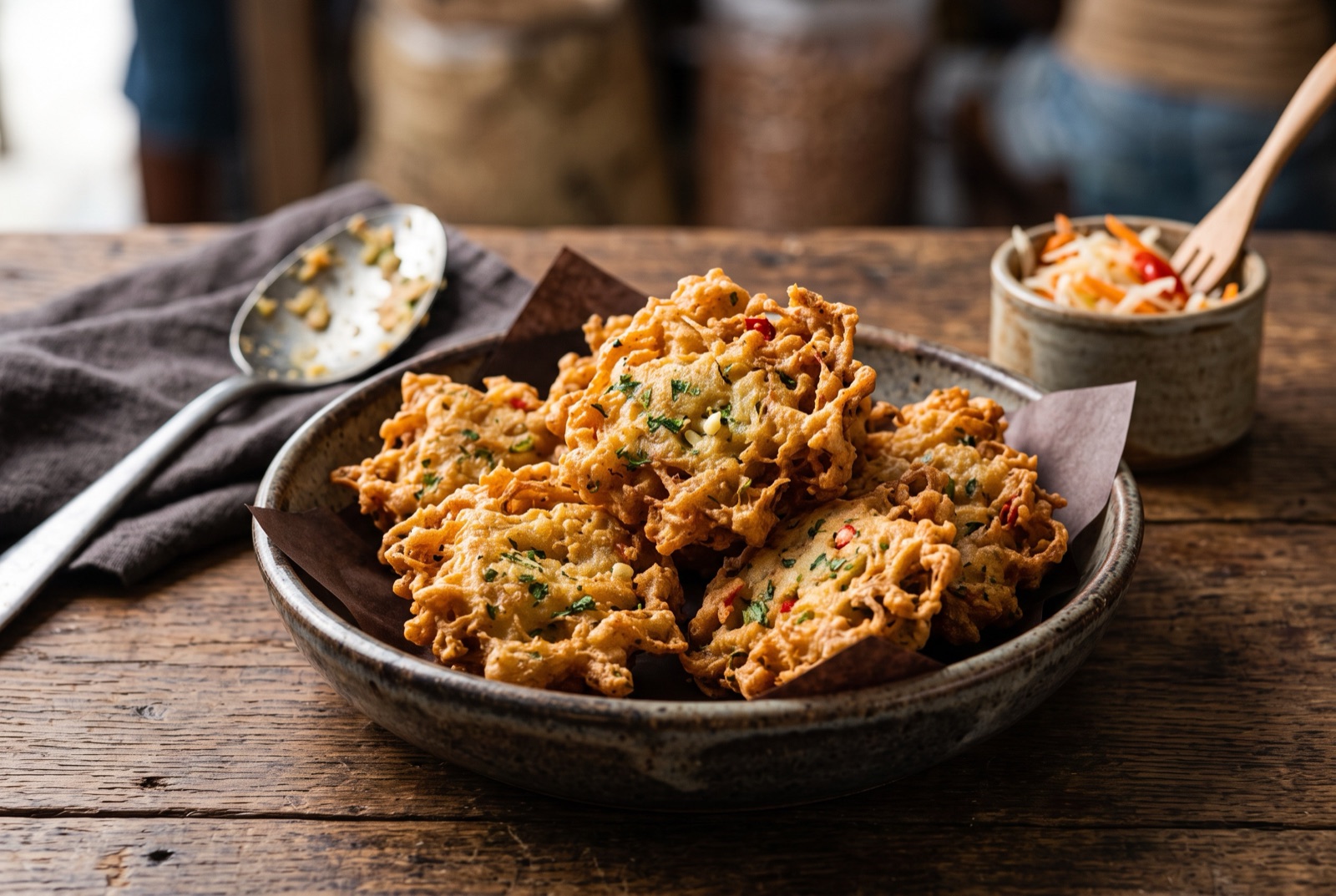
Haiti has 9 more dishes in the atlas — Akra and Bannann Peze, and 7 more.
All Haiti recipes Goat recipes Garlic recipes Lime recipes mainstreet foodgluten freedairy freehalal friendlyRecipe by The DishRoute Kitchen · published August 20, 2026 · updated August 20, 2026