Hyderabadi Kacchi Biryani.
Dum-Cooked Mutton and Saffron Rice
حیدرآبادی بریانی · Hyderabadi kacchi gosht ki biryani · say it: HY-der-ah-BAH-dee bir-YAH-nee
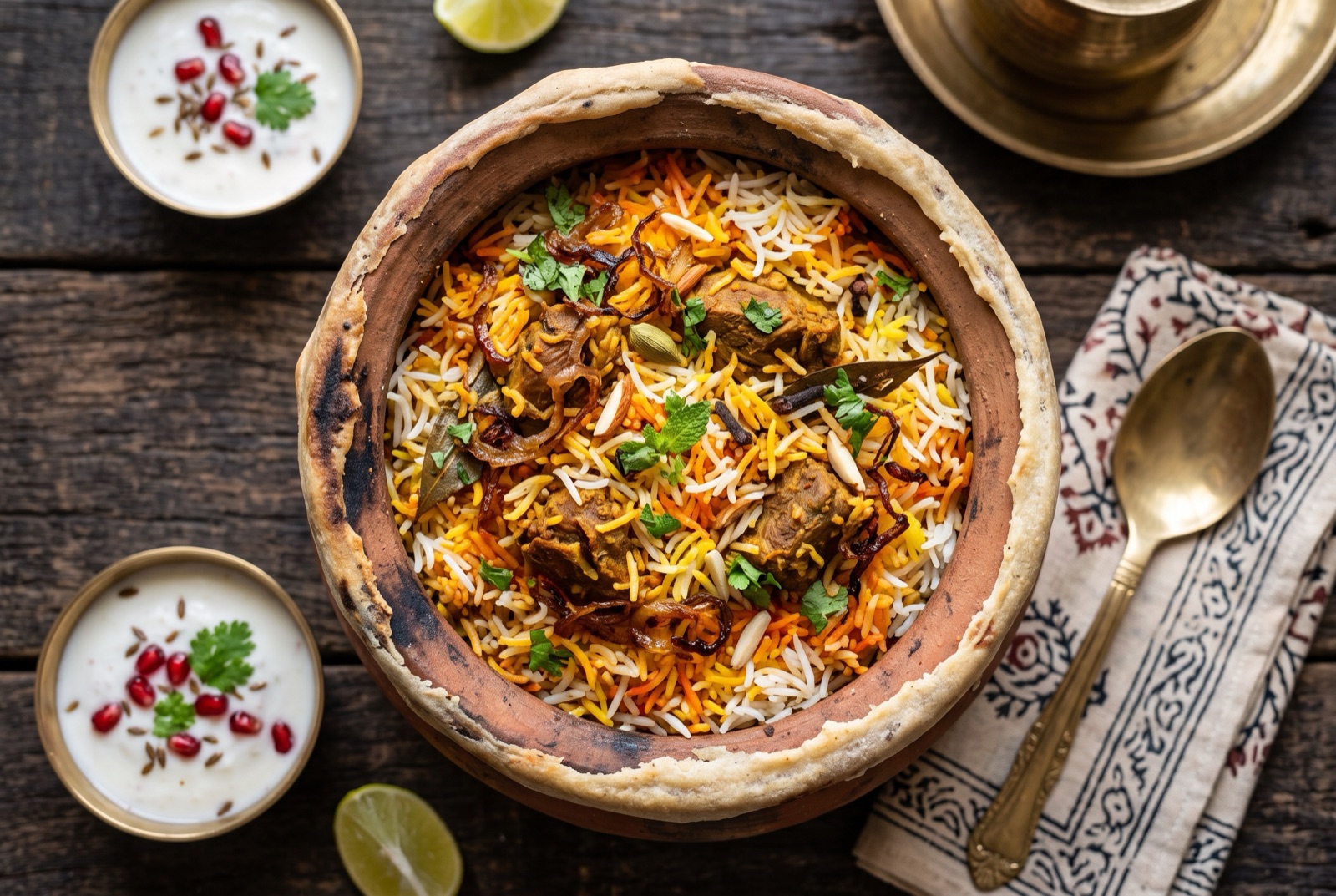
Hyderabadi biryani is a layered rice dish in which bone-in mutton, marinated overnight in yogurt, fried onions, chile and lime, goes into the pot completely raw, is covered with basmati boiled to only about seventy percent, and then sealed and cooked on low heat until the meat is tender and the rice has absorbed the steam rising through it. That is the kacchi method, and it is what separates this from every biryani that cooks the meat first. The result is not uniform: the bottom is dark, spicy and wet with meat juices, the top is pale, saffron-streaked and separate-grained, and you are meant to eat both in the same spoonful. It is hot, sour and deeply savory, and it is served with a thin yogurt raita to cool it down.

- Gate
- IndiaHyderabad, Telangana
- Prep
- 45 min
- Cook
- 1 hr 10 min
- Total time
- 5 hr 55 min incl. 4 hr rest
- Serves
- 6
- Status
- Takes skill
- Nutrition / serving · estimated
- Calories 720 kcal
- Protein 38 g
- Carbs 74 g
- Fat 30 g
- Fiber 3 g
- Sodium 1150 mg
Why this recipe works.
- The real kacchi method, with the timings and doneness cues that make it work in a domestic pot rather than a restaurant degh.
- Birista (fried onions) made properly — a third of them go into the marinade, which is where most of the sweetness comes from.
- Tells you exactly how underdone the rice must be at draining, the single detail that decides whether the biryani is great or mush.
- A pakki fallback is spelled out, so a first attempt does not have to be a gamble on a kilo of lamb.
Ingredients.
29 itemsFor the marinade
For the birista
For the rice
To layer and seal
Equipment
- Wide heavy-based pot or Dutch oven with a tight lid
- Large pot for boiling rice
- Flat tava or heat diffuser for the dum
- Fine sieve or colander
Instructions.
Fry the onions into birista
Heat the oil in a wide pan and fry the sliced onions in two batches over medium-low heat, stirring often, for 15–20 minutes each until they are deep amber and no longer limp. Lift them out just before they look done — they darken further on the paper — and drain flat so they crisp.
Tip Pale onions give a thin, sweetish biryani; black ones make the whole pot bitter. Amber, crisp and smelling of caramel is the target.
Marinate the meat
In a large bowl mix 1 kg of meat with the yogurt, ginger and garlic pastes, chili powder, turmeric, garam masala, green chiles, mint, cilantro, lime juice, melted ghee, salt, papaya paste if using, and two thirds of the birista, crushed in your hand. Cover and refrigerate at least 4 hours, ideally overnight.
Tip The marinade should cling to the meat in a thick coat, not sit in a puddle. Any excess liquid ends up in the rice.
Soak the rice and bloom the saffron
Rinse 750 g of basmati until the water runs clear, then soak it in cold water for 30 minutes and drain. Crush the saffron between your fingers into the warm milk and leave it to steep until the milk turns bright orange.
Par-boil the rice to 70 percent
Bring 4 litres of water to a hard rolling boil with the bay leaves, cinnamon, cardamoms, cloves, shahi jeera and the 2 tablespoons of salt. Add the drained rice and boil uncovered for 4–5 minutes, then drain immediately. Test constantly: a grain pressed between finger and thumb should flatten at the ends but keep a hard, chalky white core.
Tip The water should taste aggressively salty, like seawater. This is the only chance the rice has to be seasoned.
Layer the pot
Spread the marinated meat and all its marinade in an even layer across the bottom of a wide heavy pot. Tip the hot drained rice over it and spread it gently to the edges without pressing down. Scatter over the remaining birista, drizzle with the saffron milk, the melted ghee and the kewra water, and add a last handful of mint.
Seal and start the dum
Knead the flour with water into a stiff rope of dough and press it around the rim, or crimp a double layer of foil over the pot, then clamp the lid down hard. Set the pot over high heat for 5 minutes to get steam moving — you should hear it hiss and see the seal tighten.
Cook low and slow
Slide a flat tava or heat diffuser under the pot, drop the heat to the lowest setting, and cook undisturbed for 45 minutes. Do not lift the lid: every peek costs steam that the raw meat needs. Take it off the heat and let it stand, still sealed, for 15 minutes.
Tip If your seal is good, you will smell almost nothing while it cooks. A strong aroma in the kitchen means steam is escaping — press the seal down.
Open and serve without stirring
Crack the seal at the table if you want the moment. Push a flat spoon straight down through the layers to the bottom and lift out portions sideways, so every plate gets pale saffron rice from the top and dark, juicy meat from below. Check a piece of meat pulls easily from the bone before serving.
Tips from our kitchen.
- Use bone-in goat or lamb shoulder cut into large pieces. Boneless cubes dry out during the long dum and give the rice nothing to work with.
- Fry the onions properly: low and slow until they are deep amber and audibly crisp, then drain on paper. Pale onions mean a flat, thin biryani, and burnt ones turn the whole pot bitter.
- Drain the rice when a grain still snaps in the middle with a hard white core — roughly 70 percent cooked, about 4–5 minutes of hard boiling. It will feel far too raw. Trust it.
- Marinate overnight if you can. Yogurt and raw papaya both tenderise, but time is what actually gets goat meat tender in a pot with no added water.
- Use the widest heavy pot you have so the meat sits in a shallow layer. A tall narrow pot leaves the top rice dry while the bottom stews.
- When you finish the dum, do not stir. Cut down through the layers with a flat spoon and lift portions out sideways, so the grains stay whole.
Substitutions.
- Bone-in goat or lamb → Bone-in chicken thighs and drumsticks
- Chicken kacchi biryani works but needs much less time — 25 minutes of dum rather than 45 — and the rice should be drained slightly less underdone since it has less time to finish.
- Saffron → A pinch of turmeric plus a drop of rose water
- This gives colour but not the aroma. Saffron is expensive, but biryani is one of the few dishes where a few threads genuinely change the result.
- Kewra water (screwpine essence) → Rose water, or leave it out
- Kewra is the distinctly Hyderabadi perfume in this dish. Use it sparingly — half a teaspoon too much and the pot tastes like soap.
- Atta dough seal → A sheet of aluminium foil crimped tightly under a heavy lid
- Functionally the same. The seal exists to trap steam, and foil does that perfectly well.
Variations.
- Pakki biryani
- Cook the marinated meat into a thick, nearly dry curry first, then layer with par-boiled rice and dum for only 20 minutes. Far more forgiving, and the standard method in most home kitchens.
- Hyderabadi vegetable biryani
- The same marinade and layering with carrots, beans, cauliflower and paneer instead of meat. It needs the pakki approach — vegetables cannot survive 45 minutes of dum raw.
- Bagara khana with mirchi ka salan
- The everyday Hyderabadi cousin: plain spiced rice served with a peanut-sesame chile gravy. Mirchi ka salan is also the classic side for biryani itself, alongside raita.
Storage & reheating.
Biryani keeps 3 days refrigerated and is arguably better on day two, once the layers have settled into each other. Reheat portions covered, with a tablespoon of water sprinkled over, in a low oven or a covered pan on the lowest heat — microwaving dries the top grains and toughens the meat. It freezes acceptably for a month; thaw fully in the fridge before reheating, or the rice turns to paste. Never reheat more than once.
Serve with
Thin raita of whisked yogurt with onion, cucumber and a little roasted cumin — its job is to put out the fire, so keep it loose and cold. Mirchi ka salan, the peanut and sesame chile gravy that Hyderabad serves with biryani almost by law. Sliced raw onion soaked in lime juice, for sharpness between bites.
The story behind Hyderabadi Kacchi Biryani.
Biryani reached the Deccan through the Persianate courts that ruled it — Golconda first, then the Asaf Jahi Nizams who made Hyderabad one of the wealthiest princely states in India — and there it met a local palate that liked sourness and chile far more than the Mughal north did. Hyderabadi biryani is the result of that collision: green chile, lime, mint and fried onion in quantity, over lamb or goat, with a heat level that Lucknow would consider rude. Compare it with Awadhi biryani from Lucknow, which is gentler, subtly perfumed and built to be understated, and you have the two poles of Indian biryani.
The city distinguishes sharply between two techniques. Kacchi biryani — the one below — layers raw marinated meat under par-cooked rice and cooks everything together under a sealed lid, so the meat steams in its own marinade and its juices rise into the rice. It is unforgiving: get the timing wrong and you have either chewy meat or mushy rice. Pakki biryani cooks the meat into a finished curry first, then layers it with rice for a shorter dum, which is far more reliable and is what most home cooks and many restaurants actually do. Hyderabad regards kacchi as the higher form, and it is traditionally made with goat or lamb on the bone, never boneless, because bone and fat are what flavor the rice.
Dum means sealing the pot, historically with a rope of atta dough pressed around the lid, and cooking it slowly so nothing escapes. The seal is not decoration — it is the whole mechanism, since the dish has no added liquid beyond the marinade and the water clinging to the rice. Across India the same idea produces very different biryanis: Kolkata adds a whole potato and a boiled egg, Thalassery in Kerala uses short-grained kaima rice, and Ambur in Tamil Nadu uses seeraga samba and a lot more dried red chile. Arguing about which is best is a permanent national pastime.
Questions, answered.
What is the difference between kacchi and pakki biryani?
In kacchi biryani the meat goes into the pot raw, straight from its marinade, with par-cooked rice layered on top; everything finishes together under a sealed lid. In pakki biryani the meat is cooked into a curry first and then layered with rice for a much shorter steam. Kacchi gives deeper flavour because the meat juices rise through the rice, but it demands correct timing. Pakki is safer and is what most people cook at home.
Why did my biryani rice turn mushy?
The rice was boiled too far before layering. It should be drained at about 70 percent cooked, when a grain crushed between your fingers still has a firm white core, because it will keep cooking for another 40 minutes in the steam. Two other causes: not soaking and rinsing the basmati first, so it releases too much starch, and too much liquid in the marinade — the yogurt should coat the meat, not pool around it.
Can I make biryani without a dough seal?
Yes. Cover the pot tightly with aluminium foil, crimp it down over the rim, and press the lid on top of that. The dough seal is traditional and looks impressive when you crack it open at the table, but its only function is trapping steam. What matters more is a heavy-based pot and a low, even heat — set the pot on a flat tava or heat diffuser so the bottom layer does not scorch.
Do I need to tenderise the meat with papaya?
Only for goat or older mutton, and only a little. Raw green papaya paste contains papain, an enzyme that breaks down connective tissue, and a teaspoon per kilo is enough for an overnight marinade. Too much turns the meat unpleasantly mealy. For lamb shoulder, yogurt and a long marination usually do the job on their own.
How many people does a kilo of meat feed?
This recipe serves six generously as a one-dish meal with raita on the side, which is how biryani is actually eaten — it is not a rice side dish. If it is part of a larger spread with kebabs and curries, the same pot stretches to eight. Bone-in weight includes the bone, so a kilo yields roughly 700 g of meat.
You might also like.
All recipes →
Keep exploring India.
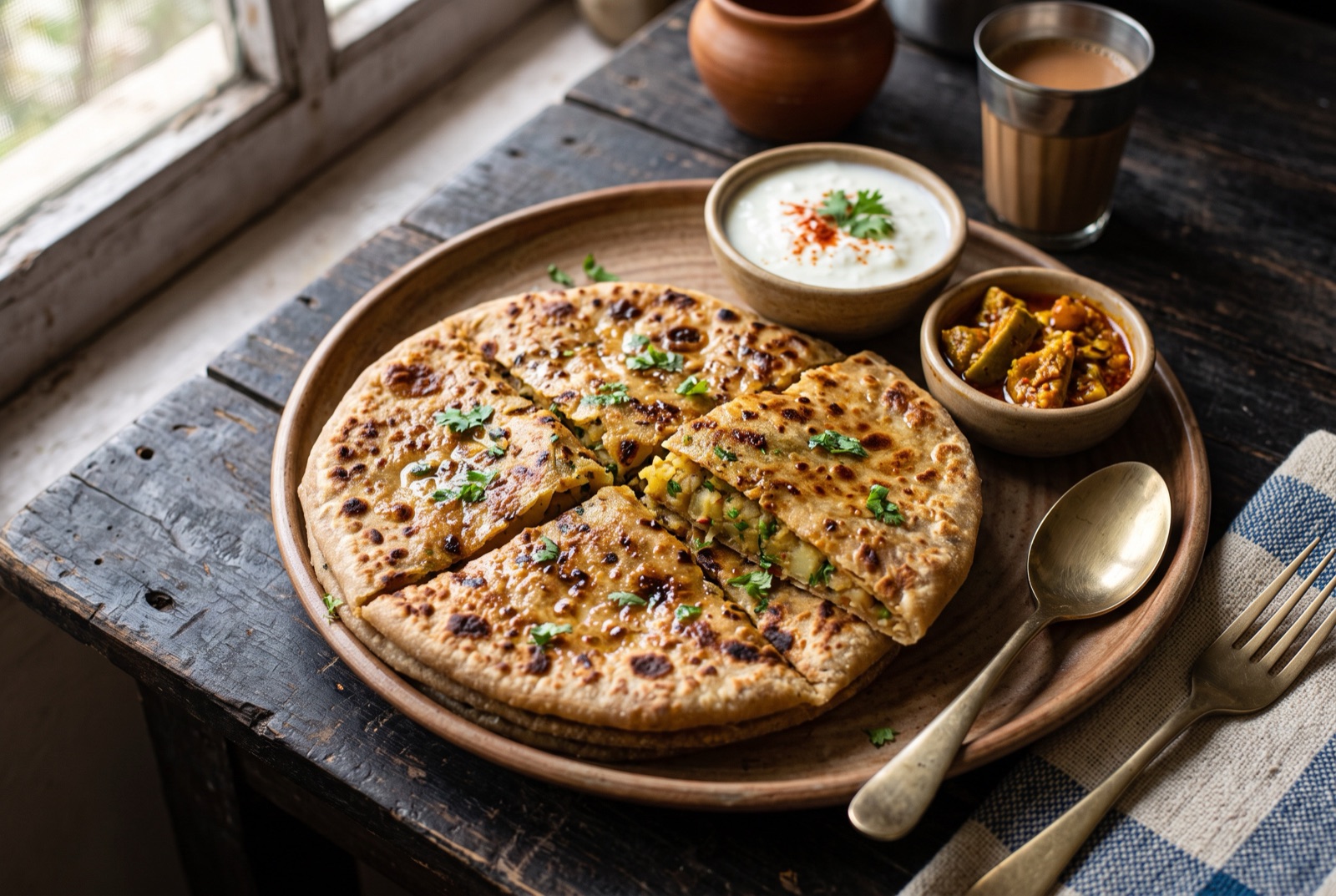
India has 9 more dishes in the atlas — Aloo Paratha and Butter Chicken, and 7 more.
Recipe by The DishRoute Kitchen · published August 19, 2026 · updated August 19, 2026