Pylsur.
Icelandic Lamb Hot Dog with Everything
Pylsa með öllu · say it: PIL-sa meth UD-lu
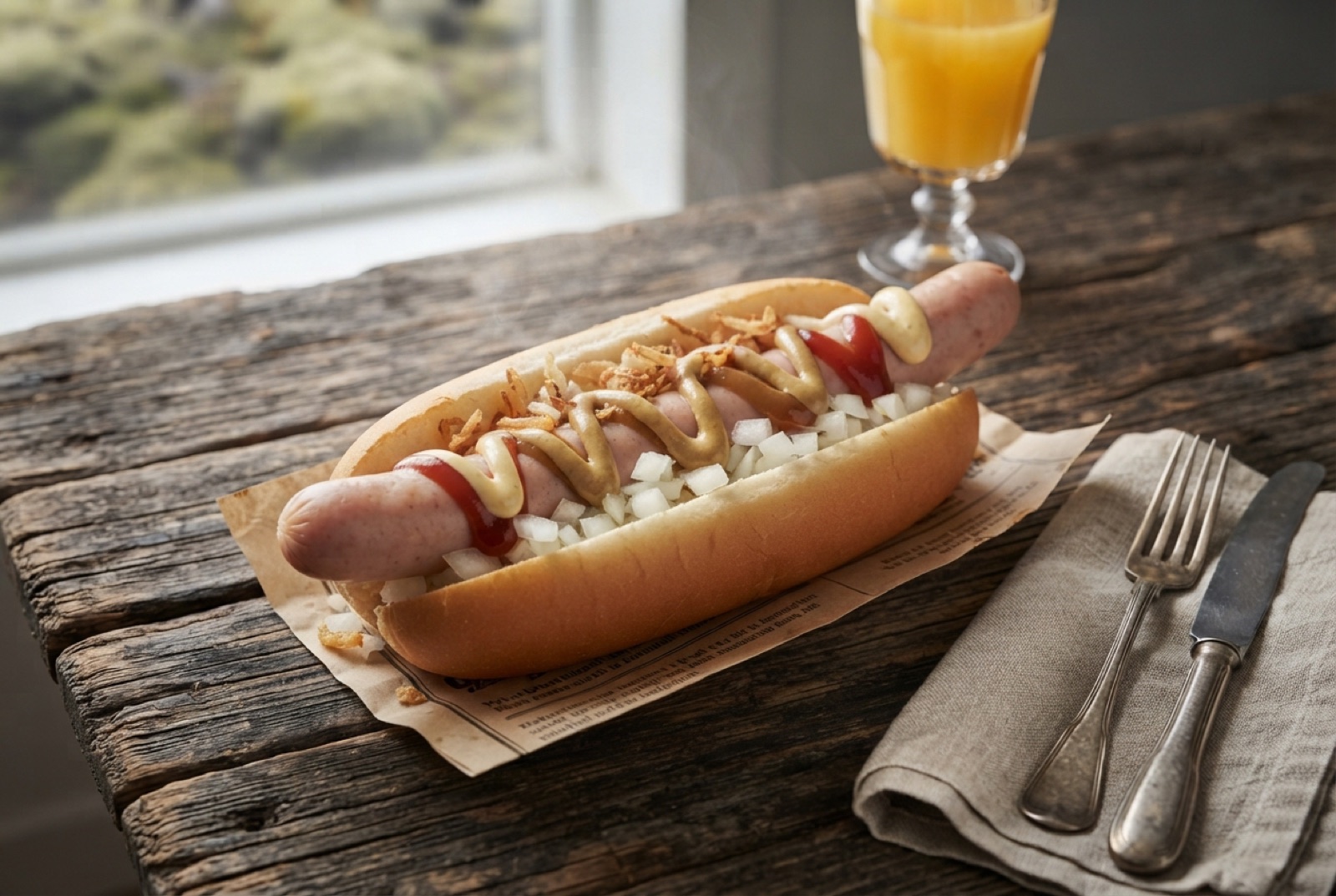
A pylsa með öllu — one with everything — is Iceland's national fast food, and it is built in a specific order that most people outside the country get wrong. Raw diced onion and crisp fried onion go into the bun first, the sausage lies on top of them, and the three sauces are drawn along its length last. The sausage itself is the reason it works: an Icelandic pylsa is a fine-textured, lightly smoked emulsion sausage made with a good proportion of lamb alongside pork and beef, which gives it a savoury, faintly gamey depth that a standard pork frankfurter simply does not have. Sweet ketchup, sweet-sharp brown mustard, cool remoulade, crunch underneath, snap on top. Fifteen minutes at home.

- Gate
- IcelandReykjavík
- Prep
- 20 min
- Cook
- 15 min
- Total time
- 35 min
- Serves
- 4
- Status
- Easy
- Nutrition / serving · estimated
- Calories 520 kcal
- Protein 17 g
- Carbs 42 g
- Fat 31 g
- Fiber 3 g
- Sugar 11 g
- Sodium 1240 mg
Why this recipe works.
- Poaches the sausages at sub-simmer, the stand technique that keeps the casing snapping instead of splitting.
- Builds the bun in the correct Icelandic order — onions underneath, sauces on top — which changes how every bite lands.
- Includes a from-scratch remoulade and a mixed sweet brown mustard, so the dish works outside Iceland.
- Crisp onions fried at home in ten minutes, which taste nothing like the stale tinned kind.
Ingredients.
11 itemsFor the hot dogs
For the onions
For the sauces
Equipment
- Saucepan
- Small frying pan for the onions
- Slotted spoon
- Squeeze bottles or spoons for the sauces
Instructions.
Mix the remoulade
Stir the mayonnaise with the chopped gherkins and capers, the pinch of turmeric and a teaspoon of the mustard. Leave it to sit while you cook — it should taste tangy and faintly sweet, with the pickle audible but not dominant.
Fry the crisp onions
Toss 1 of paper-thin onion slices with the flour until lightly dusted, shake off the excess, and fry in 1 cm of oil over medium-low heat. Stir often for 8–10 minutes: they go limp, then pale gold, then amber. Lift them out with a slotted spoon while they are one shade lighter than you want, and drain on paper.
Tip They keep browning off the heat. Amber in the pan means dark and bitter on the plate.
Poach the sausages
Bring a pan of water to a simmer, then drop the heat until the surface is steaming with no bubbles breaking — about 80°C. Slide in the sausages and hold them there for 6–8 minutes, until they are plump and firm and the casings are tight and glossy.
Warm the buns
Set the buns split-side down in a steamer basket or on a plate over the sausage pan, cover, and steam for 1 minute until they are soft, warm and slightly damp to the touch. Cold buns are the single most common mistake with this dish.
Build in the right order
Open each bun and lay in a spoonful of raw onion first, then a generous heap of the fried onion. Set the sausage on top so it sits in the onion bed rather than on bare bread.
Stripe the sauces and eat
Draw three stripes along the sausage — ketchup, brown mustard, remoulade — running the full length so each bite gets all three. Eat immediately, standing up, before the bun starts to soften.
Tips from our kitchen.
- Never boil the sausages hard. Keep the water at around 80°C — steaming, with no bubbles breaking — and hold them there for 6–8 minutes.
- Fry the onions low and slow at first, then lift the heat at the end; rushed onions go brown outside and stay raw and bitter inside.
- Warm the buns properly, ideally in the steam over the sausage water for a minute. A cold bun is the fastest way to ruin the whole thing.
- Dice the raw onion very small, around 3 mm — big chunks roll out of the bun and dominate every bite they land in.
- Squeeze the sauces in three narrow stripes along the length of the sausage rather than dumping them in a pool at one end.
Substitutions.
- Icelandic pylsur → Fine-textured lamb sausages, or good European frankfurters with a natural casing
- The natural casing matters more than the exact meat — it is what gives the snap. A supermarket skinless hot dog will taste fine but will never bite the way a pylsa does.
- Pylsusinnep (Icelandic sweet mustard) → 2 tbsp mild mustard mixed with 1 tbsp dark syrup or brown sugar and a few drops of vinegar
- The Icelandic version is dark, sweet and barely hot — much closer to a sauce than to a table mustard. Do not substitute Dijon or English mustard straight; they are far too sharp.
- Remoulade → Mayonnaise stirred with finely chopped gherkin, a little mustard and a pinch of turmeric
- Danish-style remoulade is the closest bought equivalent and is sold in most Nordic and German shops. Tartare sauce is a serviceable emergency substitute.
Variations.
- Ein með öllu og kokteilsósa
- Cocktail sauce — mayonnaise with ketchup — instead of or alongside the remoulade. Common in Icelandic households and slightly sweeter.
- Pylsubrauð með hráum lauk aðeins
- Raw onion only, no fried onion, with mustard and ketchup. The plainer order, and what many Icelanders actually eat when they want the sausage to be the point.
- Pylsa in a bowl
- Sliced sausage over mashed potato with all the sauces on top, sold at Icelandic petrol stations as pylsa í brauði's lazier cousin. Better than it sounds.
Storage & reheating.
Hot dogs are an assemble-and-eat dish; a built one collapses within minutes as the bun absorbs the sauces. Cooked sausages keep 3 days refrigerated and reheat well in hot water. The fried onions keep a week in an airtight jar at room temperature and re-crisp in a dry pan or a hot oven for 2 minutes. Homemade remoulade keeps 5 days in the fridge and improves after a few hours as the pickle flavours it.
Serve with
A bottle of malt and appelsín mixed together, the Icelandic soft-drink combination that traditionally goes with them.
The story behind Pylsur.
Hot dogs took hold in Iceland during and after the Second World War, when Allied troops were stationed on the island and American food habits arrived with them, but the sausage that resulted is not American. Icelandic producers made theirs with the meat the country actually had, so lamb went into the blend alongside pork and beef, and the result is leaner and more savoury than a frankfurter. The stand that made it famous, Bæjarins Beztu Pylsur, has been selling them from a small hut near the old Reykjavík harbour since the 1930s, and the queue outside it at two in the morning is as much a part of the city's nightlife as anything with a licence.
The ordering ritual matters. Saying "ein með öllu" — one with everything — gets you the full arrangement: hrár laukur (raw onion), steiktur laukur (crisp fried onion), tómatsósa, pylsusinnep and remúlaði. The mustard is not yellow American mustard or sharp Dijon but a dark, sweet, mild condiment closer to a thin brown sauce, and the remoulade is a mayonnaise-based sauce with finely chopped pickle and a whisper of curry, inherited from Danish cooking during centuries of Danish rule. Leave any of them out and Icelanders will tell you what you missed.
What makes the hot dog worth a recipe rather than an assembly note is the handling of the sausage. Icelandic stands hold their pylsur in hot water at just below simmering point, never at a rolling boil, so the casing stays taut and snaps when bitten instead of splitting and going flabby. The bun is warmed too, usually by steam. Everything about it is unremarkable individually and unusually good together, which is the general condition of great street food.
Questions, answered.
What is an Icelandic hot dog made of?
Icelandic pylsur are fine-emulsion sausages made from a blend that includes lamb along with pork and beef, lightly smoked and packed in a natural casing. The lamb gives them a deeper, more savoury flavour than a standard frankfurter, and the casing is what produces the characteristic snap when you bite in.
What does "ein með öllu" mean?
It means "one with everything" — the standard Reykjavík hot dog order. You get raw diced onion, crisp fried onion, ketchup, sweet brown Icelandic mustard called pylsusinnep, and remoulade. The onions go into the bun before the sausage, and the three sauces are striped over the top.
Why do the onions go under the sausage?
Because it keeps them crisp and stops them sliding out. Fried onion sitting on top goes soggy as soon as the sauces hit it, while underneath it stays crunchy and soaks up a little of what drips down. It also means every bite reaches onion, sausage and sauce together rather than in sequence.
Can I use ordinary mustard?
Not straight. Icelandic pylsusinnep is dark, sweet and very mild, unlike yellow American mustard or sharp Dijon. Mix a mild mustard with dark syrup or brown sugar and a few drops of vinegar to get close. Using Dijon alone makes the hot dog aggressive in a way no Icelandic stand would serve.
How do you cook hot dogs so the skin does not split?
Keep the water below a simmer, around 80°C, and never let it boil. Rapid boiling forces the emulsion to expand faster than the casing can stretch, which splits it and lets fat and juice escape. Six to eight minutes at steaming temperature heats them through and leaves the casing taut.
You might also like.
All recipes →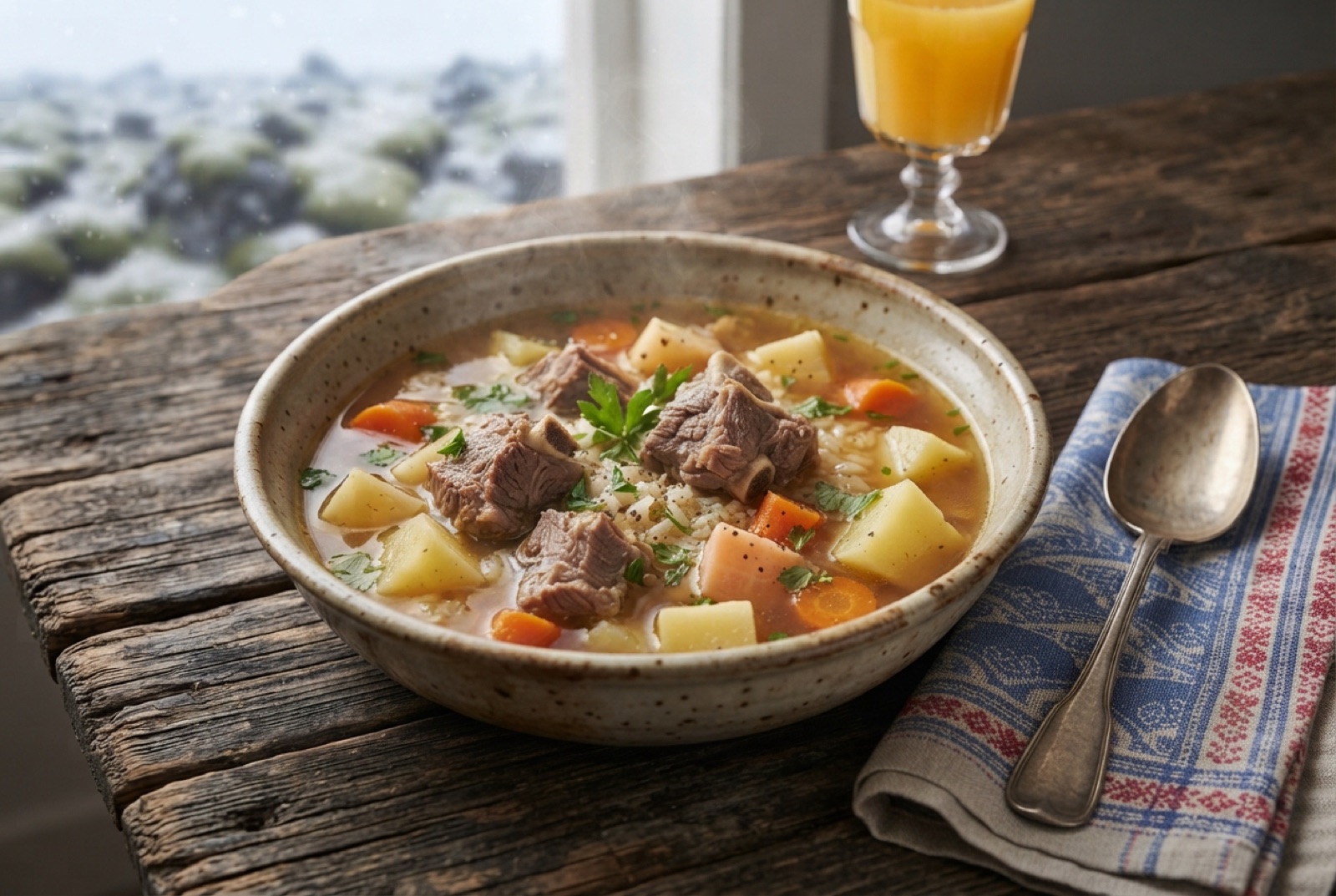
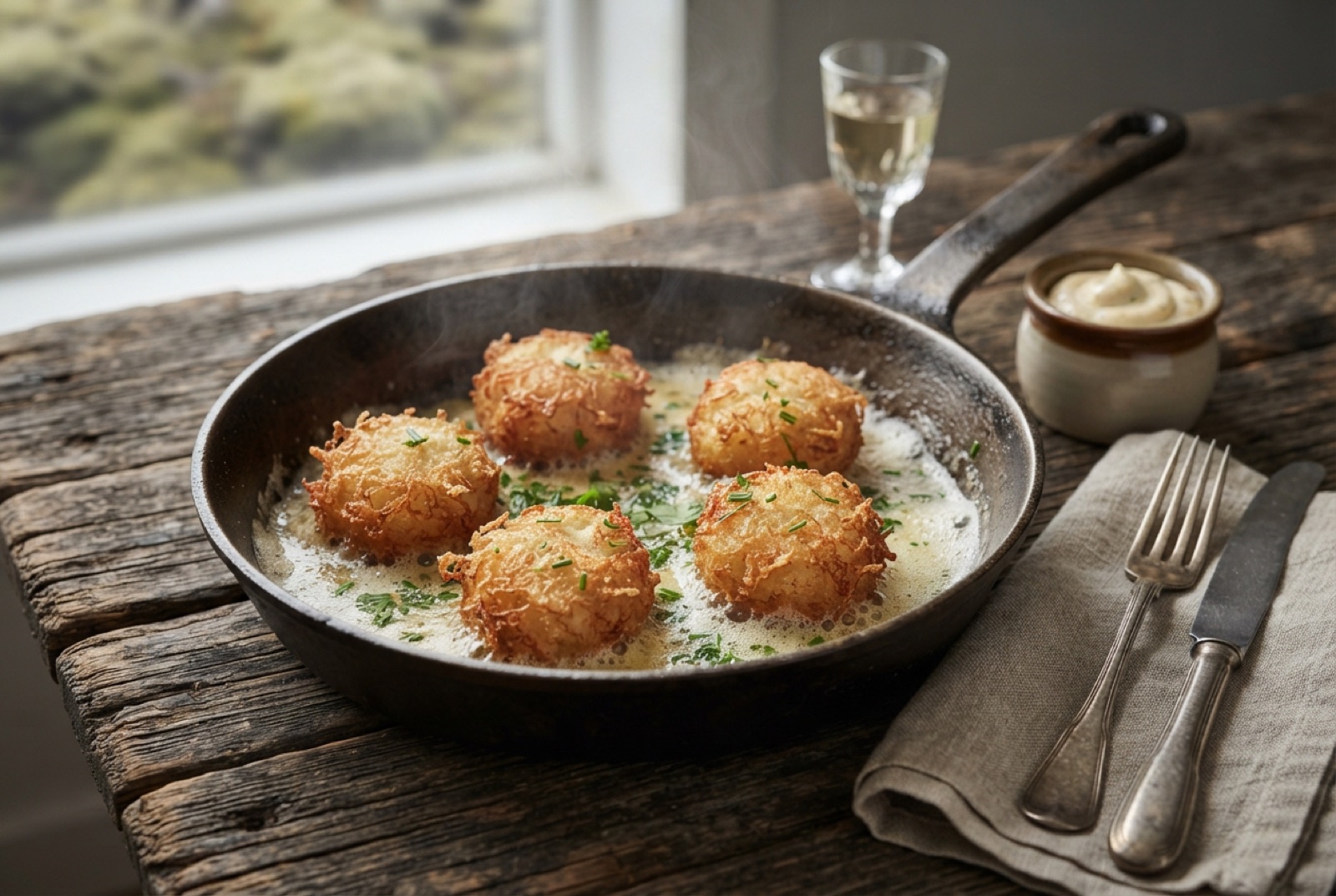
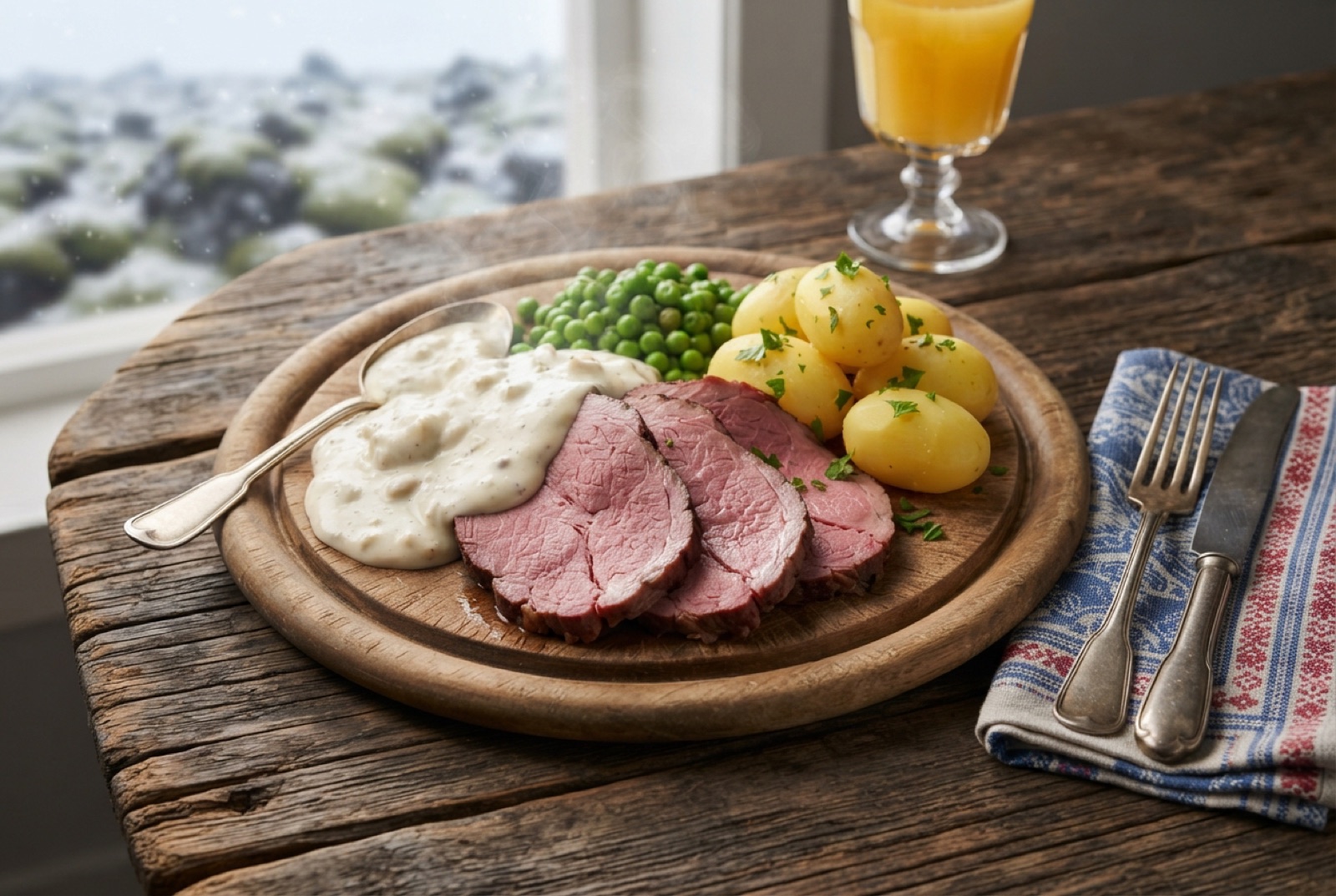
Keep exploring Iceland.
Iceland has 9 more dishes in the atlas — Fiskibollur and Hangikjöt, and 7 more.
Recipe by The DishRoute Kitchen · published August 19, 2026 · updated August 19, 2026