Shakshuka.
Eggs Poached in Spiced Pepper and Tomato
שקשוקה · Shakshuka · say it: shak-SHOO-kah
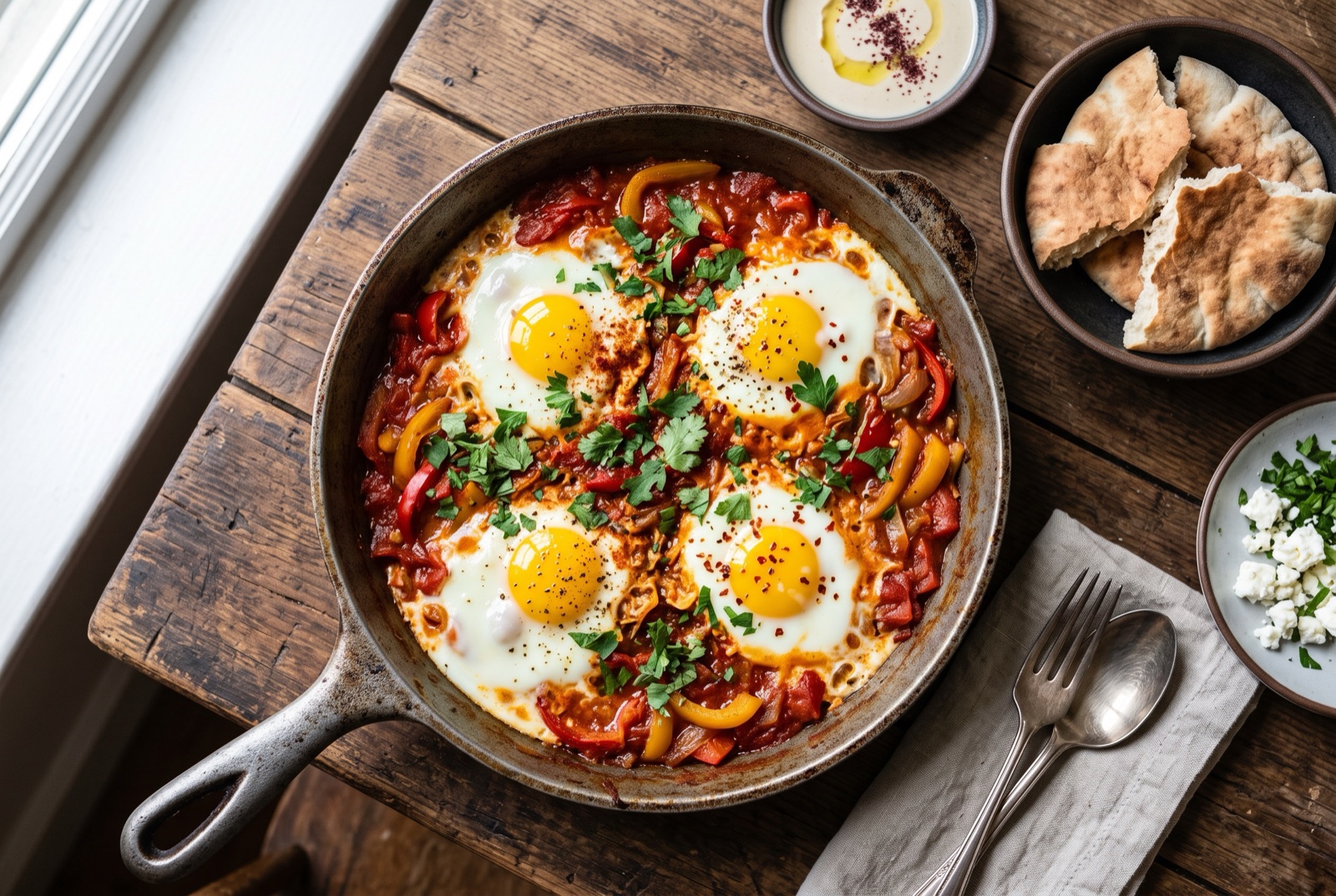
Shakshuka is a pan of eggs poached directly in a spiced tomato and pepper sauce, eaten straight from the skillet with torn bread. The sauce is the work: onion and red peppers softened until they collapse, tomato paste fried until it darkens, cumin and sweet paprika bloomed in the oil, then tomatoes cooked down long enough that a spoon dragged through the pan leaves a track. Only then do the eggs go in, into shallow wells, covered for a few minutes so the whites set while the yolks stay liquid. The flavour is sweet-sour and gently smoky, with as much chilli heat as you decide to put in. It takes about forty minutes, most of it unattended, and it is eaten at breakfast, at midnight, and at every hour in between.

- Gate
- IsraelNorth African kitchens, adopted nationally
- Prep
- 15 min
- Cook
- 35 min
- Total time
- 50 min
- Serves
- 4
- Status
- Easy
- Nutrition / serving · estimated
- Calories 320 kcal
- Protein 15 g
- Carbs 21 g
- Fat 20 g
- Fiber 5 g
- Sugar 12 g
- Sodium 860 mg
Why this recipe works.
- The sauce is cooked down to a jammy, spoon-tracking thickness before the eggs go in, which is the difference between shakshuka and tomato soup.
- Tomato paste is fried until it darkens, adding depth that raw tinned tomato alone cannot give.
- Clear visual cues for egg doneness so the yolks stay runny instead of turning chalky under the lid.
- Scales from a solo breakfast to a pan for four without any change in method.
Ingredients.
17 itemsFor the sauce
To finish
Equipment
- Wide 26–30 cm skillet or sauté pan with a lid
- Wooden spoon
- Small cup for cracking eggs
Instructions.
Soften the peppers and onion
Warm the olive oil in a wide skillet over medium heat and cook the onion and diced peppers with a pinch of salt for 12–15 minutes, stirring now and then. Do not rush this: the peppers should go completely limp and start to sweeten, with the onion turning translucent and gold at the edges.
Bloom the garlic and spices
Add the sliced garlic and cook for a minute until it smells sweet rather than raw, then stir in the tomato paste, cumin, paprika, caraway and harissa. Keep the spoon moving for a full minute — the paste should darken from bright red to brick and the oil around it should stain orange.
Tip This is where most of the depth is built. Stop as soon as it smells toasty; burnt paprika turns bitter fast.
Cook the sauce down
Tip in the crushed tomatoes with the sugar if using, plus a splash of water to rinse the tin. Simmer uncovered over medium-low heat for 15–20 minutes, until the sauce is thick enough that a spoon dragged across the pan leaves a channel that fills back slowly. Taste and season firmly with salt and pepper.
Tip Season now. Once the eggs are in you cannot fix the sauce underneath them.
Make wells and add the eggs
Turn the heat to low. Press six shallow wells into the sauce with the back of a spoon, crack each egg into a cup and slide it into its well. Scatter over the feta if you are using it and season the egg whites lightly with salt.
Cover and poach
Cover the pan and cook for 6–8 minutes, checking at six. The whites should be fully opaque right to the edge of the yolk with no clear jelly left, while the yolks still tremble when you shake the pan. Pull the pan off the heat a shade early — it keeps cooking on the way to the table.
Serve from the pan
Scatter the parsley over the top, set the pan on a board in the middle of the table and hand round warm bread. Everyone digs into the shared pan, spooning sauce and one egg at a time onto their bread.
Tips from our kitchen.
- Use a wide, shallow pan rather than a deep one. The sauce needs surface area to reduce and the eggs need room to sit in a single layer.
- Fry the tomato paste for a full minute until it turns from bright red to brick and smells sweet — this step supplies most of the depth.
- Make wells in the sauce with the back of a spoon and crack each egg into a cup first, then slide it in. Cracking directly over a hot pan is how yolks break.
- Cover the pan once the eggs are in and watch for the whites turning opaque around the yolk. Uncovered, the tops stay raw and slimy while the bottoms overcook.
- Salt the sauce properly before the eggs go in. You cannot season underneath an egg once it has set.
- If the sauce looks watery at the halfway point, push the lid aside and let it reduce. It is easier to loosen a thick sauce with a splash of water than to rescue a thin one.
Substitutions.
- Fresh red peppers → Jarred roasted red peppers, drained and chopped
- Cuts fifteen minutes and adds a smoky note. Add them with the tomatoes rather than at the start, since they are already soft.
- Harissa → A teaspoon of chilli flakes plus an extra half teaspoon of paprika
- Harissa brings garlic, caraway and chilli in one spoon; the substitute gets the heat but not the roundness.
- Tinned plum tomatoes → 800 g of very ripe fresh tomatoes, grated on a box grater
- Better in high summer and worse the rest of the year. Grated fresh tomatoes need about ten extra minutes of reduction.
Variations.
- Green shakshuka
- Swap the tomato base for spinach, chard, leek and green chilli cooked down in olive oil, finished with lemon. Modern, common in Tel Aviv cafés, and much lighter.
- Shakshuka with merguez
- Brown sliced merguez sausage in the pan first and build the sauce in the spiced fat it leaves behind — closer to Tunisian ojja and considerably richer.
- Shakshuka with feta and olives
- Crumble feta between the eggs and scatter chopped green olives over the sauce. A dairy version, so it belongs to a dairy meal rather than a meat one.
Storage & reheating.
The sauce is the make-ahead component and it improves overnight: refrigerate it up to 4 days or freeze up to 3 months, then reheat until it bubbles and crack in fresh eggs. Finished shakshuka does not store well, because reheating turns runny yolks hard and the whites rubbery. If you have leftovers, chop them roughly, warm them briefly in a pan and eat them as a spread on toast rather than trying to restore the original dish.
Serve with
Warm pita, challah or any bread with a crust worth dragging, plus a plate of pickles and a bowl of olives.
The story behind Shakshuka.
Shakshuka came to Israel with Jewish immigrants from Tunisia, Libya and Algeria in the 1950s and 1960s, and it is North African before it is anything else. The word comes from a Maghrebi Arabic root meaning a mixture or a jumble, and versions of the dish run right across the region: Tunisian ojja, often loaded with merguez or with prawns, is a close relative, and Libyan and Algerian cooks make their own variants with more caraway or more chilli. Further north, Turkish menemen scrambles the eggs loosely through the sauce rather than poaching them whole. None of these is a copy of another; they are branches of the same idea, which is that peppers, tomato and eggs cooked in one pan is one of the most efficient good meals available to anyone.
In Israel the dish moved out of North African home kitchens and into the general population through cheap cafés and, famously, through Tel Aviv and Jaffa restaurants that put it on the menu at all hours. It suited the country's eating habits perfectly: pareve or dairy at will, quick, cheap, made from vegetables that are good most of the year, and served communally in the pan. By the 1990s it had stopped being a specifically Tunisian or Libyan dish and become something everyone made, with each family arguing about whether the peppers should be roasted first, whether the tomatoes should be tinned or fresh, and whether feta is a legitimate addition or a foreign import.
The international career came later, largely through Israeli chefs cooking abroad, and the dish is now on brunch menus in cities that have never seen a jar of harissa. That travel has smoothed some edges — restaurant shakshuka is often thinner and less cooked than the original — but the home version has not changed much. The rule that has survived everywhere is that the sauce must be finished before the eggs arrive. Eggs cooked alongside a watery sauce give you soup with eggs in it.
Questions, answered.
How do I know when the eggs are done?
Look for whites that have turned completely opaque right up to the edge of the yolk, with no clear jelly left, while the yolk itself still wobbles when you shake the pan gently. That is usually 6 to 8 minutes covered over low heat. Remember that the pan keeps cooking after it leaves the stove, so pull it a shade early rather than late.
Why is my shakshuka watery?
The sauce was not reduced enough before the eggs went in, and the eggs themselves release liquid as they cook. Cook the tomato base uncovered until a spoon dragged across the pan leaves a channel that fills back slowly, not instantly. Tinned tomatoes vary a lot in water content, so treat the timings as a guide and the visual test as the rule.
Is shakshuka Israeli or North African?
North African in origin — Tunisian, Libyan and Algerian kitchens all made versions long before it reached Israel, where immigrants from those countries brought it in the mid-twentieth century. It then became a national dish in Israel and travelled worldwide from there. Calling it a North African dish adopted and popularised by Israel is accurate; calling it an Israeli invention is not.
Can I make shakshuka for a crowd?
Yes, but not in one pan. Beyond about six eggs the sauce is too crowded for the eggs to sit in a single layer and they poach unevenly. Make a large batch of sauce, then divide it between two or three pans, or bake it: ladle hot sauce into an oven dish, add the eggs and bake at 190°C for 10 to 12 minutes.
What is the difference between shakshuka and Turkish menemen?
The eggs. In shakshuka they are cracked in whole and poached in wells so each portion has an intact yolk, and the sauce is thicker and usually spicier. In menemen the eggs are stirred loosely through a softer pepper and tomato mixture until they set in curds, so the result is closer to a wet scramble. Menemen also rarely includes chilli paste or cumin.
You might also like.
All recipes →
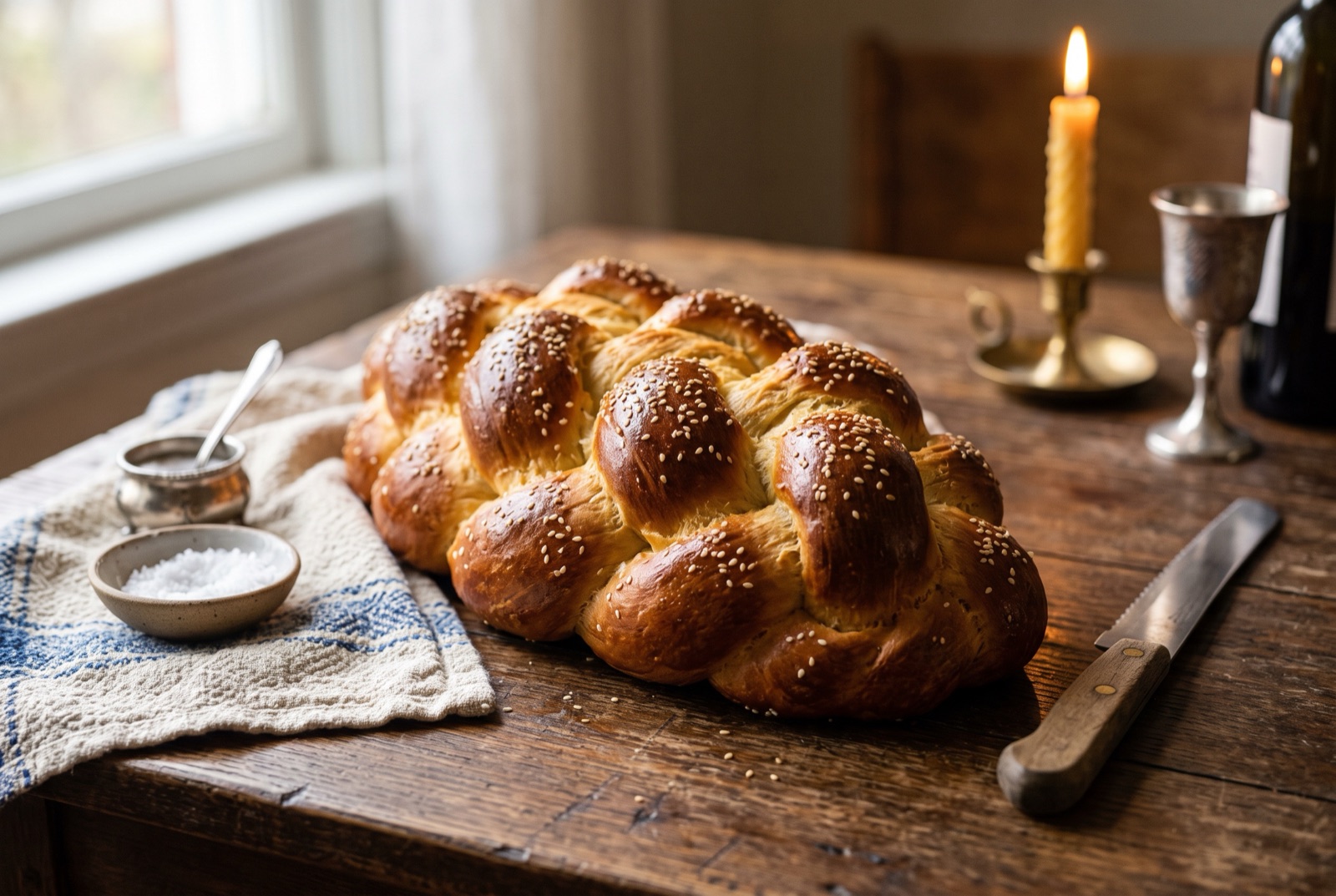
Keep exploring Israel.
Israel has 9 more dishes in the atlas — Challah and Cholent, and 7 more.
All Israel recipes Eggs recipes Tomato recipes Bell pepper recipes breakfastmainvegetariangluten freeRecipe by The DishRoute Kitchen · published August 20, 2026 · updated August 20, 2026